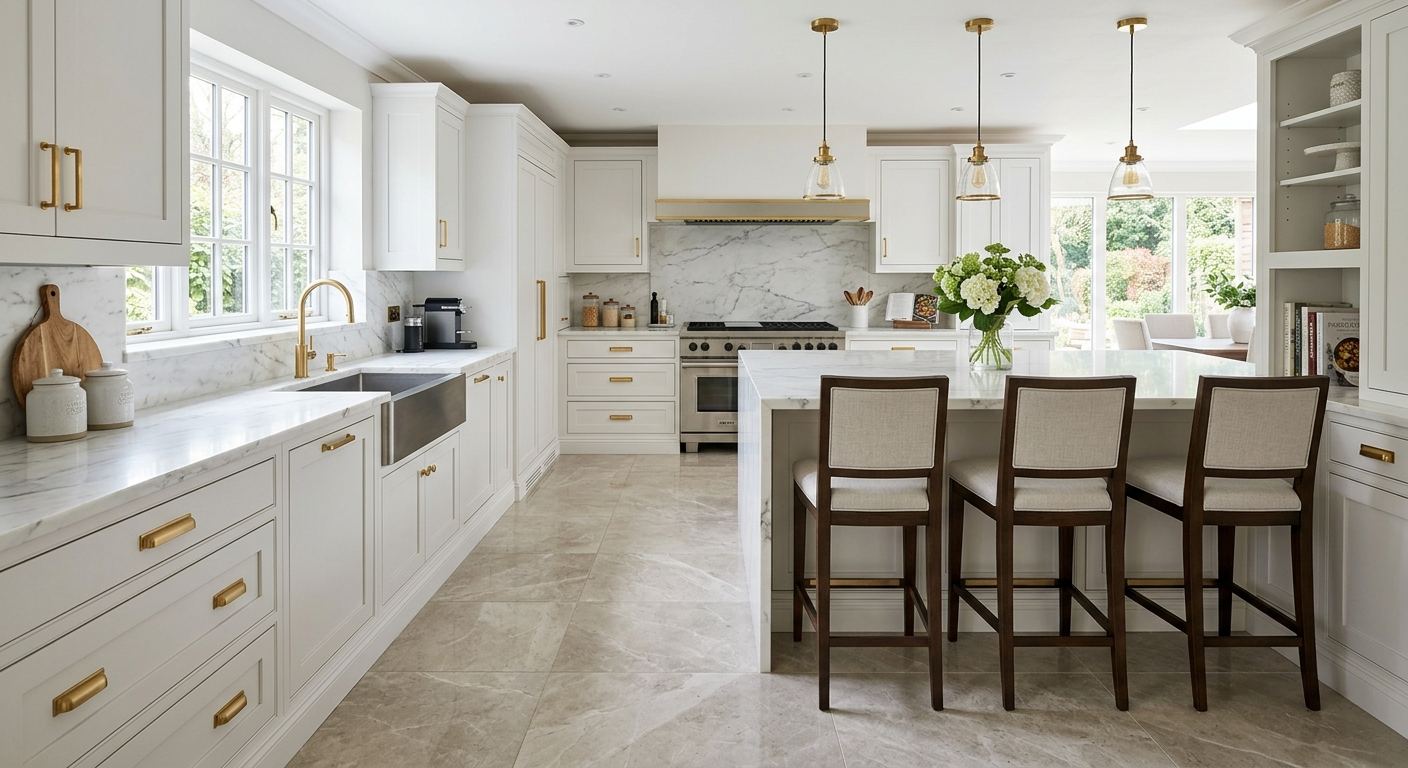
Kitchen renovation options and costs in Vineland
In Vineland, kitchen renovation costs usually track the same reality as the broader Toronto economic region: buyers pay for upgrades, so homeowners tend to budget for finishes that photograph well and hold up to everyday use. With a 2021 population of 4,074 in the town (Statistics Canada, 2021 Census), projects are smaller in number than in downtown Toronto, but trades are still competing for the same high-demand mid- and late-season slots. On the “why” side, Vineland sits inside a Toronto-area housing market where higher-value neighbourhood pockets commonly steer renovations toward upgraded cabinetry and premium countertops because the kitchen is one of the first resale-impact rooms. In practice, that means your kitchen budget often lines up with the finish tier you choose—stock refreshes stay closer to the low–mid range, while custom millwork and stone move you toward the upper end (Statistics Canada, 2021 Census).
Toronto-region budgeting is shaped less by weather than by market expectations and project pacing. The region’s strong demand can tighten availability for cabinet installers and stone fabricators, so schedules can shift and “same-week” turnarounds cost more. Climate still matters indirectly: higher summer humidity and winter temperature swings can stress caulking and grout lines over time, so many homeowners choose better sealing methods, durable backsplash systems, and properly installed sub-surfaces when they’re investing in a longer-lasting rebuild. In Vineland, the trade is especially busy in well-established family areas where older homes are being updated for resale, so permit timing and material lead times can be the difference between a four- and eight-week stretch.
Below are realistic cost bands you’ll see in Vineland quotes, broken down by typical renovation tier, so you can compare apples to apples before you sign.
| Renovation Tier |
What's Included |
Typical Duration |
Price Range |
| Cosmetic refresh (paint, hardware, new appliances only) |
Paint, trim touch-ups, new cabinet hardware, appliance swap (non-structural), minor caulking |
1–2 weeks |
$25,000–$35,000 |
| Mid-range full renovation (new cabinets, counters, sink, tile) |
Semi-custom or quality stock cabinets, quartz or good laminate counters, sink + faucet, backsplash/tile, labour for plumbing/electrical hookups |
3–6 weeks |
$45,000–$70,000 |
| High-end full renovation (custom cabinets, stone counters, island) |
Fully custom cabinetry, premium quartz or natural stone, larger island build, upgraded appliance package, full-height backsplash options |
6–10 weeks |
$75,000–$90,000 |
| Cabinet refacing only (new doors + drawer fronts, same boxes) |
Door/drawer replacement, veneer/finish on existing boxes, matching hardware, installation and trim detailing |
2–4 weeks |
$8,000–$22,000 |
| Countertop swap only (laminate to quartz or stone) |
Remove existing top, fabricate/install new countertop, basic sink cut-out and reseal, backsplash top edge work (if needed) |
3–7 days |
$10,000–$15,000 |
| Backsplash tile installation only |
Surface prep, tile supply and install (ceramic), grout + seal, finishing at counters and corners |
3–5 days |
$2,000–$8,000 |
Prices are estimates only and vary by project scope, site access and material selection.
What affects the price of kitchen renovation in Vineland
In Vineland and across Ontario, two quotes for “the same kitchen” can differ by 30–50% because contractors price for what’s actually behind the walls, not just the visible finishes. Cabinet and countertop line items look comparable at first, but allowances for demolition, electrical rework, plumbing tie-ins, and subfloor repairs can swing the total fast. Toronto-area market dynamics push that variation further: in higher-value areas of the Toronto region, owners more often choose quartz or stone and semi-custom cabinetry because they expect to recover the spend on resale; in more cost-sensitive pockets, owners lean toward laminate and stock options to keep ROI balanced. Finish tier is typically the biggest driver—your plan can move from mid-range $45,000–$70,000 territory into high-end $75,000–$90,000 once you add custom millwork, premium stone, and an island that requires electrical and ventilation work.
Concrete Vineland examples that change cost include older houses with dated rough-ins—sometimes you’ll need to replace corroded shutoff valves or tighten drain slopes, which adds plumbing labour. Another common variable is cabinet box condition on refacing: if boxes are out of level after years of humidity and seasonal temperature swings, installers may have to do extra shimming and repair before new doors go on. Finally, layout choices often raise the “unpredictable” portion of the budget: removing a wall, adding an island, or moving a gas line can re-route supply/drain, trigger additional electrical circuits, and increase inspection time, regardless of whether you pick laminate or quartz.
Put simply: market and finish tier set the ceiling, but layout and hidden-condition risk decide how close you land to the low or high end of bands you see in Toronto-area renovations.
| Price Factor |
Why It Matters |
Cost Impact |
| Cabinet tier — stock vs. semi-custom vs. fully custom millwork |
Design fit, build quality, door styles, and number of custom parts change material and install time |
Can shift the overall budget by roughly $10,000–$25,000 |
| Countertop material — laminate vs. quartz vs. granite vs. stone |
Fabrication complexity and edge profiles drive labour + shop time; natural stone varies by slab |
Often adds $3,000–$12,000 depending on choice and layout |
| Layout change — wall removal, island add, plumbing/gas move |
Trigger framing, structural review, permit timelines, and re-routing lines |
Typically adds $8,000–$30,000 |
| Appliance package tier — builder vs. mid-range vs. pro-grade |
Electrical requirements, ventilation demands, and fit/finish accessories vary |
Can swing $2,000–$10,000 |
| Flooring — refinish existing vs. full replacement |
Subfloor prep and transition details add labour; full replacement increases demo + materials |
Typically adds $1,500–$8,000 |
| Backsplash — ceramic tile vs. marble vs. full-height slab |
Weight, cutting, waterproof detailing, and material cost vary widely |
Can add $2,000–$12,000 |
| Electrical — new circuits for island, under-cabinet lighting |
More penetrations and code-compliant wiring work increase electrician time |
Often adds $1,000–$6,000 |
| Permit fees and licensed trade requirements |
When permits are required, schedules and administrative steps add cost |
Typically adds $500–$3,500 |
Permits & regulations in Ontario
In Ontario, not every kitchen renovation triggers a permit. Generally, cabinet and countertop swaps that don’t change services (no new plumbing routes, no moving gas, no new wall openings for structural or electrical work) typically don’t require permits. If you’re simply replacing cabinets in the same locations, swapping a laminate top for quartz, and reinstalling the sink to the existing plumbing connections, many projects proceed without permits—assuming no service relocation is involved.
Where permits do come into play in Ontario is when you change the “services or structure” of the kitchen. That commonly includes: moving plumbing supply or drain lines (even a few feet), relocating a gas stove or making changes to a gas range setup, removing a load-bearing wall, or adding new electrical circuits—for example, wiring for an island receptacle cluster or under-cabinet lighting that requires new runs. Gas work must be performed by a licensed gas fitter, and electrical work must be done by a licensed electrician; both require proper inspections.
Step-by-step for homeowners in Vineland: (1) ask the contractor to provide the electrician and gas fitter company details before work starts; (2) request a certificate of insurance (general liability) and confirm workers’ coverage (WSIB/WCB clearance letter); (3) verify Ontario licences using the regulator/online registry search for the specific trades; (4) ensure the written contract clearly states who is pulling permits, who is responsible for inspections, and what’s included for administrative work.
Cabinets, countertops and layout decisions in Vineland
Three decisions usually determine 80% of your kitchen renovation outcome in Vineland: cabinet tier, countertop material, and layout changes. Start with cabinets. Stock cabinets are the fastest path and easiest to price because they come ready-made with fewer custom parts. Semi-custom cabinets (often the most popular mid-range choice in the Toronto region) give you more flexibility in drawer sizes, door styles, and fit while staying closer to a $45,000–$70,000 full renovation budget when paired with good-quality countertops. Custom cabinets are the highest cost, but they can solve real-fit issues in older homes—especially when ceilings aren’t perfectly square or wall planes are out of plumb.
Second, choose countertops with maintenance and durability in mind for local conditions. Ontario kitchens experience winter dryness followed by summer humidity, which can impact how surfaces and seals are installed and maintained. Laminate is budget-friendly and forgiving, while quartz is often the best “set it and enjoy it” option because it’s hard-wearing and low-maintenance. Granite and natural stone look premium and handle heat well, but they typically require more attention to sealing. Butcher block brings warmth and repairability, yet it needs disciplined oiling to protect against moisture.
Third, decide whether layout changes are worth it. In resale-focused Toronto-area markets, opening an awkward wall or adding an island can pay back by improving usability, but it’s not cheap. A straightforward example: upgrading from laminate to quartz might add only a few thousand dollars in most mid-range projects, while moving plumbing or gas can add significantly more due to rework and permitting. If you’re staying near the same plumbing locations, you can often keep your total closer to mid-range bands without sacrificing the look buyers expect at your price point.
| Option |
Durability |
Maintenance |
Best For |
Price Range |
| Stock cabinets (big-box) |
Good daily durability with limited custom sizing |
Low; tighten hardware as needed |
Short timelines and tighter budgets |
$8,000–$18,000 |
| Semi-custom cabinets (local dealer) |
Very good durability; better fit and higher build consistency |
Low to moderate; regular hardware checks |
Most common Vineland balance of cost and fit |
$18,000–$35,000 |
| Custom cabinets (local millwork shop) |
Excellent durability; tailored construction and layout integration |
Low; designed for longevity but needs correct installation |
Unusual dimensions or buyers prioritizing “built-in” feel |
$35,000–$55,000 |
| Laminate countertop |
Good for everyday use; can chip at edges if abused |
Low; avoid prolonged heat and sharp impacts |
Value-first refreshes |
$3,000–$8,000 |
| Quartz engineered countertop |
Very durable; resistant to staining and day-to-day wear |
Low; wipe clean, minimal sealing |
Families who want premium look with low upkeep |
$6,000–$12,000 |
| Granite / natural stone countertop |
High durability; unique variations by slab |
Moderate; periodic sealing recommended |
Homeowners aiming for a luxury statement |
$8,000–$15,000 |
| Butcher block countertop |
Durable with proper care; can scratch and dent |
Moderate; oiling and sanding as needed |
Warm, traditional kitchens and light cooking use |
$7,000–$12,000 |
| Marble countertop |
Beautiful but softer than quartz; can etch with acids |
Higher; requires careful cleaning and sealing |
Low-traffic showpiece or buyer-ready luxury finishes |
$10,000–$15,000 |
How to choose a kitchen renovation contractor in Vineland
Choosing the right contractor is the difference between a smooth kitchen and a long, expensive correction cycle—especially in Ontario where trades are licensed and inspections matter. Start with licensing and coverage: verify the company’s business registration, ensure you get the electrician and gas fitter licences for the specific work required, and request proof of general liability insurance plus WSIB/WCB coverage. To check: (1) look up the electrician and gas fitter on the Ontario online licence registry using the exact company or individual name; (2) confirm your contractor’s certificate of insurance includes you as an additional insured where applicable; (3) request a WSIB/WCB clearance letter showing current coverage for workers; and (4) ask for insurer contact details so you can confirm policies are active.
Next, get 2–3 itemised written quotes. The best quotes separate labour and materials, show cabinet supply pricing, countertop fabrication and installation, and list plumbing/electrical scopes instead of rolling everything into one lump sum. Read the scope line by line: what’s excluded (older cabinet removal, subfloor repairs, drywall patching, disposal), is permit pulling included, and is waste hauling/disposal in the price? Warranty matters too: ask for the workmanship warranty length, confirm the manufacturer warranty for cabinets and countertops, and whether warranty transfers if you sell the home.
Finally, protect your cash flow and schedule. Avoid paying the bulk upfront—generally keep deposits to 10–15% and hold back a final portion until completion and punch-list items are done. Get a written start date and a realistic completion estimate in the contract, including material lead time assumptions.
- Ask for licence and insurance documents before signing.
- Confirm WSIB/WCB clearance letter for workers.
- Request 2–3 itemised quotes (labour + materials breakdown).
- Check whether the quote includes permit pulling (when required).
- Verify disposal/waste hauling is included or priced separately.
- Confirm who is responsible for plumbing, gas, and electrical scopes.
- Insist on a written start date and finish target.
- Ask how they protect flooring and cabinets during demolition.
- Confirm the cabinet install standard (shimming, levelling, fastening method).
- Ask about countertop template timing and installation scheduling.
- Review warranty terms in writing (workmanship + manufacturer).
- Keep deposits to 10–15% upfront and hold back for the punch list.
Red flags to watch for in Vineland: contractors who won’t provide itemised pricing; vague scopes that don’t list electrical/plumbing responsibilities; missing or expired insurance/WSIB coverage; demanding large upfront payments without a clear contract timeline; and “unlimited change orders” language that doesn’t define how extras are quoted and approved.
Frequently asked questions — kitchen renovation in Vineland
Do I need a permit for a kitchen renovation in Ontario?
In Ontario, cabinet and countertop swaps that don’t change plumbing, gas, structural walls, or electrical circuits typically do not require permits. For example, replacing cabinets in the same locations and installing a new quartz top usually stays permit-free, because you’re not moving services. Permits are commonly required when you move plumbing supply/drain lines, relocate gas appliances or make changes to a gas range setup, remove a load-bearing wall, or add electrical circuits (like island receptacles or new lighting runs). In Vineland, the practical takeaway is to treat permits as a scope question, not a “kitchen-renovation” question. Confirm in writing who pulls permits, who schedules inspections, and which licensed trades are responsible—before you sign anything.
What's the ROI on a kitchen renovation?
ROI varies by how much you spend versus what you improve, but kitchens are high-impact rooms in the Toronto region because buyers use them to judge overall quality. In practice, you’ll often get the strongest resale benefit from mid-range upgrades that look current—like semi-custom cabinetry plus quartz or a durable countertop, updated hardware, and clean tile lines—rather than the most expensive “everything custom” option. If your project lands in the $45,000–$70,000 band with a sensible layout and quality materials, it’s usually easier to recover value than if you overspend on premium stone and complex structural work relative to your home’s market positioning. Because Vineland is a smaller community (population 4,074 per Statistics Canada, 2021 Census), there can be fewer comparable renovations locally, so choosing broadly appealing finishes that match Toronto buyer expectations helps the most.
How do I budget for a kitchen renovation?
Budgeting starts with deciding your finish tier and how much of the kitchen you’ll keep in place. A cosmetic refresh (paint, hardware, and new appliances only) can sit around the $25,000–$35,000 range, while a mid-range full renovation commonly falls into the $45,000–$70,000 band. If you’re planning custom cabinetry, premium stone, and an island that requires electrical/venting work, it can move toward the $75,000–$90,000 end. Build your budget around unavoidable “hidden” costs too: demo and disposal, wall repair, subfloor checks, and electrical/plumbing tie-ins. A good rule is to expect some variance for older homes—especially around shutoff valves, drain slopes, and electrical condition—because Toronto-area housing stock includes many kitchens built decades ago.
Can I move my kitchen sink or stove?
Yes, but you should expect it to be one of the highest-cost moves. Relocating a sink means moving plumbing supply and drain lines and usually triggers permitting and licensed plumbing work in Ontario. Moving a stove can involve gas (or electrical) changes; if it’s a gas appliance relocation, gas work must be done by a licensed gas fitter, and permits/inspections are typically required. Even if the finish tier is budget-friendly, the “service reroute” drives cost—typically through labour, materials, and schedule delays. If you want better outcomes without huge costs, consider keeping the sink/stove in roughly the same footprint and only adjusting cabinetry framing, spacing, and finishes where possible. When relocation is justified, it’s usually to create a better layout that’s worth the spend for resale.
What's the most cost-effective kitchen upgrade?
The most cost-effective upgrade is often the one that upgrades the “face” of the kitchen without triggering big service changes. In many Vineland projects, a cabinet refacing option (new doors and drawer fronts while keeping the existing boxes) can be a strong value route, often in the $8,000–$35,000 range depending on kitchen size and finish choices. Another high-ROI move is countertops: swapping older laminate for quartz or stone can modernize the entire room with less disruption than moving plumbing or walls. If your kitchen is already functional, backsplash and hardware upgrades also refresh the look at relatively low cost—backsplash tile installation commonly lands around $2,000–$10,000 depending on coverage and tile type. The key is to avoid costly layout changes unless you’re gaining real usability (like storage, circulation, or an island) that buyers will notice.
Custom vs stock cabinets — is custom worth it?
Custom cabinets can be worth it when you have out-of-standard dimensions, need perfect built-in matching to a unique layout, or want a long-term “signature” kitchen that fits your home’s quirks. However, most Vineland homeowners are happiest when they match cabinet tier to their project goal. Stock cabinets are the fastest and usually cheapest route, especially if your walls and measurements are standard; semi-custom is often the sweet spot because it offers better drawer organization and improved fit while keeping you closer to mid-range full renovation budgets ($45,000–$70,000). Custom becomes harder to justify if your layout changes are limited and your main goal is resale-friendly upgrades—because you may spend significantly more without gaining much additional value. In Ontario’s Toronto-area market, buyers tend to respond strongly to a cohesive look—clean lines, durable counters, and smooth hardware—so choose the cabinet tier that supports that goal without overbuilding beyond your budget.