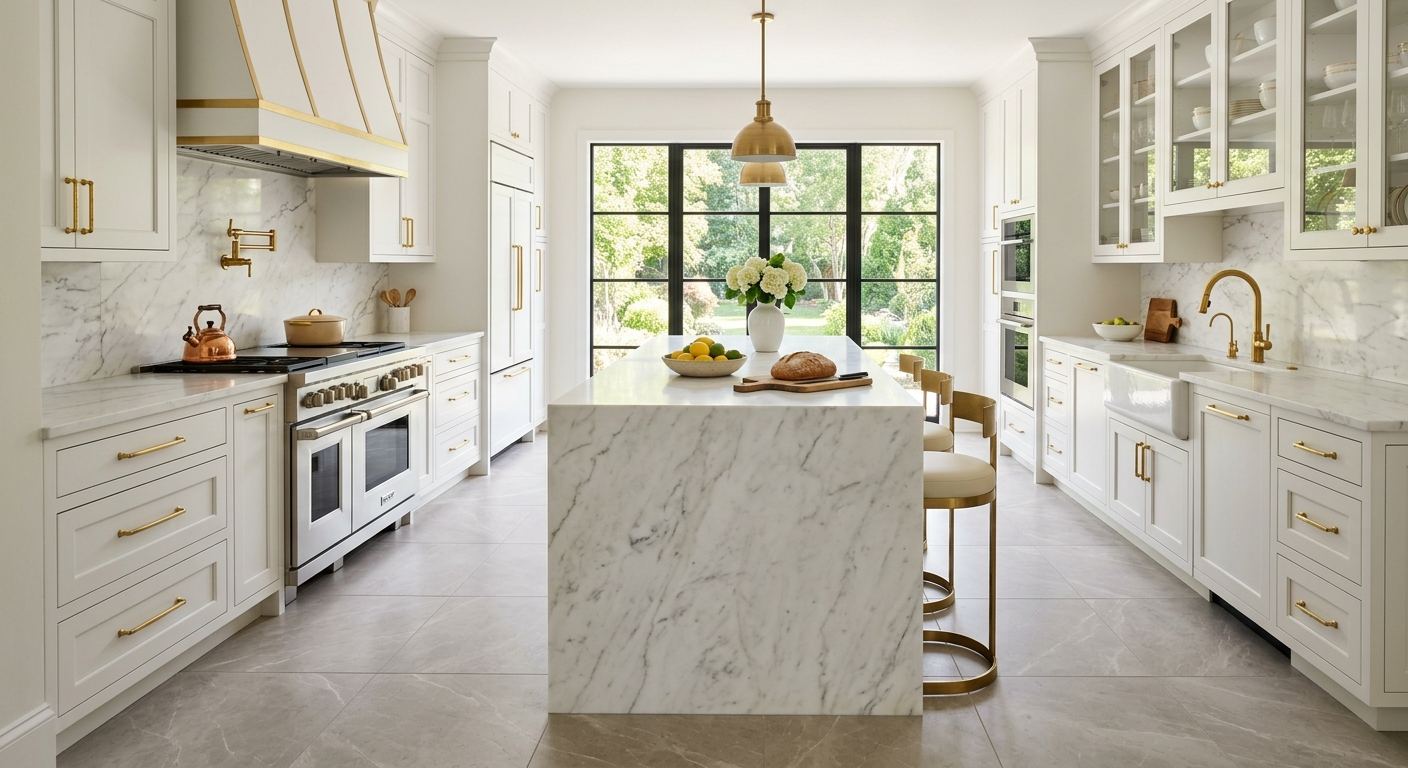
Kitchen renovation options and costs in St. Clements
St. Clements homeowners typically start their kitchen projects with a budget goal in mind, then narrow choices around resale expectations. With a population of 1,240 (Statistics Canada, 2021 Census), the local market is small, so many residents look outward to the broader Toronto economic region for cabinet and countertop supply. That ties closely to what buyers expect in this part of Ontario: in higher-value pockets of the GTA, owners often invest around 8–15% of their home value into kitchen updates, which encourages upgrades like quartz, more durable finishes, and semi-custom cabinetry.
At the same time, most St. Clements renovations are still driven more by market choices than by weather. Toronto-area demand can keep trades booked during peak renovation months, which can move labour pricing and lead times slightly—especially for trades supporting electrical and plumbing changes. Winter freeze–thaw doesn’t usually “break” kitchens, but it can affect schedule reliability if crews need to coordinate access, temporary power, and drywall/finishing sequencing after service work.
In practice, the most in-demand work in and around St. Clements is mid-range full renovations—especially in the older housing stock along local residential corridors—because they balance cost recovery with a modern look. If you’re comparing options, the easiest way is to look at renovation tiers side-by-side, then map your desired finish level to a realistic budget.
| Renovation Tier |
What's Included |
Typical Duration |
Price Range |
| Cosmetic refresh (paint, hardware, new appliances only) |
Cabinet paint or re-finish (no box changes), new hardware, new/relocated appliances (like fridge and range), wall/ceiling touch-ups, basic caulking and trim |
3–7 days |
$8,000–$18,000 |
| Mid-range full renovation (new cabinets, counters, sink, tile) |
New semi-custom cabinets, countertop installation, sink + faucet swap, backsplash tile, new flooring option (if included), sink plumbing refresh and basic electrical allowance for under-cabinet lighting |
3–6 weeks |
$25,000–$60,000 |
| High-end full renovation (custom cabinets, stone counters, island) |
Fully custom cabinetry, quartz/natural stone countertops, island (often including electrical and seating details), upgraded hardware, premium backsplash (including full-height option), more extensive plumbing/electrical coordination |
6–10 weeks |
$60,000–$90,000 |
| Cabinet refacing only (new doors + drawer fronts, same boxes) |
Door and drawer-front replacement, new hardware, veneer/face updates, selective trim changes, re-sealing and caulking; counters usually remain unless you choose a separate swap |
1–3 weeks |
$8,000–$25,000 |
| Countertop swap only (laminate to quartz or stone) |
Remove existing countertop, prep and install new countertop material, new sink cut-out integration as needed, edge profile upgrade (if selected) |
3–7 days |
$3,000–$15,000 |
| Backsplash tile installation only |
Surface prep, tile supply coordination (ceramic/porcelain), layout and installation, caulking and sealing at changes of plane |
3–7 days |
$2,000–$10,000 |
Prices are estimates only and vary by project scope, site access and material selection.
What affects the price of kitchen renovation in St. Clements
Two homeowners can receive quotes for the “same” St. Clements kitchen renovation and still see a 30–50% difference—because the drivers aren’t just finishes. In the Toronto economic region, local home values and the typical income profile influence what tier of product is purchased: buyers in higher-value pockets more often choose quartz or natural stone and semi-custom cabinetry because the update is easier to justify at resale. In more price-sensitive areas of the region, laminate and stock cabinets remain popular because they deliver visible change with a stronger budget-to-impact ratio.
Climate matters far less than you’d think for day-to-day pricing. Toronto’s freeze–thaw cycles can contribute to scheduling delays if exterior access and moisture control are an issue during drywall and finishing, but they don’t usually change what it costs to install cabinets. Contractor availability and the scope of work (especially plumbing/electrical coordination) are the bigger levers. That’s why layout changes add unpredictability regardless of finish level: removing a wall, adding an island, or moving a gas line or plumbing point changes the work sequence and labour intensity.
Concrete examples we commonly see in St. Clements: (1) an island addition can shift a project from a typical mid-range full renovation around $25,000–$60,000 into a higher-end range because electrical circuits and ventilation requirements stack quickly; (2) reusing existing cabinet boxes keeps cabinet installation simpler, while changing cabinet depths or ceiling heights for soffits increases custom millwork time; (3) upgrading from laminate to quartz is often a straightforward install, but if the sink cut-out and undermount configuration need adjustment, the countertop swap costs can rise within the countertop-only band of roughly $3,000–$15,000.
| Price Factor |
Why It Matters |
Cost Impact |
| Cabinet tier — stock vs. semi-custom vs. fully custom millwork |
Material quality, box construction, door styles, adjustability, and how much trimming is required on site determine labour and material costs. |
Can shift the project by tens of thousands; a full renovation often moves from mid-range into high-end when custom millwork is selected. |
| Countertop material — laminate vs. quartz vs. granite vs. stone |
Material price, fabrication complexity, edge profiles, and sink cut-outs affect both supply and installation time. |
Laminate stays low-mid; quartz/stone commonly increase the countertop portion and raise overall project cost. |
| Layout change — wall removal, island add, plumbing/gas move |
Structural, mechanical, and trade coordination requirements introduce uncertainty and add subcontract labour. |
Most likely driver of unexpected overruns; often the reason quotes diverge by 30–50%. |
| Appliance package tier — builder vs. mid-range vs. pro-grade |
Power/ventilation requirements and fit tolerances change how much electrical/plumbing and cabinetry adjustments are needed. |
Can raise appliance spend substantially and trigger additional electrical or venting upgrades. |
| Flooring — refinish existing vs. full replacement |
If you keep existing subflooring and only refinish, you avoid demo and underlay prep costs. |
Full replacement adds demolition and material/installation; refinish keeps the budget predictable. |
| Backsplash — ceramic tile vs. marble vs. full-height slab |
Premium stone and higher coverage areas increase material cost, layout precision, and labour time. |
Can keep small projects modest (tile bands) or push into higher-end backsplash spend. |
| Electrical — new circuits for island, under-cabinet lighting |
Adding outlets, island pendant circuits, and lighting requires licensed electrical work and inspection coordination. |
Often adds cost even when fixtures are “nice,” because wiring and access through walls drive labour. |
| Permit fees and licensed trade requirements |
Where permits apply, time and administrative steps add cost; licensed trades also charge for service and compliance. |
Generally increases total budget in scope-heavy renovations, especially where plumbing/electrical/gas is involved. |
Permits & regulations in Ontario
In Ontario, cabinet and countertop swaps typically do not require a permit—so replacing cabinets, installing new quartz or stone tops, and adding a backsplash are usually permit-light projects. Where permits and licensed trades are required is in the work that changes a building’s systems or structural safety. For example, moving plumbing supply/drain lines, relocating a gas stove or range hood that involves gas, removing a load-bearing wall, or adding new electrical circuits (like for island outlets or under-cabinet lighting tied into new wiring) generally requires permits and inspections.
Gas work must be completed by a licensed gas fitter, and electrical work must be completed by a licensed electrician. Both trades should arrange the necessary inspections after the work is done and before concealment by drywall or finishes.
For a homeowner in St. Clements, the verification process should be simple and documented:
- Ask for the contractor’s Ontario licensing details and proof of liability insurance.
- Request certificates of insurance showing coverage remains active for your project dates.
- Confirm WSIB/WCB coverage for the trades that will work on site, and get it in writing.
- Use the public online registry tools for trades where available, or ask the contractor to provide licence numbers.
- Get a written statement clarifying who pulls permits (and who pays) before signing.
Always confirm permit responsibility in your contract—permit pulls and inspection scheduling should be explicit to avoid delays or cost disputes mid-project.
Cabinets, countertops and layout decisions in St. Clements
Your three most consequential decisions in a St. Clements kitchen renovation are: (1) cabinet tier, (2) countertop material, and (3) layout changes. Cabinet tier determines how quickly the job runs and how perfectly the kitchen fits the room. Stock cabinets are fastest and cheapest, semi-custom is the “best value” choice most homeowners land on, and custom cabinetry delivers the tightest fit and design flexibility at the highest cost. Countertops then set the visual tone and the day-to-day durability: laminate is budget-friendly and easy to replace, quartz offers consistent performance and low maintenance, and granite/stone add premium character but can require more careful fabrication and sealing practices depending on the stone.
Layout changes are where Toronto-area pricing becomes more variable because they often require coordinated trades. Removing a wall to open the kitchen can justify the cost if it improves sightlines and circulation for resale. Adding an island is worth it when you have the clearances for seating and walking paths—otherwise you pay for a “feature” that doesn’t function well. If your plan includes moving plumbing or a gas line, that cost should be treated as a scope multiplier regardless of finish tier.
As a realistic example: upgrading from laminate to quartz can fit within the countertop-only band of roughly $3,000–$15,000, and it’s often a strong ROI upgrade. But if you pair that with an island and new electrical circuits, your project may trend upward toward a mid-to-high full renovation budget such as $25,000–$60,000 and beyond, depending on cabinet tier and how much plumbing/gas relocation is needed.
| Option |
Durability |
Maintenance |
Best For |
Price Range |
| Stock cabinets (big-box) |
Good for everyday use; limited sizing options can mean more site modifications. |
Standard cleaning; hardware upgrades can improve longevity. |
Fast turnarounds and tighter budgets with a straightforward layout |
$8,000–$20,000 |
| Semi-custom cabinets (local dealer) |
Typically stronger construction and better fit options; easier to tailor to your space. |
Low maintenance; keep hinges aligned and use appropriate cleaners. |
Most St. Clements homeowners aiming for resale-friendly finishes |
$15,000–$35,000 |
| Custom cabinets (local millwork shop) |
Highest fit and detail; best for unusual ceilings, angles, or built-ins. |
Low day-to-day maintenance; quality hardware is important. |
When you want a tailored look and maximum design flexibility |
$30,000–$60,000 |
| Laminate countertop |
Durable for light-to-moderate wear; edges can chip if abused. |
Wipe clean; avoid prolonged standing water at seams. |
Budget-conscious refreshes where you want a major aesthetic change |
$3,000–$7,000 |
| Quartz engineered countertop |
Very durable; resistant to staining and everyday impacts when installed correctly. |
Minimal—regular cleaners are usually all that’s needed. |
Resale-friendly kitchens that need a low-maintenance surface |
$6,000–$12,000 |
| Granite / natural stone countertop |
Excellent durability; natural variation and hardness differ by slab type. |
Periodic sealing may be required depending on the stone. |
Premium look with a one-of-a-kind pattern |
$8,000–$15,000 |
| Butcher block countertop |
Strong but can scratch; moisture management is key. |
Oil/condition periodically; avoid standing water at joints. |
Warm, traditional styles and homeowners who accept maintenance |
$5,000–$10,000 |
| Marble countertop |
Beautiful but more sensitive to acids/etching; needs careful use. |
More frequent sealing and gentle cleaning habits. |
Statement kitchens for homeowners who want a luxury surface |
$10,000–$20,000 |
How to choose a kitchen renovation contractor in St. Clements
Choosing the right contractor in St. Clements is mostly about verification, clarity, and risk control. First, confirm Ontario compliance: ask for proof of liability insurance and make sure the contractor/tied trades have WSIB/WCB coverage where applicable. To check, look for current certificate dates (not expired PDFs), request licence numbers for relevant trades, and confirm coverage amounts are adequate for jobsite activities. A reputable contractor will also provide licence details and show how permits—if required—are handled for your scope.
Next, get 2–3 itemised written quotes. You want line items for labour and materials (cabinet supply, countertop fabrication/installation, plumbing/electrical allowances, demolition, disposal, tile setting, and any trim/patching). Avoid “lump sum only” quotes with no scope definition. Read the exclusions carefully: is drywall repair included? Is disposal included? Will permit pulling be included if needed for plumbing, gas, or electrical changes?
Warranty is another decision point. Ask for the workmanship warranty length, whether it covers callbacks for installation issues, and how the manufacturer warranty works on product defects. Also clarify whether warranties transfer to new homeowners if you sell.
Payment schedule matters: never pay more than 10–15% upfront. Hold back a reasonable amount until key milestones are complete—cabinets installed, countertops templated/installed, tile grouted, and final trim done. Finally, request a start date and completion estimate in writing, with a clear plan for approvals, inspections, and countertop lead times.
- Confirm licence numbers and the contractor’s role in permit responsibility for your specific scope.
- Verify liability insurance with active dates and project-appropriate coverage limits.
- Request WSIB/WCB coverage confirmation for workers attending your site.
- Ask for 2–3 itemised quotes with labour + materials breakdowns.
- Ensure the quote lists exclusions (demo, disposal, drywall repair, subfloor repairs, patching/paint).
- Check whether under-cabinet lighting is included and whether electrical work is part of the scope.
- Confirm countertop templating timing and who pays if fabrication changes are needed.
- Ask who supplies tile/backer materials and grout/adhesive brands (and whether allowances are used).
- Review warranty: workmanship length, manufacturer warranties, and whether they’re transferable.
- Use a milestone payment schedule; keep a holdback for completion and punch-list items.
- Get timelines in writing, including lead times for cabinets, slabs, and hardware.
- Request a communication plan for change orders (written approval required).
Red flags I see too often in St. Clements: contractors who won’t provide insurance/WSIB proof; quotes that don’t list what’s included (especially electrical permits, disposal, and drywall repair); pressure for large upfront payments; vague timelines without countertop/cabinet lead-time assumptions; and no written scope for change orders—so costs appear “after the fact” once demolition starts.
Frequently asked questions — kitchen renovation in St. Clements
What's the most cost-effective kitchen upgrade?
In St. Clements, the most cost-effective upgrades are usually the ones that deliver a “new kitchen look” without triggering plumbing, gas, or major electrical changes. If your boxes are in good shape, cabinet refacing can be a strong value—often in the range of $8,000–$25,000—because you get new doors, drawer fronts, and updated hardware while keeping installation simpler. Pair that with a countertop swap like quartz (commonly within the countertop-only band of $3,000–$15,000) and a backsplash tile refresh for a budget-friendly transformation. In Ontario, cabinet and countertop swaps typically don’t require permits, which helps keep timelines and labour costs more predictable.
Custom vs stock cabinets — is custom worth it?
Custom cabinets are worth it when your kitchen has challenging dimensions (soffits, angled walls, non-standard ceiling heights) or when you want built-ins that match a specific design plan. For a straightforward layout, stock cabinets are usually the faster and cheaper route, especially when you’re trying to stay near a mid-range full renovation budget such as $25,000–$60,000. Custom can also pay off at resale when it improves storage efficiency and visual cohesion, but you typically pay a premium in material and shop time. In the Toronto economic region, homeowners in higher-value areas may lean into custom millwork; in more price-sensitive areas, semi-custom is often the practical middle ground that still looks tailored.
How do I choose a kitchen contractor in St. Clements?
Start by verifying Ontario compliance: request proof of liability insurance, confirm WSIB/WCB coverage for the workers who will be on site, and ask for licences relevant to the scope (especially for electrical and gas if those trades will be involved). Then get 2–3 itemised written quotes that break down labour and materials instead of lump-sum pricing. Make sure the quote states who pulls permits if you’re moving plumbing supply/drain lines, relocating gas, removing a load-bearing wall, or adding new electrical circuits. Finally, review warranty terms and the payment schedule—avoid paying more than 10–15% upfront and hold back until the punch-list is complete. These steps prevent most of the budget blowouts we see in Ontario kitchen renovations.
What order do kitchen renovation steps happen in?
A typical renovation sequence in St. Clements starts with measurement and design finalization, then demolition if needed (remove existing cabinets/counters). If layout changes are planned, plumbing/gas/electrical rough-in usually happens after demo and before walls are closed—because you can’t safely run lines and then cover them without the trades performing required work and inspections where applicable. After rough-in, drywall repairs and prep come next, followed by cabinet install, countertop templating, and countertop fabrication/installation. Tile/backsplash installation is usually after cabinets are set (to get clean alignment), then flooring trim/finishing touches, and finally paint, hardware installation, and appliance hookups. A contractor should give you a timeline that matches countertop lead times and inspection scheduling.
Can I live at home during a kitchen renovation in St. Clements?
Often, yes—but it depends on how extensive the work is. If you’re doing a cosmetic refresh or backsplash tile installation only, living at home is usually straightforward. For a mid-range full renovation, many homeowners remain at home because work can be staged room-by-room, but you’ll likely have periods where the sink area is unavailable and kitchen access is limited during countertop installation and plumbing tie-ins. For high-end renovations that include island electrical, new plumbing paths, or structural changes, some families choose temporary relocation because the kitchen becomes a primary work zone for weeks. Discuss daily access, dust control, temporary power, and a workable meal plan with your contractor before signing.
Should I renovate my kitchen before selling in St. Clements?
It can make sense, but the “best time” depends on the condition of your current kitchen and the finish tier buyers will expect for your price point. In the Toronto economic region, kitchens often sell faster when they look modern and functional, but over-improving beyond buyer expectations can reduce return. If your current layout is solid, a refresh that improves appearance—like refacing cabinets plus a quartz countertop—can be a safer strategy than a full custom build. That said, St. Clements homeowners should avoid high-risk scope changes unless necessary, because moving plumbing/gas lines and adding electrical circuits can raise costs quickly. In most cases, focus on visible, durable upgrades first within realistic bands like $25,000–$60,000 for a mid-range full renovation, and confirm resale fit during planning.