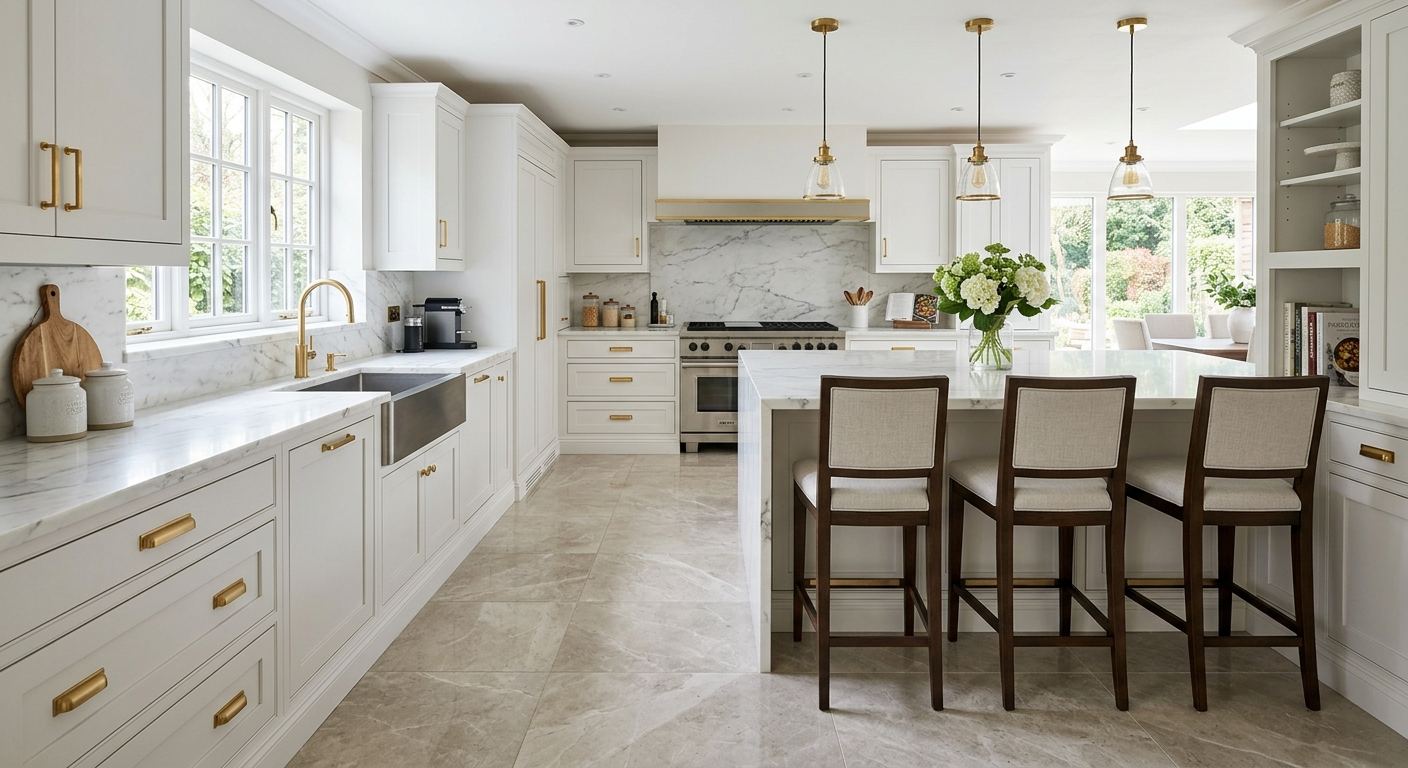
Kitchen renovation options and costs in Iroquois Falls
Iroquois Falls homeowners typically face the same decision first: do you refresh the kitchen, do a mid-range rebuild, or go full high-end? With a 2021 population of 4,418 and 1,480 homeowner households (74.9% of households own), many projects are planned with long-term use—and resale value—top of mind. Median household income in 2020 was about $75,000, which helps explain why the most common “hybrid” jobs land in the mid-range rather than pure full-custom makeovers for every house. In practice, that income level and local housing profile (83.8% of homes built before 1981) favour renovations that respect existing footprints, then upgrade the parts buyers notice most: cabinetry fronts, counters, backsplash, and lighting.
In Ontario’s Northeast, scheduling and material lead times are the bigger cost shapers than climate finish tier. Freezing temperatures and seasonal freeze/thaw can slow trade access and tile/grout curing, and older homes can hide surprises in plumbing, electrical, and subfloor conditions—pushing labour time up even when finishes look “similar.” Contractor availability in the broader Northeast area can also influence timelines and pricing, especially when multiple crews are booked for simultaneous jobs.
On the ground, I see strong demand for renovations around downtown Iroquois Falls and along the main commuter routes where older ranch-style homes are common and kitchens tend to be due for updates. Next, compare the realistic options and typical price bands before you decide how deep you want to go.
| Renovation Tier |
What's Included |
Typical Duration |
Price Range |
| Cosmetic refresh (paint, hardware, new appliances only) |
Prep and repainting cabinets/walls, new hardware, appliance swap (like-for-like cut-out sizing), optional vented exhaust accessory fit-up, basic caulking and touch-ups |
3–7 days |
$6,000–$18,000 |
| Mid-range full renovation (new cabinets, counters, sink, tile) |
New stock or semi-custom cabinets, new countertop (quartz or quality laminate), sink and faucet, backsplash tile, updated lighting (where feasible), labour for removal/reinstall |
2–4 weeks |
$30,000–$60,000 |
| High-end full renovation (custom cabinets, stone counters, island) |
Custom cabinetry, premium stone (granite/stone), island cabinetry and countertop, upgraded backsplash (often tile + premium trim), higher-end plumbing/electrical allowance, flooring refresh, deeper layout work |
4–8 weeks |
$60,000–$80,000 |
| Cabinet refacing only (new doors + drawer fronts, same boxes) |
Remove and replace doors/drawer fronts, reface panels, new hardware, polish/fit, limited countertop/backsplash refresh (if desired) |
1–2 weeks |
$6,000–$25,000 |
| Countertop swap only (laminate to quartz or stone) |
Remove old top, install new quartz/stone (including seams, sink cut-out adjustments if required), seal/edge finishing, basic backsplash tie-in where needed |
2–5 days |
$3,500–$15,000 |
| Backsplash tile installation only |
Tile supply allowance, surface prep, layout and installation, grout/seal, caulking at corners and around outlets |
3–7 days |
$2,500–$12,000 |
Prices are estimates only and vary by project scope, site access and material selection.
What affects the price of kitchen renovation in Iroquois Falls
In the Northeast and across Ontario, it’s common to see the “same” kitchen project quote come back 30–50% apart—especially when one contractor includes trades coordination and the other treats it as a basic install. The biggest driver isn’t climate; it’s the local finish tier tied to what the home is worth and what owners can comfortably finance. In higher-value areas of the broader Northeast market, homeowners more often choose quartz or premium stone counters and semi-custom cabinetry because those upgrades are easier to justify at resale. In more modest situations, laminate counters and stock cabinetry remain popular because they deliver a visible upgrade without stretching budgets.
Even when materials are similar, layout changes create the most unpredictable cost. Removing a wall, adding an island, or moving a gas line (or even just the stove location and venting) tends to add labour hours and coordination time in a way that “looks clean” on paper but costs more in practice. Appliance tier also matters: builder-grade packages may fit easily; pro-grade ranges and ventilators often need electrical, ducting, and stronger framing allowances.
In Iroquois Falls, two local realities regularly shift costs upward. First, many homes were built before 1981 (83.8%), so you may encounter out-of-date electrical runs or older plumbing rough-ins that require rewiring, new shutoffs, or rerouting drains. Second, winter scheduling and temperature swings can slow tile and caulking cure times, and they can expose subfloor movement—especially near exterior walls—making floor leveling an extra line item. If you start with a $30,000–$60,000 mid-range renovation plan, a small change like relocating the sink or adding under-cabinet lighting can push the job toward the upper end; likewise, sticking to countertop installation only (often $3,500–$15,000) can keep surprises manageable.
| Price Factor |
Why It Matters |
Cost Impact |
| Cabinet tier — stock vs. semi-custom vs. fully custom millwork |
Tier changes cabinet pricing, lead time, fitting complexity, and adjustability for older wall conditions |
$6,000–$30,000+ |
| Countertop material — laminate vs. quartz vs. granite vs. stone |
Material type affects per-square-foot cost, seam layout, edge profiles, and installation difficulty |
$3,500–$15,000+ |
| Layout change — wall removal, island add, plumbing/gas move |
Layout work adds demolition, reframing, venting, plumbing/electrical reroutes, and permit/inspection steps |
$5,000–$20,000+ |
| Appliance package tier — builder vs. mid-range vs. pro-grade |
Higher tiers often require different rough-in clearances, electrical upgrades, and stronger ventilation/delivery |
$2,000–$12,000 |
| Flooring — refinish existing vs. full replacement |
Older subfloors can force replacement; full replacement increases waste, dust control, and install time |
$1,500–$8,000 |
| Backsplash — ceramic tile vs. marble vs. full-height slab |
Premium stone and full-height installations raise material costs and labour intensity (cutting, sealing, fitting) |
$2,500–$12,000 |
| Electrical — new circuits for island, under-cabinet lighting |
New circuits and fixture wiring require licensed electricians and inspection, plus additional rough-in labour |
$800–$6,000 |
| Permit fees and licensed trade requirements |
Work that changes plumbing, gas, structural elements, or electrical circuits triggers permits/inspections |
$250–$4,000+ |
Permits & regulations in Ontario
In Ontario, a straight cabinet or countertop swap usually does not require a permit. If you’re not changing plumbing/drain locations, not relocating gas appliances, and not opening up walls for new electrical circuits, you’re typically in the “no permit” zone. However, once you start changing the kitchen’s systems, permits and licensed trades usually come into play. That includes moving plumbing supply or drain lines, relocating a gas stove or changing the venting path, removing a load-bearing wall, or adding new electrical circuits (common for island outlets and under-cabinet lighting beyond simple replacement).
Gas work must be done by a licensed gas fitter, and electrical work must be completed by a licensed electrician. Both require appropriate inspections before you close walls or finalize finishes. The key point is that the permit responsibility should be clear in writing before you sign.
For a homeowner in Iroquois Falls, you can verify contractor compliance in a practical sequence: (1) request their Ontario licence details and trade registration information; (2) ask for a certificate of insurance (liability) that lists the work location; (3) confirm they have WSIB/WCB clearance—either a current clearance letter or a way to verify it; and (4) keep copies of everything with your contract. If they won’t provide proof or rush you to pay before documents are reviewed, that’s a warning sign.
Cabinets, countertops and layout decisions in Iroquois Falls
Your kitchen renovation in Iroquois Falls usually comes down to three high-impact choices: (1) cabinet tier, (2) countertop material, and (3) whether you change the layout. Cabinet tier affects everything from timeline to how well the renovation hides older wall/level issues. Stock cabinets are fastest and typically the cheapest; semi-custom is the sweet spot for most homeowners because it offers better sizing options and layouts without fully custom lead times. Custom cabinets provide the tightest fit and best storage features, but they cost more and tend to require longer scheduling.
Countertops should be selected for durability in real household use. Laminate is budget-friendly and easier to swap later, but it’s less forgiving to heat and can chip at edges over time. Quartz is a strong mid-range choice in Ontario kitchens because it resists stains and handles daily cooking well, and it typically fits cleanly into a $30,000–$60,000 mid-range renovation plan. Granite and other natural stone add premium look and heat resistance but require more attention to sealing and care. Butcher block offers a warm, rustic feel and can be refinished if scratched, though it’s more sensitive to moisture and spills.
Layout decisions are the “cost multiplier.” If you’re considering removing an open section of wall or adding an island, justify it with real space gain and traffic flow, not just aesthetics. For example, adding an island and moving plumbing can push a project from the mid-range toward the high-end band ($60,000–$80,000) even when cabinet and counter choices stay moderate—because plumbing, electrical, and tile/floor transitions multiply labour. If you keep plumbing where it is and only refresh cabinetry and counters, the same home can often stay closer to the $30,000–$60,000 range.
| Option |
Durability |
Maintenance |
Best For |
Price Range |
| Stock cabinets (big-box) |
Good for standard layouts; durability depends on finish and hardware |
Low; wipe-down and periodic hardware tightening |
Fast timelines and budget-conscious refreshes |
$8,000–$18,000 |
| Semi-custom cabinets (local dealer) |
High durability with better options for sizing and interior storage |
Low to moderate; hinges and soft-close components need normal care |
Most Iroquois Falls renovations where you want a noticeably better fit |
$15,000–$30,000 |
| Custom cabinets (local millwork shop) |
Excellent; tailored structure and stronger joinery where specified |
Low once installed; quality hardware typically lasts longer |
Irregular spaces, full storage plans, and premium design goals |
$25,000–$45,000+ |
| Laminate countertop |
Moderate; can be vulnerable to heat marks and edge impacts |
Easy; avoid prolonged heat exposure and use care on seams |
Entry-level renovations that need a clean upgrade without heavy spend |
$3,500–$7,500 |
| Quartz engineered countertop |
High; resistant to staining and everyday wear |
Low; routine cleaning and avoiding abrasive pads |
Mid-range renovations aiming for a “new kitchen” feel |
$7,500–$14,000 |
| Granite / natural stone countertop |
High; very durable with good heat tolerance |
Moderate; depends on stone type and periodic sealing |
High-end looks with premium durability |
$10,000–$18,000 |
| Butcher block countertop |
Moderate to high; can scratch but can be sanded/refinished |
Moderate; oiling and careful moisture management |
Casual kitchens where you want warmth and don’t mind upkeep |
$5,000–$12,000 |
| Marble countertop |
Moderate; elegant but more susceptible to etching/staining |
High; requires careful cleaning habits and sealing |
Design-forward kitchens that prioritize look over heavy-duty prep |
$12,000–$20,000+ |
How to choose a kitchen renovation contractor in Iroquois Falls
Choosing the right contractor in Iroquois Falls is less about flashy photos and more about proof, process, and clarity. First, verify Ontario requirements. Ask for documentation for (1) trade licensing where applicable, (2) liability insurance (certificate of insurance showing current coverage and jobsite), and (3) WSIB/WCB clearance—usually provided as a clearance letter or equivalent proof. Don’t rely on verbal confirmation; request copies or direct verification evidence you can keep with your contract.
Second, get 2–3 itemised written quotes instead of one lump-sum number. The quote should separate labour and materials (demolition, cabinet install, countertop install, tile setting, electrical allowances, plumbing allowances), plus specify inclusions like removal/disposal, protection of floors, and how long permits or inspections will be tracked if needed. Carefully read the scope for exclusions: will they handle permit pulls if your layout changes, or is that your responsibility? Will disposal be included, or is there a separate haul-away line item?
Third, look at warranty terms. You want a workmanship warranty (how many months/years) and the product/manufacturer warranty, plus whether coverage is transferable if you sell the home. Payment schedules also matter: a common safe practice is to avoid paying more than 10–15% upfront and hold back a portion until completion and punch-list items are done. Finally, require a start date and an estimated completion window in writing so winter scheduling doesn’t quietly drift.
- Ask for licence proof details and confirm they match the work being quoted.
- Request a certificate of liability insurance and verify the jobsite address is covered.
- Provide WSIB/WCB clearance documentation before work starts.
- Get an itemised quote: labour vs materials, and allowance amounts for cabinets/counters/tile.
- Confirm whether permits are included or excluded if plumbing/gas/electrical scope changes.
- Clarify who handles disposal and whether there’s a separate waste/haul-away fee.
- Make sure the quote states protection of floors and doorway openings during demolition.
- Ask how they handle unknowns in pre-1981 homes (rough-in condition, subfloor repair, knob-and-tube history if present).
- Verify countertop template timing and who is responsible for measurements.
- Ask what’s included in backsplash scope: outlet trims, caulking, and grout type.
- Confirm under-cabinet lighting and electrical fixture allowances (and whether circuits are included).
- Review warranty: workmanship length, manufacturer warranties, and transferability on sale.
Red flags I commonly see around kitchen renovations in Iroquois Falls include: refusing to provide insurance or WSIB/WCB proof, quoting without line items (no allowances or labour breakdown), “too-good” pricing that omits disposal/protection/permits, promising countertop timelines without measuring/template dates, and asking for large deposits upfront with no holdback for completion.
Frequently asked questions — kitchen renovation in Iroquois Falls
Custom vs stock cabinets — is custom worth it?
In Iroquois Falls, custom cabinets are worth it when your kitchen layout is difficult (offset walls, unusual corner gaps, or you’re chasing a very specific storage plan) and when you plan to keep the home long enough to enjoy the fit. Stock cabinets can be a smart move if the walls are fairly straight and your priority is speed and a controlled budget. For most homeowners in this area, semi-custom is the practical middle: you still get better sizing options than stock, without the lead times and cost jump that often come with full custom millwork. As a rule of thumb, many kitchens stay in a mid-range total budget such as $30,000–$60,000 when cabinetry tier is balanced and layout changes are limited.
How do I choose a kitchen contractor in Iroquois Falls?
Start with verification and documentation. In Ontario, confirm the contractor’s relevant trade licensing for the work they’re doing, request a liability insurance certificate, and ask for WSIB/WCB clearance proof before any demolition. Then compare quotes that are itemised: you should be able to see labour and materials, allowance amounts, and exactly what’s included for disposal, protection, and any permit-related work if plumbing/gas/electrical changes are involved. A good contractor should also explain how they handle surprises that are common in older homes (83.8% built before 1981), like rough-in condition and subfloor repair. If you can’t get clear answers, don’t sign—kitchen schedules get expensive when trades overlap.
What order do kitchen renovation steps happen in?
A typical sequence in Iroquois Falls goes: (1) measure and confirm layout details (and template countertops); (2) demolition with proper protection and dust control; (3) rough work—electrical and plumbing adjustments, plus any framing if required; (4) inspections where permits are pulled; (5) flooring preparation and underlayment/level fixes; (6) cabinet install and leveling/anchoring; (7) countertop install (after cabinets are set); (8) sink/faucet hook-up and finishing touches for plumbing; (9) backsplash tile; (10) paint and final trim/caulking; (11) appliance installation and final punch list. Tile and grout curing can be sensitive to seasonal conditions, so contractors who schedule it deliberately help avoid rework.
Can I live at home during a kitchen renovation in Iroquois Falls?
Often yes, depending on scope and your comfort with a temporary kitchen setup. Cosmetic refreshes can usually keep you fully in the home with only minor disruption. Mid-range renovations may work with a “functional zone” (microwave, kettle, limited fridge access) while cabinets and countertops are temporarily removed and reinstalled. Full renovations are trickier because demolition and rough-ins can make cooking difficult and create dust. If you’re keeping plumbing in place and avoiding major layout changes, the process is smoother. Always ask the contractor for a daily plan: dust containment, when power access is shut down, and whether you’ll have a safe path through to the main living area—especially important in winter.
Should I renovate my kitchen before selling in Iroquois Falls?
Generally, yes—if the renovation targets buyer-visible upgrades and stays cost-conscious. In a market like Iroquois Falls with a high share of homeowner households (74.9% own), kitchens still drive perception: clean cabinetry, updated counters, and modern lighting often help. If you’re unsure, a targeted approach can be smarter than a full rebuild—for example, countertop upgrades or a new backsplash can dramatically refresh the look while keeping spend closer to $3,500–$15,000 for countertops and $2,500–$12,000 for backsplash tile installation. If you’re planning a full renovation, align finishes to what local buyers expect at the price point—often semi-custom or quality laminate/quartz rather than extreme custom-only features.
What's the most popular kitchen style in Iroquois Falls right now?
Right now, the most common look I see in Iroquois Falls is a modern transitional style: simple, shaker-style cabinet fronts; warm neutrals; and a bright, clean countertop surface (many homeowners choose quartz for low maintenance). Backsplashes often use classic ceramic tile or a more substantial accent that feels “finished” without going fully marble-on-every-surface. Because many homes were built before 1981 (83.8%), designers and contractors frequently focus on layouts that maximize light and storage without extensive structural work. That’s why you’ll often see renovations that blend practical upgrades—new cabinets, refreshed backsplash, and lighting—while keeping the original plumbing footprint to control cost.