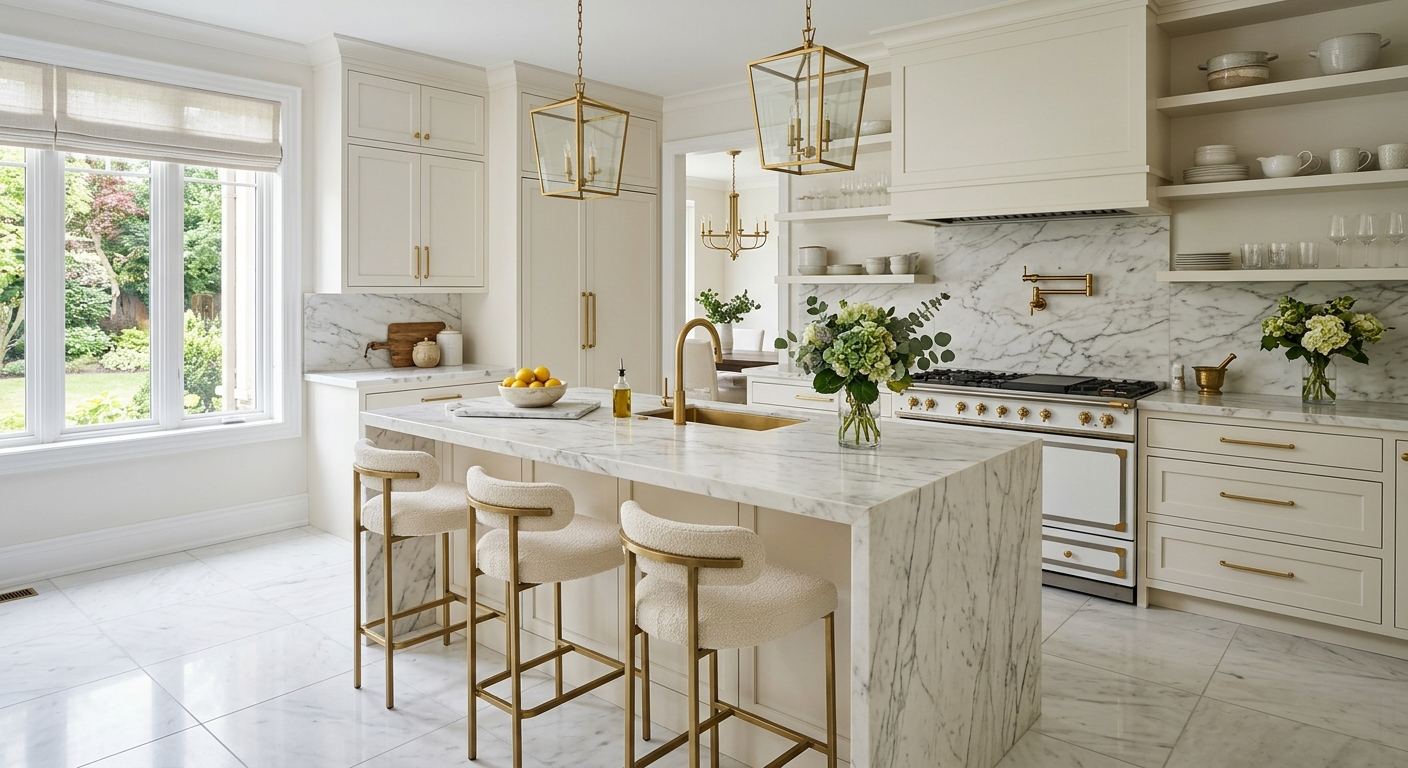
Kitchen renovation options and costs in Bay Street Corridor
Bay Street Corridor kitchen renovations are largely shaped by the local value of homes and what buyers expect when they walk in. In Toronto’s core market pocket, many homeowners treat the kitchen as a “sale feature,” so finish choices often land in the premium end of the spectrum even when the layout is unchanged. While the provided profile shows Bay Street Corridor’s population is 25,797 (Statistics Canada, 2021 Census), the broader Toronto economic region tends to correlate with higher spending on upgrades; that’s why you’ll see more quartz, natural stone, and upgraded appliance packages than you’d expect in lower-cost areas of the GTA. In practice, Toronto’s winter freeze–thaw cycle and humid summer swings don’t usually change cabinetry sizing, but they do increase the importance of properly installed caulking, ventilation, and moisture management—especially around sinks, dishwasher lines, and exterior-facing walls. They also affect scheduling: contractors are busiest in late spring through fall, so “rush” timelines typically add labour premium for matching crews, ordering lead times, and protecting finishes.
Demand is particularly strong in the Bay Street Corridor corridor-adjacent condo and older infill areas—think mid-rise conversions and pre-1970 homes—where kitchens are often smaller, dated, and worth improving for resale. If your goal is to update the look without opening up the walls, a cosmetic refresh keeps disruption low. If you want a true reset (new cabinets, counters, sink, and tile), a mid-range full renovation is the most common starting point; for major changes and bespoke millwork, high-end builds push the project budget quickly.
Here’s how the main renovation tiers usually stack up for Bay Street Corridor homeowners, based on Toronto-area pricing realities.
| Renovation Tier |
What's Included |
Typical Duration |
Price Range |
| Cosmetic refresh (paint, hardware, new appliances only) |
Cabinet paint/stain where applicable, new pulls/knobs, tile touch-ups as needed, replace appliances only (no plumbing/gas relocation) |
3–7 days |
$8,000–$18,000 |
| Mid-range full renovation (new cabinets, counters, sink, tile) |
Semi-custom or quality stock cabinets, quartz or laminate counters, sink swap, backsplash tile, flooring refresh/limited replacement, basic electrical upgrades for lighting |
3–6 weeks |
$25,000–$55,000 |
| High-end full renovation (custom cabinets, stone counters, island) |
Custom millwork, premium quartz or granite/natural stone, island with electrical, upgraded backsplash (often full-height), potential plumbing/gas relocation, enhanced lighting and finishes |
6–12 weeks |
$65,000–$90,000 |
| Cabinet refacing only (new doors + drawer fronts, same boxes) |
New doors/drawer fronts, matching laminate/quartz cap decisions depending on existing condition, hardware upgrades; generally no cabinet box removal |
1–3 weeks |
$10,000–$28,000 |
| Countertop swap only (laminate to quartz or stone) |
Remove existing tops, install new quartz/stone, new sink cut-outs as required, seam/edge finishing, optional backsplash tie-in materials |
5–10 business days |
$3,000–$15,000 |
| Backsplash tile installation only |
Ceramic/porcelain tile install, standard prep (grout/adhesive), sealing where needed, grout colour selection |
3–7 days |
$2,000–$10,000 |
Prices are estimates only and vary by project scope, site access and material selection.
What affects the price of kitchen renovation in Bay Street Corridor
Even when two homeowners describe the same “new kitchen” scope in Bay Street Corridor, quotes can swing by 30–50% across Toronto and Ontario. The main reason isn’t climate—it’s what’s chosen (finish tier) and what’s discovered once the demo begins (hidden plumbing/electrical conditions, subfloor/soffit issues, and ventilation needs). In higher-value economic pockets within the Toronto region, owners more often aim for quartz or natural stone and semi-custom cabinetry because the cost is easier to recover on resale; in more price-sensitive areas of the GTA, laminate tops and stock cabinets are common because they offer a stronger affordability-to-value balance. Across Bay Street Corridor, buyers tend to respond to “complete” looking kitchens—clean edges, good lighting, and durable surfaces—so contractors frequently recommend moving from mid-range into higher tiers when the layout or island is part of the plan.
Local housing stock also drives variability. Many older homes and condo suites have tighter rough-ins and older shutoffs, so a “simple” sink swap can become a plumbing access job once walls are opened. For example, if you’re staying in the mid-range full renovation band (often $25,000–$55,000), you can keep costs predictable by limiting layout changes and choosing a consistent cabinet tier. If you go into the $65,000–$90,000 high-end band, the biggest accelerant is usually not the countertop—it’s structural and service complexity: adding an island, moving a gas line, or relocating a drain path.
Concretely, three common Bay Street Corridor cost triggers are: (1) older supply lines that don’t align cleanly with modern shutoffs, (2) limited panel capacity for island lighting/under-cabinet LED runs, and (3) venting and make-up air concerns when range hoods are upgraded. The solution isn’t to guess—it’s to plan for inspections, itemised pricing, and a clear allowance for “unknowns” before demolition.
| Price Factor |
Why It Matters |
Cost Impact |
| Cabinet tier — stock vs. semi-custom vs. fully custom millwork |
Material grade, hardware quality, door styles, interior organisation, and fit/finish tolerances vary dramatically |
Can shift the project by roughly $8,000–$30,000+ depending on total cabinetry and whether boxes are reused |
| Countertop material — laminate vs. quartz vs. granite vs. stone |
Durability, edge/seam complexity, and fabrication cost drive labour and materials together |
Typical delta of $2,000–$10,000+ between laminate and premium stone for the same footprint |
| Layout change — wall removal, island add, plumbing/gas move |
Rough-in coordination and structural/service work adds trade time and inspection steps |
Often adds $5,000–$25,000+ regardless of cabinet tier |
| Appliance package tier — builder vs. mid-range vs. pro-grade |
Electrical/gas requirements, venting compatibility, finish longevity, and installation complexity |
Can add $1,500–$12,000+ to the total, especially with pro-grade ventilation |
| Flooring — refinish existing vs. full replacement |
Whether the subfloor is opened for underlayment/repairs; alignment issues after cabinet install |
Often $2,000–$10,000+ difference depending on removal and finish tier |
| Backsplash — ceramic tile vs. marble vs. full-height slab |
Surface preparation, material breakage rates, and whether slabs require specialised fabrication |
Usually $2,000–$10,000+, with marble/slabs trending higher |
| Electrical — new circuits for island, under-cabinet lighting |
Load planning, lighting circuits, GFCI/AFCI needs, and cable routing behind cabinets |
Commonly $800–$6,000+ depending on number of circuits and lighting layout |
| Permit fees and licensed trade requirements |
Licensed work and inspection overhead increase scheduling and administrative cost |
Often $500–$3,000+ in typical scenarios, higher when multiple permits are triggered |
Permits & regulations in Ontario
In Ontario, straightforward cabinet and countertop swaps generally don’t require permits. Replacing existing cabinets (without changing the rough-in locations), swapping laminate for quartz, and installing a new backsplash typically fall under normal renovation work that can be handled without formal municipal permitting. Where Bay Street Corridor homeowners get tripped up is when they change the services: moving plumbing supply/drain lines, relocating gas equipment (including stovetop/range locations or changing how a range hood vents), removing a load-bearing wall, or adding new electrical circuits for an island or additional lighting. Those scenarios typically require permits and licensed trades, plus inspections.
Step 1: before signing, ask your contractor to list exactly which items trigger permits in your scope—gas relocation, electrical circuit additions, structural changes, and any drain relocation. Step 2: verify the trades. For gas work, request proof the gas fitter is licensed, and confirm inspections are scheduled. For electrical work, request proof of a licensed electrician and ensure the plan includes the required inspection step. Step 3: confirm coverage. In Ontario, ask for a current certificate of insurance (liability) and evidence of WSIB coverage where applicable for the contractor and subcontractors. Finally, ask for documentation you can keep: licence numbers (or registry proof), clearance letters (if applicable), and a signed contract that clearly states which party pulls which permits.
Always confirm permit responsibility with the contractor before signing—it belongs in the written agreement, not in verbal assurances.
Cabinets, countertops and layout decisions in Bay Street Corridor
The three most consequential decisions in a Bay Street Corridor kitchen renovation are cabinet tier, countertop material, and whether you’ll change the layout. Cabinet tier affects how the kitchen “looks tight” at the edges and how well doors and drawers align over time. Stock cabinets usually install fastest and keep budgets tight, but fit/finish options are more limited. Semi-custom is the most popular Toronto-area balance: better door styles and more storage features without going fully bespoke. Custom cabinets deliver the best fit for uneven walls and unusual spaces common in older housing, but they’re the most expensive and require longer lead times.
Countertop material is your daily durability decision. Laminate is budget-friendly and quick to replace, while quartz is the Toronto market workhorse: stain-resistant, consistent colour, and easy maintenance. Granite/natural stone adds high-end visual variation, but you need to follow proper sealing and care. Butcher block can warm a space and performs well in kitchens where you’re actively using wood-friendly maintenance, though it requires more attention in humid seasons to avoid swelling at seams. Marble looks luxurious and bright, but it’s more sensitive to staining and etching.
Finally, layout changes justify their cost when they improve function—like making space for an island to improve workflow or opening an enclosed kitchen. But layout and rough-in work are where unpredictability lives. If your budget is targeting a mid-range full renovation (often $25,000–$55,000), you’ll typically get the best value by keeping plumbing and major service locations in place and prioritising cabinet and counter quality. In high-end builds ($65,000–$90,000), the added cost can be justified when an island or reconfigured traffic flow solves real space constraints that buyers notice immediately.
On Bay Street Corridor projects, I most often see the biggest value bump from upgrading to quartz and semi-custom cabinetry, while limiting “service moves” unless the space gain is clearly worth it.
| Option |
Durability |
Maintenance |
Best For |
Price Range |
| Stock cabinets (big-box) |
Good for normal household wear; durability depends on door material and hardware |
Low—wipe clean; avoid overloading organisers beyond rated weight |
Budget-first refreshes and faster timelines |
$8,000–$20,000 |
| Semi-custom cabinets (local dealer) |
Very good overall—better door stability and storage options |
Low to moderate; align with proper care for finishing and soft-close hardware |
Most Bay Street Corridor homeowners aiming for resale appeal |
$18,000–$45,000 |
| Custom cabinets (local millwork shop) |
Excellent—best tolerance for uneven walls and specialised layouts |
Low, but requires professional install and accurate levelling for smooth operation |
Complex spaces, custom sizes, and bespoke storage |
$35,000–$70,000 |
| Laminate countertop |
Moderate—can chip at edges; less impact-resistant than quartz/stone |
Low—avoid prolonged standing water at seams and use trivets |
Keeping costs down while updating the look |
$3,000–$7,000 |
| Quartz engineered countertop |
High—resists staining and everyday wear well |
Low—routine cleaner only; wipe spills promptly |
Busy households and Toronto-area resale expectations |
$6,000–$12,000 |
| Granite / natural stone countertop |
High—very durable surfaces; variation is part of the appeal |
Moderate—seal on schedule and use proper cleaners |
Premium look with character and long-term durability |
$8,000–$15,000 |
| Butcher block countertop |
Medium—strong for cutting but can dent and show wear |
Moderate—oil regularly and protect seams from moisture |
Homes where wood feel is a priority |
$5,000–$10,000 |
| Marble countertop |
Medium—beauty comes with softer surface behaviour |
Higher—requires careful cleaning and prompt spill management |
Low-traffic kitchens or buyers prioritising luxury appearance |
$10,000–$18,000 |
How to choose a kitchen renovation contractor in Bay Street Corridor
Choosing the right contractor in Bay Street Corridor is less about flashy photos and more about proof: Ontario licensing where relevant, liability insurance, and WSIB/WCB coverage. Start by asking for their current certificate of insurance (liability) and confirming the contractor’s WSIB/WCB status is in order—then ask the same for any subcontractors they plan to use. If gas or electrical work is in your scope, require the licensed trade credentials to be provided before scheduling. Don’t accept “we’re covered” as a substitute for documentation.
Next, get 2–3 itemised written quotes. You want labour and materials broken out by category (demo, carpentry/cabinet install, counter fabrication/installation, plumbing/electrical, tile and flooring, disposal). Avoid vague lump sums that don’t say what’s included—particularly disposal, site protection, and patch/paint scope. Pay attention to permits: ask whether permit pulling is included in the price or billed separately, and confirm which items trigger it. For timelines, get a start date and completion estimate in writing, including lead times for cabinets and countertops.
Warranty matters too. Ask for the workmanship warranty length and what it covers (often door alignment, water-related installation issues, and sealant performance). Also confirm product warranties from manufacturers and whether they transfer if you sell your home.
- Verify contractor licence/registration where applicable in Ontario and record the licence number.
- Request certificate of insurance and confirm coverage limits.
- Confirm WSIB/WCB coverage for the contractor and major subcontractors.
- Ask for itemised quotes (labour + materials), not just one overall total.
- Check exclusions: permit fees, disposal, dust control, patch/paint, and appliance hookups.
- Confirm countertop fabrication responsibility and lead time (template date matters).
- Confirm who sources cabinets and whether you’re paying deposit vs. milestone schedule.
- Ask how they protect floors, doorways, and existing finishes during demo.
- Read the scope for plumbing/gas/electrical tasks and whether licensed trades are included.
- Warranty: get workmanship length in writing and ask about coverage for defects.
- Payment schedule: never pay more than 10–15% upfront; holdback until substantial completion.
- Get start date and completion estimate, plus what happens if lead times slip.
Concrete red flags I regularly see with Bay Street Corridor kitchen contractors include: quotes that omit permits and then surprise you later; “no licensed trades” claims for gas/electrical tasks; refusing to provide insurance/WSIB documentation; deposits that exceed 10–15% without a clear milestone plan; and contracts that don’t list disposal, patch/paint, and appliance hookup scope.
Frequently asked questions — kitchen renovation in Bay Street Corridor
What's the best countertop material for a busy Bay Street Corridor kitchen?
For most busy Bay Street Corridor households, quartz is the practical sweet spot. It handles daily wear well, resists staining compared with many natural stones, and doesn’t demand the same sealing routine as granite. Laminate can work if you’re targeting a refresh budget, but it’s more prone to edge damage and doesn’t offer the same “premium” resale look buyers often expect in the Toronto market. If you’re comparing options inside a typical full kitchen renovation budget (often $25,000–$55,000 for mid-range), quartz helps you avoid future repairs while still keeping the project in a predictable tier. For high-traffic kitchens with active cooks and family use, quartz tends to deliver better long-term satisfaction than marble, which needs more careful maintenance to avoid etching and staining.
How do I add an island to my Bay Street Corridor kitchen?
Adding an island in Ontario usually starts with service planning. If the island requires new outlets, under-cabinet lighting, or a different venting setup for a range hood, you may trigger electrical work (and sometimes permits). If you’re moving or extending plumbing/drain lines for an island sink, that’s another major driver of cost and scheduling. Practically, the steps are: confirm space clearance and circulation, draft electrical and plumbing rough-in locations early, then order cabinet and countertop templates only after the rough-in is confirmed. In Bay Street Corridor, I commonly recommend islands be designed to reuse nearby service locations when possible—so you can stay closer to the mid-range band (for example, $25,000–$55,000 for many full renovations) unless the layout change truly unlocks a better traffic flow.
How much does a kitchen renovation cost in Bay Street Corridor?
In Bay Street Corridor, realistic full kitchen renovation budgets typically range from about $25,000–$90,000 depending on scope and finish tier. A cosmetic refresh can be much lower if you’re only updating paint/hardware and swapping appliances, but once you add new cabinets, countertops, sink, and tile, you’re usually in the mid-range full renovation territory (often $25,000–$55,000). High-end projects—custom cabinetry, premium stone countertops, and islands with additional plumbing/electrical—commonly move into $65,000–$90,000. Local timing also matters in Toronto: contractor availability and material lead times can push costs upward if you compress timelines. Because home values and buyer expectations are high in the core market, many homeowners invest a larger share into the kitchen finishes than they would further from the centre.
How long does a kitchen renovation take in Bay Street Corridor?
Timelines in Bay Street Corridor are usually driven by lead times for cabinets and countertops and by how much of the work involves licensed trades. A cosmetic refresh is often about 3–7 days. A mid-range full renovation commonly takes around 3–6 weeks when layout is mostly staying put and the cabinet/counter schedules align. High-end projects with custom millwork and an island can run 6–12 weeks, largely because custom pieces and premium stone fabrication require more coordination. If you’re changing plumbing/drain locations, adding new electrical circuits, or removing structural elements, plan for permit steps and inspections, which can add delays even when crews are ready. The best way to keep timing realistic is to lock your scope early, schedule templates promptly, and ask for a written start and completion estimate.
Quartz vs granite countertops — which is better?
“Better” depends on how you use your kitchen. Quartz is usually the top choice for busy Bay Street Corridor kitchens because it’s very consistent in look, resists staining well, and requires less routine care than natural stone. Granite is also durable and offers unique visual character, but it’s a natural product that typically needs sealing and proper cleaning habits to maintain performance. If you’re renovating within a mid-range full budget (often $25,000–$55,000), quartz frequently delivers excellent value because it upgrades the look without adding significant maintenance effort. If you’re aiming higher-end ($65,000–$90,000) and want the premium, one-of-a-kind stone pattern, granite can be a strong option—just budget time for correct sealing guidance from your installer and choose an installer who understands seam planning and edge finishes.
Should I reface or replace my cabinets?
Refacing is usually the right move when your existing cabinet boxes are sound, level, and structurally good—refacing replaces doors and drawer fronts while keeping the base frames. It’s typically faster and can keep costs lower than full replacement, especially if you want an updated look with minimal demolition. Replacement is better when boxes are damaged, poorly aligned, suffering from moisture issues, or when you want to change layout dimensions (like relocating appliance cut-outs, adding pull-outs where boxes can’t be retrofitted, or addressing uneven walls). In Bay Street Corridor, a refacing project often fits around $10,000–$28,000, while full mid-range renovations can run $25,000–$55,000 depending on scope. The practical approach: have your contractor assess box condition and ask whether reusing boxes will affect door alignment and long-term durability.