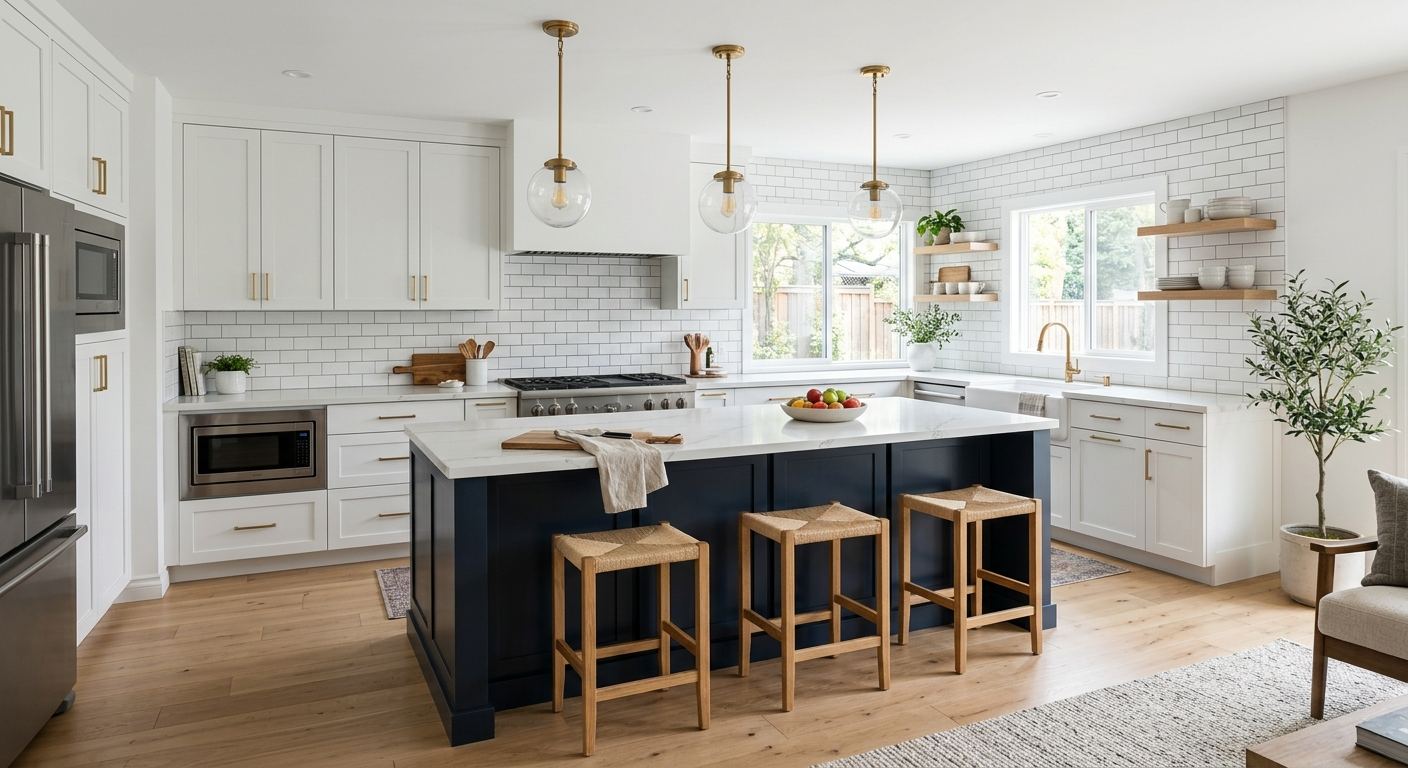
Kitchen renovation options and costs in Grand River South
In Grand River South, Ontario, kitchen renovation pricing tends to track what homeowners expect to get out of the space. With a 2021 population of 9,649 (Statistics Canada, 2021 Census), the area draws steady demand from buyers and homeowners who want kitchens that read “current” at resale. In the broader Toronto economic region, renovation budgets often rise and fall with local home values and household purchasing power, which influences finish selection more than any single weather pattern. In practice, many higher-value pockets in the GTA push owners toward quartz or natural stone and upgraded appliance packages, while more cost-conscious renos keep to laminate or good-quality alternatives.
Toronto-area climate and housing stock do still matter for budgeting—especially the way older homes handle moisture around exterior walls and how winters drive heavier heating cycles that can move materials slightly over time—but these effects usually show up in detailing (sealing, caulking, ventilation) rather than in the headline price. Contractor availability can also shift timing: during busier renovation months, labour scheduling may cost more if you need a fast turnaround for demolition, cabinet installation, and countertop templating.
Based on what we see in the neighbourhoods around Grand River South where semi-custom renos are popular—often the family-oriented pockets near the river—most homeowners start by choosing a cabinet tier, then lock in counters and layout. Once that foundation is set, the rest of the quote becomes more predictable. Use the price ranges below as your “backbone” before you compare detailed, itemised proposals.
| Renovation Tier |
What's Included |
Typical Duration |
Price Range |
| Cosmetic refresh (paint, hardware, new appliances only) |
Cabinet paint or refinishing, new hardware, appliance swap, light caulking/touch-ups, basic deep clean |
3–7 days |
$8,000–$18,000 |
| Mid-range full renovation (new cabinets, counters, sink, tile) |
New cabinets (stock or semi-custom), quartz or quality laminate counters, sink and faucet, backsplash tile, flooring refresh, basic plumbing tie-ins |
3–6 weeks |
$25,000–$55,000 |
| High-end full renovation (custom cabinets, stone counters, island) |
Fully custom millwork, premium quartz or stone (granite/other natural stone), island (often with electrical/plumbing), upgraded backsplash, designer fixtures, higher-end appliance package |
6–10 weeks |
$65,000–$90,000 |
| Cabinet refacing only (new doors + drawer fronts, same boxes) |
Door/drawer replacement, new veneer/face panels, new hardware, re-installation of existing boxes, optional new trim and filler adjustments |
1–2 weeks |
$8,000–$30,000 |
| Countertop swap only (laminate to quartz or stone) |
Template and install new counters, sink cut-outs as needed, basic caulking, haul-away of old laminate counters |
5–10 days |
$3,000–$15,000 |
| Backsplash tile installation only |
Surface prep, tile installation, grout/seal where needed, finishing trim and caulking |
3–7 days |
$2,000–$10,000 |
Prices are estimates only and vary by project scope, site access and material selection.
What affects the price of kitchen renovation in Grand River South
In Grand River South and across the Ontario market, two quotes for what looks like the “same kitchen” can still land 30–50% apart. The most common reasons are finish tier (how premium the cabinetry and countertops are), the amount of layout work, and how much electrical/plumbing is being moved—not the season or temperature alone. In higher-value Toronto-area pockets, homeowners more often choose upgrades like quartz or natural stone and semi-custom cabinetry because the renovation cost is easier to justify on resale; in more price-sensitive areas, laminate and stock cabinets keep budgets closer to the mid-range while still looking current.
Local home values and income shape expectations more than climate. When buyers in the Toronto economic region see quartz counters, soft-close cabinetry, and a cohesive backsplash, they expect it to be “turn-key,” which pushes projects toward the $80k+ band for larger builds. Conversely, when the goal is resale but within a tighter budget, you’ll see many projects cluster closer to the $25,000–$55,000 range using durable surfaces and a selective approach to layout changes.
Here are concrete Grand River South examples that reliably move the cost up or down. First, an island addition often triggers new electrical runs and sometimes venting/ducting considerations, which can be more expensive than the countertop itself. Second, older homes near the river can have uneven wall planes; correcting that for tile backsplashes and cabinet alignment adds labour even if the materials stay mid-range. Third, if your existing cabinet boxes are out of level or damaged by moisture, cabinet refacing may become a full cabinet replacement rather than a true “doors-only” refresh—changing the budget by thousands.
The takeaway: finish upgrades raise the baseline, but layout and trade scope determine the uncertainty. That’s why the best estimates start with measurements, a site walk, and a clear plan for plumbing, gas (if applicable), and electrical before anyone locks a price.
| Price Factor |
Why It Matters |
Cost Impact |
| Cabinet tier — stock vs. semi-custom vs. fully custom millwork |
Materials, door styles, soft-close hardware, interior configurations, and lead times vary significantly. |
$8,000–$35,000 (cabinet portion alone, depending on tier) |
| Countertop material — laminate vs. quartz vs. granite vs. stone |
Fabrication complexity, edge profiles, and material cost drive the total; premium stone often needs more templates and finishing. |
$3,000–$15,000 (typical installed range) |
| Layout change — wall removal, island add, plumbing/gas move |
Moving services reshapes labour scope and may require additional permits and inspections. |
$5,000–$25,000 (wide swing based on work required) |
| Appliance package tier — builder vs. mid-range vs. pro-grade |
Cooktops, ranges, ventilation, and dishwashers vary in power, fit, and install requirements. |
$2,500–$12,000 |
| Flooring — refinish existing vs. full replacement |
Kitchen renovations frequently damage flooring; matching grades, subfloor condition, and waterproofing affect scope. |
$1,500–$8,000 |
| Backsplash — ceramic tile vs. marble vs. full-height slab |
Large-format tile, natural stone, and full-height walls demand tighter prep and more material wastage. |
$2,000–$10,000 |
| Electrical — new circuits for island, under-cabinet lighting |
New load requirements, pot lights/LED runs, and code-compliant placements can expand labour and inspection time. |
$1,500–$9,000 |
| Permit fees and licensed trade requirements |
Whenever plumbing/drain moves, gas work relocates, or new electrical circuits are added, the process adds cost and scheduling. |
$500–$4,000 |
Permits & regulations in Ontario
In Ontario, many kitchen updates are straightforward from a permitting standpoint, but several common “upgrade paths” trigger permits and licensed trades. Cabinet and countertop swaps typically do not require a permit because you’re replacing finished surfaces without changing core systems. However, if you’re moving plumbing supply or drain lines, relocating a gas stove or any gas-related components (including certain range hood situations), removing a load-bearing wall, or adding electrical circuits (for example, dedicated circuits for an island or new under-cabinet lighting runs), you should expect permits and inspections. Gas work must be done by a licensed gas fitter, and electrical work by a licensed electrician; both trades must follow code and arrange required inspections.
For a homeowner in Grand River South, the verification process should happen before you sign. Step one: ask the contractor for the exact permit responsibility—does your contractor pull permits, or do you? Step two: confirm licensing using Ontario online registries where trades are searchable, and request licence numbers in the contract. Step three: ask for current certificates of insurance (liability) and WSIB/WCB coverage clearance evidence. You should see the clearance letter or equivalent proof included with the proposal package, not provided after work starts.
Finally, keep it in writing: job scope, who pulls permits, inspection milestones, and what’s excluded. When responsibilities are clear upfront, cost surprises drop—especially on kitchens that involve service relocations.
Cabinets, countertops and layout decisions in Grand River South
Three decisions shape almost every Grand River South kitchen renovation budget and buyer impression: (1) cabinet tier, (2) countertop material, and (3) whether you change the layout. Cabinet tier affects speed and cost—stock cabinets are fastest and cheapest, semi-custom is the most popular mid-range because it balances flexibility with price, and custom cabinets create the tightest fit but carry the highest bill. Countertop choice then locks in the “look” and durability. Laminate can be cost-effective, quartz provides consistent appearance with low maintenance, and granite/natural stone adds natural variation and upscale appeal.
Layout is where Toronto-area kitchens get the most scrutiny in resale. If you’re removing a wall for open-concept flow, adding an island for seating, or relocating plumbing/gas, the decision is justified when it delivers usable space, better traffic flow, or a layout that matches how modern buyers live. But service moves are also the most unpredictable portion of a quote: even a small sink relocation can involve drain slope changes and rework. In older homes common around the region’s established neighbourhoods, walls and floors can be slightly out of square; good contractors plan shimming and subfloor corrections so tile and cabinet reveals don’t look off.
A practical dollar example: if you’re choosing between laminate and quartz, you might add a few thousand dollars for quartz. That upgrade is typically “worth it” when you’re already in the mid-range renovation tier ($25,000–$55,000) and want the counters to read premium without buying fully custom millwork. If you’re staying in a cosmetic refresh approach, however, spending a large portion of the budget on quartz while keeping cabinets dated usually doesn’t deliver the best resale payoff.
Because winters in Ontario run long and indoor heating cycles are steady, it’s also smart to prioritise good ventilation and proper sealing around sinks and backsplash edges. That helps protect cabinet bases and keeps finish lines clean over time.
| Option |
Durability |
Maintenance |
Best For |
Price Range |
| Stock cabinets (big-box) |
Good durability with standard materials; limited custom sizing can expose gaps if walls aren’t true. |
Low maintenance; occasional hardware tightening; caulking where trim meets wall. |
Faster refreshes, buyers who prioritise budget and quick timelines |
$8,000–$18,000 |
| Semi-custom cabinets (local dealer) |
Very solid durability; better range of sizes and interior options for real-world spaces. |
Low maintenance; hinges and soft-close components stay smooth with normal care. |
Most homeowners targeting a strong resale look in the mid-range |
$18,000–$35,000 |
| Custom cabinets (local millwork shop) |
Highest durability when built to the room; best for irregular layouts and ceiling heights. |
Low-to-moderate maintenance; quality hardware and finish care recommended. |
High-end renovations and unique storage needs |
$35,000–$60,000+ |
| Laminate countertop |
Resists daily use, but can be more sensitive to heat and impact; seams need care. |
Easy daily cleaning; protect from heat and avoid harsh abrasives at seams. |
Budget-conscious updates while keeping the kitchen functional |
$3,000–$7,000 |
| Quartz engineered countertop |
Highly durable and consistent; excellent resistance to staining from typical household use. |
Minimal maintenance; wipe clean, avoid extreme heat directly on surface. |
Busy households and resale-driven projects that still want low fuss |
$6,000–$12,000 |
| Granite / natural stone countertop |
Very durable with natural variation; good scratch resistance but can require careful sealing depending on the stone. |
Periodic sealing may be required; clean spills promptly and use cutting boards. |
Premium look seekers who want a unique stone pattern |
$8,000–$15,000 |
| Butcher block countertop |
Durable for everyday prep, but susceptible to moisture if not properly sealed. |
Requires oiling/conditioning and consistent drying around the sink. |
Warm, traditional styles and households that actually cook at home |
$4,000–$10,000 |
| Marble countertop |
Elegant and durable, but more prone to etching/staining from acidic foods and beverages. |
Higher maintenance; use proper cleaners and promptly wipe acidic spills. |
Statement kitchens where homeowners want a luxury surface |
$10,000–$18,000+ |
How to choose a kitchen renovation contractor in Grand River South
Choosing the right kitchen contractor in Grand River South comes down to proof, not promises. First, verify Ontario licensing: ask for the contractor’s licence information where applicable and confirm that any licensed trades on your job—electrician and gas fitter if needed—are licensed for the work they’re doing. Next, confirm liability insurance so you’re protected if there’s property damage, and request WSIB/WCB clearance evidence so you aren’t exposed to worker coverage gaps. A reputable contractor will provide these documents as part of the proposal package, not as an afterthought.
Then get 2–3 itemised written quotes. Look for a breakdown that separates labour and materials: cabinet supply/installation, countertop fabrication/install, tile and backsplash labour, plumbing/electrical allowances (if any), disposal, and contingency for site conditions. Avoid “lump sum” only pricing when the scope includes service relocations—those projects can change quickly if walls are out of square or concealed issues are found.
Read the scope carefully for what’s excluded: demolition finish-up, permit pull responsibility, dust control, haul-away and disposal, and whether flooring is patched/topped up after cabinet install. Warranty matters too: confirm the workmanship warranty length, what’s covered (labour only vs. labour plus materials), product/manufacturer warranties, and whether coverage transfers if you sell your home.
For payment, never pay more than about 10–15% upfront. Use a holdback until the kitchen is complete and any punch-list items are corrected. Finally, lock down the timeline: request a start date and completion estimate in writing, including key milestones like cabinet measurement, countertop templating, and final install.
- Confirm insurance: request liability certificate and expiry dates.
- Confirm WSIB/WCB clearance evidence before work begins.
- Require licence numbers for trades that will do electrical or gas-related work.
- Get 2–3 quotes that are itemised, not just one total number.
- Ensure permit responsibility is stated in the contract (who pulls, who pays).
- Ask whether disposal/haul-away is included and where debris goes.
- Clarify who handles site prep: drywall repair, patching, and subfloor corrections.
- Confirm cabinet lead times and countertop templating dates.
- Define warranty terms: workmanship coverage length and what triggers repairs.
- Use a clear payment schedule with 10–15% maximum upfront and a holdback.
- Require a detailed scope of exclusions (what the contractor will not do).
- Get a written timeline with milestones and a completion date estimate.
Common red flags we see in Grand River South include: quoted “low numbers” that exclude permits and licensed-trade work, missing insurance or WSIB/WCB documents, no itemised breakdown for cabinets/counters/tile labour, vague warranty language, and contractors who push for large upfront payments (beyond roughly 10–15%).
Frequently asked questions — kitchen renovation in Grand River South
What order do kitchen renovation steps happen in?
In Grand River South, a kitchen renovation usually starts with design finalisation and measurements, then demolition, followed by rough-ins and trade work before anything is finished. Typically, cabinets are ordered after measurements, but before countertop templating. If you’re changing plumbing or adding electrical for an island, that rough stage is done after demolition and before drywall is closed up. Next comes cabinet installation, then countertop templating and fabrication, followed by backsplash tile installation and final trim/finishing. Appliances are installed at the end so you don’t risk damage during work. This sequencing helps prevent rework costs—especially if walls aren’t square or if service lines need adjustments. If you’re aiming for a mid-range full renovation budget like $25,000–$55,000, following a proper sequence is key to keeping labour predictable and avoiding delays.
Can I live at home during a kitchen renovation in Grand River South?
Often, yes—many homeowners in Ontario do stay in their homes during a kitchen renovation, but it depends on scope. A cosmetic refresh (paint, hardware, and new appliances only) is usually the easiest to manage with normal daily routines. For full renovations, you can typically live at home if you set up a temporary cooking area (microwave, kettle, small cooktop where allowed) and protect the rest of the house from dust. If plumbing or gas is being moved, you’ll want to plan for partial kitchen downtime while connections are capped and inspected. A high-end full renovation can run longer, commonly $65,000–$90,000, and may require more disruption because island builds and finish installs take time. Your contractor should discuss dust control, schedule milestones, and when your sink and appliances will be back online. In older Grand River South homes, dust and access challenges can be more noticeable due to tighter layouts.
Should I renovate my kitchen before selling in Grand River South?
Usually, you renovate before selling only if the kitchen is actively hurting buyer appeal or inspection outcomes. In Grand River South and the wider Toronto economic region, many buyers expect modern cabinetry lines, clean backsplash work, and durable countertops—especially when homes are listed at higher price points. That’s why projects with quartz and well-installed cabinetry often support a stronger “first look,” while minor updates can still help if your layout is already functional. A realistic approach is to target a mid-range full renovation band like $25,000–$55,000 when you can improve both appearance and day-to-day usability without overbuilding. If you’re considering an island or structural changes that push toward the $80k+ territory, weigh whether the buyer profile in your pocket will value that work. Also consider timing: permit lead times and countertop templating can stretch schedules, so plan renovations to finish before listing photos and open house prep.
What's the most popular kitchen style in Grand River South right now?
Right now, homeowners in Grand River South most often ask for clean, modern styles: shaker or shaker-like cabinet fronts, neutral colours (whites, warm greys, and greige), and a simple backsplash that doesn’t fight the countertops. In mid-range renos, semi-custom cabinetry paired with quartz is a common “sweet spot” because it looks cohesive and feels premium without the full custom price. In higher-end projects, you’ll see more dramatic stone looks, bigger islands, and upgraded hardware finishes. The Toronto market tends to reward kitchens that photograph well and feel uncluttered, so layout decisions—like improving circulation and adding seating—matter as much as the aesthetic. If you want an easy baseline, start with a cabinet tier that matches your budget and then choose a countertop and backsplash that complement it rather than competing. That’s what keeps projects aligned with budgets like $25,000–$55,000 for many full renovations.
How do I know if I need to update my kitchen plumbing in Grand River South?
You may need plumbing updates if you’re moving fixtures (sink location, dishwasher position, or adding a second water line), if you notice leaks, or if your current piping is older and showing signs of wear. In older Ontario homes, drain routing can be difficult, and small changes to slope or venting requirements can increase labour even when cabinets and counters are “easy.” Another common trigger is a kitchen layout change that involves an island with a sink—this usually requires reworking supply and drain lines, and it’s often where inspection requirements come in. If you’re keeping the sink in the same location and only swapping countertops and cabinets, you can often avoid major plumbing work. A good contractor will evaluate existing shut-offs, supply lines, shutoff condition, and under-sink material before final pricing. When plumbing work is part of the scope, it affects timeline and cost more than selecting quartz versus laminate.
What is the difference between a galley and open-concept kitchen?
A galley kitchen is a narrow, corridor-style layout with cabinets on two opposing sides—typically efficient for smaller spaces but less ideal for multiple people working at once if there’s limited clearance. An open-concept kitchen removes barriers so the kitchen flows into the living or dining area, making the space feel larger and improving sightlines. In Grand River South, homeowners choosing open-concept renovations usually do it for lifestyle and resale appeal: better entertaining flow and more “public” kitchen space. The trade-off is that open-concept work can involve removing a wall, which is a major scope change and may require permits, licensed trades, and more careful structural planning. If you’re staying within a mid-range budget such as $25,000–$55,000, many owners still achieve a roomy feel with smart storage, lighting, and less dramatic layout adjustments rather than full wall removal. A contractor should explain what’s structurally possible and how services will be rerouted.