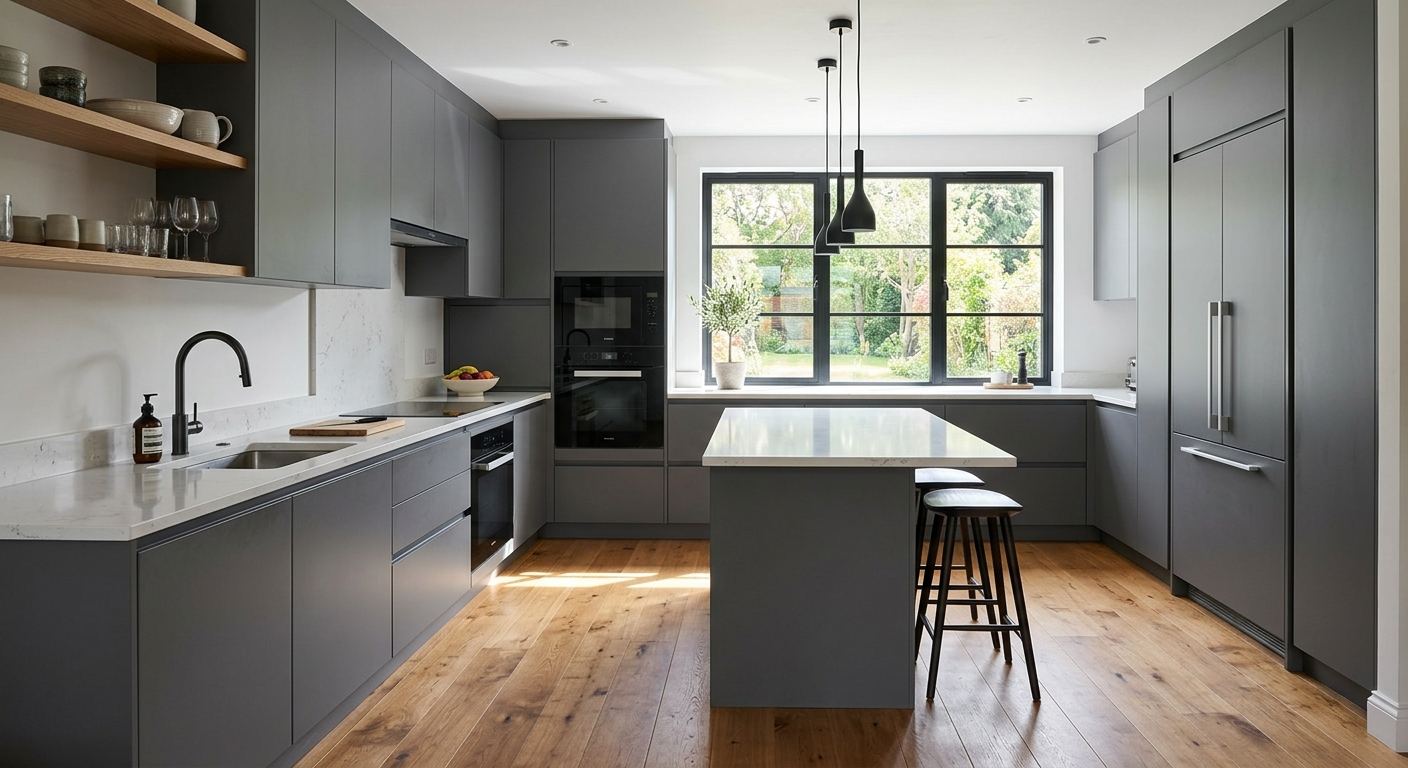
Kitchen renovation options and costs in Rockcliffe-Smythe
Renovating a kitchen in Rockcliffe-Smythe means balancing what today’s buyers expect with what you can realistically do inside a mature, mostly established neighbourhood. With a population of 22,246 (Statistics Canada, 2021 Census), the area sits in a broader Toronto market where upgrades are common and expectations run higher than in many smaller Ontario cities. In the Toronto economic region, finish choices often track household purchasing power, and homeowners frequently lean toward premium-looking surfaces—especially where they’re targeting resale. That’s also why many projects are planned as a share of home value: in higher-priced Toronto pockets, it’s not unusual to see budgets that effectively reflect roughly 8–15% of the property value when owners go custom.
Unlike a region where winter weather directly drives construction logistics, Toronto-area costs are shaped more by market demand and availability of skilled trades than by “climate severity.” That said, kitchen renovations still face practical winter and shoulder-season realities: wet basements, indoor drying time after demo, and scheduling for electrical and plumbing inspections. In Rockcliffe-Smythe, labour demand is especially strong around the Lansdowne/Annex-adjacent corridor, where older housing stock and lots of renovation-minded homeowners keep cabinet and countertop installers booked.
If you’re comparing contractor quotes, the quickest way to de-risk the process is to match your scope to a clear renovation tier—then price materials and labour inside that tier. Use the table below as your backbone, and we’ll talk next about the factors that make quotes swing across the GTA.
| Renovation Tier |
What's Included |
Typical Duration |
Price Range |
| Cosmetic refresh (paint, hardware, new appliances only) |
Paint (cabinet repaint if selected), new cabinet hardware, appliance swap, basic caulking/trim touches |
5–10 working days |
$6,000–$18,000 |
| Mid-range full renovation (new cabinets, counters, sink, tile) |
Semi-custom or stock cabinetry, quartz or laminate counters, sink and faucet, backsplash tile, install only (no major structural changes) |
3–6 weeks |
$35,000–$65,000 |
| High-end full renovation (custom cabinets, stone counters, island) |
Fully custom millwork, premium stone/quartz, island with upgraded electrical, upgraded tile/backsplash, lighting and finishes |
6–12 weeks |
$75,000–$95,000 |
| Cabinet refacing only (new doors + drawer fronts, same boxes) |
Refacing doors/drawers, new hardware, optional repaint of frames, countertop not included (unless stated) |
2–4 weeks |
$12,000–$28,000 |
| Countertop swap only (laminate to quartz or stone) |
Remove old top, install new quartz or stone, sink/cooktop cut-outs where applicable (no cabinetry changes) |
1–2 weeks |
$6,000–$15,000 |
| Backsplash tile installation only |
Demo and prep of backsplash area, tile supply and installation, new caulking, grout and finish detailing |
3–7 working days |
$2,000–$9,000 |
Prices are estimates only and vary by project scope, site access and material selection.
What affects the price of kitchen renovation in Rockcliffe-Smythe
In Rockcliffe-Smythe and across the Toronto economic region, quotes for what looks like the “same kitchen” can vary by 30–50% because the scope is rarely identical. Two contractors may both say “new cabinets and counters,” but one quote might include electrical work for an island, plumbing adjustments, better insulation and drywall, and proper disposal—while another may exclude them. Finish tier is the main cost driver, but the big swings also come from layout risk: removing a wall, adding an island, or moving a gas line adds hidden trades time no matter what material you choose.
Home values and income influence finish defaults more than weather does. In higher-value Toronto pockets, homeowners more often select quartz or natural stone and semi-custom cabinetry because the upgrade is easier to defend on resale. In more price-sensitive parts of the region, laminate tops and stock or refaced cabinets remain popular because they balance aesthetics with a lower total spend. Either way, a realistic mid-range renovation often lands in the $25,000–$90,000 full-kitchen band, with smaller “work package” projects like cabinet installation/refacing and countertops sitting in their own sub-ranges.
Concrete Rockcliffe-Smythe examples that raise or lower cost include: (1) older homes with out-of-date rough-in plumbing that may require supply line or shutoff upgrades during a sink change; (2) tighter kitchen footprints where an island addition forces ceiling soffit or duct coordination, extending schedule and drywall finishing; and (3) variable subfloor flatness, which can increase labour for tile underlay and cabinet levelling. Those are the reasons you’ll often see the same countertop choice cost different amounts—if your installer has to correct the base.
| Price Factor |
Why It Matters |
Cost Impact |
| Cabinet tier — stock vs. semi-custom vs. fully custom millwork |
Higher tiers increase material cost, build accuracy, and custom options (hardware-ready drawers, internal organizers) |
Typically 20–50% of the cabinet portion of your budget |
| Countertop material — laminate vs. quartz vs. granite vs. stone |
Material cost and fabrication difficulty drive the difference, along with edge profiles and backsplash integration |
Can shift your overall kitchen by ~5–25% |
| Layout change — wall removal, island add, plumbing/gas move |
Creates unpredictable framing, electrical, plumbing, and coordination work beyond “swap and install” |
Often the single biggest swing factor (up to 20–40% total) |
| Appliance package tier — builder vs. mid-range vs. pro-grade |
Voltage, venting requirements, and trim kits can change labour and material allowances |
Usually 3–15% depending on the package |
| Flooring — refinish existing vs. full replacement |
Cabinet install needs a stable surface; stairs/thresholds and baseboard changes can add drywall and trim |
Can add 2–12% to the overall scope |
| Backsplash — ceramic tile vs. marble vs. full-height slab |
Premium stone increases cutting complexity and substrate prep requirements |
Often $2,000–$10,000 depending on finish |
| Electrical — new circuits for island, under-cabinet lighting |
More fixtures means more rough-in time and inspection scheduling |
Commonly $1,500–$6,000+ depending on changes |
| Permit fees and licensed trade requirements |
Major plumbing, gas relocation, load-bearing changes, and added electrical often trigger permitting and inspections |
May add a few thousand dollars and affect timeline |
Permits & regulations in Ontario
In Ontario, some kitchen changes are straightforward from a permitting standpoint, but others require formal permits and licensed trades. Generally, cabinet and countertop swaps (for example, replacing uppers/lowers or installing new quartz over existing cabinet boxes) typically do not require a permit. However, if you move plumbing supply or drain lines, relocate gas work (stove/range locations or gas range modifications), remove a load-bearing wall, or add new electrical circuits (common with island outlets and under-cabinet lighting), you should expect permits and inspections.
For homeowners in Rockcliffe-Smythe, the best practical approach is to verify the work scope before anyone starts. Step 1: ask your contractor to list each task that triggers licensing—gas fitter work must be done by a licensed gas fitter, and electrical work must be done by a licensed electrician. Step 2: confirm who is pulling the permit and whether it’s included in the quoted price. In the contract, the permit responsibility should be spelled out clearly. Step 3: review documentation before deposit and again before rough-in—ask for certificate of insurance (liability), proof of WSIB/WCB coverage where applicable, and any required clearance letters or inspection evidence.
Do not assume: even if the kitchen “looks cosmetic,” moving a sink, adding a vent hood, or changing the outlet plan can turn a no-permit renovation into a permit-required project. Get it in writing.
Cabinets, countertops and layout decisions in Rockcliffe-Smythe
When you’re planning a kitchen renovation in Rockcliffe-Smythe, focus on the three most consequential decisions: (1) cabinet tier, (2) countertop material, and (3) layout changes. In the Toronto resale market, these choices largely determine both your daily usability and your buyer appeal at the next sale. Toronto-area buyers often expect kitchens to look cohesive and “finished”—that’s why semi-custom cabinetry and quartz-like surfaces are common mid-range preferences, while higher-value homes tend to justify custom millwork and stone.
Cabinet tier is the backbone. Stock cabinets are the fastest and cheapest because they’re built to standard sizes and lead times. Semi-custom cabinets are the most popular mid-range approach because you get better sizing and more interior options without fully custom pricing. Custom cabinets offer the best fit and distinctive storage layouts, but they’re where budgets move quickly—especially if you’re adding an island or changing the wall-to-wall layout. For counters, laminate is durable for many households but lacks the “premium” look buyers associate with quartz or stone. Quartz engineered countertops provide a strong balance of stain resistance and low maintenance, while granite and natural stone add authentic character and can justify higher resale expectations when properly sealed and maintained.
Layout changes are where costs can jump unpredictably. Adding an island often pays off if it creates real workflow (clearances for a second cook, seating that doesn’t crowd traffic, and correct outlet placement). If you’re moving plumbing or gas, it can quickly push a project beyond a simple $35,000–$65,000 mid-range renovation into the $75,000–$95,000 high-end band. A concrete example: swapping from laminate to quartz may add several thousand dollars, but you’ll feel that value every day and in photos—whereas changing the plumbing route behind a new island can add more labour and materials than the countertop upgrade.
Toronto’s housing stock also plays a role. In older homes, uneven subfloors and legacy rough-ins can make “fast installs” slower—so the best plan is one that pairs the right cabinet system with correct levelling, not one that assumes everything is already square.
| Option |
Durability |
Maintenance |
Best For |
Price Range |
| Stock cabinets (big-box) |
Solid for typical daily use; limited customization |
Low effort; depends on finish quality and hardware |
Budget-conscious upgrades and quicker timelines |
$8,000–$22,000 |
| Semi-custom cabinets (local dealer) |
Good everyday durability with better fit and options |
Low effort with proper cleaning and soft-close care |
Most Rockcliffe-Smythe homeowners targeting resale appeal |
$15,000–$35,000 |
| Custom cabinets (local millwork shop) |
High durability with precise build and tailored storage |
Low effort, but quality hinges on craftsmanship and materials |
Unique layouts, imperfect walls, premium finish expectations |
$30,000–$60,000 |
| Laminate countertop |
Good for moderate wear; edges are the weak point |
Easy daily cleaning; avoid prolonged heat exposure |
Best bang-for-buck refreshes |
$3,000–$6,500 |
| Quartz engineered countertop |
Very durable against stains; resists day-to-day abuse |
Low maintenance; typically no sealing required |
Busy kitchens and a premium look that photographs well |
$6,000–$12,000 |
| Granite / natural stone countertop |
High durability; performance varies by stone type |
Usually needs periodic sealing; wipe spills promptly |
Homeowners who want natural variation and character |
$8,000–$15,000 |
| Butcher block countertop |
Durable if maintained; can scratch and scorch |
Requires regular oiling and protective habits |
Warm, traditional look and light cooking styles |
$5,000–$10,000 |
| Marble countertop |
Elegant but more susceptible to etching and staining |
Needs careful maintenance and quick spill response |
Premium aesthetic for lower-spill households |
$10,000–$18,000 |
How to choose a kitchen renovation contractor in Rockcliffe-Smythe
Choosing the right contractor in Rockcliffe-Smythe comes down to proof: Ontario licensing, proper insurance, and clear written scope. Start with licensing checks—confirm the trades you’ll need (like a licensed electrician for electrical and a licensed gas fitter for gas modifications). Then verify liability insurance with your contractor’s certificate of insurance, and ask for evidence of WSIB/WCB coverage where applicable so you’re not exposed if a worker is injured on your site.
Next, require 2–3 itemised written quotes rather than one lump-sum number. The best quotes break out labour and materials separately (cabinet supply, installation labour, countertop fabrication and install, tile labour, electrical and plumbing allowances, disposal, and drywall/paint if included). Read exclusions line-by-line: is the permit pull included, who pays for municipal fees, and is demolition/disposal part of the scope? Also confirm whether your quote includes electrical rough-in for under-cabinet lights or island receptacles if you’re planning them.
Warranty matters in a kitchen because failures show up fast. Ask for a workmanship warranty length, confirm manufacturer warranties on cabinets and countertops, and clarify whether warranties are transferable to future owners (important for resale in Toronto). For payment, keep deposits conservative—never more than 10–15% upfront—then request a holdback until the job is complete and inspected. Finally, ask for a written start date and a completion estimate, and ensure the schedule accounts for inspection lead times when permits are required.
- Provide Ontario licence details for the relevant trades (electrician/gas fitter) where your scope requires them.
- Share a current certificate of liability insurance.
- Confirm WSIB/WCB coverage evidence for workers working at your address.
- Give itemised quotes: labour, materials, permits, disposal, and any allowances.
- State who pulls permits and whether permit fees are included.
- Include a demo/disposal line item (dump fees and haul-away).
- Clarify what’s excluded: floor refinishing, drywall patching, paint, and trim caulking.
- Confirm product lead times for cabinets and slab fabrication; add contingencies for stock shortages.
- Provide start date and completion timeframe in writing.
- Ask how changes are priced during the project (change-order process in writing).
- Review warranty terms: workmanship duration and who covers what.
- Set payment milestones: keep upfront deposits to 10–15% and hold back until close-out.
In Rockcliffe-Smythe, a few red flags show up repeatedly: vague “all-in” numbers with no breakdown, promises of “no permit required” when you’re changing gas/plumbing/electrical, missing or outdated insurance/WSIB paperwork, workmanship warranties that are shorter than the cabinet/counter warranty or not clearly documented, and a payment schedule that asks for more than 10–15% upfront without a defined scope.
Frequently asked questions — kitchen renovation in Rockcliffe-Smythe
What's the best countertop material for a busy Rockcliffe-Smythe kitchen?
For most busy households in Rockcliffe-Smythe, quartz is the practical “best overall” pick: it resists staining better than many natural options and typically needs minimal maintenance, which matters when you’re cleaning frequently after cooking. In a Toronto resale market, quartz also delivers a consistent, modern look that buyers recognize quickly. If you want maximum heat tolerance and natural variation, granite is strong but usually requires periodic sealing and more attentive care. If you’re trying to stay within the kitchen-renovation backbone budget (often $25,000–$90,000 for a full project), many homeowners choose quartz because it’s easier to defend than laminate when the kitchen becomes the focal point.
How do I add an island to my Rockcliffe-Smythe kitchen?
Add a kitchen island by starting with clearance and workflow, then checking rough-in requirements before you order cabinets. In many Rockcliffe-Smythe homes, it’s not just carpentry: you’ll likely need electrical planning for island outlets (and often under-cabinet task lighting). If you’re moving plumbing or a gas line for a sink or cooktop, that’s where permitting and licensed trades come into play in Ontario. Get a contractor to show you the outlet plan, appliance cut-outs, and how the island base aligns with the existing subfloor. Budget-wise, an island can be a major driver: it commonly pushes projects upward within the $35,000–$65,000 mid-range into the $75,000–$95,000 high-end band when plumbing/gas and premium finishes are involved.
How much does a kitchen renovation cost in Rockcliffe-Smythe?
For Rockcliffe-Smythe homeowners, a realistic full-kitchen renovation budget typically falls in the $25,000–$90,000 range depending on cabinet tier, countertop choice, and whether you change the layout. Cosmetic refreshes (paint, hardware, and new appliances only) can be far less, often around $6,000–$18,000. If you’re keeping the layout and focusing on materials, mid-range full renovations commonly land around $35,000–$65,000, especially with semi-custom cabinetry and quartz or laminate counters. High-end builds with custom millwork, stone counters, and an island with upgrades often reach $80,000+ in the GTA. Your contractor’s quote should itemize cabinets, counters, labour, and any permit-driven trades so you can see what’s driving the total.
How long does a kitchen renovation take in Rockcliffe-Smythe?
Timing in Ontario is usually driven by material lead times (especially cabinets and slab fabrication) and the permitting/inspection schedule when plumbing, gas, or electrical work changes. For a cosmetic refresh, plan about 5–10 working days. A mid-range full renovation is often 3–6 weeks if items are in stock and the layout is mostly unchanged. If you’re doing a high-end renovation with custom cabinets, stone, and an island, 6–12 weeks is more realistic, particularly when trades coordination and inspections add downtime. If your kitchen has older rough-ins—common in established Toronto neighbourhoods—planning extra time for troubleshooting and drywall/finish touch-ups can prevent surprises. Always get a written start date, completion estimate, and a schedule that accounts for inspections where required.
Quartz vs granite countertops — which is better?
Quartz is usually the better “low-maintenance” choice for a busy Rockcliffe-Smythe kitchen because it’s engineered to resist stains more consistently and typically doesn’t require regular sealing. Granite can be extremely durable and beautiful, with natural variation that many homeowners love, but it usually needs periodic sealing and prompt spill care to keep it performing well. In a practical trade-off, quartz often wins for everyday usability and predictable upkeep; granite wins for natural look and the uniqueness of each slab. If you’re choosing within a renovation budget (for example, a full kitchen commonly in the $25,000–$90,000 range), quartz often gives you a premium look without the extra maintenance routine and can be easier to spec with reliable lead times.
Should I reface or replace my cabinets?
Refacing is a strong option when your existing cabinet boxes are solid and the layout works: you can often achieve a fresh look at a lower cost by replacing doors and drawer fronts, typically in the $12,000–$28,000 range. Replacement is usually better when boxes are damaged, the frame is out of square, or you want major internal storage changes and a fully updated configuration. In Rockcliffe-Smythe, where many homes are older, assess the condition of hinges, box stability, and water damage near sinks before deciding. If you’re also upgrading countertops, you can sometimes pair cabinet refacing with a countertop swap, which keeps you closer to a smaller “work package” budget than a full cabinet replacement. A good contractor should help you decide based on the condition of what you already have, not just the cheapest path to sell.