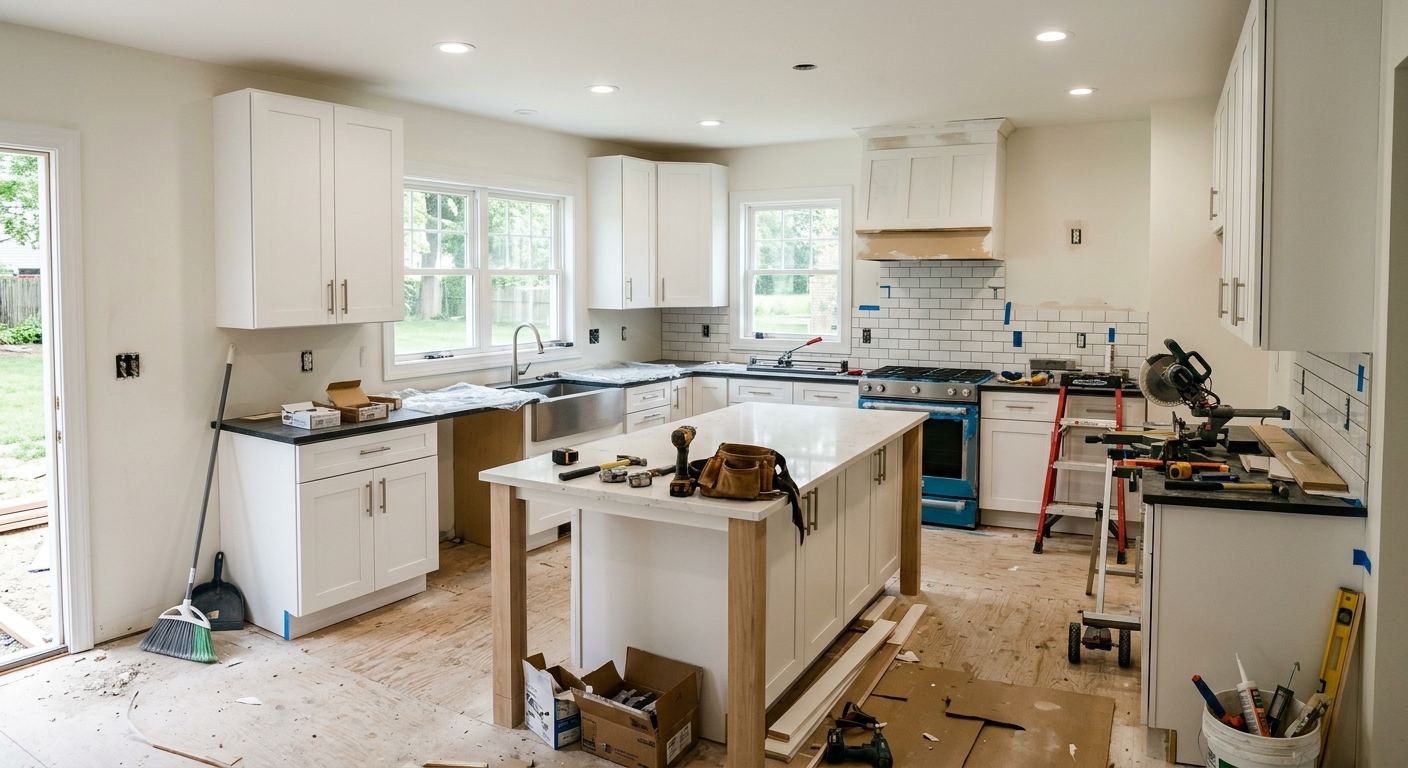
Kitchen renovation options and costs in Old East York
Old East York, Ontario is where I see two distinct kitchen renovation mindsets: homeowners upgrading for everyday comfort and homeowners renovating to protect resale value on older, mid-century housing stock. With a population of 9,233 (Statistics Canada, 2021 Census), this neighbourhood is also supported by a steady local contractor base, but demand spikes around spring and early fall—so scheduling and material availability can move pricing. In the Toronto economic region, finish expectations rise with the area’s purchasing power; in many higher-value pockets, kitchens are treated as a “major improvement,” and that’s why custom cabinetry and premium quartz or stone show up more often. Market-driven choices matter more than the weather itself—Toronto’s freeze-thaw cycles mainly affect backsplash grout, sealants, and how carefully contractors detail edges around sinks and exterior-adjacent walls.
In practice, you’ll usually choose between a cosmetic refresh, a mid-range full renovation, or a high-end build. If you’re in the Thorncliffe Park or upper-Old East York corridor (many families, active daily use), I often recommend durable counters and practical storage upgrades because kitchens take the most wear. A full renovation in the GTA commonly lands between the mid-$20k range for modest refreshes and the $80k+ range once you’re into custom millwork, stone, and layout changes. Use the table below as a realistic budget backbone before you start comparing contractor proposals.
| Renovation Tier |
What's Included |
Typical Duration |
Price Range |
| Cosmetic refresh (paint, hardware, new appliances only) |
Paint, new cabinet hardware, appliance swap (no plumbing/electrical relocation), minor trim touch-ups |
1–3 weeks |
$8,000–$20,000 |
| Mid-range full renovation (new cabinets, counters, sink, tile) |
New semi-custom or refaced cabinets, new counters, sink + faucet, backsplash tile, flooring patching/repair, basic plumbing reconnection |
5–9 weeks |
$25,000–$60,000 |
| High-end full renovation (custom cabinets, stone counters, island) |
Custom cabinetry, quartz or natural stone, island (including electrical if needed), upgraded lighting, stone/solid-surface backsplash, higher-end appliance package |
8–14 weeks |
$65,000–$90,000 |
| Cabinet refacing only (new doors + drawer fronts, same boxes) |
Door/drawer replacement, hardware, new cabinet-face finish, matching trim; keep existing box layout |
3–6 weeks |
$8,000–$35,000 |
| Countertop swap only (laminate to quartz or stone) |
Remove/replace laminate, install quartz or stone, new sink cut-out and basic sealing |
1–3 weeks |
$3,000–$15,000 |
| Backsplash tile installation only |
Tile removal/replacement as needed, backer prep, waterproofing where required, tile install and grouting |
1–2 weeks |
$2,000–$10,000 |
Prices are estimates only and vary by project scope, site access and material selection.
What affects the price of kitchen renovation in Old East York
In Old East York and across the Toronto economic region, two homeowners can get quotes that differ by 30–50% for what looks like the “same” kitchen on paper. That’s because Toronto-area pricing tracks home values and buyer expectations more than it tracks climate: higher-value pockets tend to push homeowners toward quartz or natural stone and semi-custom/custom cabinetry, while more price-sensitive projects often focus on laminate or stock/refaced cabinets with smarter layout use. In other words, contractors can bid a low–mid range (for stock/refaced + laminate) or move quickly into the $60k–$90k+ lane when stone, islands, and structural changes are part of the plan.
Here are concrete Old East York examples that reliably change costs. First, many homes have older plumbing routes and limited shutoff access—switching from an older supply run to a modern under-sink setup can add labour and materials, even if the finish tier is mid-range. Second, if your kitchen backsplash area has repeated grout failures due to moisture cycling near windows or exterior walls, waterproofing and backer work can add days and increase the budget (especially if you’re moving from simple ceramic tile to full-height finishes). Third, layout changes are the wildcard: removing a wall, adding an island, or moving a gas line for a range hood turns a “finish-only” job into a coordination job between trades, and that’s where costs jump regardless of whether you choose laminate or quartz.
If you’re trying to stay closer to the $25,000–$90,000 full renovation backbone, prioritize cabinet tier and layout first; if you’re aiming for a premium kitchen, it’s usually the stone and island package—not the backsplash—that most often drives you into the higher band.
| Price Factor |
Why It Matters |
Cost Impact |
| Cabinet tier — stock vs. semi-custom vs. fully custom millwork |
Material grade, hardware compatibility, door styles, and how precisely you can fit to uneven walls |
Often the single biggest swing; can shift a full renovation by several tens of thousands |
| Countertop material — laminate vs. quartz vs. granite vs. stone |
Supply cost, fabrication time, edge profiles, and install labour (especially with islands) |
Laminate is typically the lowest-cost path; natural stone usually pushes you toward high-end |
| Layout change — wall removal, island add, plumbing/gas move |
Structural trades, coordination, and additional licensed work |
Unpredictable; commonly adds the most cost variance across quotes |
| Appliance package tier — builder vs. mid-range vs. pro-grade |
Electrical demands, fit/finish, and warranty/repair expectations |
Can increase total spend meaningfully even if cabinet/counter pricing stays mid-range |
| Flooring — refinish existing vs. full replacement |
Subfloor condition and how well you can protect flooring during demolition |
Refinishing is usually cheaper; replacement can add material + install time |
| Backsplash — ceramic tile vs. marble vs. full-height slab |
Prep requirements, waterproofing details, and finishing complexity |
Typically a mid-budget item; full-height or high-end materials escalate quickly |
| Electrical — new circuits for island, under-cabinet lighting |
Lighting, outlets, and any GFCI/AFCI requirements for modern kitchens |
Can add several thousand dollars depending on how much rewiring is required |
| Permit fees and licensed trade requirements |
Permits and inspections add administrative cost and schedule sequencing |
Often modest per permit, but delays and additional visits increase total project cost |
Permits & regulations in Ontario
In Ontario, many “like-for-like” kitchen updates don’t trigger permits. Cabinet and countertop swaps typically do not require permits because you’re not changing the building’s core systems. If you’re only replacing existing cabinets, installing a new countertop, swapping a faucet, or updating the backsplash (without altering plumbing routes), you usually avoid permit work.
Permits are typically required when you change the systems or the structure. That means moving plumbing supply or drain lines, relocating a gas stove or making changes related to a range hood with gas, removing a load-bearing wall, or adding new electrical circuits (for example, extra receptacles on an island or wiring under-cabinet lighting) generally requires permits and licensed trades. Gas work must be performed by a licensed gas fitter and electrical work by a licensed electrician, each with inspections.
For a homeowner in Old East York, the best practice is to verify three things before signing: (1) the contractor’s licence/credentials for the trades they are performing (ask for references to the correct trade licences where applicable), (2) liability insurance, and (3) WSIB/WCB coverage where required for the contractor and/or subcontractors. Where to look: check the contractor’s online listing for credentials, request a current certificate of insurance, and ask for proof of WSIB/WCB clearance (or documented exemption, if applicable). Most reliable GTA renovation companies include these documents in their preconstruction package—make that a requirement in your contract so responsibility is clearly defined.
Cabinets, countertops and layout decisions in Old East York
In Old East York, your kitchen renovation usually turns on three decisions: cabinet tier, countertop material, and whether you change the layout. For cabinets, stock is the fastest and lowest-cost route, semi-custom is the most popular balance in the Toronto resale market, and custom cabinets deliver the tightest fit and highest-end look when your walls, ceilings, and angles aren’t perfectly square. For counters, durability and maintenance matter most for busy households: laminate can be budget-friendly but is more prone to heat/scratch damage at seams; quartz and granite are more forgiving and look “new” longer, which aligns with what buyers expect in mid-to-high finish tiers. Butcher block can be beautiful and repairable, while marble is premium and needs more careful maintenance to avoid staining.
Layout is the spend you should only chase when it truly unlocks use. If you’re considering open-concept wall removal, an island addition, or plumbing/gas relocation, justify it with real daily movement—especially in older Toronto homes where floorplans can be tight. A common “worth it” scenario is adding seating on an island plus updated lighting so the kitchen becomes a social hub; a common “not worth it” scenario is reworking plumbing just to create cosmetic symmetry. As a dollar example: upgrading from laminate to quartz might move you up a few thousand in the countertop band, but pairing that with an island often pushes the overall project into the broader $25,000–$90,000 range because electrical and, sometimes, plumbing changes follow the new footprint. Since Toronto buyers often anchor on cabinetry and countertop condition, that’s where your ROI usually shows first—provided the layout still makes sense.
| Option |
Durability |
Maintenance |
Best For |
Price Range |
| Stock cabinets (big-box) |
Good day-to-day durability; fit may be less precise on older walls |
Low; keep hinges/hardware adjusted |
Fast, budget-conscious refreshes with minimal layout changes |
$8,000–$25,000 |
| Semi-custom cabinets (local dealer) |
Very good durability with better style/size flexibility |
Low to moderate; depends on finish and hardware quality |
Most homeowners balancing resale appeal and cost |
$15,000–$45,000 |
| Custom cabinets (local millwork shop) |
Excellent durability; best fit and alignment for irregular spaces |
Low; premium finishes and hardware reduce wear issues |
High-end builds and kitchens with challenging dimensions |
$35,000–$70,000 |
| Laminate countertop |
Moderate; can chip or scorch at hot spots, especially near seams |
Easy daily cleaning; avoid abrasive pads and direct heat |
Value-focused renovations where you still want a clean look |
$3,000–$7,000 |
| Quartz engineered countertop |
High; resists staining and daily impacts well |
Low; wipe clean, avoid harsh solvents |
Busy households wanting a “premium” look without stone upkeep |
$6,000–$12,000 |
| Granite / natural stone countertop |
High; heat and scratch resistance depend on stone and finish |
Moderate; may require periodic sealing and careful cleaning |
Owners prioritizing natural variation and luxury appearance |
$7,000–$15,000 |
| Butcher block countertop |
Moderate to high when maintained; can dent with heavy use |
Moderate; periodic oiling and resealing |
Families who want warmth and can commit to maintenance |
$5,000–$10,000 |
| Marble countertop |
Moderate; prone to etching and staining if not protected |
Higher; requires disciplined cleaning and sealing |
Low-to-moderate daily wear kitchens aiming for luxury aesthetics |
$8,000–$15,000 |
How to choose a kitchen renovation contractor in Old East York
Choosing the right contractor in Old East York comes down to verifying three protective basics: licensing/credentials (for the trades they perform), liability insurance, and WSIB/WCB coverage where applicable. Start by asking for their certificate of insurance before work begins—make sure it clearly lists current coverage and includes liability limits appropriate for construction activities. Next, request proof of WSIB/WCB coverage (or a documented clearance letter) and confirm subcontractors are covered too. If a contractor can’t provide these documents promptly, pause—kitchen projects move fast and delays become expensive.
Then get 2–3 itemised written quotes. You want a breakdown that shows labour and materials separately, including allowances for cabinets, countertops, tile, plumbing/electrical, disposal, and any permit-related costs. Avoid “lump sum only” bids unless your scope is extremely tight. Read exclusions carefully: ask whether demolition and debris removal are included, whether site protection is included (floors, stairways, and adjacent finishes), and whether permit pulling is the contractor’s responsibility. Finally, confirm warranty terms in writing: workmanship warranty length, product/manufacturer warranty coverage, and whether warranties transfer if you sell your home.
For payment, don’t give away the project. In Ontario kitchen renovations, it’s common to limit upfront payment to about 10–15%, then hold back a portion until completion and walkthrough items are corrected. Get a written start date and a realistic completion estimate so you can plan around Toronto material lead times.
- Ask for insurance certificate and verify liability limits and dates.
- Request WSIB/WCB clearance proof (or documented exemption where appropriate).
- Confirm which trades handle gas, plumbing and electrical and that they’re licensed.
- Get 2–3 itemised quotes with labour and material line items, not lump sums.
- Ensure the contract states what’s included (demo, disposal, site protection).
- Confirm whether permits are included or billed separately, and who pulls them.
- Lock in cabinet/countertop specs: model, finish, thickness, hardware brands.
- Ask who is responsible for field measurements and how changes are priced.
- Review warranty: workmanship duration, product warranty, and transferability.
- Use a payment schedule with 10–15% max upfront and a holdback until punch list.
- Require an installation timeline with milestone dates (demo, rough-in, install, final).
- Confirm communication process: who provides updates and how changes are approved.
Red flags I see in Old East York: vague scopes that omit disposal or tile/backer prep; quotes that don’t clarify permit responsibility; inability to produce insurance/WSIB/WCB documentation; pressure for high upfront deposits; and “today’s price only” bids that won’t honour material allowances after measurements.
Frequently asked questions — kitchen renovation in Old East York
What’s the most popular kitchen style in Old East York right now?
In Old East York, the most requested look right now is a warm, modern transitional style: flat-panel or simple shaker fronts in neutral tones (white, warm greige, or soft greige) paired with brushed hardware and either quartz or a low-maintenance stone look. Buyers in Toronto often want kitchens that feel bright and clean, but not sterile—especially in older homes where wall lines and ceiling heights can be uneven. Most homeowners land in the mid-range finish tier first, then “upgrade inside the budget” by moving from laminate to quartz and adding better lighting. If you’re working toward the full renovation backbone of $25,000–$60,000, semi-custom cabinets plus a quartz countertop is the sweet spot for many resale-minded projects.
How do I know if I need to update my kitchen plumbing in Old East York?
Plumbing updates usually become necessary when you’re changing more than finishes. If you’re moving the sink, dishwasher, or changing the layout to add an island, your plumbing supply and drain routes often need rework. Even without relocating fixtures, older supply lines, slow drains, leaks under the sink, or corrosion around shutoffs are strong signals. In Old East York homes, I also see issues when contractors remove cabinets and discover hidden deficiencies—like cracked shutoff valves or inadequate venting that only shows up once you replace the countertop and get better access. If you’re just doing a cosmetic refresh, you can often keep plumbing as-is. But for a mid-range full renovation (commonly $25,000–$60,000), it’s wise to budget a contingency for minor plumbing corrections so you don’t get surprised after demolition.
What is the difference between a galley and open-concept kitchen?
A galley kitchen is a narrow, efficient layout where cabinetry runs along two parallel walls, typically with a clear walking path between. It’s space-efficient, works well for older Toronto homes, and often costs less because you’re not changing the main plumbing and electrical footprints as aggressively. An open-concept kitchen removes barriers to create one larger living space, usually by removing a wall or widening openings. That can add cost because electrical, ventilation, and sometimes structural considerations come into play, and permits may be needed if you remove load-bearing elements. In resale terms, open-concept can appeal broadly, but a well-executed galley with great storage and lighting can still perform strongly for many Old East York households. Budget-wise, layout changes are usually what push projects from lower mid-range into higher bands, even before you choose whether your counters are quartz or stone.
How do I get accurate kitchen renovation quotes in Old East York?
To get accurate quotes in Ontario (including Old East York), you need comparability. Ask for 2–3 itemised written quotes that separate labour and materials, and include allowances for cabinets, countertops, tile, electrical/plumbing work, disposal, and any permits. Make sure each contractor measures your space and includes how they’ll handle out-of-square walls common in older housing. Provide the same spec package to each bidder: cabinet tier, countertop thickness/type, backsplash scope, appliance selection, and whether you’re moving the sink, stove, or adding under-cabinet lighting. The biggest quote swings happen when layout changes are described vaguely—moving a gas line, adding an island, or removing a wall is where costs can jump by tens of thousands. If one quote is for a “countertop swap only” and another is for a full renovation, those numbers won’t be apples-to-apples. Use the expected full renovation backbone of $25,000–$90,000 to sanity-check scope before signing.
What’s the best countertop material for a busy Old East York kitchen?
For a busy Old East York household, quartz is usually the safest “best overall” pick because it balances durability and low maintenance. It resists staining well, handles everyday impacts better than laminate, and doesn’t require the same sealing routines as natural stone. Granite is also excellent for durability and heat resistance, but maintenance depends on finish and whether sealing is required. Laminate can be a smart budget choice if you keep heat and heavy cutting off the surface, but it’s more vulnerable around seams and to scorch marks—issues that show up faster in high-use kitchens. If you’re aiming for a mid-range renovation and want value, quartz often supports the “upgrade where it matters” strategy—commonly landing within the countertop band of $6,000–$12,000 depending on edges, thickness, and island complexity.
How do I add an island to my Old East York kitchen?
Adding an island is doable, but the key is planning for service connections and clearance. First confirm your room dimensions: you generally need comfortable walkways around the island for real daily use (not just “it fits on paper”). Then decide whether the island is decorative or functional—seating, prep, and especially a cooktop or sink change the scope. If you’re adding a sink, you’re typically moving plumbing supply and drain lines, which can trigger permits and licensed plumbing work. If you’re adding a cooktop/range ventilation with gas, the gas work must be done by a licensed gas fitter and coordinated with hood venting. Electrical for outlets and under-cabinet/pendant lighting is also frequently required. In budget terms, island additions often push the project toward the higher side of the full renovation backbone (commonly into $60,000–$90,000 once you include the cabinet changes, countertop fabrication, and added rough-in).