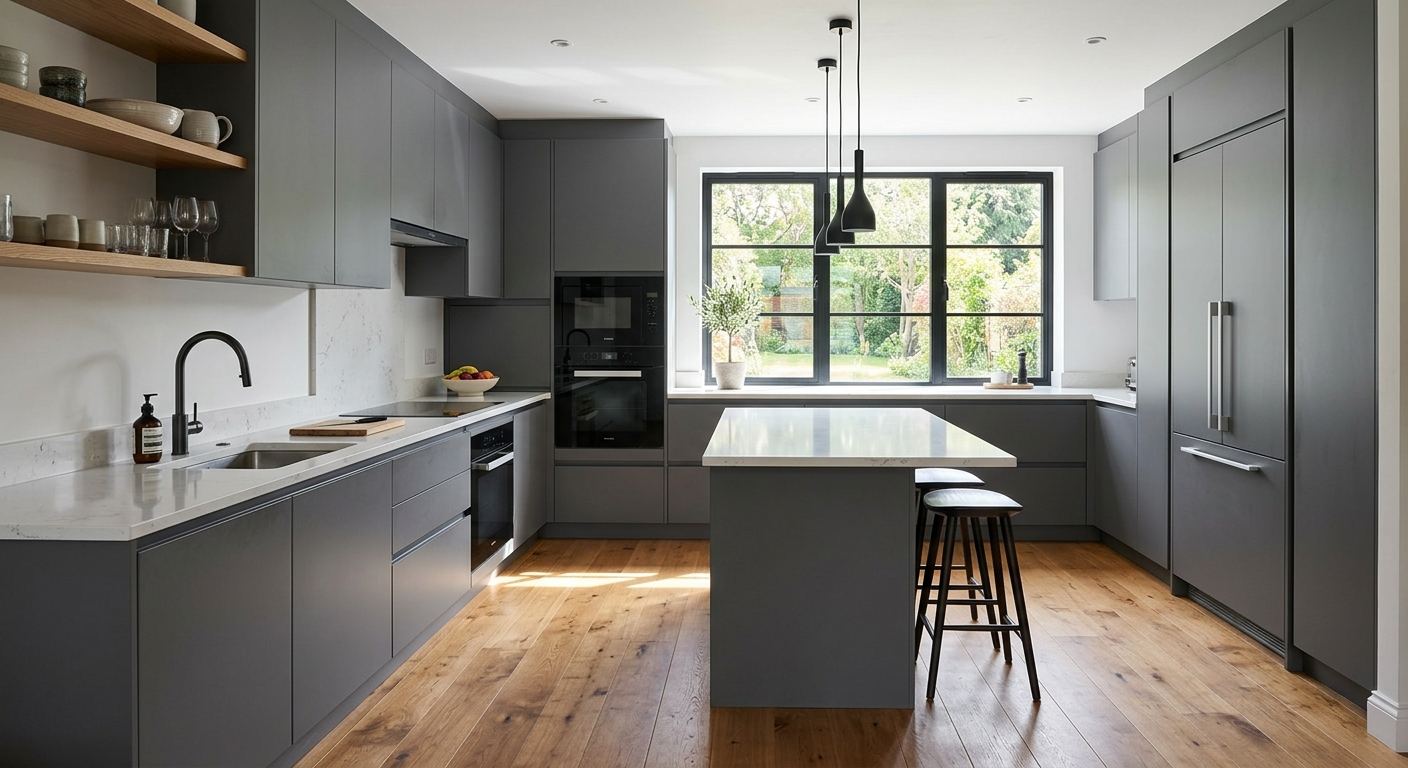
Kitchen renovation options and costs in Playter Estates-Danforth
Playter Estates-Danforth is where many homeowners want a kitchen that looks “right now” but still feels livable day to day. With a local population of 7,804 (Statistics Canada, 2021 Census), the area is small enough that trades availability can tighten during peak renovation months, especially for kitchen installers and countertop teams coming off other GTA jobs. At the same time, Toronto purchasing power strongly influences how owners spend: many households here plan upgrades that align with what today’s buyers pay attention to, because the renovation cost is easier to justify when housing demand is steady. In practice, Toronto’s high price points encourage more owners to select upgraded finishes sooner, and that often means custom or semi-custom cabinetry and higher-end countertop materials rather than “good enough” refreshes.
Ontario’s renovation costs are also shaped less by climate and more by the local market rhythm. Contractor demand can be steadier than in smaller Ontario cities, but the region still sees scheduling delays when multiple crews are booked for kitchen installs, tile, and electrical sign-offs. Kitchens in older homes around Playter Estates-Danforth can add a twist: you may find dated knob-and-tube wiring, uneven subfloors, or older venting routes that weren’t designed for today’s hood sizes. Those issues affect timelines and can shift you from a “cosmetic” plan into a full renovation scope.
If you’re trying to decide how far to go, think in tiers—cosmetic refresh, mid-range full renovation, or high-end full renovation—and then compare those tiers side-by-side with cabinet-only, countertop-only, and backsplash-only options in the table below.
| Renovation Tier |
What's Included |
Typical Duration |
Price Range |
| Cosmetic refresh (paint, hardware, new appliances only) |
Cabinet paint or repaint, new pulls/handles, appliance swap (range/hood/dishwasher or fridge as selected), new caulking/seal where needed |
3–7 days |
$8,000–$20,000 |
| Mid-range full renovation (new cabinets, counters, sink, tile) |
Semi-custom or quality stock cabinets, new countertop (often quartz), sink and faucet, backsplash tile, basic under-cabinet lighting (if included), labour for demo and install |
3–6 weeks |
$25,000–$55,000 |
| High-end full renovation (custom cabinets, stone counters, island) |
Fully custom millwork, premium stone counters (quartz premium blends or natural stone), island build, upgraded appliance package, full backsplash (feature wall possible), coordinated plumbing/electrical changes |
6–12 weeks |
$65,000–$90,000 |
| Cabinet refacing only (new doors + drawer fronts, same boxes) |
Door and drawer-front replacement, new veneer/face material, new hardware, minor trim updates, existing box prep |
1–2 weeks |
$8,000–$25,000 |
| Countertop swap only (laminate to quartz or stone) |
Removal of old surface, new quartz or stone install, sink cut-outs, seam placement, sealing where required |
3–7 days |
$3,000–$15,000 |
| Backsplash tile installation only |
Tile layout and install, waterproofing/bonding as required, grout/seal, caulking at edges |
3–10 days |
$2,000–$10,000 |
Prices are estimates only and vary by project scope, site access and material selection.
What affects the price of kitchen renovation in Playter Estates-Danforth
Even when two homeowners agree on the same end result—say, white shaker cabinets and quartz countertops—quotes in Toronto can still diverge by 30–50%. The gap usually comes down to how contractors price risk and complexity: site conditions (subfloor condition, wall straightness, ventilation routing), how much hidden work is uncovered during demo, and whether plumbing/electrical changes are included in the allowance. In GTA-area projects, local home values and median household purchasing power shape the typical finish tier far more than climate. In higher-value parts of the Toronto market, homeowners commonly move toward quartz or natural stone and semi-custom cabinetry because the upgrade cost aligns with resale expectations; in more price-sensitive pockets, laminate and stock cabinets dominate to balance budget with ROI.
For Playter Estates-Danforth specifically, two realistic examples often affect cost quickly. First, older Toronto housing stock can mean older venting and duct runs; if your range hood or fan upgrade requires rerouting ducting, the labour and materials can push a job toward the higher end of a mid-range full renovation budget (around $25,000–$55,000). Second, homes with uneven floors or dated water supply lines may force rework once base cabinets come off—this can turn a “countertop swap only” plan into a more complete scope if you need new shutoffs or patching before tile goes in.
The biggest unpredictable cost driver remains layout changes—removing a wall, adding an island, or moving a gas line or plumbing. Those changes can add trade coordination and permit work, pushing projects toward high-end full renovation budgets (often $65,000–$90,000) even if the finish materials are mid-range.
Toronto’s renovation market also affects scheduling: when trades are booked, some contractors price in longer carrying time for crews and tighter material lead times, which can show up in the quote as higher labour allowances. Finish tier still dominates the final number, but complexity is what usually explains the spread between seemingly similar estimates.
| Price Factor |
Why It Matters |
Cost Impact |
| Cabinet tier — stock vs. semi-custom vs. fully custom millwork |
Custom sizing, specialty finishes, and upgraded hardware increase fabrication and install time |
Can swing most of the budget; commonly $10,000+ difference between tiers |
| Countertop material — laminate vs. quartz vs. granite vs. stone |
Material price per square foot and install complexity (seams, edge profiles, weight) |
Typically $3,000–$15,000 for install-related scope depending on material |
| Layout change — wall removal, island add, plumbing/gas move |
Involves structural, plumbing/electrical/gas trades and coordination |
Often the largest unpredictable item; can add thousands and extend timeline |
| Appliance package tier — builder vs. mid-range vs. pro-grade |
Premium units cost more and may require electrical or ventilation upgrades |
Can add noticeable cost even if cabinet/counter finishes stay mid-range |
| Flooring — refinish existing vs. full replacement |
Tile/LVP/engineered flooring changes under cabinets can add demo and prep time |
Small refresh may add minimal cost; full replacement adds labour and materials |
| Backsplash — ceramic tile vs. marble vs. full-height slab |
Complex patterns, higher-end materials, and more surface area increase labour |
Often $2,000–$10,000 depending on style and coverage |
| Electrical — new circuits for island, under-cabinet lighting |
Electrical work requires licensed trades and careful planning for GFCI/loads |
Can add several thousand, especially when new circuits are required |
| Permit fees and licensed trade requirements |
Permits and inspections add administrative cost; licensed trades increase labour coordination |
Varies by scope; can meaningfully affect the final budget |
Permits & regulations in Ontario
In Ontario, a straight swap of cabinets or countertops typically does not require permits, because you’re not changing the home’s services or structural elements. That said, once you move plumbing supply/drain lines, relocate gas connections (including relocating a gas stove or range hood that vents/generates gas-related changes), remove a load-bearing wall, or add new electrical circuits (for example, power drops for an island or upgrading the under-cabinet lighting plan with new wiring), you should expect permits and licensed trades to be involved. Gas work must be completed by a licensed gas fitter, and electrical work must be completed by a licensed electrician, with inspections scheduled as required.
For a homeowner in Playter Estates-Danforth, the practical way to verify responsibility is to confirm two things in writing before work starts: (1) what permits, if any, will be pulled, and (2) who is responsible for each permit. Then, check your contractor’s Ontario licensing and documentation. Start by asking for a copy of the contractor’s liability insurance certificate and WSIB/WCB coverage documentation, then verify licences using the relevant Ontario online registry or professional regulator listings for the trades involved. Finally, request clearance/coverage letters where applicable so you’re not relying only on verbal assurances.
If a contractor tells you “permits are always handled,” ask which permits apply to your exact scope (plumbing, electrical, structural, or gas) and have that responsibility added to the contract.
Cabinets, countertops and layout decisions in Playter Estates-Danforth
The three most consequential decisions in a Playter Estates-Danforth kitchen renovation are your cabinet tier, your countertop material, and whether you change the layout. First, cabinet tier determines both appearance and how closely the kitchen fits your space. Stock cabinets are the fastest and usually the lowest-cost way to get a clean, updated look. Semi-custom cabinets are the sweet spot for many Toronto-area homeowners because they offer better sizing flexibility without the full premium of custom millwork. Custom cabinets cost more, but they can correct awkward ceiling heights, offset walls, or add details that make the room feel bespoke.
Second, countertop material affects durability and day-to-day maintenance. Laminate is budget-friendly but can be less forgiving when it comes to chips and heat marks; quartz is a common Toronto choice because it resists staining and is practical for busy households. Granite and other natural stones add a premium aesthetic and heat resistance, but they can require periodic sealing depending on the stone. Butcher block can work beautifully in kitchens that want warmth, but it needs more care to keep it looking uniform, especially with Ontario temperature swings and kitchen steam/condensation cycles.
Third, layout changes are what buyers notice first—and what can blow budgets. In an older Toronto home, moving plumbing or gas lines can be justified if you gain a more usable work triangle or open up the sightline with an island. If you stay with your existing sink location and electrical points, you can keep the project in a mid-range band (around $25,000–$55,000). But if you add an island and relocate plumbing/gas, the project can move toward high-end territory (often $65,000–$90,000), even if you choose mid-range finishes, simply due to coordination and trade work.
Example: upgrading from laminate to quartz countertops can raise the countertop install scope, but if you’re already doing a full renovation with new cabinets and tile, that upgrade is usually “visible value.” On the other hand, paying for custom cabinets when your layout won’t change much (and your budget is tight) often isn’t justified—semi-custom typically delivers the better cost-to-looks balance for many Playter Estates-Danforth homes.
| Option |
Durability |
Maintenance |
Best For |
Price Range |
| Stock cabinets (big-box) |
Good day-to-day durability; fit can be less precise in irregular rooms |
Low—mostly cleaning; door hardware replacement if desired |
Fast renovations and tighter budgets |
$8,000–$18,000 |
| Semi-custom cabinets (local dealer) |
Very good durability; better sizing and options for Toronto home constraints |
Low to moderate—keep hardware tight; clean finishes regularly |
Most Playter Estates-Danforth renovations balancing price and fit |
$18,000–$35,000 |
| Custom cabinets (local millwork shop) |
Excellent durability; tailored construction and premium details |
Low—care depends on finish; upgraded hardware usually lasts longer |
Unique layouts, premium upgrades, and “forever home” renovations |
$35,000–$60,000 |
| Laminate countertop |
Moderate; seams can be vulnerable and chips may require repair |
Easy daily cleaning; avoid heat directly on the surface |
Budget-focused refreshes |
$3,000–$7,000 |
| Quartz engineered countertop |
High durability; resistant to stains and everyday wear |
Low—routine cleaning only; less concern about sealing |
Busy kitchens that still want a premium look |
$7,000–$12,000 |
| Granite / natural stone countertop |
High; naturally strong and heat tolerant (varies by stone) |
Moderate—often requires periodic sealing and gentle maintenance |
Homeowners wanting distinctive natural variation |
$10,000–$15,000 |
| Butcher block countertop |
Moderate to high if maintained; sensitive to standing water |
Higher—regular oiling and prompt cleanup |
Warm, casual style and food-prep-friendly kitchens |
$5,000–$10,000 |
| Marble countertop |
Moderate; can scratch and may etch with acidic spills |
Higher—regular sealing and careful stain/etch management |
High-end look for lower-spill households or more careful use |
$12,000–$18,000 |
How to choose a kitchen renovation contractor in Playter Estates-Danforth
Choosing the right contractor in Playter Estates-Danforth starts with verifying Ontario licensing, insurance, and coverage. For licensing, you want the correct licensed trades for any permit-triggering work: gas fitter for gas-related changes and a licensed electrician for new circuits or significant electrical upgrades. Ask for proof and check the trade’s licence using Ontario’s online listings. For liability insurance, request a current certificate of insurance showing the contractor’s coverage and limits. For WSIB/WCB coverage, ask for documentation that confirms they carry the appropriate workers’ compensation coverage (or the applicable proof of coverage/clearance letter). Don’t rely on “we’re covered” in email—have documents ready before you start.
Next, get 2–3 itemised written quotes with a labour-and-materials breakdown, not a single lump sum. A good quote will separate demo, framing/repairs, cabinet install, countertop install, tile/backsplash, and electrical/plumbing allowances when included. Read the scope carefully: what’s excluded (for example, disposal fees, floor patching, drywall repairs beyond a defined allowance), and is permit pulling included? Confirm whether disposal and protection (dust control, drop sheets, floor protection) are part of the base price.
Warranty matters too: request workmanship warranty length and what it covers, plus product/manufacturer warranties for cabinets and countertops. Ask whether warranties are transferable if you sell the home. For payments, don’t pay more than 10–15% upfront; use a holdback until key milestones are complete (substantial completion and final walkthrough). Finally, timeline: you should get a written start date target and a realistic completion estimate that accounts for cabinet and countertop lead times.
- Provide licence numbers (or trade documentation) for any gas/electrical/permit work included.
- Show current liability insurance certificate and confirm it covers your project address.
- Provide WSIB/WCB documentation or clearance letter before scheduling.
- Use itemised quotes (demo, carpentry, cabinetry install, countertop install, tile, electrical/plumbing allowances).
- Spell out exclusions: drywall beyond patching, subfloor replacement, disposal, and appliance delivery handling.
- Confirm whether permits are included and who is responsible to pull them.
- Include dust control and protection in the written scope to reduce damage during demo.
- Ask about lead times for cabinets and countertops and whether schedule dates are “best case” or locked.
- Get cabinet and countertop specifications (model, finish, thickness, edge profile) in writing.
- Ask for a workmanship warranty start date and duration, and what you must do for service.
- Review the payment schedule: limit upfront to 10–15% and hold back until final sign-off.
- Require a final walkthrough checklist and a written close-out date.
Red flags in Playter Estates-Danforth: (1) they won’t provide proof of insurance or coverage; (2) they only offer lump-sum pricing with vague allowances; (3) they dodge questions about who pulls permits and who schedules inspections; (4) they request large upfront deposits (well beyond 10–15%); and (5) they avoid written specs for cabinets/counters, which later becomes “change order” work.
Frequently asked questions — kitchen renovation in Playter Estates-Danforth
How do I choose a kitchen contractor in Playter Estates-Danforth?
Start by verifying Ontario licensing and proof of coverage. Any gas-related change needs a licensed gas fitter, and any new electrical circuits require a licensed electrician; ask for documentation and confirm it’s current. Request liability insurance and WSIB/WCB coverage (or clearance letters where applicable) and keep copies for your records. Next, compare 2–3 itemised quotes—labour and materials broken out—so you can see whether you’re comparing apples to apples. In Playter Estates-Danforth, scope creep is common when older homes reveal wiring or subfloor issues after demo, so ensure the quote spells out what’s included versus excluded. Finally, align your finish tier to a realistic budget; for example, a mid-range full renovation can run about $25,000–$55,000, while high-end projects often go higher.
What order do kitchen renovation steps happen in?
Typically, the sequence is: planning and measurements, permit and material confirmation (if required), then demo and removal of existing cabinets/counters. After demo, contractors complete rough-in work—plumbing, electrical, venting, and any structural work—so walls and floors can be prepped. Next comes base cabinet installation and leveling, followed by countertop templating and fabrication coordination. Once counters arrive, installs happen, then sink/faucet connections and backsplash prep follow. Flooring repairs and final finish work usually land near the end, along with painting, trim, hardware installation, and appliance hookups. In older Playter Estates-Danforth homes, delays can come from hidden repairs discovered during demo, so ask your contractor how they price unforeseen issues and how schedule changes are communicated.
Can I live at home during a kitchen renovation in Playter Estates-Danforth?
Often yes, especially for a cosmetic refresh or a countertop/backsplash-focused scope, but full renovations are more disruptive. Many homeowners in Playter Estates-Danforth choose to stay if they can set up a temporary kitchen (microwave, kettle, basic food prep) in another room while the work zone is contained. Dust control is a big factor—ask for drop sheets, sealed work areas, and daily cleanup plans. If plumbing or electrical work is scheduled, you may have short periods without a functional sink or cooking area depending on how your contractor stages the work. If you’re budgeting for a mid-range full renovation (often $25,000–$55,000), plan for several weeks of partial access rather than “back to normal” in a few days.
Should I renovate my kitchen before selling in Playter Estates-Danforth?
Usually, you renovate first if your kitchen is clearly dated or hard to live with—buyers still look at layout and finish quality in Toronto’s resale market. The most cost-effective approach is often to invest in changes that buyers can see quickly: refreshed cabinet fronts, a durable countertop upgrade, and a clean backsplash. If you’re considering a full rebuild, keep the scope aligned to resale expectations: cosmetic refreshes (paint, hardware, new appliances) can be a smarter first step than immediately jumping to custom millwork. Because neighbourhood demand and buyer preferences vary across the Toronto area, your contractor should help you pick a finish tier that fits the home’s condition and price point. A typical cabinet + counter mid-range approach can land in the $25,000–$55,000 range, whereas structural/layout-heavy work often pushes higher.
What's the most popular kitchen style in Playter Estates-Danforth right now?
In Playter Estates-Danforth and the broader Toronto market, the most requested look right now tends to be bright, modern warmth: shaker-style or simple slab-front cabinetry, neutral paint colours (whites/greiges/soft greys), and countertops that look like clean stone—quartz is common because it’s low-maintenance. Many homeowners choose a quartz finish paired with a tile backsplash that adds texture (subway tile, zellige-style looks, or a simple straight-stack pattern). The “why” is practical: quartz and neutral cabinetry photograph well for listings, and the maintenance burden is lower for busy households. If your budget is tighter, laminate can still work for a clean refresh, but many end up upgrading to quartz during the project once they see how it changes the whole kitchen.
How do I know if I need to update my kitchen plumbing in Playter Estates-Danforth?
You may need plumbing updates if you’re moving the sink, changing the dishwasher layout, adding a new island, or if your existing supply/drain lines are old and showing issues. In many older Toronto homes, shutoff valves can be dated, drains can be slow, or under-sink piping may not match current best practices. During the early phase of your renovation, ask your contractor to inspect visible supply lines and shutoffs and to confirm whether the drain layout matches the new cabinet plan. Also watch for “hidden” clues: corrosion, inconsistent water pressure, leaks at joints, or a musty odour that doesn’t resolve with cleaning. If plumbing changes trigger permits and licensed work, your contractor should clearly state that in the written scope and confirm responsibility before signing.