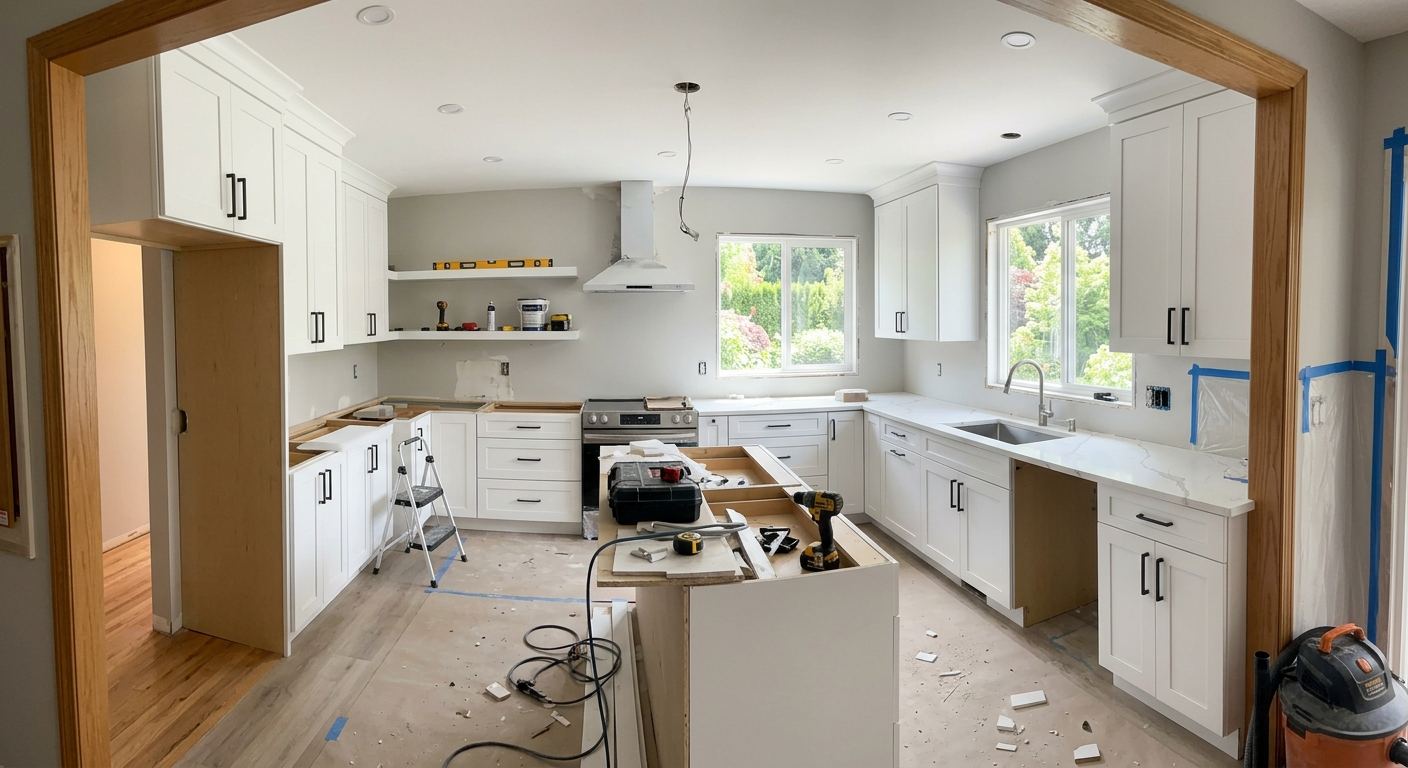
Kitchen renovation options and costs in Atikokan
Kitchen renovation in Atikokan is usually driven more by homeowner budgets and resale expectations than by “cold-weather construction” details. In 2020, the median household income in Atikokan’s local profile is $69,000 (Statistics Canada, 2021 Census), and most households are owners (82.5% of households), which typically translates into practical, value-focused upgrades. That same affordability profile is reflected in finish choices: you’ll see a lot of semi-custom cabinetry paired with laminate or quartz counters rather than fully custom millwork and high-end stone everywhere.
Atikokan’s housing stock is also older—90.1% of homes were built before 1981 (Statistics Canada, 2021 Census). Older homes often have tighter wall framing, fewer accessible service chases, and sometimes out-of-date electrical/plumbing layouts, which can add labour for electrical and plumbing updates. In Northwestern Ontario, contractor availability is solid but tends to concentrate around the larger centres first; when trades have to swing into smaller communities, scheduling can tighten, and that can affect your total project timeline more than your material pricing.
Where this trade is especially in demand is around the town core where many homeowners do “refresh + function” renovations—new cabinets, updated lighting, and better storage layouts—rather than full gut projects. If your goal is to compare your options quickly, the table below maps the most common renovation tiers to typical duration and cost bands for Atikokan.
| Renovation Tier |
What's Included |
Typical Duration |
Price Range |
| Cosmetic refresh (paint, hardware, new appliances only) |
Paint, new cabinet hardware, appliance swap (no plumbing/gas relocation), minor caulking and trim touch-ups |
3–7 days |
$6,000–$15,000 |
| Mid-range full renovation (new cabinets, counters, sink, tile) |
Stock or semi-custom cabinets, countertop installation, new sink/faucet, backsplash tile, basic lighting updates |
2–4 weeks |
$30,000–$55,000 |
| High-end full renovation (custom cabinets, stone counters, island) |
Custom cabinetry, quartz/granite or natural stone counters, island (electrical and/or plumbing as required), upgraded tile and lighting |
4–8 weeks |
$65,000–$90,000 |
| Cabinet refacing only (new doors + drawer fronts, same boxes) |
Reface system, new doors/drawer fronts, new hardware, often includes a backsplash touch-up |
1–2 weeks |
$6,000–$18,000 |
| Countertop swap only (laminate to quartz or stone) |
Remove/install counters, new sink cut-out as needed, sealants and finishing |
3–7 days |
$2,500–$12,000 |
| Backsplash tile installation only |
Surface prep, tile install, grouting/sealing, trim and caulk detailing |
3–10 days |
$1,500–$8,000 |
Prices are estimates only and vary by project scope, site access and material selection.
What affects the price of kitchen renovation in Atikokan
In Atikokan and across Northwestern Ontario, quotes for the “same” kitchen can land 30–50% apart because the scope details are rarely identical—especially around labour hours, trade scheduling, and how much of the wall/floor/service work has to be corrected once cabinets come off. Even though climate plays a role in material handling and drying times, it’s the market and home economics that most strongly set the baseline finish tier. In higher-value areas of the region, homeowners more often default to quartz or natural stone and semi-custom cabinetry because the cost is easier to recover on resale. In more modest homes, laminate counters and stock cabinets keep the project closer to the lower end of the local bands.
In Atikokan specifically, older pre-1981 builds (90.1% of homes) can push costs upward when electrical grounding, venting details, or supply lines don’t match today’s standards. For example, adding under-cabinet lighting or an island often means running new circuits—small work on paper, but labour-heavy in tight spaces. Another common swing factor is layout: removing a wall or adding an island can change cabinet carcass sizes, require additional blocking, and trigger plumbing/gas considerations, so it’s the most unpredictable line item regardless of finish. Finally, flooring and backsplash are “small-ticket” only until you hit uneven substrates—then tile prep becomes a labour job.
As a reference point, if you’re budgeting within the full renovation range of $30,000–$90,000, your cabinet tier and countertop choice will usually determine where you land. Many Atikokan projects targeting mid-range budgets end around the $30,000–$55,000 band when plumbing/gas relocation is minimal; pushing to custom millwork and stone often moves clients into the $65,000–$90,000 band.
| Price Factor |
Why It Matters |
Cost Impact |
| Cabinet tier — stock vs. semi-custom vs. fully custom millwork |
Carcass quality, hardware included, design flexibility, and door styles change both material and install time |
Typically the largest swing; can move a full kitchen tens of thousands of dollars |
| Countertop material — laminate vs. quartz vs. granite vs. stone |
Material price and templating/installation complexity vary; thicker stone and larger slabs increase labour and risk |
Can shift countertop-only installs by several thousand dollars; also affects overall scope |
| Layout change — wall removal, island add, plumbing/gas move |
Alters framing, service runs, ventilation strategy, and sometimes inspection requirements |
Often adds the most unpredictability; can move total project cost by 10–30% or more |
| Appliance package tier — builder vs. mid-range vs. pro-grade |
Pricing changes widely; higher tiers may require different electrical/venting and fitment |
Usually a smaller swing than cabinets, but can still add several thousand dollars |
| Flooring — refinish existing vs. full replacement |
Hidden subfloor issues show up once demo starts; tile/laminate changes under-cabinet detailing |
Replacement adds labour and materials; refinish keeps costs lower |
| Backsplash — ceramic tile vs. marble vs. full-height slab |
Large-format and natural stone increase cutting complexity, waste, and install time |
Backsplash can rise from “small ticket” to a notable portion of the budget |
| Electrical — new circuits for island, under-cabinet lighting |
Lighting and outlets for islands require circuit planning and licensed electrical work |
Can add several thousand dollars depending on routing and number of new loads |
| Permit fees and licensed trade requirements |
Any work involving plumbing/drain, gas relocation, load-bearing wall changes, or new electrical circuits affects compliance steps |
Indirectly adds cost via trade coordination, inspections, and paperwork |
Permits & regulations in Ontario
In Ontario, a straightforward cabinet and countertop swap typically does not require a permit, because you’re not changing the building’s services or structure. That means replacing existing counters, re-installing cabinets in the same footprint, or updating finishes like backsplash tile generally falls into “no-permit” work—assuming you’re not cutting into plumbing/drain lines, relocating vents, or altering load-bearing elements.
Where permits are commonly required is when you move the kitchen’s functional systems. For example: moving plumbing supply or drain lines, relocating gas appliances (or changing the route/connection for a stove, range hood with gas, or similar), removing a load-bearing wall, or adding new electrical circuits for an island, additional outlets, or new lighting all require permits and licensed trades. Gas work must be performed by a licensed gas fitter, and electrical work must be performed by a licensed electrician, with inspections where required.
For an Atikokan homeowner, verify three items before you sign: (1) contractor licence and trade registration where applicable, (2) liability insurance, and (3) coverage for workers through the workplace coverage system—commonly referenced as WSIB/WCB. Step-by-step: ask for insurance certificates and clearance letters up front; then check credentials using the relevant Ontario online professional/contractor registry tools for the trades involved. Don’t rely on verbal confirmation—ensure the permit responsibility and any inspection scope are written clearly in your contract.
Cabinets, countertops and layout decisions in Atikokan
The biggest “make or break” decisions in a kitchen renovation in Atikokan are (1) cabinet tier, (2) countertop material, and (3) whether you change the layout (like removing a wall, adding an island, or relocating plumbing/gas). In Northwestern Ontario, buyers typically want a kitchen that looks current and feels durable through long winters and daily use—so your material choice should match your household routine, not just your style.
Cabinet tiers: stock cabinets are the fastest and usually the cheapest because lead times and standard sizes are predictable. Semi-custom (the most popular mid-range approach) balances cost with options like better internal storage and nicer door profiles. Custom cabinets give the best fit—great for older Atikokan homes with out-of-square walls—but they’re the highest cost and usually add design time. Countertop decisions: laminate is budget-friendly and fine for light-to-average use, while quartz is a strong “no-fuss” choice for busy homes (less staining risk than many natural stone options). Granite/natural stone adds a premium look but can require more careful sealing/maintenance depending on the stone. Butcher block is warm and repairable, yet it needs regular oiling to avoid drying out in heated indoor seasons.
Layout: an island is often justified when it improves circulation and adds seating or work space—especially in kitchens that feel narrow. But adding plumbing or gas to an island is where costs jump; if your goal is storage and counter space, you can sometimes achieve the same benefit with an island that doesn’t require service relocation. For example, moving to a quartz engineered countertop (often a mid-range upgrade) can be “worth it” compared with laminate when you plan to stay in the home for several years—whereas switching to full custom cabinetry mainly pays off when you need a perfect fit or high storage layout.
Bottom line for resale in the Northwest: at lower price points, buyers expect clean, modern cabinetry and a practical counter; at higher price points, they expect upgraded counters, improved lighting, and more built-in storage—so spend where the value shows.
| Option |
Durability |
Maintenance |
Best For |
Price Range |
| Stock cabinets (big-box) |
Good for everyday use; limited flexibility on sizes and finishes |
Low; straightforward cleaning and standard parts |
Renovations where budget and schedule are the priority |
$10,000–$18,000 |
| Semi-custom cabinets (local dealer) |
Very good everyday durability; better internals and door/drawer options |
Low to moderate; hinges and organizers vary by brand |
Most Atikokan mid-range projects targeting a durable, modern look |
$18,000–$30,000 |
| Custom cabinets (local millwork shop) |
Excellent build quality and fit; best for unusual wall conditions |
Low once installed; depends on hardware quality |
Homes with tight dimensions, specialty storage needs, or premium finishes |
$30,000–$55,000+ |
| Laminate countertop |
Decent for most kitchens; can be more vulnerable to impact at seams/edges |
Low; avoid standing water at seams |
Budget-conscious refreshes where layout isn’t changing much |
$2,500–$5,500 |
| Quartz engineered countertop |
Very durable surface; excellent everyday stain and scratch resistance |
Low; regular cleaning only |
Busy families who want a “set it and forget it” upgrade |
$5,500–$10,500 |
| Granite / natural stone countertop |
High durability; performance varies by stone type and finish |
Moderate; sealing and mindful cleaning typically required |
Homeowners who want natural movement and premium appearance |
$8,000–$14,000 |
| Butcher block countertop |
Repairable and warm; can dent if abused but can be sanded/refinished |
Moderate to high; needs routine oiling |
Those who cook a lot and want a traditional, handcrafted feel |
$4,500–$9,000 |
| Marble countertop |
Beautiful but more porous and prone to etching/staining than quartz |
Higher; sealing and careful daily use required |
Premium look with a lighter-touch kitchen routine |
$10,000–$18,000+ |
How to choose a kitchen renovation contractor in Atikokan
Choosing the right contractor in Atikokan comes down to verifying Ontario compliance, getting clear written scope, and making sure you control payments. Start with licensing and trade credentials: ask the contractor to name the licensed trades involved (gas fitter, electrician, plumbers as needed) and provide details so you can confirm they’re properly authorized. Next, request liability insurance documents—certificate of insurance showing coverage—and verify workers’ coverage for the job through WSIB/WCB documentation or clearance letters where applicable. For each trade, ask for their insurance certificate and make sure the dates match your renovation window.
Then get 2–3 itemised written quotes, not a single lump sum. You want the labour and materials broken out: demo/disposal, framing adjustments, cabinet installation labour, countertop fabrication/templating, electrical/plumbing scope, tile prep, and any allowance for appliances. Read exclusions carefully: disposal included or not, drywall repairs included or not, permit fees and who pulls permits, and whether the quote assumes existing services are in good condition.
Warranty matters too: confirm the workmanship warranty length, what it covers (installation only vs. install plus adjustments), product/manufacturer warranty coverage, and whether warranty terms are transferable if you sell. For payments, keep it sensible—never pay more than 10–15% upfront, and hold back money until completion and punch-list items are done. Finally, insist on a start date and completion estimate in writing, with a clear plan for delays.
- Request proof of liability insurance and workers’ coverage (WSIB/WCB) before signing
- Confirm which permits (if any) are required and who is responsible for pulling them
- Get itemised labour + materials quotes (no “everything included” blanket pricing)
- Verify warranty terms: workmanship duration and what voids it
- Ask who handles site protection (floors, doors, dust control)
- Confirm countertop templating timeline and whether fabrication delays affect your schedule
- Clarify demolition and disposal: included or extra
- Check whether patching/painting of damaged drywall is included
- Make sure electrical scope (island lighting/outlets) includes inspection expectations
- Use a clear change-order process in writing for scope creep
- Review payment schedule: keep upfront to 10–15% and hold a completion holdback
- Confirm lead times for cabinets and appliances and build those into your start date plan
Red flags in Atikokan include: refusing to provide insurance/coverage documentation, quoting without itemisation, “verbal promises” about permits or start dates, asking for large upfront payments (beyond 10–15%), and vague warranties that don’t specify workmanship coverage. If you see any of these, pause and ask for the missing details in writing.
Frequently asked questions — kitchen renovation in Atikokan
What’s the best countertop material for a busy Atikokan kitchen?
For most busy households in Atikokan, quartz is the safest “workhorse” option because it’s durable, low-maintenance, and resistant to everyday staining. In a practical full renovation budget—often in the $30,000–$90,000 band—quartz tends to deliver a big visible upgrade without the higher upkeep that some natural stones require. Granite and natural stone can look stunning, but maintenance depends on the stone type and it usually needs periodic sealing. Laminate can work if you’re trying to keep costs closer to the lower end (especially for smaller projects), but it’s less forgiving around seams and heavy impacts. If you cook often and want minimal fuss through winter heating cycles, quartz is usually the best balance.
How do I add an island to my Atikokan kitchen?
Adding an island starts with measuring your clearances and then deciding whether the island needs services. If the island is purely for seating and extra prep space, you may avoid major plumbing or gas work—keeping your renovation closer to the mid-range of the regional bands. Once you add plumbing (sink) or gas (cooktop) on the island, the scope becomes more complex and may require permits and licensed trade involvement, so plan for more coordination and inspection timing. In older Atikokan homes built before 1981, service routes may be harder to access, which can increase labour. A good contractor will confirm feasibility, show you where the electrical outlets/lighting can land, and provide an itemised quote for island framing and service runs before you commit.
How much does a kitchen renovation cost in Atikokan?
Kitchen renovation cost in Atikokan usually tracks the basic to mid-range Ontario cost bands, with the most variation coming from cabinets, counters, and whether you change layout or move plumbing/gas. A cosmetic refresh can be relatively modest, but most homeowners who change storage and finishes end up planning for a full renovation budget. For reference, a typical full kitchen renovation lands around $30,000–$90,000 depending on whether you choose stock or semi-custom cabinets, laminate vs. quartz/stone, and how much electrical/plumbing work is involved. In many Atikokan projects, the mid-range full renovation sits around $30,000–$55,000 when the layout stays similar. Higher-end custom millwork and stone counters with an island often moves closer to $65,000–$90,000.
How long does a kitchen renovation take in Atikokan?
Timelines depend mostly on lead times (cabinets and countertops) and the amount of demolition and service work. For a cosmetic refresh, many projects are completed in about a week. A mid-range full renovation with new cabinets, counters, sink, and backsplash typically takes about 2–4 weeks once demolition and rough trades are done. If you’re adding an island and upgrading electrical/plumbing and tile, a high-end full renovation commonly takes about 4–8 weeks. Older Atikokan homes built before 1981 can add time if walls or subfloors need repairs after demo. Also, because Northwest trades may schedule travel into smaller communities, build schedule flexibility into your start date and ask your contractor for a written timeline with key milestones.
Quartz vs granite countertops — which is better?
“Better” depends on how you use your kitchen, but for most Atikokan homeowners, quartz is easier to live with. Quartz engineered countertops are very consistent in appearance, highly resistant to staining and everyday wear, and typically require routine cleaning only. Granite/natural stone can be more variable in pattern and typically looks more “organic,” but it often needs sealing and careful maintenance to protect against staining and etching depending on the stone. If you want premium natural look and you’re comfortable with maintenance, granite can be worth it. If you want low-fuss durability for daily cooking and cleaning through Ontario winters, quartz is usually the better overall choice. Budget-wise, quartz is often a strong value in the countertop-only range of $5,500–$10,500, while granite/natural stone can climb higher.
Should I reface or replace my cabinets?
Refacing is often the smart choice when your cabinet boxes are solid, the layout is functional, and you want a faster update without removing all the carcasses. It’s also attractive in older homes when removing everything would uncover surprises in plumbing runs, wall framing, or electrical access. Replacing cabinets is usually better when your boxes are warped, water-damaged, outdated in layout, or you’re planning major reconfigurations (like new storage patterns, wider drawer bases, or significant layout changes). In Atikokan, a cabinet refacing-only approach is commonly priced in the range of $6,000–$18,000, while a full cabinet replacement can push your overall project toward the larger $30,000–$90,000 kitchen band depending on countertop and layout. The deciding factor is condition plus how much you want to change functionality, not just appearance.