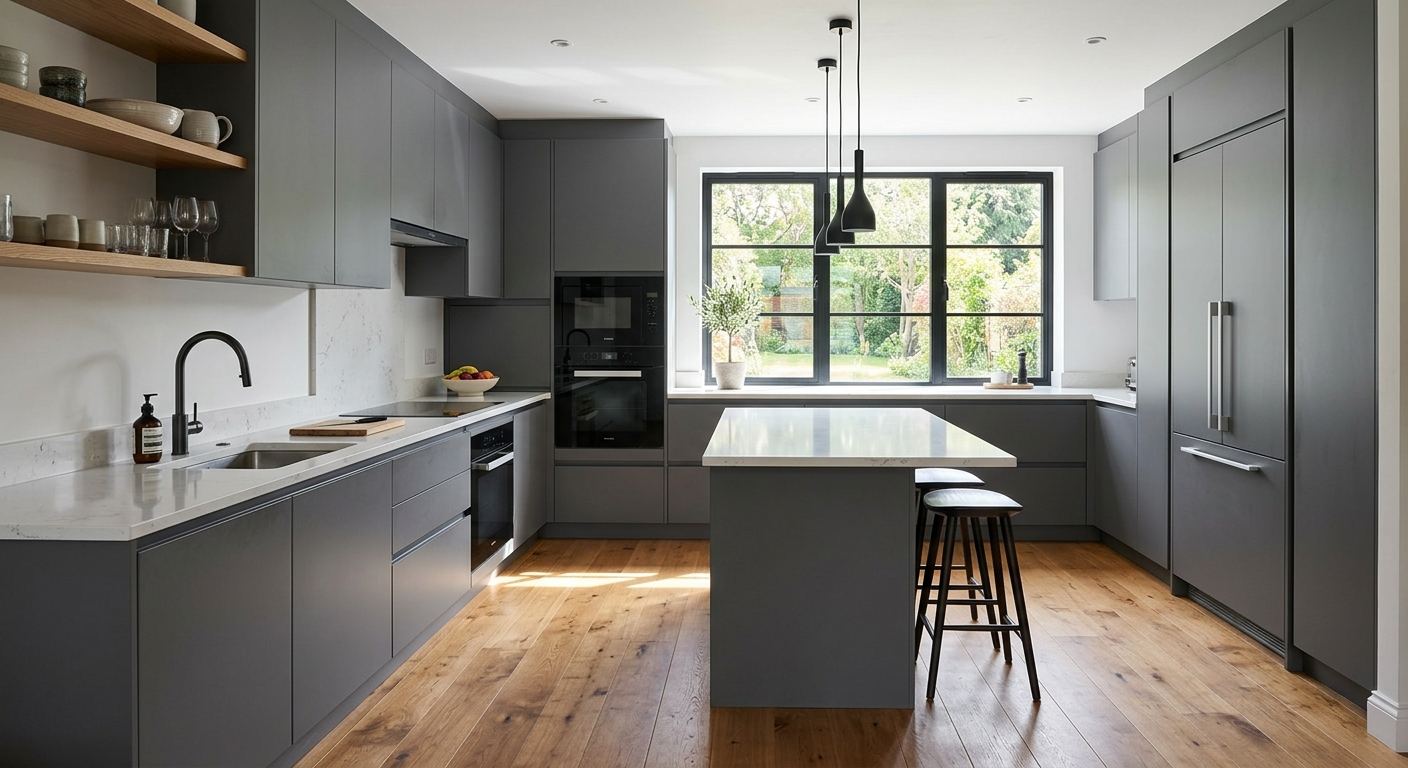
Kitchen renovation options and costs in Chapleau
Kitchen renovations in Chapleau are shaped by what homeowners can realistically finance and by how they want the finished kitchen to perform on resale. With a median household income of about $84,000 (Statistics Canada, 2021 Census), many families choose upgrades that feel “complete” without going fully custom on every component. Chapleau also has an older housing base—83.0% of homes were built before 1981 (Statistics Canada, 2021 Census)—so projects often start with practical fixes (cabinet alignment, dated lighting, worn subfloors) before the cosmetic work begins.
In the Northeast economic context, kitchen budgets tend to track stronger with local household economics than with weather alone. Climate in Northern Ontario mainly affects scheduling and site conditions (drying times, moisture management, and access during shoulder seasons). It doesn’t usually force higher finish tiers by itself. Contractor availability is the bigger lever: when trades are booked, timelines stretch and labour components move upward, especially for jobs with plumbing/gas and electrical work.
Because Chapleau has a lot of single-detached homes (71.8% of dwellings), many owners prioritize durable, family-friendly finishes that can handle heavier everyday use. In the downtown/Water Street area, and along the main corridor with frequent older homes, demand is especially high for mid-range renovations that replace cabinets and countertops while keeping a layout that won’t trigger extensive rerouting.
To help you compare scopes, use the price bands below as a starting point for planning and quote discussions.
| Renovation Tier |
What's Included |
Typical Duration |
Price Range |
| Cosmetic refresh (paint, hardware, new appliances only) |
Cabinet paint/stain or repaint, new hardware, appliance swaps (no plumbing/gas moves), touch-up lighting |
1–3 weeks |
$3,000–$12,000 |
| Mid-range full renovation (new cabinets, counters, sink, tile) |
Cabinet replacement (stock or semi-custom), new countertops, sink and faucet, backsplash tile, disposal/major appliance installs (as needed) |
4–8 weeks |
$30,000–$55,000 |
| High-end full renovation (custom cabinets, stone counters, island) |
Fully custom millwork, premium stone (quartz or natural stone), island with electrical/plumbing as required, full backsplash and upgraded lighting package |
8–14 weeks |
$60,000–$80,000 |
| Cabinet refacing only (new doors + drawer fronts, same boxes) |
Reface doors/drawers, new laminate/quilted-look panels where applicable, hardware changes, update toe-kicks; existing boxes reused |
2–5 weeks |
$6,000–$18,000 |
| Countertop swap only (laminate to quartz or stone) |
Remove and replace tops, seal/finish at seams, new sink cut-out as needed, basic faucet integration |
1–2 weeks |
$5,000–$15,000 |
| Backsplash tile installation only |
Tile removal where needed, backer/patching, tile install, sealing/grout, caulking at edges |
1–2 weeks |
$2,500–$12,000 |
Prices are estimates only and vary by project scope, site access and material selection.
What affects the price of kitchen renovation in Chapleau
In Chapleau and across the Northeast region of Ontario, you can see the same “kitchen renovation” quoted 30–50% apart because contractors price different risk levels, scheduling realities, and allowance tiers (especially for cabinets and countertops). The big drivers are usually finish tier and the amount of work hidden behind the existing walls—older homes commonly have out-of-square framing, dated wiring runs, and changes made over the decades.
Local home value and median household income help determine the finish tier far more than climate does. In higher-value owner pockets, homeowners more often choose quartz or stone counters and semi-custom cabinetry because they’re easier to justify on resale; in more modest scopes, laminate and stock cabinets are a practical way to keep the total project within budget. On a typical Chapleau project, going from laminate to quartz can swing your countertop line by several thousand dollars, and that difference is most noticeable when the rest of the kitchen is either fully refreshed or kept mostly original.
Layout changes are where costs become most unpredictable—moving plumbing supply/drain, relocating a gas stove or range hood, removing a wall, or adding an island typically adds labour trades, coordination time, and inspection requirements. For example, a “mid-range” full renovation often lands around $30,000–$55,000, but once plumbing/gas or additional electrical circuits are involved, the same look can drift toward the higher end of that band. Likewise, a full custom/stone island scope may target $60,000–$80,000, with the island’s services and structure often determining how close you get to the top.
Concrete Chapleau examples: 1) older pre-1981 kitchens frequently need subfloor patching or reinforcement before new tile goes down, which adds labour; 2) winter scheduling can affect grout/tile cure timing and drying for wall prep, pushing work into longer sequencing; and 3) if your current cabinet runs are out of level, levelling and wall shimming adds time even when the cabinet material stays “mid-range.”
| Price Factor |
Why It Matters |
Cost Impact |
| Cabinet tier — stock vs. semi-custom vs. fully custom millwork |
Material quality, door styles, internal hardware, and how well units fit your existing walls |
Often drives the largest swing within a full renovation (commonly several thousand to tens of thousands) |
| Countertop material — laminate vs. quartz vs. granite vs. stone |
Supply cost, fabrication complexity, seam requirements, and sealing/maintenance needs |
Typical countertop-only swaps move within the range of $3,500–$15,000 depending on material and complexity |
| Layout change — wall removal, island add, plumbing/gas move |
Requires additional trades, coordination, and inspections; increases labour and demolition waste |
Can add the most unpredictable dollars regardless of finish tier |
| Appliance package tier — builder vs. mid-range vs. pro-grade |
Electrical/GFCI requirements, venting complexity, and finish/surface durability |
Can shift the project by thousands even before installation labour |
| Flooring — refinish existing vs. full replacement |
Prep work, subfloor condition, underlayment, and matching transitions in older homes |
Replacement floors usually increase both material and labour allowances |
| Backsplash — ceramic tile vs. marble vs. full-height slab |
Material weight, substrate preparation, and grout/finishing complexity |
Tile installs often fall around $2,500–$12,000; premium formats push higher |
| Electrical — new circuits for island, under-cabinet lighting |
Licensed electrical work, routing, and switching decisions |
Unexpected circuit additions can raise labour and permit-related timelines |
| Permit fees and licensed trade requirements |
Inspections and scheduling requirements add coordination time |
Small line items individually, but they influence overall project cost and sequencing |
Permits & regulations in Ontario
In Ontario, cabinet and countertop swaps typically do not require a building permit. If you’re keeping plumbing and gas locations the same, and you’re only replacing cabinets, installing new tops, swapping appliances that connect to existing hookups, or updating a backsplash, you usually avoid the permit path.
Permits and licensed trades are commonly required when the scope changes the building systems. This typically includes moving plumbing supply or drain lines, relocating a gas stove or making changes related to gas connections (including certain venting/range hood scenarios), removing a load-bearing wall, or adding new electrical circuits (for example, dedicated circuits for an island, a microwave hood fan, or expanded under-cabinet lighting). Electrical work must be done by a licensed electrician, and gas-related work must be done by a licensed gas fitter. Both should include the required inspections.
For a homeowner in Chapleau, here’s a practical verification sequence. First, ask your contractor for their Ontario licence/registration details and check the contractor’s licensing information on the appropriate provincial registry. Second, request a current certificate of liability insurance—make sure the certificate shows active coverage for the project term. Third, confirm WSIB/WCB coverage (or the applicable clearance proof if the contractor participates through an approved arrangement). Finally, confirm in writing who pulls permits and who pays the permit fees—responsibility should be clearly stated in the contract before work begins.
Cabinets, countertops and layout decisions in Chapleau
The three most consequential decisions in a Chapleau kitchen renovation are cabinet tier, countertop material, and layout changes. Start with cabinets: stock (fastest and usually cheapest), semi-custom (the most popular mid-range choice), or custom (best fit, highest cost). Next choose countertops based on durability and maintenance: laminate is budget-friendly, quartz is a strong all-rounder, granite/natural stone offers premium character (with more maintenance considerations), butcher block adds warmth (but needs care), and marble is visually high-end but can be more sensitive to etching.
Now the layout. Open-concept wall removal or adding an island can transform day-to-day usability, but they also add risk because the work often involves electrical and plumbing/gas coordination. In Chapleau’s older housing stock (83.0% built before 1981, Statistics Canada, 2021 Census), it’s common to discover mismatched rough-ins and aged service routes, so the “same cabinet package” can still end up costing more if services need rerouting.
In the Northeast resale market, buyers typically expect updated cabinetry and durable tops at higher price points, especially if you’re aiming closer to a mid-range full renovation budget around $30,000–$55,000. For a realistic dollar example: if you choose quartz instead of laminate during a mid-range kitchen, it can be an efficient upgrade because the look reads “new” from the street and through listing photos. But if your layout needs major plumbing relocation anyway, spending heavily on ultra-premium stone while keeping cabinets basic can be less justified than aligning your spend across cabinets plus a durable countertop.
Seasonal moisture and cold snaps don’t automatically force a higher finish tier, but they do make careful scheduling and moisture-safe installation practices more important—especially for tile work and wall prep—so budget for proper sequencing even when materials feel “standard.”
| Option |
Durability |
Maintenance |
Best For |
Price Range |
| Stock cabinets (big-box) |
Good everyday durability; fit depends on how your walls measure |
Low—wipe clean, avoid soaking seams |
Quick renovations, budget-conscious updates |
$12,000–$20,000 |
| Semi-custom cabinets (local dealer) |
Very durable with better sizing flexibility and hardware options |
Low—typical cabinet care |
Most Chapleau homeowners aiming for a complete look |
$18,000–$35,000 |
| Custom cabinets (local millwork shop) |
Highest durability and best fit for irregular spaces |
Low—premium materials often resist warping and wear better |
Non-standard layouts, built-ins, maximum resale appeal |
$30,000–$55,000 |
| Laminate countertop |
Decent for daily use; seams and edges are the most vulnerable points |
Low to moderate—avoid heat and heavy impacts |
Budget-first renovations, rental or short-horizon plans |
$3,500–$6,500 |
| Quartz engineered countertop |
High durability; resistant to staining and everyday wear |
Low—no routine sealing |
Busy family kitchens that need an upgrade without heavy upkeep |
$7,000–$13,000 |
| Granite / natural stone countertop |
Very durable; natural pattern variation is a design feature |
Moderate—periodic sealing and careful stain prevention |
Premium look seekers and kitchens designed for long-term use |
$9,000–$15,000 |
| Butcher block countertop |
Good durability; susceptible to scratches and water exposure if unmanaged |
Moderate—oil and regular care |
Warm, casual styles; owners willing to maintain the surface |
$6,000–$11,000 |
| Marble countertop |
Visually premium, but softer than quartz/granite in daily use |
Higher—more prone to etching and requires careful cleaning |
Statement kitchens where appearance is the top priority |
$10,000–$18,000 |
How to choose a kitchen renovation contractor in Chapleau
Choosing the right contractor in Chapleau starts with proof, not promises. Confirm Ontario licensing/registration for the trade scope involved and request current liability insurance certificates. For coverage verification, ask for WSIB/WCB clearance proof (or the contractor’s proof of participation/coverage arrangement). If your project includes plumbing, gas, or electrical work, insist that those components are performed by the appropriate licensed trades and that the contractor coordinates them on schedule.
Next, get 2–3 itemised written quotes—labour and materials separated, not a single lump sum. Make sure the quote lists cabinet line/brand tier, countertop material (including thickness, edge profile, and seam plan), backsplash scope, and how disposal is handled. Confirm whether permits are included and who is responsible for pulling them. Also clarify what’s excluded: flooring under cabinets, drywall patching, moving the refrigerator range hood ducting, or any hidden repairs discovered after demolition.
Warranty matters. Ask for the workmanship warranty length and what it covers (for example, cabinet installation, countertop seam issues, tile/grout cracks), plus the manufacturer’s product warranty details. Check whether warranties are transferable if you sell the home.
For payment structure, avoid paying more than 10–15% upfront. Use a holdback until key completion milestones are met, and make the schedule specific. Finally, request start date and completion estimate in writing so you can match your kitchen “downtime” to your household needs.
- Verify each licensing/coverage item before signing: contractor responsibility plus licensed trades as required.
- Ask for an itemised quote: labour hours/allowances and named materials, not “equivalent” descriptions.
- Confirm permit responsibility in writing (who pulls, who pays, and who schedules inspections).
- Ensure disposal/dump fees are included or clearly excluded.
- Confirm what happens if asbestos/lead is discovered during demolition (older stock is common in Chapleau).
- Require a demolition-and-protection plan for floors and adjacent rooms.
- Ask how they handle wall prep for tile and countertop base alignment.
- Get a countertop templating timeline and confirm who attends templating.
- Clarify cabinet lead times and what “installation date” assumes about delivery.
- Review warranty terms in plain language, including exclusions and service response time.
- Use a payment schedule with a holdback until punch-list items are complete.
- Request a written schedule with milestones (demo, rough-in, cabinet install, countertop install, finish trim).
Red flags to watch for: (1) no itemisation and only vague “allowance” numbers; (2) contractor won’t show proof of insurance or WSIB/WCB coverage; (3) promises a fixed-price timeline without acknowledging cabinet/stone lead times; (4) asks for large upfront payments beyond 10–15%; and (5) avoids discussing permits/licenced-trade responsibilities when electrical or plumbing/gas relocation is part of the plan.
Frequently asked questions — kitchen renovation in Chapleau
How do I get accurate kitchen renovation quotes in Chapleau?
In Chapleau, accurate quotes start with detailed measurements and a clearly defined scope. Ask for 2–3 itemised quotes that break out labour, cabinet tier, countertop material, backsplash, and appliance installation assumptions. If your home was built before 1981 (83.0% of homes in Chapleau, Statistics Canada, 2021 Census), expect variability from hidden issues like uneven framing or older wiring—your contractor should include an allowance approach and a process for discoveries during demo. To tighten accuracy, request cabinet measurements after a demolition “reveal,” confirm whether plumbing/gas moves are included, and ensure permit responsibility is written. This reduces the common 30–50% swing you may see when scopes aren’t truly comparable.
What's the best countertop material for a busy Chapleau kitchen?
For most busy households in Ontario, quartz is the most balanced choice because it’s durable and low-maintenance for everyday use—especially if you want a clear “new kitchen” look without extra upkeep. Laminate can be a good budget option, but it tends to be more sensitive at seams and edges over time. If you’re aiming for a mid-range kitchen, remember that countertop swaps can be a major part of the ticket; countertop installation commonly falls within $3,500–$15,000 depending on material and complexity. Granite and natural stone are premium and durable but typically involve more maintenance steps (like sealing). Butcher block can work if you’re comfortable with routine care.
How do I add an island to my Chapleau kitchen?
Adding an island usually costs more than homeowners expect because you’re not only changing cabinetry—you’re often changing services. In Chapleau, if the island requires new electrical circuits (for outlets or under-cabinet lighting) or plumbing/gas relocation (for a sink or cooktop), that triggers licensed trade involvement and inspections in Ontario. The layout decision should be justified by circulation space and how you use the kitchen: an island is most worth it when it improves workflow (prep space + seating) without forcing cramped walkways. Plan for demolition prep, possible subfloor refinishing, and countertop lead times. Your budget should reflect island services first, then choose finishes to match. Island projects often sit toward the higher end of full-reno bands like $60,000–$80,000 when services are substantial.
How much does a kitchen renovation cost in Chapleau?
For Chapleau homeowners, kitchen costs usually fall into three practical tiers: cosmetic refreshes, mid-range full renovations, and high-end full renovations. Cosmetic refresh scopes (paint/hardware plus appliance-only changes) commonly start around $3,000–$12,000. A mid-range full renovation—new cabinets and countertops with a sink and backsplash—often targets $30,000–$55,000. If you’re going custom cabinetry, adding an island, and using stone countertops, the project is typically in the $60,000–$80,000 band. Actual pricing depends on whether you’re making layout changes that require plumbing/gas or electrical work, and on the condition of older kitchens (many homes are pre-1981).
How long does a kitchen renovation take in Chapleau?
Timelines depend on scope, material lead times, and how much the project involves plumbing/gas and electrical work. A cosmetic refresh can be done in about 1–3 weeks. Mid-range full renovations typically take 4–8 weeks, assuming cabinets and countertops are ordered early enough and rough-in work is scheduled without gaps. High-end projects, especially those with custom millwork and island services, often take 8–14 weeks. Chapleau’s seasonal conditions can also influence sequencing: tile prep and drying times, and safe finishing conditions in colder stretches, can extend the finish phase. To avoid surprises, ask your contractor for a written milestone schedule and confirm cabinet delivery dates and countertop templating timing.
Quartz vs granite countertops — which is better?
Neither is “universally better”; it’s about your lifestyle and maintenance preferences. Quartz is engineered, generally more consistent in appearance, and is low-maintenance—commonly a top pick for busy kitchens in Ontario because it resists staining and typically doesn’t require the same sealing routine as natural stone. Granite is natural, durable, and offers distinct veining, but you’ll usually manage more maintenance steps (like periodic sealing) to protect against stains. If you’re comparing prices, countertop installation commonly ranges from $3,500–$15,000 depending on material and cut complexity, so quartz can deliver excellent value when you want durable performance with fewer care steps. If you love natural pattern variation and are willing to maintain, granite is a strong choice.