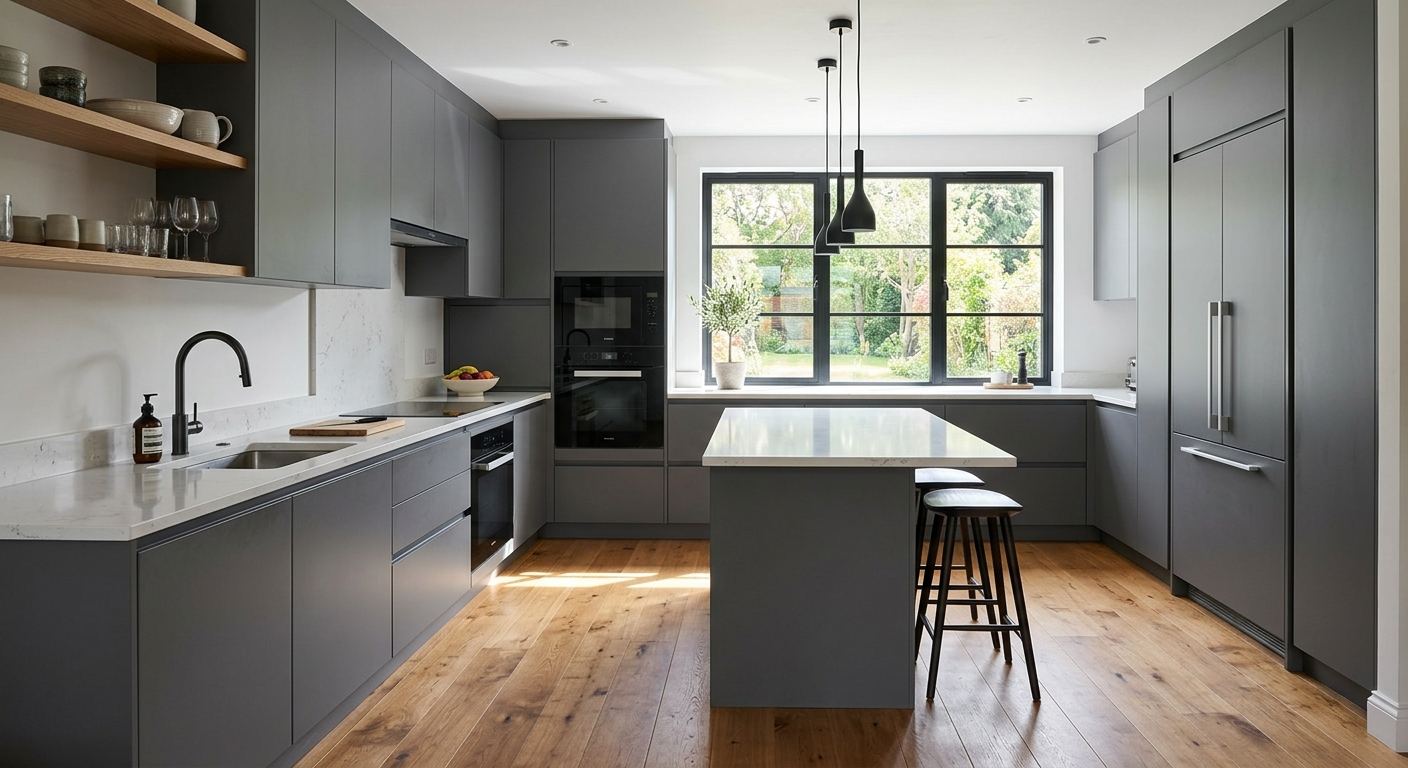
Kitchen renovation options and costs in Cherry Hill
Kitchen renovations in Cherry Hill, Ontario typically start with one practical question: how far do you want to go—freshen the look, upgrade the systems, or redesign the layout. With a small local population of 3,027 (Statistics Canada, 2021 Census), most demand clusters through the broader Toronto region, where homeowners often choose finishes that match current buyer expectations. That’s also why the budget conversation tends to track local home values and purchasing confidence: many GTA kitchens get treated like a resale investment rather than only a personal upgrade, pushing many projects toward mid-range or better materials instead of “quick fixes.”
In the Toronto economic region, costs are driven far more by market finish expectations than weather. Even though Ontario winters are hard on indoor humidity swings, kitchen cost drivers here are usually labour availability and scope decisions—cabinet installation complexity, countertop templating and fabrication schedules, and how many trades need to coordinate. For Cherry Hill homeowners, the trade is especially busy around the more established residential pockets where older homes are common and kitchens show their age, including in the broader central-rental and mature-neighbourhood pockets that feed regional contractors.
Below are realistic cost bands for common renovation paths in Cherry Hill, so you can compare quotes apples-to-apples before you ask your contractor for an itemised breakdown.
| Renovation Tier |
What's Included |
Typical Duration |
Price Range |
| Cosmetic refresh (paint, hardware, new appliances only) |
Paint, cabinet hardware, faucet (if not moving plumbing), cabinet fronts touch-ups, appliance swap, minor caulking and trim |
3–7 days |
$5,000–$15,000 |
| Mid-range full renovation (new cabinets, counters, sink, tile) |
New cabinets (stock or semi-custom), countertop (laminate or quartz), sink and faucet, backsplash tile, new under-cabinet lighting (optional), flooring prep |
2–4 weeks |
$25,000–$55,000 |
| High-end full renovation (custom cabinets, stone counters, island) |
Fully custom cabinetry, stone countertops (quartz or natural stone), island (electrical + plumbing if required), full-height backsplash options, upgraded appliance package |
4–8 weeks |
$60,000–$90,000 |
| Cabinet refacing only (new doors + drawer fronts, same boxes) |
Refacing panels, new doors/drawers, updated hardware, new toe-kick trim, labour to prep and install (no new cabinet frame) |
1–2 weeks |
$8,000–$35,000 |
| Countertop swap only (laminate to quartz or stone) |
Removal and install of existing top, new quartz/stone surface, sink cut-out and reseal (when applicable), basic backsplash edging |
3–10 days |
$3,000–$15,000 |
| Backsplash tile installation only |
Surface prep, tile supply and install, waterproofing details, trim/finishing, grout and caulking |
2–5 days |
$2,000–$10,000 |
Prices are estimates only and vary by project scope, site access and material selection.
What affects the price of kitchen renovation in Cherry Hill
It’s common to see the same kitchen renovation scope come in 30–50% apart across the Toronto and Ontario market, even when the “look” is similar. In Cherry Hill, the biggest reason is that homeowners in higher-value pockets often choose a higher finish tier, and that flows into everything: cabinet build type, countertop sourcing, appliance grade, and how much structural or electrical work the plan requires. In markets where buyers expect premium counters and more detailed millwork, renovations often land closer to the $80k+ band for full builds. In more price-sensitive areas, projects frequently stay in the mid-range—stock or refaced cabinets with quartz-or-laminate tops—so you can still modernize without paying for every upgrade.
Local home values and household income shape your finish tier far more than weather. Toronto’s freeze–thaw cycles don’t usually dictate the cabinet price, but they can influence how long it takes to complete trades on older homes (warped subfloors, outdated rough-in, or moisture-related caulking repairs). Also, layout changes are the most unpredictable cost regardless of finish level: removing a wall, adding an island, or moving a gas or plumbing line changes how many licensed trades get involved and how long the kitchen is out of service.
Concrete Cherry Hill examples: if you’re upgrading from laminate to quartz, many homeowners see countertop installation priced in the $3,000–$15,000 band depending on edge profiles and sink/undermount cuts. If you add an island that requires new electrical and potentially plumbing, the job can move from a mid-range $25,000–$55,000 renovation into a higher-end $60,000–$90,000 scope quickly—mostly because of rough-in and inspection work, not the cabinets alone. Finally, older flooring underfoot can push flooring replacement or subfloor repairs upward, even when you keep the same cabinet footprint.
| Price Factor |
Why It Matters |
Cost Impact |
| Cabinet tier — stock vs. semi-custom vs. fully custom millwork |
Different build processes, material grades, door styles, and lead times |
Can swing the full project by roughly $10,000–$35,000 depending on coverage and complexity |
| Countertop material — laminate vs. quartz vs. granite vs. stone |
Material cost and fabrication difficulty change labour and template time |
Typical countertop-only installs range from $3,000 up to $15,000+; full kitchen totals shift accordingly |
| Layout change — wall removal, island add, plumbing/gas move |
Adds structural work and triggers more trades and inspections |
Often increases costs by $5,000–$25,000+ depending on rerouting and removals |
| Appliance package tier — builder vs. mid-range vs. pro-grade |
Power requirements, venting needs, and finish matching can change the install scope |
Can add $2,000–$10,000+ to a mid-range kitchen depending on model tier |
| Flooring — refinish existing vs. full replacement |
Kitchen renovations often require removal and releveled transitions |
Replacements commonly add $2,000–$8,000; refinishing can be less but may not be feasible |
| Backsplash — ceramic tile vs. marble vs. full-height slab |
Material handling, substrate prep, and install time increase with larger-format/stone |
Backsplash-only budgets can range around $2,000–$10,000+ |
| Electrical — new circuits for island, under-cabinet lighting |
Island additions often require additional receptacles/lighting pathways |
Frequently adds $1,500–$7,000+ depending on circuit and wiring complexity |
| Permit fees and licensed trade requirements |
Work involving plumbing, gas, electrical additions, or structural changes needs permits |
Costs vary by scope, but can add several thousand dollars once multiple permits apply |
Permits & regulations in Ontario
In Ontario, you typically do not need a permit for straightforward cosmetic swaps like repainting, replacing cabinet doors with refacing (without moving plumbing/electrical), or replacing countertops as long as you’re not changing rough-ins. However, permits are usually required when you change the systems of the kitchen. The work that commonly does require permits includes: moving plumbing supply or drain lines (sink, dishwasher, bar/wet locations), relocating or adding gas service for a stove or range setup, removing a load-bearing wall, and adding new electrical circuits (for example, additional outlets for an island or new hardwired under-cabinet lighting circuits). Gas work must be completed by a licensed gas fitter, and electrical work must be completed by a licensed electrician—both are subject to inspection.
For Cherry Hill homeowners, the best approach is to verify before you sign and again before the first rough-in. Step-by-step: (1) ask your contractor for their Ontario licence details and the trade-specific credentials they’ll use (gas fitter and electrician where applicable); (2) request a certificate of insurance and confirm liability coverage is current; (3) confirm workers’ compensation coverage (WSIB/WCB) so you’re not exposed if a worker is injured; and (4) keep the permit responsibility clearly written in the contract—who pulls permits, who pays fees, and who schedules inspections. Finally, confirm what’s included for disposal and protection of finished surfaces during construction, since that affects scheduling and inspection sequencing.
Cabinets, countertops and layout decisions in Cherry Hill
The three biggest decisions that shape both your budget and your resale appeal in Cherry Hill are cabinet tier, countertop material, and whether you change the layout. First, choose your cabinet tier: stock cabinets are the fastest and usually the cheapest because they’re readily available; semi-custom is the most popular sweet spot in the Toronto market, balancing better interior storage and styling without custom lead times; and custom millwork gives the tightest fit and best architectural details, but it’s what tends to push full renovations into the upper end of the $60,000–$90,000 range.
Second, select a countertop material that matches how the kitchen is used. In Ontario’s real-life kitchen conditions—busy weekdays, frequent cleaning, and temperature shifts—quartz is often preferred because it’s durable and low-maintenance, while laminate can look great but is more sensitive to heat and heavy impacts. Granite/natural stone can be beautiful and resilient, but it may require periodic sealing depending on the stone and finish. Butcher block adds warmth and is forgiving, yet it needs ongoing sealing and care.
Third, layout changes should be made for a reason. Opening up a wall or adding an island can be worth it when it improves flow, creates storage, and aligns with how buyers expect a functional kitchen. But if the project requires plumbing/gas and new electrical pathways, those system changes can move the cost faster than upgrading from laminate to quartz. For example, keeping cabinetry mid-range while swapping to quartz often fits within the $3,000–$15,000 countertop install band, whereas moving supply/drain lines or adding an island electrical rough-in can drive a kitchen beyond the mid-range $25,000–$55,000 budget into a higher-end full renovation.
| Option |
Durability |
Maintenance |
Best For |
Price Range |
| Stock cabinets (big-box) |
Good durability with standard door hardware; limited custom sizing |
Low upkeep; hinges/hardware may need periodic adjustment |
Quick timelines and tighter budgets where the footprint stays consistent |
$8,000–$25,000 |
| Semi-custom cabinets (local dealer) |
Typically stronger construction and better internal options (pull-outs, shelves) |
Low upkeep; hardware updates can improve day-to-day reliability |
Most Toronto-area homeowners aiming for better function without full custom pricing |
$15,000–$40,000 |
| Custom cabinets (local millwork shop) |
Highest fit and finish; best for unusual dimensions and premium hardware |
Low upkeep; you may invest in upgrades like soft-close systems |
Architectural details, specialty storage, and highest-end resale presentation |
$30,000–$70,000+ |
| Laminate countertop |
Decent for everyday use, but vulnerable to heat and chips at edges |
Easy daily cleaning; protect from hot pans and avoid heavy impact |
Cost-conscious renos where you want a refreshed look within a controlled budget |
$3,000–$7,000 |
| Quartz engineered countertop |
Very durable for busy kitchens; resistant to most stains and everyday wear |
Low maintenance—wipe clean; avoid abrasive pads and extreme heat exposure |
High-traffic kitchens that need a premium look with minimal fuss |
$6,000–$15,000 |
| Granite / natural stone countertop |
Hard and long-lasting; performance varies by stone type and finish |
May require sealing; handle spills promptly and use proper cleaners |
Homeowners wanting distinctive, natural variation and premium visual depth |
$7,000–$18,000 |
| Butcher block countertop |
Durable but can scratch; best with regular care |
Ongoing sealing/oiling; quick wipe-down after water exposure |
Casual warmth, light prep use, and homeowners willing to maintain the surface |
$4,000–$12,000 |
| Marble countertop |
Luxurious and heat-tolerant, but more prone to etching and staining |
Higher maintenance—requires careful cleaning and sealing |
Statement kitchens where appearance is the top priority |
$10,000–$22,000+ |
How to choose a kitchen renovation contractor in Cherry Hill
Choosing the right contractor in Cherry Hill comes down to proof, not promises. Start by verifying Ontario trade credentials: ask for documentation for any licensed work (gas fitting and electrical) and confirm their business licence status when applicable. Request a current certificate of liability insurance (so you’re protected if property damage occurs) and confirm WSIB/WCB coverage for their workers—this is critical in Ontario because it helps ensure injured workers are handled properly without shifting risk to homeowners. If they can’t provide these documents promptly, treat that as a serious red flag.
Next, get 2–3 itemised written quotes that break down labour and materials. Avoid lump sums when possible; you want to see line items such as demolition, cabinet installation, countertop templating, electrical allowance, tile setting, permit handling, and disposal. Carefully read what’s excluded: is it removal of old flooring? Are appliances included or allowance-based? Is permit pulling included when systems are changed? Also review warranty terms—look for a clear workmanship warranty length and understand product/manufacturer warranty coverage. If the contractor is moving quickly to “seal the deal,” ask whether warranties are transferable to future owners (important for resale).
For payments, never agree to large upfront sums. A safe approach is to keep initial deposits around 10–15%, then hold back remaining funds until key milestones are complete. Finally, confirm timeline expectations in writing: start date, procurement lead times for cabinets/counters, inspection scheduling, and a realistic completion estimate.
- Verify Ontario licence details and confirm which trades are licensed for gas and electrical work.
- Request a certificate of liability insurance and confirm it covers renovation activities.
- Confirm WSIB/WCB clearance for workers (ask for proof, not verbal assurance).
- Get 2–3 itemised quotes with labour and material breakdowns, not just totals.
- Ask if permits are required for your specific scope and whether the contractor pulls them.
- Check inclusions: demolition, disposal, protecting floors/walls, and patching/painting after cabinet install.
- Confirm allowance amounts for appliances, fixtures, flooring, and tile if you’re not choosing specific models yet.
- Confirm countertop templating and install dates so you can plan around fabrication lead times.
- Ask who handles electrical rough-in and whether it includes outlets/lighting for an island.
- Clarify warranty: workmanship length, what’s covered, and how claims are handled.
- Use a payment schedule with a small deposit and milestone-based payments.
- Require a written schedule with start date, duration estimate, and completion target.
Red flags to watch for in Cherry Hill: (1) quotes that don’t specify whether permits are included when plumbing/electrical/gas is changing; (2) unusually low pricing that excludes disposal, patching, or electrical rough-in; (3) refusal to provide insurance/WSIB/WCB documentation; (4) vague timelines with no allowance for countertop/cabinet lead times; and (5) pressure for full payment upfront or no written scope and exclusions.
Frequently asked questions — kitchen renovation in Cherry Hill
What is the difference between a galley and open-concept kitchen?
In Ontario homes around Cherry Hill, a galley kitchen runs cabinetry along two parallel walls, typically creating a narrow work corridor. It can be efficient for cooking, but it offers less space for seating and can feel closed in. An open-concept kitchen removes some wall boundaries to connect the kitchen with the living/dining area, improving sightlines and making the space feel larger. From a renovation standpoint, open-concept layouts often cost more if you’re removing a load-bearing wall or modifying electrical and plumbing pathways. The good news is you can still target mid-range budgets—many homeowners keep within the $25,000–$55,000 band by using semi-custom cabinets and quartz where possible, while minimizing structural changes.
How do I get accurate kitchen renovation quotes in Cherry Hill?
To get accurate kitchen renovation quotes in Cherry Hill, start by sharing the same inputs with each contractor: your measurements, photos, a sketch of your preferred layout, and a finish direction (cabinet tier and countertop material). Then ask for itemised pricing that separates demolition, cabinet installation, countertop templating/fabrication, tile work, electrical allowances, and any permit handling. If you’re changing plumbing or adding an island, make sure the quotes explicitly state who is responsible for permits and licensed trade work. Avoid “best guesses” on scopes—request details on what’s included in disposal and patching/painting. A well-prepared scope helps keep bids comparable, especially when projects can shift from $25,000–$55,000 into the $60,000–$90,000 range just due to layout and system changes.
What's the best countertop material for a busy Cherry Hill kitchen?
For a busy Cherry Hill kitchen, quartz is often the best balance of durability and low maintenance. It handles everyday cooking activity well and typically doesn’t require the periodic sealing that some natural stones need. If your household cooks often and you want a consistent look that stands up to the daily routine, quartz is usually the practical “upgrade” choice. Laminate can be a budget-friendly option for refreshes, but it’s more sensitive to heat and can chip at edges, which matters if you frequently move hot cookware or do heavy prep. Natural stone like granite looks premium and is tough, but maintenance depends on the exact stone. In budgeting terms, countertop-only projects commonly land in the $3,000–$15,000 range depending on the material and sink cut-outs.
How do I add an island to my Cherry Hill kitchen?
Adding an island starts with a layout plan: you’ll need safe walkway clearance and a realistic placement that doesn’t block traffic through the kitchen. Next, confirm whether your island requires new services. If you want an island sink, that usually means relocating or adding plumbing supply/drain lines; if you want power outlets or built-in task lighting, you’ll likely need new electrical circuits. Those system changes are where the biggest cost swings happen, because they may require permits and licensed trades. The rest is cabinetry and surfaces. If you keep the island purely for prep/storage (no plumbing/gas), you can sometimes stay closer to the mid-range full renovation band like $25,000–$55,000, but adding plumbing/gas and electrical often nudges the total higher.
How much does a kitchen renovation cost in Cherry Hill?
In Cherry Hill, a realistic full kitchen renovation budget commonly ranges from mid-$20k for modest but complete refreshes up to $80k+ for larger, custom builds. In practical terms, many homeowners land in the $25,000–$55,000 range for mid-range full renovations (new cabinets, counters, sink, and tile) when the layout stays mostly intact. If you’re going custom with an island, upgrading to stone counters, and changing systems, projects often move into the $60,000–$90,000 band. Cabinet refacing-only and countertop-only projects can be much lower, depending on what’s changing—refacing might run around $8,000–$35,000, and countertops alone often fall in the $3,000–$15,000 range. Your exact number depends on the cabinet tier, countertop choice, and whether you’re moving plumbing, electrical, or gas.
How long does a kitchen renovation take in Cherry Hill?
Timelines in Cherry Hill typically depend on demolition speed, trade scheduling, and—most importantly—cabinet and countertop lead times. A cosmetic refresh can be quick, often around a few days. For a mid-range full renovation with new cabinets and counters, plan for roughly 2–4 weeks once materials are ordered and templating is complete. High-end renovations with custom cabinetry and an island generally take longer—commonly 4–8 weeks—because of fabrication lead time and the extra coordination needed for electrical and plumbing rough-ins. If your project requires permits and inspections, that can add time due to scheduling. To reduce delays, confirm your countertop templating date early and keep an itemised spec sheet finalized before demolition begins.