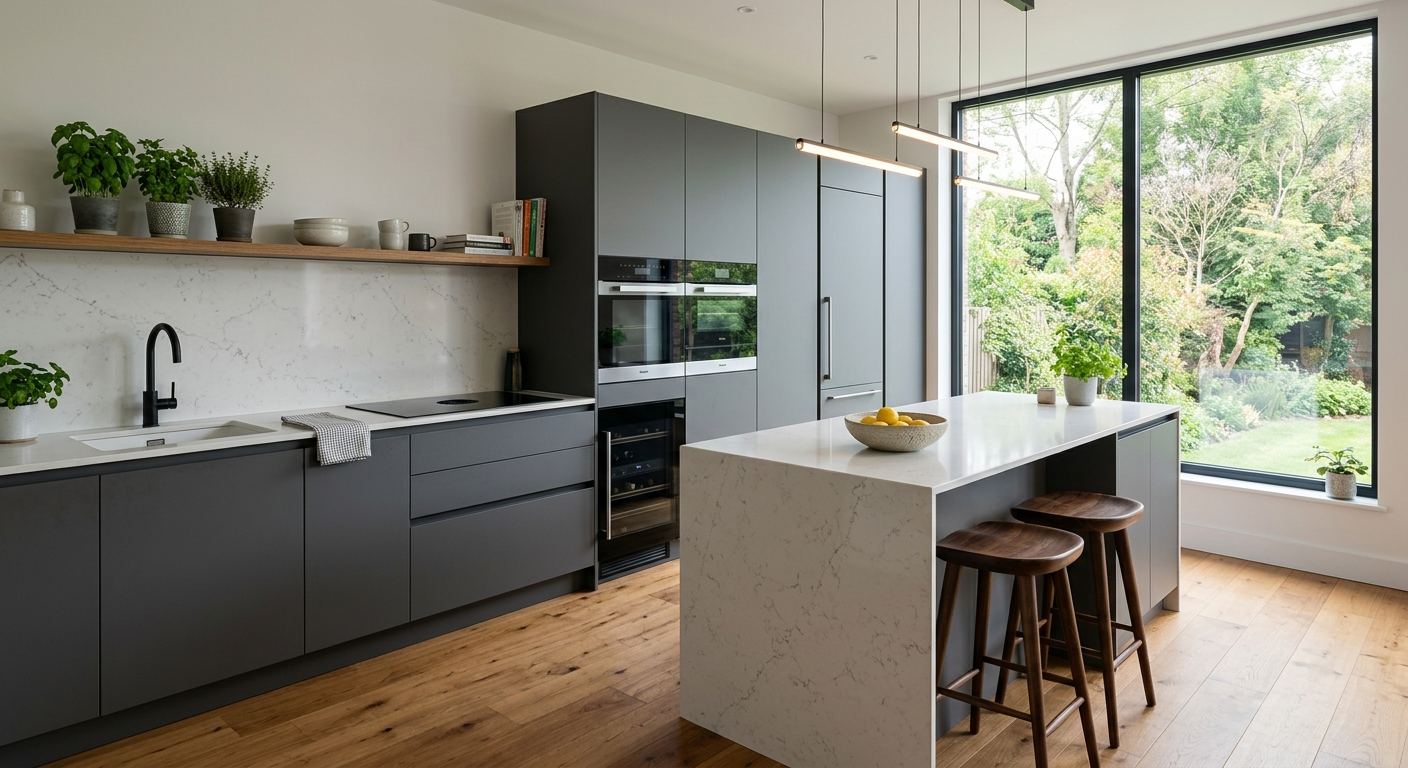
Kitchen renovation options and costs in Lowertown
Kitchen renovations in Lowertown often start with homeowners balancing a fresh look against resale expectations in a Toronto market where kitchens are a high-traffic selling feature. With a total population of 12,824 in 2021 (Statistics Canada, 2021 Census), Lowertown is large enough to support multiple installer crews, yet projects still compete for specialty millwork and stone-supply slots during peak spring and early summer. Costs in this part of Toronto are also shaped more by the local housing market than by the weather itself: in higher-value pockets, owners commonly invest a larger share of home value into finish upgrades, which pushes budgets toward semi-custom cabinetry and quartz or natural stone. In practical terms, that means the same footprint can land in different budget tiers depending on whether you choose stock, semi-custom, or fully custom millwork.
Toronto’s winter freeze-thaw cycles don’t usually change cabinet and countertop material performance as dramatically as you might expect, but they do affect site readiness and schedule—wet basements, limited access during snow periods, and busier subcontractor calendars can add a few days of lag between demolition, inspections, and install. In Lowertown, contractor demand is especially strong around the Church–Wellesley area, where many older homes are being refreshed for modern buyer preferences.
Below are realistic renovation tiers and what they typically include, so you can compare quotes apples-to-apples before you move on to the factors that drive price.
| Renovation Tier |
What's Included |
Typical Duration |
Price Range |
| Cosmetic refresh (paint, hardware, new appliances only) |
Cabinet paint or refinishing (no cabinet box changes), new hardware, backsplash touch-up or none, new appliances (no plumbing/gas relocation) |
1–3 weeks |
$3,500–$12,000 |
| Mid-range full renovation (new cabinets, counters, sink, tile) |
New stock or semi-custom cabinets, new countertops (laminate or quartz), sink + faucet, backsplash tile, cabinet-level electrical/lighting adjustments if already planned |
3–6 weeks |
$25,000–$55,000 |
| High-end full renovation (custom cabinets, stone counters, island) |
Fully custom cabinetry, quartz or natural stone (granite/marble), island with upgraded finishes, full tile/backsplash coverage, coordinated appliance package |
6–12 weeks |
$60,000–$90,000 |
| Cabinet refacing only (new doors + drawer fronts, same boxes) |
Refacing veneer/laminate, new doors/drawers, new hardware, minor repairs to existing boxes, matching trims |
2–4 weeks |
$8,000–$35,000 |
| Countertop swap only (laminate to quartz or stone) |
Remove existing laminate, install new countertop, sink cut-out adjustments, standard seam planning (no major plumbing relocation) |
1–3 weeks |
$3,000–$15,000 |
| Backsplash tile installation only |
Surface prep, tile supply/installation (ceramic/porcelain), grout/seal where applicable, minor trim/edge finishing |
3–7 days |
$2,000–$10,000 |
Prices are estimates only and vary by project scope, site access and material selection.
What affects the price of kitchen renovation in Lowertown
Two quotes for the “same” kitchen can still differ by 30–50% across Toronto and Ontario because labour scheduling, trade coordination, and how homeowners choose to spend on finishes vary widely by neighbourhood. In practice, the biggest price lever is local buying behaviour: where home values and household expectations are higher, homeowners more often move toward quartz or natural stone counters and semi-custom cabinetry, even when the layout stays mostly unchanged. In more price-sensitive settings, the strategy shifts to keeping the project inside mid-range budgets using laminate or selective upgrades, while still improving the feel with good lighting, hardware, and a sensible backsplash.
Layout changes are the most unpredictable cost regardless of finish tier. Removing a wall, adding an island, or moving a gas line or plumbing stack can trigger electrical and permitting work, specialty labour, and sometimes subfloor corrections—each one can add days and materials you don’t see in an early estimate. In Lowertown, older housing stock also matters: some kitchens have outdated rough-ins or mismatched joist spacing, which can make “simple” sink or dishwasher swaps more involved.
Here are concrete ways costs rise or fall in Lowertown. If you keep the current sink location and don’t relocate plumbing, a mid-range full renovation often stays closer to the $25,000–$55,000 band. If you add a gas range island or move the hood ducting, budgets commonly drift upward into the $60,000–$90,000 range because the mechanical and electrical scope expands. Likewise, if your flooring is already in good shape and you refinish it, you avoid replacement lead times; if subfloor repairs are needed, labour and disposal increase quickly.
| Price Factor |
Why It Matters |
Cost Impact |
| Cabinet tier — stock vs. semi-custom vs. fully custom millwork |
Custom sizing, dovetail construction, and specialty hardware increase fabrication time and materials cost |
Small jobs can vary by thousands; full kitchens often swing broadly between low–mid and high-end budgets |
| Countertop material — laminate vs. quartz vs. granite vs. stone |
Material pricing plus templating, fabrication complexity, and seam planning drive the difference |
Laminate stays lower; quartz and natural stone typically add meaningful cost to the countertop line item |
| Layout change — wall removal, island add, plumbing/gas move |
Triggers engineering, permitting, inspection scheduling, and coordinated trades |
Often the largest swing factor; commonly pushes budgets beyond the “refresh” tier |
| Appliance package tier — builder vs. mid-range vs. pro-grade |
Higher tiers require better dimensions, electrical/gas readiness, and sometimes ventilation upgrades |
Can shift total cost quickly depending on whether you keep existing hookups |
| Flooring — refinish existing vs. full replacement |
Demo exposes subfloor condition; matching new product can add complexity |
Refinishing reduces demolition/disposal and keeps labour leaner |
| Backsplash — ceramic tile vs. marble vs. full-height slab |
Premium materials increase both supply cost and installation difficulty/weight |
Ceramic is predictable; premium stone or full-height applications raise both material and labour |
| Electrical — new circuits for island, under-cabinet lighting |
New circuits require licensed electrical work and can change the lighting and outlet plan |
Often adds cost even when the cabinet work stays the same |
| Permit fees and licensed trade requirements |
Some tasks trigger inspections; scheduling inspections can extend timelines |
Costs are variable, but delays and rework risk raise total project spending |
Permits & regulations in Ontario
In Ontario, a countertop swap or a straight cabinet replacement/refacing typically doesn’t need a permit, because you’re not changing the building services. That said, kitchen renos become permit-requiring when you move or alter plumbing supply/drain lines, relocate a gas appliance or gas lines (including stove/range and certain range hood configurations), remove a load-bearing wall, or add/modify electrical circuits. Adding an island that requires additional outlets, relocating the sink to a new location, or cutting into drywall to reroute ducting are the common triggers that change a “cosmetic” job into a permit-and-inspection job.
For Lowertown homeowners, the best approach is to verify three things before you sign: (1) the contractor’s Ontario licence/registration where applicable, (2) liability insurance, and (3) WSIB/WCB coverage for workers. Step-by-step: first, ask the contractor for their proof of insurance (certificate of insurance showing general liability limits) and the workers’ compensation clearance/coverage document; then confirm they provide it to you at contract signing. Next, review their licence information through Ontario’s online registry (the contractor should be able to identify which specific trade category they hold). Finally, request the clearance letter or coverage evidence and keep it with your contract package.
Always confirm in writing who pulls permits for your specific scope—especially for plumbing, gas-fitting, and electrical—because “we assumed someone else would handle it” is where disputes start.
Cabinets, countertops and layout decisions in Lowertown
If you’re deciding how to spend your budget in a Lowertown kitchen renovation, focus on three choices that shape both cost and buyer appeal: (1) cabinet tier, (2) countertop material, and (3) layout changes. Cabinet tier sets your baseline. Stock cabinets are fastest and cheapest, but limited sizing can force compromises in door alignment or storage layouts. Semi-custom is the popular mid-range option because it balances fit with predictable timelines. Fully custom cabinets cost the most, yet they deliver the best storage planning—especially in older Lowertown homes where walls aren’t perfectly square.
Countertops drive day-to-day satisfaction. Laminate is budget-friendly and can look great with the right edge profiles, but it’s less forgiving to impact and heat. Quartz is the Toronto-area standard for a reason: it’s non-porous, resists stains, and handles daily use well, which matters for busy households and resale showings. Granite/natural stone is durable and premium-looking, but it needs sealing and careful maintenance. Butcher block adds warmth and works beautifully in kitchens that see serious cooking, though it requires regular oiling and attention to moisture seams.
Layout decisions are where value can be earned. In the Toronto market, buyers increasingly expect functional work zones and built-in storage; if you can add an island without complicated service moves, you’ll usually justify it through better flow and seating. For example, upgrading from laminate to quartz might land around the $3,000–$15,000 countertop-swap band—often worth it because it improves both appearance and stain resistance. By contrast, if your island requires moving plumbing/gas and rewiring circuits, the added labour and coordination can push you toward the full renovation bands rather than a simple refresh.
| Option |
Durability |
Maintenance |
Best For |
Price Range |
| Stock cabinets (big-box) |
Solid for everyday use; limited height/width options can affect fit |
Basic care; hinges/hardware longevity depends on model tier |
Time-sensitive projects and budgets that need predictable lead times |
$8,000–$25,000 |
| Semi-custom cabinets (local dealer) |
Better sizing options and upgradeable internal storage |
Low day-to-day upkeep; upgradeable hardware improves longevity |
Most Lowertown renovations aiming for strong resale look without full custom pricing |
$20,000–$45,000 |
| Custom cabinets (local millwork shop) |
Best fit and build details; optimized storage for unusual wall conditions |
Low maintenance; choose quality finishes for long-term durability |
High-end builds, challenging footprints, and buyers expecting “built for the space” millwork |
$35,000–$70,000+ |
| Laminate countertop |
Good for normal wear; sensitive to heat and deep cuts depending on quality |
Wipe clean; avoid hot pans and sharp impacts |
Budget-first renovations where cosmetics matter most |
$3,000–$7,500 |
| Quartz engineered countertop |
High resistance to staining and daily abrasion; consistent surface |
Easy care—standard cleaners; protect from extreme heat |
Busy kitchens that need a low-fuss, high-end look for Toronto resale |
$7,000–$15,000 |
| Granite / natural stone countertop |
Very durable; natural variation; can chip if mishandled |
Sealing and periodic maintenance depending on stone type |
Homeowners seeking timeless premium character |
$9,000–$18,000 |
| Butcher block countertop |
Strong but can scratch; edges are more vulnerable near sinks |
Regular oiling; careful moisture management and re-finishing |
Cooking-focused kitchens with space to maintain the surface |
$6,000–$14,000 |
| Marble countertop |
Premium look; more prone to etching/staining than quartz |
Frequent care; sealing and immediate cleanup are essential |
Showpiece kitchens where maintenance is acceptable |
$12,000–$25,000+ |
How to choose a kitchen renovation contractor in Lowertown
Choosing the right contractor in Lowertown comes down to verifying credentials, demanding itemised quotes, and controlling risk through the contract. First, confirm licensing/registration where applicable for each trade involved: ask who is pulling permits, who is doing plumbing/gas work, and who is handling electrical. Next, verify liability insurance (certificate of insurance naming you as the certificate holder if available) and workers’ compensation coverage (WSIB/WCB clearance information for Ontario). If they can’t provide documentation promptly, that’s a sign to pause.
Get 2–3 written, itemised quotes—not lump sums. You want a breakdown that separates labour from materials (cabinets, countertops, tile, demo/disposal, electrical, plumbing/gas work where needed). Read the scope carefully for exclusions: Is demolition and disposal included? Are old cabinets and countertop removals hauled away? Is permit pulling included, and who pays permit fees? For warranty, ask for the workmanship warranty length, whether it covers cabinets installation adjustments and countertop seam issues, and whether the manufacturer warranty for products is transferable to you. Finally, use a payment schedule that limits upfront payment to about 10–15%, with a holdback until substantial completion.
Timeline matters too. Require a start date and a completion estimate in writing, including key milestones like cabinet template day, countertop fabrication lead time, and final inspection sign-off for any permitted work.
- Confirm which specific tasks require permits in your scope (plumbing/gas/electrical, load-bearing removal).
- Ask for the contractor’s insurance certificate and workers’ compensation clearance/coverage documents.
- Require trade lead names and responsibilities (who does electrical, who does gas fitting, who handles plumbing).
- Get itemised quotes with line-by-line labour and material amounts.
- Ensure disposal and site protection are included (dust control, floor protection, hauling).
- Verify cabinet and countertop lead times are stated in the proposal.
- Confirm backsplash scope: surface prep, waterproofing/backer where needed, grout type and sealing.
- Ask who handles measurements/templating for countertops and how changes are managed.
- Include warranty details in writing for both workmanship and manufacturer coverage.
- Use a payment schedule with 10–15% upfront and a holdback until completion.
- Require a written schedule with milestones, not just a target start and end date.
- Check communication: a single point of contact and documented change-order process.
Red flags I see in Lowertown include: proposals that don’t itemise labour vs. materials, vague “all-in” pricing without scope boundaries, contractors who won’t state who is pulling permits, missing insurance/WSIB/WCB documentation, and timelines that ignore countertop template/fabrication lead times.
Frequently asked questions — kitchen renovation in Lowertown
What's the best countertop material for a busy Lowertown kitchen?
For a busy Lowertown household, quartz is often the safest “best overall” choice in Ontario because it resists staining and holds up well to daily cooking. If you’re upgrading from laminate, the countertop-swap budget commonly sits in the $3,000–$15,000 band depending on slab size, edges, and whether you’re keeping the same sink/cut-outs. Quartz is also less maintenance-heavy than granite or marble—important when life is busy and you want a surface that stays looking clean between deep cleans. If you love the look of natural stone, granite can work well too, but it requires sealing and careful attention to spills and acids. For most buyers in the Toronto market, quartz delivers a modern, durable appearance without constant upkeep.
How do I add an island to my Lowertown kitchen?
Adding an island usually starts with your layout and service planning. If you’re keeping plumbing and gas where they are, the project is simpler: you frame and install the island with standard power for outlets (and possibly under-cabinet lighting) and let it align with existing traffic flow. If you want a sink or a gas cooktop on the island, expect more complexity—plumbing supply/drain moves and/or gas-fitting work, plus electrical circuits and likely permits and inspections. In the Toronto economic region, that can move you from a mid-range refresh into a higher scope budget quickly because coordination increases. A good contractor will sketch clear clearances (walkways), confirm appliance electrical requirements, and schedule countertop templating early so you don’t lose weeks while trade work catches up.
How much does a kitchen renovation cost in Lowertown?
In Lowertown, a realistic full-kitchen renovation budget commonly lands anywhere from the mid-range to high-end depending on cabinet tier, countertop choice, and whether you’re changing layout. For modest but complete updates, many projects fit the $25,000–$55,000 range (new cabinets, counters, sink, and tile). If you’re choosing custom cabinets, premium stone, and adding an island—especially with plumbing/gas/electrical changes—budgets more often target the $60,000–$90,000 band. Cosmetic refreshes (paint, hardware, and new appliances only) can be much lower, but that doesn’t replace the core cost drivers like countertop fabrication and millwork installation. Your quote should show whether you’re staying in a refresh or building a full replacement plan, with line items for labour, materials, and any permitted work.
How long does a kitchen renovation take in Lowertown?
Typical timelines in Lowertown depend on lead times and how complicated the services are. A cosmetic refresh can be as quick as 1–3 weeks if appliances and hardware are ready. A mid-range full renovation often takes about 3–6 weeks, assuming cabinets are in stock or the dealer’s lead time is confirmed, and countertop templating/fabrication happens on schedule. If you’re doing high-end work with custom cabinetry and stone, expect 6–12 weeks because custom millwork requires measuring, fabrication, and schedule coordination with stone installers. Layout changes that trigger permits and inspections can add time even when materials are ready, because inspection slots control the “next step” for finishes. Your contractor should provide milestone dates—demo, rough-in completion, template day, countertop install, and final inspection—so you can plan around your household needs.
Quartz vs granite countertops — which is better?
“Better” comes down to how you use your kitchen and how much maintenance you’re willing to do. Quartz is generally the better everyday choice for busy Lowertown kitchens: it’s non-porous, resists staining, and typically requires only routine cleaning. Granite is durable and premium-looking, but it’s a natural stone with variation and it requires sealing and more careful maintenance to keep it stain-resistant. In Toronto-area kitchens where buyers expect a modern, low-fuss surface, quartz often fits best. If you want the natural movement of stone and you’re comfortable with periodic sealing, granite can be a great long-term option. Budget also matters: quartz and natural stone frequently sit in the $7,000–$15,000 and higher ranges depending on slab size and complexity. A good contractor will help you choose based on your cooking habits, pets/kids, and your tolerance for maintenance.
Should I reface or replace my cabinets?
Refacing is usually best when your cabinet boxes are still structurally sound, your layout works, and you mainly want a newer face and hardware. It’s often the more cost-effective route and can keep your kitchen usable while the upgrade happens, which is especially helpful in older Lowertown homes where moving everything requires more dust, demolition, and service coordination. If your boxes are damaged, poorly built, warped, or you want major layout changes (like new storage geometry or moving appliance locations), replacement is usually the better investment. In budget terms, cabinet refacing often falls in the $8,000–$35,000 band, while full cabinet replacement typically pushes higher depending on stock vs. semi-custom vs. custom tiers. A contractor should assess box condition in person—often the best deciding factor is whether the existing boxes are worth keeping.