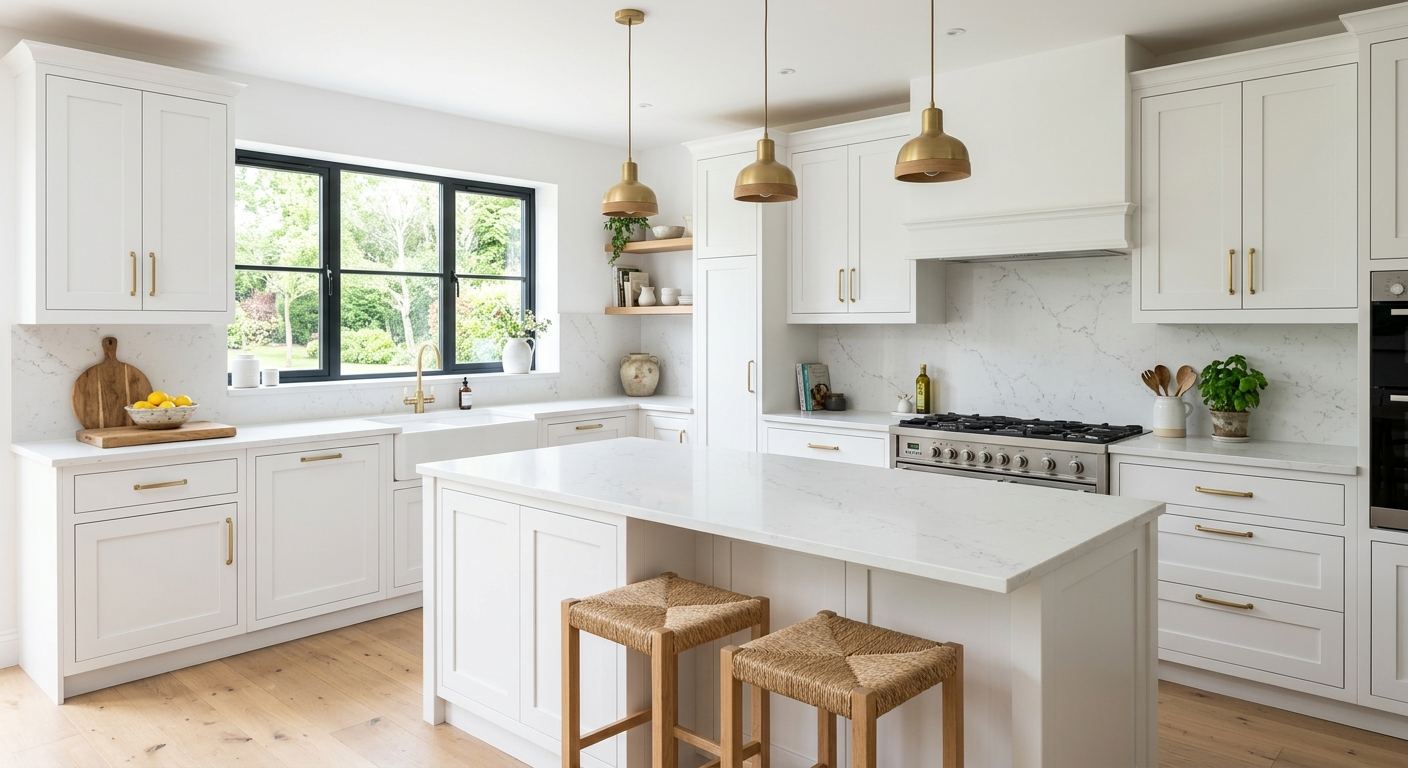
Kitchen renovation options and costs in Attawapiskat
Kitchen renovations in Attawapiskat tend to be straightforward in concept, but the final price swings based on how “complete” the project is. To put it in local context, Attawapiskat’s population was 1,501 people in 2021 (Statistics Canada, 2021 Census). Even when labour and material pricing track the broader Toronto economic region, homeowners here still choose finishes that align with what local buyers can realistically pay for. In practical terms, projects in higher-value markets around the Toronto region often target premium looks—sometimes spending roughly 8–15% of the home’s value on kitchen upgrades—while more budget-conscious renovators keep costs closer to the mid-range to protect resale ROI. In Attawapiskat, that same principle shows up as a preference for durable, wipe-clean surfaces and cabinetry that can handle everyday wear without constant maintenance.
Across the Toronto economic region, pricing is driven far more by demand and finish tier than by climate. Our renovation crews aren’t limited because of weather the way outdoor trades can be; instead, timelines and availability depend on crew capacity and material lead times. That said, kitchens still “feel” the climate indirectly: winter temperature swings and indoor humidity can stress certain finishes (especially low-cost particleboard and thin laminates), so contractors commonly recommend better sealed edges, quality under-cabinet ventilation, and cabinets with solid-grade construction—when budgets allow.
If you’re in the zone where repairs and upgrades are often requested—especially near the community’s busiest central activity areas, such as the main retail/services strip where kitchens get used hard—expect higher demand for mid-range renovations that deliver a visible refresh quickly. From there, it’s easier to compare options with a budget map.
| Renovation Tier |
What's Included |
Typical Duration |
Price Range |
| Cosmetic refresh (paint, hardware, new appliances only) |
Cabinet paint or refinish, new pulls/knobs, new appliance set, minor touch-ups; no cabinet rework |
3–7 days |
$8,000–$20,000 |
| Mid-range full renovation (new cabinets, counters, sink, tile) |
Semi-custom or quality stock cabinets, new countertops, sink + faucet, backsplash tile, new plumbing fixtures; optional flooring refinishing |
3–5 weeks |
$35,000–$65,000 |
| High-end full renovation (custom cabinets, stone counters, island) |
Fully custom millwork, premium quartz/natural stone, island design + seating, upgraded appliance package, feature backsplash, upgraded lighting/circuits |
6–10 weeks |
$70,000–$90,000 |
| Cabinet refacing only (new doors + drawer fronts, same boxes) |
New veneer/face panels, doors/drawer fronts, new hardware; countertop not included unless you add it |
1–3 weeks |
$12,000–$30,000 |
| Countertop swap only (laminate to quartz or stone) |
Remove existing tops, install new quartz/stone (templating, fabrication, install), seal where applicable; sink reuse if compatible |
1–2 weeks |
$3,000–$15,000 |
| Backsplash tile installation only |
Surface prep, waterproofing/adhesive system, ceramic tile installation (standard height), grout/seal, clean-up |
3–7 days |
$2,000–$10,000 |
Prices are estimates only and vary by project scope, site access and material selection.
What affects the price of kitchen renovation in Attawapiskat
Two homeowners can receive very different quotes for what sounds like the same job in Ontario—often 30–50%—because the “hidden scope” varies: how much demolition is needed, what the cabinet boxes/flooring condition looks like behind the scenes, and whether trades can work around existing electrical/plumbing without opening more walls than expected. In the Toronto economic region, local home values and household purchasing power shape the finish tier far more than climate does. In higher-value pockets, homeowners default to quartz or natural stone and semi-custom cabinetry because they can recover more of that cost on resale. In more price-sensitive areas, laminate and stock cabinets dominate, keeping total budgets closer to the mid-$20k to mid-range projects rather than pushing toward $80k+.
Layout changes are the most unpredictable cost regardless of finish. Moving a gas line (for a cooktop/range), relocating plumbing, or adding an island changes how many hours of carpentry, drywall patching, and electrical work you’re effectively buying. In addition, older housing stock—common across many Ontario communities—can require extra reinforcement for new island loads or correcting out-of-level floors before cabinets can sit properly.
Here are a few concrete examples of what raises or lowers costs you’d typically see in Attawapiskat: (1) If your existing cabinet boxes are solid, refacing can keep you in the lower band—often around the $12,000–$30,000 range—because you avoid full demolition. (2) If you swap to quartz or natural stone but keep the plumbing location unchanged, you can hold the project near the $3,000–$15,000 countertop installation band. (3) If you want an open-concept feel by removing a wall and adding new electrical circuits for island lighting, expect the budget to move quickly toward the full-renovation ranges ($25,000–$90,000), even when the finishes are mid-tier.
| Price Factor |
Why It Matters |
Cost Impact |
| Cabinet tier — stock vs. semi-custom vs. fully custom millwork |
Higher tiers raise material cost and labour time for precision fitting |
Can shift the full kitchen budget by roughly $10,000–$30,000+ |
| Countertop material — laminate vs. quartz vs. granite vs. stone |
Fabrication complexity and durability requirements affect price |
Typically +$2,000–$12,000 from laminate to stone/quartz |
| Layout change — wall removal, island add, plumbing/gas move |
Creates unknowns in framing, patching, and licensed-trade work |
Often +$5,000–$25,000 depending on services moved |
| Appliance package tier — builder vs. mid-range vs. pro-grade |
Pro-grade appliances add venting, power requirements, and trim/fit work |
Usually +$1,500–$8,000+ |
| Flooring — refinish existing vs. full replacement |
Removing cabinets may require floor repair and re-leveling |
Can add +$2,000–$10,000 |
| Backsplash — ceramic tile vs. marble vs. full-height slab |
Material weight and cutting accuracy increase labour and waste |
Often +$1,000–$6,000 |
| Electrical — new circuits for island, under-cabinet lighting |
Adding outlets/lighting triggers more wiring, panels, and inspection time |
Commonly +$800–$4,000 |
| Permit fees and licensed trade requirements |
Permits and inspections add administrative and compliance cost |
Often +$300–$2,500 (project-dependent) |
Permits & regulations in Ontario
In Ontario, many “surface-level” kitchen changes don’t require permits. Cabinet and countertop swaps typically do not require a permit when you’re keeping plumbing and gas connections where they are and you’re not altering structural elements. However, permits (and licensed trades) become necessary when you touch systems or structure: moving plumbing supply or drain lines, relocating a gas stove/range or making changes that affect gas venting (including range hoods connected to gas), removing a load-bearing wall, or adding new electrical circuits for outlets, island power, or significant lighting changes.
Here’s a practical step-by-step way for a homeowner in Attawapiskat to verify a contractor before you sign: (1) Ask for their Ontario business details and check their licensing online via the appropriate provincial licensing/registration resources for their trade category. (2) Request a certificate of insurance showing general liability (and, if relevant, proof of auto/contractors’ coverage). (3) Confirm WSIB/WCB coverage—many homeowners only ask “do you have insurance,” but you want the actual clearance documentation or a current coverage letter number. (4) Require that the electrical work is performed by a licensed electrician and gas work by a licensed gas fitter, with permit responsibilities clearly stated in the contract. (5) Before any work starts, confirm who pulls permits, who schedules inspections, and whether the contractor includes that cost in their scope.
Cabinets, countertops and layout decisions in Attawapiskat
Three decisions drive most kitchen outcomes in Attawapiskat: the cabinet tier, the countertop material, and whether you change the layout. (1) Cabinet tier determines speed, fit quality, and how well the kitchen withstands everyday use—especially important in an Ontario home where temperature shifts can reveal installation gaps and where higher humidity cycles can stress lower-grade materials. Stock cabinets are fastest and generally lowest cost, but they can look more “standard.” Semi-custom is the most popular mid-range option because you get better sizing and options without the full custom price. Custom cabinets provide the best fit and storage planning, but they push budgets toward the high-end full renovation band.
(2) Countertops should be chosen for durability and maintenance. Laminate is cost-effective and repairable in limited ways, but it can be less forgiving with heat and seam wear. Quartz offers a strong balance: it resists staining and daily messes well, and it’s often priced in the countertop-install band you’d budget around $3,000–$15,000 for a typical swap, depending on cut complexity. Granite/natural stone can be beautiful and long-lasting but can require sealing routines and has more variability. Butcher block brings warmth and is forgiving for light repairs, while marble is elegant but needs more careful maintenance.
(3) Layout changes only make financial sense when you’re buying real space/function. For example, adding an island can justify the higher labour and electrical (island outlets/lighting) when it improves circulation and storage. If your goal is visual refresh, you often get more value staying closer to mid-range renovation pricing like $35,000–$65,000 rather than jumping into fully custom territory around $70,000–$90,000.
In the Toronto resale market, buyers tend to expect at least durable cabinetry and a modern, clean-looking surface. In Attawapiskat, that translates to choosing finishes that look current now and won’t look tired in a few years—especially around sink splash zones and cooking areas.
| Option |
Durability |
Maintenance |
Best For |
Price Range |
| Stock cabinets (big-box) |
Good for everyday use; relies on careful installation for long-term alignment |
Low; wipe-clean surfaces, tighten hardware as needed |
Fast projects and tighter budgets |
$8,000–$20,000 |
| Semi-custom cabinets (local dealer) |
Very solid; better sizing options and stronger storage planning |
Low; standard cleaning and hardware checks |
Most homeowners balancing look and value |
$18,000–$45,000 |
| Custom cabinets (local millwork shop) |
Highest fit and finish; best for irregular spaces and specialty storage |
Low-to-moderate depending on finish type |
Long-term homes where you want a tailored layout |
$35,000–$70,000+ |
| Laminate countertop |
Moderate; seams and edges are the vulnerable points |
Simple daily cleaning; avoid prolonged heat contact |
Budget-friendly renovations and rental-style refreshes |
$3,000–$7,000 |
| Quartz engineered countertop |
High; resists stains and daily wear extremely well |
Low; no sealing for typical quartz products |
Busy households wanting a premium look without extra upkeep |
$6,000–$13,000 |
| Granite / natural stone countertop |
High; very durable but varies by stone |
Moderate; sealing and careful maintenance for longevity |
Homeowners prioritizing natural variation and classic upscale feel |
$8,000–$15,000 |
| Butcher block countertop |
Medium-to-high with proper oiling; can show scratches gracefully |
Moderate; periodic oiling and protective habits |
Families who like food prep and a warm, casual look |
$5,000–$12,000 |
| Marble countertop |
Medium; strong but can etch/stain from acids and heat |
High care; prompt cleaning and sealing routines |
Statement kitchens where appearance matters most |
$10,000–$18,000+ |
How to choose a kitchen renovation contractor in Attawapiskat
Choosing the right contractor matters as much as the materials. Start by verifying Ontario licensing for each relevant trade: cabinetry/finish trades may not be licensed the same way as electrical or gas, but the electrician and gas fitter must be licensed for their work, and your contractor should coordinate those permits. Next, confirm liability insurance by requesting a current certificate of insurance (not just “we’re insured”), and verify WSIB/WCB coverage status. In Ontario, homeowners can ask for a coverage letter/clearance documentation number—if the contractor can’t provide it, treat that as a serious red flag.
Then get 2–3 itemised written quotes. You want labour and materials broken down (demolition, framing/drywall patching, cabinetry install, countertop templating/fabrication/install, plumbing/electrical allowance, tile labour), not one lump number. Read the scope for exclusions: is disposal included? Is dust protection included? Who pays for permit pulls and inspections if required? Also confirm warranty details in writing: workmanship warranty length, product/manufacturer warranty coverage, and whether warranties transfer if you sell the home.
On payments, never go beyond 10–15% upfront. Hold back a final portion until all punch-list items are complete and you’ve received product close-out information. Finally, demand a timeline with a start date and realistic completion estimate based on material lead times. In communities like Attawapiskat, delays often come from shipment/coordination, so your contract should account for lead time in the schedule.
- Ask who pulls permits and schedules inspections (and confirm it in the contract).
- Verify the contractor’s Ontario business details and trade-specific licensing where applicable.
- Request certificate of insurance showing general liability limits and coverage dates.
- Confirm WSIB/WCB clearance documentation (or proof of coverage) before work starts.
- Get 2–3 itemised quotes with labour and materials separated—no “mystery totals.”
- Check inclusions: demolition, disposal, dust control, patching/painting scope.
- Confirm countertop templating timing and who pays for re-templating if needed.
- Clarify appliance allowance versus exact model numbers (avoid price-only allowances).
- Verify plumbing/electrical allowances and whether relocating services are priced.
- Demand a written warranty schedule: workmanship and product warranties separately.
- Keep payment front-loaded no more than 10–15%; request progress draws with receipts.
- Get a start date, milestones, and completion target in writing; include lead-time contingencies.
Red flags I see with kitchen renovation contractors in Attawapiskat include: refusing to provide itemised quotes; “license/insurance” answers that don’t come with documents; vague scope language like “we’ll figure it out later”; requiring large upfront payments beyond 15% without a clear payment schedule tied to milestones; and no written warranty details for workmanship or product terms.
Frequently asked questions — kitchen renovation in Attawapiskat
Custom vs stock cabinets — is custom worth it?
In Ontario, custom cabinets are worth it when your layout is awkward (off-square walls, uncommon ceiling heights) or you want specialty storage that stock can’t replicate—like full-height pantries, pull-outs sized to your exact cookware, or an island plan that integrates seating and outlets. If your goal is a visible upgrade quickly, stock cabinets can be the fastest path, especially if you’re staying in the mid-range budget. Many homeowners in Attawapiskat choose semi-custom because it gives a better fit than stock without the full custom lead time and cost. If you’re aiming for a full renovation budget around $35,000–$65,000, semi-custom often gives you the best balance. If you’re budgeting closer to $70,000–$90,000, custom can make sense—particularly when paired with quartz and a layout upgrade buyers expect.
How do I choose a kitchen contractor in Attawapiskat?
Start with verification: confirm the electrician and any gas fitter are licensed for their scope, and ask your contractor for proof of liability insurance and WSIB/WCB coverage (clearance documentation). Then request 2–3 itemised written quotes with a labour/material breakdown so you can compare apples-to-apples. In Ontario, the scope should clearly state who pulls permits when plumbing, gas, structural walls, or electrical circuits change. Pay attention to warranty terms: workmanship duration, product/manufacturer warranty coverage, and whether warranties transfer. Finally, protect your cashflow: don’t pay more than 10–15% upfront, and hold a portion until your punch list is complete. If the contractor can’t explain the schedule and exclusions in plain language, that’s often how projects stall and budgets drift.
What order do kitchen renovation steps happen in?
While every job has site-specific variations in Attawapiskat, a typical Ontario sequence looks like this: (1) measure/template (especially for cabinets/countertops), (2) demolition and rough-in coordination, (3) framing/drywall patching (if you’re changing layout), (4) install base cabinets and verify levels, (5) countertop templating/fabrication scheduling, (6) countertop install, (7) sink/faucet installation and final plumbing connections, (8) electrical/lighting completion (island outlets, under-cabinet lighting), (9) backsplash tile, (10) trim/finish work and final paint/touch-ups, and (11) appliance hookup and final inspection. If permits are required (for electrical circuits, moving plumbing drains/supplies, or gas relocation), inspections must be scheduled after rough work and before closing walls. A good contractor keeps the order tight so you’re not delaying tile and countertops behind uncoordinated trades.
Can I live at home during a kitchen renovation in Attawapiskat?
Often you can, but it depends on how disruptive your scope is and how well the contractor manages dust and access. In Attawapiskat, many homeowners choose to stay home for cosmetic refreshes and even mid-range renovations if the work is staged and a safe kitchen-use area is set up. For full renovations that involve cabinet removal, countertop installation, and plumbing/electrical changes, living in the home is possible but usually uncomfortable—especially when there’s limited sink access, temporary electrical routing, and dust control challenges. If the project includes layout changes or permits (plumbing/gas/electrical), plan for more disruption and consider a temporary cooking setup. You can also ask your contractor about scheduling: starting early in the day, keeping demo contained, and prioritizing a functional sink/cook zone first to reduce day-to-day inconvenience.
Should I renovate my kitchen before selling in Attawapiskat?
It can be a smart move, but timing depends on your resale goal and the local buyer expectations in the Toronto economic region. In Ontario, buyers often notice kitchens first, and a clear “update” (clean cabinetry, durable counters, modern backsplash and lighting) tends to help. However, overspending on ultra-premium finishes without matching the overall home value can reduce ROI. If you’re aiming for a resale-friendly upgrade, many homeowners pick a mid-range full renovation around $35,000–$65,000 rather than pushing to $70,000–$90,000 unless the home supports it. Also consider housing-stock constraints: older homes may have hidden issues behind cabinets (subfloor flatness, dated electrical), and addressing those before listing can prevent negotiation surprises. If you plan to sell soon, focus on visible finishes and functional upgrades while minimizing major layout changes that introduce cost uncertainty.
What's the most popular kitchen style in Attawapiskat right now?
In Attawapiskat and across Ontario, the most commonly requested look is a bright, clean modern style with “warm minimalism”: simple cabinet lines, lighter neutral colours, and durable countertops that read premium in photos. Quartz is often the go-to because it delivers a consistent appearance with low maintenance. Backsplashes are frequently a ceramic tile or a simple pattern that won’t date quickly. Many homeowners also ask for improved lighting—especially under-cabinet LED—to make the kitchen feel larger and more functional during long winter months. Layout-wise, the trend is often toward small, practical upgrades rather than full structural removals: better storage, more workspace, and in some cases an island add when the room size justifies plumbing/electrical work. If you’re planning a refresh that stays in budget, a cosmetic refresh plus upgrades like new hardware and appliances can still be a strong first step—often beginning around $8,000–$20,000.