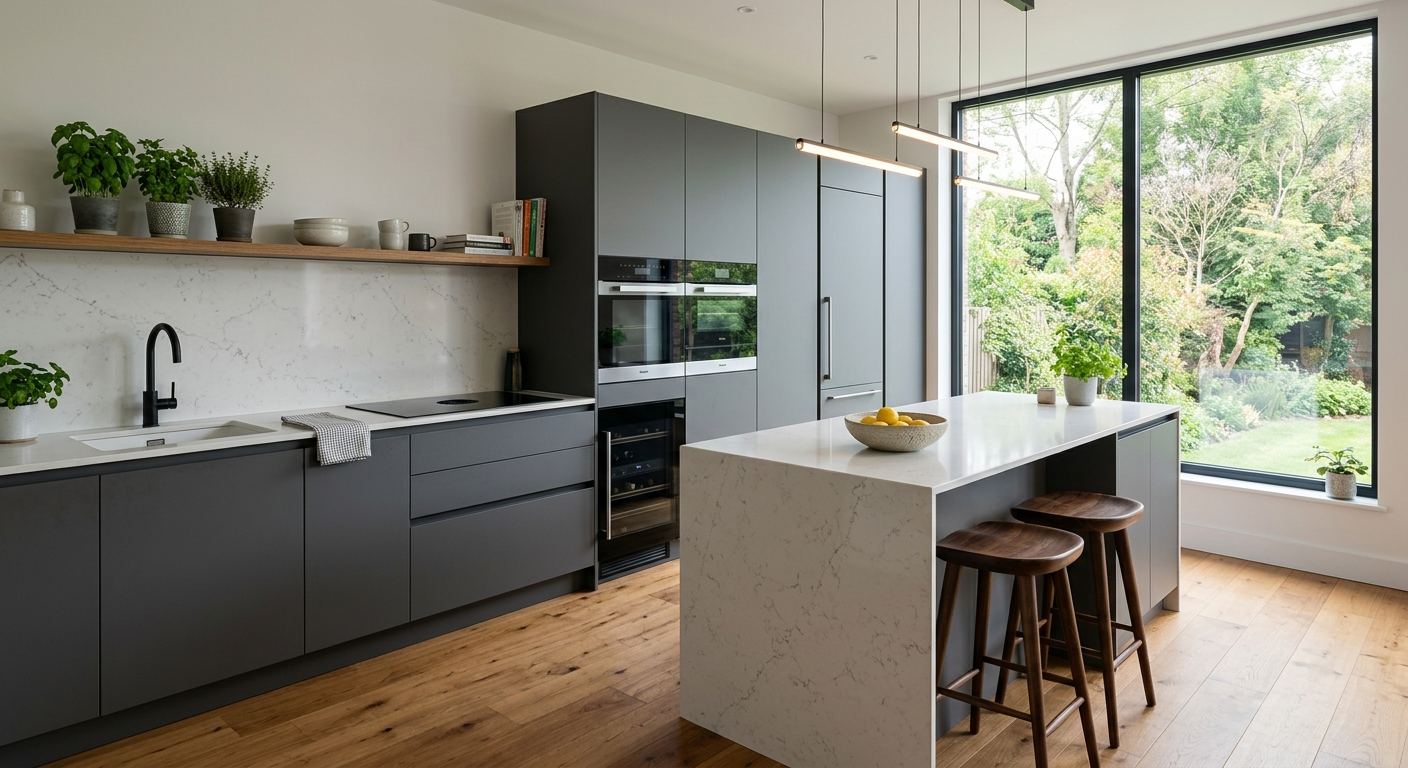
Kitchen renovation options and costs in Doon South
Doon South homeowners typically start their kitchen project by choosing how “new” they want the kitchen to feel—cosmetic updates, a mid-range refresh, or a full high-end rebuild. With a population of 11,524 (Statistics Canada, 2021 Census), Doon South and nearby neighbourhoods draw a steady mix of resale-focused renovations and long-term upgrades. In the broader Toronto economic region, kitchen spending trends track home value and household purchasing power more closely than weather: owners in higher-value pockets often allocate roughly 8%–15% of their home’s value toward kitchen finishes to protect resale appeal. In practical terms, that usually means custom cabinetry and quartz or natural stone when the rest of the home is already upgraded.
Toronto-area labour and materials pricing are relatively consistent year-round, but local demand affects availability. In spring and early summer, cabinet makers and countertop installers can book out faster, which can add schedule pressure (not always a direct cost increase). Summer humidity also impacts how quickly crews can install and cure certain finishes like adhesives and grout, while winter cold mainly affects site readiness and drying times for tile work and subfloor repairs. One local hotspot where kitchen work is especially in demand is the West Doon and Doon South/Westmont corridor, where many homes are approaching the age when owners start replacing dated cabinetry and worn flooring.
Below are realistic budget ranges you can use when comparing quotes and deciding what’s worth upgrading versus keeping.
| Renovation Tier |
What's Included |
Typical Duration |
Price Range |
| Cosmetic refresh (paint, hardware, new appliances only) |
Cabinet hardware, paint, minor caulking/trim touch-ups, appliance swap (no plumbing/gas moves), basic cleanup |
3–7 days |
$6,000–$18,000 |
| Mid-range full renovation (new cabinets, counters, sink, tile) |
Cabinets (stock or semi-custom), new countertop, sink + faucet, backsplash tile, floor repair/partial replacement, electrical upgrades as required |
3–5 weeks |
$25,000–$55,000 |
| High-end full renovation (custom cabinets, stone counters, island) |
Custom millwork, premium quartz/stone, island with seating, upgraded lighting, full-height backsplash option, upgraded appliance package (often pro-grade), flooring replacement |
6–10 weeks |
$65,000–$90,000 |
| Cabinet refacing only (new doors + drawer fronts, same boxes) |
Door/drawer replacement, new veneer finish, new hardware, updated toe-kick/trim, typically limited plumbing/electrical disturbance |
1–2.5 weeks |
$8,000–$35,000 |
| Countertop swap only (laminate to quartz or stone) |
Remove old top, fabricate/install new countertop, seam sealing, sink cut-out (reuse or replace sink as scope allows) |
3–7 days |
$3,000–$15,000 |
| Backsplash tile installation only |
Tile supply/installation, waterproofing prep, grouting/sealing, caulking at edges |
3–6 days |
$2,000–$10,000 |
Prices are estimates only and vary by project scope, site access and material selection.
What affects the price of kitchen renovation in Doon South
Even when two homeowners request the “same” kitchen—same size, similar finishes—you can still see quotes that differ by 30–50% across Toronto and Ontario. The biggest drivers aren’t the headline materials alone; they’re site conditions, how the contractor estimates unknowns, and whether the scope includes the hidden trade work (electrical, plumbing adjustments, subfloor repairs, ventilation upgrades). Local finish expectations also matter. In higher-value Toronto-area pockets, many homeowners default to quartz or natural stone and semi-custom cabinetry because the cost is more easily recovered on resale. In more price-sensitive areas near the edges of the market, laminate and stock cabinets dominate, keeping projects in the lower parts of the full-renovation range such as $25,000–$55,000.
Local conditions that raise costs in Doon South often include older plumbing runs and electrical panels that need updates to add an island circuit or under-cabinet lighting. Many homes in this area have layout constraints that make layout changes the most unpredictable line item—removing a wall, adding an island, or moving a gas line can add labour and inspection costs even if the new finish tier stays mid-range. A second example: if your current floor is uneven, tile underlayment and subfloor levelling can add several days and materials, pushing costs toward the higher end of backsplash and flooring tie-ins. A third example: seasonal scheduling—busy periods in spring—can increase coordination complexity, and a quartz lead time can force crews to stage work, increasing temporary protection and site logistics.
Because the Toronto economic region pushes homeowners toward either value-focused refreshes or premium “resale-ready” upgrades, your choice of cabinet tier and countertop material will usually influence your final number more than any weather factor. Still, budgeting for layout uncertainty is smart if you’re aiming for a mid-range renovation around $55,000 or moving into the $65,000–$90,000 custom/stone band.
| Price Factor |
Why It Matters |
Cost Impact |
| Cabinet tier — stock vs. semi-custom vs. fully custom millwork |
Custom fit, bespoke storage, and higher-grade materials increase fabrication time and hardware costs |
Low–mid range: moderate; custom: can add tens of thousands on full projects |
| Countertop material — laminate vs. quartz vs. granite vs. stone |
Material cost, fabrication complexity, and seam/layout limits affect labour and waste |
Laminate tends to keep you near the low end; quartz/stone moves you toward mid–high bands |
| Layout change — wall removal, island add, plumbing/gas move |
Structural and service work triggers additional trades, inspections, and longer schedules |
Often the largest unpredictable swing regardless of finish tier |
| Appliance package tier — builder vs. mid-range vs. pro-grade |
Higher-tier appliances cost more and may require more electrical/venting coordination |
Can shift total budget meaningfully even with identical cabinet/counter specs |
| Flooring — refinish existing vs. full replacement |
Subfloor condition and levelness determine prep labour and material quantities |
Refinish/spot repair saves time; full replacement increases both labour and materials |
| Backsplash — ceramic tile vs. marble vs. full-height slab |
Patterning, cutting complexity, and full-height waterproofing elevate installation labour |
Ceramic typically lands mid-range; marble/slab trends higher |
| Electrical — new circuits for island, under-cabinet lighting |
New circuits, dedicated breakers, and lighting wiring add permit/inspection and electrician time |
Common in island upgrades; costs climb when panel work is required |
| Permit fees and licensed trade requirements |
Permits, inspections, and licensed trades increase administrative and compliance steps |
Generally modest in minor refreshes; larger in structural/plumbing/gas/electrical changes |
Permits & regulations in Ontario
In Ontario, simple cabinet and countertop swaps typically do not require permits. If you’re repainting, replacing cabinet doors/drawer fronts (refacing), installing new countertops on the existing layout, or updating a backsplash without moving services, you’re usually in the permit-free category. However, once you start changing the kitchen’s “infrastructure,” permits and licensed trades are often required. In Doon South, that commonly includes moving plumbing supply/drain lines, relocating a gas line for a stove or making changes to a gas range setup, removing a load-bearing wall, or adding electrical circuits (for example, dedicated breakers for an island, new under-cabinet lighting with more circuits, or rewiring that changes the load profile).
Step-by-step, here’s how a homeowner should verify contractor readiness in Ontario:
- Ask for the contractor’s Ontario licence details (and the trade licences where applicable) before signing.
- Confirm liability insurance: request a current certificate of insurance naming you as an interested party where offered.
- Confirm WSIB/WCB coverage for the workers and/or the company doing the work.
- For gas-related scope, ensure the work will be completed by a licensed gas fitter and that an inspection is planned where required.
- For electrical scope, confirm a licensed electrician will do the wiring and that inspection/clearance is arranged.
- Make sure permit responsibility is written into the contract (who pulls permits, who pays, and who schedules inspections).
If a contractor can’t clearly explain what needs permits versus what doesn’t, that’s a red flag—kitchen projects often stall when compliance is discovered late.
Cabinets, countertops and layout decisions in Doon South
In a Doon South kitchen renovation, three decisions drive the outcome more than anything else: (1) cabinet tier (stock, semi-custom, or custom), (2) countertop material (laminate, quartz, granite, butcher block, marble), and (3) layout changes (open-concept wall removal, island addition, or plumbing/gas relocation). The Toronto resale market tends to reward kitchens that look cohesive and durable: at the lower end, buyers still expect clean lines, modern hardware, and counters that won’t stain easily. In the mid-range—commonly around the $25,000–$55,000 band—semi-custom cabinets with quartz often hits the sweet spot of “looks upgraded” without the full premium of custom millwork. When you move into the $65,000–$90,000 range, island configurations and stone surfaces become more common because they justify the added footprint and higher buyer expectations.
Ontario’s seasonal freeze-thaw and humidity swings also matter in the long run, mainly by influencing how well materials and adhesives perform and how carefully tile prep is done. For example, butcher block can be beautiful, but in a busy household it needs routine sealing and quicker cleanup to prevent swelling at seams. Marble and natural stone can elevate the look, but they’re more sensitive to etching and acidic spills, so you’ll want to be honest with your lifestyle.
Here’s a concrete budgeting example: upgrading from laminate to quartz often costs far less than people expect when your base cabinets are already being replaced. If your mid-range renovation is targeting roughly $45,000, adding quartz instead of laminate might be a manageable bump within the countertop portion (often reflected in countertop swap ranges like $3,000–$15,000 depending on size and complexity), while keeping your cabinetry tier at semi-custom can protect the overall budget. Conversely, changing the layout to add an island is only “worth it” when you gain real function—an awkward island that blocks circulation is not a resale advantage.
| Option |
Durability |
Maintenance |
Best For |
Price Range |
| Stock cabinets (big-box) |
Good day-to-day durability with standard finishes |
Low; keep hardware tightened and avoid excessive moisture at edges |
Fast, budget-conscious refreshes with predictable lead times |
$8,000–$22,000 |
| Semi-custom cabinets (local dealer) |
Very solid construction with more storage options |
Low to moderate; routine cleaning and gentle care for coatings |
Most Doon South renovations targeting strong resale appeal |
$18,000–$35,000 |
| Custom cabinets (local millwork shop) |
Best fit and strongest longevity when built for your space |
Low to moderate; premium hardware can require periodic tightening |
Sloped/unique spaces, full-height storage, and premium styling |
$30,000–$60,000 |
| Laminate countertop |
Moderate; can chip at edges if impacted |
Easy cleaning; avoid prolonged standing water at seams |
Value-focused projects that still need a clean, modern look |
$3,000–$7,000 |
| Quartz engineered countertop |
High; resistant to staining and everyday wear |
Low; wipe clean and maintain caulk lines around sinks and backsplashes |
Busy households and resale-minded buyers seeking low maintenance |
$7,000–$15,000 |
| Granite / natural stone countertop |
High; durable with proper sealing |
Moderate; periodic sealing and careful spot treatment |
Premium look with a bit more upkeep tolerance |
$9,000–$18,000 |
| Butcher block countertop |
Good for cutting but can dent and scratch |
Moderate; frequent oiling and protection from standing water |
Warm, casual styles and homeowners who enjoy maintenance |
$6,000–$14,000 |
| Marble countertop |
Premium but more susceptible to etching and staining |
Higher; requires careful cleaning and good sealing |
Statement kitchens where beauty outweighs heavy wear |
$10,000–$22,000 |
How to choose a kitchen renovation contractor in Doon South
Choosing the right contractor is the fastest way to avoid budget creep in a Doon South kitchen project. Start by verifying Ontario licensing and coverage. For work involving electrical or gas, the relevant licensed trades must do that portion of the job. Ask the contractor to provide their certificate of insurance (liability coverage) and proof of WSIB/WCB coverage for workers. Then check their licensing and credentials through Ontario trade licensing resources or the appropriate trade registry listings, and confirm the insurer’s information matches the company you’re contracting with.
Next, request 2–3 itemised written quotes instead of relying on a lump sum. You want a labour + materials breakdown showing what you’re paying for: demolition, cabinet install, countertop fabrication and install, tile installation, electrical/plumbing adjustments, disposal, and any site protection. Read the scope carefully—what’s excluded matters. A quote that “sounds” cheaper often excludes permit pull costs, drywall patching, disposal, or electrical changes for island power, and those gaps are exactly where change orders happen.
Warranty and payment terms should also be explicit. Workmanship warranty should be in writing (and ideally longer for cabinetry install and tile). Product warranties should state who covers what and whether they’re transferable. For payment schedule, don’t pay more than 10%–15% upfront; hold back a portion until key milestones are complete. Finally, insist on a start date and completion estimate in writing so you can plan around lead times for cabinets and stone.
- Confirm insurance and WSIB/WCB in writing before work begins.
- Verify permit responsibility is clearly stated in the contract.
- Ask for an itemised quote: labour, materials, and allowance items.
- Confirm disposal and dump fees are included (or listed separately).
- Check that demolition includes patching and surface prep.
- Confirm who handles cabinet leveling, shimming, and fastening behind toe-kicks.
- Ask how they will protect floors and counters during installation.
- Require a detailed backsplash/tile scope (waterproofing, underlayment, grout/sealant).
- Confirm countertop template, fabrication timing, and sink cut-out responsibility.
- Get the warranty duration for workmanship and products, plus exclusions.
- Ensure the payment schedule includes a holdback until completion.
- Require a schedule that accounts for cabinet and countertop lead times.
Red flags I see in Doon South include: contractors who won’t provide proof of WSIB/WCB or insurance; quotes that lump everything together without allowances; unclear responsibility for permits/inspections; unrealistic “same-week” countertop timelines; and vague warranties (no end date, no scope, or no transferability). In kitchen renovations, clarity is quality.
Frequently asked questions — kitchen renovation in Doon South
Custom vs stock cabinets — is custom worth it?
If you’re renovating in Doon South and aiming for a “forever home” kitchen, custom can be worth it—especially when you have an awkward wall length, sloped ceilings, or want full-height storage that fits your exact measurements. That said, for many Toronto buyers, semi-custom offers the strongest value: you get upgraded storage, better door/drawer options, and a more polished look without paying for every millimetre of bespoke fabrication. Stock cabinets are typically the fastest option and can keep a project closer to the mid-range band (for example, a full renovation budget starting around $25,000). Custom becomes a smart choice when layout or storage truly can’t be achieved well with stock or semi-custom, not when it’s chosen purely for aesthetics. A good contractor will show you equivalent layouts across tiers and explain where the real quality differences show up.
How do I choose a kitchen contractor in Doon South?
Start by comparing contractor coverage and licensing before you compare personalities. In Ontario, ask for liability insurance documents and proof of WSIB/WCB coverage, and confirm who will handle any electrical or gas-related work with the appropriate licensed trades. Then get 2–3 itemised quotes with labour and materials broken out, including demolition, electrical/plumbing adjustments, disposal, and permit handling (if applicable). Make sure you’re not looking at a “best guess” lump sum only—kitchen renovations are full of hidden prep work like drywall patching and subfloor levelling. Finally, confirm warranty terms in writing (workmanship and product warranties) and review the payment schedule—never pay 40%–50% up front. For homeowners budgeting around $55,000 to $90,000, clarity on scope is what protects you from expensive change orders later.
What order do kitchen renovation steps happen in?
In Doon South, a typical order keeps trades from stepping on each other. First comes site protection and demolition, followed by assessment of walls, floors, and existing plumbing/electrical conditions. Next, any required rough-in work happens—this is where permits may come into play if you’re moving plumbing/drain lines, relocating gas, or adding electrical circuits. After rough-in inspection, crews do drywall patching and surface prep. Then cabinets go in (leveling and fastening), followed by countertop templating and fabrication. Once countertops are installed, the backsplash and finishing work follows, along with final trim, caulking, and hardware adjustments. Flooring usually fits into the plan early or just after demolition depending on whether existing flooring is refaced or replaced. If you’re staying in the $25,000–$55,000 band, timing cabinet installs and countertop templates is where schedule reliability matters most.
Can I live at home during a kitchen renovation in Doon South?
Often, yes—but it depends on how invasive your scope is. If you’re doing a cosmetic refresh or backsplash installation only, living at home is usually practical with minimal disruption. If you’re doing cabinet and countertop work, you may be able to stay in your home using a temporary kitchen setup (microwave, kettle, and a small prep zone), especially if demolition is contained to the kitchen. Living at home becomes harder during full renovations that involve removing cabinets, replacing flooring, and moving services (plumbing/gas/electrical). In those cases, plan for dust control, limited access to the sink, and possible temporary routing for appliances. Contractors in the Doon South area typically schedule the noisiest phases first and protect the rest of the home, but you should still plan for daily cleanup and restricted travel through the work zone. Your quote should specify site protection and debris disposal expectations.
Should I renovate my kitchen before selling in Doon South?
Renovating before selling can make sense in Ontario, but only if you target improvements that buyers notice and value. In the Toronto market, many buyers respond well to modern cabinetry hardware, clean lines, and low-maintenance countertops like quartz. If you’re investing in cabinets and counters, a mid-range renovation budget (often $25,000–$55,000) can be a reasonable window for upgrading visuals without overbuilding. If you go too high into a custom, stone-heavy project (like the $65,000–$90,000 band) without aligning with your home’s overall level and layout, you risk spending beyond what the local resale market will reward. A strong approach is to upgrade what’s worn: dated cabinets, scratched laminate counters, failing backsplash tile, and inefficient lighting. Let your contractor compare your planned finishes with what’s most common in the neighbourhoods around Doon South, then decide based on your timeline.
What's the most popular kitchen style in Doon South right now?
Right now in Doon South and the broader Toronto region, the most common “safe bet” style is a modern, bright look: flat-panel or simple shaker-style fronts, warm neutral tones, and quartz counters that hold up well to everyday cleaning. Homeowners also often choose an upgraded backsplash that ties into the countertop—commonly a clean tile pattern rather than an overly busy design. Many renovations emphasize function with improved storage and, where space allows, an island to support hosting and daily prep. The style trend aligns with resale expectations in the Toronto market: kitchens that feel updated without looking overly themed. In practical budgeting terms, most homeowners who follow this approach land in the mid-range tier, where you can typically build a strong result without needing the full custom/stone premium. If you want a higher-end look, custom millwork and stone can be added, but only when the layout supports it.