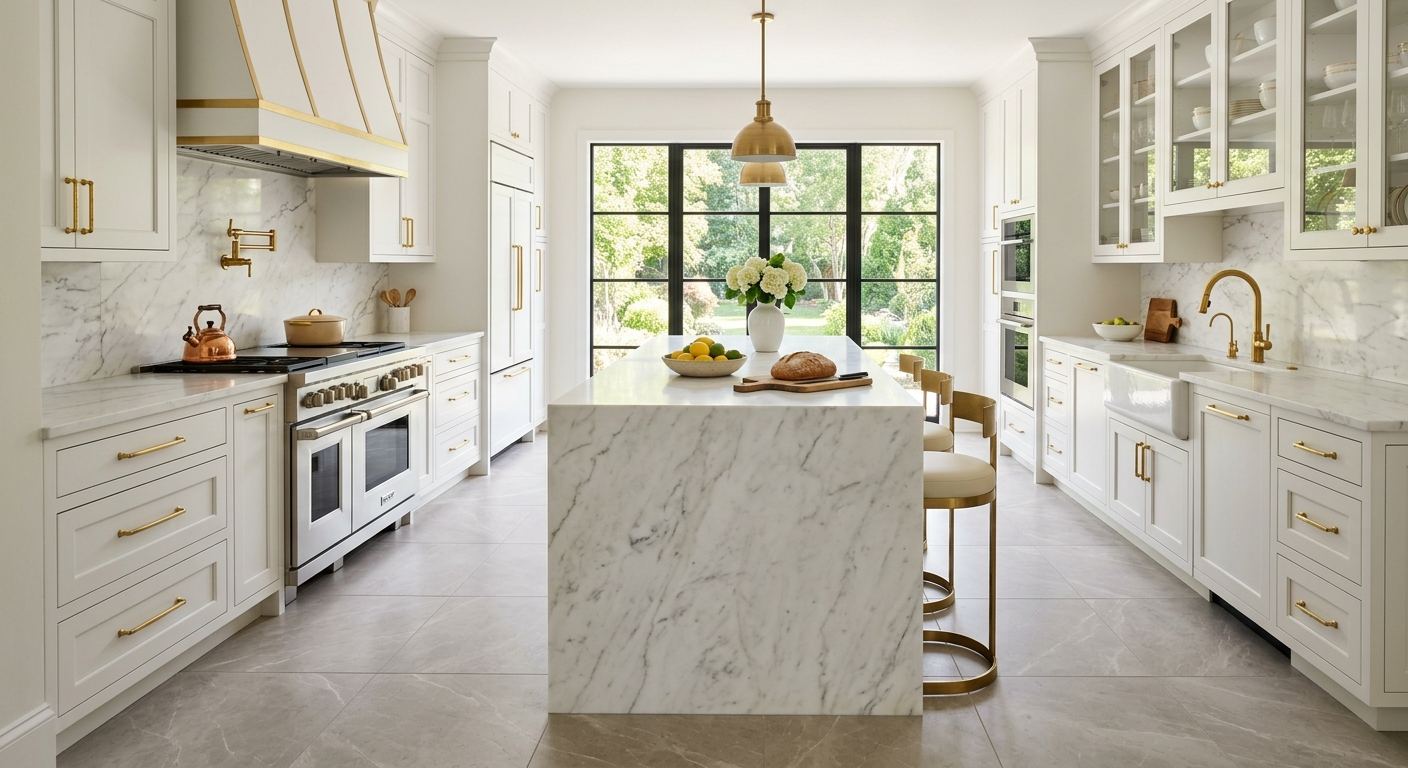
Kitchen renovation options and costs in Heritage Park
Heritage Park homeowners often ask the same question first: “What will my kitchen cost here?” With a local population of 7,263 (Statistics Canada, 2021 Census), the GTA market is busy enough that reputable installers usually book a few weeks to a couple of months out—especially in neighbourhoods where older homes are being refreshed for resale. In Toronto’s economic pull, many owners decide the kitchen finish tier based on housing value and buyer expectations more than on weather. In this part of Ontario, higher-value markets within the broader Toronto region tend to push projects toward premium materials (commonly quartz or stone) and more tailored cabinetry; as a rule of thumb, upgraded kitchens are often treated as a meaningful share of the home value when resale is the goal. Meanwhile, in more price-sensitive pockets, homeowners more often balance style with affordability using stock or refaced cabinets and laminate or mid-tier quartz.
Costs in the Toronto economic region are driven mostly by material choices and the labour hours required for fit-and-finish, not by climate. Ontario winters (freeze–thaw cycles and dry indoor air from heating) can matter for installation details—especially around plumbing, caulking, and the long-term performance of adhesives and grout—but they don’t typically change contractor availability or permit rules. The big swing is whether the renovation is cosmetic, full replacement, or includes layout work like adding an island, moving plumbing, or changing electrical for under-cabinet lighting.
If you’re in a high-demand corridor near the Heritage Park area where families renovate for school-age resale timing and downsizers want safer, more accessible layouts, you’ll see more bids for semi-custom cabinetry packages. Next, here’s a practical cost comparison so you can align your expectations before you review quotes.
| Renovation Tier |
What's Included |
Typical Duration |
Price Range |
| Cosmetic refresh (paint, hardware, new appliances only) |
Cabinet paint or refinishing, new pulls/knobs, appliance swap, touch-up lighting updates, basic caulking, disposal |
1–3 days on site; 1–2 weeks scheduling/curing |
$7,000–$18,000 |
| Mid-range full renovation (new cabinets, counters, sink, tile) |
New semi-custom or quality stock cabinets, quartz or laminate counters, sink and taps, backsplash tile, floor refinishing or replacement (as quoted) |
2–5 weeks |
$25,000–$70,000 |
| High-end full renovation (custom cabinets, stone counters, island) |
Custom cabinetry, premium quartz/natural stone, island (layout + power), detailed backsplash (stone/marble or full-height), upgraded appliance package, extended trim and lighting |
5–10+ weeks |
$70,000–$95,000 |
| Cabinet refacing only (new doors + drawer fronts, same boxes) |
Door/drawer replacement, veneer/laminate refinishing, new hardware, minor adjustments for alignment |
1–2 weeks |
$8,000–$35,000 |
| Countertop swap only (laminate to quartz or stone) |
Remove existing top, new countertop fabrication and installation, sink cut-outs (if included), basic resealing and trim |
3–7 days for install (plus fabrication lead time) |
$3,000–$15,000 |
| Backsplash tile installation only |
Tile supply and installation, surface prep, waterproofing where needed, grout/caulk, clean-up |
2–5 days |
$2,000–$10,000 |
Prices are estimates only and vary by project scope, site access and material selection.
What affects the price of kitchen renovation in Heritage Park
In Heritage Park and across Ontario, two homeowners with “the same” kitchen can receive quotes that differ by 30–50% once you factor in finishes, site conditions, and how much trade coordination is required. In the Toronto economic region, this is less about climate and more about what buyers expect at different price points: many homeowners in higher-value pockets default to quartz or stone counters and semi-custom cabinetry because the upgrade is easier to justify during resale. In more budget-conscious areas of the GTA, laminate tops and stock or refaced cabinets keep the project in the low–mid bands, so the renovation still feels like a meaningful improvement without overstretching the budget.
Layout changes are the biggest unpredictable cost regardless of finish tier. Removing a wall (structural considerations), adding an island (power + sometimes venting considerations), or moving a gas line or plumbing supply/drain can turn a mid-range plan into a high-end scope quickly. For example, a countertop-only change that’s typically in the $3,000–$15,000 band can become far more if you also want a sink relocation or new under-mount drainage tie-ins.
In Heritage Park specifically, older home stock often brings surprises: out-of-square walls, dated subfloor moisture patterns, and older electrical runs that can require new circuits for island outlets and under-cabinet lighting. If your kitchen has steam-aged caulking around plumbing penetrations or older tile that needs rework, prep time increases. Conversely, straightforward cabinetry installs into sound framing and clean demolition access can help keep you closer to $25,000–$70,000 for a mid-range full renovation.
Below are the main price drivers contractors use to explain those quote differences.
| Price Factor |
Why It Matters |
Cost Impact |
| Cabinet tier — stock vs. semi-custom vs. fully custom millwork |
Pricing changes with build precision, door styles, interior storage options, and lead times |
Often shifts a full renovation by $10,000–$35,000 |
| Countertop material — laminate vs. quartz vs. granite vs. stone |
Material cost and fabrication complexity (edge profiles, thickness, seam placement) |
May move countertop scope by $1,500–$12,000 |
| Layout change — wall removal, island add, plumbing/gas move |
Requires additional trades, engineering/permit pathways, and more labour hours |
Typically adds $8,000–$25,000 depending on moves |
| Appliance package tier — builder vs. mid-range vs. pro-grade |
Cost of appliances plus electrical/venting compatibility and installation labour |
Varies by $1,500–$10,000+ |
| Flooring — refinish existing vs. full replacement |
Subfloor condition and removal/disposal effort drive labour and material needs |
Often shifts by $2,000–$12,000 |
| Backsplash — ceramic tile vs. marble vs. full-height slab |
Material fragility, layout complexity, and waterproofing/prep requirements |
Can range $2,000–$10,000 for tile installations |
| Electrical — new circuits for island, under-cabinet lighting |
Licensed work, new breakers/circuits, and fixture/lighting integration |
Typically adds $800–$6,000 |
| Permit fees and licensed trade requirements |
Permits and inspections apply when plumbing/electrical/gas or structural work is involved |
Usually $500–$3,500 plus scheduling impacts |
Permits & regulations in Ontario
For Ontario homeowners in Heritage Park, the permit question usually comes down to whether you’re changing “systems,” not just swapping finishes. Cabinet and countertop swaps generally do not require permits. However, when you move plumbing supply or drain lines, relocate a gas appliance or gas line (including a stove or range hood that involves gas), remove a load-bearing wall, or add new electrical circuits (for example, additional outlets around an island or dedicated lighting circuits), permits are commonly required and the work must be done by the appropriate licensed trade.
Gas work must be completed by a licensed gas fitter, and electrical work must be done by a licensed electrician. Both trades typically require permits/inspections as part of compliant close-out. If you’re planning a layout change—like adding an island and relocating a sink—treat it as a “systems” renovation from a planning standpoint, even if the visuals look like a countertop-and-cabinet refresh.
To verify your contractor before signing, follow a simple order:
- Ask for their Ontario licence details (where applicable for their trade scope) and confirm it matches the services they’re proposing.
- Request a Certificate of Insurance (liability) showing active coverage for the renovation period.
- Confirm WSIB/WCB coverage for workers (or equivalent proof of clearance if they hire subcontractors).
- Get the permit responsibility in writing: who pulls permits, who pays, and who schedules inspections.
- Keep all documentation with your contract and signed change orders.
This is the fastest way to avoid surprises when the plan includes anything beyond paint, hardware, and like-for-like replacements.
Cabinets, countertops and layout decisions in Heritage Park
In a Heritage Park kitchen renovation, the three decisions that most influence both cost and resale appeal are: (1) cabinet tier, (2) countertop material, and (3) whether you change the layout. Cabinet tier is about fit and daily usability. Stock cabinets are the quickest and generally lowest-cost; semi-custom is the most common “best balance” for GTA homeowners who want better storage and more door/style options without full custom pricing. Custom cabinets offer the best fit for irregular spaces, but they come with the highest cost and longer lead times.
Countertops drive the look more than almost anything. Laminate is budget-friendly and durable enough for busy households, but it can’t match quartz or stone for heat/impact resistance and the “high-end” finish buyers look for. Quartz engineered countertops are a popular mid-to-high choice in the Toronto market because they resist staining and offer clean, consistent edges. Natural stone (granite/other stone) and marble deliver the strongest visual character, but they often require more care around sealing and maintenance habits.
Layout changes should be justified by space gain and workflow. Removing a wall or adding an island can be worth it if it improves circulation and seating—especially for family life—but it’s where plumbing/gas/electrical upgrades can push budgets into the $70,000–$95,000 high-end band. For a concrete example: if you choose quartz instead of laminate, you might see a mid-project uplift of a few thousand dollars; that’s usually easier to recover at resale than paying to move plumbing solely to chase a design preference.
Below is a decision guide tuned to Ontario realities—cold winters affecting caulking longevity and dry indoor air that can impact grout/adhesives over time—so you select materials that perform after installation, not just on day one.
| Option |
Durability |
Maintenance |
Best For |
Price Range |
| Stock cabinets (big-box) |
Good daily durability; fit may be less precise in older homes |
Simple cleaning; minor adjustments may be needed for out-of-square walls |
Fast projects and tight budgets |
$8,000–$20,000 |
| Semi-custom cabinets (local dealer) |
Strong build quality with better interior storage and options |
Wipe clean; smooth glides reduce wear |
Most resale-focused renovations in the GTA |
$15,000–$35,000 |
| Custom cabinets (local millwork shop) |
Excellent fit to the space; ideal for awkward corners and ceiling heights |
Care similar to wood finishes; longer warranty support often available |
Hard-to-fit layouts and top-tier finishes |
$30,000–$60,000+ |
| Laminate countertop |
Solid for everyday use; edges/seams are the vulnerability point |
Clean with non-abrasives; avoid sustained heat exposure |
Value-first renovations |
$3,000–$7,000 |
| Quartz engineered countertop |
High resistance to staining and everyday impacts |
Low maintenance; seal not usually required |
Best “Toronto resale” balance of look and practicality |
$6,000–$15,000 |
| Granite / natural stone countertop |
Very durable; variation in veining is unique to your slab |
Usually needs periodic sealing depending on the stone |
Premium visual appeal |
$8,000–$20,000 |
| Butcher block countertop |
Good resilience; sensitive to standing water if not maintained |
Oil/condition regularly; use a mat near sinks |
Warm, family-friendly kitchens |
$5,000–$12,000 |
| Marble countertop |
Stunning appearance but more susceptible to etching/staining |
Regular sealing and careful use of acidic foods/cleaners |
Statement kitchens with homeowners who maintain surfaces |
$10,000–$25,000 |
How to choose a kitchen renovation contractor in Heritage Park
Choosing the right contractor matters as much as the materials, especially in Ontario where licensed trade coordination is often what separates a smooth renovation from a drawn-out one. Start by verifying Ontario licensing for the trades involved in your scope: your electrician for any new circuits and your gas fitter if any gas appliance or gas line work is included. Ask your contractor for their proof of liability insurance (Certificate of Insurance) and confirm WSIB/WCB coverage for their workers; if they rely on subcontractors, request documentation for those trades as well.
Next, request 2–3 itemised written quotes rather than lump-sum totals. Itemisation should clearly separate labour and materials (demolition, carpentry/cabinet install, countertop fabrication/installation, tile prep, electrical, plumbing/gas where applicable, permits, disposal). Then read the scope like a checklist: what is excluded? Is permit pulling included? Who provides and installs appliances? Is countertop removal and sink rework covered? Is waste disposal included in the price or billed separately?
For warranty, confirm workmanship coverage length and whether the product/manufacturer warranty is included by model. Ask if the warranty is transferable to a new owner, which can matter for Heritage Park resale timing. For payments, use a schedule that never exceeds 10–15% upfront; hold back a portion until completion and final walkthrough.
Finally, get timeline details in writing: proposed start date, key milestones (demo, cabinet lead time, countertop template, electrical/plumbing rough-in), and the estimated completion date.
- Verify that the quote includes demolition, haul-away/disposal, and protection of floors/adjacent rooms.
- Confirm whether site conditions (older plaster, out-of-square walls) are included or treated as an extra.
- Ask for cabinet install method and shimming plan for uneven Toronto-era framing.
- Ensure electrical scope includes specified circuit count and under-cabinet lighting (if desired).
- Confirm plumbing scope includes shut-off, reconnection, and leak testing.
- Request countertop template date and fabrication lead time, not just “allowance.”
- Clarify backsplash prep and waterproofing (especially around sinks and cooktops).
- Check if permit fees are included or itemised as a pass-through cost.
- Review how change orders are handled (written approvals before extra work).
- Confirm warranty start date and what “workmanship” covers if an issue occurs.
- Make sure cleanup is part of the scope, including caulking and final polish.
- Ask who your point of contact is during installation and after handover.
Red flags to watch for: (1) quotes that avoid itemising labour vs materials, (2) vague “permits by us” language without who pays and who pulls them, (3) willingness to start before cabinet/countertop measurements are scheduled, (4) warranty that’s limited to “we’ll try” wording or no written duration, and (5) requesting large upfront payments or refusing a written payment schedule with a holdback.
Frequently asked questions — kitchen renovation in Heritage Park
Do I need a permit for a kitchen renovation in Ontario?
In Ontario (including Heritage Park), many “like-for-like” kitchen updates don’t require permits. Cabinet swaps and countertop replacements are typically permit-free when plumbing, gas, structural elements, and electrical work aren’t changing. You usually need permits and licensed trades when you move plumbing supply or drain lines, relocate gas appliances or gas lines, remove a load-bearing wall, or add new electrical circuits (for example, additional outlets or dedicated island/under-cabinet lighting). The safest approach is to confirm your contractor’s permit responsibility in the contract before work begins, because permit requirements are tied to the actual scope. If your budget is targeting a mid-range renovation around $25,000–$70,000 but includes an island with new power, you’re very likely entering the “electrical permit” zone.
What's the ROI on a kitchen renovation?
Kitchen renovations can improve resale appeal in the Toronto economic region, but the ROI depends on whether you stay within buyer expectations. In higher-value areas, owners often invest more toward quartz/stone and semi-custom cabinetry because the look aligns with what buyers pay premiums for. Conversely, oversized upgrades that don’t match the neighbourhood’s price tier can underperform. The most consistent ROI comes from updating the visible “decision surfaces” (cabinet fronts, countertops, backsplash, hardware) and ensuring the layout supports everyday workflow. As a practical budgeting lens in Heritage Park, many owners consider either a cosmetic refresh or a mid-range full renovation; staying in the $25,000–$70,000 band typically offers the best balance between cost recovery and buyer-ready presentation. Layout changes and premium custom millwork can add value, but they’re also the highest risk for ROI if your design choices outpace market norms.
How do I budget for a kitchen renovation?
Budgeting starts with choosing your tier and then adding a realistic contingency. For Heritage Park, a full kitchen renovation commonly falls in the mid-to-high range because cabinets, countertops, and trade labour add up quickly. A modest refresh may land in the cosmetic band around $7,000–$18,000, while many full renovations land in $25,000–$70,000 depending on cabinet tier, countertop selection, and whether flooring and backsplash are included. If you’re planning custom cabinetry, natural stone, and an island with electrical and plumbing coordination, budgets often trend toward $70,000–$95,000. Build in contingency for common surprises: older framing out-of-square, older electrical circuits that can’t support new loads, and countertop seam adjustments. Ask your contractor to itemise labour and materials so you know what you’re actually paying for—and what you’re not.
Can I move my kitchen sink or stove?
Yes, it’s possible in Ontario, including Heritage Park, but it’s not just a carpentry decision—it’s a plumbing/gas/electrical scope decision. Moving a sink involves rerouting supply and drain lines, which typically triggers permitting and licensed plumbing work. Moving a stove can be more complex if it’s gas: relocating the gas line usually requires work by a licensed gas fitter and the appropriate permits/inspections. Moving a range hood that ties into gas or venting can also affect the scope. If your plan includes moving either the sink or stove, treat the project like a layout change, not a surface update, because costs can jump even if the cabinets and countertops stay in the same finish tier. If you’re aiming to control costs, keep plumbing moves minimal and let the design work around existing rough-ins where feasible.
What's the most cost-effective kitchen upgrade?
The most cost-effective upgrade usually depends on what “broken” element you’re replacing: cabinet condition, countertop age, or lighting/function. In many Heritage Park homes, cabinets are the biggest visual anchor, so refacing or a well-designed cabinet refresh can deliver strong impact without the full tear-out cost. If the existing cabinet boxes are solid, cabinet refacing—typically in the $8,000–$35,000 range—often provides a “new kitchen look” at a fraction of full replacement. Countertop swaps can also be efficient when the sink location stays put; countertop-only installs commonly sit in the $3,000–$15,000 band. For the lowest cost-per-impact, pairing cabinet hardware upgrades with a fresh backsplash can work well, but make sure underlying water protection and caulking are corrected where needed. When in doubt, prioritise what buyers see first: cabinet fronts, countertops, and clean tile lines.
Custom vs stock cabinets — is custom worth it?
Custom cabinets can be worth it when your kitchen has constraints that stock can’t resolve cleanly—like challenging ceiling heights, awkward corners, or a layout that demands specific storage depth or fit. In the Toronto market, buyers often like the “precision look” of better hardware spacing and seamless cabinet lines, which is easier to achieve with semi-custom or custom millwork. But custom is also the highest cost lever, so it’s only worth it if you’re also making the rest of the kitchen competitive (countertops, backsplash, and lighting). If you’re keeping the project in a mid-range budget around $25,000–$70,000, semi-custom is often the sweet spot because it upgrades storage and style without the full premium. If your renovation plan is closer to the high-end direction—custom cabinets plus stone and an island—then custom can feel justified. The best approach is to match cabinet tier to your layout complexity and your resale expectations in Heritage Park.