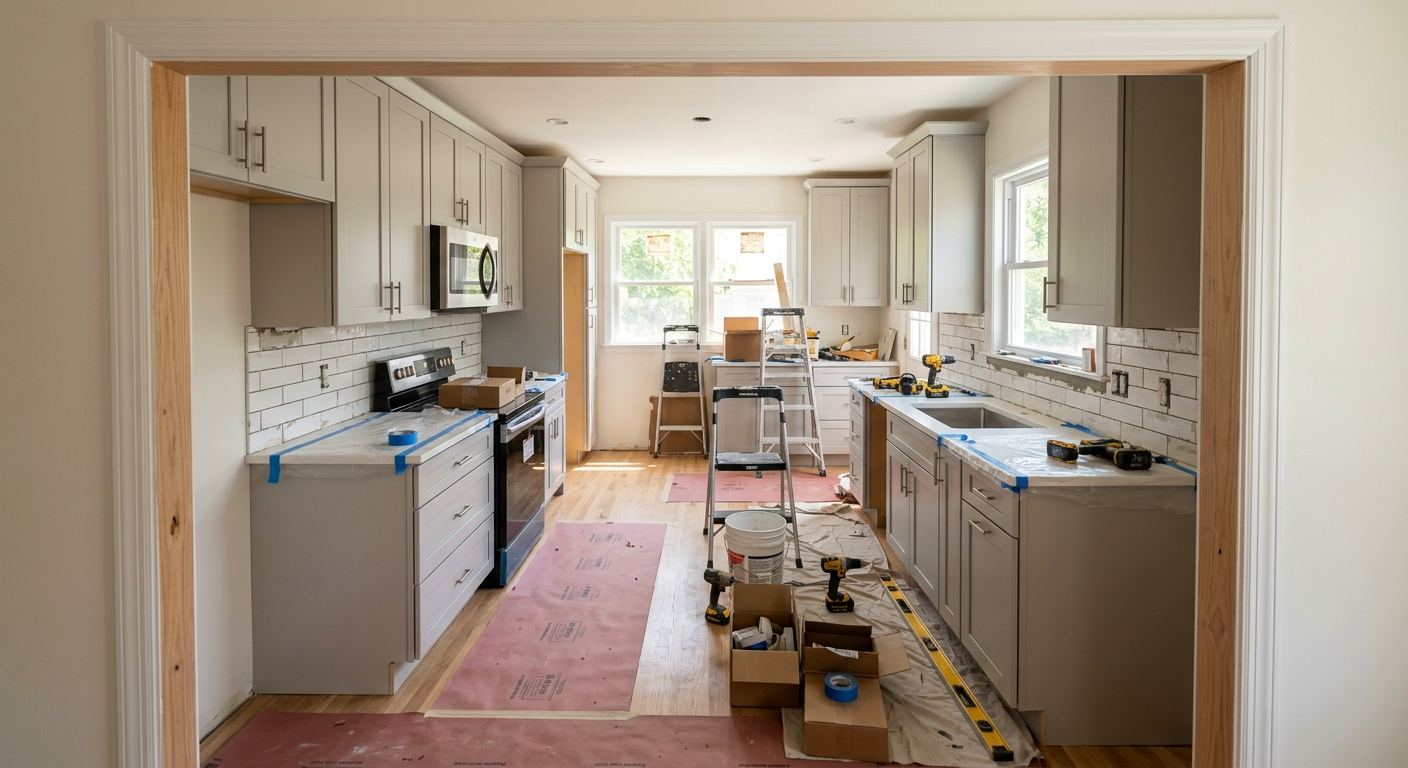
Kitchen renovation options and costs in College Heights
In College Heights, homeowners typically start by matching their kitchen budget to the level of finish they want and what they expect buyers to pay for—especially because the area’s housing demand sits within the broader Toronto economic region. While the local population is 5,476 (Statistics Canada, 2021 Census), renovation decisions are more strongly influenced by the surrounding Toronto market’s pricing and buyer expectations than by the weather itself. In higher-value Toronto-area pockets, owners often plan kitchens as an investment, sometimes targeting an $80k+ full renovation where custom cabinetry and quartz or natural stone are the norm.
Toronto-area kitchen labour and materials are generally consistent across the GTA, but the cost differences show up in finish tier and complexity. Finish selections drive most of the spread: stock or refaced cabinets with laminate counters can land closer to the mid-$20k range for modest full refreshes, while structural changes and premium millwork push budgets toward $80,000–$90,000. Even though “climate” is not the dominant driver, Ontario’s freeze–thaw cycles and dampness in older homes can matter—if your existing subfloor or base cabinetry has absorbed moisture, you may need additional repairs before new countertops are installed.
In College Heights, contractors often see the strongest demand in neighbourhoods closer to active shopping and commuting corridors, where homeowners prioritize layout improvements for resale appeal and daily usability. If you’re comparing options, the table below breaks down the typical tiers and what they include before you request itemised pricing.
| Renovation Tier |
What's Included |
Typical Duration |
Price Range |
| Cosmetic refresh (paint, hardware, new appliances only) |
Cabinet paint or staining, new hardware, appliance swap (cooktop/oven/fridge/dishwasher), new tap/faucet if desired, minor caulking and touch-ups |
3–7 days (plus ordering lead time) |
$7,000–$18,000 |
| Mid-range full renovation (new cabinets, counters, sink, tile) |
New semi-custom or quality stock cabinets, countertop installation, sink + faucet, backsplash tile, disposal allowance, basic electrical and plumbing reconnects, floor protection and trim reinstalls |
3–6 weeks |
$25,000–$55,000 |
| High-end full renovation (custom cabinets, stone counters, island) |
Custom millwork, quartz or natural stone countertops, island fabrication/installation, upgraded appliance package, full-height or premium backsplash treatment, extended electrical (undercabinet lighting), stronger material finishes and details |
5–10 weeks |
$60,000–$90,000 |
| Cabinet refacing only (new doors + drawer fronts, same boxes) |
Door/drawer replacement, veneer/re-skin of cabinet faces, new hardware, optional interior refinishing, existing countertop left as-is unless bundled separately |
1–2 weeks |
$8,000–$35,000 |
| Countertop swap only (laminate to quartz or stone) |
Removal of old laminate, new quartz/stone fabrication and install, new sink cut-out adjustments (if required), recaulk, backsplash edge finishing as applicable |
3–10 days |
$3,000–$15,000 |
| Backsplash tile installation only |
Tile supply and install (ceramic or upgraded options), wall prep, waterproofing where needed, finishing at outlets, optional grout sealing |
2–5 days |
$2,000–$10,000 |
Prices are estimates only and vary by project scope, site access and material selection.
What affects the price of kitchen renovation in College Heights
In College Heights and across Ontario’s Toronto economic region, quotes for the same “looking kitchen” can vary by 30–50% because builders price risk and complexity differently. Even when the room size is similar, contractors adjust the price based on what the renovation actually changes: how many walls are opened, whether plumbing or gas lines move, how much electrical work is required, and which finish tier you choose. Climate plays a smaller role than homeowners think; the real driver is the Toronto-area resale market, where higher-value homes often steer owners toward quartz or natural stone and semi-custom cabinetry because those finishes are easier to justify to buyers.
In higher-value parts of the Toronto market, many homeowners effectively price kitchens like “value-added improvements,” often targeting the $80k+ band when they’re doing custom millwork or adding an island. In more price-sensitive GTA areas, you’ll see more projects stay in the mid-$20k to mid-range band by using refacing or stock cabinets and laminate-to-quartz upgrades. That said, the biggest unpredictable costs still come from layout changes. Removing a wall, adding an island, or moving a gas line can trigger extra framing, venting considerations, and additional inspections—costs that exist regardless of whether your countertops are laminate or stone.
Two practical College Heights examples: first, older homes may have out-of-level bases, meaning new cabinets and counters require more shimming and subfloor prep—adding labour before the “pretty” work begins. Second, if your existing backsplash isn’t square or your wall has moisture damage, tile install may require further prep or drywall replacement, pushing the backsplash portion above the typical $2,000–$10,000 range.
| Price Factor |
Why It Matters |
Cost Impact |
| Cabinet tier — stock vs. semi-custom vs. fully custom millwork |
Higher tiers change material quality, door styles, fit tolerances, and lead times |
From roughly $8,000–$35,000 for refacing to $25,000–$90,000 for full custom builds depending on scope |
| Countertop material — laminate vs. quartz vs. granite vs. stone |
Material price, fabrication complexity, and edge detailing raise labour and waste |
Typically $3,000–$15,000 for swaps, with premium stone often pushing the upper end |
| Layout change — wall removal, island add, plumbing/gas move |
Creates hidden work (framing, structural assessment, rough-in, re-trims) and delays |
Can be the single biggest swing factor; often the difference between mid-range and $80k+ projects |
| Appliance package tier — builder vs. mid-range vs. pro-grade |
Pro-grade models require matching electrical/gas specs and often cost more to install |
Usually shifts total budget by several thousand to tens of thousands depending on package |
| Flooring — refinish existing vs. full replacement |
If cabinetry sits on uneven floors, you’ll pay for prep or replacement |
Partial repairs can be cheaper; full replacement adds both material and install time |
| Backsplash — ceramic tile vs. marble vs. full-height slab |
Premium materials increase cutting time, waste, and labour for straight, consistent planes |
Often within $2,000–$10,000, with premium options trending higher |
| Electrical — new circuits for island, under-cabinet lighting |
Lighting and additional outlets trigger licensed electrical work and inspection steps |
Can add meaningful cost in both labour and permit/inspection coordination |
| Permit fees and licensed trade requirements |
Permits and inspections become necessary when moving plumbing/gas or adding circuits |
Adds direct fees plus scheduling time, affecting the overall project total |
Permits & regulations in Ontario
For Ontario kitchen projects around College Heights, not every change triggers a permit, but several common upgrades do. Cabinet and countertop swaps typically do not require a permit—assuming you’re not altering the rough openings, moving plumbing supply/drain lines, or changing structural elements. Likewise, straightforward hardware swaps, painting, and a backsplash installation are usually handled under normal renovation practices.
Where permits do apply is when you change the building’s services or structure. Moving plumbing supply or drain lines, relocating a gas stove or range setup (including changes that affect venting for a gas range hood), removing a load-bearing wall, or adding new electrical circuits for an island, outlets, or lighting generally requires permits and licensed trades. Gas work must be performed by a licensed gas fitter, and electrical work by a licensed electrician—both require inspections as part of the process.
Step-by-step, here’s how a homeowner can verify before signing:
- Ask for the contractor’s licence details (and licence numbers where applicable) and confirm they’re valid online.
- Request a current certificate of liability insurance showing coverage for the project scope.
- Confirm WSIB/WCB coverage for workers (where required) and request documentation.
- Clarify in writing who pulls permits and who schedules inspections.
- Confirm which items are “no-permit” work (e.g., cabinet re-skin) versus “permit-triggering” changes (e.g., plumbing/gas/electrical/layout).
Because responsibility must be in the written contract, always review it line-by-line before work starts.
Cabinets, countertops and layout decisions in College Heights
In a College Heights kitchen renovation, three decisions shape the cost and the “end result” the most: (1) cabinet tier, (2) countertop material, and (3) whether you change layout. Cabinet choice sets your budget and your timeline—stock cabinets are usually the fastest and cheapest, semi-custom is the most common sweet spot for fit and style, and custom cabinets cost the most but allow the most precise sizing for your room.
Countertops matter both for day-to-day maintenance and for what buyers expect in the Toronto market. Laminate can keep budgets in the lower band, while quartz and stone raise durability and “finish value.” Granite/natural stone offers distinct character but comes with specific care needs. Butcher block looks warm and hides scratches better, though it requires sealing and more maintenance to stay looking clean.
Layout changes are where ROI and risk meet. In many Toronto-area homes, adding an island or opening the room can be justified by better circulation, especially if you currently have a narrow walkway. But moving plumbing or gas lines adds the kind of hidden cost that can push a mid-range kitchen toward the $60,000–$90,000 bracket. As a practical dollar example, if you’re deciding between sticking with your current plumbing versus relocating it for an island, the “move” scenario can cost enough to wipe out your savings from choosing laminate—so only relocate when the space gain is truly worth it.
Also remember Ontario’s indoor humidity swings and older home construction: if your base cabinets sit on slightly uneven subflooring, proper prep work is essential so countertops sit level and don’t trap moisture at seams.
| Option |
Durability |
Maintenance |
Best For |
Price Range |
| Stock cabinets (big-box) |
Good for daily use; durability depends on build quality and hardware |
Low—simple hardware upgrades and regular cleaning |
Fast timelines and budget-focused renovations |
$8,000–$25,000 |
| Semi-custom cabinets (local dealer) |
Very good strength with better fit and wider style selection |
Low to moderate; keep hinges aligned and maintain soft-close mechanisms |
Most College Heights buyers who want better look without full custom pricing |
$18,000–$45,000 |
| Custom cabinets (local millwork shop) |
Excellent durability and fit for unusual layouts and premium hardware |
Low—built for longevity, with proper installation and care |
High-end builds, tricky dimensions, and premium resale appeal |
$35,000–$70,000 |
| Laminate countertop |
Moderate durability; can chip or peel if edges aren’t well sealed |
Low—avoid standing water at seams; protect from heat |
Budget refreshes and rental-friendly updates |
$3,000–$7,000 |
| Quartz engineered countertop |
High durability; resists stains and daily wear well |
Low—routine cleaning; avoid impact damage and treat hot items with care |
Busy households and kitchens targeting mid-range to high-end resale value |
$6,000–$14,000 |
| Granite / natural stone countertop |
High durability; heat resistant and scratch resistant to varying degrees |
Moderate—typically needs periodic sealing depending on the stone |
Homeowners who want natural variation and premium look |
$8,000–$15,000 |
| Butcher block countertop |
Moderate to good—can dent, but scratches can be sanded |
Higher—regular oiling/sealing and prompt wipe-down after spills |
Family kitchens where warmth and repairability are priorities |
$4,000–$10,000 |
| Marble countertop |
Beautiful but softer; more prone to staining etching than quartz |
Moderate to high—seal often and protect from acidic foods and spills |
Statement kitchens where maintenance habits are manageable |
$9,000–$15,000 |
How to choose a kitchen renovation contractor in College Heights
Choosing the right contractor for a kitchen in College Heights starts with verifying Ontario compliance and proof of financial responsibility. Confirm each contractor’s Ontario licensing status where relevant to their trade scope, then request documentation for liability insurance and WSIB/WCB coverage for workers. The safest approach is to ask for the certificate of insurance and coverage letters before any work begins, not after you’ve already booked materials.
Next, collect 2–3 itemised written quotes with a clear labour and materials breakdown—don’t accept vague “kitchen package” numbers. The scope should state who supplies cabinets, countertops, tile, fixtures, grout, caulking, and disposal. It should also specify whether permits are included, whether electrical/plumbing/gas work is carried out by licensed subs, and what happens if you uncover hidden damage after demolition. A quote that doesn’t mention demolition dust control, subfloor repairs, or cabinet floor levelling is usually under-scoped.
Pay attention to warranty. You want a workmanship warranty (length and what it covers), plus manufacturer warranties for cabinets, countertops, and appliances. Ask whether warranties are transferable if you sell the home.
For payment schedules, avoid large upfront payments—aim to keep upfront to about 10–15% and use a holdback until the work is complete and verified. Finally, insist on a written timeline with a start date and completion estimate, including lead times for cabinets and countertops (which can drive delays in the GTA).
- Ask for insurance certificate and confirm it matches the renovation scope and address.
- Request WSIB/WCB confirmation (or applicable coverage) before starting demolition.
- Verify licensed trades for any electrical, gas, or plumbing work; don’t let the main contractor “self-perform” where licences are required.
- Get 2–3 itemised quotes: labour, demolition, materials, and disposal listed separately.
- Confirm if permits and inspections are included, and who pulls them.
- Check for exclusions (e.g., drywall repair, subfloor replacement, tile backer board) that can add surprises.
- Ask how they handle changes mid-job (change-order process and pricing method).
- Require a detailed schedule for cabinet/countertop template and fabrication timelines.
- Confirm site protection: tarping, dust control, and daily cleanup expectations.
- Review warranty terms in writing, including workmanship start/end dates.
- Use a payment schedule with a holdback until the kitchen is fully completed and signed off.
- Request a contract that states responsibility for code compliance and inspections.
In College Heights, common red flags include: (1) quotes that are only lump sums with no itemised scope; (2) no proof of insurance or WSIB/WCB coverage; (3) promises of “all permits included” without specifying what work triggers permits; (4) vague timelines that ignore cabinet/countertop lead times; and (5) pushing for high upfront payments before templates and measurements are done.
Frequently asked questions — kitchen renovation in College Heights
What's the best countertop material for a busy College Heights kitchen?
For many homeowners in College Heights, quartz is the safest “busy kitchen” choice. It’s very durable for everyday use, resists stains better than natural options, and typically stays looking consistent with simple routine cleaning—helpful in a Toronto-area household where spills happen during weeknights and weekends. If you want to stay budget-conscious, laminate can work well for cosmetic refreshes, and it can fit within the lower band (often around $3,000–$7,000 for a swap depending on the kitchen size). If you want premium appeal and natural character, granite or stone are excellent, but they can require periodic sealing and more careful spill management. The best pick also depends on your cooking habits: if you set hot pans directly on the surface often, quartz and stone still need sensible heat practices.
How do I add an island to my College Heights kitchen?
Adding an island usually starts with confirming space and services. In Ontario homes in the Toronto economic region, the biggest cost swing is whether the island requires electrical outlets, under-cabinet lighting, and new plumbing or gas routing. If you’re moving a gas cooktop or altering venting, that must be handled by licensed trades and often triggers permits and inspections—so plan for scheduling and paperwork. Step one is a site measurement and a utility check: confirm where your current supply/drain and electrical runs are. Step two is decide the island function (seating, prep sink, or cooktop). If you’re staying electric and relocating plumbing is expensive, you can still create value by adding power-ready outlets and a durable quartz top, while keeping existing plumbing in place. A realistic plan can fit a mid-range kitchen around $25,000–$55,000 if finishes are controlled, but island + service moves can push budgets toward the higher end.
How much does a kitchen renovation cost in College Heights?
In College Heights, kitchen renovation costs generally track the broader Toronto economic region, where buyers expect higher finish tiers as home values rise. A modest cosmetic refresh may land around $7,000–$18,000 if you’re only repainting, swapping hardware, and replacing appliances. For a practical full renovation with new cabinets, counters, a sink, and backsplash, many projects fall in the $25,000–$55,000 range. If you’re planning a high-end build with custom cabinetry, stone counters, and an island—especially with electrical or plumbing changes—budgets commonly move into the $60,000–$90,000 band. Contractors sometimes quote wider ranges because layout changes, permit requirements, and hidden repairs (like subfloor prep in older Toronto-area homes) can add cost quickly. If you want accurate pricing, request itemised quotes so you can compare scope and allowances rather than only comparing the final totals.
How long does a kitchen renovation take in College Heights?
Typical timelines in College Heights depend on finish tier and whether you’re changing layout or moving services. A cosmetic refresh with paint, hardware, and appliance swaps can be completed in roughly 3–7 days, but ordering time may extend the overall schedule. A mid-range full renovation (new cabinets, counters, sink, and tile) often takes about 3–6 weeks on-site. High-end projects with custom millwork and stone countertops commonly require 5–10 weeks due to fabrication and template lead times, plus the extra work for an island and upgraded electrical. If your renovation includes plumbing or gas changes, inspections can add a few days as trades complete rough-in and the city inspection steps are scheduled. To keep delays down, confirm cabinet and countertop ordering dates early, and ask your contractor for a written start date, completion target, and how they handle shipping delays in the GTA.
Quartz vs granite countertops — which is better?
“Better” depends on what you value most in your kitchen. Quartz is usually the best all-around choice for busy households in Ontario because it’s engineered for consistency and tends to resist staining well. It also typically needs less day-to-day maintenance than many natural stones. Granite/natural stone offers premium look and unique variation; it can be very durable and heat resistant, but it often requires periodic sealing and careful attention to acidic spills to prevent etching or staining. In College Heights, homeowners often choose quartz to balance premium appearance with lower maintenance, especially when aiming for a mid-range to high-end renovation. If your budget allows, a quartz swap often sits around $6,000–$14,000, while granite can land around $8,000–$15,000 depending on slab selection and edge work. Either option can work beautifully—your best choice is the one that matches your cleaning habits and how you cook.
Should I reface or replace my cabinets?
Refacing makes sense when your cabinet boxes and layout are in good condition—doors and drawer fronts are the parts that look dated, while the internal structure stays solid. It’s usually faster and can be a strong value if you want a noticeable transformation without the full demo and rebuild. In College Heights, cabinet refacing projects commonly fall in the $8,000–$35,000 range, depending on door styles, hardware, and whether you also upgrade accessories or countertops. Replacing cabinets is the better choice when boxes are damaged by moisture, the frames are out of square, the storage function is outdated, or you’re doing layout changes that require reworking elevations. If you’re planning a full kitchen upgrade and want new storage features, replacement often aligns better with a complete renovation budget (for example $25,000–$55,000 mid-range). If you’re unsure, ask for an on-site assessment so you can confirm box integrity before committing.