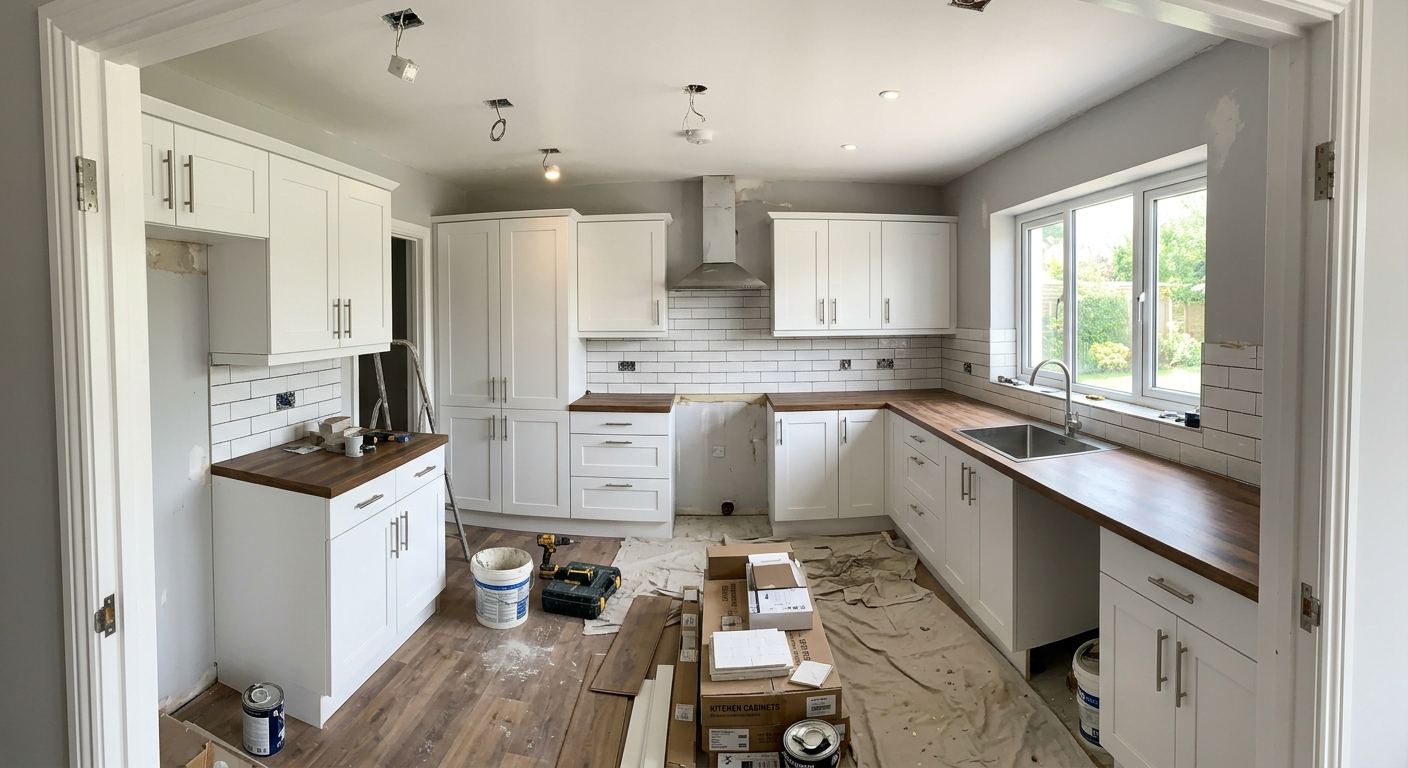
Kitchen renovation options and costs in Leaside-Bennington
Leaside-Bennington kitchen renovations are popular because homeowners there tend to plan projects around long-term comfort and resale readiness. With a population of 16,828 (Statistics Canada, 2021 Census), the area is close-knit, and local suppliers and trade partners often book out faster when multiple neighbours are updating at the same time. In the Toronto economic region, kitchen budgets generally reflect purchasing power more than weather: households in higher-value pockets more readily upgrade to quartz or natural stone and select semi-custom or custom cabinetry, whereas more price-sensitive homeowners often start with a refresh or mid-range rebuild. Even though Toronto winters are cold and summers can be humid, the climate itself usually doesn’t “drive” the cost; it mainly affects drying times, scheduling around temperature/humidity, and the risk of delayed installs when indoor conditions aren’t stabilized.
In Leaside-Bennington, where many homes are older brick-and-stucco builds with established kitchen plumbing runs, keeping plumbing in the same footprint usually helps control cost. Demand is especially strong in the Leaside side of the neighbourhood—around Bayview Avenue and the wider Leaside commercial corridor—where buyers expect a modern finish package and contractors see steady repeat work from nearby streets. From a budgeting standpoint, you’ll typically see modest refreshes land in the low-to-mid bands, while full high-end builds commonly push into the upper end of Toronto’s realistic range.
Here’s how the main renovation paths compare, so you can map your preferences to a defensible budget before you request quotes.
| Renovation Tier |
What's Included |
Typical Duration |
Price Range |
| Cosmetic refresh (paint, hardware, new appliances only) |
Cabinet hardware swap, cabinet/trim paint or touch-ups, new appliances (no cabinet rework), basic countertop cleaning/polish where applicable |
1–2 weeks |
$12,000–$20,000 |
| Mid-range full renovation (new cabinets, counters, sink, tile) |
Semi-custom or quality stock cabinets, new countertop, undermount sink, backsplash tile, plumbing connections kept in place, vanity-style faucet, selective flooring/trim fixes |
3–6 weeks |
$25,000–$55,000 |
| High-end full renovation (custom cabinets, stone counters, island) |
Custom millwork, premium quartz or natural stone, island with detailed cabinetry, upgraded appliance package, full backsplash to spec, electrical upgrades for island lighting |
6–10+ weeks |
$65,000–$90,000 |
| Cabinet refacing only (new doors + drawer fronts, same boxes) |
Door/drawer front replacement, hinge hardware upgrades, veneer/refacing of exposed surfaces, paint/stain as specified, new pulls |
2–4 weeks |
$8,000–$25,000 |
| Countertop swap only (laminate to quartz or stone) |
Removal of existing top, new quartz/stone template and install, sink/cooktop re-seating if kept in place, edge and basic caulking/finishing |
3–10 days (plus template/lead time) |
$3,000–$15,000 |
| Backplash tile installation only |
Tile supply and install (ceramic/porcelain), surface prep, waterproofing where required, trim and caulking, grout sealing as applicable |
3–7 days |
$2,000–$10,000 |
Prices are estimates only and vary by project scope, site access and material selection.
What affects the price of kitchen renovation in Leaside-Bennington
In Toronto and across Ontario, two quotes for the same kitchen can easily diverge by 30–50%. The biggest reason isn’t climate; it’s the finish tier and the extent of “hidden” labour—like adjusting cabinet openings, re-routing electrical, or correcting subfloor/wall issues that show up once the old counters and backsplash come off. In higher-value Toronto pockets, owners often expect a more bespoke result and will choose quartz or stone counters and semi-custom cabinetry because the upgrade tends to match what buyers look for at resale. In more value-sensitive pockets of the GTA, laminate counters and stock cabinets dominate, keeping budgets nearer the low–mid range while still delivering a refreshed look.
In Leaside-Bennington specifically, costs often rise when homeowners choose a layout that demands more trades coordination. For example, adding an island (and especially running new power and ducting) commonly pushes projects toward the higher end of the mid-range full renovation budget, where you may see totals move from roughly the $25,000–$55,000 band up toward $65,000–$90,000. Similarly, switching from laminate to quartz can be a relatively contained change in well-planned kitchens, but if the sink is moved or the cooktop cut-out needs modification, the “simple swap” starts to behave like a mini-reno. Even older housing stock matters: if your kitchen walls aren’t perfectly square from earlier renovations, it can add fitting time for cabinets and increase shimming and drywall patching.
Weather affects scheduling rather than base pricing. Toronto’s freeze-thaw cycles and humid summer days can slow down paint and thinset cure times, particularly if the HVAC isn’t stable during installation. Those delays usually show up as longer durations, not dramatically higher prices—unless the contractor has to re-mobilize labour. That’s why finish choices and scope clarity are your best levers for controlling the final number.
| Price Factor |
Why It Matters |
Cost Impact |
| Cabinet tier — stock vs. semi-custom vs. fully custom millwork |
Custom sizing, door styles, internal organizers, and build quality change material and labour time; also affects lead time. |
Typically adds about 10–40% on cabinets-and-install labour portions |
| Countertop material — laminate vs. quartz vs. granite vs. stone |
Material pricing, template time, and edge finishing differ; natural stone also varies in slab selection and handling. |
Can swing overall job cost by several thousands (often 10–25% of total) |
| Layout change — wall removal, island add, plumbing/gas move |
Structural work and re-routing plumbing/gas require more trades, inspections, and demolition/patching. |
Frequently the largest variable; can add 15–35% or more |
| Appliance package tier — builder vs. mid-range vs. pro-grade |
Pro-grade models cost more and may require different clearances, ventilation specs, and electrical needs. |
Appliance upgrades can range widely and often add $1,500–$8,000+ |
| Flooring — refinish existing vs. full replacement |
Taking on subfloor fixes and matching transitions is labour-intensive; refinish is usually faster. |
Can move the job by ~$2,000–$10,000 depending on extent |
| Backsplash — ceramic tile vs. marble vs. full-height slab |
Material density and cut complexity change installation time; full-height work increases waterproofing and detailing. |
Commonly adds ~$1,000–$6,000+ for premium choices |
| Electrical — new circuits for island, under-cabinet lighting |
Island lighting and additional outlets often require new runs, junction boxes, and inspection. |
Often adds ~$800–$4,500 depending on scope |
| Permit fees and licensed trade requirements |
Some work triggers permits and licensed trades; those steps add admin and schedule time. |
Usually a few hundred to several thousand, plus coordination labour |
Permits & regulations in Ontario
In Ontario, not every kitchen change needs a permit. Generally, cabinet and countertop swaps that don’t alter plumbing or electrical typically don’t require a permit. However, once you’re moving the “systems” of the kitchen, the rules change: relocating plumbing supply/drain lines, moving a gas line or changing a gas appliance setup, removing a load-bearing wall, or adding new electrical circuits (like for an island) usually requires permits and licensed trades. Gas work must be completed by a licensed gas fitter, and electrical work by a licensed electrician—both with required inspections before the work can be closed up.
If you’re in Leaside-Bennington, the easiest way to protect yourself is to make permit responsibility explicit in your contract. Before signing, ask the contractor to confirm exactly which items will be permitted, who pulls the permits, and what inspection dates are anticipated. As a homeowner, you can verify licensing and coverage in a few practical steps: (1) check the contractor’s Ontario licence/registration where applicable via the relevant online registry pages they provide; (2) request a current certificate of insurance showing general liability (and ask whether they include professional coverage if design/build services are involved); (3) confirm WSIB/WCB coverage or ensure your contractor provides proof of compliance for themselves and subcontractors; and (4) if the contractor can’t provide clear documentation, that’s a red flag.
Done right, permits prevent surprises—especially during rough-ins when inspectors confirm safe venting, grounding, and gas/electrical connections. Always confirm responsibility in writing.
Cabinets, countertops and layout decisions in Leaside-Bennington
For Leaside-Bennington homeowners, the three most consequential decisions are: (1) cabinet tier, (2) countertop material, and (3) whether you change the layout. These choices steer both cost and resale appeal in the Toronto market. Stock cabinets are fastest and usually the lowest cost, while semi-custom is the “most popular” mid-range option because it upgrades storage and fit without reaching full custom pricing. Custom cabinets look best when you need exact dimensions, unique door profiles, or specialty storage, but they also carry the highest lead times and design labour.
For countertops, laminate is budget-friendly and practical, but it isn’t as heat- or scratch-resistant as engineered quartz. Quartz offers a strong balance: consistent look, good durability, and easier day-to-day maintenance than many natural stones. Granite/natural stone can be excellent and adds character, yet it requires more careful slab selection and may need periodic sealing depending on the product. Butcher block is warmer-looking and great for certain lifestyles, though it’s more sensitive to water exposure—important in a kitchen with high-use sinks and steam.
Layout changes are where budgets can jump regardless of finish tier. If you remove a wall to open the space or add an island, you may need new electrical outlets/circuits and potentially ducting changes for ventilation. A concrete example: if you start with a mid-range full renovation budget around $25,000–$55,000 and keep plumbing in place, you can often absorb a countertop upgrade to quartz and still stay near the mid-range. But if you move plumbing or add an island with new electrical and ventilation, the same project frequently shifts toward $65,000–$90,000—because labour coordination and patchwork increase.
In this area, buyers often expect clean lines, durable counters, and modern lighting. Aligning cabinet and countertop tier with your willingness to do layout work is the fastest way to get a renovation that feels “worth it” on resale.
| Option |
Durability |
Maintenance |
Best For |
Price Range |
| Stock cabinets (big-box) |
Good durability with standard hardware and finishes; limited flexibility for awkward spaces. |
Low maintenance; minor adjustments may be needed for older wall/line variations. |
Budget-focused refreshes and quicker timelines |
$8,000–$18,000 |
| Semi-custom cabinets (local dealer) |
Very solid build quality; better drawer organizers and door variety. |
Low maintenance; more options to reduce visible wear on high-touch areas. |
Most Leaside-Bennington mid-range full renovations |
$18,000–$35,000 |
| Custom cabinets (local millwork shop) |
Highest fit and finish; ideal for specialty storage and exact alignment. |
Low maintenance with superior hardware options; longer-term reliability. |
High-end builds, unique layouts, and standout storage |
$35,000–$60,000+ |
| Laminate countertop |
Decent for everyday use; can be more vulnerable to heat and seam wear. |
Easy cleaning; avoid prolonged moisture at seams and protect from hot pans. |
Cost-conscious renovations targeting functional upgrades |
$3,000–$7,000 |
| Quartz engineered countertop |
High durability; resistant to staining and everyday impacts. |
Very low maintenance; wipe-clean surface and fewer concerns about sealing. |
Busy households that want a premium look with minimal upkeep |
$7,000–$15,000 |
| Granite / natural stone countertop |
Very durable and heat resistant; unique veining adds natural character. |
Maintenance may include periodic sealing depending on the stone. |
Owners who want natural variation and premium aesthetics |
$8,000–$18,000 |
| Butcher block countertop |
Good durability when properly sealed/maintained; can scratch but can be sanded/refinished. |
Requires regular care to protect from moisture; avoid leaving standing water. |
Casual, warm styles and households comfortable with upkeep |
$5,000–$12,000 |
| Marble countertop |
Elegant but softer than quartz; can etch and stain with acidic substances. |
More careful cleaning and sealing practices recommended. |
High-end “statement” kitchens where appearance is the priority |
$10,000–$20,000+ |
How to choose a kitchen renovation contractor in Leaside-Bennington
Choosing the right contractor in Leaside-Bennington starts with verification and documentation. First, ask for proof of Ontario licensing/registration where applicable and confirm they work with licensed trades for gas and electrical. Next, review their liability insurance certificate—look for current dates and enough coverage for construction activities. Finally, confirm WSIB/WCB coverage (or that they’re compliant in how they handle their workforce and subcontractors). If a contractor can’t provide clear, current documents, don’t proceed; kitchen renovations are high-risk work with demolition, heavy material handling, and plumbing/electrical interfaces.
For pricing, request 2–3 itemised written quotes rather than one lump sum. Your quotes should break out labour and materials separately (cabinets, counters, backsplash, plumbing/electrical allowances, demolition/disposal, installation, and any electrical/permit line items). Read the scope carefully: what’s excluded (flooring beyond patching, subfloor repairs, drywall repainting, moving appliances, cabinet adjustments)? Is permit pulling included, or is it an add-on? Is disposal/hauling included, and does it cover old countertops/cabinets? Warranty matters too: ask for the workmanship warranty length, the manufacturer/product warranties, and whether the warranties are transferable if you sell your home.
On payment schedule, avoid large upfront deposits. A common safe approach is never paying more than 10–15% upfront, then using holdback until key milestones are complete. Also lock in a start date and realistic completion estimate in writing, along with how lead times for cabinets and stone are handled.
- Verify the contractor’s Ontario registration/licensing information before any work begins.
- Request current liability insurance and confirm coverage limits.
- Confirm WSIB/WCB coverage or compliant subcontractor coverage.
- Use itemised quotes with labour and materials broken out, not just totals.
- Ensure scope includes disposal/hauling of old cabinets/counters.
- Clarify whether permits are included and who pulls them.
- Ask who does the template (counters) and when it will happen in the schedule.
- Confirm electrical and gas work will be done by licensed trades.
- Get warranty details in writing: workmanship and product/manufacturer warranties.
- Confirm payment schedule milestones and holdback amount until completion.
- Ask for a projected timeline that accounts for cabinet and countertop lead times.
- Require a written change-order process for any scope or design changes.
Concrete red flags in Leaside-Bennington: (1) a contractor unwilling to provide insurance/WSIB documentation; (2) quotes that don’t specify what’s included in demolition, disposal, or drywall/painting touch-ups; (3) “all-in” pricing with no breakdown for electrical/plumbing allowances; (4) vague timelines that ignore countertop templating/lead times; and (5) pressure to pay large upfront amounts without a signed contract and schedule.
Frequently asked questions — kitchen renovation in Leaside-Bennington
How do I budget for a kitchen renovation?
In Leaside-Bennington and the Toronto region, most homeowners budget based on the full kitchen finish tier rather than climate. A reasonable starting point for a full kitchen is typically within the $25,000–$90,000 range, depending on whether you’re doing a mid-range build or moving into high-end finishes. If your goal is a lighter refresh, cosmetic-only work (paint/hardware and new appliances) often fits in the $12,000–$20,000 band. The most common cost escalators are layout changes (especially island and plumbing/gas moves), upgrades to quartz/stone counters, and any electrical additions like under-cabinet lighting. When you request quotes, ask for an itemised breakdown so you can see where you’re trending and whether allowances (for permits, electrical, or flooring repairs) are inflating the final number.
Can I move my kitchen sink or stove?
Yes, but in Ontario it can trigger permitting and licensed-trade requirements. Moving a sink usually means re-routing plumbing supply and drain lines; moving a stove can involve relocating gas lines and venting. That’s why many Leaside-Bennington renovations keep plumbing in the same footprint to avoid unpredictable labour and schedule delays. If you do move these elements, plan for more coordination between trades, demolition/patching, and inspection time. It also affects your design details—cabinet base placement, countertop cut-outs, and appliance clearances. If you’re aiming for a budget closer to the $25,000–$55,000 mid-range band, keeping plumbing and gas in place often helps. For island projects that add power/venting, it’s common to see budgets move toward the $65,000–$90,000 high-end range.
What's the most cost-effective kitchen upgrade?
In Ontario kitchens, the most cost-effective upgrade is often the one that upgrades the “front-of-house” look without triggering a full systems rework. For many Leaside-Bennington homes, cabinet refacing is a strong value because it refreshes doors/drawer fronts while keeping the existing box structure. That can fall around the $8,000–$25,000 range depending on materials and scope. Another cost-effective path is a countertop swap if the sink and cooktop locations stay the same; moving from laminate to quartz can deliver a noticeable improvement for a few thousand dollars (commonly $7,000–$15,000 for quartz countertops installed). If you’re only updating the visual impact behind the counters, backsplash installation can also be a targeted upgrade in the $2,000–$10,000 range. The key is avoiding layout changes that add plumbing/gas and new electrical circuits, because those are the biggest unpredictable cost drivers.
Custom vs stock cabinets — is custom worth it?
Custom cabinets can be worth it when your kitchen has unusual dimensions, a highly specific storage plan, or you want a truly integrated look (like a tailored pantry wall, special drawer organizers, or exact alignment with an off-standard layout). In Leaside-Bennington and the broader Toronto market, many homeowners choose semi-custom for a strong balance of fit and cost. Stock cabinets are fastest and cheapest, usually best for buyers prioritizing a quicker renovation and straightforward upgrades. Custom pricing typically lands far above stock—often pushing cabinet portions from roughly the $8,000–$18,000 stock range into $35,000–$60,000+ for custom millwork, before you consider counters and other trades. If your budget targets the mid-range $25,000–$55,000 band, semi-custom or refacing is commonly the smarter ROI. If your budget is in the $65,000–$90,000 territory, custom can be the difference between “nice” and “designer-level.”
How do I choose a kitchen contractor in Leaside-Bennington?
Start by verifying Ontario compliance. Ask for the contractor’s Ontario licence/registration information where applicable, confirm liability insurance is current, and ensure WSIB/WCB coverage is in place (or that subcontractors are covered). Then get 2–3 itemised written quotes with labour and materials broken out—especially for electrical, plumbing allowances, permits, demolition, and disposal. Scope clarity is critical: make sure the quote states whether permit pulling is included, what’s excluded (flooring beyond patching, drywall repair, paint touch-ups), and how changes are handled. Warranty should be written and clear: workmanship warranty length, manufacturer warranties, and whether warranties transfer if you sell. Avoid contractors who want large deposits (you should generally keep it to 10–15% upfront) or who won’t give a clear start date and completion estimate. In older Leaside-Bennington homes, ask how they handle wall out-of-square and subfloor corrections before cabinets go in.
What order do kitchen renovation steps happen in?
A typical kitchen renovation sequence in Ontario starts with teardown and preparation, then proceeds to rough-ins, then install and finish. First, demolition happens (cabinets, counters, backsplash, and any flooring removal needed). Next comes rough carpentry and any required plumbing/gas/electrical work—this is where permits and inspections may apply, especially if you move sink, stove, or add circuits for island lighting. After rough-ins, cabinets get installed (often requiring shimming and alignment checks), then countertops are templated and installed once cabinetry is locked. Backsplash tile follows, then final electrical connections and lighting, and finally painting and flooring finishing. If you choose quartz or natural stone, lead times and templating timing can affect the schedule, and Toronto’s indoor humidity can influence paint and thinset curing. Plan for a clean transition from install to finish so your counters and tile aren’t delayed by late rough-ins.