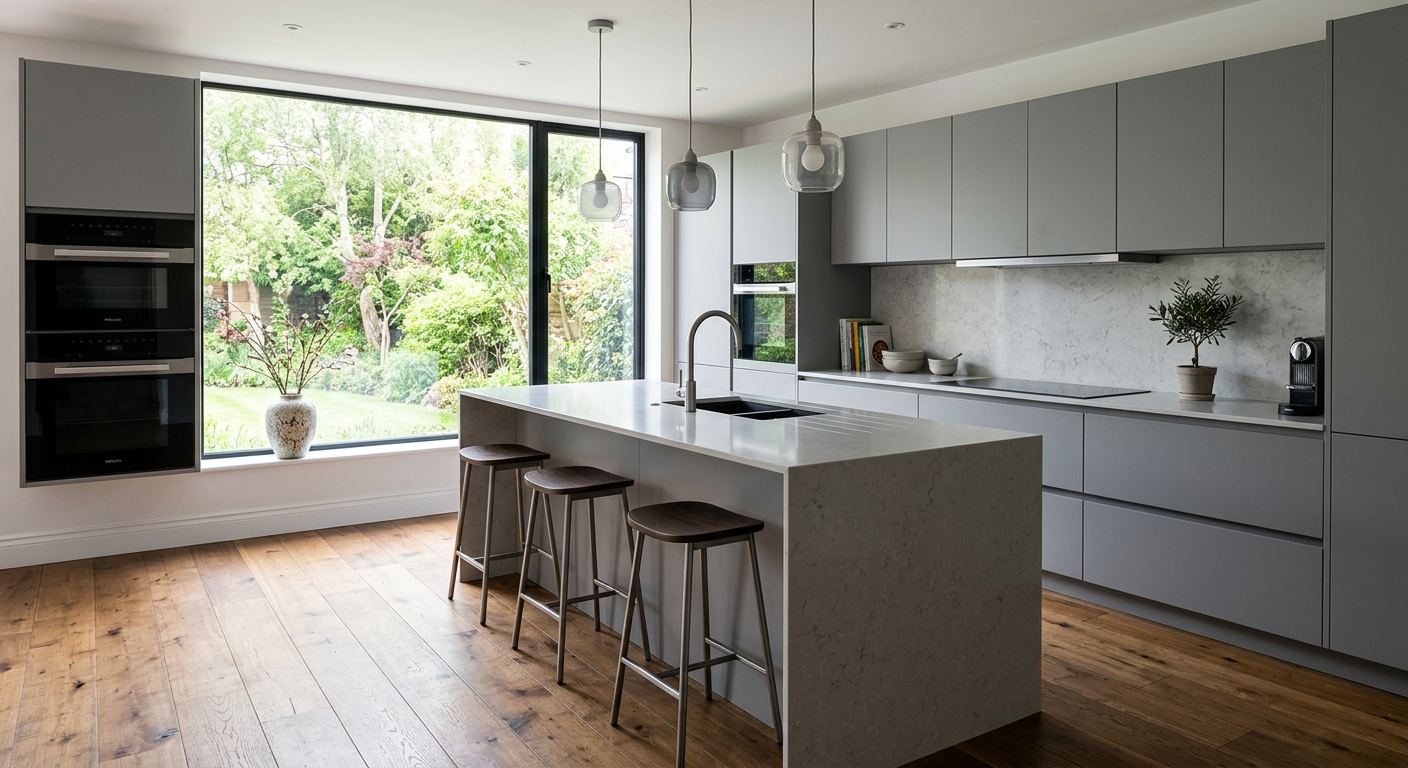
Kitchen renovation options and costs in Welcome Beach
In Welcome Beach, British Columbia, kitchen renovations tend to fall into three practical lanes: cosmetic upgrades, mid-range full remodels, and high-end builds where cabinetry and stonework drive the total. Even though Welcome Beach is a small community (Population 1,125; Statistics Canada, 2021 Census), many homeowners plan upgrades around the wider Lower Mainland–Southwest resale market, where expected finishes can be premium. In the Lower Mainland–Southwest overall, owners often have household incomes that support higher material tiers, and that shows up in the quotes you receive—especially when the project is positioned for resale rather than staying “as is.” (Statistics Canada, 2021 Census)
Climate has less direct influence on kitchen pricing here than market expectations, but it still matters for detailing: damp-season moisture control, sealing around sinks and plumbing penetrations, and ensuring caulking holds up when indoor humidity swings. Contractor availability can also tighten seasonally because coastal areas draw trades for flooring, roofing, and exterior envelope work. That’s why the same kitchen size can price differently based on cabinet lead times and how complex the plumbing or electrical tie-ins are.
If you’re near the beachfront core where access is tighter—think older lanes and occasional limited parking—contractors often spend more time on protection, material handling, and jobsite coordination. Once the scope is confirmed, you’ll usually see a predictable spread across the renovation tiers below, which helps you compare quotes apples-to-apples.
| Renovation Tier |
What's Included |
Typical Duration |
Price Range |
| Cosmetic refresh (paint, hardware, new appliances only) |
Cabinet paint or staining (if applicable), new pulls/handles, appliance replacement, minor caulking/touch-ups |
1–2 weeks |
$10,000–$25,000 |
| Mid-range full renovation (new cabinets, counters, sink, tile) |
New cabinets (semi-custom or quality stock), countertop install, sink + faucet, backsplash tile, flooring spot repairs, basic electrical refresh |
4–8 weeks |
$40,000–$85,000 |
| High-end full renovation (custom cabinets, stone counters, island) |
Custom millwork, stone counters (quartz/stone), oversized island, upgraded hardware, premium backsplash (stone/full-height options), expanded electrical/lighting package |
8–14 weeks |
$85,000–$120,000 |
| Cabinet refacing only (new doors + drawer fronts, same boxes) |
Door/drawer replacement, new fronts and trim, hinges/rollers where needed, finish prep and installation |
1–3 weeks |
$8,000–$30,000 |
| Countertop swap only (laminate to quartz or stone) |
Template + install of new countertops, sink cut-out adjustments as needed, basic countertop sealing |
1–2 weeks |
$3,000–$12,000 |
| Backsplash tile installation only |
Surface prep, tile installation, grout/seal where required, finish trim and caulking at edges |
3–7 days |
$1,500–$6,000 |
Prices are estimates only and vary by project scope, site access and material selection.
What affects the price of kitchen renovation in Welcome Beach
For the same kitchen layout, two quotes across the Lower Mainland–Southwest can differ by 30–50%—and the variation can be even wider when comparing to other parts of British Columbia—because pricing is driven primarily by what’s behind the finish: cabinet tier, stone/counter material, and how complex the trades need to be for layout changes. In the Lower Mainland–Southwest, local home values and household purchasing power shape the finish tier far more than weather. In higher-value areas, homeowners often default to quartz or stone counters and semi-custom cabinetry because the upgrade is easy to justify on resale. In more modest pockets, laminate and stock cabinets dominate because the return is strongest when you keep labour and millwork scope controlled.
Layout decisions are the real swing factor. Removing a wall, adding an island, or moving a gas line or plumbing can add unpredictable labour and wall reinstatement costs regardless of whether you choose a laminate or quartz countertop. As a rule, the cabinet and counter swap categories can be comparatively clean—within the broad bands like a countertop swap at $3,000–$12,000—while any “structure” change pushes the budget toward full renovation totals such as $40,000–$120,000 depending on finish level.
Two or three Welcome Beach-specific examples we see often: (1) older homes with out-of-date shut-offs can force extra time for plumbing tie-ins; (2) coastal humidity highlights any cabinet base swelling—so we sometimes add prep/liner details even in a refresh; and (3) limited access can increase material protection and staging costs, especially when swapping countertops and installing heavier stone. Bottom line: market expectations set the destination tier; site realities and layout changes decide the route.
| Price Factor |
Why It Matters |
Cost Impact |
| Cabinet tier — stock vs. semi-custom vs. fully custom millwork |
Material quality, door styles, internal upgrades, and how closely boxes match your walls affect both cost and time on site |
Often the biggest swing item; can move a “mid-range” project into high-end pricing |
| Countertop material — laminate vs. quartz vs. granite vs. stone |
Material price per slab/foot, edge profiles, and how much template complexity you have drive totals |
Counter swaps can land around $3,000–$12,000, while premium stone supports higher full-kitchen totals |
| Layout change — wall removal, island add, plumbing/gas move |
More demolition, re-framing, venting, and re-finishing increases labour unpredictability |
Can add thousands even if finishes stay “mid”; often the main reason bids diverge |
| Appliance package tier — builder vs. mid-range vs. pro-grade |
Ventilation requirements, install complexity, and power/gas demands change the electrical/plumbing scope |
Higher-tier appliances typically push labour and accessory costs up |
| Flooring — refinish existing vs. full replacement |
Kitchen tear-outs often expose subfloor; mismatched heights can force broader replacement |
Refinish can keep costs restrained; full replacement can broaden demolition and install time |
| Backsplash — ceramic tile vs. marble vs. full-height slab |
Weight, cut-outs, and how premium surfaces are installed affect labour and waste factor |
Tile-only jobs are commonly $1,500–$6,000; full-height can push toward full renovation budgets |
| Electrical — new circuits for island, under-cabinet lighting |
Island receptacles, pot lights, and lighting transformers add licensed electrical work and inspections |
Often a mid-level cost add that becomes significant with layout changes |
| Permit fees and licensed trade requirements |
Permits, inspections, and trade participation add process cost and scheduling time |
Can add time and fees even when demolition scope is modest |
Permits & regulations in British Columbia
In British Columbia, not every kitchen improvement triggers a permit, but the high-risk work always does. A typical cabinet door swap, cabinet refacing, and countertop replacement (like swapping an old laminate surface to quartz) usually do not require a building permit—because you’re not relocating major systems. However, if you move plumbing supply/drain lines, relocate a gas line for a stove or range setup, remove a load-bearing wall, or add electrical circuits (for example, new island receptacles or dedicated lighting circuits), you should expect permits and licensed trade involvement.
For gas work in Welcome Beach, the job must be completed by a licensed gas fitter and subject to required inspections. For electrical work, use a licensed electrician for any new circuits, panel work, or code-required modifications. If you’re considering an open-concept change, removing a wall is where your risk spikes—engineer/permit steps may be required depending on whether the wall is structural.
How a homeowner verifies the contractor (before signing) is straightforward:
- Ask for the trades’ licence details and confirm they match the scope (gas vs electrical).
- Request a current certificate of insurance and confirm liability coverage is active for the project dates.
- Verify workplace coverage (WCB/WSIB equivalent coverage): ask for proof and check that it’s not expired.
- Confirm who pulls permits in writing—contractors should clearly state permit responsibility in the agreement.
- Keep copies of licence/insurance documents in your project file for inspection and close-out.
Then, make sure the contract explicitly assigns who is responsible for permits, inspections, and compliance—because “we’ll handle it” should be replaced with written clarity.
Cabinets, countertops and layout decisions in Welcome Beach
When planning a kitchen renovation in Welcome Beach, your three most consequential choices are cabinet tier, countertop material, and whether to change the layout. (1) Cabinet tier controls cost and speed: stock is fastest and cheapest, semi-custom is the most popular mid-range path, and custom millwork delivers the tightest fit for older wall conditions. (2) Countertop material affects both look and day-to-day maintenance: laminate is budget-friendly and resilient, quartz is a strong “no-fuss” option for busy households, and natural stone (granite/stone/marble) can deliver premium appeal but may require more attentive care depending on finish and sealing. (3) Layout changes—open-concept wall removal, adding an island, or relocating plumbing/gas—are the most justified only when the space gain improves function (circulation, storage, and seating) rather than just chasing trends.
Lower Mainland–Southwest resale expectations often steer people toward cleaner lines and durable work surfaces. In practice, that means a mid-range remodel with semi-custom cabinets and quartz can feel “complete” at $40,000–$85,000, while a custom rebuild with an island and premium stone lands closer to $85,000–$120,000. Coastal humidity is a consideration: we pay attention to sealing around sink plumbing penetrations and ensuring cabinet bases are protected so seasonal damp doesn’t show up as swelling or finish failure.
Concrete example: upgrading from laminate to quartz on a mid-size kitchen often stays within the countertop swap band (commonly around $3,000–$12,000). If you also add an island and move plumbing to support it, that “small” countertop upgrade can become part of a full budget because the layout drives new electrical, venting/heat details, and more wall rework—so the cost difference is justified only when you’re truly changing how you use the room.
| Option |
Durability |
Maintenance |
Best For |
Price Range |
| Stock cabinets (big-box) |
Good for normal household wear when installed level and sealed properly |
Low; wipe-clean surfaces |
Fast timelines and tighter budgets |
$8,000–$25,000 |
| Semi-custom cabinets (local dealer) |
Very good impact resistance with better door/drawer options and fit flexibility |
Low; refinish only if desired after years of use |
Most Welcome Beach homeowners aiming for a balanced mid-range build |
$25,000–$60,000 |
| Custom cabinets (local millwork shop) |
Excellent when detailed for your exact wall and ceiling conditions |
Low to moderate depending on finish type |
Challenging layouts, high-end finishes, and maximum storage efficiency |
$60,000–$95,000+ |
| Laminate countertop |
Decent daily durability; edges and seams are the weak points if poorly detailed |
Low; keep water away from seams |
Budget refreshes that still look clean |
$2,000–$5,000 |
| Quartz engineered countertop |
High durability; resistant to staining and typical kitchen wear |
Low; wipe and rinse is usually enough |
Busy kitchens and resale-friendly finishes |
$4,500–$10,000 |
| Granite / natural stone countertop |
Very durable surface with natural variation |
Moderate; sealing schedule depends on stone type and finish |
Premium look where you’re comfortable with light maintenance |
$6,000–$12,000 |
| Butcher block countertop |
Durable but can dent or scorch; needs proper sealing |
Moderate; regular oiling and protection from standing water |
Warm, character-driven kitchens with careful use |
$3,500–$8,000 |
| Marble countertop |
Beautiful but softer; can etch with acids and requires careful handling |
Moderate to higher; sealing and gentle cleaning |
Statement kitchens and homeowners who love maintenance |
$7,000–$12,000 |
How to choose a kitchen renovation contractor in Welcome Beach
Choosing the right contractor in Welcome Beach comes down to proof and process, not just a nice kitchen photo. First, verify British Columbia licensing and coverage. Ask for the contractor’s licence details where applicable, and—more importantly—confirm the licensed trades match your scope: a licensed gas fitter for gas line relocation or stove/range vent changes, and a licensed electrician for new circuits or island lighting. Then verify liability insurance: request a certificate of insurance with active dates that covers your project. For worker protection, confirm WCB coverage with proof (ask for documentation and ensure it’s current). If they can’t provide it or redirect you to “trust us,” that’s a serious warning.
Next, require 2–3 itemised written quotes. You want labour and materials broken out: demolition and disposal, cabinetry supply/installation, countertop templating and install, electrical/plumbing allowances, tile/backsplash work, and any painting/staging. Avoid lump-sum-only proposals that don’t state what’s included—especially permits, patch-and-paint, and whether materials like shims, underlayment, and trim are included.
Warranty and payment structure also matter. Get workmanship warranty length in writing, know whether manufacturer warranties transfer if you sell, and confirm start and completion timelines. For payment, never pay more than about 10–15% upfront; hold back the final portion until the job is complete and cleaned.
- Request a written scope that lists every room surface affected (backsplash, flooring transition, caulking/trim).
- Confirm who pulls permits and who schedules inspections in British Columbia when systems change.
- Ask for a demolition/disposal line item (dump fees and haul-away should be explicit).
- Verify included patch-and-paint for drywall and ceiling areas after electrical/plumbing access.
- Confirm countertop templating timing and who pays for remakes if measurements change.
- Require product names and model numbers (appliances, fixtures, tile) in the quote.
- Get lead times for cabinets and stone, not just an estimated install date.
- Require an electrical plan note for island receptacles and under-cabinet lighting.
- Ask about dust control: plastic containment and jobsite cleanup frequency.
- Clarify warranty terms: what’s covered, for how long, and how claims are handled.
- Ensure the contract includes start date, milestones, and completion date estimate.
- Confirm payment schedule in writing and keep a holdback until final walkthrough.
In Welcome Beach, common red flags include: “lump sum” quotes with no breakdown, missing proof of insurance or WCB coverage, no written scope about disposal and patch-and-paint, vague dates with no cabinet/stone lead time plan, and contractors who avoid discussing permits when moving plumbing or gas lines.
Frequently asked questions — kitchen renovation in Welcome Beach
How do I choose a kitchen contractor in Welcome Beach?
Start by confirming the contractor’s coverage and the licensed trades that your scope requires. In British Columbia, countertop swaps and cabinet refacing are often straightforward, but if you’re moving plumbing supply/drain lines, relocating gas, or adding new electrical circuits (common with an island), you need properly licensed trades and inspections. Ask for liability insurance documents (with dates that cover your start-to-finish window) and proof of WCB coverage. Then get 2–3 itemised quotes with labour and materials broken out—so you can see how you’d get a mid-range full renovation around $40,000–$85,000 versus a higher-end build closer to $85,000–$120,000. Finally, verify the contract states who pulls permits and who is responsible for compliance.
What order do kitchen renovation steps happen in?
Most kitchen projects in Welcome Beach follow a reliable sequence. First comes site protection and demolition (removal of old cabinets/counters, and careful separation of flooring and trim). Next, rough-ins happen: electrical and plumbing adjustments, plus any gas work if your stove/range setup changes (handled by licensed trades). Then the wall and floor patching begins so surfaces are flat and ready. Cabinets are installed and levelled, followed by countertop templating and fabrication. After countertops go in, you complete backsplash tile, install appliances, and finish with trim, caulking, and a final paint touch-up where needed. If you’re staying in a cosmetic refresh lane, the order shortens—paint/hardware first, then appliances and final alignment checks.
Can I live at home during a kitchen renovation in Welcome Beach?
Often, yes—especially for refresh or targeted upgrades—but you’ll need a plan that protects the rest of the home. For a cosmetic refresh or cabinet refacing, many homeowners remain in the house because the disruption is mostly dust and limited access. For mid-range full renovations, you’ll typically have a temporary kitchen setup (microwave, kettle, and a small sink if possible) while work progresses through demolition, rough-ins, and installation. If you’re in a higher-end full renovation, the dust and trade traffic can be heavier due to custom millwork lead times and additional electrical/plumbing changes. Contractors in coastal BC often use containment and daily cleanup, but if you want uninterrupted living, clarify access routes, schedule noisy work earlier in the day, and confirm whether the contractor can stage materials on-site without blocking entry.
Should I renovate my kitchen before selling in Welcome Beach?
In Welcome Beach and across the Lower Mainland–Southwest, kitchens strongly influence buyer decisions, and the “right” timing depends on whether the space feels functional and modern when someone tours. If your layout works and cabinets only look dated, a refresh or refacing can provide strong visual impact without pushing the total too high. If buyers would expect a durable, resale-friendly surface, upgrading counters (for example quartz) can help—countertop-only projects are often in the $3,000–$12,000 band. For full renovations, homeowners usually plan budgets in the $40,000–$120,000 range depending on finish tier and whether they change plumbing/electrical or add an island. If you’re changing a lot of systems, it’s generally best to renovate before listing so inspections and install quality are complete and documented.
What's the most popular kitchen style in Welcome Beach right now?
Based on what’s selling and what homeowners request in the Lower Mainland–Southwest, the most common direction is clean, modern transitional: shaker or flat-panel cabinet fronts, neutral colours, and quartz-type surfaces with practical hardware. Many people also choose a layout that supports everyday flow—typically improved pantry/storage and a more functional island or better work triangle. In coastal BC, we also see higher attention to moisture-tough details: properly sealed sink areas, good caulking, and cabinet base protection, which helps cabinets last through seasonal humidity swings. Style-wise, the “premium look” is often tied to semi-custom cabinetry and stone counters. That’s why mid-range remodels (often around $40,000–$85,000) can look nearly “custom” when the design is cohesive and the fit is tight.
How do I know if I need to update my kitchen plumbing in Welcome Beach?
You may not need a full plumbing replacement, but you should update anything that’s unsafe, leaking, corroded, or incompatible with your proposed layout. In Welcome Beach (and throughout coastal BC), older supply lines, shut-offs, and drainage connections can be the hidden issue that expands costs during demolition. Good signals you need updates include: slow drains, frequent shut-off failures, water staining under sinks, loose or outdated connections, or if you plan to move the sink/dishwasher or relocate gas/appliances that affect hot/cold routing. A reputable contractor will assess valves and drain lines during the tear-out phase and document what needs replacement. If your plan stays countertop-only, plumbing may remain unchanged, keeping that scope closer to $3,000–$12,000; but if you move lines, expect additional licensed work and permits.