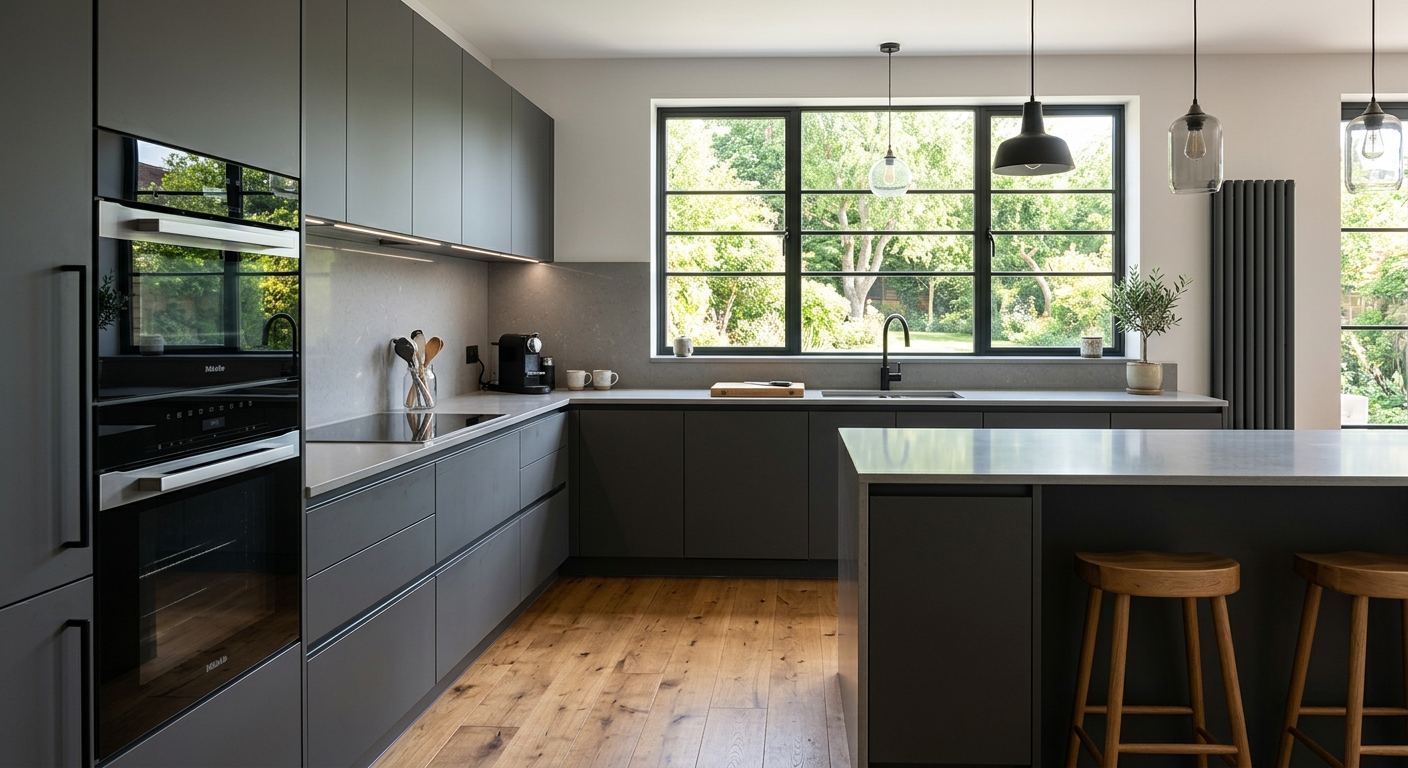
Kitchen renovation options and costs in Victoria-Downtown
In Victoria-Downtown, kitchen renovation options tend to be grouped by finish tier and how much of the room you’re changing—not just by size. With a city population of 46,309 (Statistics Canada, 2021 Census), demand is steady, but project expectations vary block to block. In the higher-value pocket around downtown-adjacent neighbourhoods (where buyers often compare remodels at resale), homeowners typically lean into upgraded millwork and stone-looking surfaces because the renovation cost can be easier to recoup. On Vancouver Island and the Coast, pricing is also strongly shaped by household spending patterns tied to incomes, which is why you’ll see more quartz-and-custom-cabinet requests than in secondary-suite type projects.
Coastal weather doesn’t “drive” the cost the way it would with, say, heavy insulation work, but it does influence scheduling and site conditions. Moisture management matters during demolition and countertop install, and contractors often plan around drying times for subfloors, drywall, and paint. Availability can be tighter in peak renovation months because trades servicing Victoria are pulled into ongoing projects across the island. That’s why the same scope can land at different totals: labour rates and finish leads move with demand.
In Victoria-Downtown, kitchen remodels are especially in demand in and around James Bay, where many homes have older layouts and buyers often look for modern storage, better lighting, and durable surfaces. Next, compare typical tiers and what you’ll usually receive in each quote.
| Renovation Tier |
What's Included |
Typical Duration |
Price Range |
| Cosmetic refresh (paint, hardware, new appliances only) |
Cabinet paint/stain touch-up (where applicable), new hardware, appliance swap, minor drywall patching, updated lighting (like-for-like) |
1–3 weeks |
$15,000–$35,000 |
| Mid-range full renovation (new cabinets, counters, sink, tile) |
New semi-custom cabinets, countertop install, new sink + faucet, backsplash tile, under-cabinet lighting (if included), basic plumbing/electrical adjustments (as required) |
4–8 weeks |
$40,000–$85,000 |
| High-end full renovation (custom cabinets, stone counters, island) |
Fully custom cabinetry, premium stone counters, island with electrical/lighting (if added), upgraded backsplash (including tile/stone feature), deeper plumbing/electrical work for layout changes |
8–14 weeks |
$90,000–$150,000+ |
| Cabinet refacing only (new doors + drawer fronts, same boxes) |
Refacing, new doors/drawer fronts, updated hardware, optional paint refresh to adjoining walls, typically no countertop replacement |
2–4 weeks |
$8,000–$35,000 |
| Countertop swap only (laminate to quartz or stone) |
Remove existing tops, install new quartz/stone, new sink cut-out (if needed), new caulking/trim, backsplash touch-up (not always full tile reset) |
1–2.5 weeks |
$3,000–$12,000 |
| Backsplash tile installation only |
Surface prep, tile supply + install, grout/seal where required, trim pieces at edges and under-cabinet line (full-height options add cost) |
1–3 weeks |
$2,500–$9,000 |
Prices are estimates only and vary by project scope, site access and material selection.
What affects the price of kitchen renovation in Victoria-Downtown
In Victoria-Downtown and across Vancouver Island and the Coast, you’ll often see quotes for the “same” kitchen land 30–50% apart. That gap usually comes down to local finish choices and how trades price uncertainty, not because climate “adds cost.” In higher-value Victoria pockets, homeowners commonly start from a finish tier that assumes resale value: quartz or natural stone counters and semi-custom or custom cabinetry are favoured because the investment aligns with buyer expectations. In more modest settings or secondary-suite style renovations, the better value play is usually stock cabinets and laminate or entry-level quartz, which keeps projects nearer the refresh band or lower end of mid-range.
Two concrete local cost drivers: (1) older downtown housing stock often hides surprises behind walls—out-of-square boxes, older venting, or dated subfloor conditions—so trades build labour contingency even before they open everything up. (2) Basements and crawlspaces in certain Victoria-Downtown homes can be tight, which increases time for plumbing/electrical access. Even without major layout changes, those access issues can push labour upward.
Layout changes are the most unpredictable cost regardless of finish. Removing a wall, adding an island, or moving a gas line can turn a mid-range remodel (often in the $40,000–$85,000 bracket) into something closer to the higher end. Conversely, if you stay with the existing sink location and keep countertops in a defined budget tier, you can often control spend even when upgrading from basic refresh to a full rebuild. For example, a countertop-only swap might fall within the $3,000–$12,000 band, while changing cabinet sizes and adding an island typically triggers the cabinet and electrical pricing that drives the total much higher.
| Price Factor |
Why It Matters |
Cost Impact |
| Cabinet tier — stock vs. semi-custom vs. fully custom millwork |
Custom framing, dovetail construction, hardware upgrades, and exact fit to older walls increase labour and material cost |
Often the single biggest swing; custom can double cabinet spend versus stock |
| Countertop material — laminate vs. quartz vs. granite vs. stone |
Material price and installation time change with weight, edging complexity, and sink cut-outs |
Laminate is lowest cost; quartz/stone move you into mid-to-upper budgets |
| Layout change — wall removal, island add, plumbing/gas move |
Creates structural, MEP, and permitting complexity; adds demolition/rebuild time |
Can add tens of thousands compared with a “like-for-like” refresh |
| Appliance package tier — builder vs. mid-range vs. pro-grade |
Install complexity increases with power requirements, ventilation style, and warranty expectations |
Lower tier keeps upgrades closer to refresh budgets; pro-grade can push total upward quickly |
| Flooring — refinish existing vs. full replacement |
Damage risk during demo and the amount of matching/replacement required in an open-plan area |
Refinish can save substantial labour; full replacement adds demo, underlayment and install |
| Backsplash — ceramic tile vs. marble vs. full-height slab |
Full-height coverage and natural stone cutting increase time and cost per linear foot |
Small increases can come from tile choice; slab options move you higher |
| Electrical — new circuits for island, under-cabinet lighting |
Licensed electrical work and potential panel upgrades affect both price and scheduling |
Often adds cost mid-range-to-high-end projects; can be lower if you keep circuits as-is |
| Permit fees and licensed trade requirements |
Work tied to gas, load-bearing removal, and service upgrades triggers permit and inspection steps |
Usually not the largest line item, but it adds labour and administrative time |
Permits & regulations in British Columbia
In British Columbia, cabinet and countertop swaps generally do not require permits when you’re working within the existing footprint. That means replacing cabinets, installing new countertop surfaces, and adding a standard tile backsplash typically fall into “no permit” scope—assuming you’re not altering plumbing, moving gas, or creating electrical work beyond like-for-like.
Permits and licensed trade involvement are usually required when you change critical systems. Typical permit-triggering work includes: moving plumbing supply or drain lines, relocating a stove/range that uses gas, removing a load-bearing wall, adding electrical circuits (for example, adding outlets or under-cabinet lighting that requires new wiring), and any panel or service upgrade tied to new loads. Gas work must be performed by a licensed gas fitter, and electrical work must be performed by a licensed electrician; both require inspections as applicable.
For a homeowner in Victoria-Downtown, verify in writing before you sign: (1) request the contractor’s licence details and licence numbers for applicable trades, (2) ask for a certificate of insurance showing liability coverage, and (3) confirm coverage status for workers under WCB (WSIB/WCB coverage is commonly referenced in trade documentation—request proof and confirm it matches the scope). A solid workflow is to check online trade licence registries for individuals/companies, then match that with the certificates your contractor provides in the bid package. Also ensure who pulls permits is clearly stated in the contract—permit responsibility is often the difference between a smooth project and an unexpected cost later.
Cabinets, countertops and layout decisions in Victoria-Downtown
The three biggest decisions that shape both feel and budget in a Victoria-Downtown kitchen renovation are: (1) cabinet tier, (2) countertop material, and (3) layout changes. Cabinet tier affects how quickly a kitchen comes together and how well it fits older Victoria homes. Stock cabinets are usually fastest and cheapest; semi-custom is the most common mid-range choice because it balances variety with realistic lead times; custom cabinets deliver the best fit for imperfect walls and unique storage needs but cost the most.
Countertops define durability and day-to-day maintenance in a high-use kitchen. Laminate can be cost-effective, but it’s less forgiving with impacts and heat. Quartz is a popular “busy household” choice because it resists staining and wipes clean easily, and it sits in the mid-range budget band. Granite and other natural stones bring unique veining and value-focused appeal, but they may require more attention depending on sealers and usage. Butcher block offers a warm look and easy spot repairs, while marble is stylish but more sensitive to acidic spills.
For layout, consider justification first. If you’re removing a wall to open sightlines or adding an island, costs can move quickly because electrical, plumbing/gas, and/or structural steps get involved. The Vancouver Island and Coast resale market often rewards functional storage and modern lighting, so an island can be worth it when it truly improves work zones—not just aesthetics.
Dollar example: if you upgrade from a quartz countertop to granite on a typical Victoria-Downtown kitchen, the material jump may look modest on paper, but the extra template precision, edge finishing, and install time can push you toward the upper end of the $3,000–$12,000 countertop swap band. If instead you keep the same cabinet footprint and upgrade cabinets to semi-custom, you may get a bigger perceived upgrade with less layout-related uncertainty—often the best value move before you decide on an island.
| Option |
Durability |
Maintenance |
Best For |
Price Range |
| Stock cabinets (big-box) |
Solid for everyday use; limited customization means fit can be less perfect in older rooms |
Basic care; minor gaps may show if walls aren’t straight |
Faster refreshes and tighter budgets |
$8,000–$25,000 |
| Semi-custom cabinets (local dealer) |
High durability with more sizing options; better storage configurations |
Low day-to-day upkeep |
Mid-range remodels aiming for resale-ready looks |
$20,000–$55,000 |
| Custom cabinets (local millwork shop) |
Excellent longevity; built to fit irregular or historic Victoria layouts |
Low upkeep; hardware and finishes vary by spec |
High-end renovations and unique storage needs |
$45,000–$110,000+ |
| Laminate countertop |
Good for normal use; less resistant to heat and heavy impacts than stone |
Wipe clean; avoid hot pans and cutting directly on surface |
Refreshes and cost-conscious projects |
$3,000–$6,000 |
| Quartz engineered countertop |
Very durable and resistant to staining; handles daily cooking well |
Low maintenance; occasional sealers generally not needed |
Busy households and resale-friendly durability |
$6,000–$12,000 |
| Granite / natural stone countertop |
Extremely durable with natural variation; great scratch resistance |
May need periodic sealing depending on stone |
Homeowners wanting natural character |
$7,000–$14,000 |
| Butcher block countertop |
Durable but can be dented; best with regular maintenance |
Conditioning/oiling as recommended; protect from standing water |
Warm, casual kitchens and those who enjoy upkeep |
$4,500–$9,000 |
| Marble countertop |
Beautiful but softer; can etch and stain from acids |
Higher-care routines; quick wipe-up of spills |
Statement kitchens for lighter-use cooking |
$9,000–$16,000+ |
How to choose a kitchen renovation contractor in Victoria-Downtown
Choosing a contractor in Victoria-Downtown is less about flashy photos and more about verification and clarity. Start with British Columbia licensing where applicable: ask who holds the relevant trade licences (for gas work, a licensed gas fitter; for electrical, a licensed electrician). For the contractor as a business, request liability insurance and confirm active WCB coverage for workers. How to check: (1) ask for the insurance certificate and verify the coverage dates and named insured match the company you’re hiring, (2) request proof of WCB coverage, and (3) confirm licences using online trade registries for the specific trade(s) involved. A reputable contractor won’t hesitate to provide documentation before you sign.
Then get 2–3 itemised written quotes. You want labour and materials separated, not lump sums. Scope clarity matters: confirm what’s included for permits (if required), disposal/haul-away, protection of floors and counters, and whether plumbing/electrical allowances are already priced or treated as “extras.” Warranty is another key differentiator—ask for workmanship warranty length, whether product warranties transfer to you, and what coverage includes (labour vs parts, and exclusions like misuse). For payment, avoid high upfront deposits: never more than 10–15%, and use a holdback until substantial completion and punch list items are finished. Finally, request a start date and completion estimate in writing, including how long lead times may affect the schedule.
- Request proof of relevant trade licences (gas/electrical where applicable) and match them to your scope.
- Verify liability insurance certificate (coverage limits and dates).
- Confirm WCB coverage for workers handling the project.
- Get 2–3 itemised quotes with labour + materials breakdown, not one total line.
- Ask exactly who pulls permits and who pays permit fees if permit-triggering work is included.
- Check exclusions: flooring replacement, drywall finishing level, disposal/haul-away, and appliance installation responsibilities.
- Confirm countertop template and install date dependencies (lead times and site readiness).
- Review warranty terms for workmanship and products; ask if warranties are transferable.
- Use a payment schedule with 10–15% max upfront and a holdback for punch list completion.
- Require a written timeline with milestones (demo, rough-in, install, trim, final).
- Ensure change-order process is documented with pricing method and approval steps.
- Ask who handles site protection and cleanup at each stage (dust control, tarping, daily cleanup).
Red flags to watch in Victoria-Downtown: (1) quote lacks line-item scope and only offers a lump sum, (2) contractor won’t provide insurance/WCB confirmation in writing, (3) promises “no permits ever” even though you’re moving plumbing/gas or adding circuits, (4) vague warranty language (no duration or what’s included), and (5) demands large deposits upfront or won’t agree to a holdback at completion.
Frequently asked questions — kitchen renovation in Victoria-Downtown
How do I get accurate kitchen renovation quotes in Victoria-Downtown?
To get accurate kitchen renovation quotes in Victoria-Downtown, start with a consistent scope you can compare: cabinet layout measurements, desired finish tier, and whether you’re moving plumbing/gas or adding electrical for an island. Ask for 2–3 itemised quotes so labour and materials are separated, including disposal/haul-away and any allowances for drywall, flooring patching, and electrical or plumbing adjustments. A good contractor will also do (or require) an on-site assessment to confirm wall straightness and existing service locations, which are common variables in older downtown housing stock. Then sanity-check pricing against local bands: a full refresh often sits in the mid-teens to mid-thirties, while mid-range full renovations frequently land in the $40,000–$85,000 bracket.
What's the best countertop material for a busy Victoria-Downtown kitchen?
For most busy Victoria-Downtown households, quartz is the safest “daily performance” choice because it’s durable and generally easy to maintain with normal cleaning. It’s also a resale-friendly option across British Columbia: buyers tend to respond positively to a modern, consistent look that holds up to everyday cooking. If you’re comparing budgets, countertop swaps alone often fall into the $3,000–$12,000 range depending on size, edging, and sink cut-outs; quartz typically sits toward the upper half of that band versus laminate. Natural stone like granite is also durable and attractive, but it may require periodic sealing depending on the stone and how you use it.
How do I add an island to my Victoria-Downtown kitchen?
Adding an island in Victoria-Downtown usually becomes a combined carpentry + countertop + electrical (and sometimes plumbing/gas) project. The practical first step is to confirm clearance and circulation, especially in older layouts where wall thickness and existing service runs can be tight. Next, decide whether your island needs power for outlets or a pendant/undercabinet lighting plan—new circuits typically require a licensed electrician and inspections in British Columbia. If you need a sink or dishwasher in the island, that’s when plumbing changes and likely permit steps come into play. Budget-wise, an island addition commonly pushes you out of a simple refresh and into full renovation territory, often aligning with the mid-range $40,000–$85,000 band when cabinets and countertops are also updated.
How much does a kitchen renovation cost in Victoria-Downtown?
Kitchen renovation cost in Victoria-Downtown depends mostly on cabinet tier, countertop material, and whether you’re changing layout or moving services. As a baseline, a cosmetic refresh (paint, hardware, new appliances only) often lands roughly in the mid-teens to mid-thirties. For a mid-range full renovation—new cabinets, counters, sink, and tile—many projects land around the $40,000–$85,000 bracket. If you want fully custom cabinetry, premium stone counters, and an island with deeper electrical or layout changes, budgets commonly move into the $90,000–$150,000+ range. Even though coastal weather doesn’t “drive” costs, tight Victoria trade schedules and older home conditions can affect labour time, which is why itemised quotes matter.
How long does a kitchen renovation take in Victoria-Downtown?
Typical timelines in Victoria-Downtown depend on whether you’re doing a refresh or a full rebuild. Cosmetic refresh work often takes about 1–3 weeks because you’re mainly swapping finishes and appliances. Mid-range full renovations usually take around 4–8 weeks, assuming cabinet and countertop lead times line up and any rough-in work (plumbing/electrical adjustments) stays on schedule. High-end custom builds can take 8–14 weeks, especially when millwork is being fabricated to fit older walls and when permits/inspections add scheduling steps. Coastal humidity matters indirectly: contractors plan around drying times for drywall and paint so counters and backsplash install when surfaces are ready.
Quartz vs granite countertops — which is better?
Neither is “universally better”—they’re different strengths. Quartz is often the better option for busy kitchens because it’s non-porous (in most cases) and typically requires less maintenance than natural stone; that makes daily cleanup easier and helps you avoid sealing routines. Granite is extremely durable and offers unique natural variation, which many Victoria-Downtown buyers love, but depending on the specific stone, it may require sealing to manage staining risk. Budget and installation details also matter: countertop swaps in Victoria-Downtown commonly fall into the $3,000–$12,000 band, but quartz and granite can both push higher depending on slab selection, edging, and sink complexity. If you want low-fuss performance with a consistent look, quartz usually wins; if you want natural character and don’t mind a slightly higher care routine, granite can be excellent.