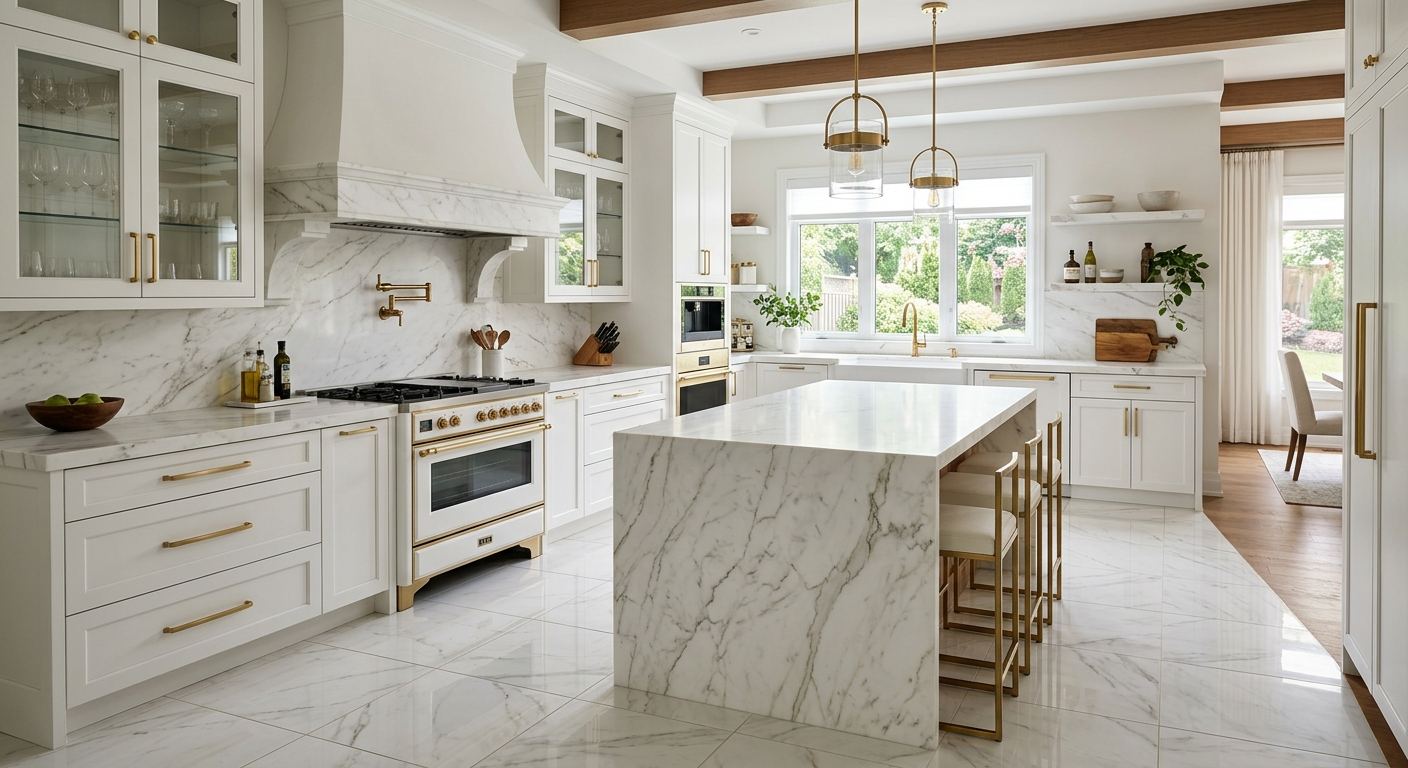
Kitchen renovation options and costs in Glenmore
In Glenmore, kitchen renovations usually start with one key decision: are you simply refreshing the space, or rebuilding it around a new layout and premium finishes? With a small local population of 1,028 (Statistics Canada, 2021 Census), Glenmore’s renovation choices are strongly influenced by the broader Lower Mainland–Southwest market, where many homeowners plan for resale value and want finishes that photograph well and hold up to daily use. In high-value Metro Vancouver pockets, owners often lean toward semi-custom cabinetry and quartz or stone counters because the upgrade cost is easier to recover on resale—an approach shaped by income and home values across the region (Statistics Canada, 2021 Census).
Climate plays a smaller role in day-to-day pricing than you might expect; in the Lower Mainland–Southwest, the bigger cost drivers are material selection and labour demand tied to expected finish level. That said, Glenmore homes that are older (or built with original, builder-grade cabinets) can require extra prep time to address uneven walls, dated plumbing runs, and ventilation details—especially where steam, humidity and frequent cooking accelerate wear at cabinet bases and around the sink. Trade availability is also a factor: cabinetry and countertop install schedules can tighten when multiple projects overlap in the same nearby areas, including the Glenmore neighbourhoods close to the Richmond corridor where finish-led remodels are common.
To compare realistic scopes and budgeting ranges, use the table below as a starting point for Glenmore projects.
| Renovation Tier |
What's Included |
Typical Duration |
Price Range |
| Cosmetic refresh (paint, hardware, new appliances only) |
Cabinet paint or staining, new hardware/pulls, appliance swap (no ducting/plumbing moves), minor caulking & trim touch-ups, basic cleaning and re-install |
5–10 business days |
$8,000–$25,000 |
| Mid-range full renovation (new cabinets, counters, sink, tile) |
New cabinet package (stock or semi-custom), new countertop, sink + faucet, backsplash tile, under-cabinet lighting prep (if added), flooring refinishing or replacement allowance, disposal & demo included |
3–6 weeks |
$40,000–$75,000 |
| High-end full renovation (custom cabinets, stone counters, island) |
Custom cabinetry (made-to-fit), premium stone counters, island build, upgraded hardware, full backsplash (including design features), electrical upgrades for island lighting, coordinated countertop templating and install |
6–12 weeks |
$85,000–$120,000 |
| Cabinet refacing only (new doors + drawer fronts, same boxes) |
Door and drawer front replacement, new hinges/soft-close hardware, refinish/repair of existing boxes as needed, new trim where applicable, no countertop replacement |
2–4 weeks |
$10,000–$28,000 |
| Countertop swap only (laminate to quartz or stone) |
Remove existing surface, template, install new quartz or stone, reseal/caulk, re-connect sink if required (typically on same rough-in) |
7–15 business days |
$3,000–$12,000 |
| Backsplash tile installation only |
Surface prep, waterproofing as needed near sink/cooktop, tile supply & install allowance, grouting and caulking |
5–10 business days |
$1,500–$6,000 |
Prices are estimates only and vary by project scope, site access and material selection.
What affects the price of kitchen renovation in Glenmore
In Glenmore and across the Lower Mainland–Southwest, two quotes for the “same” kitchen can differ by 30–50% because the real comparison isn’t just square footage—it’s cabinet style, countertop tier, and how much plumbing/electrical work is triggered by layout decisions. The broader British Columbia pattern is similar: when homeowners choose premium finishes and made-to-fit millwork, project totals rise quickly, even if the renovation seems cosmetic from the hallway view. In higher-value regional markets, owners often default to quartz or stone counters and semi-custom cabinetry because buyers expect that finish standard; in more modest scopes, laminate and stock cabinets dominate for better ROI.
Local examples in Glenmore that commonly swing costs include: first, older homes where the wall behind the refrigerator is uneven can add labour time to achieve a flush reveal on new cabinets; second, kitchens where the existing sink plumbing sits slightly off-centre may require drain line adjustments to accommodate a modern undermount sink—one of the more unpredictable cost items regardless of whether you choose laminate or quartz. Third, if you’re adding a gas range hood upgrade or changing cooking locations, the ventilation and rough-in work can expand scope beyond the countertop and cabinetry budget.
Even with the same countertop band (for example, a countertop installation budget of about $3,000–$12,000), the cabinet tier you select can change the overall feel of the room and the trade time—especially if you move from a basic refacing approach to a full mid-range full renovation. That’s why it’s also common to see a “mid-range” kitchen land in the $40,000–$75,000 range for practical upgrades, while finish-led full renovations move toward $85,000–$120,000 when an island, stone, and custom cabinetry are in the plan.
| Price Factor |
Why It Matters |
Cost Impact |
| Cabinet tier — stock vs. semi-custom vs. fully custom millwork |
Determines material quality, fit-and-finish, door styles, interior organization, and onsite labour for alignment |
Often the biggest swing; can shift a project by $20,000+ between tiers in full remodels |
| Countertop material — laminate vs. quartz vs. granite vs. stone |
Material cost, fabrication complexity, seam planning, and sink/cooktop cutouts change both time and price |
Can add several thousand dollars on the countertop line alone; usually a noticeable jump at quartz/stone |
| Layout change — wall removal, island add, plumbing/gas move |
Triggers engineering/structural considerations, re-routing rough-ins, and more electrical/venting coordination |
Unpredictable; typically increases labour and trade days more than finish upgrades |
| Appliance package tier — builder vs. mid-range vs. pro-grade |
Higher-end units often require more precise installation clearances and may need electrical/venting upgrades |
Can change the overall build-out by thousands depending on specs and readiness |
| Flooring — refinish existing vs. full replacement |
Cabinet removal and dust control affect prep; replacing flooring can add demo and new install time |
Often adds 5–15 days of trade time in full renovations, plus material variability |
| Backsplash — ceramic tile vs. marble vs. full-height slab |
Tile type affects weight, substrate prep, and how precisely outlets are detailed |
Full-height or stone slabs generally push backsplash budgets toward the top of the band |
| Electrical — new circuits for island, under-cabinet lighting |
Requires licensed work and can involve panel capacity checks and extra run length |
May add a few thousand when island/recessed lighting or new dedicated circuits are required |
| Permit fees and licensed trade requirements |
Permits add administration; licensed trades add scheduling and inspection milestones |
Cost impact varies, but delays and rework are the real risk if scope is misunderstood |
Permits & regulations in British Columbia
In British Columbia, many kitchen swaps do not require a permit, but several common renovation steps do. Cabinet and countertop swaps (for example, replacing doors/drawer fronts or installing new quartz over the existing footprint) typically do not require permits, as long as you are not changing plumbing, gas, or electrical circuits. Similarly, adding a backsplash is usually treated as a finish installation—provided you’re not altering concealed services.
Where permits enter the picture is when you modify the building systems. In a Glenmore kitchen, the work that typically does require permits and licensed trades includes: moving plumbing supply lines or drain lines (sink, dishwasher, waterline changes), relocating gas for a stove/range, changing ventilation tied to gas appliances, removing or altering a load-bearing wall, and adding new electrical circuits (for instance, wiring for island outlets or under-cabinet lighting when it requires circuit work). Gas work must be performed by a licensed gasfitter; electrical work by a licensed electrician, with inspections required before you can close up walls or finalize the job.
To verify a contractor in Glenmore before you sign: (1) request their current licence details and trade numbers; (2) ask for a certificate of insurance and confirm it includes liability coverage and coverage dates; (3) ask how they handle workplace coverage (WSIB/WCB) and obtain proof/clearance documentation in your paperwork; (4) ensure the written contract clearly states who pulls permits and who is responsible for inspections. If a quote is silent on permits, it’s a gap—clarify it in writing.
Cabinets, countertops and layout decisions in Glenmore
For most Glenmore homeowners, the three most consequential decisions are cabinet tier, countertop material, and whether you change the layout. Start with cabinetry: stock cabinets are the fastest and cheapest (often best for cosmetic refresh + keeping the footprint), semi-custom is the most popular mid-range choice because you get better storage options and improved door/drawer quality without the long lead times of full custom. Custom cabinets cost the most, but they can be worth it when you’re dealing with awkward angles, ceiling soffits, or want a truly seamless built-in island and pantry wall.
Next is countertop material. Laminate is budget-friendly and durable enough for most everyday cooking, but it’s less forgiving for heat and can chip at edges over time. Quartz is the realistic “busy kitchen” winner in British Columbia: it resists staining and stands up well to day-to-day use, and it typically lands in the mid-to-upper countertop band. Granite/natural stone looks premium but can require more careful maintenance depending on the stone and seal schedule; butcher block can work beautifully in a warm design, but it needs ongoing oiling and careful water management near the sink area.
Finally, layout. In Glenmore, an open-concept feel (wall removal or partial opening) and island addition often justify the cost when it solves real circulation problems—like making the work triangle flow better or adding seating. But plumbing/gas relocation is where budgets can jump regardless of finish tier. For example, moving plumbing to support an island can erase savings from choosing laminate; in many cases, homeowners are better off keeping the sink rough-in location and using a quartz counter within the $3,000–$12,000 countertop band, then spending the difference on better cabinet organization.
| Option |
Durability |
Maintenance |
Best For |
Price Range |
| Stock cabinets (big-box) |
Good everyday durability; hinges and finishes vary by line |
Low; minor touch-ups over time |
Budget-conscious refresh and straightforward layouts |
$10,000–$25,000 |
| Semi-custom cabinets (local dealer) |
Very solid construction for daily use; better fit and range of storage options |
Low to moderate; keep hardware tightened and clean |
Most Glenmore renovations aiming for strong resale appeal |
$20,000–$45,000 |
| Custom cabinets (local millwork shop) |
Highest fit-and-finish; best for irregular spaces and built-ins |
Low; premium hardware and surfaces typically hold up well |
Design-led kitchens, islands with special dimensions, and full rebuilds |
$40,000–$75,000 |
| Laminate countertop |
Decent resistance to staining; edges are the weak point if abused |
Low; avoid sustained heat and wet edge exposure |
Cost-controlled remodels and homeowners keeping scope practical |
$3,000–$6,000 |
| Quartz engineered countertop |
Excellent stain resistance and strong everyday durability |
Low; simple cleaning, wipe up spills promptly |
Busy kitchens where you want “set it and forget it” performance |
$6,000–$10,500 |
| Granite / natural stone countertop |
Very durable surface; variation in hardness and porosity by stone type |
Moderate; seal schedule depends on the stone and finish |
Premium look with natural variation in a full renovation |
$8,000–$12,000 |
| Butcher block countertop |
Durable when cared for; can show wear with heavy water exposure |
Moderate; regular oiling and careful drying near the sink |
Warm design styles and homeowners willing to maintain it |
$4,000–$9,000 |
| Marble countertop |
Beautiful but softer; more prone to etching and staining |
High; frequent care and protection from acidic spills |
Statement kitchens with lighter day-to-day wear |
$10,000–$14,000 |
How to choose a kitchen renovation contractor in Glenmore
Choosing the right contractor in Glenmore starts with proof, not promises. Ask for documentation showing they’re properly licensed for the trades they perform in British Columbia: electrical work should be covered by a licensed electrician, and gas-related changes by a licensed gasfitter. Then verify liability insurance—request a certificate of insurance with coverage dates and confirm it’s current for your project period. Finally, request proof of workplace coverage (WSIB/WCB) or clearance documentation so you’re not exposed if a worker is injured. A reputable contractor will provide this up front without pressure.
For quotes, get 2–3 itemised written estimates. You want labour and materials broken out separately (cabinet package, countertop fabrication, tile, disposal, electrical/plumbing provisions), not a single lump sum that hides scope gaps. Read what’s excluded: demo and disposal, wall repairs, floor protection and refinishing, permit pulling, and whether electrical rough-in for island lighting is included. Also confirm start date and completion estimate in writing, since cabinet and countertop lead times can shift schedules.
Warranty matters too. Ask for the workmanship warranty length and what it covers, plus the product/manufacturer warranty for cabinets and countertops. Clarify whether warranties are transferable if you sell your home. Keep the payment schedule controlled: in practice, avoid paying more than 10–15% upfront, and hold back a portion until punch-list completion. For Glenmore projects with multiple trades, this protects you if inspections or install sequencing create delays.
- Request licence numbers and confirm the scope of trades matches the quote.
- Verify liability insurance certificate is current and matches the project term.
- Get proof of WSIB/WCB or clearance documentation before work starts.
- Demand 2–3 itemised quotes (labour + materials), not lump sums.
- Confirm who pulls permits and whether permit fees are included.
- Clarify disposal: is demo debris hauling included?
- Ask about substrate prep (plaster repair, floor flatness, caulking details).
- Confirm measurements and templating process for countertops (and who is responsible for re-fabrication if mistakes occur).
- Get a written demolition schedule and dust-control plan.
- Review warranty: workmanship term, manufacturer terms, and transferability.
- Use a payment plan with no more than 10–15% upfront; hold back until completion.
- Require a start date and a realistic completion estimate in writing.
Concrete red flags I see in Glenmore: contractors who won’t provide insurance or licence details; quotes that don’t specify whether permits are included; “cheap” countertop pricing with no mention of templating responsibility; payment requests beyond 10–15% upfront; and vague timelines that ignore cabinet/countertop lead times.
Frequently asked questions — kitchen renovation in Glenmore
What is the difference between a galley and open-concept kitchen?
In Glenmore and across the Lower Mainland–Southwest, a galley kitchen typically has two parallel counter runs with limited clearance, which can make traffic flow tight but keeps tasks efficient. An open-concept kitchen removes (or partially removes) walls and connects the kitchen to living space, changing how lighting, ventilation, and finishes read from farther away. Open layouts are popular for resale because they feel larger, but they often trigger additional electrical planning and can require structural review if you’re removing walls. If your goal is a practical refresh, staying in a galley layout can help you budget within the mid-range band for a full renovation; if you’re going open-concept, plan for higher variability and more coordination as scope grows.
How do I get accurate kitchen renovation quotes in Glenmore?
Accurate quotes come from comparable scope. In Glenmore, ask for itemised estimates that separate cabinetry, countertops, backsplash, labour, and any electrical/plumbing work. Provide your contractor with photos, rough measurements, and appliance specs, and request a site visit so they can assess wall condition and access. For countertop work, confirm whether templating is included and what happens if re-fabrication is needed. Make sure the quote states whether disposal and permit handling are included. A common budgeting mistake is comparing a “countertop swap only” price to a “full renovation” scope—countertops alone can fall around the $3,000–$12,000 band, while full renovations typically start much higher. Compare apples to apples and you’ll reduce the usual 30–50% quote spread seen across British Columbia.
What's the best countertop material for a busy Glenmore kitchen?
For most busy Glenmore kitchens, quartz is the practical best balance. It offers excellent stain resistance and strong everyday durability with low maintenance—important if you’re cooking frequently and wiping spills often. If you have a high-use household near the sink and cooking zone, quartz usually performs better than laminate long-term, especially around seams and edges. Laminate can be a smart budget choice for controlled scopes, but it’s more vulnerable to heat exposure and edge wear. Natural stone (granite/other stone) can look premium and durable, but maintenance expectations vary by stone type. In budgeting terms, quartz installations commonly land within the countertop band you’ll see for countertop installation ($3,000–$12,000), while higher-end stone and special thickness finishes push totals toward the upper end of that range.
How do I add an island to my Glenmore kitchen?
Adding an island in a Glenmore kitchen is usually justified when it improves circulation and adds storage or seating—but it’s rarely “just cabinetry.” The biggest variables are electrical outlets (for pendant lighting and outlets), plumbing changes (if you add a sink or dishwasher), and ventilation for cooking if the island becomes a prep or cooking zone. If your current sink rough-in can stay where it is, you may avoid the most unpredictable plumbing cost. Electrical work must be handled by a licensed electrician in British Columbia, and any gas-related modifications need a licensed gasfitter. Start by choosing island size and function, then confirm rough-in strategy before you buy finishes. This approach helps keep your project closer to predictable mid-range full renovation budgeting rather than expanding into higher-end territory.
How much does a kitchen renovation cost in Glenmore?
Based on typical Glenmore scopes and the Lower Mainland–Southwest finish expectations, a full kitchen renovation commonly lands in the broader band of $40,000–$120,000, with the mid-range usually closer to the practical end if you’re not changing everything. Cosmetic refresh projects (paint, hardware, and new appliances only) are often much lower, while high-end rebuilds jump when you add custom cabinetry, stone countertops, and island builds with upgraded electrical. Cabinet installation or refacing is a frequent deciding line item, and countertop installation alone can be around $3,000–$12,000 depending on material and complexity. Your exact total will depend more on cabinet tier and layout changes than on climate, though older home conditions can add prep labour.
How long does a kitchen renovation take in Glenmore?
Timelines in Glenmore are driven by lead times (cabinets and countertops) and how much construction scope you’re doing. A cosmetic refresh can often be completed in about 5–10 business days. A mid-range full renovation typically takes around 3–6 weeks once demo, cabinetry, countertops, tile, and finishes are sequenced. High-end full renovations with custom millwork and a stone island can run 6–12 weeks. Island additions and layout changes can extend timelines because plumbing/electrical rough-ins require coordination and inspections in British Columbia. To protect your schedule, confirm start date, completion estimate, and lead-time assumptions in writing, and ask your contractor how they sequence templating for countertops relative to cabinet install.