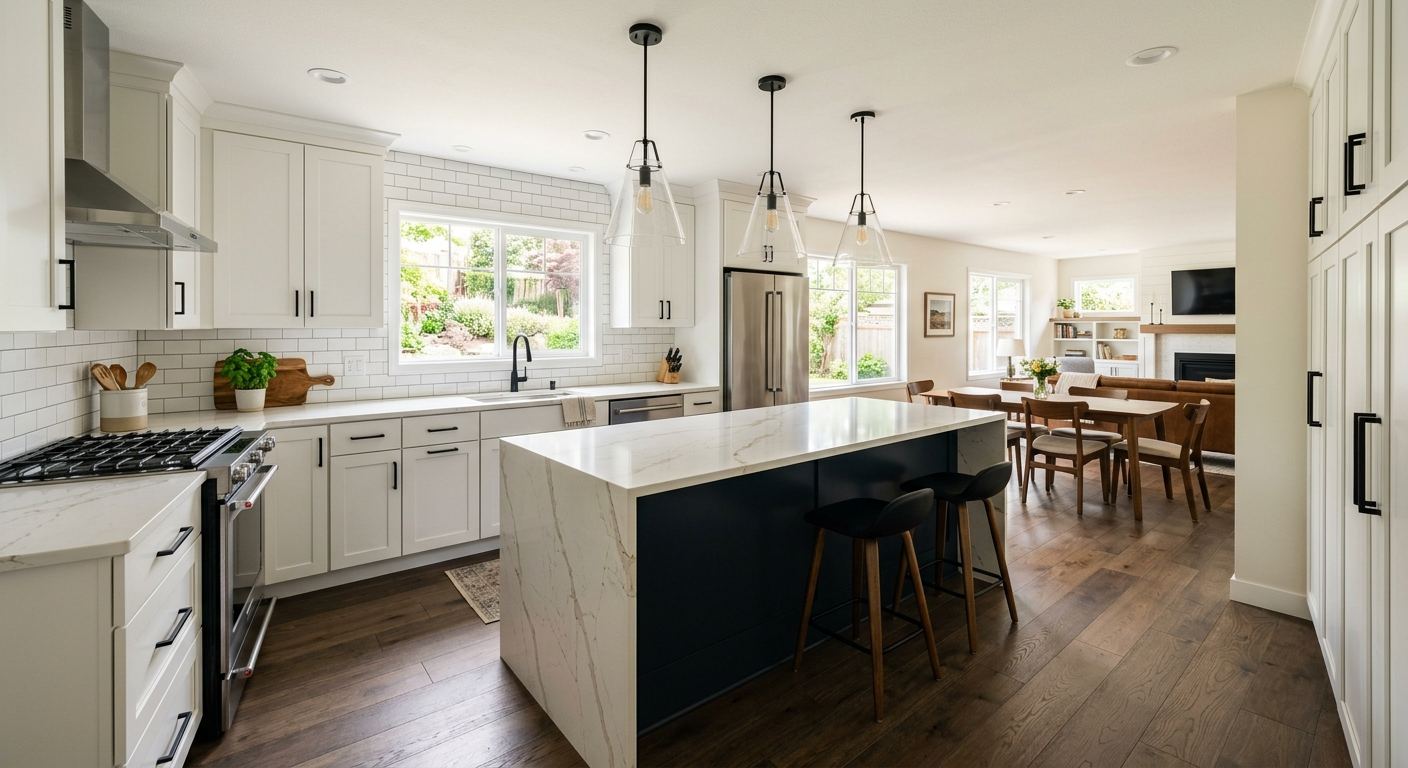
Kitchen renovation options and costs in University Endowment Lands
University Endowment Lands, part of Metro Vancouver’s Lower Mainland–Southwest, tends to price kitchen renovations based less on weather and more on what buyers expect to see when they walk into a home. With a local population of 16,920 (Statistics Canada, 2021 Census), the area’s renovation demand is steady, but it’s the surrounding market profile that sets finish expectations. In higher-value pockets across the Lower Mainland–Southwest, owners are often upgrading to semi-custom cabinetry, quartz or stone counters, and updated hardware because those upgrades align with what sells well on resale.
Contractor availability is also shaped by the region’s year-round activity: Vancouver-area winters are mild compared with interior climates, so trades generally aren’t limited by extreme freeze-thaw. That said, wet-season scheduling can still affect how quickly crews move through demolition, flooring, and waterproofing details, which can subtly shift timelines and staging costs. Overall, though, the biggest cost swings come from how “full” the renovation is—cabinet scope, countertop choice, layout changes, and whether plumbing or electrical work is involved.
In University Endowment Lands itself, trades are particularly in demand around the Gordon Head and Royal Oak–adjacent residential areas where many homes are older and benefit from kitchen modernization. If you’re deciding what level of work to fund first, the comparison table below will help you anchor realistic ranges before you request itemised quotes.
| Renovation Tier |
What's Included |
Typical Duration |
Price Range |
| Cosmetic refresh (paint, hardware, new appliances only) |
Cabinet paint or stain touch-up, new pulls/hinges, new fridge/range/dishwasher (no cabinet replacement), basic backsplash refresh if applicable |
3–7 days install + 1–2 days prep/paint |
$8,000–$25,000 |
| Mid-range full renovation (new cabinets, counters, sink, tile) |
Stock or semi-custom cabinets, quartz or upgraded laminate counters, new sink/faucet, backsplash tile, updated vanity-style lighting and flooring repair/replacement as needed |
3–6 weeks |
$40,000–$85,000 |
| High-end full renovation (custom cabinets, stone counters, island) |
Custom cabinetry or made-to-fit millwork, stone counters (quartz/stone), island with upgraded hardware, full backsplash scope, expanded electrical (often under-cabinet lighting), upgraded finishes throughout |
6–12 weeks |
$85,000–$120,000 |
| Cabinet refacing only (new doors + drawer fronts, same boxes) |
Replace doors/drawer fronts and hinges, new trim profiles, refinish boxes (if feasible), hardware change, limited countertop/backsplash refresh if included by scope |
2–4 weeks |
$15,000–$40,000 |
| Countertop swap only (laminate to quartz or stone) |
Remove existing countertop, install new quartz/stone, seal/surface finishing, reconnect sink/backsplash cut-ins as required (no cabinet changes) |
2–5 days install + templating |
$10,000–$25,000 |
| Backsplash tile installation only |
Demo and set tile, grout/seal, caulking at edges, cleanup and haul-away (no cabinet/counter replacement) |
3–7 days |
$1,500–$6,000 |
Prices are estimates only and vary by project scope, site access and material selection.
What affects the price of kitchen renovation in University Endowment Lands
In University Endowment Lands and across the Lower Mainland–Southwest, you’ll often see two quotes for the “same” kitchen that differ by 30–50% because the determining factors are tied to market norms: expected finish level, cabinetry complexity, and how much scope includes trades beyond cabinets and counters. British Columbia pricing can also diverge because labour demand and material lead times shift throughout Metro Vancouver, and premium products (like quartz and custom cabinetry) are more sensitive to supply and design changes than simple refresh work.
For this region, the biggest drivers are local home values and buyer expectations rather than climate. Owners in higher-value neighbourhoods commonly choose quartz or stone counters and semi-custom cabinetry because those materials match resale language and hold up well under everyday use. In more modest scopes, laminate or stock cabinetry often dominates because it keeps the project within a tighter budget while still updating the look. That said, the most unpredictable cost addition is layout: removing a wall, adding an island, or moving plumbing/gas lines can change what trades need to do behind the scenes, even when your visible finishes stay the same.
Concrete University Endowment Lands examples: (1) older homes often have narrower service chases, so moving a sink or dishwasher can increase labour for plumbing access; (2) if your kitchen has original flooring or dated subflooring, replacing tile or LVP can add prep work; and (3) if you choose a full-height tile backsplash, you’ll typically pay more for labour and material cuts around outlets. Budget-wise, a refresh can be restrained in the $8,000–$25,000 band, while a mid-range full renovation commonly jumps into the $40,000–$85,000 range once cabinetry and countertop scopes are included.
| Price Factor |
Why It Matters |
Cost Impact |
| Cabinet tier — stock vs. semi-custom vs. fully custom millwork |
Cabinet price rises with fit, finish, interior storage features, and lead time |
Stock: lower material/labour; semi-custom: mid-range; custom: highest cost and scheduling impact |
| Countertop material — laminate vs. quartz vs. granite vs. stone |
Material pricing, templating complexity, edge profiles, and installation requirements vary widely |
Laminate: least; quartz/engineered: mid-to-high; granite/natural stone: highest |
| Layout change — wall removal, island add, plumbing/gas move |
Behind-wall work drives demolition, patching, and coordination across trades |
Often the single largest swing factor, regardless of finish tier |
| Appliance package tier — builder vs. mid-range vs. pro-grade |
Brand tiers affect dimensions, power requirements, and installation tolerances |
Can add a noticeable premium—especially with built-in or vented pro models |
| Flooring — refinish existing vs. full replacement |
Subfloor assessment and alignment impacts what your contractor must replace |
Refinish keeps cost down; full replacement can add prep and demo/disposal |
| Backsplash — ceramic tile vs. marble vs. full-height slab |
Material weight, cutting precision, and water-resistant detailing change labour hours |
Ceramic: modest; premium stone or full-height: higher labour and materials |
| Electrical — new circuits for island, under-cabinet lighting |
Electrical scope affects permit requirements and electrician time |
Usually adds cost beyond appliance-only refreshes |
| Permit fees and licensed trade requirements |
Where permits are required, coordination and inspection timing adds indirect project cost |
Can shift timelines and add administrative costs |
Permits & regulations in British Columbia
In British Columbia, a simple swap like replacing cabinets, or changing countertops (even upgrading from laminate to quartz/stone), generally does not require a permit. However, the moment you change the service side of the kitchen, permits and licensed trades typically come into play. If you’re moving plumbing supply or drain lines, relocating a gas stove/range, removing a load-bearing wall, or adding new electrical circuits (for example, adding power to an island or upgrading to a larger under-cabinet lighting layout), plan for permits and inspections.
Gas work must be completed by a licensed gas fitter, and electrical work must be done by a licensed electrician. Your contractor should coordinate the licensed trades, but you should still confirm responsibility for permits in the written agreement—who pulls the permit, who pays the fees, and who schedules inspections.
To verify licensing and coverage in University Endowment Lands and across BC, follow these steps before signing: (1) ask for the contractor’s business information and licence details where applicable; (2) request a current certificate of insurance (liability) and confirm it’s active for your project dates; (3) ask for proof of coverage for workers (in practice, contractors commonly provide documentation that supports WCB coverage); (4) for licensed gas/electrical work, ask to see the trade licence details and match them to the certificates they provide; and (5) request a signed, itemised scope that clearly identifies what trades are responsible for permits and inspections.
Cabinets, countertops and layout decisions in University Endowment Lands
For most homeowners in University Endowment Lands, three choices decide the majority of your kitchen budget and the “look” that buyers recognize at resale: (1) cabinet tier, (2) countertop material, and (3) layout changes. Cabinet tier usually means stock (fastest and least expensive), semi-custom (the most common mid-range choice), or custom (best fit and highest cost). In Metro Vancouver’s Lower Mainland–Southwest market, semi-custom is a sweet spot because it delivers better storage options and more refined finishes than basic stock, without the full design and lead-time burden of made-to-fit millwork.
For countertops, laminate is the budget-friendly option; quartz engineered surfaces are the common upgrade for durability and easy maintenance. Granite/natural stone can be striking, but it requires more careful sealing expectations and templating. Butcher block offers warmth, yet it’s more maintenance-sensitive for sealing and protection around water and heat.
Layout changes—like open-concept wall removal, island addition, or moving plumbing/gas—are where ROI can be justified or lost. If your space gain creates a functional work triangle, better storage, or genuinely improves flow, the cost can feel worthwhile. If the change is cosmetic-only, you may be paying for expensive behind-the-wall work without improving everyday usability.
Here’s a dollar example: choosing quartz over laminate can be a smart incremental spend, but moving a sink to support an island can blow up scope quickly if drainage needs to be rerouted. If your move triggers additional plumbing access and electrical changes, that upgrade can shift you from a mid-range renovation (often $40,000–$85,000) toward the higher end ($85,000–$120,000) faster than many homeowners expect. The Lower Mainland–Southwest buyer preference is clear: clean lines, modern cabinet fronts, and durable stone-like surfaces tend to convert better than dated finishes.
| Option |
Durability |
Maintenance |
Best For |
Price Range |
| Stock cabinets (big-box) |
Good for everyday use; limited custom storage configurations |
Low; follow manufacturer care for finish durability |
Time-sensitive projects and tighter budgets |
$8,000–$25,000 |
| Semi-custom cabinets (local dealer) |
Very good; improved hardware options and better fit |
Low; easy wipe-down and proper hardware use |
Most University Endowment Lands remodels aiming for resale-ready quality |
$25,000–$60,000 |
| Custom cabinets (local millwork shop) |
Excellent; tailored storage and exact ceiling/wall integration |
Low to moderate; depends on finish and door material |
Hard-to-fit spaces and design-led layouts (islands, pantries, display niches) |
$60,000–$95,000 |
| Laminate countertop |
Moderate; can chip or wear at edges over time |
Low; avoid prolonged standing water and heat directly on surface |
Budget refreshes where cabinet and layout are the priority |
$3,000–$7,000 |
| Quartz engineered countertop |
High; resists staining and handles daily use well |
Low; clean with standard non-abrasive products |
Resale-friendly upgrades across BC’s Lower Mainland–Southwest market |
$7,000–$12,000 |
| Granite / natural stone countertop |
High; very durable, strong surface performance |
Moderate; sealing expectations depending on slab type |
Homeowners wanting natural variation and premium appearance |
$9,000–$15,000 |
| Butcher block countertop |
Moderate to high when maintained; can show wear marks |
Moderate; periodic oiling and careful moisture protection |
Warm/character kitchens and occasional light-duty prep |
$6,000–$10,000 |
| Marble countertop |
Moderate; beautiful but more susceptible to etching and staining |
Higher; requires diligent care, sealing, and stain management |
Design-forward kitchens where appearance is the top priority |
$10,000–$18,000 |
How to choose a kitchen renovation contractor in University Endowment Lands
Choosing the right contractor in University Endowment Lands is about verifying three things: licensing/coverage, clarity of scope, and financial responsibility. Start with British Columbia requirements: ask for proof of liability insurance (certificate of insurance) and confirm whether they carry workers’ coverage documentation used in BC (commonly provided via WCB/coverage paperwork). For licensed work, the contractor should connect you with a licensed electrician or licensed gas fitter where needed—your contractor’s job is to coordinate, but the licensed trades must be the ones completing the regulated portions.
Next, get 2–3 itemised written quotes. Not one lump sum. You want separate labour and materials lines for cabinetry, countertop fabrication/installation, tile/backsplash labour, demo/disposal, plumbing/electrical allowances, and permit-related items (if applicable). Carefully read exclusions: is disposal included, who handles drywall patching, and are appliances included or allowance-based? A quote should say whether it includes permit pulling and inspection scheduling if plumbing/gas/electrical scope triggers it.
Review warranty details. Look for a workmanship warranty length and whether it’s transferable if you sell the home. Product/manufacturer warranties for cabinets, countertops, and appliances should be documented with serial numbers or purchase proof where possible.
Finally, manage cashflow: never pay more than 10–15% upfront. Use a holdback until substantial completion and final walkthrough. In writing, confirm a start date, lead-time assumptions, and a realistic completion estimate.
- Request BC insurance certificates and confirm active coverage for your project dates.
- Verify the contractor’s licence/business information and match it to the quote documents.
- Ask for proof of WCB/coverage documentation for workers (not just “we’ll be careful”).
- Confirm which permits are required for your specific scope (plumbing/gas/electrical/layout changes).
- Get an itemised quote: cabinetry, counter templating, installation, backsplash, demo, disposal, and allowances.
- Check whether measurements are site-templated for counters/cabinets, not estimated off plans.
- Ensure disposal/haul-away is included (and what’s excluded like hazardous materials).
- Confirm electrical scope: number of circuits, locations, and whether under-cabinet lighting is included.
- Ask how they handle hidden conditions (subfloor rot, outdated wiring, water damage) and the change-order process.
- Request schedule details: demolition start, cabinet delivery lead times, and countertop templating window.
- Review workmanship and product warranty terms; ask if warranties transfer to new owners.
- Use a payment schedule with milestones and a holdback until final punch-list completion.
In University Endowment Lands, common red flags include: quotes that bundle everything without itemisation, no clear mention of permits when plumbing/gas/electrical changes are proposed, vague warranty language (“covered if manufacturer approves”), insisting on large upfront payments, and refusing to put the start/completion timing in writing.
Frequently asked questions — kitchen renovation in University Endowment Lands
Do I need a permit for a kitchen renovation in British Columbia?
In British Columbia, cabinet and countertop swaps generally don’t require a permit because you’re not changing the building’s service systems. However, if your University Endowment Lands kitchen renovation involves moving plumbing supply or drain lines, relocating a gas stove/range or vented hood with gas, removing a load-bearing wall, or adding new electrical circuits (such as power for an island), permits and inspections are typically required. Licensed trades must handle regulated work: gas fitting by a licensed gas fitter and electrical by a licensed electrician. Before you sign, confirm in writing who pulls the permit, who schedules inspections, and whether your contractor includes the permit fees or bills them as a separate allowance.
What's the ROI on a kitchen renovation?
ROI varies by neighbourhood demand, finish tier, and how much of the work buyers care about—cabinet quality, countertops, layout flow, and overall visual “refresh.” In the Lower Mainland–Southwest, homeowners often target upgrades that match what sells: clean, modern cabinetry and quartz/stone-like surfaces, especially when the kitchen feels more functional (better storage and workable circulation). A cosmetic refresh or appliance-only upgrade can improve livability, but resale lift is usually smaller than a full mid-range renovation (often $40,000–$85,000) with durable materials. High-end custom rebuilds ($85,000–$120,000) can be appealing, yet ROI is highest when the layout and finishes align with the home’s price point rather than going overboard on niche design.
How do I budget for a kitchen renovation?
Start by selecting a renovation tier based on what you actually need to change. If you’re keeping cabinet boxes and the layout largely works, budgeting for a cosmetic refresh or cabinet refacing can keep costs contained. If you’re installing new cabinets and countertops, plan for a mid-range full renovation range (often $40,000–$85,000). Add realistic allowances for tile/backsplash (often $1,500–$6,000 for backsplash-only labour) and countertop installation (commonly $3,000–$12,000 depending on material and complexity). For older University Endowment Lands homes, also budget for “unknowns” like subfloor prep or patching after demo. Finally, request itemised quotes so you can see labour versus materials and understand what triggers permit costs.
Can I move my kitchen sink or stove?
Yes, but moving a sink or stove in British Columbia can quickly change the scope because it often requires plumbing and/or gas work, which typically triggers permits and inspections. In University Endowment Lands, older home plumbing runs and cabinet chases can be tight, so rerouting drains or supplies may require careful access, drywall removal, and sometimes subfloor work. Moving a stove with gas requires a licensed gas fitter to handle the gas relocation safely. If you also add an island or change the layout, plan for electrical adjustments as well. The practical approach is to get a contractor to confirm feasibility after site inspection, then include the plumbing/gas and electrical allowances in the itemised quote—so you’re not surprised by behind-the-wall costs later.
What's the most cost-effective kitchen upgrade?
The most cost-effective upgrade is usually the one that upgrades the “big visual surfaces” without triggering major trade moves. For many University Endowment Lands homeowners, that’s either a backsplash and hardware refresh, or a countertop swap to quartz. Backsplash tile installation only often falls around $1,500–$6,000, and upgrading countertops can land roughly in the $3,000–$12,000 band depending on material and edge details. If your cabinets are still structurally sound, cabinet refacing can also be a strong value path compared to full replacement. The cost-effectiveness changes if you want to move plumbing/gas or expand electrical—those layout/service changes are typically the highest-cost and most variable part of kitchen renovation pricing.
Custom vs stock cabinets — is custom worth it?
Custom cabinets can be worth it when you need an exact fit for ceilings, unusual wall dimensions, or a design-led layout (for example, built-in pantry walls or a specialized island configuration). In the Lower Mainland–Southwest resale market, buyers often appreciate better storage and cleaner lines, which semi-custom commonly delivers without the highest costs. Stock cabinets are usually the fastest and cheapest path, but they can be limited in storage features and may leave gaps or require more filler for imperfect spaces. As a rule of thumb for University Endowment Lands projects: if the layout is straightforward and you want a controlled budget, semi-custom is often the best balance; if you’re paying for complexity in millwork anyway, full custom is justified when it solves space constraints that stock can’t handle. Always compare itemised quotes, not marketing claims.