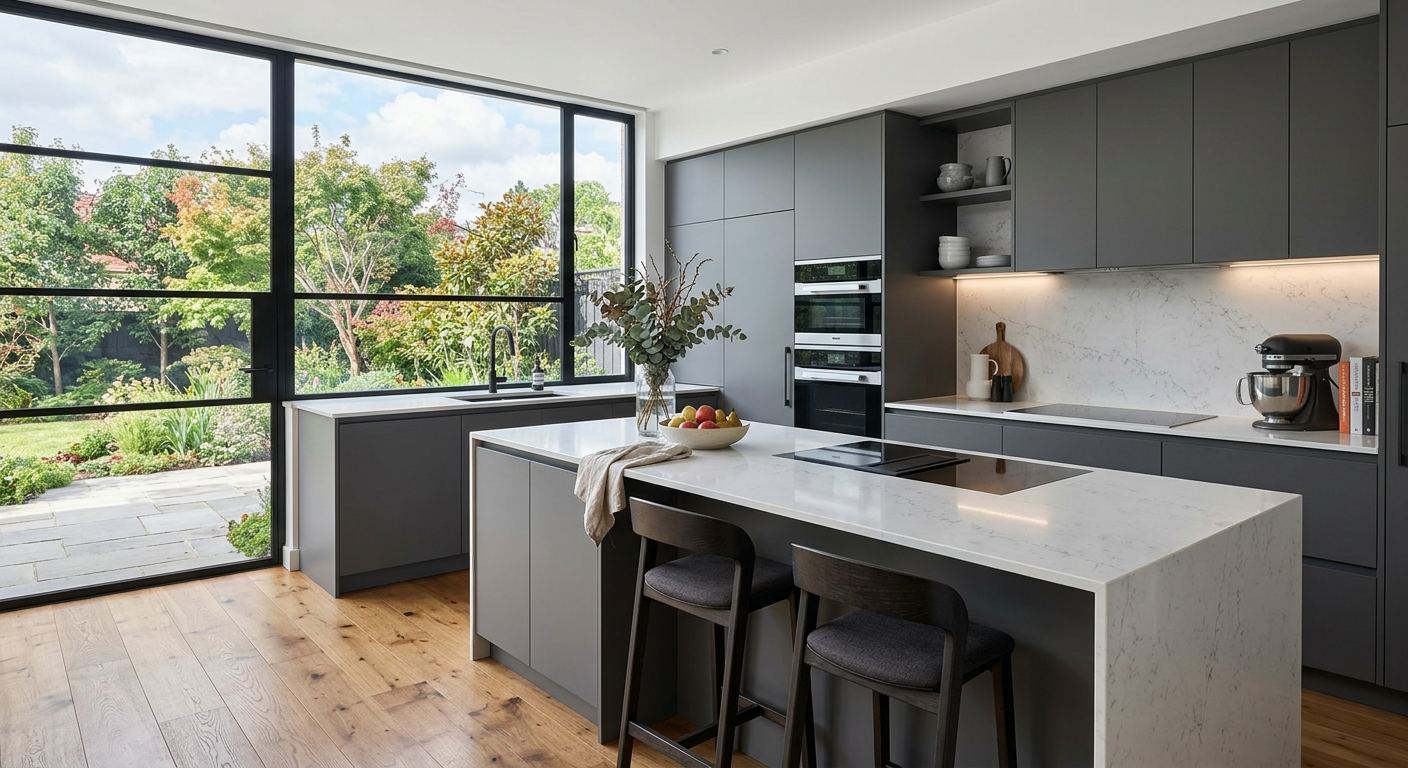
Kitchen renovation options and costs in Capilano
In Capilano, kitchen renovation costs tend to follow the project “finish level” more than the weather itself—so homeowners planning work this year usually compare options based on cabinetry, counters and layout, not just labour availability. With a population of 3,177 (Statistics Canada, 2021 Census), Capilano and the surrounding Lower Mainland–Southwest area draw a steady mix of trades from the wider Metro Vancouver market, and that helps keep baseline scheduling reasonable for typical refreshes. At the same time, Lower Mainland–Southwest buyers often have higher expectations for kitchens tied to resale value in the region; in practical terms, that means more projects lean toward semi-custom cabinetry and quartz-like surfaces compared with more modest markets across British Columbia.
BC’s climate does still matter, but indirectly: humid summers can amplify issues with poor ventilation around the range hood, and cold, damp shoulder seasons can expose subfloor or trim problems once you start demo. The biggest cost swings, however, come from what’s “behind the walls” and whether the scope includes layout changes. In neighbourhoods near West Vancouver and the Capilano-area hillside homes, contractors are especially in demand for jobs that involve access challenges, careful dust control, and on-site protection—particularly for tile, stone and cabinet installation.
Below is a practical comparison of common kitchen renovation tiers you’ll see in quotes from Lower Mainland–Southwest contractors, followed by a note on how estimates can move once site conditions and material selections are confirmed.
| Renovation Tier |
What's Included |
Typical Duration |
Price Range |
| Cosmetic refresh (paint, hardware, new appliances only) |
Cabinet paint or repaint, new pulls/knobs, appliance swaps (no plumbing/gas moves), new backsplash caulk lines where applicable |
1–3 weeks |
$8,000–$22,000 |
| Mid-range full renovation (new cabinets, counters, sink, tile) |
Semi-custom or quality stock cabinets, quartz or stone-look counters, sink + faucet, backsplash tile, laminate/engineered flooring touch-ups where needed |
4–8 weeks |
$40,000–$85,000 |
| High-end full renovation (custom cabinets, stone counters, island) |
Custom cabinetry, natural stone or premium quartz, island with enhanced cabinetry, under-cabinet lighting, full-height backsplash option, more complex layout |
8–14 weeks |
$85,000–$120,000 |
| Cabinet refacing only (new doors + drawer fronts, same boxes) |
Door/drawer replacement, new hardware, re-surfacing visible cabinet parts, optional re-seal and minor prep/patching |
2–4 weeks |
$8,000–$35,000 |
| Countertop swap only (laminate to quartz or stone) |
Remove/install existing counters, new quartz/stone, sink cutout changes if needed (within same layout), edge detailing |
1–2.5 weeks |
$3,000–$12,000 |
| Backsplash tile installation only |
Tile supply and install (starter pieces, bullnose/edge trim as needed), prep of walls, grout/caulking to match kitchen joints |
3–7 days |
$1,500–$6,000 |
Prices are estimates only and vary by project scope, site access and material selection.
What affects the price of kitchen renovation in Capilano
In the Lower Mainland–Southwest, it’s common to see the “same” kitchen renovation come back with quotes that differ by 30–50% when homeowners compare across British Columbia. The main driver isn’t the cold or heat—it’s the expected finish level, labour demand, and how the job ties to resale. In higher-value Metro Vancouver–area settings, many owners choose quartz or natural stone counters, upgraded hardware, and semi-custom cabinetry because those costs are easier to justify when the improvement translates into a stronger listing. In more modest markets, laminate surfaces and stock cabinets often provide better ROI, and the budget naturally holds lower even if the layout is similar.
Layout changes are the wildcard: removing a wall, adding an island, or moving a gas line or plumbing can add cost quickly regardless of whether you’re aiming for a $40,000–$85,000 mid-range renovation or stretching toward a $85,000–$120,000 high-end rebuild. In Capilano specifically, older housing stock—often with narrower stud bays, dated subflooring and earlier plumbing routing—can mean additional labour for patching, shimming and rerouting.
Two practical examples I see frequently: (1) when homeowners upgrade from laminate to quartz, the countertop move itself may fit the $3,000–$12,000 band, but if the sink opening or edge support needs changes due to old framing, the cabinet and prep work can push the total upward; (2) when a backsplash project is kept within tile-only scope (often $1,500–$6,000), costs stay predictable—however, if electrical outlets or an under-cabinet lighting run is included, electrical scope can become part of the quote and expand duration.
| Price Factor |
Why It Matters |
Cost Impact |
| Cabinet tier — stock vs. semi-custom vs. fully custom millwork |
More custom means made-to-fit frames, more fabrication labour, better tolerances for older homes |
Can swing roughly $8,000–$40,000+ depending on size and complexity |
| Countertop material — laminate vs. quartz vs. granite vs. stone |
Material cost and fabrication/installation difficulty (weight, templating, edge profiles) |
Often $3,000–$12,000 for installs; premium stone increases further with heavier edges |
| Layout change — wall removal, island add, plumbing/gas move |
Structural and service reroutes change demolition, framing, permitting, and schedule |
Typically adds the largest unpredictable portion of the budget |
| Appliance package tier — builder vs. mid-range vs. pro-grade |
Higher tiers cost more and sometimes require electrical/gas spec changes |
Can add several thousand to the project total (beyond install labour) |
| Flooring — refinish existing vs. full replacement |
Protect-and-refinish is less disruptive; replacement adds demo, underlayment and install time |
Moderate to high impact if flooring must be lifted under new cabinet runs |
| Backsplash — ceramic tile vs. marble vs. full-height slab |
Material density, cutting complexity, and waterproofing approach change labour intensity |
Usually lands within $1,500–$6,000, with full-height options pushing higher |
| Electrical — new circuits for island, under-cabinet lighting |
New outlets/lighting require licensed work, routing decisions, and inspection timing |
Often a hidden line item that increases both cost and schedule |
| Permit fees and licensed trade requirements |
Jobs that require permits must be planned for inspections and trade coordination |
Can add several hundred to over a thousand, plus administrative and scheduling overhead |
Permits & regulations in British Columbia
In British Columbia, many common “swap” projects do not require permits. Typically, you do not need a permit for simple cabinet and countertop swaps when the work stays within the existing layout (for example, replacing cabinet doors and drawer fronts on the same boxes, or changing laminate to quartz without altering plumbing or electrical). Likewise, installing a backsplash generally doesn’t require a permit by itself.
However, you do need permits and licensed trade involvement for work that changes services or structure. Examples that usually require permits/inspections include moving plumbing supply or drain lines, relocating a gas appliance or making changes involving the stove/range hood with gas, removing a load-bearing wall (or doing structural modifications), and adding new electrical circuits for an island or under-cabinet lighting beyond existing provisions. Gas work must be performed by a licensed gas fitter, and electrical work must be completed by a licensed electrician; both require proper inspection sign-off after installation.
For a Capilano homeowner, verify in writing before signing. First, ask for the contractor’s licence details and check the posted licensing information through the appropriate online registry for their trade category. Second, request a certificate of liability insurance and confirm coverage limits. Third, ask for WCB coverage documentation (clearance letter or WCB account confirmation depending on how they provide it). Lastly, confirm in the contract who pulls permits and who pays permit fees—because that responsibility should be spelled out clearly, not assumed.
Cabinets, countertops and layout decisions in Capilano
For Capilano homeowners, three decisions tend to determine 80% of the outcome: (1) cabinet tier, (2) countertop material, and (3) whether you change the layout. Cabinet tier affects speed, tolerances and the look of the finished kitchen. Stock cabinets are the fastest and usually cheapest, but they’re less forgiving on older walls and out-of-square corners. Semi-custom cabinets (the most popular mid-range choice locally) balance lead times and fit, especially when ceilings and walls aren’t perfectly level. Custom cabinets deliver the best fit and storage but cost the most—often the difference between a practical remodel and a high-end rebuild.
Countertops matter for daily use and maintenance. Quartz engineered tops are a strong “busy kitchen” pick because they resist staining better than many laminate and avoid some sealing needs that come with natural stone. Granite/natural stone offers unique veining and a premium feel, but you’ll want to confirm care requirements and seam placement. Laminate is budget-friendly, but you must plan for edge wear and the possibility of earlier surface replacement.
Layout changes are where resale logic meets cost control. In the Lower Mainland–Southwest, buyers often expect functional circulation and good lighting—adding an island can justify the spend if your space supports it. If you’re dealing with an older kitchen and moving plumbing or gas, the layout can push you into the higher end of typical bands (for example, mid-range work often aligns with $40,000–$85,000, while island + premium finishes commonly drift toward $85,000–$120,000). One dollar reality check: upgrading counters from laminate to quartz might fit the $3,000–$12,000 countertop install band; but if you also need new cabinet support for heavier stone edges or you change the sink location, that savings can disappear quickly.
Climate-wise, Capilano’s damp-to-humid swing makes ventilation and sealing around the cooktop more important once you upgrade finishes—especially where tile, caulking, and cabinet liners meet.
| Option |
Durability |
Maintenance |
Best For |
Price Range |
| Stock cabinets (big-box) |
Good for new, square installs; less forgiving if walls are uneven |
Minimal—regular tightening and cleaning |
Fast turnarounds and tighter budgets |
$8,000–$25,000 |
| Semi-custom cabinets (local dealer) |
Strong build with better flexibility for fit and storage options |
Low—typical cabinet care |
Most Capilano remodels that want a “finished look” |
$25,000–$55,000 |
| Custom cabinets (local millwork shop) |
Excellent fit and storage planning; ideal for unique layouts |
Low, but requires quality hardware upkeep |
Max storage, best aesthetics, challenging spaces |
$55,000–$90,000+ |
| Laminate countertop |
Decent surface, but edges and seams can be more vulnerable over time |
Easy daily cleaning; avoid prolonged standing water at seams |
Budget-conscious refreshes |
$3,000–$7,000 |
| Quartz engineered countertop |
High resistance to staining and impact for everyday cooking |
Low—wipe clean; use standard care products |
Busy households that want “set it and forget it” |
$6,000–$12,000 |
| Granite / natural stone countertop |
Very durable; performance depends on stone selection and finish |
May need periodic sealing depending on the stone |
Premium look and unique veining |
$8,000–$14,000 |
| Butcher block countertop |
Durable with proper care; susceptible to staining if neglected |
Requires regular oiling and careful spill management |
Warm, casual design and families who maintain it |
$5,000–$10,000 |
| Marble countertop |
Elegant but more porous and can etch with acidic foods |
More maintenance—gentle cleaners and prompt wiping |
Low to moderate use kitchens or showpiece design |
$10,000–$18,000 |
How to choose a kitchen renovation contractor in Capilano
Choosing the right contractor in Capilano starts with proof, not promises. In British Columbia, confirm licensing for each relevant trade (or that a trade-capable firm is coordinating licensed work): gas work requires a licensed gas fitter, and electrical work must be completed by a licensed electrician. Ask for their certificate of insurance (liability) and request confirmation of WCB/WCB clearance documentation. When you check, look for the licence details to match the exact trade they’re quoting and verify the insurance is current and aligned with the scope (especially for tile/stone and demolition work where risk increases). If they can’t provide documentation quickly or in writing, that’s often a sign the project will be harder to manage later.
Next, get 2–3 itemised quotes (not just lump sums). A good quote breaks out labour and material lines clearly—cabinet supply versus install, countertop templating and fabrication, plumbing/gas/electrical scopes (or explicit exclusions), tile labour, and disposal. Read the scope line-by-line: is permit pulling included, are drawings included, and what happens if unexpected framing damage is discovered behind old cabinets? Clarify the warranty too: confirm workmanship warranty length, the product/manufacturer warranty and whether it’s transferable if you sell the home. Finally, agree on payment milestones—never pay more than 10–15% upfront, and use holdback until key completion steps and punch-list items are done. A reputable contractor should give you a start date and completion estimate in writing, including material lead times.
- Confirm licensing and that each regulated trade is covered under a licensed provider.
- Request a current liability insurance certificate (and verify dates).
- Ask for WCB coverage proof or a clearance letter.
- Require an itemised quote: labour vs materials, and line items for demo/disposal.
- Ensure the quote states who pulls permits and who pays permit fees.
- Check exclusions: what’s not included (lighting, patch/paint, subfloor repair, shims).
- Verify cabinet base spacing and filler planning for out-of-square walls.
- Confirm countertop template timing and responsibility if measurements change.
- Ask who handles any electrical rough-in/permits for island/outlets/under-cabinet lighting.
- Confirm tile prep requirements (backer board, waterproofing method) in wet areas.
- Use a schedule with milestones and a realistic lead-time plan for cabinets/stone.
- Set warranty terms in the contract: workmanship coverage and product warranty documents.
Red flags I see in Capilano kitchen projects include: vague “allowances” that balloon later, no clear permit responsibility, missing WCB/insurance documentation, quotes that don’t list disposal or patching/paint scope, and payment schedules requesting large deposits (well beyond 10–15% upfront) without a signed completion milestone plan.
Frequently asked questions — kitchen renovation in Capilano
What’s the most popular kitchen style in Capilano right now?
In Capilano and across the Lower Mainland–Southwest, the most common direction I’m seeing is a clean, bright contemporary look: shaker-style cabinetry, modern matte hardware, and quartz countertops in light-to-medium tones that reflect natural light. Many homeowners also keep the backsplash simple—ceramic tile with a restrained pattern or a straight-set look—because it ties well to resale expectations in the Metro Vancouver area. If you’re budgeting, a cosmetic refresh can start around the low end of the typical band, but the “now popular” look usually lands in a mid-range full renovation tier once you factor cabinetry and new counters (often aligning with $40,000–$85,000). British Columbia’s damp shoulder seasons also push people toward good range hood performance and tighter sealing around the cooktop so the finished look lasts.
How do I know if I need to update my kitchen plumbing in Capilano?
Plumbing updates are usually justified when you’re changing the layout, noticing active symptoms, or the existing lines can’t support the new fixtures cleanly. In Capilano homes, older plumbing runs sometimes use materials or routing that complicate a new sink location or a dishwasher hookup—so if your renovation includes moving a sink or adding an island, ask the contractor to evaluate supply shutoffs, drain slope, and shutoff accessibility before demo. You typically also upgrade if you see corrosion around valves, inconsistent water temperature, slow drainage, or recurring minor leaks under the sink. Even without leaks, a full renovation can expose things behind cabinet bases and toe-kicks, and that’s when replacing aging shutoffs or compromised sections prevents repeated call-outs later. The permit and licensed trade requirements apply when supply/drain lines move—so confirm scope upfront.
What is the difference between a galley and open-concept kitchen?
A galley kitchen is a narrow, efficient corridor-style layout with counters on two parallel runs (often common in older homes). An open-concept kitchen removes or reduces barriers so the kitchen connects visually and functionally to a living/dining area. In Capilano’s Lower Mainland–Southwest market, open-concept is popular for how it feels and how it photographs for resale, but it can be costlier because wall removal can involve structure and more complex service rerouting. If you’re keeping a galley layout, you can still modernize with new cabinets, better lighting, and updated counters without the highest-cost surprises. If you’re considering a wall removal or gas/plumbing relocation, expect permitting and licensed trades to come into play, which influences both timeline and budget. That’s why two quotes can diverge substantially even when the cabinet style looks similar.
How do I get accurate kitchen renovation quotes in Capilano?
To get accurate quotes in Capilano, make your “apples-to-apples” comparison clear: provide a dated plan or measured sketch of the existing layout, confirm which appliances are staying or changing, and decide whether you want to keep plumbing/gas locations or relocate them. Request 2–3 itemised written quotes that break down labour and materials rather than one lump sum. Make sure the quotes specify what’s included for demolition and disposal, drywall patching/paint (if applicable), countertop templating responsibilities, and backsplash prep. Also ask whether permit pulling is included and who covers inspection scheduling. If you’re aiming for a simple refresh, note the scope (paint/hardware/appliances only) because that can land far from a full renovation budget—for example, refresh work may start much lower than full kitchen rebuild pricing (which often falls within the $40,000–$120,000 region depending on finish tier).
What’s the best countertop material for a busy Capilano kitchen?
For busy households in Capilano, quartz engineered countertops are usually the best balance of durability, low maintenance and “looks good for years.” They resist staining better than many laminate surfaces and typically don’t require the sealing routines that can come with some natural stones. If you cook often, quartz also helps you maintain a consistent finish—important when you’re managing moisture and humidity swings typical of the Lower Mainland–Southwest. Granite and other natural stone options can be excellent too, but you’ll want to confirm finish type and care requirements (sealing and cleaning approach). Butcher block can work beautifully in family kitchens, though it’s higher maintenance because it needs regular oiling and careful spill management. Budget-wise, quartz countertop installs often align with the $6,000–$12,000 band, while laminate swaps can come in lower (roughly $3,000–$7,000) depending on edge profiles, cutouts and sink integration.
How do I add an island to my Capilano kitchen?
Adding an island is less about “can we place it there” and more about clearances, circulation, and services. First, measure your walking paths and aim for comfortable aisle space around the island; your contractor can confirm how it affects movement between sink, fridge and cooktop. Next, plan for the services: if you’re adding a sink or cooktop on the island, you’ll likely be moving plumbing and/or relocating gas and you’ll need permits plus licensed trade work. If you’re only adding power for outlets or under-cabinet lighting, that still usually requires electrical scope by a licensed electrician. In the Lower Mainland–Southwest, island projects also tend to push budgets higher because they involve additional cabinetry, sometimes more complex ventilation, and extended install sequencing for countertops and tile. If your project is otherwise a refresh, an island can take you from a lower tier into mid-range or beyond (for example, island + premium finishes often lines up closer to $85,000–$120,000).