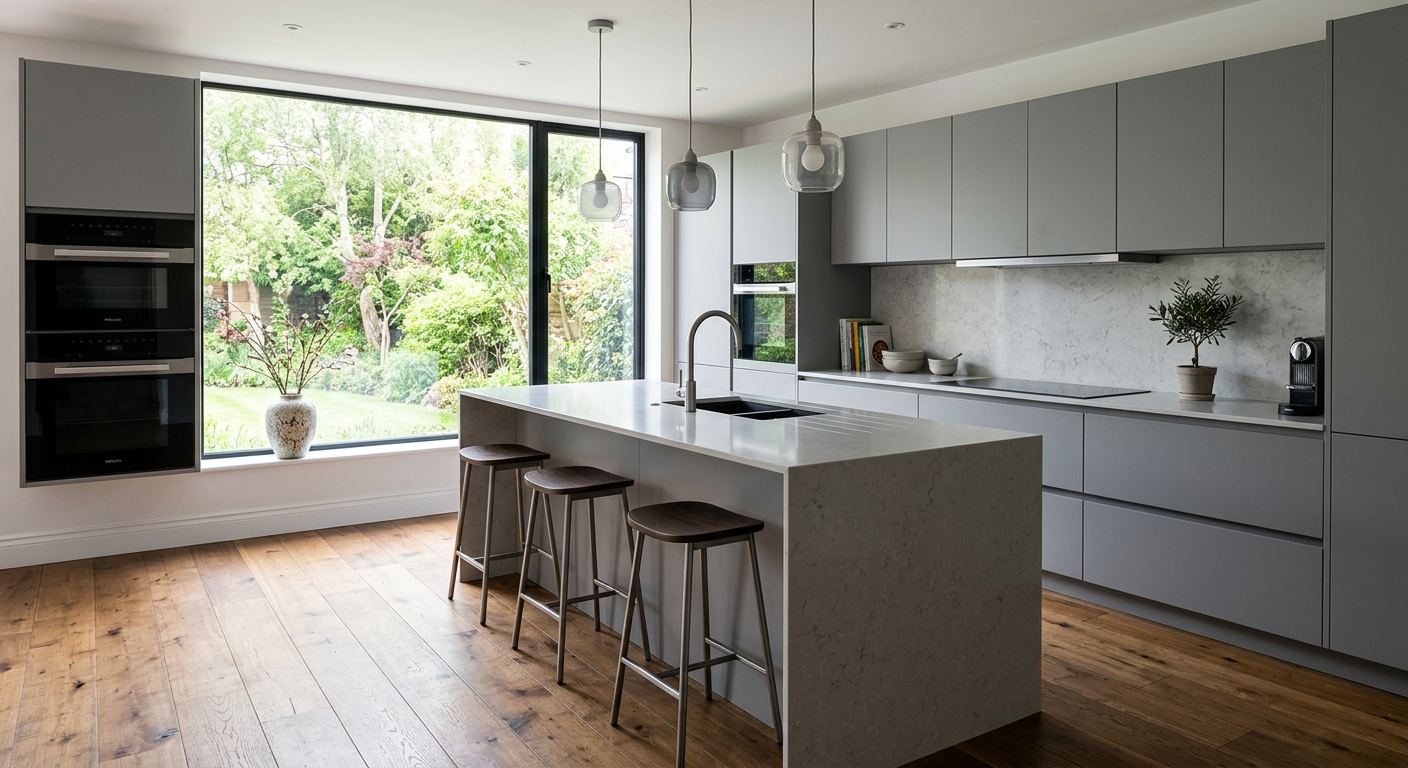
Kitchen renovation options and costs in Lynn Canyon
Lynn Canyon is a small community in the Lower Mainland–Southwest, where kitchen renovations tend to be driven less by “weather damage” and more by how homeowners want the space to look and function when they live there—or when they sell. With a population of 2,155 (Statistics Canada, 2021 Census), most projects are handled through a limited pool of local trades, so scheduling can tighten during peak renovation months. Even so, the pricing pressure in this region comes from neighbourhood-level expectations: in higher-value Metro Vancouver pockets, buyers often expect quartz or stone counters and cabinetry that looks built-in, which is why kitchen costs can land at the upper end of the typical provincial bands.
Across the Lower Mainland–Southwest, the climate is mild and wet, which means kitchens experience more humidity swings indoors than many homeowners assume. That affects long-term performance of materials—especially joints, caulking, and ventilation around the cooking area—but it usually doesn’t add as much cost as finish selection and scope changes. In practice, homeowners around Lynn Canyon—particularly the core near Forest Hills Drive and the busier commercial access routes—often choose contractors who can coordinate cabinets, counter installation, and tile in a tight sequence.
Because market expectations are tied to resale value, the same kitchen size can price very differently depending on whether you’re doing a refresh with laminate and new appliances, or a full rebuild with custom millwork and stone. Below is a practical comparison of renovation tiers to help you map realistic totals to your plan.
| Renovation Tier |
What's Included |
Typical Duration |
Price Range |
| Cosmetic refresh (paint, hardware, new appliances only) |
Cabinet paint or stain touch-up, new hardware/pulls, new range/fridge/dishwasher, minor caulking, re-seal around sink, basic adjustments |
1–3 weeks |
$8,000–$22,000 |
| Mid-range full renovation (new cabinets, counters, sink, tile) |
Semi-custom or stock cabinets, new countertop, sink + faucet, backsplash tile, new flooring prep/patching, full install coordination |
3–7 weeks |
$40,000–$80,000 |
| High-end full renovation (custom cabinets, stone counters, island) |
Custom cabinetry, quartz or natural stone counters, island build and finish details, upgraded hardware, extended backsplash, more complex layout + service work |
6–12 weeks |
$85,000–$120,000 |
| Cabinet refacing only (new doors + drawer fronts, same boxes) |
Door/drawer front replacement, new hardware, sanding/repair of existing frames where needed, matching finishes, re-install |
2–5 weeks |
$10,000–$35,000 |
| Countertop swap only (laminate to quartz or stone) |
Removal and replacement of existing surface, new sink cut-outs if needed, edging and sealing, template + install |
1–2 weeks |
$8,000–$15,000 |
| Backsplash tile installation only |
Tile supply and install, removal of old backsplash where applicable, wall prep, grout + sealing, detail trims at outlets |
3–7 days |
$1,500–$6,000 |
Prices are estimates only and vary by project scope, site access and material selection.
What affects the price of kitchen renovation in Lynn Canyon
In Lynn Canyon and across British Columbia, two quotes for the “same” kitchen can diverge by 30–50% because the scope that actually drives labour and material cost isn’t always described the same way. In the Lower Mainland–Southwest, home value, household income, and the expected finish tier tend to steer decisions more than climate does. That’s why, in higher-value Lower Mainland–Southwest areas, homeowners more often choose quartz or stone counters and semi-custom cabinetry—costs that can be recovered more easily on resale. In more modest parts of the region, laminate and stock cabinet packages dominate because they deliver the ROI homeowners expect while keeping totals contained.
Layout changes are the biggest wild card. Removing a wall, adding an island, or relocating a gas line or plumbing supply can trigger drywall rebuild, structural checks, new cabinet base planning, and additional trades—pushing costs up even if your finish level stays mid-range. For example, a mid-range full renovation in the $40,000–$80,000 band can jump into the upper end if you move the sink or change venting. Conversely, a cosmetics refresh can stay lean in the $8,000–$22,000 band if you keep plumbing/electrical in the same locations and simply modernize finishes and appliances.
Two Lynn Canyon-specific examples that affect cost: (1) older housing often has less generous chase space behind walls, so routing new under-cabinet lighting wiring or adding a dishwasher circuit can add drywall and patching time; (2) kitchens in this area commonly need strong ventilation due to damp indoor air—if your hood ducting path is longer than expected, metalwork and finishing time increase. Finally, older cabinets that are out of square can raise cabinet installation time, especially when you’re upgrading to thicker quartz or stone edge profiles.
| Price Factor |
Why It Matters |
Cost Impact |
| Cabinet tier — stock vs. semi-custom vs. fully custom millwork |
Custom increases fitting time, material use, and design complexity; stock is fastest with fewer changes on site |
Can shift your cabinet portion by 2–4x; commonly a major driver inside the $40,000–$120,000 range |
| Countertop material — laminate vs. quartz vs. granite vs. stone |
Material cost and install difficulty rise with thickness, edges, and weight; stone can require additional template and handling |
Countertop installation totals often land around $3,000–$12,000 depending on choice and complexity |
| Layout change — wall removal, island add, plumbing/gas move |
Triggers structural scope, permits, extra demolition/rebuild, and coordination between trades |
Most unpredictable; can add thousands even if you keep finishes mid-range |
| Appliance package tier — builder vs. mid-range vs. pro-grade |
Dimensions, ventilation requirements, and electrical needs differ by model |
Higher tiers can push appliance budgets and affect cabinet/trim allowances |
| Flooring — refinish existing vs. full replacement |
Kitchen work disturbs subfloor and transitions; replacement adds demolition and installation labour |
Can be a smaller line item on paper, but often grows with patching and leveling |
| Backsplash — ceramic tile vs. marble vs. full-height slab |
Slab installs require more precision; full-height surfaces increase material, sealing, and framing checks |
Backsplashes commonly run $1,500–$6,000 depending on finish and area coverage |
| Electrical — new circuits for island, under-cabinet lighting |
Islands and additional lighting add licensed electrical work, conduit decisions, and drywall patching |
Often becomes significant when you add outlets and task lighting |
| Permit fees and licensed trade requirements |
Scope that touches gas, certain plumbing moves, electrical circuits, or structural changes requires approvals |
Adds administrative time and inspection scheduling on top of trade labour |
Permits & regulations in British Columbia
In British Columbia, you generally do not need a permit to swap cabinets or countertops in place. A like-for-like countertop replacement (even with a new material) typically falls into a no-permit category because you’re not altering the building systems. That’s different when you move plumbing supply or drain lines, relocate gas (for example the stove/range connection and some hood venting configurations), remove a load-bearing wall, or add new electrical circuits for an island or significant under-cabinet lighting runs—those are the scenarios that require permits and licensed trades.
If you’re planning a kitchen change in Lynn Canyon, think of it step-by-step:
- Confirm with your contractor whether your plan includes any plumbing/drain relocation, gas relocation, electrical circuit additions, or any structural removal.
- Ask who is pulling permits (and whether it’s included in the quote) before work starts; it should be explicit in the written contract.
- Ensure gas work is done by a licensed gas fitter and electrical by a licensed electrician, with inspections arranged as required.
- Request proof of licensing and insurance before the first trade begins.
To verify a contractor’s standing, check online licence listings for the relevant trade classifications, review their certificate of insurance for liability coverage, and confirm workers’ compensation coverage (WCB/WSIB coverage where applicable for the trades working on your site). You should also ask for the clearance letter or current coverage proof, then keep copies in your project file. If they can’t provide documentation promptly, it’s a red flag.
Cabinets, countertops and layout decisions in Lynn Canyon
The three biggest decisions that shape your final cost in a Lynn Canyon kitchen renovation are: (1) cabinet tier, (2) countertop material, and (3) layout changes. Start with cabinet tier because it sets the foundation for everything else—how the room feels, how well it fits older framing, and how quickly the job stays on schedule. Stock cabinets are typically the fastest and cheapest; semi-custom is the most common mid-range choice; custom millwork costs more but helps when you have off-square walls, unique ceiling lines, or want an island and integrated details that look built-in.
Next is countertop material. In the Lower Mainland–Southwest, homeowners often gravitate to quartz or natural stone because they handle daily use well and look premium against typical local housing finishes. Laminate can be very cost-effective and still perform well with careful maintenance, but it won’t give the same “real stone” resale impression. A practical dollar example: moving from laminate to quartz can add roughly $3,000–$6,000 within the countertop install line (depending on edges and sink cut-outs). If you’re already aiming for a mid-range full renovation in the $40,000–$80,000 band, that upgrade can be justified—especially if your cabinetry is staying semi-custom and you’re planning a modern backsplash.
Finally, layout changes are where costs can rise fastest. Removing an open-concept wall or adding an island is justified when it meaningfully improves traffic flow and storage, not just for appearance. In Lynn Canyon, older homes can make plumbing/gas relocation more labour-intensive because of hidden runs and patching demands. If you want the space gain, plan your island location carefully so you’re not repeatedly chasing electrical outlets, venting, and drain paths.
| Option |
Durability |
Maintenance |
Best For |
Price Range |
| Stock cabinets (big-box) |
Good for standard layouts; less forgiving with out-of-square walls |
Low; wipe clean and keep hardware adjusted |
Fast timeline and budget-focused refreshes |
$8,000–$25,000 |
| Semi-custom cabinets (local dealer) |
Excellent fit for typical residential measurements; better range of sizes and finishes |
Low; tune hinges and keep surfaces dry |
Most Lynn Canyon renovations aiming for mid-range resale appeal |
$20,000–$55,000 |
| Custom cabinets (local millwork shop) |
Highest build quality and fit; ideal for unique wall lines and full-height details |
Low to moderate; finish care depends on chosen coating |
Design-led kitchens with islands, pantry towers, and tight tolerances |
$50,000–$85,000 |
| Laminate countertop |
Moderate; sensitive to seams and heat if not protected |
Easy daily cleaning; avoid prolonged moisture at edges |
Budget renovations or when you want quick cosmetic impact |
$3,000–$7,000 |
| Quartz engineered countertop |
High; resistant to stains and everyday wear |
Low; clean with standard non-abrasive products |
Most common “premium but practical” choice in the Lower Mainland–Southwest |
$6,000–$12,000 |
| Granite / natural stone countertop |
Very high; strong surface performance with natural variation |
Moderate; sealing and care depend on stone type |
Homeowners who want true natural character and premium look |
$7,000–$14,000 |
| Butcher block countertop |
Moderate to high when cared for; susceptible to prolonged water exposure |
Higher; periodic oiling and careful drying required |
Warm, farmhouse-style kitchens with attentive owners |
$4,000–$10,000 |
| Marble countertop |
Moderate; beautiful but can etch or stain without proper habits |
Higher; sealing and gentle cleaning routine required |
Design-focused renovations where appearance is prioritized |
$9,000–$18,000 |
How to choose a kitchen renovation contractor in Lynn Canyon
Choosing the right contractor in Lynn Canyon comes down to proof: British Columbia licensing, real insurance, and a clear written scope you can compare. First, verify licensing for the trades involved—gas fitting (if applicable), electrical work, and any structural or trade work that requires licensed approval. Check their liability certificate of insurance and confirm workers’ compensation coverage (WCB/WSIB coverage proof where applicable). Ask for the clearance letter or current coverage documentation before work begins, not after the first inspection scheduling call. A contractor should be comfortable sharing these documents; if they hesitate, pause.
Next, request 2–3 itemised written quotes with a labour + materials breakdown. You want to see cabinet supply and install labour separated, countertop template/install included as a distinct line, and tile/backsplash labour called out. A lump-sum quote makes it harder to compare apples-to-apples, especially when the difference between a $40,000–$80,000 renovation and a higher total is often cabinet tier, counter selection, and the scope of plumbing/electrical changes.
Read exclusions carefully: is demolition included, is disposal included, and who pulls permits? Confirm warranty terms in writing—workmanship warranty length, product/manufacturer warranty coverage, and whether warranties are transferable if you sell. For payments, avoid large upfront deposits; a common guideline is no more than 10–15% upfront, and hold back until substantial completion. Finally, get a start date and completion estimate in writing, including lead-time assumptions for cabinets and countertops.
- Ask for BC trade licence numbers relevant to your scope, and verify them online.
- Confirm liability insurance limits and that the certificate lists the correct project address.
- Request WCB/WSIB coverage proof (clearance letter or current documentation).
- Get itemised quotes: labour vs materials vs allowances.
- Make sure permits, inspections, and permit fees are clearly assigned in the contract.
- Confirm whether demolition, debris removal, and site protection are included.
- Check cabinet measurements process: template/field measure before ordering where needed.
- Verify countertop process: template timing, edge details, and sink cut-out responsibility.
- Require a finish schedule for paint, caulking, hardware, and backsplash grout/seal plan.
- Confirm warranty: workmanship duration and product warranty details in writing.
- Use a payment schedule with a holdback until completion and punch-list sign-off.
- Get a timeline that includes cabinet/counter lead times and weather-related constraints.
In Lynn Canyon, red flags I watch for include: quotes that omit permit responsibility, “we’ll handle it” promises without a contract clause, vague allowances that don’t match your selections, schedules that ignore cabinet/counter lead times, and contractors who won’t provide insurance/licence proof before deposits are taken.
Frequently asked questions — kitchen renovation in Lynn Canyon
What's the most cost-effective kitchen upgrade?
If you want the biggest visible improvement per dollar in Lynn Canyon, start with the upgrades that don’t require moving plumbing or adding new circuits. Typically, a cosmetic refresh (new hardware, paint/stain refresh, and appliance replacement) is the most cost-effective route, often landing around the $8,000–$22,000 band depending on appliance selection and whether any cabinetry repairs are needed. Another strong value option is a backsplash installation, since tile can refresh the whole room with comparatively limited demolition; backsplash tile installation only commonly fits the $1,500–$6,000 range. If your cabinets are structurally sound but dated, cabinet refacing can also be efficient versus a full replacement, since you can keep the box system and update doors/drawer fronts.
Custom vs stock cabinets — is custom worth it?
Custom cabinets are worth it when your Lynn Canyon kitchen has measurement challenges (out-of-square walls, unusual ceiling lines), you want a tight integrated look (including tall pantries, appliance garages, or full-height details), or you’re making a layout change that requires non-standard planning. Stock cabinets are usually the best choice when your layout is straightforward and you’re working to a budget; they’re also the fastest because orders are typically more standardized. Semi-custom tends to be the “best value middle” for many Lower Mainland–Southwest renovations, because it offers more size/finish options than stock without the long lead times and higher price tags of fully custom millwork. As a practical benchmark, cabinet-only pricing can swing widely—stock can start around the $8,000–$25,000 range while fully custom often pushes higher—so custom is most justified when the fit and design payoff clearly matters for your resale expectations.
How do I choose a kitchen contractor in Lynn Canyon?
Choose based on documentation and clarity, not just the lowest number. In British Columbia, confirm the contractor’s relevant licences for the scope that needs them (electrical and gas work), and request proof of liability insurance plus WCB/WSIB coverage (clearance letter or current documentation). Next, get 2–3 itemised quotes that split labour vs materials and include allowances—especially for cabinets, countertops, backsplash, and any electrical/plumbing changes. Make sure the contract clearly states who pulls permits, and what’s included for demolition and disposal. Finally, validate the warranty: workmanship coverage length, product/manufacturer warranty details, and whether warranties transfer if you sell. A reputable contractor can answer these questions quickly and provide paperwork without pressure.
What order do kitchen renovation steps happen in?
In a typical Lynn Canyon kitchen renovation, the sequence is designed to protect the finish work and reduce rework. Usually, demolition happens first, followed by rough-ins for any plumbing, electrical, or gas-related changes and permit inspections where required. Next comes drywall repair/patching and flooring prep (or protection if floors are staying). Cabinet install follows, then countertop templating and scheduling—because counters can’t be finalized until the cabinetry is set and measured. Once counters are installed, you complete sink/faucet connection details, then backsplash tile work, and finally paint/touch-ups and hardware installation. Appliance installation is typically near the end so you’re not damaging finishes during construction. For timelines, the longest lead items are commonly cabinets and stone/quartz templating, so your contractor should show a realistic plan for those steps.
Can I live at home during a kitchen renovation in Lynn Canyon?
Sometimes yes, but it depends on scope and how your home is laid out. A cosmetic refresh or cabinet refacing can often be managed with you staying in the home, because it usually involves less demolition and fewer trades disrupting the kitchen space. For mid-range to full renovations—especially when moving plumbing, relocating gas, or adding an island—living at home can be challenging due to dust, limited access to water use, and the need to coordinate multiple trades and inspections in British Columbia. If you stay, plan a “safe zone” with a temporary microwave/coffee setup, protect floors and doorways, and confirm with your contractor how they handle debris removal and daily cleanup. Also ask how long the kitchen will be unusable during cabinet and countertop installs; those are the most disruptive days. If you do plan to stay, build a contingency plan for takeaway meals or a short off-site window.
Should I renovate my kitchen before selling in Lynn Canyon?
Renovating before selling can make sense in Lynn Canyon if your goal is to update high-impact surfaces while keeping changes resale-friendly. Buyers typically pay attention to cabinets, counters, lighting, and the overall layout flow. If your current kitchen is dated but structurally sound, a targeted refresh or a mid-range full renovation can be a smart move—mid-range projects commonly sit around the $40,000–$80,000 band, and many buyers respond well to semi-custom cabinetry paired with quartz or similarly premium counters. However, avoid overspending on highly custom, highly personal finishes if your layout doesn’t improve usability. Also consider practical realities: older homes may require more hidden repairs, and any job that includes plumbing/electrical/gas relocation can increase uncertainty and permit scheduling time. A good contractor can help you align your finish tier with what buyers expect in the Lower Mainland–Southwest resale market.