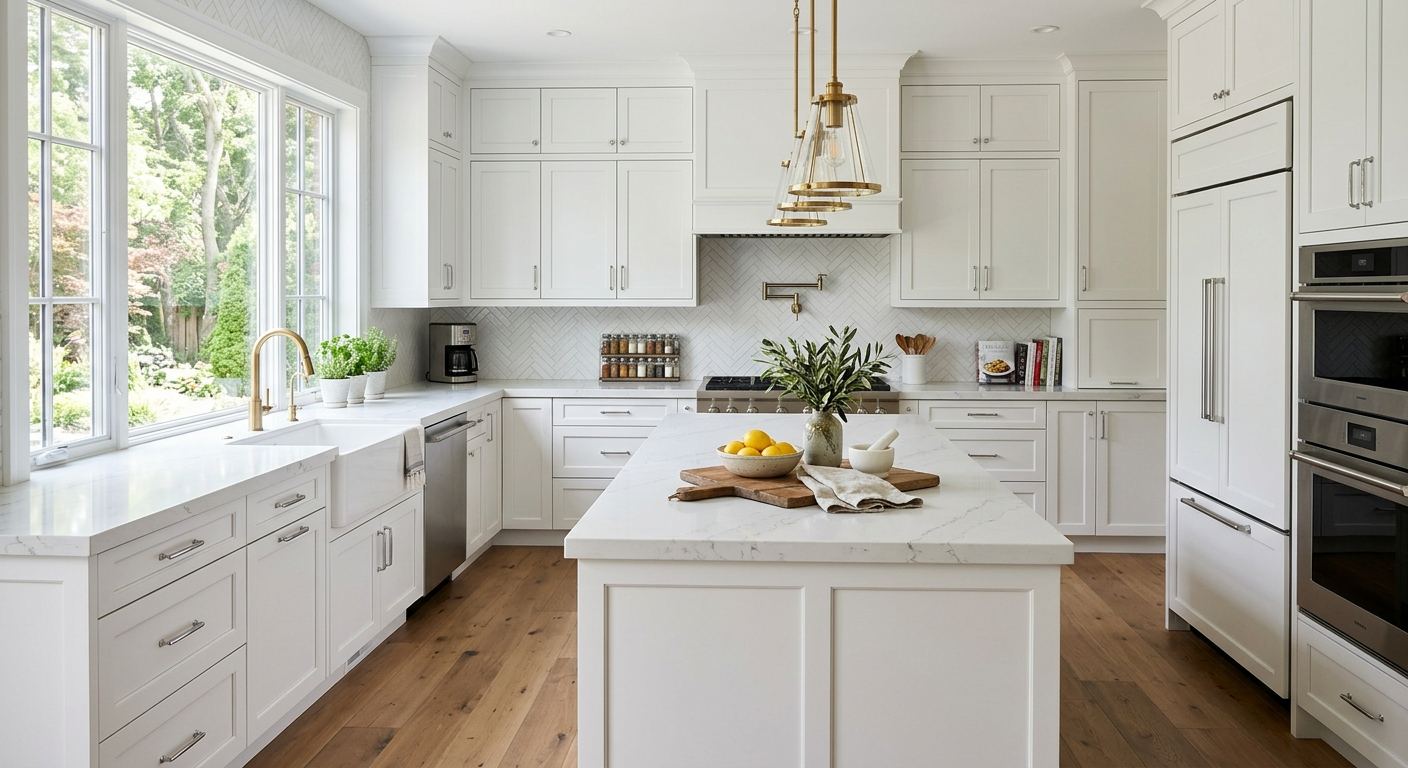
Kitchen renovation options and costs in Invermere
In Invermere, kitchen renovations typically start with budget conversations that reflect the home you’re updating and the finish expectations of today’s buyers, not just the weather. With a median household income of $84,000 (Statistics Canada, 2021 Census), many homeowners choose a “refresh-to-mid-range” approach: new cabinets and countertops, but not major structural changes. Invermere’s housing stock is also older—40.7% of homes were built before 1981 (Statistics Canada, 2021 Census)—so older plumbing/electrical runs and layout quirks can influence labour and materials, especially when you’re replacing sinks, dishwashers, or moving outlets.
In the Kootenay region, costs are shaped more by market tier than climate. The local freeze–thaw cycle matters for tile edges, caulking lines, and subfloor preparation, but it’s usually manageable and not the main driver. Where pricing does swing is contractor availability and the level of custom work: trades schedule tighter in peak seasons, and custom cabinetry or stone countertops require longer lead times and more labour on installation and adjustments.
Trade demand is especially strong around Invermere’s downtown and the surrounding year-round neighbourhoods near the lake and valley—owners there often want upgrades that hold up visually through changing seasons and perform well with higher humidity swings. That’s why many quotes cluster into the bands below, and that’s also why the table is useful before you call for measurements and a draft scope.
| Renovation Tier |
What's Included |
Typical Duration |
Price Range |
| Cosmetic refresh (paint, hardware, new appliances only) |
Cabinet paint or repaint, hardware, new appliances (no cabinetry rework), touch-up caulking, basic appliance install/connection |
3–7 days |
$5,000–$15,000 |
| Mid-range full renovation (new cabinets, counters, sink, tile) |
New stock/semi-custom cabinets, laminate or entry quartz counters, new sink and faucet, backsplash tile, and flooring/tile repairs as needed |
4–8 weeks |
$30,000–$55,000 |
| High-end full renovation (custom cabinets, stone counters, island) |
Fully custom cabinetry, quartz/stone countertops (often slab), island build, upgraded backsplash (sometimes full-height), refined electrical and lighting detailing |
8–14 weeks |
$55,000–$85,000 |
| Cabinet refacing only (new doors + drawer fronts, same boxes) |
Refaced doors/drawer fronts, new hardware, paint/stain of existing boxes where required, usually limited countertop touch-ups |
2–5 weeks |
$5,000–$25,000 |
| Countertop swap only (laminate to quartz or stone) |
Remove/replace existing counters, profile/edge change, new undermount sink if desired, and backsplash tie-in where needed |
1–3 weeks |
$8,000–$25,000 |
| Backsplash tile installation only |
Tile supply allowance and installation, surface prep, waterproofing at wet areas as required, finishing trims and caulking |
2–7 days |
$1,200–$5,000 |
Prices are estimates only and vary by project scope, site access and material selection.
What affects the price of kitchen renovation in Invermere
Across Kootenay and the wider British Columbia market, quotes for the “same” kitchen can swing by 30–50% because labour availability, trade scheduling, and finish choices change how much work gets done onsite. When homeowners compare proposals, the big difference is often not the brand of cabinet—it’s whether the scope includes layout changes, electrical upgrades, plumbing relocation, and how much custom detailing is baked into the design.
In Invermere and other higher-value areas of Kootenay, homeowners often lean into mid-to-premium counters earlier because buyers typically expect a more durable surface. In practical terms, that means quartz or stone becomes a standard upgrade rather than an add-on, even when the rest of the kitchen stays in the refresh-to-mid-range tier. In lower- and mid-priced markets, laminate and stock cabinets still dominate because they deliver better ROI for the same usable cabinet footprint. Either way, climate plays a secondary role: freeze–thaw doesn’t usually “raise the price” of cabinets directly, but it can increase prep and finishing time—especially for tile edges, subfloor corrections, and caulk/grout detailing around older exterior walls.
Two examples that commonly raise cost in Invermere: (1) upgrading from laminate to quartz can bump your materials budget meaningfully, and it also adds time for new undermount sink/faucet sealing; (2) moving a gas line or relocating a range hood changes the scope complexity and can trigger permit and scheduling steps. Conversely, staying in a cabinet refacing or counter-swap-only approach can keep many of those costs controlled, which is why projects often land near the $30,000–$55,000 mid-range band or the $5,000–$25,000 cabinet/refacing band depending on how much you change.
| Price Factor |
Why It Matters |
Cost Impact |
| Cabinet tier — stock vs. semi-custom vs. fully custom millwork |
Custom sizing, profile details, and build time affect labour and install time; also impacts how precisely countertops fit |
Stock typically keeps budgets in the lower range; semi-custom often sets the mid-range; fully custom can materially lift total project cost |
| Countertop material — laminate vs. quartz vs. granite vs. stone |
Material cost, cutting templates, and installer time change; premium slabs also require more careful handling and finishing |
Laminate is usually the lowest-cost; quartz and natural stone increase both material and install labour |
| Layout change — wall removal, island add, plumbing/gas move |
Alters framing, ducting, electrical, plumbing/drain runs, and sometimes ventilation; scope becomes less predictable |
Typically the largest swing factor—often more than upgrading finishes |
| Appliance package tier — builder vs. mid-range vs. pro-grade |
Cutouts, electrical requirements, and installation details vary; higher tiers can require more precise alignment |
Pro-grade can push appliance-related budget noticeably higher even when cabinet costs stay the same |
| Flooring — refinish existing vs. full replacement |
Existing surfaces may need flattening and underlayment; mismatched heights can force further transitions |
Refinish/patch tends to cost less; full replacement can add both demo and install time |
| Backsplash — ceramic tile vs. marble vs. full-height slab |
Higher-end materials increase cutting complexity and reveal more substrate imperfections |
Ceramic tile sits lower; full-height slab or premium stone can increase costs and schedule |
| Electrical — new circuits for island, under-cabinet lighting |
Electrical scope affects permits/inspection and adds time for rough-in, final connection, and testing |
Can be moderate in refresh jobs, but increases quickly with new circuits and lighting runs |
| Permit fees and licensed trade requirements |
Major work triggers permits and licensed trade scheduling; inspections can affect sequencing |
Typically modest fees, but the trade steps can add labour days and coordination cost |
Permits & regulations in British Columbia
In British Columbia, a simple swap of cabinets and countertops often does not trigger permits on its own. Typically, replacing existing countertops (even upgrading laminate to quartz) and swapping in new cabinet sections to match the current footprint is usually permit-free because you’re not changing plumbing, gas, structural elements, or electrical infrastructure.
Permits and licensed trades are usually required when you change the building systems: moving plumbing supply or drain lines, relocating a gas stove or altering gas connections (including work tied to range/hood ventilation), removing a load-bearing wall, adding or relocating electrical circuits (for example, new outlets for an island or new lighting circuits). In those cases, gas work must be performed by a licensed gas fitter, and electrical work must be done by a licensed electrician, with required inspections.
For a homeowner in Invermere, the practical process is straightforward. Before signing, ask the contractor for: (1) their certificate of liability insurance and the clearance/coverage letter they use for jobs; (2) proof each sub-trade is licensed for the specific scope (gas fitter for gas-related work; electrician for circuits); and (3) permit responsibility—who pulls the permit and who schedules inspections. You can also verify licences using provincial online licence registries and cross-check that the certificate names match the trade who will be on site.
Always confirm permit responsibility in writing in your contract before work starts.
Cabinets, countertops and layout decisions in Invermere
When you’re planning a kitchen renovation in Invermere, three decisions usually dictate most of your outcome: (1) cabinet tier, (2) countertop material, and (3) layout change. Cabinet tier drives budget and the “fit and finish” you’ll see every day. Stock cabinets are the fastest and usually the most budget-friendly, but limited sizes can create filler-heavy installs in older homes. Semi-custom cabinetry is the most common mid-range choice because it balances local availability with better sizing for irregular spaces common in pre-1981 houses. Custom cabinets deliver the best fit and storage layouts, but they require longer lead times and more workmanship for installation and finishing.
Countertops should be chosen for durability first, especially with the way British Columbia households cook and entertain across seasons. Laminate is economical, but it’s less forgiving with heat and can show wear at edges over time. Quartz is a strong, low-maintenance middle ground—great for resale expectations—while granite/natural stone offers upscale look but can require more upkeep depending on the stone and sealing requirements. Butcher block and marble are beautiful options; butcher block needs regular oiling, and marble demands careful cleaning to avoid etching.
Layout changes—open-concept wall removal, island addition, or plumbing/gas relocation—are the most justified when space gain changes daily flow and storage. For example, if your current kitchen is closed off and you’re considering removing a wall, spending toward engineering and licensed trade work can cost more than upgrading from quartz to stone—but it may produce a larger functional improvement that buyers notice immediately. If your goal is to protect budget, keeping layout stable while moving to quartz is often the most “bang for buck,” especially compared with full high-end custom millwork.
| Option |
Durability |
Maintenance |
Best For |
Price Range |
| Stock cabinets (big-box) |
Good for everyday use; may be limited for perfect fit in older footprints |
Low—typically just routine cleaning and hardware care |
Fast, budget-conscious renovations with minimal layout changes |
$5,000–$20,000 |
| Semi-custom cabinets (local dealer) |
Very durable; better sizing options and door/drawer quality |
Low to moderate—depends on finish type |
Most Invermere mid-range full renovations targeting strong resale appeal |
$15,000–$40,000 |
| Custom cabinets (local millwork shop) |
Excellent durability; engineered for your exact measurements and storage plan |
Low—long-term care is similar to quality manufactured cabinetry |
Homes where you want a tailored look, distinctive storage, and premium details |
$30,000–$70,000 |
| Laminate countertop |
Moderate—can chip at edges; less heat resistant than stone |
Low daily maintenance; protect seams and edges |
Budget refreshes and rental-friendly updates |
$2,500–$6,000 |
| Quartz engineered countertop |
High—resists staining and daily wear well |
Low—usually just wipe-and-clean |
Best balance for Invermere homeowners aiming for durable, modern resale value |
$6,000–$12,000 |
| Granite / natural stone countertop |
High—very durable surface; natural variation |
Moderate—may need periodic sealing depending on the stone |
Premium look where you want a unique, upscale pattern |
$8,000–$16,000 |
| Butcher block countertop |
Moderate to high—can dent; best with cutting boards |
Higher—regular oiling and mindful care |
Warm, rustic styles and households that like maintenance |
$4,000–$10,000 |
| Marble countertop |
Moderate—can etch with acidic spills |
Higher—careful cleaning and protection |
Statement kitchens where the look is the priority over ruggedness |
$10,000–$18,000 |
How to choose a kitchen renovation contractor in Invermere
Choosing the right contractor in Invermere is less about flashy photos and more about whether they can manage the trades, permits, and sequencing that kitchen projects demand in British Columbia. Start by verifying licensing and coverage: gas work must be done by a licensed gas fitter and electrical by a licensed electrician. For your renovation contractor, request their liability insurance certificate and confirm coverage matches the work dates and address. For workers’ coverage, ask what system applies to their employees and whether they can provide documentation of WSIB/WCB coverage as applicable.
Next, get 2–3 itemised written quotes that separate labour and materials, rather than a single lump sum. You want line items for demo, rough-in coordination, cabinet supply and install, countertop fabrication/installation, backsplash tile prep and installation, electrical, plumbing, disposal, and any allowance items (like tile or appliance models). Read the scope carefully: what’s excluded (moving existing fridge/freezer, repairing damaged drywall, removing old tile)? Is permit pulling included? Is waste disposal included, or is it your responsibility?
Warranty matters in the Kootenay climate where seasonal expansion and contraction can reveal grout or caulking issues. Ask for workmanship warranty length, how product warranties are handled by the manufacturer, and whether the warranty is transferable to you if you sell. Payment schedule should be conservative—typically no more than 10–15% upfront, with a holdback until the job is complete and you’ve inspected punch list items. Finally, insist on a written timeline with a start date and completion estimate.
- Provide a written scope that matches your plans, including exact cabinet and countertop allowances
- Confirm who pulls permits and schedules licensed trade inspections (in writing)
- Verify contractor liability insurance certificate and jobsite coverage dates
- Ask for evidence of WSIB/WCB coverage for crew members where applicable
- Confirm gas and electrical trades are licensed for the exact work described
- Require itemised quotes (labour vs materials) with clear inclusions and exclusions
- Check disposal and dump fees: included or extra?
- Clarify demolition responsibilities: framing protection, drywall patching level, paint allowance
- Get countertop templating schedule and lead times in the contract (no assumptions)
- Ask about waterproofing details behind backsplash and at any wet-area transitions
- Confirm warranty terms for workmanship and whether product warranties are transferred
- Agree on payment milestones tied to deliverables, not just “progress” language
In Invermere, watch for red flags such as: quotes that are not itemised (no line-item scope clarity), no written warranty details, “we’ll handle the permits” without naming which permits and who pulls them, missing insurance documents, and contractors who ask for most payment upfront instead of a 10–15% initial deposit with a holdback.
Frequently asked questions — kitchen renovation in Invermere
Custom vs stock cabinets — is custom worth it?
In Invermere, custom cabinets are worth it when your kitchen has difficult measurements, older framing that doesn’t sit square, or you want a storage plan that fits how you actually cook (pantry depth, drawer layout, pull-outs, built-in charging zones). Stock cabinets can still be a great choice if you’re keeping the layout stable and you’re comfortable with standard sizes and possible fillers. Semi-custom is often the sweet spot for most homeowner budgets, especially when you’re aiming to land in a mid-range full renovation tier like $30,000–$55,000. If you’re planning a refresh without moving plumbing or gas, semi-custom delivers a more tailored look without the longest lead times. If you’re planning major layout changes, custom can still pay off, but the bigger budget driver will usually be the added trade work and coordination.
How do I choose a kitchen contractor in Invermere?
Choose a contractor who can prove coverage and licensing matches the scope. In British Columbia, confirm the right licensed trades for the work: gas work by a licensed gas fitter and electrical by a licensed electrician. Ask for the contractor’s liability insurance certificate and request documentation showing WSIB/WCB coverage for their crew where applicable. Then get 2–3 itemised quotes that break out labour and materials (not just a lump sum), including disposal, drywall patching level, and whether permit pulling and inspections are included. A good contractor will also provide realistic lead times for cabinets and countertops and will schedule templating for counters. For homeowners comparing budgets, remember that a mid-range kitchen in Invermere often sits around $30,000–$55,000, while refacing or counter swaps can fall into narrower bands, so quote clarity matters for apples-to-apples comparison.
What order do kitchen renovation steps happen in?
In Invermere projects, the usual order starts with site protection, then demolition, and assessment of rough-in conditions (especially important in homes built before 1981). Next comes rough electrical and plumbing changes—only after you’ve confirmed what requires permits and licensed trade work—followed by inspections. After rough-in, walls and floors get prepped: drywall patching, leveling, and underlayment/tile surface prep. Cabinet installation follows (with careful wall alignment), then countertop templating and fabrication. Once countertops arrive, they’re installed with proper sealing and edge finishing. Backsplash tile goes after cabinets and counters are set, so lines are consistent. Finally, appliances are connected, lighting is tested, caulking/grout are completed, and the punch list is finished.
Can I live at home during a kitchen renovation in Invermere?
Often yes, but it depends on how extensive your work is. If you’re doing a cosmetic refresh or cabinet refacing only, many homeowners can stay in place because demo is limited and the kitchen remains functional with temporary workarounds. For mid-range full renovations (commonly $30,000–$55,000), you may still live at home, but you’ll likely set up a temporary cooking station because counters and sink areas are out of service during installation and countertop work. For high-end full renovations—especially with an island and layout changes—you can still stay home, but there’s a higher chance the kitchen is effectively inaccessible for longer stretches due to inspections, sub-trades, and cabinet/counter lead times. If you have school-aged children or rely on one bathroom only, plan for dust control and clear scheduling with the contractor so your daily routines aren’t constantly interrupted.
Should I renovate my kitchen before selling in Invermere?
Usually, yes—if the renovation is targeted and supports buyer expectations in the Invermere market. Kitchens are a primary decision point, and durable countertops and a clean, modern cabinet finish often help the home feel updated. That said, overspending on ultra-premium custom millwork without addressing layout or obvious wear can be hard to recover. Many sellers do well with a mid-range full renovation around $30,000–$55,000 or a more focused upgrade like cabinet installation/refacing plus a countertop swap, because it improves functionality and appearance without pushing into the highest-end tier. Because Invermere’s housing stock includes many older homes (40.7% built before 1981), fixing visible issues—like dated finishes, tired tile edges, and underperforming storage—can matter more to buyers than trendy upgrades. Consider working with your realtor to align finishes with recent comparable sales and avoid unusual custom details that may not match broad tastes.
What's the most popular kitchen style in Invermere right now?
Right now in Invermere (and across Kootenay), the most popular look is clean, warm modern: simple cabinet lines, shaker-style doors in light-to-medium tones, and durable countertops that read naturally under changing daylight. Quartz is especially common because it offers a sleek finish with low maintenance, and it fits both permanent residency and vacation/home-rental households. Many homeowners pair that with a modest backsplash upgrade—often ceramic tile rather than complex full-height stone—because it’s easier to maintain through seasons and usually lands in a manageable range like $1,200–$5,000 for tile installation when scoped correctly. If you see a “premium” look, it’s typically driven by the countertop and lighting details (under-cabinet lighting, cleaner outlet placement, and a well-finished island), not just cabinet material alone. The goal is a kitchen that feels bright in winter and practical year-round.