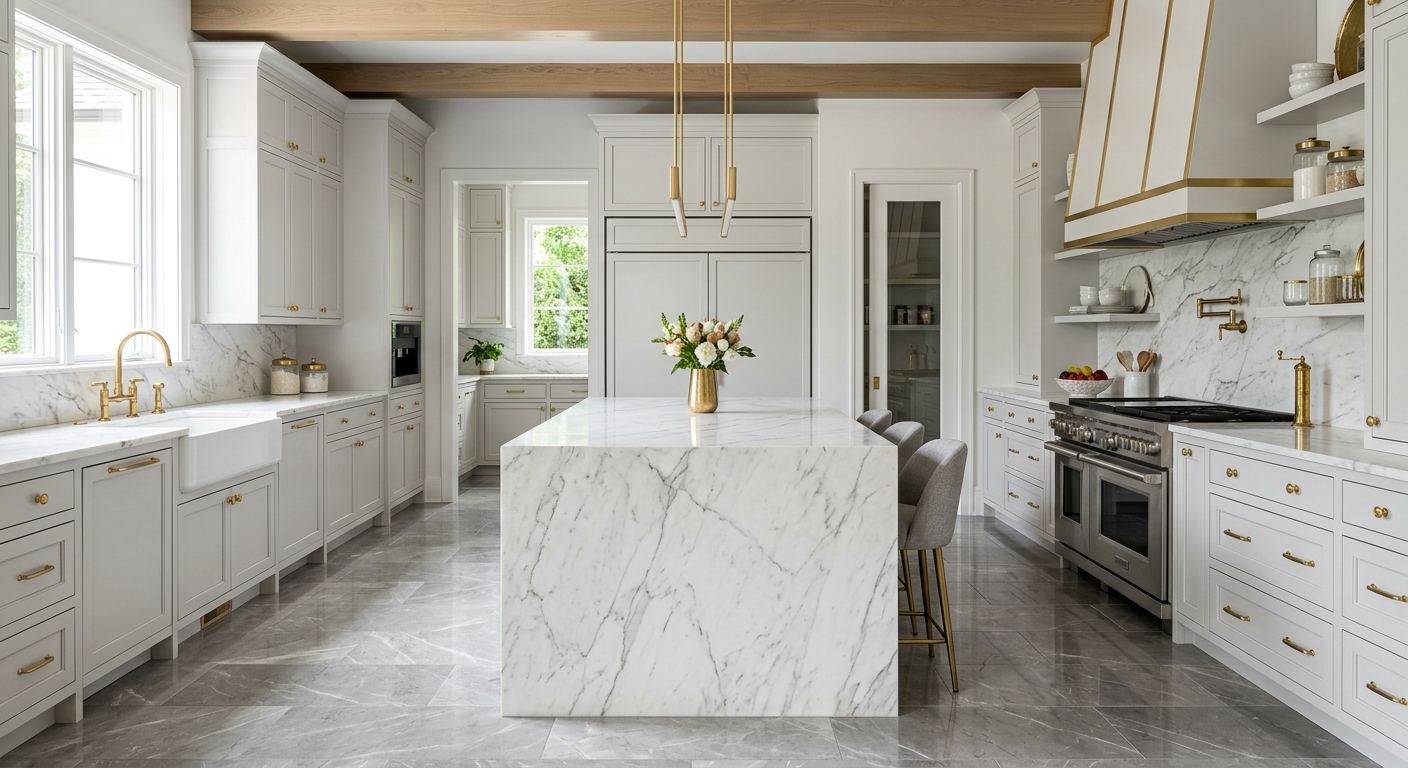
Kitchen renovation options and costs in North Park
North Park, British Columbia sits in the Lower Mainland–Southwest, and kitchen renovations here typically price more on homeowner expectations and resale value than on weather-driven material failures. In 2021, the city’s population was 3,725 (Statistics Canada, 2021 Census), and the broader Lower Mainland–Southwest market has a wide range of household buying power, which directly affects whether owners choose practical refreshes or design-forward remodels. In higher-value parts of the Lower Mainland–Southwest, homeowners more often select semi-custom cabinetry, quartz/stone counters, and upgraded hardware—finishes that are easier to recover at resale because buyers recognize the “complete” look. In lower-cost scopes, laminate surfaces and stock cabinet layouts still dominate because they keep total project totals closer to the backbone price bands for this tier.
Climate plays a smaller role in cost than many people expect. In North Park, the main impact is moisture management and ventilation: kitchens often need better range-hood ducting, sealed edges, and properly detailed backsplash/tile transitions to handle routine humidity. Contractor availability also varies by season; demand can tighten in spring and summer when many homeowners plan full renovations and island builds. If you’re renovating a home in the denser pocket near the Commercial corridor and nearby residential streets, you’ll usually find a faster path to scheduling because trades are used to short on-site access windows and quicker material deliveries.
With that context, here are the common renovation tiers homeowners compare when they request quotes—starting from a simple refresh and moving up to full high-end rebuilds—so you can see where your budget typically lands.
| Renovation Tier |
What's Included |
Typical Duration |
Price Range |
| Cosmetic refresh (paint, hardware, new appliances only) |
Cabinet paint or refinish, new hardware/pulls, paint touch-ups, new fridge/range/dishwasher, minor caulking and trim, basic cleaning and countertop wipe-down |
1–2 weeks |
$8,000–$25,000 |
| Mid-range full renovation (new cabinets, counters, sink, tile) |
New semi-custom or quality stock cabinets, countertop replacement, sink/faucet swap, backsplash/tile update, new vanity-style trim, disposal hookup, updated caulking and sealing |
3–6 weeks |
$40,000–$75,000 |
| High-end full renovation (custom cabinets, stone counters, island) |
Fully custom millwork, quartz/stone counters, island with upgraded storage, premium hardware, full backsplash (including feature detailing), enhanced lighting prep, coordinated appliance package |
6–10 weeks |
$85,000–$120,000 |
| Cabinet refacing only (new doors + drawer fronts, same boxes) |
Door/drawer-front replacement, veneer overlay on existing box faces (if in good condition), hardware upgrade, alignment adjustments, new toe-kick/trim where needed |
2–4 weeks |
$8,000–$30,000 |
| Countertop swap only (laminate to quartz or stone) |
Remove existing countertop, template and install new quartz/stone (or higher-grade surface), sink cutouts where applicable, silicone and edge detailing, basic countertop-area cleanup |
1–3 weeks |
$6,000–$12,000 |
| Backsplash tile installation only |
Surface prep, tile layout and installation, grouting/sealing, trim detailing at outlets and corners, caulk where tile meets counters and cabinets |
3–7 days |
$1,500–$6,000 |
Prices are estimates only and vary by project scope, site access and material selection.
What affects the price of kitchen renovation in North Park
In North Park and across the Lower Mainland–Southwest, two quotes for the “same” kitchen can differ by 30–50% because the biggest cost drivers are not the weather—they’re the choices that track with local resale value: cabinet tier, countertop type, and the complexity of the build. Climate influences installation details (especially moisture control around sinks and under-ventilated cooking areas), but it usually isn’t the reason one contractor lands at the lower end of a $40,000–$120,000 full-renovation band while another lands near the top. Instead, labour rates and lead times are strongly shaped by demand, and finish expectations are shaped by local home values and median incomes—owners in higher-value pockets often default to quartz/stone and semi-custom cabinetry because the upgrade shows well in photos and in-person walk-throughs.
Across British Columbia, the same layout change can also carry different labour costs and schedule realities depending on the contractor’s current workload. Even in one city, North Park-style townhomes and older detached homes can create very different scopes: an older kitchen might require more demo and sub-surface correction before installing cabinets and tile, while a newer home may need fewer structural fixes. Layout changes add the most unpredictable cost regardless of finish level—removing a wall, adding an island, or moving a gas line can trigger additional framing, venting, and trade coordination.
Here are a few common North Park examples: (1) If you add an island and need an electrical run plus an updated under-cabinet lighting plan, you’re often pushed toward the mid-range full renovation band; (2) If your current cabinets are warped or water-damaged near the sink, a “cabinet swap later” approach becomes more expensive than a planned full package; (3) Homes with older plumbing roughed-in behind walls can raise demolition and patching labour, especially if drains require rework. In many scenarios, it’s still easier to budget accurately by referencing the countertop install and backsplash bands—then deciding how much cabinet upgrade you want to pair with them.
| Price Factor |
Why It Matters |
Cost Impact |
| Cabinet tier — stock vs. semi-custom vs. fully custom millwork |
Higher tiers reduce compromises on fit, storage layouts, and finish consistency; they also increase build time for made-to-fit components |
Often the largest swing item within a project; can move a full renovation by tens of thousands |
| Countertop material — laminate vs. quartz vs. granite vs. stone |
Material cost plus fabrication complexity; heavy stones require more careful handling and templating |
Countertop installs typically fall around the $3,000–$12,000 band, with upgrades pushing the high end |
| Layout change — wall removal, island add, plumbing/gas move |
Creates structural, mechanical, and inspection complexity; increases demo and patching |
Can add significant labour and coordination regardless of finishes; frequently drives projects toward the top of the $40,000–$120,000 band |
| Appliance package tier — builder vs. mid-range vs. pro-grade |
Electrical/gas and ventilation requirements vary; premium models may require different clearances and hookups |
Can change total cost by several thousand depending on whether upgrades include ventilation and panel updates |
| Flooring — refinish existing vs. full replacement |
Removing cabinets and appliances can force a full flooring replacement when existing materials are damaged or incompatible |
Refinishing stays cheaper; full replacement commonly adds cost and schedule time |
| Backsplash — ceramic tile vs. marble vs. full-height slab |
Tile labour scales with detailing and outlet cuts; premium materials increase both material and installation risk |
Backsplash scopes often fall around the $1,500–$6,000 band; premium detailing lifts the high end |
| Electrical — new circuits for island, under-cabinet lighting |
Islands and modern lighting plans often need additional circuits and compliant placement |
Electrical additions can add a noticeable cost even when the rest of the kitchen is “mid-range” |
| Permit fees and licensed trade requirements |
Mechanical/electrical/structural work usually needs permits, inspections, and coordination |
Administrative and trade costs rise quickly when work extends beyond a simple swap/refinish |
Permits & regulations in British Columbia
In British Columbia, homeowners often start by asking what requires permits during a kitchen renovation. As a rule of thumb, cabinet and countertop swaps usually do not require a building permit—you can typically replace surfaces without changing the underlying plumbing, gas piping, or structural elements. However, permits and licensed trades generally become necessary when you move or change systems.
Work that typically does require a permit and licensed trade involvement includes: relocating plumbing supply or drain lines (for a new sink location or dishwasher change), relocating gas lines (for a stove/range or changes around a gas range), removing a load-bearing wall (or making structural opening changes), and adding or reworking electrical circuits (for island receptacles, new lighting plans, or under-cabinet lighting tied into updated circuits). Gas work must be performed by a licensed gas fitter, and electrical work by a licensed electrician; both require proper inspections before the work is considered complete.
To verify your contractor in North Park step-by-step: (1) ask for their BC licence details and confirm what they do themselves (and what they sub-contract); (2) request a current certificate of insurance and ensure liability coverage is appropriate for renovations; (3) confirm worker coverage through WSIB/WCB documentation where applicable for their trade workforce; (4) confirm the contractor will handle permit submissions where required; (5) insist the contract clearly states which permits and inspections are included. Before signing, confirm who is responsible for permit fees, inspections, and any post-inspection correction work—this should be written, not assumed.
Cabinets, countertops and layout decisions in North Park
In a North Park kitchen renovation, three decisions drive most of the cost and the long-term “does it feel worth it?” outcome. First is cabinet tier: stock cabinets are the fastest and cheapest, semi-custom is typically the most popular mid-range choice because you get better sizing and storage options without fully custom pricing, and custom cabinets deliver the tightest fit and highest build quality—at the highest cost. Second is countertop material: laminate is budget-friendly and easy to replace later, while quartz, granite/natural stone, butcher block, and marble shift the project based on durability, maintenance, and how the surface handles daily wear and moisture. Third is layout changes: open-concept wall removal, adding an island, or moving plumbing/gas. In the Lower Mainland–Southwest resale market, those changes are only justified when they create real usability gains (clear circulation paths, better prep space, improved storage flow) rather than just “looking modern.”
For climate, North Park’s coastal conditions mean kitchens live with routine humidity and frequent cooking vapours. That’s why proper ventilation and sealed transitions around the sink and backsplash matter—especially for butcher block and natural stone where maintenance habits differ. A practical way to decide is to align your finish tier to how buyers interpret value at your price point. If you’re staying mid-range (often around the $40,000–$75,000 zone), semi-custom cabinets paired with quartz frequently offer the “finished look” buyers expect. If you move into high-end territory (often $85,000–$120,000), custom millwork and stone counters plus an island tend to be the package that feels cohesive.
Dollar example: upgrading from quartz to a premium natural stone choice and adding an island can push a job toward the top end, not because the countertop alone is always dramatically higher, but because the island typically triggers additional electrical and sometimes plumbing/gas coordination. If you want the upgraded countertop look without the full layout complexity, a countertop swap strategy can stay closer to the countertop install band (often $3,000–$12,000 for many scopes) while keeping other systems mostly unchanged.
| Option |
Durability |
Maintenance |
Best For |
Price Range |
| Stock cabinets (big-box) |
Good for normal household use; durability depends on door construction and installation quality |
Low—focus on cleaning and checking hinges; may show seams if fitted imperfectly |
Fast remodels and budget-focused refreshes |
$8,000–$20,000 |
| Semi-custom cabinets (local dealer) |
Very durable with better sizing and more options for storage and finishes |
Low to moderate—standard wipe-down and hardware care |
Most North Park mid-range remodels where you want a built-in look |
$20,000–$45,000 |
| Custom cabinets (local millwork shop) |
Highest durability and fit; best when you have unusual layouts or want premium detailing |
Low—requires the same routine care, but build quality typically ages well |
Design-led kitchens with islands, ceiling-height runs, and specialty storage |
$45,000–$80,000 |
| Laminate countertop |
Moderate; can chip if heavy impacts occur, and seams require care |
Low—easy daily cleaning; avoid excessive heat and standing water at seams |
Budget swaps and “good enough” ROI |
$3,000–$6,000 |
| Quartz engineered countertop |
High durability; resists staining and daily wear well |
Low—no sealing; wipe clean and address spills quickly near seams |
Most popular upgrade in the Lower Mainland–Southwest |
$6,000–$10,000 |
| Granite / natural stone countertop |
Very durable and heat resistant, with natural variation that looks premium |
Moderate—often requires periodic sealing and prompt spill cleanup |
Owners who want a natural look and long service life |
$8,000–$12,000 |
| Butcher block countertop |
Durable but can scratch; sensitive to standing water and prolonged humidity |
Moderate—requires oiling and disciplined drying to prevent swelling |
Warm, casual kitchens where owners maintain surfaces |
$5,000–$9,000 |
| Marble countertop |
Premium look with softer surface; can etch or stain compared to quartz |
Higher—requires careful cleaning, sealing, and attention to acidic spills |
Statement kitchens where aesthetics matter most |
$10,000–$14,000 |
How to choose a kitchen renovation contractor in North Park
Choosing the right contractor in North Park comes down to proof: licensing, insurance, clear scope, and realistic scheduling. In British Columbia, verify trade licences by asking for current documentation from the contractor and any subcontractors. For the contractor’s financial and worker protection, request evidence of liability insurance and confirmation of WSIB/WCB coverage as applicable to their workforce. You should also ask how the contractor handles permits and inspections for permitted scope—especially for electrical circuits for island receptacles or under-cabinet lighting, and any gas-related changes.
Get 2–3 itemised written quotes rather than lump-sum estimates. The best quotes break down labour and materials for cabinets, counters, tile/backsplash, plumbing/electrical scope (when applicable), demo/disposal, and any custom fabrication. Read the scope line-by-line: what’s excluded (flooring patching, drywall repairs, appliance install, permit pulls, disposal)? Confirm whether disposal is included and who is responsible for site protection. Then check warranties: workmanship warranty length, whether the manufacturer warranty transfers if you sell the home, and what “warranty service” actually includes.
For payment, avoid heavy up-front costs—never pay more than 10–15% upfront, and hold back a portion until the job is complete and verified (especially cabinet alignment, tile grout seal, caulking quality, and appliance fit). Finally, get a start date and a completion estimate in writing, along with key dependencies such as countertop fabrication lead times and cabinet manufacturing schedules.
- Confirm BC licences for any permitted work and ask who is doing the work vs. who is quoting it.
- Request a current certificate of insurance for liability and verify it covers renovation activities.
- Ask for WSIB/WCB documentation for the contractor’s workers (not just subcontractors).
- Get 2–3 quotes with an itemised labour/materials breakdown (not a single lump sum).
- Verify permit responsibility: who pulls permits, who pays fees, who schedules inspections.
- Confirm disposal and site protection are included in the quote.
- Check exclusions for drywall, patching, painting touch-ups, and flooring undercabinet repairs.
- Make sure appliance installation terms are clear (leveling, hookups, any electrical/gas coordination).
- Ask about cabinet tolerances and adjustment process for older North Park floors/walls.
- Confirm countertop template timing and how changes are handled (change orders process).
- Review warranty terms: workmanship duration, product warranty documentation, and transferability.
- Use a payment schedule that starts small (10–15% max), with holdback tied to completion/inspection.
Common North Park red flags include: vague scope wording (“includes” without line items), quoting a high-end total without matching it to cabinet/counter grades, skipping permit discussion for layout moves, refusing to provide insurance/licence details in writing, and demanding large up-front payments beyond 15%. If a contractor can’t explain the sequencing of demo, rough-ins, cabinet installation, countertop templating, and finish work, that’s a warning sign for both cost and timeline.
Frequently asked questions — kitchen renovation in North Park
What order do kitchen renovation steps happen in?
In North Park, most kitchen renovations follow a dependable sequence so trades don’t get in each other’s way. Typically, demo happens first (old cabinets/counters, and any damaged drywall or subfloor repairs). Next come rough-ins for any permitted changes—electrical circuits, plumbing/drain moves, and ventilation updates—followed by inspections when required. After that, you install base cabinets and confirm level and alignment, then template for countertops. Once counters are fabricated, they’re installed and the sink/faucet are set. Tile/backsplash and flooring patch/finish usually land after or alongside countertop install so edges and caulking look clean. Final steps are hardware installation, painting touch-ups, and appliance hookups/commissioning.
Can I live at home during a kitchen renovation in North Park?
Often yes, but it depends on how disruptive your scope is. A cosmetic refresh (paint, hardware, and appliances only) is usually the easiest to manage while staying in the home. For a mid-range full renovation, expect some days where the kitchen is partially unusable; many homeowners set up a temporary microwave/coffee station and plan meals around it. If you’re doing a full high-end renovation with an island, new counters, and layout changes, the work zone is larger and dust can be heavier—so it may be more practical to arrange a short-term relocation or at least a “clean kitchen” alternative (bar-style setup) for several weeks.
As a budgeting reference, if you’re staying near a countertop swap only or a backsplash-only scope, it’s usually more manageable. If your plan is in the $40,000–$120,000 band for a full renovation, plan for longer disruption and dust control measures.
Should I renovate my kitchen before selling in North Park?
If you’re selling soon in North Park or the surrounding Lower Mainland–Southwest market, renovate only where the ROI is clear: visible finishes (cabinets, counters, and lighting) and functional improvements (storage, layout flow, and clean appliance integration). Buyers commonly notice cabinet condition and countertop style immediately. In higher-value segments, quartz/stone and semi-custom cabinetry tend to “read” as a complete update, which can support buyer confidence because the finish package looks cohesive.
If you’re planning to sell within a short window, consider scopes that are quicker: a cabinet refacing with updated doors/drawer fronts, or a countertop swap (often priced within the typical countertop installation band). For full renovations (often $40,000–$120,000), the decision should align with your listing timeline and whether your current kitchen has layout or moisture problems that would otherwise deter showings.
What's the most popular kitchen style in North Park right now?
North Park kitchens right now typically lean toward clean, bright, modern-transitional designs that photograph well and feel durable in daily life. Homeowners frequently pair semi-custom cabinetry with quartz countertops and a simple, well-detailed backsplash—often tile rather than full-height stone. The goal is a cohesive look: consistent hardware finishes, practical drawer storage, and an island or widened prep area when the home’s layout supports it.
Material choices are also guided by the Lower Mainland–Southwest resale expectations. Quartz tends to be the go-to for its low maintenance, while backsplashes are chosen to manage moisture well around the sink and cooking zone. If you’re budgeting mid-range, the look usually lands in the $40,000–$75,000 full renovation range; if you’re building a true showpiece with custom millwork and island complexity, it commonly moves toward $85,000–$120,000.
How do I know if I need to update my kitchen plumbing in North Park?
You may need plumbing updates if your current system shows symptoms rather than just age. Common signals include slow drains, leaks under the sink, recurring garbage disposal issues, inconsistent water pressure, or signs of corrosion around supply lines. Older homes can also hide problems behind walls—especially if you’re moving the sink location, adding a dishwasher, or changing the island layout. When plumbing supply or drain lines move, that work usually requires permits and licensed plumbing trades, and it can expand the scope due to wall openings and patching.
A practical approach: have your contractor assess under-sink connections and the accessible parts of drain/supply routing during the walkthrough. If you’re already pricing a renovation in the mid-range $40,000–$75,000 band, catching plumbing issues early can prevent expensive “change orders” after cabinets are set.
What is the difference between a galley and open-concept kitchen?
A galley kitchen is a narrow layout with counters along two parallel walls, which usually prioritizes efficient workflow in smaller spaces. An open-concept kitchen removes barriers between the kitchen and living area, often through wall removal, which can change traffic patterns and increase the need for coordinated electrical, ventilation, and lighting planning. In North Park’s housing stock, both layouts are common—older homes often lean galley, while newer or renovated homes are frequently updated to open-concept for modern living.
Cost differences show up when you change walls or systems. Open-concept builds can introduce permit-requiring structural work and electrical rework, which is why they can push projects toward the top of the $40,000–$120,000 range. A galley refresh may stay closer to cabinet/counter upgrades without major structural changes.