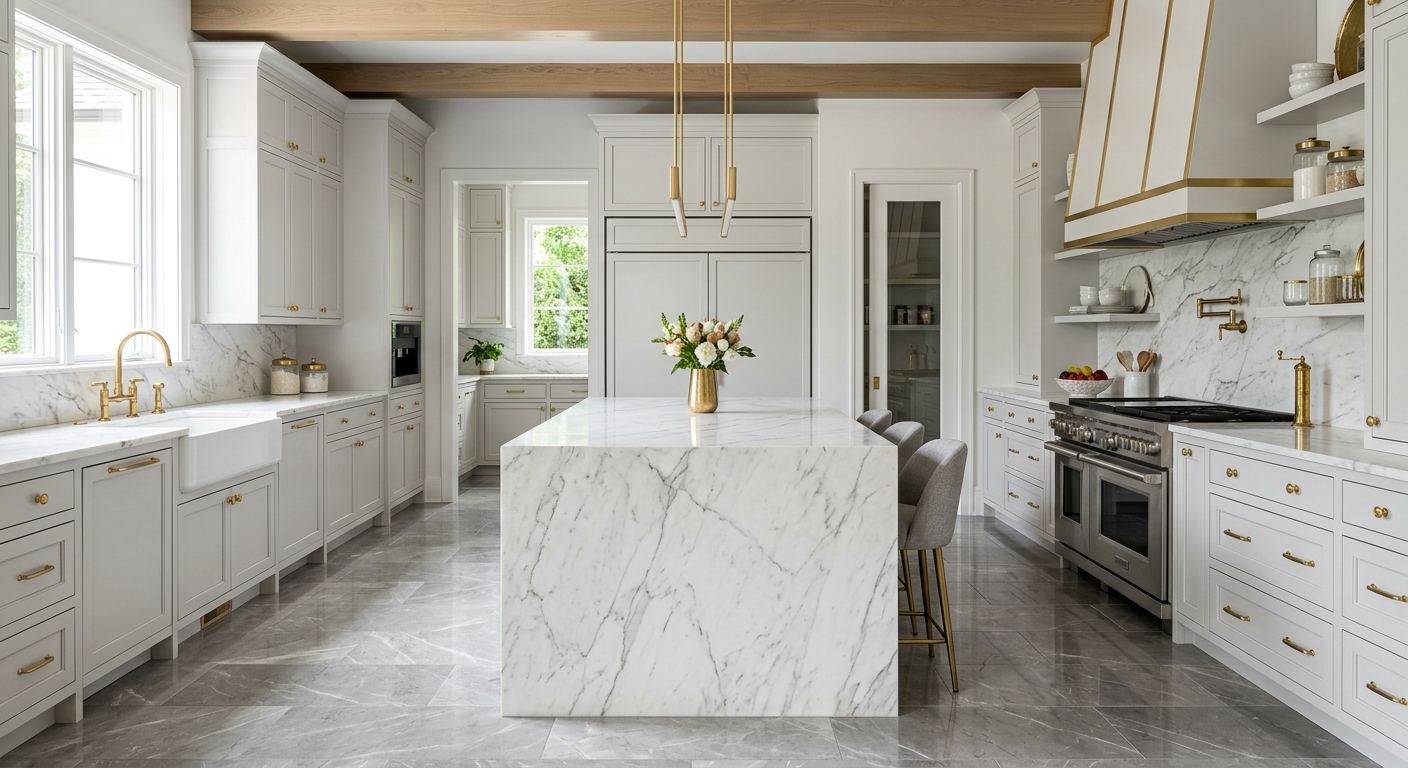
Kitchen renovation options and costs in Glenwood
Kitchen renovations in Glenwood tend to follow a clear ladder of options, from simple refreshes to full rebuilds. Glenwood’s population is 11,437 (Statistics Canada, 2021 Census), and like much of the Lower Mainland–Southwest, the local market’s expectations often track with what buyers are willing to pay for a modern, move-in-ready kitchen. In the Lower Mainland–Southwest, pricing is driven more by home values and the expected finish level than by climate alone—meaning many homeowners lean into higher-performing, design-led choices when they can recoup that spend. In higher-value Metro Vancouver-adjacent pockets, semi-custom cabinetry and quartz/stone counters are common because the improvement supports resale confidence; lower-cost scopes more often default to laminate and stock cabinets for stronger ROI.
Coastal British Columbia also plays a supporting role: kitchens see real-day wear from humidity swings, and contractors plan for ventilation, moisture-resistant materials, and stable installation methods. Labour availability can matter too; when demand is busy across Surrey, Abbotsford, and the broader Lower Mainland, scheduling and material lead times can add cost even for projects that look “simple.”
Because kitchen work is steady, demand is especially high for cabinet and countertop trades in and around the Glenwood–Ridgeway service corridor where families are renovating older housing stock and updating layouts. Use the options below to compare typical scopes before you request quotes—then match the tier to your budget and your resale expectations.
| Renovation Tier |
What's Included |
Typical Duration |
Price Range |
| Cosmetic refresh (paint, hardware, new appliances only) |
Cabinet paint or refinishing, new pulls/knobs, appliance swap (in-stock), minor touch-ups; no cabinet box changes |
1–3 weeks |
$8,000–$20,000 |
| Mid-range full renovation (new cabinets, counters, sink, tile) |
New cabinets (stock or semi-custom), new countertops (quartz/stone or upgraded laminate), sink + faucet, backsplash tile, flooring refresh where needed |
4–8 weeks |
$40,000–$75,000 |
| High-end full renovation (custom cabinets, stone counters, island) |
Custom cabinetry/ millwork, premium stone counters, island build-out, extended backsplash, upgraded lighting, more complex layout and finishes |
8–16 weeks |
$85,000–$120,000 |
| Cabinet refacing only (new doors + drawer fronts, same boxes) |
Refaced fronts, new hardware, re-seal/paint as needed; countertops generally stay unless you plan a swap |
2–5 weeks |
$8,000–$30,000 |
| Countertop swap only (laminate to quartz or stone) |
Remove existing counters, template, install new countertop and edge profile; sink/faucet changes may be limited |
1–3 weeks |
$3,000–$12,000 |
| Backsplash tile installation only |
Tile supply and install, surface prep, waterproofing/underlayment as needed, clean-up and caulking at edges |
3–7 days |
$1,500–$6,000 |
Prices are estimates only and vary by project scope, site access and material selection.
What affects the price of kitchen renovation in Glenwood
In Glenwood, two quotes for the same “kitchen size” can differ by 30–50% because Lower Mainland–Southwest pricing is influenced by what nearby buyers pay for renovations and how upgraded materials trend in higher-value areas. British Columbia isn’t one market—labour rates, subcontractor availability, and material lead times vary as projects cluster. That’s why the same plan can land closer to $40,000 in a practical mid-range scope, yet reach $120,000 when cabinetry becomes semi-custom/custom and countertops shift to stone with a more complex layout.
The biggest drivers are local home values and household income expectations, not weather. In higher-value {region} markets, homeowners often default to quartz or stone counters and semi-custom cabinetry because the spend is easier to recover on resale. In more modest situations, laminate and stock cabinets remain common because the ROI is stronger and the project can be paced around your timeline.
Layout changes are the wildcard cost regardless of finish. Removing a wall, adding an island, or moving a gas line introduces plumbing/electrical work, inspection requirements, and longer schedules. In Glenwood specifically, older homes can have unexpected venting routes and older service locations, which means more demolition and rework before cabinets and tile go in. Also, coastal humidity means you’ll want moisture-tolerant underlayments and reliable ventilation—skimping here can create call-backs that cost more than the original difference between backsplash tiers.
| Price Factor |
Why It Matters |
Cost Impact |
| Cabinet tier — stock vs. semi-custom vs. fully custom millwork |
Determines fit, finish options, internal storage, and installation complexity |
Often the largest swing; can shift a mid-range project toward high-end totals |
| Countertop material — laminate vs. quartz vs. granite vs. stone |
Material price and templating/installation requirements vary widely |
Countertop swaps alone typically run $3,000–$12,000 depending on material and edges |
| Layout change — wall removal, island add, plumbing/gas move |
Triggers structural review, trades coordination, and longer site time |
Can add several thousand to tens of thousands even if cabinets stay mid-tier |
| Appliance package tier — builder vs. mid-range vs. pro-grade |
Pricing affects install requirements, venting, and trim/fit details |
Upgrades can materially lift total kitchen cost without changing cabinet tier |
| Flooring — refinish existing vs. full replacement |
Subfloor condition and moisture tolerance affect underlayment and prep |
Refinish keeps cost down; full replacement increases demo and labour |
| Backsplash — ceramic tile vs. marble vs. full-height slab |
Changes prep intensity and material weight/cutting complexity |
Backsplash & tile commonly lands in $1,500–$6,000 |
| Electrical — new circuits for island, under-cabinet lighting |
Needs a licensed electrician and careful load planning |
Can increase both material and labour; also affects schedule due to inspection |
| Permit fees and licensed trade requirements |
Permits apply when you relocate key systems or modify structures |
Adds direct permit/trade costs and indirect schedule time |
Permits & regulations in British Columbia
In British Columbia, a straightforward cabinet or countertop swap often does not trigger a permit because you’re keeping the layout of plumbing, gas, and electrical in place. However, in Glenwood projects, the moment you move plumbing supply/drain lines, relocate a gas appliance connection, add or move electrical circuits, or remove a load-bearing wall, permits and licensed trades typically come into play. Gas work (stove/range/hood connections involving gas) must be done by a licensed gas fitter, and electrical work must be performed by a licensed electrician—both require inspections as the work progresses.
Here’s the practical split homeowners can use when planning: Usually no permit for cabinet door/drawer replacements, painting/refinishing, and installing new countertops in the same location. Usually requires permits and licensed trades for moving sink drains and water supply lines, extending or relocating gas lines, adding an island that changes appliance power/venting, installing under-cabinet lighting that ties into new circuits, and any structural change such as removing a load-bearing wall.
To verify your contractor in Glenwood, ask for proof before work begins: (1) a licence number for the relevant trade (gas/electrical where applicable), (2) current liability insurance and (3) workers’ compensation coverage through the employer’s clearance letter or proof of coverage. You can also request certificate of insurance documents and clearance documentation directly from the contractor, then confirm the licence details through the appropriate online registry links they provide. Make sure the contract clearly states who pulls permits and who pays inspection-related costs.
Cabinets, countertops and layout decisions in Glenwood
In Glenwood, three decisions drive both cost and long-term satisfaction: cabinet tier, countertop material, and whether you change the layout. Cabinet tier is the biggest structural choice: stock cabinets are fastest and usually cheapest, semi-custom is the most popular mid-range option for better sizing and storage, and custom cabinets give the best fit but increase design, lead time, and labour. For countertops, laminate is budget-friendly and durable for normal use, quartz is the “set it and forget it” choice for busy households, granite/natural stone offers a premium look with more care, butcher block adds warmth but needs maintenance, and marble provides luxury styling but is more prone to etching and staining.
Layout changes are where you should spend only when the space gain is real. In the Lower Mainland–Southwest resale-minded market, buyers often expect a functional triangle, good lighting, and storage—so adding an island can be worth it if your room can handle clearances and you’re also upgrading electrical and ventilation properly. Just know that moving a gas line or relocating plumbing can push timelines and costs regardless of finish tier.
Example: if you’re comparing a mid-range renovation around $40,000–$75,000 versus a higher-end full build near $85,000–$120,000, the jump is usually justified when you go semi-custom/custom cabinetry and add an island—especially when you also upgrade to quartz and extend the backsplash for a clean, modern finish that photographs well and meets buyer expectations.
| Option |
Durability |
Maintenance |
Best For |
Price Range |
| Stock cabinets (big-box) |
Good everyday durability; fit depends on your wall conditions |
Low; just standard cleaning and gentle hardware care |
Fast timelines and tighter budgets |
$8,000–$25,000 |
| Semi-custom cabinets (local dealer) |
Strong build quality with better storage configurations |
Low to moderate; wipe and maintain hardware finish |
Most Glenwood mid-range remodels |
$20,000–$55,000 |
| Custom cabinets (local millwork shop) |
Excellent fit and longevity; built for your exact layout |
Low if professionally finished; keep moisture under control |
Complex spaces, specialty storage, premium look |
$45,000–$90,000+ |
| Laminate countertop |
Good for daily use; edges and seams are the weak points |
Low; avoid prolonged heat exposure and standing water |
Budget-first refreshes |
$3,000–$6,000 |
| Quartz engineered countertop |
High durability; resistant to staining and everyday impacts |
Low; wipe with mild cleaner and avoid abrasive pads |
Busy households and resale-friendly upgrades |
$6,000–$11,000 |
| Granite / natural stone countertop |
Very durable surface; natural variation |
Moderate; periodic sealing and careful cleaning |
Premium look where you’ll maintain stone properly |
$8,000–$12,000 |
| Butcher block countertop |
Durable but can be sensitive to water and sharp thermal shocks |
Moderate to high; oiling and protective care |
Warm, casual kitchens and frequent prep users |
$5,000–$10,000 |
| Marble countertop |
Beautiful but softer; can scratch and etch |
Moderate to high; sealing and prompt spill clean-up |
Showpiece kitchens with lighter-duty use |
$9,000–$14,000 |
How to choose a kitchen renovation contractor in Glenwood
Choosing a kitchen contractor in Glenwood is mostly about verifying trade responsibility and preventing surprises. Start by confirming British Columbia licensing: if your project includes gas or electrical work, ensure the contractor provides the relevant licence information for those scopes and uses licensed subtrades. Ask for liability insurance and verify it matches your project start date. For workers’ coverage, request the employer’s workers’ compensation clearance letter/proof of coverage (often called WCB proof) before the first day on site.
Next, get 2–3 itemised written quotes with a labour + materials breakdown (not just a lump sum). A solid quote clearly lists cabinet supply/installation, countertop fabrication/templating, plumbing/electrical allowances, tile labour, disposal, and any allowances for upgrades. Read the scope details carefully: what’s excluded? Is permit pulling included or charged separately? Is demolition disposal included in the price or billed at cost? Confirm which finish selections are included and how changes are priced.
Warranty matters: request a workmanship warranty (often 1 year, sometimes longer) and understand product/manufacturer warranties. Ask whether the warranty is transferable if you sell the home. Payment schedule should be conservative—never more than about 10–15% upfront; hold back a portion until completion and snag correction. Finally, insist on a written start date and a realistic completion estimate that accounts for cabinet and countertop lead times common to the Lower Mainland–Southwest.
- Ask for BC licence details relevant to your scope (gas/electrical if applicable).
- Request a certificate of liability insurance and confirm it covers renovations, not just general work.
- Get proof of workers’ compensation clearance (WCB coverage) before work starts.
- Use itemised quotes: labour lines, material lines, and clear allowances.
- Confirm who pulls permits and who pays permit fees.
- Verify disposal is included (dump fees and haul-away), or you may pay extra mid-project.
- Ask how they handle change orders and provide a written change process.
- Require a detailed demolition plan (protect floors/railings, dust control, re-install sequence).
- Confirm cabinet and countertop lead-time assumptions in writing.
- Ask about installation standards for under-cabinet lighting and ventilation clearances.
- Get warranty terms in writing for workmanship and product coverage.
- Set payment milestones tied to inspections and completion of key phases, not time alone.
Red flags I see in Glenwood: quotes that aren’t itemised and rely on vague allowances, contractors who won’t provide insurance/WCB proof before signing, “we’ll pull permits later” language, payment requests above 20% upfront, and schedules that ignore known cabinet/countertop lead times—leading to rushed installs and finish defects.
Frequently asked questions — kitchen renovation in Glenwood
Should I renovate my kitchen before selling in Glenwood?
Often, a kitchen refresh can be a smart move in British Columbia because it helps buyers picture day-to-day living, especially when cabinetry and lighting look current. If your kitchen is dated but structurally sound, you may get strong impact without overspending by focusing on a cosmetic refresh plus targeted upgrades; many Glenwood homeowners spend in the mid-range for cabinet/counter upgrades rather than doing a full custom rebuild. If you’re planning a full renovation, a typical band in the Lower Mainland–Southwest is $40,000–$75,000 for a mid-range scope, while full high-end projects can reach $85,000–$120,000. Renovating earlier also helps with resale photos and inspections—but don’t choose premium finishes unless your layout and plumbing/gas work supports them.
What's the most popular kitchen style in Glenwood right now?
In Glenwood and the broader Lower Mainland–Southwest, the most requested look right now is bright, practical kitchens with shaker-style cabinetry, warm neutral tones, and quartz counters paired with simple, modern hardware. Homeowners frequently ask for a semi-custom cabinet package because it balances better sizing and storage with lead times that still work for resale timelines. Many projects include an upgraded backsplash (often ceramic tile in a clean pattern, or sometimes full-height accents) and better under-cabinet lighting for evening usability. Climate-wise, contractors plan for stable cabinet installation and good ventilation so finishes don’t suffer from coastal humidity swings. Style-wise, the key is consistency: your cabinet colour, countertop tone, and backsplash should read cohesive rather than “mixed and matched.”
How do I know if I need to update my kitchen plumbing in Glenwood?
You may need plumbing updates if you see active leaks, chronic low water pressure, slow drains, frequent disposal jams, or water stains under sinks and around shutoffs. In older Glenwood housing stock, a common trigger is when you move a sink location or add an island—those changes often require re-routing supply/drain lines and adding new shutoff points. Even if you’re not moving fixtures, it’s worth checking shutoffs, supply hoses, and drain connections during demolition so you don’t lock in hidden issues behind new cabinets. If you’re upgrading countertops and sink faucets, plan for the possibility of replacing aging shutoffs and short lines; this is usually far less disruptive than doing plumbing after cabinets and tile are installed. Any relocation typically requires permits and licensed plumbing trades.
What is the difference between a galley and open-concept kitchen?
A galley kitchen is a narrow, corridor-style layout with counters on two parallel walls, often with a passageway in between. It’s efficient for cooking, but it can feel tight and less flexible for entertaining. An open-concept kitchen removes walls or reconfigures the plan so the kitchen blends into the living/dining area, which typically increases perceived space and makes sightlines better. In Glenwood renovations, open-concept projects are popular when homeowners want a more social layout, but they’re also more likely to involve structural considerations and permit requirements when you remove a load-bearing wall. Cost differences often come from the layout work—moving plumbing/gas/electrical systems and updating ventilation—rather than finish level alone.
How do I get accurate kitchen renovation quotes in Glenwood?
Accurate quotes come from clear scope and documented assumptions. Before requesting bids, measure your kitchen and list what you’re changing: cabinets, countertop material, backsplash, sink/faucet, flooring, electrical (like under-cabinet lighting), and whether you’re relocating plumbing or gas. Ask for 2–3 itemised written quotes that break out labour and materials, and include what’s in the allowances (tile, disposal, electrical upgrades, permit fees if applicable). Include your finish selections early—especially cabinet tier and countertop type—because material pricing and lead times affect scheduling and total cost. Confirm timeline assumptions and ask how they handle unexpected substrate conditions uncovered during demo. This is where many quotes drift: vague allowances and missing scope details cause that 30–50% variation you hear about across the Lower Mainland–Southwest.
What's the best countertop material for a busy Glenwood kitchen?
For most busy households in Glenwood and British Columbia, quartz is the best balance of durability and low maintenance. It resists staining and handles daily use well, which is especially helpful when you’re cooking often and cleaning frequently. If you want the most budget-friendly option for a refresh, laminate can work, but you must be careful with heat exposure and water at seams and edges. Natural stone like granite is durable and looks premium, but it typically needs periodic sealing and careful cleaning to protect the surface. Marble is stunning but is generally higher maintenance because it can etch and stain more easily. In pricing terms, countertop swaps commonly fall in the band of $3,000–$12,000 depending on material and complexity—so quartz often lands in a sweet spot for practical value.