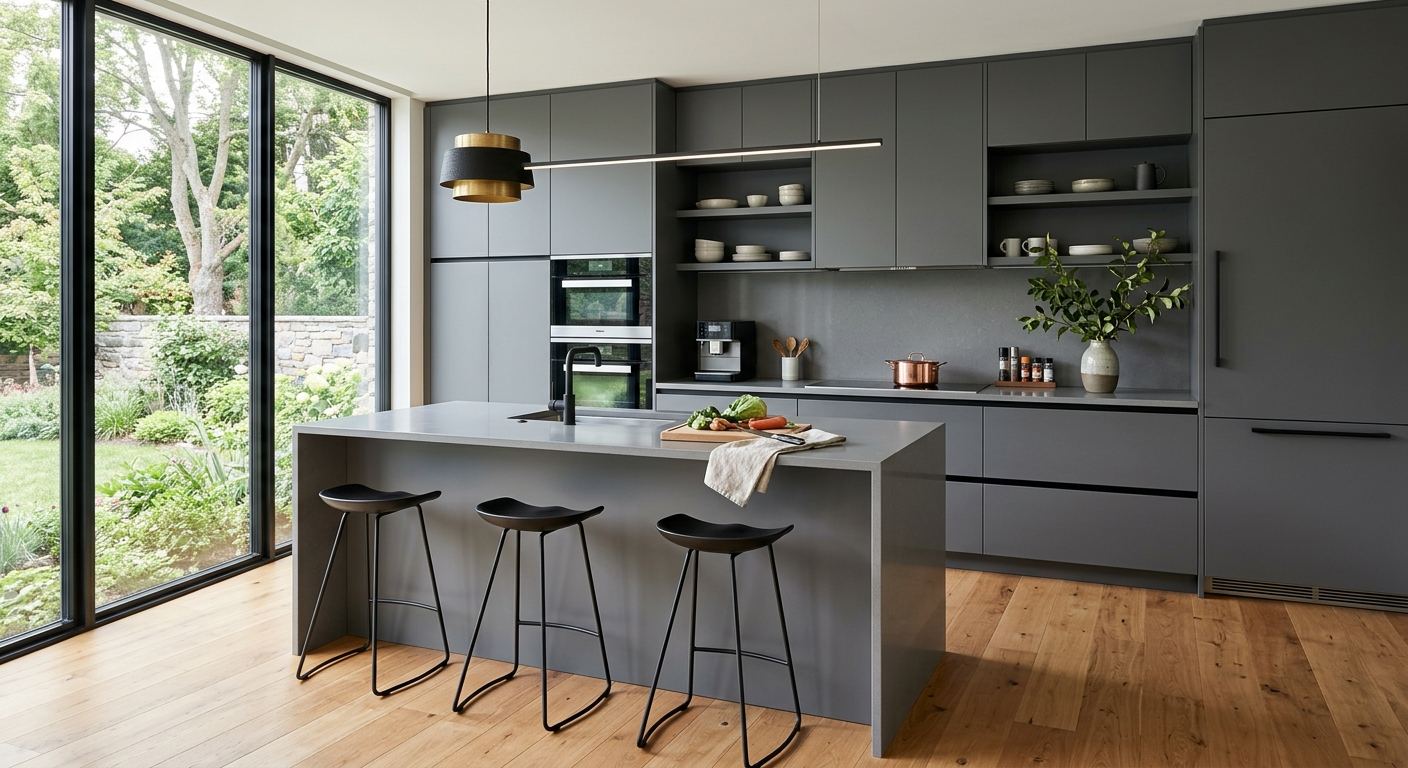
Kitchen renovation options and costs in Oyster River
In Oyster River, British Columbia, homeowners usually start their kitchen decisions by picking the scope—because a refresh and a full rebuild can land in completely different cost brackets. Oyster River is a small community (population 1,500, per Statistics Canada, 2021 Census), so the most common upgrades tend to be the practical ones: clean lines, durable surfaces, and layouts that work for everyday cooking. In the broader Lower Mainland–Southwest market, demand is also shaped by where families can afford higher finish expectations and resale confidence, and that shows up in the way many renovations budget for semi-custom cabinetry and premium counters when the total project value supports it. (Statistics Canada, 2021 Census)
Pricing across the Lower Mainland–Southwest is driven more by home value, buyer expectations, and finish level than by climate alone. While coastal conditions can increase exposure to moisture and salt-air residues, most cost differences come from material tiers and complexity: semi-custom cabinetry packages, quartz/stone countertops, island builds, and any plumbing or electrical relocations. Contractor availability is generally strong in the Lower Mainland, but Oyster River projects often involve scheduling around delivery lead times for cabinetry and stone—especially during peak renovation months.
If you want the fastest path to an updated look, many homeowners in the Oyster River area focus on cosmetic refresh work—new hardware, paint, and appliances—before deciding whether they want to change cabinets, counters, or the layout. From there, the next step is typically a mid-range full renovation with new cabinets, counters, a sink, and tile, followed by high-end rebuilds with custom millwork and islands where the footprint allows.
Use the table below as a starting point for comparing quotes and timelines.
| Renovation Tier |
What's Included |
Typical Duration |
Price Range |
| Cosmetic refresh (paint, hardware, new appliances only) |
Cabinet/trim paint, new pulls and hinges, new appliance set, basic caulking/finish touch-ups |
1–3 weeks |
$8,000–$18,000 |
| Mid-range full renovation (new cabinets, counters, sink, tile) |
New cabinetry (stock or semi-custom), countertop replacement, sink and faucet, backsplash tile, new flooring tie-in and trim |
3–8 weeks |
$40,000–$85,000 |
| High-end full renovation (custom cabinets, stone counters, island) |
Custom cabinets, stone or quartz counters, upgraded hardware and lighting, island (sometimes with added electrical/plumbing), feature backsplash |
6–14 weeks |
$85,000–$120,000 |
| Cabinet refacing only (new doors + drawer fronts, same boxes) |
Replace doors/drawer fronts, reface visible surfaces, install updated hardware, polish/repair minor surface wear |
2–5 weeks |
$8,000–$28,000 |
| Countertop swap only (laminate to quartz or stone) |
Remove old top, template, install new countertop and sink cut-outs (if applicable), seal/finish edges |
1–2 weeks |
$3,000–$12,000 |
| Backsplash tile installation only |
Surface prep, tile installation, grout/seal, matching edge trim, caulking to adjacent surfaces |
3–7 days |
$1,500–$6,000 |
Prices are estimates only and vary by project scope, site access and material selection.
What affects the price of kitchen renovation in Oyster River
For the same kitchen size in the Lower Mainland–Southwest versus other British Columbia markets, quotes can easily differ by 30–50%. The main reason isn’t usually climate—it’s what the buyer market expects and what the renovation can recoup at resale. In higher-value areas around the Lower Mainland, many owners choose quartz or stone counters, semi-custom or custom cabinetry, and upgraded hardware because those upgrades align with how homes are marketed when they come time to sell. In more modest-price pockets, laminate and stock cabinets remain common because they deliver a stronger cost-to-value ratio.
In Oyster River, layout changes are typically the most unpredictable cost item regardless of finish tier. Moving plumbing or gas hookups, adding an island, or removing a wall can trigger additional framing, subfloor work, ventilation adjustments, and electrical changes. Even if you choose the “mid-range” tier (for example, a typical mid-range full renovation band of $40,000–$85,000), a couple of layout moves can push the project toward the upper end once trades and materials scale up.
Two local examples that commonly shift costs here: older homes near the community core often have awkward plumbing runs and dated rough-ins, which can add labour for re-routing supply/drain lines; and kitchens with exterior-adjacent walls can show moisture-related wear over time, making prep and substrate repair (before tile and new countertops) more involved. On the other hand, if your existing cabinet boxes are sound and your layout stays put, a countertop-only swap can be a more controlled budget play—often landing in the $3,000–$12,000 range depending on cut-outs and edge detail.
That’s why the most useful comparisons between quotes come from matching scope line-by-line, not just comparing the final number.
| Price Factor |
Why It Matters |
Cost Impact |
| Cabinet tier — stock vs. semi-custom vs. fully custom millwork |
Material quality, finish options, and fit/adjustment requirements change significantly by tier |
~$10,000–$45,000 swing within full renovations |
| Countertop material — laminate vs. quartz vs. granite vs. stone |
Installed cost, edge complexity, and sink/cooktop cut-out effort vary by material |
~$2,500–$20,000 difference depending on material and complexity |
| Layout change — wall removal, island add, plumbing/gas move |
Re-framing, ventilation/electrical/plumbing rework adds labour and inspections |
~$5,000–$40,000+ depending on how much is moved |
| Appliance package tier — builder vs. mid-range vs. pro-grade |
Pricing jumps quickly for ventilation performance, built-in integration, and finishes |
~$1,500–$12,000+ impact |
| Flooring — refinish existing vs. full replacement |
Existing subfloor condition dictates prep time and demo/disposal needs |
~$2,000–$15,000 swing |
| Backsplash — ceramic tile vs. marble vs. full-height slab |
Sheeting, polishing, and substrate flatness requirements change with finish |
~$1,000–$10,000+ difference |
| Electrical — new circuits for island, under-cabinet lighting |
Electrical scope affects permit work, routing, and fixture install labour |
~$800–$8,000+ added cost |
| Permit fees and licensed trade requirements |
Permits and licensed trades add cost but protect safety and compliance |
~$500–$5,000+ depending on scope |
Permits & regulations in British Columbia
In British Columbia, not every kitchen change needs a permit. Swapping cabinets, paint, hardware, and doing a countertop change typically does not require a permit as long as you are not changing plumbing, moving drains/supply lines, relocating gas appliances, or altering electrical service. Likewise, a backsplash tile installation and appliance swaps are usually permit-free. However, permits and licensed trades are required when you change the systems, not just the surfaces.
Work that typically does require a permit includes: moving plumbing supply or drain lines (including relocating a sink), relocating a gas line or modifying a gas stove or range hood with gas, removing a load-bearing wall, adding/removing structural support, and adding new electrical circuits (common when installing an island with outlets or hardwired lighting). Electrical and gas work must be completed by properly licensed professionals, and inspections are part of the process.
Step-by-step for Oyster River homeowners: (1) Ask for the contractor’s licence numbers and trade credentials relevant to the scope (gas fitter for gas work; electrician for electrical). (2) Request a current certificate of insurance and confirm coverage limits for your project. (3) For workers’ compensation coverage, ask for proof consistent with provincial coverage requirements (commonly provided through documentation your contractor can supply). (4) Only after that, confirm with the contractor who is pulling permits and when inspections are scheduled—this must be clearly stated in your contract.
If a contractor suggests skipping permits to save time on the systems, that’s a warning sign. You want the safety and documentation handled correctly from the start.
Cabinets, countertops and layout decisions in Oyster River
In an Oyster River kitchen renovation, the three decisions that most strongly affect both day-to-day satisfaction and resale appeal are: (1) cabinet tier, (2) countertop material, and (3) layout changes. Start with cabinet tier. Stock cabinets are the fastest and cheapest because they’re standardized and easier to order quickly. Semi-custom cabinets are usually the sweet spot in the Lower Mainland–Southwest: more colour/door options, better internal organization, and better tailoring without fully custom lead times. Custom cabinets deliver the best fit, including unusual alcoves and built-ins, but the cost rises quickly and lead times can extend.
Next is the countertop. Laminate can look modern at a lower budget, but it’s less forgiving for deep scratches and heat. Quartz is usually the best “busy home” choice in British Columbia because it resists stains and holds up well to daily cooking; granite and other natural stones bring unique character but often need more careful sealing and maintenance. If you’re aiming for an island, consider how seam placement and edge style affect both durability and the installed price.
Finally, layout. In Oyster River homes with tighter footprints, opening up to an adjacent space can be justified if it improves traffic flow and adds seating value. But moving plumbing or gas is where budgets change. For example, if you stay in your current footprint, a countertop upgrade can remain around $3,000–$12,000. If you relocate a sink and build an island with power, the project often shifts into a full renovation tier rather than a simple refresh, because electrical and plumbing rework plus inspections typically add thousands.
Lower Mainland–Southwest resale buyers tend to expect clean cabinetry lines and durable, modern counters—so your spend should follow the upgrades that buyers notice first.
| Option |
Durability |
Maintenance |
Best For |
Price Range |
| Stock cabinets (big-box) |
Good for everyday use; limited customization can affect long-term fit |
Low—regular cleaning; careful with moisture at seams |
Budget-first refreshes or when layout stays unchanged |
$15,000–$35,000 |
| Semi-custom cabinets (local dealer) |
Very durable with better internal design and fit to the room |
Low—keep hardware tightened; wipe moisture promptly |
Most common Oyster River remodel targets mid-range full renovations |
$25,000–$60,000 |
| Custom cabinets (local millwork shop) |
Excellent fit and build quality; best for complex spaces |
Low—still requires routine cleaning and moisture management |
High-end renovations with islands, specialty storage, and unusual dimensions |
$50,000–$95,000 |
| Laminate countertop |
Moderate; can chip at edges and mark more easily with heavy use |
Easy cleaning; avoid hot pans directly and protect seams |
Cosmetic updates and tighter budgets where appearance matters most |
$2,000–$4,500 |
| Quartz engineered countertop |
High durability; resistant to staining and everyday impacts |
Low—simple wipe-down; heat protection still recommended |
Busy households and resale-oriented upgrades in British Columbia |
$4,500–$9,500 |
| Granite / natural stone countertop |
Very durable; surface hardness varies by stone selection |
Moderate—often benefits from periodic sealing and careful maintenance |
Owners wanting natural variation and a premium, timeless look |
$7,000–$12,000 |
| Butcher block countertop |
Good durability; can be dented but can be sanded/refinished |
Moderate to high—oiling/conditioning and drying needed |
Casual kitchens and under-lighting designs; great for entertaining styles |
$3,500–$7,500 |
| Marble countertop |
Premium look; softer and more stain-prone without diligent care |
Higher maintenance—requires sealing and prompt stain management |
Low-to-moderate cooking intensity and strong design-first budgets |
$8,000–$14,000 |
How to choose a kitchen renovation contractor in Oyster River
Choosing a contractor in Oyster River (and across the Lower Mainland–Southwest) comes down to verifying credentials, getting comparable quotes, and locking down scope details. Start with British Columbia licensing: ask which trades are doing gas work (gas fitter), electrical work (electrician), and any structural or framing scope that may require additional compliance. Then check liability insurance—your contractor should provide a certificate of insurance that matches your project and shows they can cover accidental damage. For workers’ compensation coverage, ask for proof your contractor has coverage consistent with provincial requirements; don’t rely on verbal assurances.
Next, request 2–3 itemised written quotes. You want a line-by-line breakdown separating labour, materials, cabinetry supply, countertop fabrication/installation, tile work, electrical, plumbing, and waste/disposal. Avoid “lump sum” quotes that don’t list what’s included. Read the scope carefully: does the quote include permit pulling and inspections where needed? Is demolition and disposal included, or will you be paying extra? Does the installer include template and seam details for counters?
Warranty matters too. Ask for the workmanship warranty length in writing and whether it covers cabinets, counters, tile, and any install-related issues. Confirm the product/manufacturer warranty terms and whether they’re transferable if you sell the home. For payment schedules, keep it conservative—never more than 10–15% upfront, and use a holdback until key milestones and final walkthrough are complete.
Finally, insist on timeline clarity. Get a start date and a completion estimate in writing, including expected lead times for cabinets and stone; in this region, material lead can be a major driver of schedule changes.
- Provide their BC trade registration details for the work you’re actually doing (gas, electrical, general contractor scope).
- Share a current certificate of liability insurance before you sign.
- Confirm workers’ compensation coverage documents consistent with provincial expectations.
- Use itemised quotes with labour and materials separated (no “all-in” without inclusions).
- Clarify who pulls permits and who pays for inspection fees where required.
- Confirm demolition, drywall patching, and disposal are included (or priced separately).
- Ask who verifies existing conditions (subfloor level, water shutoff access, venting routes).
- Get cabinet and countertop selections listed by product line, thickness, and finish.
- Confirm countertop template timing and what happens if sizes vary.
- Ask for tile underlayment and waterproofing approach, especially near sinks and dishwashers.
- Lock in delivery/installation dates with a realistic buffer for cabinet and stone leads.
- Review warranty terms in writing and confirm what’s covered under workmanship vs product.
Red flags to watch for in Oyster River: (1) they won’t show proof of insurance or trade licences when asked; (2) they pressure you into signing without a detailed scope and inclusions list; (3) they promise to “skip permits” for plumbing/electrical/gas changes; (4) they ask for large upfront payments beyond 10–15%; and (5) they can’t clearly explain countertop template timing, sink cut-outs, and backsplash material thickness.
Frequently asked questions — kitchen renovation in Oyster River
What's the most popular kitchen style in Oyster River right now?
In Oyster River and the surrounding Lower Mainland–Southwest area, the most requested style is a bright, clean contemporary look—typically slab or shaker-style fronts in warm greys, soft whites, and natural wood tones, paired with quartz counters and a simple, modern backsplash. Homeowners often choose this because it reads well in listings and photographs, and quartz performs reliably in day-to-day cooking. If you’re aiming for a practical budget, many projects land in the mid-range full renovation band of $40,000–$85,000, which usually supports semi-custom cabinet options, a durable counter, and a tasteful backsplash. In older homes, contractors also tend to modernize lighting and hardware so the kitchen feels updated without changing the entire footprint immediately.
How do I know if I need to update my kitchen plumbing in Oyster River?
You’ll usually need to update plumbing when there’s a hidden reliability issue, not simply because you’re replacing cabinets. Common triggers include leaks under the sink, frequent dishwasher drainage problems, slow drains, or signs of corrosion at supply lines. In Oyster River’s older housing stock, it’s also common to find dated shutoffs or awkward rough-in locations that complicate a sink relocation. If your renovation plan includes moving the sink, changing the dishwasher location, or upgrading to a new faucet with different plumbing needs, expect additional labour and material. Even when you’re staying within a countertop swap tier (often $3,000–$12,000), plumbing checks are still smart so the new sink doesn’t expose problems later. A good contractor will assess shutoff access and drain routing before finalizing the design.
What is the difference between a galley and open-concept kitchen?
A galley kitchen is typically a narrow corridor layout with counters on one or both sides and limited room for circulation. An open-concept kitchen removes barriers so the kitchen connects to dining and/or living spaces, improving sightlines and traffic flow. In Oyster River and the Lower Mainland–Southwest market, open-concept plans are often attractive because they match how many buyers describe “livability,” but they can cost more when it involves removing a wall, updating ventilation, and adding electrical or lighting for the new space. If you change plumbing/gas lines to support a new island or moved sink, the scope can shift beyond a cosmetic refresh quickly. A galley renovation can still feel modern with strong cabinet organization, good lighting, and slim-profile countertops, often keeping costs closer to mid-range bands rather than high-end rebuild budgets.
How do I get accurate kitchen renovation quotes in Oyster River?
Accurate quotes come from clear scope and comparable selections. Start by building a checklist: whether you’re doing a cosmetic refresh, a mid-range full renovation, or a higher-end rebuild; what you’re replacing (cabinets, countertops, tile, appliances); and whether you’re changing the layout. Then request itemised quotes with labour and materials separated so you can compare apples-to-apples—for example, countertop supply and install shouldn’t be bundled so loosely that it’s impossible to see what’s driving the number. Ask if permit pulling is included for plumbing/electrical/gas work (in British Columbia, system changes generally require permits and licensed trades). Finally, provide the contractor with photos, rough measurements, and your intended material tier so delivery lead times and cut-out complexity are accounted for. If your quote is only a single number without inclusions, it’s hard to trust it for a project in the $40,000–$85,000 band.
What's the best countertop material for a busy Oyster River kitchen?
For most busy Oyster River households, quartz is the best balance of durability, stain resistance, and low maintenance. It stands up well to daily cooking, wiping, and frequent use, and it’s a common choice for renovations targeting a modern look in the Lower Mainland–Southwest resale market. Laminate can work for lighter-use kitchens and tighter budgets, but it’s more prone to visible wear at edges. Natural stones like granite and marble can look exceptional, but marble is typically higher maintenance due to staining risk and sealing expectations; granite’s performance varies by stone selection and maintenance habits. If you want a controlled upgrade path without changing cabinets, countertop-only projects often land around $3,000–$12,000, and quartz tends to be a reliable mid-to-upper option within that range depending on thickness, edge profile, and the number of cut-outs.
How do I add an island to my Oyster River kitchen?
Adding an island is less about the island itself and more about how the new footprint supports circulation and services. First, confirm space: you generally need enough room for comfortable walking paths between the island and existing cabinetry. Next, decide whether the island will include a sink, dishwasher, or cooktop—each option can require additional plumbing/electrical work and, in British Columbia, may trigger permits and licensed trade involvement. In many Oyster River projects, the island is positioned to preserve an efficient work triangle while making sure there’s power for outlets or under-cabinet lighting. If you’re moving plumbing or gas, costs can escalate quickly compared to a simple refresh, which is why some homeowners start with a mid-range renovation plan and only upgrade to an island when they’re ready for a full scope. A well-planned island is often a high-impact feature, but it should be designed around your actual rough-in locations and traffic flow.