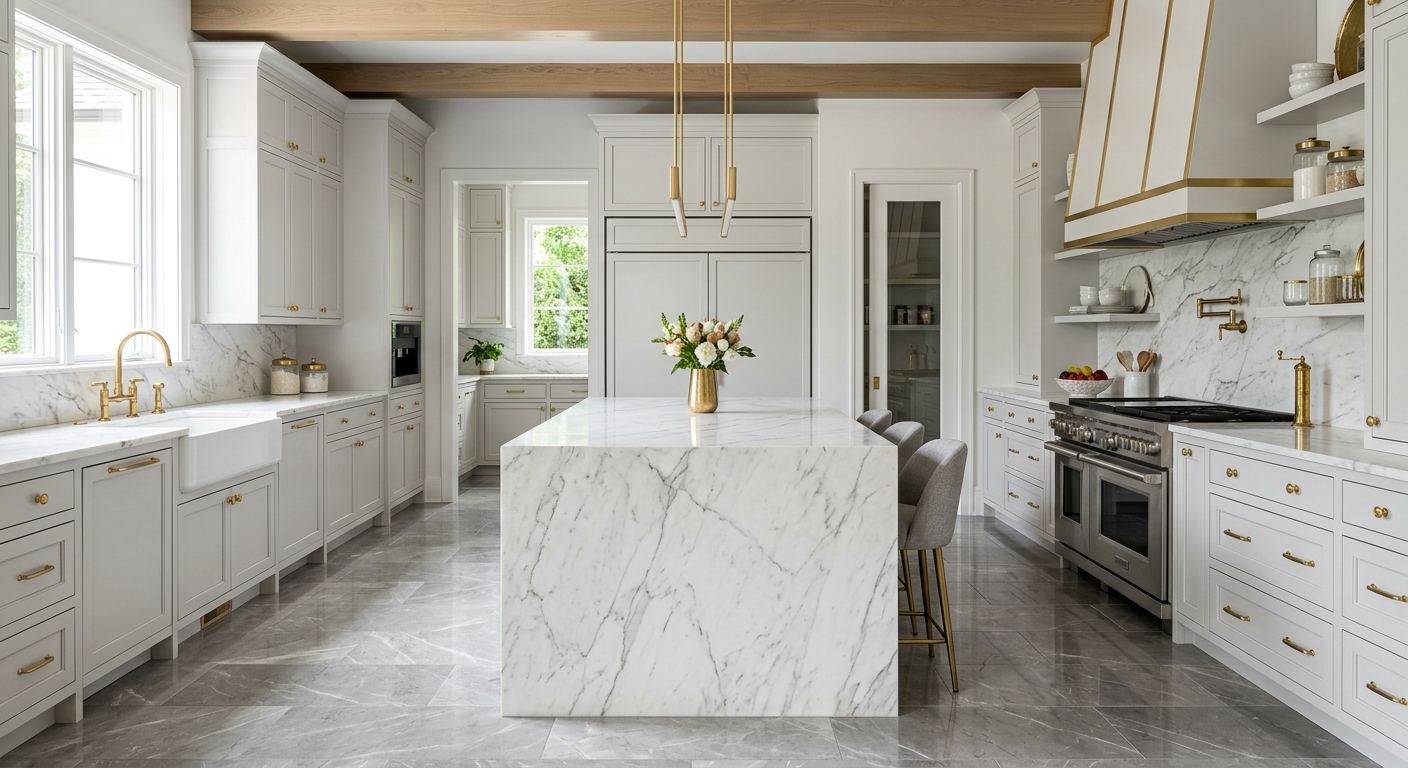
Kitchen renovation options and costs in Lions Bay
Lions Bay is a small, high-expectation market, and kitchen renovations there tend to price closer to the premium end of British Columbia because homeowners often view the kitchen as a long-term resale upgrade. With a median household income around $140,000 (Statistics Canada, 2021 Census) and a homeowner-heavy mix—445 homeowner households, with 88.1% of households owning (Statistics Canada, 2021 Census)—it’s common to see scopes that include better finishes, quieter hardware, and more design-led layouts than you’d find in lower-income regions. In the Lower Mainland–Southwest, pricing is driven more by home value, income, and expected finish level than by climate mechanics. That said, Lions Bay’s older housing stock (65.3% built before 1981) can add hidden labour: older venting runs, inconsistent subfloor flatness, and varied wiring routes can increase the time trades spend troubleshooting before cabinets go in.
Contractor availability and project sequencing also matter. Around the Lower Mainland–Southwest, there’s steady demand for cabinetry, countertop fabrication, and tile work, but scheduling can stretch when multiple homeowners choose the same seasonal window (late spring through early fall). Expect the biggest swings in quote totals when you move plumbing or gas, change layout, or upgrade cabinet tier and countertop material—those choices affect both material cost and labour complexity. For example, a cosmetic refresh can stay relatively lean, while a full remodel with an island and stone counters rises quickly. If you’re planning around the neighbourhoods and busy access points toward the village core, confirm site access and disposal timing early—these can shift the labour hours even when the design looks straightforward.
Below is a practical comparison of common renovation tiers to help you budget before you request quotes.
| Renovation Tier |
What's Included |
Typical Duration |
Price Range |
| Cosmetic refresh (paint, hardware, new appliances only) |
Cabinet paint or re-finish, new pulls/knobs, appliance swap (fridge/range/dishwasher), new sink accessories where plumbing is unchanged, touch-up finishes |
1–2 weeks |
$8,000–$22,000 |
| Mid-range full renovation (new cabinets, counters, sink, tile) |
New semi-custom or quality stock cabinets, countertop installation (quartz or similar), sink and faucet, backsplash tile, flooring refinishes or partial replacement, basic electrical allowance, disposal and haul-away |
3–6 weeks |
$40,000–$75,000 |
| High-end full renovation (custom cabinets, stone counters, island) |
Fully custom millwork, higher-end stone/quartz selection, island construction with enhanced finishes, upgraded hardware/lighting, extended backsplash, more complex layout changes, detailed trim and finishing |
6–10 weeks |
$85,000–$120,000 |
| Cabinet refacing only (new doors + drawer fronts, same boxes) |
Refaced doors/drawer fronts, hardware upgrades, new end panels (where needed), optional paint/finish on existing boxes, new mouldings, minimal disruption |
1–3 weeks |
$8,000–$35,000 |
| Countertop swap only (laminate to quartz or stone) |
Removal of existing laminate (and disposal), template, quartz or stone install, new sink cut-out adjustments if needed, caulking, basic sealant work |
5–10 business days |
$3,500–$12,000 |
| Backsplash tile installation only |
Surface prep, tile install around outlets, edging and finishing, grout/sealant where appropriate |
3–7 days |
$1,500–$6,000 |
Prices are estimates only and vary by project scope, site access and material selection.
What affects the price of kitchen renovation in Lions Bay
In the Lower Mainland–Southwest, it’s not unusual to see the same kitchen plan come back 30–50% apart between quotes from different contractors and finish tiers. The biggest driver is not weather—it’s market expectations. Lions Bay homeowners typically have the income to choose mid-to-premium finishes, and those choices carry through to cabinet styling, countertop material, and hardware. In high-value Lower Mainland–Southwest markets, many buyers expect quartz or stone counters and semi-custom cabinetry, because those upgrades are easier to recover on resale. In more modest segments of British Columbia, laminate and stock cabinets often dominate since the renovation cost needs to stay closer to a budget-friendly ROI target.
Layout changes create the most unpredictable costs regardless of finish. Removing a wall, adding an island, or moving a gas line or plumbing run changes not only the trade labour, but also how many trades need to visit, patch walls, and coordinate inspections. For Lions Bay homes built before 1981 (65.3%—Statistics Canada, 2021 Census), expect older framing and sometimes inconsistent electrical routing, which can slow down installs and add “prep” labour before cabinets are level and secure.
Here are concrete examples that regularly move numbers up or down in Lions Bay: (1) If your existing venting for a range hood doesn’t line up with the desired hood location, you can add days and patching around soffits; (2) If you’re upgrading from laminate to quartz counters—often a jump within the $3,000–$12,000 band—your sink cut-out, under-mount clips, and backsplash height details can add labour even when the countertop looks like a direct swap; (3) If you keep the cabinet footprint but upgrade doors via refacing, you can stay within a $8,000–$50,000 cabinet-focused band, whereas opening up walls for a full renovation pushes you into mid-range full renovation totals ($40,000–$120,000) quickly.
Bottom line: climate matters less than market finish expectations, but housing age and what you change in the walls is often where costs swing most in Lions Bay.
| Price Factor |
Why It Matters |
Cost Impact |
| Cabinet tier — stock vs. semi-custom vs. fully custom millwork |
Differences in materials, soft-close hardware, internal construction, tolerances, and how well it fits the room without modification |
Typically adds or removes tens of thousands; cabinet tier can swing total project cost by ~20%–40% on full remodels |
| Countertop material — laminate vs. quartz vs. granite vs. stone |
Material price and fabrication complexity, plus weight/handling and edge profile choices |
Countertop-only swaps often land in $3,000–$12,000, while higher stone selections can push well toward the upper end |
| Layout change — wall removal, island add, plumbing/gas move |
More demolition, framing, patching, venting changes, trade coordination, and potential inspection requirements |
Often the largest variable; layout moves commonly drive the biggest unplanned budget increases |
| Appliance package tier — builder vs. mid-range vs. pro-grade |
Electrical and venting needs, trim kits, dimensions, and finish matching to the cabinetry |
Can shift appliance budget by several thousand and adds labour if hookups don’t match existing rough-ins |
| Flooring — refinish existing vs. full replacement |
Kitchen renovations often expose subfloor; new flooring adds underlayment, transition strips, and extra install time |
Refinishing can save both material and demolition time; full replacement usually adds cost and schedule risk |
| Backsplash — ceramic tile vs. marble vs. full-height slab |
Tile type affects labour time, pattern matching, and whether thinset/sealer/leveling work is extensive |
Backsplashes often range from $1,500–$6,000; premium surfaces push toward the top |
| Electrical — new circuits for island, under-cabinet lighting |
Additional circuits increase labour and inspection requirements; lighting requires cleaner detailing and wire routing |
May add multiple thousand dollars depending on how much is new work |
| Permit fees and licensed trade requirements |
Work requiring licensed trades drives both direct costs and scheduling; inspections can add time if corrections are needed |
Not always the biggest dollar line, but it can affect schedule and total labour intensity |
Permits & regulations in British Columbia
In British Columbia, some kitchen updates are straightforward from a permit standpoint, while others require permits and licensed trades. A cabinet swap (including cabinet refacing or replacing doors/drawer fronts) and a countertop replacement typically do not require permits, as long as you’re not changing plumbing, gas lines, structural elements, or electrical systems. That’s why many “refresh” projects can move quickly—especially when you keep the existing sink and range positions.
Where permits are commonly required is when you change the services in or behind the walls. For Lions Bay homeowners, the work that typically needs permits and licensed trades includes moving plumbing supply/drain lines, relocating a gas stove/range, installing or relocating a range hood where gas venting or ducting changes are involved, removing a load-bearing wall, adding new electrical circuits (for an island, new outlets, or significant lighting upgrades), and any electrical work that goes beyond simple like-for-like replacement.
To verify your contractor, ask for: (1) their proof of British Columbia licensing (for the trades involved—plumbing/gas/electrical as applicable); (2) liability insurance certificate; and (3) coverage documentation for workers. In BC, electrical and gas work must be done by the appropriate licensed contractor, and inspections are part of that process. Before signing, confirm permit responsibility in writing—who pulls the permit, who schedules inspections, and what trade is responsible.
Step-by-step: search the online trade licence registry for the contractor’s name, request an up-to-date certificate of insurance, then ask for a clearance/coverage letter or documentation demonstrating worker coverage. If anything is missing or hard to provide, that’s a warning sign—especially for projects involving gas or electrical additions.
Cabinets, countertops and layout decisions in Lions Bay
For a Lions Bay kitchen renovation, your biggest “decision impact” usually comes from choosing (1) cabinet tier, (2) countertop material, and (3) whether you change layout. These choices also line up with what Lower Mainland–Southwest buyers tend to expect at different price points. In a market where many homes are older (65.3% built before 1981—Statistics Canada, 2021 Census), the practical fit matters: stock cabinets can be fast, but you may pay for extra adjustments if the room is out of square. Semi-custom cabinets tend to be the most popular mid-range balance—good fit, stronger hardware options, and a more current look. Custom cabinets are the premium route when you want made-to-fit millwork, integrated panels, and a layout that optimizes storage in tight corners.
Countertops are where durability and maintenance show up daily. Laminate can look great initially, but it’s more prone to wear around sinks and seams over time. Quartz engineered countertops offer a strong compromise—resistant to staining and generally easier to maintain than natural stone. Granite/natural stone can be durable but may require more careful sealing and maintenance. Butcher block can add warmth, but it needs regular oiling and thoughtful care near moisture sources. Marble offers a luxury look, though it’s more sensitive to etching and staining in a busy kitchen.
Layout changes are the “justified cost” lever when space gain is real. Adding an island can improve workflow, but if you’re also moving plumbing or gas, the project can quickly move from a mid-range renovation into full remodel territory. For example, upgrading countertops from laminate to quartz can start within the $3,000–$12,000 countertop installation band; if your existing boxes are solid, that upgrade can be a smart value move. Conversely, opening walls to move services can be the budget-killer even when you keep the same cabinet tier.
Because Lions Bay sits in the Lower Mainland–Southwest premium finish ecosystem, buyers often notice the “front-of-house” items—cabinet style and countertop material—so plan your spending where it improves both daily use and resale appeal.
| Option |
Durability |
Maintenance |
Best For |
Price Range |
| Stock cabinets (big-box) |
Good for straight layouts; durability depends on construction and hardware choice |
Low daily maintenance; may require filler/modification work for older homes |
Refresh budgets and quick timelines with minimal layout changes |
$15,000–$35,000 |
| Semi-custom cabinets (local dealer) |
Very solid everyday durability; better fit and upgraded internals for storage |
Low maintenance; more options for soft-close, organizers, and better door alignment |
Most Lions Bay renovations aiming for a modern look without fully custom pricing |
$25,000–$60,000 |
| Custom cabinets (local millwork shop) |
Highest durability and precision; best for complex layouts and legacy space constraints |
Low day-to-day care; requires correct installation to maximize longevity |
Design-led kitchens, integrated details, and made-to-fit storage solutions |
$45,000–$90,000 |
| Laminate countertop |
Decent for budget use; seams and edges can show wear over time |
Wipe clean; avoid heavy impact at seams; repairs may be limited |
Keeping costs down while updating appearance |
$3,000–$6,000 |
| Quartz engineered countertop |
High durability; good resistance to staining and everyday wear |
Minimal sealing; clean with standard non-abrasive products |
Busy households wanting a premium look with practical maintenance |
$6,000–$10,500 |
| Granite / natural stone countertop |
Very durable with proper care; varies by stone type and finish |
Often benefits from periodic sealing; wipe up spills promptly |
Homeowners who want natural variation and a classic premium profile |
$7,000–$12,000 |
| Butcher block countertop |
Durable with care; can dent or scorch if abused |
Regular oiling; protect from prolonged moisture exposure near sinks |
Warm, traditional kitchens and lighter-heat cooking styles |
$4,500–$9,000 |
| Marble countertop |
Beautiful but softer; can scratch and etch with acids |
More ongoing care; requires gentle cleaners and quick spill response |
Luxury aesthetics where the homeowner is willing to maintain the surface |
$9,000–$15,000 |
How to choose a kitchen renovation contractor in Lions Bay
Choosing the right contractor is what protects your schedule and your finish quality in Lions Bay’s Lower Mainland–Southwest market. Start by verifying British Columbia trade licensing for the work involved: gas work must be completed by a licensed gas fitter, electrical by a licensed electrician, and any plumbing-related service changes by the correct licensed trade. Next, verify liability insurance—ask for an up-to-date certificate of insurance naming the project and insured parties where applicable. For worker coverage, request documentation showing worker coverage and related clearances used by trades to operate and access job sites.
Then get 2–3 itemised written quotes. “Itemised” means you should see labour and materials broken out (cabinet install labour separate from cabinet material allowances, countertop fabrication separate from installation, tile labour separate from tile supply). Avoid lump-sum-only bids unless the scope is very tight and you have clearly defined allowances. Read the scope line-by-line: what’s excluded (for example, drywall patching beyond a set limit, disposal/hauling, specialty moulding, or electrical upgrades)? Confirm whether permits are included and who pulls them, and whether disposal and protection of floors/walls during demolition are part of the price.
For warranty, ask for: the workmanship warranty length and what it covers, the manufacturer warranty on cabinets/countertops (and whether it transfers if you sell), and any conditions that void coverage. Payment schedules should be conservative—never pay more than 10–15% upfront; hold back a portion until key milestones are complete. Finally, insist on a written timeline with start date and completion estimate, plus how delays from fabrication (cabinet and countertop lead times) are handled.
- Ask for BC licence proof tied to the specific trades on your scope (gas, electrical, plumbing).
- Request a current certificate of liability insurance before work starts.
- Confirm worker coverage documentation/clearance for your contractor’s team and subcontractors.
- Get 2–3 itemised quotes with labour and materials broken out, not only a single total.
- Verify what demolition includes: wall opening limits, drywall patch level, and disposal/hauling.
- Check whether permit pulling and inspection scheduling are included and who is responsible.
- Confirm inclusions for backsplash (prep, edge details, outlet covers, waterproofing where needed).
- Ask how cabinet levelling is handled on older floors/walls and how out-of-square rooms are addressed.
- Request proof of cabinet and countertop measurements process (template dates for stone/quartz).
- Ask about warranty transferability to future owners if you sell.
- Keep payment staged: small deposit, progress payments, and a holdback until punch list completion.
- Get a written schedule showing lead times for cabinets and countertops and what happens if they slip.
Red flags to watch for in Lions Bay: (1) quotes that don’t list allowances clearly (you’ll pay for “extras” later), (2) refusing to provide insurance/licensing documentation, (3) lump-sum bids with vague exclusions like “as required” without definitions, (4) asking for large upfront payments beyond 10–15%, and (5) no clear timeline for countertop templating and cabinet install readiness—fabrication delays will impact your start date and finish date.
Frequently asked questions — kitchen renovation in Lions Bay
Can I move my kitchen sink or stove?
Yes, you can move a kitchen sink or stove in Lions Bay, but the permit and trade requirements depend on what exactly changes. If you move plumbing supply/drain lines, you’ll typically need permits and licensed plumbing work, plus coordinated scheduling for inspections. If you relocate a gas stove or make changes to how the range hood vents, gas work must be performed by a licensed gas fitter and often needs permitting and inspection. From a cost standpoint, moving services is usually where budget jumps most—often more than changing cabinet tier. If you want to control cost, consider keeping the sink footprint and focusing upgrades on cabinets, countertops, and backsplash. If you are changing services anyway, ask your contractor to show the routing plan and include it in the itemised quote.
What's the most cost-effective kitchen upgrade?
For many Lions Bay homeowners, the most cost-effective upgrade is the one that delivers the biggest visual impact with minimal disruption. Common “high impact, lower disruption” options include a backsplash tile installation (often $1,500–$6,000) and a countertop swap that can bring the kitchen into a more modern look—especially when you keep the layout and don’t move plumbing. If your cabinets are in usable condition, cabinet refacing can also be a smart middle ground, frequently landing in a $8,000–$50,000 band depending on the design and hardware. Because 65.3% of Lions Bay homes were built before 1981 (Statistics Canada, 2021 Census), keeping the footprint can reduce the chances of uncovering surprises behind walls. In general, focus upgrades on cabinets/countertops and finish details before you pay for structural or service changes.
Custom vs stock cabinets — is custom worth it?
Custom cabinets can be worth it in Lions Bay when the room layout is challenging, you want a very specific storage plan, or you’re aiming for a design-led look that stock units can’t match. However, if your kitchen footprint is straightforward and your goal is to update quickly, semi-custom or quality stock can deliver strong results for less. Stock is typically the fastest and cheapest route, but older home conditions—especially with 65.3% of homes built before 1981 (Statistics Canada, 2021 Census)—can increase adjustment labour for fillers and fit. Semi-custom often balances fit and price, while custom tends to shine when you’re planning integrated features, unique dimensions, or island storage. Budget-wise, a full renovation with premium custom and stone can move into the $85,000–$120,000 range, while a mid-range full renovation can land around $40,000–$75,000. The “worth it” test is whether custom changes how you use the kitchen every day.
How do I choose a kitchen contractor in Lions Bay?
Start by verifying licensing and coverage. In British Columbia, confirm the correct licences for the trades involved (gas work with a licensed gas fitter; electrical with a licensed electrician). Ask for a current certificate of liability insurance and worker coverage documentation/clearances for the crew. Next, request 2–3 itemised written quotes with labour and materials broken out; avoid bids that only provide one lump sum without defining inclusions and exclusions like disposal, drywall patching limits, and whether permits are included. Read the warranty terms: workmanship warranty length, product/manufacturer warranty, and whether it transfers if you sell. Keep payment staged—never more than 10–15% upfront—and ensure there’s a clear timeline in writing, including cabinet delivery and countertop templating dates.
What order do kitchen renovation steps happen in?
Typical kitchen renovation order in Lions Bay goes like this: design and measurements, then demolition and rough-in work (electrical, plumbing, and gas changes where applicable), then inspections for any permitted work. After rough-ins, drywall patching and surface prep happen so cabinets sit level and secure. Next comes cabinet installation, then countertop templating (for quartz/stone) and installation. Backsplash tile and trim details follow, along with flooring final touches and finishing work like painting and caulking. Appliances are installed near the end when hookups are verified. Because many jobs rely on countertop fabrication and cabinet lead times, your contractor should schedule templating so you don’t get cabinet installed and then wait unnecessarily. If your scope is a refresh (paint/hardware/appliance only), the sequence is faster, typically weeks rather than multiple months.
Can I live at home during a kitchen renovation in Lions Bay?
Often yes, but it depends on how disruptive your scope is and how many service trades are involved. In Lions Bay, many homeowners remain in the home during mid-range renovations when there’s a clear plan for dust control, door protection, and daily cleanup. Cosmetic refreshes and countertop-only swaps are usually the easiest to live through. For full renovations—especially when walls are opened, cabinets are removed, or plumbing/gas moves are required—living in the home can be difficult because you may have a limited working kitchen and multiple trade visits. If you can live at home, ask the contractor to outline your “usable kitchen” plan (microwave station, temporary sink access if possible, safe pathways) and confirm dust protection procedures. Budget-wise, full remodels often land in the $40,000–$120,000 band, and larger scopes typically require a more controlled set-up to keep the household running.