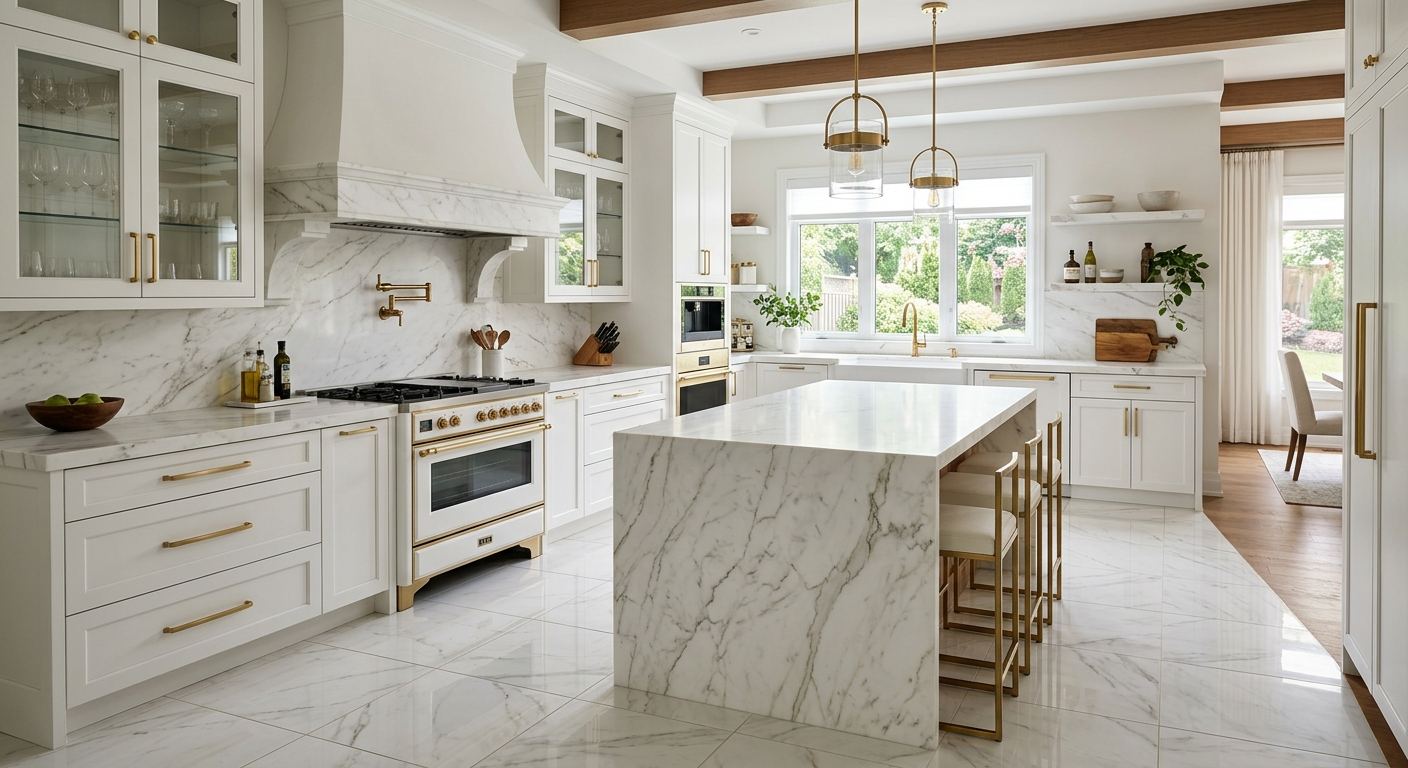
Kitchen renovation options and costs in Cleveland
Cleveland, British Columbia has a smaller local population (2,930 in the 2021 Census) than the big Metro Vancouver centres, but kitchen demand still tracks the broader Lower Mainland–Southwest market where homeowners expect upgrades that hold their value on resale (Statistics Canada, 2021 Census). In higher-value pockets of the region, finishes tend to move up a notch—owners more often budget for semi-custom cabinetry, upgraded hardware, and quartz or stone counters rather than sticking with laminate. Even when the home itself is modest, contractors often find that the “default” finish level in this part of BC is influenced by what buyers see across the Lower Mainland–Southwest.
Market availability also matters. In the Lower Mainland–Southwest, labour capacity and scheduling are shaped by competing trades across the corridor, and that can affect your total cost more than people expect. Climate plays a secondary role: the region’s wet winters drive extra care around sealing, ventilation, and water-resilient materials, especially around sinks, dishwashers, and any exterior-facing walls. For many Cleveland homes, though, pricing is driven more by scope—whether you’re doing a refresh versus a full rebuild—than by weather impacts.
Trade demand is especially strong for cabinet and tile work in the older housing stock areas around the downtown core, where renovations tend to include updating finishes and improving workflow rather than expanding the footprint. With that in mind, here’s a practical way to compare renovation tiers before you request quotes.
| Renovation Tier |
What's Included |
Typical Duration |
Price Range |
| Cosmetic refresh (paint, hardware, new appliances only) |
Cabinet paint/stain where applicable, new pulls/knobs, new appliance set, minor countertop edging repairs (no cabinet replacement) |
1–3 weeks |
$8,000–$20,000 |
| Mid-range full renovation (new cabinets, counters, sink, tile) |
New semi-custom or upgraded stock cabinets, new countertops, new sink and faucet, backsplash tile, flooring refresh as needed, basic electrical updates |
4–8 weeks |
$40,000–$80,000 |
| High-end full renovation (custom cabinets, stone counters, island) |
Fully custom cabinetry, stone counters (quartz/stone), larger layout changes, island built-in details, upgraded lighting, full-height or feature backsplash, coordinated finishes |
8–16 weeks |
$90,000–$120,000 |
| Cabinet refacing only (new doors + drawer fronts, same boxes) |
Replace doors/drawer fronts and hardware, refinish exterior panels where needed, re-seal worktops and adjust fittings |
2–5 weeks |
$8,000–$28,000 |
| Countertop swap only (laminate to quartz or stone) |
Remove existing counters, template/measure, install new quartz/stone, basic sink/cooktop cut-out adjustments |
1–2 weeks |
$10,000–$25,000 |
| Backsplash tile installation only |
Tile removal/prepare, install backsplash (ceramic or similar), grout/seal, caulking at transitions |
3–7 days |
$1,500–$6,000 |
Prices are estimates only and vary by project scope, site access and material selection.
What affects the price of kitchen renovation in Cleveland
The same kitchen scope can price out 30–50% differently across British Columbia because quote totals are driven by local market expectations, contractor scheduling, and how much “value finish” you select—not by climate alone. In the Lower Mainland–Southwest, higher home values and buyer expectations push many owners toward quartz or stone counters and semi-custom cabinetry. In other words, the labour may be similar, but the material tier and cabinetry complexity often changes with the home’s resale reality. That’s why a mid-range full renovation can land around the $40,000–$80,000 band, while a high-end full renovation with an island and stone can move into the $90,000–$120,000 range fast.
Local conditions in Cleveland that commonly change costs include: (1) older plumbing runs that require replacement sections once walls are opened (even when you thought you could keep fixtures in place), (2) off-level floors that add shimming and extra cabinet adjustments to get doors and drawers to run true, and (3) kitchens with exterior-facing walls where damp-prone areas need improved ventilation and sealing—especially behind toe-kicks and around sink bases. Market availability also affects the timeline; if your cabinetry lead time overlaps with other trades, you can see additional coordination costs.
Layout changes remain the most unpredictable cost regardless of finish tier. Removing a wall, adding an island, or moving a gas line (when applicable) can add significant trade time and permit work. Even a straightforward upgrade like a countertop swap can broaden if your sink cut-out needs rework or if the base cabinets can’t support the new slab’s weight and thickness without reinforcement.
| Price Factor |
Why It Matters |
Cost Impact |
| Cabinet tier — stock vs. semi-custom vs. fully custom millwork |
Higher tiers use better materials, more options (interior fit/organizers), and more fitting-on-site |
Can swing most of the total by tens of thousands |
| Countertop material — laminate vs. quartz vs. granite vs. stone |
Material cost, thickness, edge profiles, and installation method differ |
Often adds thousands for quartz/stone versus laminate |
| Layout change — wall removal, island add, plumbing/gas move |
More carpentry, structural work, rerouting services, and additional inspections |
Frequently the biggest unknown in any estimate |
| Appliance package tier — builder vs. mid-range vs. pro-grade |
Dimensions, electrical requirements, and warranty/service plans vary |
Can add several thousand depending on the package |
| Flooring — refinish existing vs. full replacement |
Matching existing floors is harder after demo; subfloor condition drives surprises |
Full replacement usually costs more in labour and materials |
| Backsplash — ceramic tile vs. marble vs. full-height slab |
Slab work is heavier, needs more precision, and may involve seams/trim details |
Feature backsplashes can multiply the backsplash budget |
| Electrical — new circuits for island, under-cabinet lighting |
New runs increase labour and inspection steps |
Often adds a noticeable line item beyond “basic” changes |
| Permit fees and licensed trade requirements |
Work involving services and building alterations must be permitted and inspected |
Direct fees plus coordination time with trades |
Permits & regulations in British Columbia
In British Columbia, many straightforward finish upgrades do not need permits—for example, cabinet door/drawer refacing, cabinet installation where no services move, and countertop swaps (including replacing laminate with quartz or stone) typically fall into the “no permit required” category. However, the moment your kitchen involves changes to plumbing, gas, structural walls, or new electrical circuits, permits and licensed trades are usually required.
Work that typically does require permits and inspections includes: moving plumbing supply or drain lines (sink, dishwasher location changes, or rerouting to new cabinet positions), relocating gas appliances or gas lines (stove/range and related venting work), removing a load-bearing wall or making structural changes, and adding new electrical circuits—commonly for island outlets and under-cabinet lighting that requires new wiring runs. Gas work must be done by a licensed gas fitter, and electrical work must be done by a licensed electrician; both should be inspected when required by the permitting process.
Before signing in Cleveland, verify the contractor’s British Columbia licence, liability insurance, and coverage documentation. Ask for: (1) their licence details from the relevant online registry tools available to contractors, (2) a Certificate of Insurance showing liability coverage, and (3) proof of worker coverage (commonly shown as WCB/clearance letter documentation). Then make sure the contract clearly states who pulls permits—responsibility should be written, not implied.
Cabinets, countertops and layout decisions in Cleveland
When you renovate a kitchen in Cleveland, three decisions drive most of the outcome: (1) cabinet tier, (2) countertop material, and (3) whether you change the layout. In the Lower Mainland–Southwest resale market, buyers often expect a clean, modern finish—especially at the mid-range and high-end price points. That usually means semi-custom cabinets with reliable storage (soft-close, good drawer alignment) and counters that can handle everyday use without constant maintenance.
Cabinet tier affects both look and day-to-day function. Stock cabinets are fastest and cheapest but can be limiting for custom corner storage. Semi-custom cabinets are popular in this region because they balance lead time, cost, and fit. Custom cabinets cost more, but they let you tailor pantry height, spice pullouts, corner systems, and built-in framing around awkward ceilings. For countertops, laminate can be a sensible choice if your goal is a refresh, but it won’t match quartz or natural stone for heat and stain resistance. Quartz is the “most common premium choice” because it’s durable, consistent in appearance, and typically easier to live with than natural stone.
Layout changes should be justified by space gain. In many Cleveland homes, removing a wall or adding an island can help traffic flow and usability, but it also introduces unpredictable cost if it triggers plumbing/gas reroutes or structural considerations. For example, choosing quartz instead of laminate might be a roughly few-thousand upgrade within a broader full renovation—often worth it—while relocating plumbing for a new sink location can cost materially more than the counter difference and can push you into the higher renovation band quickly.
| Option |
Durability |
Maintenance |
Best For |
Price Range |
| Stock cabinets (big-box) |
Good for typical use; depends on door/drawer quality |
Low; keep hinges adjusted and wipe with mild cleaner |
Budget-first refreshes and faster timelines |
$8,000–$20,000 |
| Semi-custom cabinets (local dealer) |
Very good; stronger construction and better fit/finish |
Low; regular hardware checks and gentle cleaning |
Most homeowners targeting mid-range resale appeal |
$20,000–$45,000 |
| Custom cabinets (local millwork shop) |
Excellent; tailored joinery and optimized storage |
Low; treat surfaces as you would premium cabinetry |
Complex layouts, unique spaces, and long-term ownership |
$45,000–$80,000 |
| Laminate countertop |
Moderate; can chip at edges if impacted |
Easy daily cleaning; avoid prolonged heat exposure |
Refresh projects within a controlled budget |
$3,000–$8,000 |
| Quartz engineered countertop |
High; strong stain resistance and consistent performance |
Low; routine cleaning only, generally no sealing |
Mid to high-end remodels wanting premium look |
$6,000–$15,000 |
| Granite / natural stone countertop |
High; durable but variety is natural |
May require periodic sealing depending on product |
Owners wanting natural variation and luxury visuals |
$8,000–$18,000 |
| Butcher block countertop |
Moderate to high; sensitive to cuts if not maintained |
Higher—oil/condition regularly to prevent drying |
Farmhouse warmth and those who like maintenance |
$4,000–$12,000 |
| Marble countertop |
Looks premium; softer than quartz so can etch/scratch |
Higher; needs careful cleaning and sealing |
Statement kitchens and lower-heat, lighter-use households |
$10,000–$25,000 |
How to choose a kitchen renovation contractor in Cleveland
Choosing the right contractor in Cleveland starts with licensing, insurance, and proof of coverage. In British Columbia, confirm the contractor’s relevant licence (and any required endorsements), then request a Certificate of Insurance that clearly shows liability coverage for your project. For worker protection, ask for proof of worker coverage documentation (commonly a current WCB/clearance letter). If they can’t provide current documents quickly, that’s a red flag.
Next, get 2–3 itemised written quotes. You want a breakdown that separates labour and major materials (cabinets, countertops, tile, plumbing/electrical allowances, disposal), rather than a single lump sum number with vague allowances. Read the scope line-by-line: what is excluded (drywall patching beyond demo limits, underfloor prep, appliance delivery, protective covering)? Is permit pulling included? Is demolition and disposal included, or “haul-away” charged separately after the fact?
Warranty matters for both workmanship and product performance. Ask how long the contractor guarantees labour, whether the manufacturer warranty transfers to you, and what happens if a cabinet door or countertop seam fails later. For payment, don’t agree to large upfront deposits—generally keep initial payments around 10–15% maximum and use a holdback until the job is complete and deficiencies are corrected. Finally, demand a start date and completion estimate in writing, including lead-time assumptions for cabinets and countertops.
- Confirm BC licence details and request proof in writing before the first payment.
- Verify liability insurance and confirm the job address is covered.
- Request WCB/coverage documentation (clearance/coverage letter) before work begins.
- Get 2–3 itemised quotes with labour and materials separated.
- Check allowances for cabinets, countertops, fixtures, and appliances are clearly stated.
- Ensure disposal/dump fees and protection for floors/doorways are included.
- Confirm permit responsibilities and licensed trade scheduling in the scope.
- Ask for a written schedule with demolition, cabinet install, countertop templating, and final finishes.
- Review warranty length for workmanship and whether it covers callbacks.
- Ask how deficiencies are handled and define the holdback release conditions.
- Confirm electrical and plumbing scope is priced for your actual appliance plan.
- Make sure finish selections (tile size, grout colour, cabinet hardware) are locked before ordering.
In Cleveland, I’d treat these as concrete red flags: quotes that don’t list material allowances clearly, missing dates/lead-time assumptions for cabinets and countertops, refusal to provide insurance/coverage paperwork, vague scope language that shifts disposal/patching costs to you later, and progress payments that ask for more than roughly 10–15% upfront without a signed, detailed payment schedule.
Frequently asked questions — kitchen renovation in Cleveland
Can I live at home during a kitchen renovation in Cleveland?
You often can live at home during a renovation in Cleveland, especially for cosmetic refreshes or phased work (like cabinet refacing and countertop templating). For mid-range full renovations—typically in the $40,000–$80,000 band—living in the home is common if you can dedicate one safe “no-trades” zone and manage dust control. Full tear-outs and layout changes are noisier and messier, but many crews still run daytime work while homeowners sleep upstairs or use a temporary setup in another room.
Ask your contractor how they’ll protect floors and doorways, where debris will be stored, and how they’ll stage plumbing/electrical shutoffs so you’re not without basic function longer than necessary. In BC’s wet-season conditions, good ventilation and moisture control around sink areas is important once walls are opened.
Should I renovate my kitchen before selling in Cleveland?
Often, yes—if your goal is to reduce buyer hesitation and modernize the look without over-customizing. In the Lower Mainland–Southwest, buyers commonly expect clean cabinetry lines, updated countertops, and functional layouts, so a mid-range full renovation (commonly around the $40,000–$80,000 range) can make the kitchen feel “move-in ready.” If your kitchen is dated but structurally sound, you may also get strong impact from targeted upgrades like cabinet refacing plus a countertop swap.
That said, consider resale timing and how much of the work changes your home’s “system” needs. If plumbing or electrical is near the end of its service life, addressing it during renovation can prevent negotiation issues later. Always ask your contractor to list which upgrades are visible and which are preventative, so you can prioritize what sellers’ buyers actually notice in viewings.
What's the most popular kitchen style in Cleveland right now?
Right now in Cleveland (and across the Lower Mainland–Southwest), the most common direction is clean, modern design with warm-neutral palettes—think flat-panel or simple shaker-style doors, matte or satin hardware, and bright, durable surfaces like quartz. Homeowners often pair this with practical storage upgrades—soft-close drawers, pull-outs, and updated lighting—because buyers value usability as much as aesthetics.
Material selection usually mirrors budget tiers. For a refresh, you’ll see painted cabinets and laminate or modest countertop upgrades; for full renovations, quartz counters and semi-custom cabinetry dominate. If you’re aiming at a high-end finish—often around the $90,000–$120,000 band—custom cabinetry and more prominent stone features (like an island) become the defining look.
How do I know if I need to update my kitchen plumbing in Cleveland?
You should plan for plumbing updates when renovation reveals aging lines, chronic leaks, or poor drainage—especially after cabinets are removed. In Cleveland homes, kitchens with older service runs frequently need attention once you open walls: valves may be outdated, under-sink fittings can corrode, and drain slopes sometimes aren’t ideal. If you’re relocating the sink or changing where the dishwasher connects, plumbing work becomes more than a “replace fixture” job and may require permits and licensed trades.
During scoping, ask your contractor to assess visible supply valves, check for signs of moisture behind toe-kicks and cabinet bases, and confirm shutoff access. A simple pressure/drain test before demo can help you avoid surprises that blow up a mid-range budget in the $40,000–$80,000 range.
What is the difference between a galley and open-concept kitchen?
A galley kitchen is a corridor-style layout with counters on one or both sides, usually with a single main aisle through the space. An open-concept kitchen removes separation so the kitchen blends into living/dining areas, typically requiring more coordination for lighting, ventilation, and—if you change walls—sometimes permits when structural work is involved.
In Cleveland, many homes start with a galley plan because of older construction patterns. Renovation can still improve function by upgrading storage, relocating key elements within the same footprint, or adding task lighting. Going open-concept can be justified when you’re gaining valuable social space, but it’s also where layout costs become harder to predict because you may need electrical revisions and rerouted plumbing/gas lines.
How do I get accurate kitchen renovation quotes in Cleveland?
Accurate quotes come from itemised scopes, fixed selections, and clear responsibilities. Start by getting 2–3 written quotes that break down labour and major materials separately (cabinets, counters, tile, plumbing/electrical allowances) instead of just lump sums. Lock your cabinet configuration and countertop type early, because substitutions can change both cost and lead time.
Make sure the quote answers: is permit pulling included, is disposal included, and what drywall/floor patching is part of the work? Confirm the contractor’s documentation for British Columbia requirements (licensing and insurance/coverage). If you’re choosing quartz as part of a countertop upgrade—often within the broader $10,000–$25,000 countertop-swap band—ensure the sink/cooktop cut-outs and edge profile are specified so the installer isn’t forced into costly change orders later.