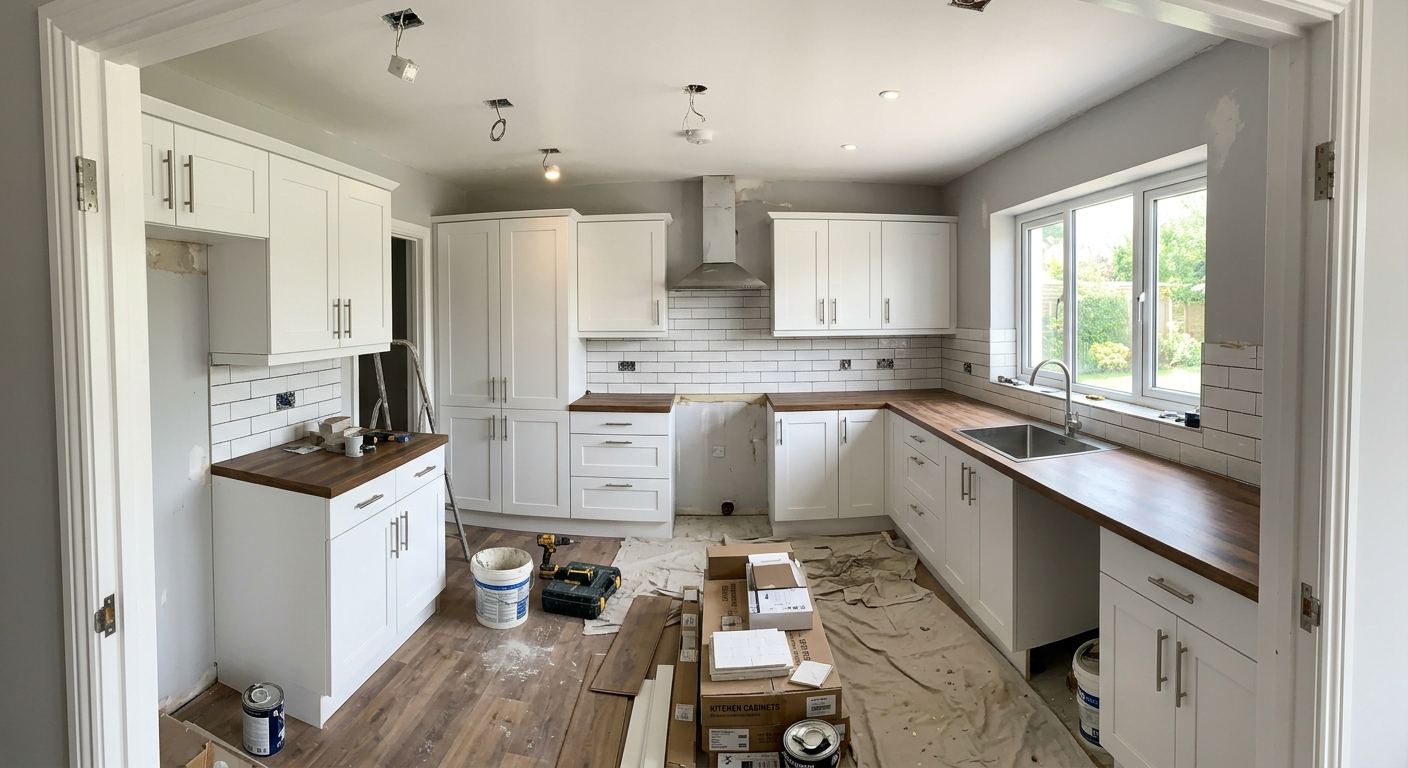
Kitchen renovation options and costs in Downtown
Downtown, British Columbia kitchen renovations often start with a realistic budget conversation, because the same kitchen size can land at very different totals. In Downtown’s local market, the area’s buyer expectations are shaped by household purchasing power and neighbourhood pricing patterns; for example, the broader local population is 62,030 (Statistics Canada, 2021 Census), and many homeowners are planning renovations with resale value in mind. In the Lower Mainland–Southwest, the cost is driven more by home value, income, and the finish tier than by climate alone—so you’ll see choices like quartz or stone counters and upgraded cabinetry more frequently in higher-value pockets. For Downtown specifically, older housing stock and tighter urban access (parking, loading, and stair/walk-up constraints) can also influence labour time and material handling.
Contractor availability is generally strong, but schedule gaps can show up when projects include trade coordination like plumbing relocations, electrical upgrades, and custom cabinetry lead times. Coastal moisture and frequent temperature swings don’t usually “break” kitchens, but they can affect how materials are prepared and sealed—especially around tile edges, under-sink areas, and caulking lines. If your kitchen is in a high-demand area like the West End / Downtown core near older pre-war buildings, there’s typically strong demand for layout improvements and design-led finish packages, which pushes higher-end work toward the upper end of typical ranges.
To help you compare bids consistently, use the tiers below as a baseline and then align your scope, materials, and layout changes before signing.
| Renovation Tier |
What's Included |
Typical Duration |
Price Range |
| Cosmetic refresh (paint, hardware, new appliances only) |
Cabinet paint/finish touch-ups (or full paint), new pulls/hinges, replace appliances, minor caulking and countertop polishing (no cabinet replacement) |
1–3 weeks |
$8,000–$25,000 |
| Mid-range full renovation (new cabinets, counters, sink, tile) |
New cabinetry (typically semi-custom), new countertop, sink + faucet, backsplash tile, flooring patch/level where needed, basic plumbing/electrical tie-ins |
4–8 weeks |
$40,000–$80,000 |
| High-end full renovation (custom cabinets, stone counters, island) |
Fully custom millwork, stone counters, island cabinetry and power/data (as required), upgraded backsplash (often higher complexity), coordinated plumbing/electrical for island |
8–16 weeks |
$90,000–$120,000 |
| Cabinet refacing only (new doors + drawer fronts, same boxes) |
Reface door/drawer fronts, new hardware, new panels as needed, re-seal edges, keep existing cabinet boxes |
2–5 weeks |
$12,000–$35,000 |
| Countertop swap only (laminate to quartz or stone) |
Remove old surface, template + fabricate, install quartz/stone, sink move within existing cutouts where possible, basic caulking and backsplash touch-up (if included) |
1–3 weeks |
$6,000–$18,000 |
| Backsplash tile installation only |
Remove/prepare surface, tile install (often includes trim/edge finishes), grout/seal, re-caulk at countertop and cabinets |
3–7 days |
$1,500–$6,000 |
Prices are estimates only and vary by project scope, site access and material selection.
What affects the price of kitchen renovation in Downtown
In Downtown, British Columbia, quotes for the “same” kitchen can vary by 30–50% across the Lower Mainland–Southwest and other British Columbia markets because the driver isn’t climate—it’s expected finish level, home value, and how complex the job becomes once trades coordinate. In higher-value Metro Vancouver settings, owners more often choose semi-custom or custom cabinetry, quartz or stone counters, and upgraded hardware, which pushes totals toward the top of the backbone ranges. In lower-cost or more budget-focused scopes, laminate surfaces and stock cabinets keep the kitchen renovation closer to the lower end. That’s why the same layout can be a mid-range renovation around $40,000–$80,000, or a high-end build around $90,000–$120,000 once cabinetry, layout changes, and stone are added.
Two conditions frequently raise costs in Downtown. First, older buildings and smaller footprints can force compromises like longer cabinet lead times, special filler pieces, or extra labour for precise fit and sealing—especially around corners and uneven walls. Second, when you move plumbing or gas lines, you add scheduling risk and permit requirements, which typically increases labour and inspection coordination. Even a backsplash change can expand in complexity if the existing wall isn’t flat or if prior moisture issues require prep. On the flip side, costs can stay lower if you keep the plumbing stack in place, choose a practical semi-custom cabinet configuration, and avoid relocating an island’s services.
For local context, Downtown’s urban density also affects access: more time on protection, staging, and scheduling can add cost even when materials are similar. In the Lower Mainland–Southwest, those “job logistics” effects can be just as impactful as the material choice when you’re working with tight schedules and premium finishes.
| Price Factor |
Why It Matters |
Cost Impact |
| Cabinet tier — stock vs. semi-custom vs. fully custom millwork |
Custom reveals, storage layouts, and fit-to-wall precision change labour hours and material pricing |
Low to high (largest spread factor) |
| Countertop material — laminate vs. quartz vs. granite vs. stone |
Material cost, fabrication complexity, and installation risk (especially around islands and seams) |
Moderate to high |
| Layout change — wall removal, island add, plumbing/gas move |
Triggers structural, MEP coordination, and permit/inspection timelines; adds demolition and rework |
High, often the biggest unpredictability |
| Appliance package tier — builder vs. mid-range vs. pro-grade |
Premium brands drive price and sometimes require different rough-in or ventilation |
Moderate |
| Flooring — refinish existing vs. full replacement |
Subfloor condition and matching material grades influence patching vs replacement cost |
Low to moderate |
| Backsplash — ceramic tile vs. marble vs. full-height slab |
More fragile stone and full-height installs increase labour, risk, and install time |
Moderate |
| Electrical — new circuits for island, under-cabinet lighting |
New circuits require licensed electrical work and inspection scheduling |
Moderate |
| Permit fees and licensed trade requirements |
Permits and inspections add time and compliance cost when plumbing/gas/electrical changes occur |
Low to high depending on scope |
Permits & regulations in British Columbia
In British Columbia, many kitchen upgrades do not require permits, but several common renovation moves do. A cabinet or countertop swap typically does not require a permit when you are keeping existing plumbing lines, gas lines, and the electrical layout as-is. That means if you’re doing a countertop installation or cabinet refacing (new doors and drawer fronts, same boxes), you can often proceed without permits for the cabinetry or surface replacement itself.
However, permits and licensed trades are typically required when you do any of the following: relocating plumbing supply or drain lines (sink or dishwasher changes that require moving pipes), relocating or adding gas connections for a stove or range hood that uses gas, removing a load-bearing wall (or any work that changes structural support), and adding new electrical circuits (for example, power to an island, dedicated circuits for additional receptacles, or new lighting runs that require circuit work). Gas work must be performed by a licensed gas fitter; electrical work must be performed by a licensed electrician, and both typically require inspections when permits apply.
How to verify a contractor in Downtown before signing: (1) request their licence info and confirm it through the appropriate online registry, (2) ask for a certificate of insurance (liability) and ensure it’s current and matches the job location, (3) confirm coverage for work comp (WSIB/WCB) where applicable, (4) verify they’ll list permit responsibility clearly in the written contract, including who pulls permits and pays for inspections, and (5) ask for a clearance letter where your project terms require it.
Cabinets, countertops and layout decisions in Downtown
When you renovate a Downtown kitchen, the three biggest decisions are (1) cabinet tier, (2) countertop material, and (3) layout changes. These choices shape both how your kitchen looks today and how buyers judge it on resale in the Lower Mainland–Southwest. For cabinets, stock is fastest and usually cheapest, semi-custom hits the best balance of lead time and fit, and custom millwork is the most expensive but gives the tightest fit-to-wall results—particularly helpful in older Downtown suites with uneven framing and tight tolerances. For countertops, laminate is the value option, quartz is the mainstream durable upgrade, and natural stone like granite or marble brings distinctive appearance but often comes with different maintenance expectations.
Layout changes are where cost jumps unpredictably: removing a wall, adding an island, or moving plumbing/gas services can trigger additional demolition, new framing/support, and licensed trade work. The justification is when the space gain actually improves daily function—better traffic flow, more workspace, or seating that fits how you live. In dense Downtown homes, a well-designed island can still be practical, but the more you relocate services, the more you should expect coordination costs to rise, even if your finish tier stays mid-range.
Here’s a concrete example: if you keep the plumbing stack and go from laminate to quartz while choosing semi-custom cabinetry, your project can often land in the mid-range band around $40,000–$80,000. If you add an island and relocate power and drainage, that same material choice can push you into the higher band near $90,000–$120,000 because labour coordination and finish matching expand beyond the countertops and cabinets alone.
| Option |
Durability |
Maintenance |
Best For |
Price Range |
| Stock cabinets (big-box) |
Good for everyday use; less forgiving on uneven walls due to standard sizes |
Low—standard cleaning; touch-ups as needed |
Fast timelines and cost control |
$8,000–$20,000 |
| Semi-custom cabinets (local dealer) |
Very good; improved storage options and better fit-to-wall flexibility |
Low; keep seals intact and clean regularly |
Most Downtown remodels aiming for resale-ready quality |
$20,000–$45,000 |
| Custom cabinets (local millwork shop) |
Excellent; best precision around quirks and non-standard openings |
Low to moderate depending on finish type |
Complex spaces and design-led kitchens |
$45,000–$75,000 |
| Laminate countertop |
Moderate; can scratch and chips can show around edges over time |
Low; avoid heat and standing water on seams |
Budget-focused refreshes |
$3,000–$7,000 |
| Quartz engineered countertop |
High; resists stains and everyday wear very well |
Low; wipe clean and protect from extreme heat near seams |
Busy households and resale-ready durability |
$7,000–$12,000 |
| Granite / natural stone countertop |
High; durable surface with natural variation |
Moderate; typically needs periodic sealing depending on stone |
Appearance-led kitchens |
$9,000–$15,000 |
| Butcher block countertop |
Moderate to high; good surface feel but can dent with impact |
Moderate; routine oiling and careful moisture management |
Warm, casual styles |
$6,000–$11,000 |
| Marble countertop |
Moderate; elegant but more susceptible to etching and staining |
Higher; careful cleaning and sealing are important |
Statement kitchens where appearance is priority |
$10,000–$18,000 |
How to choose a kitchen renovation contractor in Downtown
Choosing the right contractor in Downtown, British Columbia starts with proof, not promises. Verify British Columbia licensing for the relevant trades (general contractor where applicable, plus licensed electricians/gas fitters for any electrical or gas work). Ask for current liability insurance and confirm coverage details with their certificate of insurance. Also request proof of WSIB/WCB coverage where applicable; the goal is to make sure labour risks are handled properly if something goes wrong on site.
Next, get 2–3 itemised written quotes with a clear labour + materials breakdown rather than a single lump sum. You want line items that show cabinet package, countertop supply, install labour, backsplash labour, plumbing tie-ins, electrical allowance, and disposal/removal. Read the scope carefully: what’s excluded (like floor replacement, drywall repairs, or moving appliances), is permit pulling included, and is demolition disposal included in the price or an add-on? Warranty matters too—confirm workmanship warranty length, product/manufacturer warranty details, and whether warranties are transferable to you as the homeowner.
For payment schedule, avoid large deposits. A safe rule is never pay more than 10–15% upfront, and hold back a portion until key milestones are complete. Finally, demand a written start date and completion estimate so you’re not relying on verbal timeline assurances—especially important in the Lower Mainland–Southwest where material lead times (especially cabinetry and stone) can vary.
- Ask for proof of BC licensing and confirm it matches the scope (especially electrical/gas work).
- Request a certificate of liability insurance showing Downtown project coverage.
- Confirm WSIB/WCB coverage documentation before work begins.
- Get itemised quotes: labour and material lines, not one total.
- Clarify exclusions: patching drywall, floor replacement, and appliance installation scope.
- Ask whether permit pulling is included, and who is responsible if permits are required.
- Confirm disposal/removal: cabinets, old countertops, and demolition debris.
- Check warranty terms in writing for workmanship and products (and whether you’re covered after resale).
- Review the cabinet line: stock vs semi-custom vs custom; confirm exact specs and finish.
- Confirm countertop process: templating timeline, seam location, and sink cut-out assumptions.
- Require a schedule with milestones (demo, rough-in, cabinets install, countertop install, final finish).
- Use a payment schedule that holds back a portion until completion and touch-ups pass.
Red flags I often see in Downtown kitchen jobs: quotes that don’t explain what’s included vs excluded, missing insurance or unclear WSIB/WCB status, no written warranty details, schedules that ignore cabinet/stone lead times, and contractors who want a large upfront payment beyond 10–15%.
Frequently asked questions — kitchen renovation in Downtown
What's the best countertop material for a busy Downtown kitchen?
For most busy households in Downtown, British Columbia, quartz is usually the safest “daily driver” choice. It’s durable against stains and everyday wear, and it holds up well to frequent cooking and cleanup common in family and tenant-heavy areas of the Lower Mainland–Southwest. If you want a countertop-only upgrade, the typical swap range sits around $6,000–$18,000, depending on edge profile, sink cut-outs, and whether you keep the current layout. Natural stone like granite is also durable, but it may need periodic sealing, while marble can be more sensitive to etching and staining. If you’re prone to spills or you cook often, quartz’s low-maintenance routine usually pays off in time and fewer touch-ups.
How do I add an island to my Downtown kitchen?
Add an island in Downtown by planning services first: power for outlets and lighting, and—if you’re adding a sink or dishwasher—new plumbing/drain routing. This is where budgets change quickly because layout changes require coordination with licensed trades and, when services move, permits are typically triggered in British Columbia. In practice, many clients keep the main plumbing stack and choose an island that seats without plumbing to control cost and schedule risk. If you’re also relocating gas or adding a gas range hood, that requires a licensed gas fitter. The typical full-renovation budget band can start around $40,000–$80,000, but island projects with electrical and plumbing changes often push toward $90,000–$120,000 when finish expectations are higher. Start by confirming the island footprint, circulation space, and where the electrical and plumbing runs can realistically go.
How much does a kitchen renovation cost in Downtown?
In Downtown, British Columbia, kitchen renovation costs usually follow the regional finish tiers rather than climate-driven effects. A cosmetic refresh is often the lowest tier, while full renovations rise quickly once you add cabinetry, stone, and trade coordination. As a practical guide, a full kitchen renovation commonly falls within $40,000–$120,000 depending on whether you’re doing a mid-range scope or a high-end custom rebuild. For example, mid-range jobs with new cabinets, counters, a sink, and backsplash typically sit around $40,000–$80,000, while island + stone + custom millwork can land closer to the top end. Cabinet installation/refacing and countertop swaps have their own sub-ranges too, which matters for comparing quotes. Your final number will depend on layout changes, whether you move plumbing/gas, and how premium your selected materials are—especially in the Lower Mainland–Southwest resale market.
How long does a kitchen renovation take in Downtown?
Timelines in Downtown generally depend on construction scope and lead times for cabinets and countertops. Cosmetic refreshes can be short—often 1–3 weeks—because work is mostly surface and appliance replacement. Mid-range full renovations typically take about 4–8 weeks, while higher-end full projects with custom cabinetry and stone counters can run 8–16 weeks. The biggest schedule risks are layout changes that require re-routing plumbing/electrical and getting permits/inspections completed in the right order. Also, Downtown site conditions (tight access, stair/walk-up constraints, staging limitations) can add a bit of time even when the work itself is standard. To manage expectations, ask your contractor to put a milestone schedule in writing and to confirm the cabinet and countertop templating dates early.
Quartz vs granite countertops — which is better?
In Downtown kitchens, quartz is “better” for most homeowners who want low maintenance and consistent performance day to day. It resists staining and is easy to clean, which fits busy households. Granite is also durable and offers unique natural patterning, but it’s more variable and often benefits from sealing as part of regular upkeep. From a budget standpoint, both can fit higher renovation scopes, but quartz is typically easier to plan because it’s engineered and can be more predictable for seams and install timing. Your choice should also reflect how you cook: if you’re frequently cooking with acidic ingredients and want fewer concerns, quartz usually wins. If you want the distinctive look of natural stone and you’re comfortable with periodic maintenance, granite can be a great option. If you’re budgeting a countertop-only upgrade, you’ll commonly be in the $6,000–$18,000 range depending on material and cut-outs.
Should I reface or replace my cabinets?
Refacing is often the right move when the existing cabinet boxes are structurally sound, the layout is staying the same, and you want a faster, more cost-controlled update. It replaces doors and drawer fronts and refreshes the look without the full disruption of removing everything. Replacement is usually better when boxes are damaged, poorly built, or you want major internal changes like reorganizing storage, adjusting heights, or fixing long-term misalignment issues. In Downtown, refacing can also help keep timelines tighter if you’re avoiding extensive demolition and re-framing. If you choose cabinet refacing only, budgets often land around $12,000–$35,000, while a full mid-range kitchen renovation with new cabinetry and counters is typically higher. The decision comes down to condition: if the boxes are solid and your goal is a cosmetic upgrade, reface; if the cabinets are functionally dated or compromised, replace.