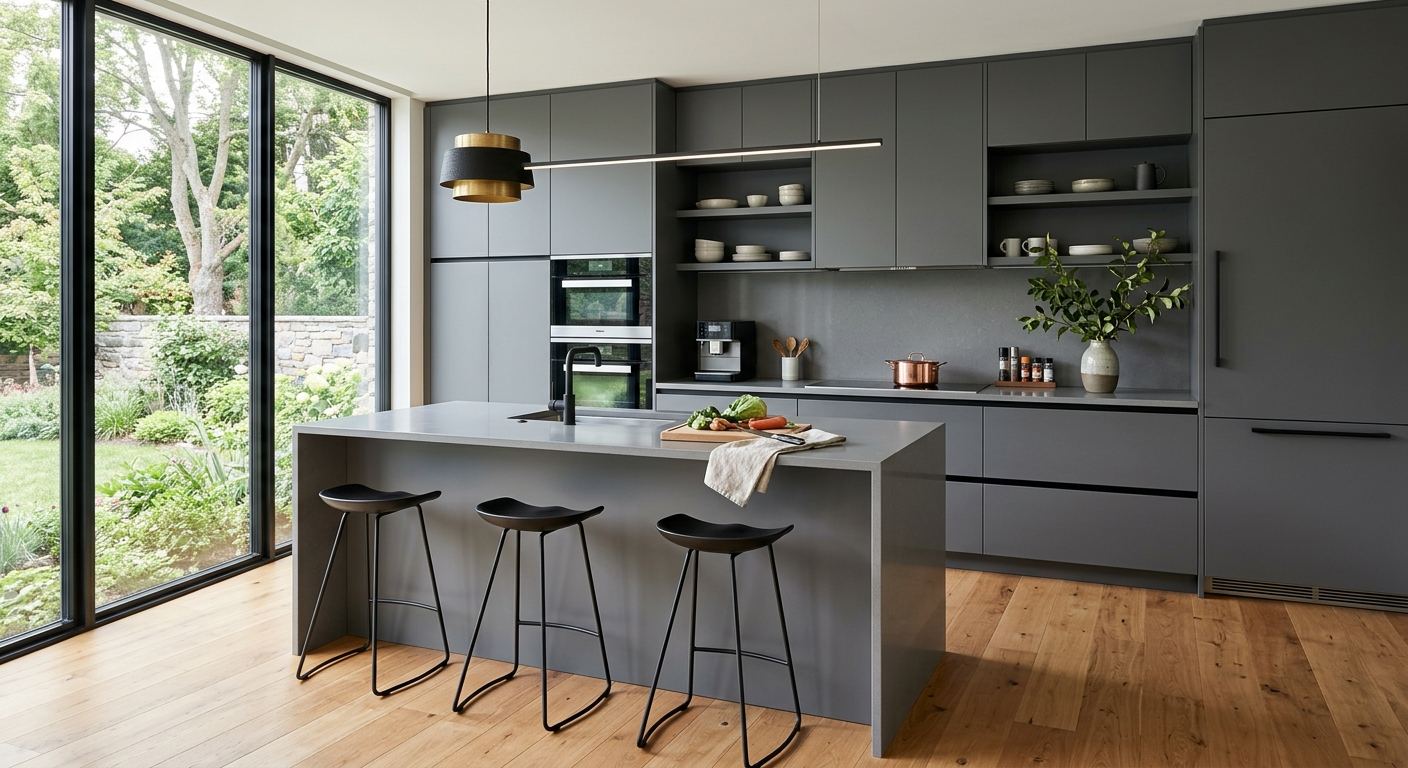
Kitchen renovation options and costs in Varsity
Varsity, Alberta homeowners typically renovate with the resale expectations of Calgary’s broader market in mind, and that’s why the same kitchen “look” can land in very different price tiers. In Varsity (population 12,040; Statistics Canada, 2021 Census), many homes are updated to match what buyers expect across established neighbourhoods around Calgary—practical storage, durable surfaces, and lighting that looks good at dusk. In the Calgary economic region, kitchen budgets also trend with household purchasing power; higher-income owners usually choose upgrades that hold value, while keeping the project inside the “mid five-figures” range rather than pushing into full bespoke remodel territory.
Calgary’s climate doesn’t usually drive day-to-day kitchen costs the way it affects roofing or siding, but it does shape construction logistics. Winter freeze–thaw can slow trades and complicate scheduling (especially when flooring, exterior venting, or window work is tied to the kitchen). More importantly, demand cycles in a strong Alberta construction market affect contractor availability, labour scheduling, and material lead times—so timing can move your budget even when scope stays the same.
In Varsity, kitchen renovations are especially in demand around older pockets near 101 Street and the LRT-adjacent areas, where many homes are from earlier build eras and owners modernize for family use and resale. With that in mind, the table below compares realistic tiers you’ll see from contractors in Calgary-area neighbourhoods like Varsity, including typical inclusions and timelines.
| Renovation Tier |
What's Included |
Typical Duration |
Price Range |
| Cosmetic refresh (paint, hardware, new appliances only) |
Cabinet hardware change, paint/stain refresh, appliance swap (no venting/drain or significant plumbing moves), minor caulking/touch-ups |
3–7 days |
$8,000 – $25,000 |
| Mid-range full renovation (new cabinets, counters, sink, tile) |
Demolition, new semi-custom or better-stock cabinetry, countertop install, new sink and faucet, backsplash tile, basic plumbing reconnects, labour + project management |
3–5 weeks |
$25,000 – $65,000 |
| High-end full renovation (custom cabinets, stone counters, island) |
Custom millwork, premium stone (quartz/natural stone), island build, integrated lighting, flooring adjustments, upgraded appliance package, more complex layout and finish coordination |
6–10 weeks |
$65,000 – $100,000 |
| Cabinet refacing only (new doors + drawer fronts, same boxes) |
Door/drawer front replacement, new pulls, refinishing/edge work on existing boxes, limited prep, backsplash touch-up only (tile not always included) |
1–2 weeks |
$8,000 – $35,000 |
| Countertop swap only (laminate to quartz or stone) |
Removal of existing counters, new quartz/stone template and install, sink cut-out adjustments as needed, sealant/caulking |
3–7 days (plus template time) |
$3,000 – $12,000 |
| Backsplash tile installation only |
Tile supply and install, surface prep, grout/seal, trim details around outlets and corners (electrical not always included) |
2–5 days |
$2,500 – $8,000 |
Prices are estimates only and vary by project scope, site access and material selection.
What affects the price of kitchen renovation in Varsity
In Varsity and across the Calgary economic region, quotes for the “same” kitchen can vary by 30–50% because contractors are pricing different scopes under the same marketing description. One team may include electrical rough-in, new drywall patching, and detailed cabinet installation tolerances; another may price only the visible finishes. Labour in Calgary is a major driver—skilled trades often run around 90–140 per hour—so design time, removal work, and project management can materially change your total even if materials look similar.
Local home values and typical household income usually determine finish tier more than climate does. In higher-value Calgary-area markets, homeowners tend to default to quartz or natural stone counters and semi-custom cabinetry because the renovation cost is more easily recovered on resale. In more modest choices, laminate and stock cabinetry dominate because they deliver a strong look upgrade at a better cost-to-impact ratio. That’s why you’ll commonly see many projects cluster around the $25,000 – $65,000 band for mid-range remodels, while top-end upgrades (especially with layout changes) push toward the $65,000 – $100,000 range.
Concrete Varsity examples that raise or lower costs include: (1) older homes with slightly out-of-square walls—cabinet installation takes longer and may require additional framing/drywall corrections; (2) moving a gas range position—bringing gas line routing into a new spot increases both labour and schedule; and (3) winter scheduling—if floors or subfloors need adjustment after winter seasonal movement, flooring and cabinet fit can add labour days.
Finally, layout changes are the most unpredictable cost regardless of finish level. Removing a wall, adding an island, or moving plumbing/gas is where the budget can jump, because you’re not just upgrading surfaces—you’re changing the infrastructure.
| Price Factor |
Why It Matters |
Cost Impact |
| Cabinet tier — stock vs. semi-custom vs. fully custom millwork |
Higher tiers add better internal layouts, more stable materials, and more customization; custom also increases fabrication time |
Often shifts the cabinet portion by several $10,000s, which can move a whole project by 20–40% |
| Countertop material — laminate vs. quartz vs. granite vs. stone |
Material cost and installation complexity change; stone templates, seals, and heavy lifting drive labour |
Can swing countertop budgets within the typical $3,000 – $12,000 range, depending on material and cut-outs |
| Layout change — wall removal, island add, plumbing/gas move |
Infrastructure work and structural considerations increase demolition and rebuild time |
Most unpredictable; this is frequently the difference between $25,000 – $65,000 and $65,000 – $100,000 |
| Appliance package tier — builder vs. mid-range vs. pro-grade |
Stoves, hoods, and dishwashers vary widely in price and installation requirements |
Can add or remove several thousand dollars; higher-end installs often require more electrical/vent coordination |
| Flooring — refinish existing vs. full replacement |
Kitchen renovations frequently reveal damage; subfloor prep can be time-consuming |
Partial upgrades can stay near a “refresh” budget; full replacement typically increases labour and material spend |
| Backsplash — ceramic tile vs. marble vs. full-height slab |
Stone and full-height systems increase cutting, weighing, and finishing details |
Ranges commonly land within $2,500 – $8,000, with full-height slab costing more |
| Electrical — new circuits for island, under-cabinet lighting |
More lighting and added outlets require licensed electrical work and potentially panel updates |
Often a meaningful “hidden” cost; can add thousands depending on wiring runs and panel capacity |
| Permit fees and licensed trade requirements |
Work that touches gas, electrical, or structural elements needs approvals and inspected trades |
Not usually the largest line item, but it can delay scheduling and increase labour coordination costs |
Permits & regulations in Alberta
In Alberta, many purely cosmetic changes in a Varsity kitchen don’t require permits—cabinet and countertop swaps are the classic examples. If you’re keeping the existing plumbing locations and you’re only changing what you can see (paint, hardware, doors, drawer fronts, and new counters), you typically avoid the permitting process. However, the moment you change the infrastructure, the rules shift.
Work that typically does require permits and licensed trades includes relocating plumbing supply/drain lines, relocating or modifying a gas appliance connection (including a gas stove or any range hood that vents via gas systems), removing a load-bearing wall, and adding new electrical circuits (for example, new outlets for an island, new lighting circuits, or upgrading how many circuits serve the kitchen). Gas work must be performed by a licensed gas fitter, and electrical work must be completed by a licensed electrician, with inspections where required.
How to verify a contractor in Varsity step-by-step: (1) ask for their Alberta licence details and proof of liability insurance—don’t accept verbal assurances; (2) confirm their workers’ compensation coverage (WSIB/WCB coverage is required for eligible employers and workers); (3) request the certificate of insurance and read the coverage limits and expiry dates; and (4) if permits are involved, ensure the contractor states who pulls the permit and schedules inspections.
Before signing, confirm in writing that permit responsibility, trade scheduling, and inspection handling are clearly assigned—those details protect you if something changes mid-project.
Cabinets, countertops and layout decisions in Varsity
Your three most consequential Varsity decisions are cabinet tier, countertop material, and whether to change the layout. For cabinets: stock is the fastest and cheapest, semi-custom is the most common “sweet spot” for families, and custom is where you gain exact sizing, specialty storage, and a tailored look. For countertops: laminate is budget-friendly but less resilient to heat and impacts; quartz is durable and low-maintenance; granite/natural stone offers premium aesthetics but typically needs more careful sealing/maintenance; butcher block adds warmth but demands consistent care to avoid water damage; and marble looks high-end but is more sensitive to etching and staining.
Layout is where resale expectations meet practical living. In Calgary-area markets, buyers often respond well to functional storage and light circulation—so open-concept wall removal or an island can be a smart upgrade if the space gain is real and the layout supports everyday use. If you’re moving a gas line, adding an island, or relocating plumbing, those upgrades are often justified when the new footprint solves an actual pain point (traffic flow, storage capacity, or workspace size) rather than just “making it look modern.”
A realistic dollar example: if you’re choosing between mid-range and high-end, upgrading from laminate to quartz might add only a few thousand dollars within the typical countertop installation range (often landing toward the upper end of $3,000 – $12,000 once cut-outs and sink adjustments are included). In contrast, changing plumbing/gas locations to support an island can move the project into the $65,000 – $100,000 tier—because labour and coordination rise regardless of the cabinet finish you choose.
Calgary’s winter conditions don’t automatically “damage” kitchens, but temperature swings can reveal minor subfloor movement and affect cabinet alignment. That’s another reason to plan for good workmanship and adequate tolerances, especially in older Varsity homes.
| Option |
Durability |
Maintenance |
Best For |
Price Range |
| Stock cabinets (big-box) |
Solid for typical use; limited custom sizing |
Low; wipe-down and occasional tightening of hardware |
Fast timelines, budget-focused refreshes |
$8,000 – $25,000 |
| Semi-custom cabinets (local dealer) |
Better internal options, stronger fit and finish |
Low; maintain hinges and hardware as needed |
Most Varsity homeowners seeking a balance of cost and fit |
$20,000 – $55,000 |
| Custom cabinets (local millwork shop) |
Highest precision and specialty storage |
Low; depends on finish, but generally easy to care for |
Unique layouts, full redesigns, premium resale finishes |
$40,000 – $85,000 |
| Laminate countertop |
Good day-to-day; susceptible to heat and chips at edges |
Easy cleaning; protect from hot pans and sharp impacts |
Budget remodels and rental-style durability needs |
$3,000 – $7,000 |
| Quartz engineered countertop |
Very durable; resists stains and everyday wear |
Minimal—typical household cleaners are usually fine |
Families who want “set it and forget it” performance |
$6,000 – $12,000 |
| Granite / natural stone countertop |
High durability; unique look; can vary by stone |
Occasional sealing; careful with acidic cleaners |
Homeowners prioritizing unique, natural aesthetics |
$7,000 – $14,000 |
| Butcher block countertop |
Durable with care; vulnerable to standing water |
Requires oiling/maintenance and immediate wipe-down |
Warm, traditional styles and frequent food prep |
$4,000 – $10,000 |
| Marble countertop |
Beautiful but softer; can scratch and stain |
Higher maintenance—sealing and gentle cleaners required |
Low-abuse kitchens aiming for a luxury look |
$10,000 – $20,000 |
How to choose a kitchen renovation contractor in Varsity
Choosing the right contractor in Varsity comes down to proof, clarity, and fit—not just photos. Start with Alberta licensing and coverage. Ask for the contractor’s licence information and their liability insurance certificate; confirm the certificate is current and that it includes coverage for your project type. Next, verify WSIB/WCB coverage—review documentation, and ensure they can show active coverage for their workers. If they can’t provide documentation quickly, treat that as a serious concern.
Then get 2–3 itemised written quotes, not one lump number. You want a labour + materials breakdown that shows cabinetry install, counter fabrication/installation, plumbing or electrical allowances (if included), demolition/disposal, drywall touch-ups, and the timeline for each trade. Read the scope carefully for inclusions and exclusions: is permit pulling included where needed, who schedules inspections, and is disposal hauling included or billed separately?
Warranty matters in kitchens because workmanship and product performance are both on the line. Ask for the workmanship warranty length, what it covers (for example, cabinet alignment, caulking, and countertop installation), and whether it’s transferable if you sell your home. Product/manufacturer warranties for cabinets, counters, and appliances should be stated clearly with model/finish details.
For payments, keep upfront deposits reasonable—never more than about 10–15% upfront—and agree on a holdback until substantial completion. Finally, insist on a written timeline: start date and a realistic completion estimate based on lead times.
- Request proof of Alberta trade licensing for any gas or electrical scope.
- Verify liability insurance and workers’ compensation coverage before work starts.
- Get itemised quotes with allowances clearly labelled (appliances, tile, under-cabinet lighting).
- Confirm who pulls permits and who pays permit-related admin fees.
- Ask whether disposal/hauling is included in the demolition line item.
- Require a detailed scope for plumbing and gas reconnections (what’s included vs excluded).
- Confirm countertop template timing and who verifies cut-outs for sink and cooktop.
- Check how they handle drywall patching and cabinet-wall spacing (shim/tolerance plan).
- Ask for a workmanship warranty in writing (length and scope).
- Request finish/colour samples and confirm what brand/grade of materials is quoted.
- Agree on a payment schedule with milestones and a completion holdback.
- Get a written schedule that names trade sequencing and lead-time assumptions.
Red flags I see in Varsity projects include: (1) contractors who won’t provide insurance/licence documentation on request; (2) quotes that omit electrical/gas allowances when the layout changes; (3) “all-in” pricing with no line items for counters, disposal, or drywall; (4) poor timeline clarity with no allowance for material lead times; and (5) pushing for large upfront payments beyond 10–15%.
Frequently asked questions — kitchen renovation in Varsity
Custom vs stock cabinets — is custom worth it?
In Varsity, custom cabinets can be worth it when your kitchen layout has quirks (angled walls, awkward corners, or a need for specialty storage like pull-outs for pantry zones). Stock cabinets are typically the fastest option, and for a cosmetic refresh or a straightforward mid-range renovation they can deliver great results at lower cost. If you’re trying to balance budget with resale appeal, semi-custom is often the practical compromise.
Here’s a realistic way to think about it: a mid-range renovation often lands in the $25,000 – $65,000 tier, and cabinetry is one of the biggest cost movers. Custom work can push the overall project toward the $65,000 – $100,000 tier—especially if you also add an island and upgrade countertops. If your plan is “looks modern” more than “storage and fit are critical,” semi-custom usually delivers most of the benefit without the full premium.
How do I choose a kitchen contractor in Varsity?
Start with verification, not reputation alone. Ask for the contractor’s Alberta licensing details where applicable, confirm liability insurance, and check WSIB/WCB coverage—request certificates and expiry dates. Next, get 2–3 itemised quotes so you can compare apples to apples: labour lines, material brands/grades, countertop installation responsibilities, disposal, and any allowance for electrical or gas work.
In Varsity, kitchen projects often require coordination because homes vary in age and wall alignment. A good contractor will explain tolerances for cabinet installation and how they handle drywall patching after demolition. They’ll also spell out permit responsibility where needed and provide a written start date and completion estimate based on lead times. If they won’t put these items in writing, it’s a sign to pause.
What order do kitchen renovation steps happen in?
For most Varsity renovations, the sequence starts with a controlled demolition and site protection, followed by rough-in work if your layout includes plumbing, gas, or electrical changes. Next comes framing/drywall repair and surface preparation so cabinets sit flat and tight to walls. Once the substrate is ready, cabinet installation happens first, then countertops are templated and installed. After that, backsplash tile and trim details are completed, followed by flooring adjustments and final sealing/finishing.
Appliances and fixtures install at the end, once final connections are verified. If you’re only swapping counters or adding a backsplash, the timeline shortens a lot. Typical full renovations often run several weeks, aligning with the mid-range $25,000 – $65,000 band for many scope levels. For bigger redesigns with more coordination, schedules can stretch toward the $65,000 – $100,000 tier due to trade sequencing and material lead times.
Can I live at home during a kitchen renovation in Varsity?
Often, yes—especially for cosmetic refreshes, cabinet refacing, or countertop swaps. In Varsity, many homeowners choose to stay home if there’s a workable temporary kitchen setup: a small microwave/coffee station, a portable induction unit if permitted for your setup, and a plan for where clean dishes and food will go. For mid-range or full renovations, staying in-home is possible, but your access to a functional sink and stove may be limited during rough-in and countertop install.
Expect daily dust control measures and safe walkway planning. Also, confirm when power access is impacted (electrical work and lighting changes) and how long demolition areas remain open. If you’re moving plumbing/gas or adding an island, it’s common to experience longer interruption windows. Your contractor should provide a step-by-step schedule so you can plan meals, childcare, and where the work area boundaries will be.
Should I renovate my kitchen before selling in Varsity?
In Varsity, kitchens sell homes, but the best approach is “buyer-relevant upgrades” rather than over-customizing. If your kitchen has dated finishes, poor storage, or worn surfaces, renovating before selling can be a smart move—particularly if you choose durable, broadly appealing materials like quartz and modern semi-custom cabinetry. A cosmetic refresh alone may improve appearance, but it won’t address functional issues like layout constraints.
That said, overspending is the risk. Layout changes and custom millwork can be excellent, but only if they fix a real problem. Many homeowners aim for a mid-range investment commonly within the $25,000 – $65,000 band. If you’re pushing into the $65,000 – $100,000 tier, be sure your home supports the upgrade level and your layout changes are meaningful for how people actually live.
What's the most popular kitchen style in Varsity right now?
Right now in Varsity and the wider Calgary market, the most requested look is a clean, modern transitional style: flat or shaker-inspired cabinet doors, warm neutral colours (greige/soft white/greige-beige blends), and brighter, layered lighting rather than heavy overhead-only lighting. Homeowners also commonly ask for durable, upscale surfaces—typically quartz counters—because they read well in photos and hold up to busy family use.
Backsplashes often lean toward timeless patterns like large-format ceramic tile, subtle veining, or simple slab-style looks rather than very busy mosaics. If you’re budgeting, this style is usually achievable within the mid-range $25,000 – $65,000 tier through semi-custom cabinetry and a quartz countertop. For a more dramatic statement (island focal points, premium stone, and integrated lighting packages), projects often trend toward the higher $65,000 – $100,000 band.