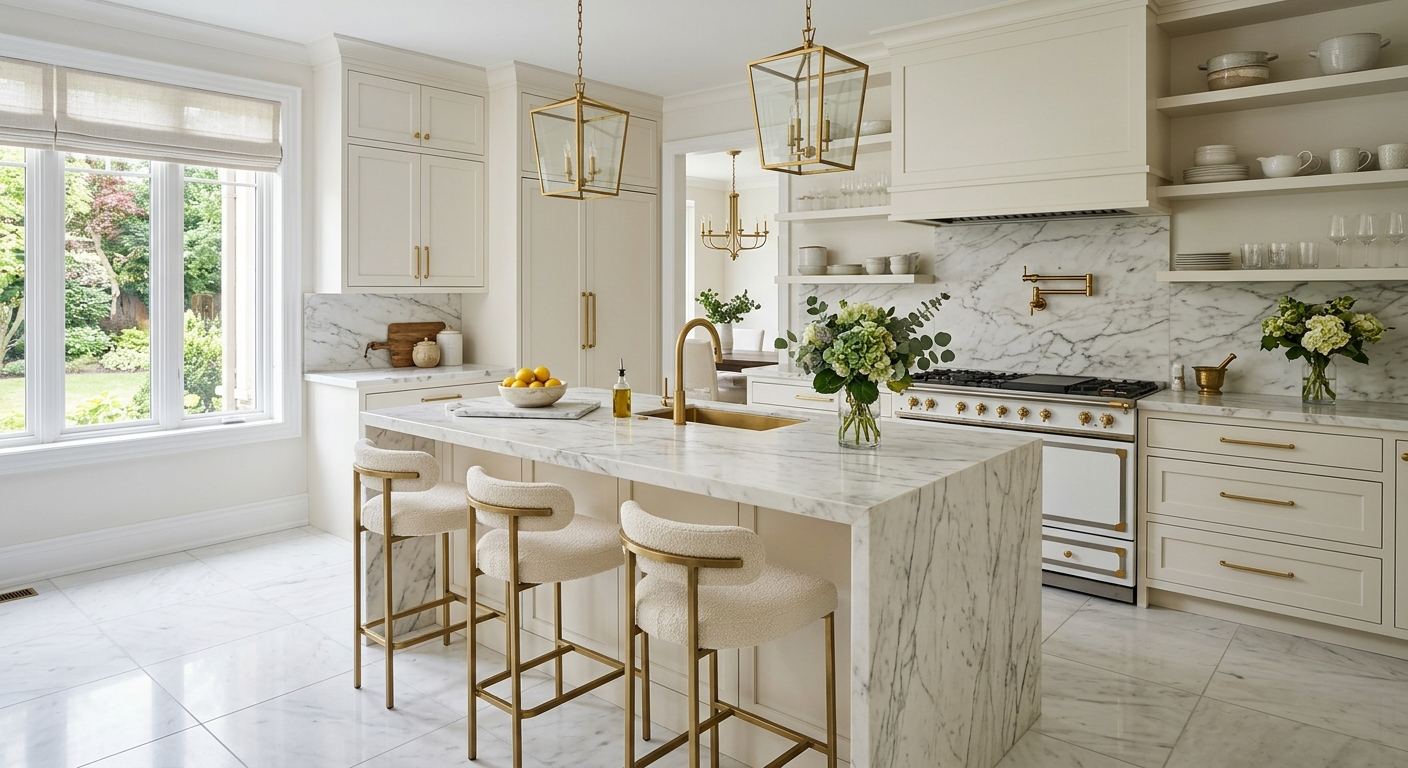
Kitchen renovation options and costs in Oxford
Oxford, Alberta kitchens can be renovated in several ways, from a quick refresh to a full redesign that changes cabinetry, counters, and sometimes the layout. With Oxford’s population of 3,398 (Statistics Canada, 2021 Census), you’ll notice fewer trades concentrated in town and more work routed through the Calgary economic region—especially in nearby demand pockets such as Okotoks-area servicing. That dynamic matters because timelines and pricing often follow Calgary’s trade availability and material supply.
In this region, budgets track closely to how homeowners value their homes and how much they can comfortably invest upfront. In many Calgary-area households, the renovation isn’t just about today—it’s about resale expectations. That’s why many projects target the mid five-figures: homeowners often choose solid-surface counters and better-quality cabinetry even when they’re aiming for a “mid-range” update.
Climate plays a smaller role than you might expect. Alberta’s freeze–thaw cycles can affect caulking, grout, and building envelope details, but kitchen cost swings are usually driven by finish tier and scope: moving plumbing or gas, widening doorways, adding an island, and upgrading lighting and ventilation. Skilled labour in Calgary often runs around $90–$140 per hour, and labour/design/project management becomes a major part of the final number—especially when permits, scheduling, and trade coordination are required. Next, here’s a practical view of common renovation tiers and what you can expect to pay in Oxford.
| Renovation Tier |
What's Included |
Typical Duration |
Price Range |
| Cosmetic refresh (paint, hardware, new appliances only) |
Paint/trim touch-ups, new hardware, appliance swap (no layout change), minor caulking/grout refresh |
3–7 days |
$10,000–$25,000 |
| Mid-range full renovation (new cabinets, counters, sink, tile) |
New semi-custom cabinets, countertop (quartz or similar), sink + taps, backsplash tile, new/updated flooring section, basic lighting adjustments |
3–6 weeks |
$40,000–$70,000 |
| High-end full renovation (custom cabinets, stone counters, island) |
Custom cabinetry, premium natural stone (or top-tier engineered), island build-out, expanded electrical/lighting, upgraded backsplash (stone/slab look), higher-end appliance package |
6–12 weeks |
$75,000–$110,000 |
| Cabinet refacing only (new doors + drawer fronts, same boxes) |
New door/drawer fronts, rework hinges/closures, updated valances, optional new hardware, patch/paint as needed |
2–5 weeks |
$8,000–$25,000 |
| Countertop swap only (laminate to quartz or stone) |
Removal and install of new countertop, edge profile change, sink/cooktop swap if compatible, caulking and finishing |
1–3 weeks |
$3,000–$12,000 |
| Backsplash tile installation only |
Demo of existing backsplash (if required), tile layout and setting, grout/seal, scribe around outlets and corners |
3–10 days |
$2,500–$8,000 |
Prices are estimates only and vary by project scope, site access and material selection.
What affects the price of kitchen renovation in Oxford
Even when homeowners in Oxford ask for “the same kitchen,” quotes can swing by 30–50% across the Calgary economic region and across Alberta. The reason isn’t climate—it’s the mix of home value expectations, finish tiers, and how complicated the scope gets once trades are scheduled and permits are involved. In higher-value markets around Calgary and nearby towns, many owners default toward quartz or natural stone and semi-custom cabinetry because the cost is easier to justify at resale. In more modest markets, laminate and stock cabinetry tend to win because they deliver a strong look without pushing the budget into the upper end of the typical $25,000–$100,000 full renovation band.
In Oxford specifically, two local conditions commonly shift costs. First, older housing stock can require more floor and wall prep—out-of-level floors, cracked plaster, and older electrical routing can add labour before any new cabinet goes in. Second, stone and quartz installation is sensitive to base readiness: if the subfloor isn’t flat, you’ll pay for shimming, rebuilding, or additional carpentry. That’s why the “cheap” counter option can become expensive if the base needs correction.
Here are practical examples: (1) If you keep the sink where it is, countertop installation may land in the $3,000–$12,000 range; move plumbing supply/drain and you’re likely adding permit steps and licensed trade time, which can push you toward the mid-to-upper portion of a full renovation budget. (2) Switching from stock cabinets to semi-custom can raise the cabinetry line item quickly, but it often reduces change-orders later because the cabinet sizes and modifications are more consistent. (3) Adding an island frequently triggers electrical and potentially gas/ventilation changes, which are among the most unpredictable costs regardless of whether you choose laminate or quartz.
| Price Factor |
Why It Matters |
Cost Impact |
| Cabinet tier — stock vs. semi-custom vs. fully custom millwork |
Material quality, door styles, tolerances, and how much on-site fitting is required |
Often the biggest swing; can shift a full renovation by tens of thousands |
| Countertop material — laminate vs. quartz vs. granite vs. stone |
Material price, edge complexity, haul/handling, and install difficulty |
Counter-only budgets can move within roughly $3,000–$12,000; full upgrades rise accordingly |
| Layout change — wall removal, island add, plumbing/gas move |
Structural and mechanical complexity; trade coordination and inspection requirements |
Highest variability; can add major labour and permit-related costs |
| Appliance package tier — builder vs. mid-range vs. pro-grade |
Trim kits, electrical requirements, ventilation sizing, and integration |
Ranges from a modest add-on to a substantial portion of the mid-to-high budget |
| Flooring — refinish existing vs. full replacement |
Whether the existing floor can be preserved and properly levelled |
Full replacement increases demo, patching, and downtime |
| Backsplash — ceramic tile vs. marble vs. full-height slab |
Material weight, pattern matching, and substrate preparation |
Tile can stay in the $2,500–$8,000 window; premium options move up fast |
| Electrical — new circuits for island, under-cabinet lighting |
Licensed work, new wiring runs, and inspection scheduling |
Can add meaningful labour and permit costs |
| Permit fees and licensed trade requirements |
Administration, inspections, and time for licensed contractors |
Small compared to cabinets/stone, but can materially affect schedule and total |
Permits & regulations in Alberta
In Alberta, a like-for-like countertop or cabinet swap typically does not require a permit. However, once you start changing plumbing, gas, electrical, or structural elements, the project can trigger permits and licensed trade involvement—regardless of whether you’re in central Calgary or closer to Oxford. Think in two buckets: “finish replacement” versus “system relocation.”
Work that typically does NOT require a permit: replacing cabinets and counters in the same location; installing a backsplash; painting; swapping hardware; replacing appliances if hookups and cut-in points remain the same.
Work that typically DOES require permits and licensed trades: relocating plumbing supply or drain lines (sink/dishwasher moved); moving a gas stove or major gas connection; relocating a range hood connected to gas or changing ventilation runs; removing a load-bearing wall; adding new electrical circuits for an island, new under-cabinet lighting that requires wiring changes, or panel/circuit upgrades.
For a homeowner in Oxford, verify licences and coverage in writing before signing:
- Ask for the contractor’s Alberta licence details and company registration (and confirm it matches the company on the proposal).
- Request a certificate of liability insurance (COI) that includes kitchen renovation work.
- Confirm workers’ compensation coverage (WSIB/WCB) for the trades involved; request proof.
- Ensure the contract clearly states who pulls permits (and when).
- Ask for inspection responsibility and a written plan for approvals before rough-in scheduling.
Good contractors will treat verification as normal paperwork—not as a hassle—and will align permit responsibility with the scope on the signed contract.
Cabinets, countertops and layout decisions in Oxford
For most Oxford homeowners, three decisions drive both cost and resale appeal: (1) cabinet tier, (2) countertop material, and (3) whether you change the layout. Cabinet choice sets your timeline and your spend; countertop choice affects durability and the “wow” factor; layout changes determine how many trades must coordinate and how many systems need to move.
Cabinet tier: Stock cabinets are the fastest and cheapest because they’re standardized and require less on-site engineering. Semi-custom cabinets are the most popular mid-range option in the Calgary market—better sizing and styles without the full custom cost. Custom cabinets are best when you need a perfect fit around ceiling heights, angled spaces, or unique storage demands (like appliance garages or deeper pantry layouts).
Countertops: In Alberta kitchens, the biggest everyday issues are heat tolerance and surface care, not weather performance. Quartz is typically a practical sweet spot: it’s less porous than natural stone and resists everyday staining, which matters for busy households and for resale. Laminate can look good for less, but it’s more sensitive to chipping at edges and can be a harder sell in higher-finish kitchens. Granite/natural stone is durable but requires sealing and careful maintenance.
Layout: Opening an interior wall into a more open feel, adding an island, or relocating plumbing/gas can justify the cost when you gain real function: more seating, better work triangles, and improved storage. But moving plumbing or gas is often where budgets jump beyond the “planned” mid-range. For example, if you swap laminate to quartz in-place, you may stay near the $3,000–$12,000 countertop swap range. If you keep cabinets and counters but add an island with new electrical and plumbing tie-ins, you’re usually shifting toward a full renovation budget level—commonly the mid-band $25,000–$100,000 depending on cabinet tier and stone selection.
To match the Calgary resale market, choose a cohesive package at your price point: buyers often expect modern cabinet finishes and quartz/stone surfaces in higher-value refreshes, while entry-to-mid refreshes can be competitive with stock cabinets paired with a solid-surface counter.
| Option |
Durability |
Maintenance |
Best For |
Price Range |
| Stock cabinets (big-box) |
Good with proper installation; limited sizes and fewer custom fit adjustments |
Low; clean with standard cabinet-safe products |
Fast timelines, tighter budgets, straightforward layouts |
$8,000–$20,000 |
| Semi-custom cabinets (local dealer) |
Very good build quality; better options for fit and interior organization |
Low; depends on finish type (matte vs. glossy) |
Most Oxford renovations aiming for a modern look and better storage |
$20,000–$45,000 |
| Custom cabinets (local millwork shop) |
Excellent; can match tricky spaces and maximize storage efficiency |
Low with regular cleaning; hinges and hardware quality matter |
Architectural layouts, specialty storage, and premium finishes |
$45,000–$80,000 |
| Laminate countertop |
Moderate; edge chipping is the main weakness if bumped |
Easy day-to-day; avoid standing water at seams and damaged edges |
Cost-effective refresh where visuals matter more than long-term wear |
$3,000–$6,500 |
| Quartz engineered countertop |
High; resists staining and wears well in everyday use |
Low; minimal sealing; wipe and dry routine is usually enough |
Balanced value—durability that fits resale expectations |
$6,500–$11,000 |
| Granite / natural stone countertop |
High; tough and heat-tolerant |
Higher; sealing and careful stain management are needed |
Premium look where you’re willing to do periodic maintenance |
$8,000–$12,000 |
| Butcher block countertop |
Moderate to high; can dent but finishes can be refreshed |
Medium; periodic oiling and protection from moisture is required |
Warm, character-driven kitchens and active cooking households |
$5,000–$10,000 |
| Marble countertop |
Moderate; beautiful but more prone to etching and staining |
Higher; requires careful cleaning and sealing discipline |
Statement kitchens where appearance is the priority |
$10,000–$16,000 |
How to choose a kitchen renovation contractor in Oxford
Choosing the right contractor in Oxford comes down to verification, clarity, and schedule control. Start with Alberta licensing and coverage. Confirm the contractor’s general business registration and request proof of liability insurance (certificate of insurance, COI). For trade work, ensure workers’ compensation coverage is in place (WSIB/WCB documentation). If you’re not shown documents during your first call, that’s usually a sign you’ll have trouble later when issues arise.
Next, get 2–3 itemised written quotes that break labour and materials apart—don’t accept a single lump sum without line items. The quote should clearly list cabinet supply/installation, countertop fabrication and install, tile and backsplash scope, plumbing/electrical allowance (if applicable), demolition, disposal, and any allowances for upgrades.
Read the scope carefully for what’s excluded: permit pulls, disposal, appliance installation coordination, and whether plumbing/electrical rough-in is included or “by separate trade.” Warranty matters too: ask for workmanship warranty length, and whether product/manufacturer warranties are included and transferable if you sell. Finally, payment scheduling should stay conservative—never pay more than 10–15% upfront, and keep a holdback until the job is substantially complete and deficiencies are corrected.
Ask for a written start date and completion estimate. In Alberta’s construction market, delays often come from cabinet lead times and stone fabrication slots, so you should know what the plan is if materials arrive late.
- Licence and COI provided before the contract is signed.
- WSIB/WCB proof for trades (not just the general contractor).
- 2–3 itemised quotes with a line-by-line scope.
- Clarify who pulls permits and who pays permit-related fees.
- Confirm disposal/dump fees are included (or not).
- Confirm demolition scope: walls, floors, backsplash removal, haul-away.
- Ask what happens with hidden damage (subfloor, electrical, plumbing condition).
- Cabinet measurement and site verification steps are documented.
- Countertop template date and installation schedule are included.
- Warranty details are written (workmanship and product coverage).
- Payment schedule capped at 10–15% deposit; holdback described.
- Timeline includes critical-path dates for rough-in and stone fabrication.
Red flags in Oxford: contractors who won’t put scope and permit responsibility in writing; quotes that omit demolition/disposal or show “allowances” without ranges; heavy upfront deposits; vague timelines that don’t account for cabinet/stone lead times; and warranty language that only covers materials (not installation workmanship).
Frequently asked questions — kitchen renovation in Oxford
Can I move my kitchen sink or stove?
Yes, but moving a sink or stove changes the project from a finish upgrade into a systems relocation, which is where Alberta permits and licensed trades usually come in. If you move the sink, plumbing supply and drain lines must be rerouted, and the work should be planned before cabinet installation so rough-in happens at the right time. If you move a gas stove or adjust the range hood connected to gas ventilation, a licensed gas fitter must do the gas work and inspections may be required. In practice, homeowners in Oxford who keep the sink “in place” often stay closer to a countertop swap budget like $3,000–$12,000, while moves can push a full kitchen project toward the mid five-figures because of coordination and inspection steps.
What's the most cost-effective kitchen upgrade?
For best value in Oxford, the cost-effective upgrades are typically the ones that improve the look without triggering major demolition or permit-required system changes. Two common winners are: (1) a backsplash update, and (2) replacing counters with a modern solid-surface option. A backsplash tile installation only can often land in the $2,500–$8,000 range, and it’s a visual change that reads well in photos and showings. A countertop swap only—from laminate to quartz or stone—can often fit within $3,000–$12,000 depending on edge profiles, cut-outs, and sink compatibility. If you want a bigger visual shift, pairing hardware, paint, and appliance refresh (no layout changes) is usually cheaper than moving plumbing or adding an island, even though it’s less “structural.”
Custom vs stock cabinets — is custom worth it?
Custom cabinets are worth it when you have a layout that demands precision: odd angles, a ceiling height that’s hard to match with standard lines, or a storage plan that needs engineered interiors. Stock cabinets are usually the most economical and fastest, but you may pay later in filler panels, compromises in drawer sizes, or more on-site adjustments. In the Calgary resale market, many Oxford homeowners choose semi-custom as the middle path because it improves fit and style while staying more predictable than fully custom millwork. Price-wise, custom millwork often sits at the high end of cabinet budgets, while semi-custom more commonly supports a mid-range full renovation where cabinetry plus counters typically drives the budget toward the $40,000–$70,000 range. If you’re staying in-place (no wall moves, no plumbing/gas changes), you’ll feel the value of custom more than if the project complexity is already high.
How do I choose a kitchen contractor in Oxford?
Start by verifying Alberta coverage and credentials. Ask for the contractor’s certificate of liability insurance (COI) and proof that trades have workers’ compensation coverage (WSIB/WCB). Then request details on licensing for any gas or electrical scopes—because those must be done by the appropriate licensed professionals. Get 2–3 itemised quotes so you can compare labour and material lines, not just the total. Pay attention to scope clarity: who pulls permits, what’s included for demolition/disposal, and what allowances cover (cabinets, tile, electrical rough-in, stone). Finally, confirm warranty terms: workmanship length and whether product warranties are transferable. In Oxford and the Calgary economic region, a contractor’s ability to manage lead times for cabinets and stone matters as much as the bid price.
What order do kitchen renovation steps happen in?
A common sequence in Oxford follows the “rough-in, build, finish” logic, especially when plumbing/electrical/gas changes are involved. Typically: (1) site measurement and confirmation of cabinet/counter dimensions; (2) demo and removal of old cabinets/counters; (3) rough framing/repairs and leveling; (4) rough-in for electrical/plumbing/gas (if moving anything) and any required inspections; (5) install cabinets; (6) install countertop template, fabrication, then final install; (7) backsplash tile and finishing trades; (8) flooring touch-ups/replacement where needed; (9) appliances installation coordination and final hardware/trim; (10) walkthrough and warranty punch list. If you’re only doing a cabinet refacing or a countertop swap with no move of systems, the timeline compresses significantly, but the measurement-to-template-to-install steps still drive the calendar.
Can I live at home during a kitchen renovation in Oxford?
Often, yes—especially for cosmetic refreshes or cabinet refacing where demolition is lighter. For a full mid-range renovation, many Oxford homeowners can stay home but should plan for reduced kitchen access, dust control, and temporary cooking arrangements. If you’re moving plumbing or gas, you may have short periods where the main sink or stove area is unavailable. That’s another reason to insist on an itemised schedule and clear milestones in your contract. Price also affects feasibility: smaller scopes like backsplash installation only (often $2,500–$8,000) usually allow more day-to-day continuity, while full redesigns—commonly falling in the broader $25,000–$100,000 band—often require more time with partial shutdowns. Alberta’s winter conditions make dust and ventilation management important, so choose contractors who use proper containment and cleanup practices.