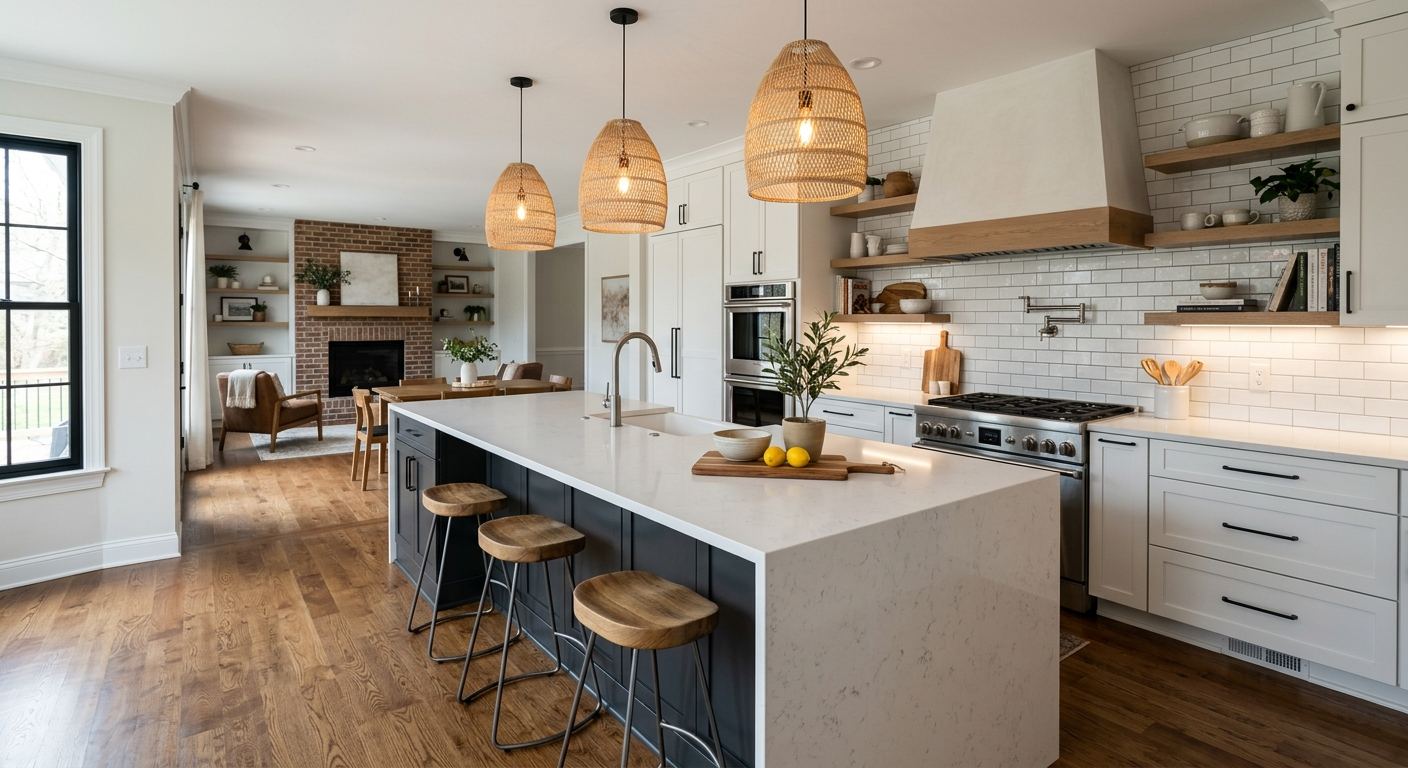
Kitchen renovation options and costs in Evanston
Evanston is a growing community in Alberta’s Calgary economic region, and the kitchen renovation choices you make usually start with budget and resale expectations. In a town like Evanston (population 18,710, Statistics Canada, 2021 Census), homeowners tend to plan upgrades that look current and photograph well for buyers, which is why finish expectations often land above “builder grade.” At the same time, the broader Calgary market pushes renovation decisions toward practical, durable materials—especially when families want to stay in place for several years and still protect resale value.
Local affordability and housing mix matter too. Even without using a single “Evanston-only” income number, the typical household planning for a refresh in the Calgary region is guided by overall income levels in the economic region, and higher household purchasing power correlates with more quartz, natural stone, and semi-custom cabinetry. That’s one reason why “basic” projects still commonly price with better cabinets and solid-surface counters rather than laminate and stock boxes.
Climate itself doesn’t drive costs as much as people think, but Alberta winter and temperature swings can affect installation timelines—drying times, substrate readiness, and the need for careful sealing around backsplashes and countertop seams. Contractors also stay busiest during spring and summer in the Calgary region, so scheduling in high-demand areas of Evanston—especially around the newer residential pockets—can add labour and coordination pressure. With that in mind, here are the most common renovation tiers and what they typically cost, so you can compare quotes apples-to-apples.
| Renovation Tier |
What's Included |
Typical Duration |
Price Range |
| Cosmetic refresh (paint, hardware, new appliances only) |
Paint/primer, new cabinet hardware, faucet/sink accessories (if swapping only fixtures), appliance swaps, basic deep clean, minor trim touch-ups |
3–7 days |
$5,000–$18,000 |
| Mid-range full renovation (new cabinets, counters, sink, tile) |
Semi-custom or upgraded stock cabinetry, new countertop (quartz often), new sink/faucet, backsplash tile, flooring patch/repair as needed, permit coordination if required for plumbing/electrical |
2–4 weeks |
$25,000–$60,000 |
| High-end full renovation (custom cabinets, stone counters, island) |
Fully custom millwork, premium natural stone (or high-end quartz), island build, upgraded lighting (including under-cabinet), coordinated appliance package, extended backsplash (often full-height), improved storage and layout changes |
4–8 weeks |
$70,000–$100,000 |
| Cabinet refacing only (new doors + drawer fronts, same boxes) |
Door/drawer front replacement, new mouldings/panels, hardware install, cabinet prep and refinishing where needed, usually no change to plumbing or electrical |
5–12 days |
$8,000–$35,000 |
| Countertop swap only (laminate to quartz or stone) |
Removal and disposal of old counters, templating, install of new quartz/stone, new sink cut-outs if changing sink model, seam/silicone detailing, backsplash caulk/seal adjustments |
3–10 days (depends on templating/lead times) |
$3,000–$12,000 |
| Backsplash tile installation only |
Tile supply and install, surface prep, waterproofing where needed behind tile, grout/seal, finishing at edges and outlet surrounds |
2–7 days |
$2,500–$8,000 |
Prices are estimates only and vary by project scope, site access and material selection.
What affects the price of kitchen renovation in Evanston
Even when two homeowners request the same “new cabinets and counters” scope, Evanston-area quotes can swing by 30–50% across Calgary and Alberta because pricing follows market finish expectations and how busy trades are—not just the materials on paper. In higher-value Calgary economic-region pockets, homeowners more often choose quartz or natural stone counters and semi-custom cabinetry because the investment is easier to justify at resale. In more modest markets (or for buyers leaning toward faster sell-through), laminate and stock cabinets can deliver better ROI and a quicker refresh. The key is that material tiers are often chosen based on the likely buyer’s expectations at a given price point, not on climate durability alone.
Layout changes are the biggest “wildcard,” regardless of finish. Removing a wall, adding an island, or moving plumbing/gas lines adds labour, inspection steps, and coordination time. For example, moving a sink generally pushes the project toward the mid-range full renovation band (often in the $25,000–$60,000 range), while a countertop-only upgrade (like laminate to quartz) often stays within $3,000–$12,000 even if you choose a higher-end slab. In practice, appliance tiers and electrical work (new circuits for under-cabinet lighting or an island outlet) can shift the budget enough to matter even if cabinetry remains the same.
Concrete Evanston examples that change cost: older homes may need subfloor or cabinet box shimming before stone installs, which affects labour time; homes with tighter alcoves can require more detailed millwork and extra template work; and seasonal scheduling during spring rush can extend project sequencing, increasing site management time. Alberta winters also mean installers need surfaces dry and stable for adhesives and grout—delays here don’t change “materials cost,” but they do change labour days and timeline.
| Price Factor |
Why It Matters |
Cost Impact |
| Cabinet tier — stock vs. semi-custom vs. fully custom millwork |
Higher tiers use better hardware, more options for storage, and more precise fitting; custom also adds design labour |
Can move you from “mid-range” into “high-end” budgets (often several tens of thousands) |
| Countertop material — laminate vs. quartz vs. granite vs. stone |
Material cost, fabrication complexity, and seam planning vary widely by surface type |
Counter swaps can stay around $3,000–$12,000, but premium stone and complex edges push higher |
| Layout change — wall removal, island add, plumbing/gas move |
Triggers structural and MEP coordination, permits, and longer sequencing |
Most likely to add the biggest single jump beyond initial estimates |
| Appliance package tier — builder vs. mid-range vs. pro-grade |
Higher-end appliances increase purchase cost and sometimes require different clearances or ventilation |
Can add several thousand quickly even if cabinets/counters stay mid-tier |
| Flooring — refinish existing vs. full replacement |
If you replace flooring you extend demolition and finishing stages; refinish can limit disruption |
Often shifts labour and material allowances by a noticeable margin |
| Backsplash — ceramic tile vs. marble vs. full-height slab |
Natural stone and full-height walls require more layout precision and labour |
Can range from the $2,500–$8,000 backsplash band to higher when premium slabs are used |
| Electrical — new circuits for island, under-cabinet lighting |
Code requirements and inspection planning add time and licensed trade cost |
Often increases the project cost more than homeowners expect |
| Permit fees and licensed trade requirements |
Permits and inspections affect scheduling; licensed trades must be booked and coordinated |
Can add both direct fees and indirect timeline cost (holding crews, scheduling delays) |
Permits & regulations in Alberta
In Alberta, simple swaps like cabinet and countertop replacements usually don’t require permits. That said, permits are commonly required when you change plumbing or electrical systems, relocate a gas appliance, or make structural changes. For a homeowner in Evanston, the practical rule is: if you’re “moving services” or “touching load-bearing structure,” expect permits and inspections.
Typically does NOT require a permit: replacing cabinets in the same location, swapping countertops, installing a backsplash (tile), and changing fixtures when the plumbing connections are not moved (for example, same location sink faucet swap). If you keep the electrical configuration the same and you’re only swapping appliances, the electrical permit may be avoided—but it depends on what’s being replaced and whether circuits are altered.
Typically DOES require a permit: moving plumbing supply/drain lines (new sink location or relocated dishwasher drain), relocating a gas line or changing where the stove/range hood vents, removing a load-bearing wall (or altering structure), and adding electrical circuits (like new island outlets or additional lighting circuits). Gas work must be done by a licensed gas fitter; electrical work must be done by a licensed electrician, with inspections for both.
To verify a contractor in Evanston before signing, ask for: (1) their Alberta licence details (where applicable for the trade), (2) a certificate of liability insurance, and (3) WSIB/WCB clearance documentation or coverage proof. Look for these on the contractor’s website, in their paperwork package, or via the relevant online registries used for contractor and trade verification. Confirm in writing who is pulling permits, since that responsibility should be clearly stated in your contract before work starts.
Cabinets, countertops and layout decisions in Evanston
Your three biggest decision points in a kitchen renovation in Evanston are almost always: (1) cabinet tier, (2) countertop material, and (3) layout changes. These choices determine not just the look, but how the project prices in the Calgary resale market. Buyers often expect clean, bright surfaces and reliable daily-use materials—so the “value” option is usually the one that looks premium enough without adding unnecessary complexity.
Cabinet tier: stock cabinets are the fastest and cheapest because they reduce custom millwork and template labour. Semi-custom is the most popular mid-range path: you can upgrade storage (corner solutions, drawers, roll-outs) while keeping budgets closer to the $25,000–$60,000 mid-range full renovation band. Custom cabinets can be worth it when you’re dealing with unusual dimensions or want a truly integrated layout—otherwise, it can over-invest relative to what’s commonly paid for in the resale market.
Countertops: laminate offers the lowest cost but won’t match quartz or stone in long-term stain resistance and “everyday finish.” Quartz is a common sweet spot in Alberta homes because it’s durable and low-maintenance. Natural stone (granite/marble) looks high-end, but marble can require more care to keep it looking right; granite is usually more forgiving. A realistic example: if you’re budgeting around $30,000 for a mid-range refresh, upgrading from laminate to quartz might be a relatively small add-on within the overall project, but switching to premium stone plus a more complex island edge profile can quickly push you toward the higher-end $70,000–$100,000 territory.
Layout changes: an open-concept wall removal or island addition can be justified when it improves function and flow (especially in homes where kitchens feel closed-in). But moving plumbing/gas lines is where costs become unpredictable—so plan that change only if the space gain truly solves a daily pain point.
| Option |
Durability |
Maintenance |
Best For |
Price Range |
| Stock cabinets (big-box) |
Good everyday durability; limited customization for odd sizes |
Basic cleaning; replace worn hardware as needed |
Fast refreshes and budgets that prioritize speed over perfect fit |
$8,000–$20,000 |
| Semi-custom cabinets (local dealer) |
Very solid; improved drawer construction and hardware options |
Low; wipe and keep seals/edges intact |
Most Evanston homeowners aiming for resale-friendly upgrades |
$15,000–$35,000 |
| Custom cabinets (local millwork shop) |
Excellent fit and build; best for unique layouts |
Low, but requires proper cleaning and care for finishes |
Unusual dimensions, integrated features, high-end island storage |
$35,000–$65,000 |
| Laminate countertop |
Moderate; can show wear around seams and edges over time |
Simple cleaning; avoid prolonged standing water at seams |
Budget-conscious renovations that want a refreshed look quickly |
$3,000–$6,000 |
| Quartz engineered countertop |
High durability; resists stains and chips better than many surfaces |
Minimal—regular cleaner, avoid abrasive pads |
Daily family kitchens in Alberta where ease matters |
$6,000–$12,000 |
| Granite / natural stone countertop |
Very durable; heat and scratch resistance are typically strong |
May require periodic sealing depending on stone |
Homeowners wanting natural variation and a premium look |
$8,000–$18,000 |
| Butcher block countertop |
Good but sensitive to impact and standing moisture |
Oil/maintenance is required; seal and dry properly |
Warm, casual styles and homeowners who commit to upkeep |
$5,000–$12,000 |
| Marble countertop |
Beautiful but softer; more prone to etching and staining |
Higher care level; regular sealing and cautious use of acidic foods |
Statement kitchens where appearance is the priority |
$10,000–$22,000 |
How to choose a kitchen renovation contractor in Evanston
Choosing the right contractor in Evanston is mostly about proof and clarity. Start with Alberta licensing and coverage: ask whether they rely on licensed trades for gas and electrical work, and request their certificate of liability insurance (and confirm coverage limits match your project risk). For WSIB/WCB, request clearance or proof of coverage showing they’re in good standing for employment-related claims. If you’re unsure what documents you should receive, ask them directly to provide a “compliance package” before you sign—legitimate contractors can do this quickly.
Next, get 2–3 itemised written quotes rather than one lump sum. You want a breakdown that separates labour and materials for cabinets, counters, demolition, tile/backsplash, plumbing/electrical allowances, and disposal. Confirm whether permits are included or excluded, and whether the quote includes drywall repair, caulking, and the return visits needed for final countertop templating and installation.
Read the scope carefully: “included” means installed and finished to a defined standard. Ask about what’s excluded (for example: subfloor repairs, appliance delivery fees, or custom stone fabrication upgrades). Warranty matters too—ensure there’s a workmanship warranty with a stated length and that manufacturer product warranties apply to the right items (and whether they’re transferable to future owners, which can matter for resale confidence).
Finally, keep the payment schedule sensible. In Alberta projects like kitchens, avoid paying more than about 10–15% upfront. Hold back a portion until completion and verification. Make the timeline concrete: a start date, a realistic completion estimate, and a written schedule that accounts for countertop templating and material lead times.
- Request their Alberta compliance package before work begins (licensing details where applicable).
- Verify certificate of liability insurance and confirm the scope matches your kitchen upgrade.
- Ask for WSIB/WCB clearance or proof of coverage.
- Get at least 2 itemised quotes (labour + materials, not just total cost).
- Confirm permit responsibility in writing (who pulls permits and who pays).
- Check disposal and site protection are included (dump fees, plastic containment, dust control).
- Verify countertop process: who templates, who fabricates, and when you’ll receive install date.
- Ensure electrical and gas scopes are clearly stated with licensed trade involvement.
- Confirm flooring and drywall patching scope after cabinet removal.
- Ask for a written warranty: workmanship length, what it covers, and exclusions.
- Review the change-order process and how revisions affect cost and schedule.
- Set a payment schedule and retain holdback until punch list completion.
Red flags in Evanston kitchens include: vague scope descriptions (“allowance” without numbers), refusing to provide proof of insurance/WSIB/WCB, only offering lump-sum pricing without itemised labour and materials, promising countertop installs without confirming templating and lead times, and pushing for large upfront payments beyond 10–15%.
Frequently asked questions — kitchen renovation in Evanston
Can I move my kitchen sink or stove?
Yes, you can move a sink or stove in Evanston, but it’s usually where projects become more expensive and more schedule-sensitive. Moving a sink typically means relocating plumbing supply and drain lines, which usually requires permits and licensed plumbing work (and inspections). Moving a stove can involve gas lines and may also require a licensed gas fitter if it’s a gas range, plus permit coordination. If you’re simply swapping the fixture in the same location, that’s often much simpler and typically falls into countertop/cabinet swap territory. As a cost benchmark, a countertop swap-only project is often within the $3,000–$12,000 band, while a mid-range full renovation that includes relocating services more often clusters around $25,000–$60,000.
What's the most cost-effective kitchen upgrade?
For many Evanston homeowners, the most cost-effective upgrade is replacing surfaces that buyers look at first: countertops and a clean backsplash, paired with updated hardware and lighting. If your cabinet boxes are in decent shape, a cabinet refacing can also deliver a major visual change without the full demolition cost. In budgeting terms, a backsplash tile-only install commonly sits in the $2,500–$8,000 range, and a countertop swap-only project often falls within $3,000–$12,000 depending on material and edging. That said, the “best value” depends on your layout and condition: if your cabinets are worn, doors won’t close properly, or the room feels cramped, spending on layout changes may be justified—but that typically moves you into mid-range or high-end full renovation budgets.
Custom vs stock cabinets — is custom worth it?
Custom cabinets are worth it when you need them—odd wall lengths, non-standard ceiling heights, or a layout where you want integrated solutions (like a tall pantry beside the fridge, or a properly designed island storage system). If your kitchen is fairly standard and you’re aiming for a resale-friendly look, semi-custom is usually the sweet spot: better storage and finish options without the highest millwork costs. Stock cabinets (big-box) are the fastest and cheapest, but they can limit how well you can resolve gaps and awkward corners. As a realistic guide, cabinet-only budgets can range broadly; when you combine cabinetry with counters and tile, mid-range full renovations often land around $25,000–$60,000, while high-end projects with custom millwork and premium stone are commonly closer to $70,000–$100,000. The “worth it” test is whether custom solves a real fit or function problem.
How do I choose a kitchen contractor in Evanston?
Start with verification: ask for their Alberta compliance details where applicable, their certificate of liability insurance, and their WSIB/WCB clearance or proof of coverage. Then compare quotes that are itemised—labour and materials separated—so you can see what you’re actually paying for (cabinets, countertops fabrication, tile install, plumbing/electrical allowances, disposal, and any permit work). A good contractor will clearly state exclusions and how change orders are handled. Make sure the contract specifies warranty terms, including workmanship warranty length and product warranty details (and whether warranties are transferable). Finally, keep the timeline realistic—countertops need templating and lead time. Avoid contractors who press for large upfront payments beyond about 10–15% or who can’t explain the sequencing of demolition, rough-in, cabinet install, and final countertop templating.
What order do kitchen renovation steps happen in?
In Evanston kitchens, the sequence is usually designed to avoid redoing work. First comes demolition and rough prep, including assessing wall condition for cabinet mounting and checking subfloor level where countertops will sit. Next is the “rough-in” phase if you’re changing plumbing, gas, or electrical—licensed trades complete their work and inspections are scheduled as needed. Then you install base cabinets and verify alignment before any countertop templating. After cabinets are set, backsplash tile prep and installation happen (or they’re sequenced so edges line up cleanly with the countertop). Finally, counters are templated and installed, appliances are set, and finishing details (caulking, trim, hardware, and punch list items) are completed. If you move services, inspections can influence timing, which is why a written schedule and realistic start/completion dates are essential.
Can I live at home during a kitchen renovation in Evanston?
Often, yes—many Evanston homeowners live at home during renovation, especially when the scope is limited (like a backsplash-only install or a countertop swap). For mid-range full renovations, living arrangements can be more challenging because cabinetry removal affects how you use sinks, counters, and sometimes the kitchen’s main work zone. High-end full redesigns typically disrupt the kitchen more and can require a temporary setup for cooking and cleanup. Winter in Alberta can also make it harder to rely on outdoor prep areas, so plan early for a temporary microwave, hot plate, or a small secondary cooking station. Discuss access and sequencing with your contractor: where dust control is set up, when the sink will be operational again, and how long lead times for counters will pause your usable countertop space.