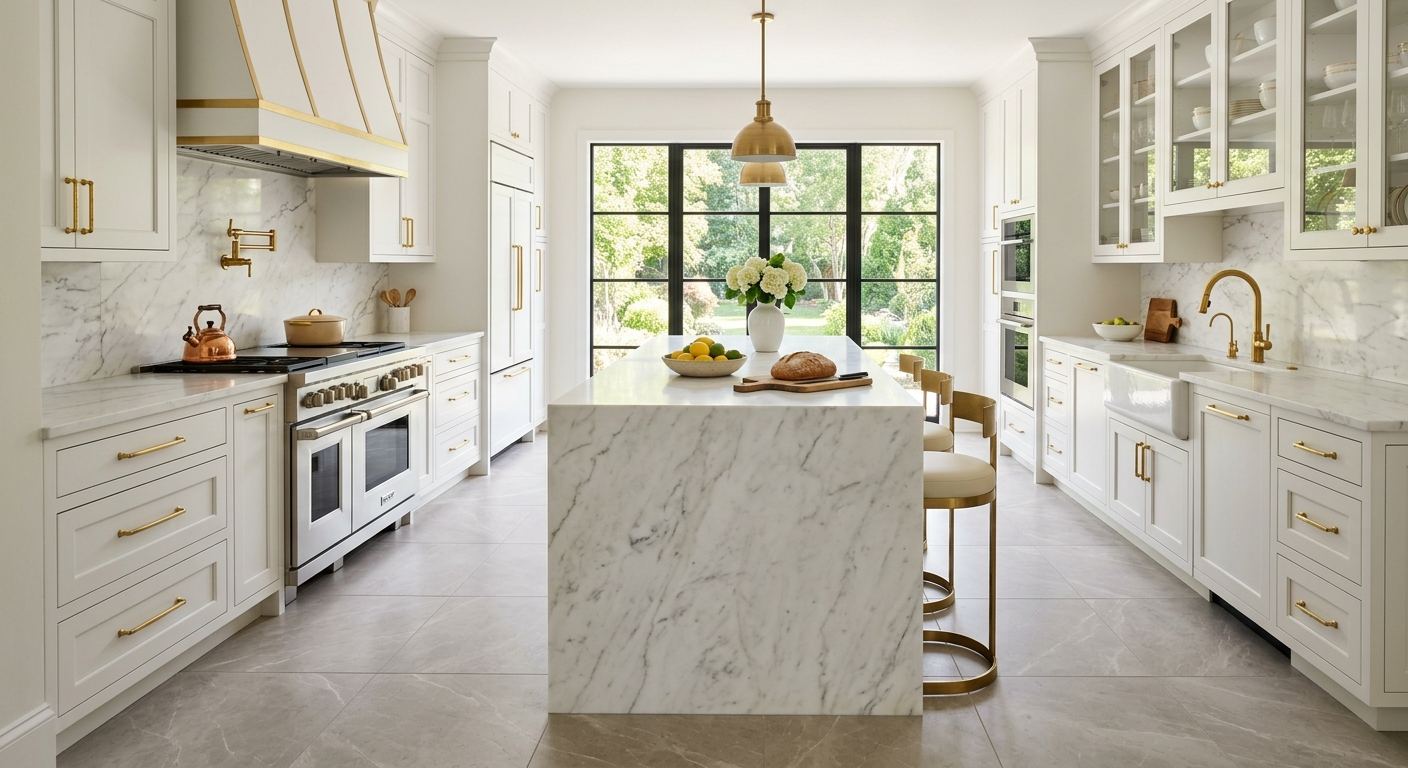
Kitchen renovation options and costs in Edgemont
Edgemont kitchen renovations in the Calgary economic region usually fall into predictable tiers, because most homeowners are balancing resale expectations with what buyers will pay for modern, durable finishes. In 2021, Edgemont’s population was 15,225 (Statistics Canada, 2021 Census), and Calgary-region households typically plan purchases around household affordability and value retention. In higher-value pockets around the city, many homeowners aim for quartz or natural stone and semi-custom cabinetry, since those upgrades are easier to recover at sale—especially when the layout already works for today’s buyers. Even though Alberta’s winters don’t “break” cabinets or stone directly, the season still influences scheduling: drywall, tile, and countertop templating tend to bunch in spring through fall when trades want to reduce on-site delays. Alberta’s strong construction market also means skilled kitchen trades can be booked ahead, which can affect start dates and labour availability.
Cost differences are driven more by market expectations than climate. Labour in Calgary often runs about $90–$140 per hour, and that labour—plus design, project management, and demolition—makes “basic” renovations costlier than people expect. In Edgemont, trades are especially in demand in the older established pockets and along busy collector routes where access and parking are tight, so contractors may price for traffic-control and extra staging. Next, use the comparison table below to match your goals to the most realistic cost band.
| Renovation Tier |
What's Included |
Typical Duration |
Price Range |
| Cosmetic refresh (paint, hardware, new appliances only) |
Paint, new cabinet hardware/hinges, appliance swap (no plumbing/gas changes), minor caulking and trim touch-ups |
3–7 days |
$8,000–$20,000 |
| Mid-range full renovation (new cabinets, counters, sink, tile) |
New semi-custom or upgraded-stock cabinets, quartz or solid-surface counters, sink and faucet, backsplash tile, basic lighting updates |
3–6 weeks |
$25,000–$55,000 |
| High-end full renovation (custom cabinets, stone counters, island) |
Fully custom millwork, premium stone (quartz or natural stone), island with upgraded storage, integrated lighting, expanded tile/backsplash, appliance package |
6–12 weeks |
$70,000–$120,000 |
| Cabinet refacing only (new doors + drawer fronts, same boxes) |
New door and drawer fronts, new hardware, re-surfacing the face frame, updated crown/trim (boxes kept), often a backsplash refresh |
2–4 weeks |
$8,000–$35,000 |
| Countertop swap only (laminate to quartz or stone) |
Template and install new counters, sink cut-out where applicable, faucet/sink adjustments as needed, caulking and edge finishing |
2–7 days (plus template lead time) |
$3,000–$12,000 |
| Backsplash tile installation only |
Ceramic/porcelain tile, waterproof membrane where required, grout/seal, demo of existing loose materials, tidy caulking and finishing |
3–6 days |
$2,500–$8,000 |
Prices are estimates only and vary by project scope, site access and material selection.
What affects the price of kitchen renovation in Edgemont
Even when two homeowners describe the “same” kitchen upgrade in Edgemont, quotes across Calgary and Alberta can differ by 30–50% because the scope rarely matches perfectly: demolition depth, cabinet installation complexity, electrical count, and stone finishing details change the labour hours. In the Calgary economic region, local home values and the way buyers perceive value strongly influence the finish tier. Homeowners in higher-value markets often move to quartz or stone counters and semi-custom cabinetry because the renovation cost is easier to justify on resale—so budgets cluster higher even when the footprint stays similar. In more modest areas, laminate and stock cabinets dominate, since they deliver a visible upgrade with better ROI.
Layout changes are the wild card. Removing a wall for open-concept flow, adding an island, or moving a gas line can push costs beyond what material upgrades alone would cause. For example, upgrading counters from laminate to quartz may land around the $3,000–$12,000 countertop band, but combining that with moving a sink to an island-ready location typically costs far more because plumbing, venting checks, and re-tiling add labour and trade scheduling. Another Edgemont-specific driver is the housing-stock profile: many kitchens are in homes where older electrical capacity and dated ducting require extra scope—so adding under-cabinet lighting and a few new circuits can elevate the electrical portion before cabinets and stone even get installed. That’s why a “mid-range full renovation” often sits in the $25,000–$55,000 band, while moving walls or adding an island commonly pushes into the higher end of the mid five-figures and beyond.
| Price Factor |
Why It Matters |
Cost Impact |
| Cabinet tier — stock vs. semi-custom vs. fully custom millwork |
Custom sizes, internal storage, and finish options increase fabrication time and installation complexity |
- Stock: lowest labour/fit risk
- Semi-custom: most common value tier
- Fully custom: highest cost and longest lead times
|
| Countertop material — laminate vs. quartz vs. granite vs. stone |
Material price, edge profiles, seam layout, and sink cut-outs affect template and install labour |
- Laminate: lowest material cost
- Quartz: strong balance of durability and price
- Natural stone: premium finishing and sealing considerations
|
| Layout change — wall removal, island add, plumbing/gas move |
Structural, plumbing, and gas relocations trigger extra trades, inspections, and higher uncertainty in labour hours |
- Typically adds the biggest swing to total budget
|
| Appliance package tier — builder vs. mid-range vs. pro-grade |
Electrical requirements, venting complexity, and premium finishes change scope and install time |
- Pro-grade can require more custom integration
|
| Flooring — refinish existing vs. full replacement |
Matching finishes, transitions, and leveling impact demo time and material waste |
- Refinish reduces demo and disposal
- Full replacement increases time and material costs
|
| Backsplash — ceramic tile vs. marble vs. full-height slab |
Harder materials need more careful cutting, sealing, and longer setting/curing schedules |
- Ceramic: fastest installation
- Marble/large-format: higher labour and breakage risk
|
| Electrical — new circuits for island, under-cabinet lighting |
Added outlets, dedicated circuits, and lighting require licensed electrician time and inspection planning |
- Can meaningfully increase labour and schedule
|
| Permit fees and licensed trade requirements |
When work involves gas, plumbing relocation, structural changes, or new circuits, paperwork and inspections are unavoidable |
- Can add time, coordination, and small admin fees
|
Permits & regulations in Alberta
In Alberta, many kitchen updates don’t require permits, but the ones that do can change your timeline and total cost. Generally, cabinet and countertop swaps—like replacing laminate tops with quartz, or installing new cabinet doors over existing boxes—typically do not require permits. The permit triggers usually appear when you move the “infrastructure” of the kitchen: relocating plumbing supply or drain lines, changing where a gas appliance connects (stove/range), removing a load-bearing wall, or adding electrical circuits (for example, dedicated power for an island or new under-cabinet lighting tied into a new circuit). Gas work must be completed by a licensed gas fitter, and electrical work must be completed by a licensed electrician, with the required inspections.
For homeowners in Edgemont, the safest approach is to verify before you sign. Step 1: ask for the contractor’s Alberta licence information and the names of the subcontractors they use for gas/electrical. Step 2: request a certificate of insurance (liability) showing current coverage and the policy effective dates. Step 3: confirm WSIB/WCB coverage (often via documentation provided directly by the contractor or subcontractor). Step 4: ensure the contract clearly states who pulls permits and who pays for inspections—responsibility should be in writing, not left to “we’ll handle it.” That line item clarity prevents surprises when the project shifts from a countertop-only scope into a wall or utility relocation.
Cabinets, countertops and layout decisions in Edgemont
Edgemont homeowners usually get the best results by treating three decisions as your “big levers”: (1) cabinet tier (stock, semi-custom, or custom), (2) countertop material (laminate, quartz, granite, butcher block, or marble), and (3) layout changes (open-concept wall removal, island addition, and whether you need plumbing/gas relocation). In the Calgary market, buyers tend to expect a modern, clean look at different budget levels. That means stock cabinets can be a fast refresh, semi-custom is the most common sweet spot for fit and storage, and fully custom millwork is what justifies itself when you’re also changing the layout or solving awkward existing dimensions.
Countertops follow the same logic. Laminate can be budget-friendly, but it’s more sensitive to heat and impact at busy cooking zones. Quartz is often chosen because it’s durable, low-maintenance, and less fussy about everyday care—so it commonly lands in the mid renovation bands. Natural stone (granite/marble) can look premium and add visual character, but marble in particular may require more careful sealing and maintenance planning. A realistic example: if you’re staying within a mid-range full renovation budget (often $25,000–$55,000), upgrading from laminate to quartz usually costs within the typical countertop band (about $3,000–$12,000). The upgrade becomes less justified if you’re also adding an island and moving a sink—because then the plumbing and rework costs can outweigh the marginal benefit of changing stone type alone.
Layout decisions are where space gain matters most. Adding an island can improve work zones and seating flow, but it’s most cost-justified when your kitchen already has enough width to avoid a cramped walkway. In older Edgemont homes, if electrical capacity is limited, adding island power can require more electrical scope—so build that into your decision-making early.
| Option |
Durability |
Maintenance |
Best For |
Price Range |
| Stock cabinets (big-box) |
Good for standard sizes; less forgiving when your wall/tile lines are off |
Low maintenance; finish is straightforward to clean |
Fast, budget-conscious refresh where the layout doesn’t change much |
$8,000–$20,000 |
| Semi-custom cabinets (local dealer) |
Very solid build; better options for widths, storage upgrades, and finishes |
Easy everyday care; hardware selection drives longevity |
Most common choice for Edgemont renovations aiming for resale appeal |
$20,000–$45,000 |
| Custom cabinets (local millwork shop) |
Top-tier fit and finish; ideal for odd corners and integrated details |
Maintenance depends on finish type; typically durable with proper care |
When you’re changing layout or want bespoke storage and a “built-in” look |
$45,000–$80,000 |
| Laminate countertop |
Moderate; can chip or scorch with heat and sharp impacts |
Easy cleaning, but you should avoid prolonged heat exposure |
Budget refresh where you want a new look without major spend |
$2,000–$5,000 |
| Quartz engineered countertop |
High durability; resistant to staining and everyday wear |
Low maintenance; clean with mild soap and avoid abrasive pads |
Busy kitchens and homeowners wanting predictable performance |
$5,000–$10,000 |
| Granite / natural stone countertop |
Very durable surface; performance depends on stone type and finish |
Some stones benefit from periodic sealing |
Premium look where you’re willing to do light maintenance |
$7,000–$12,000 |
| Butcher block countertop |
Decent durability; can be dented but repairs are possible |
Needs periodic oiling; protect from soaking and prolonged moisture |
Warm aesthetic, casual family use, and routine maintenance habits |
$4,000–$9,000 |
| Marble countertop |
Beautiful but softer than quartz; can etch with acidic spills |
Requires careful cleaning and often sealing/maintenance |
Statement kitchens where you want a luxury look |
$8,000–$14,000 |
How to choose a kitchen renovation contractor in Edgemont
Choosing the right contractor matters as much as materials in Edgemont, because kitchen jobs rise and fall on coordination—cabinet lead times, stone templating, and the order trades arrive. Start with licensing and coverage. Ask the contractor for proof of Alberta trades credentials for any work that needs it: gas fitting (licensed gas fitter) and electrical (licensed electrician). Then request a certificate of liability insurance showing active coverage and limits. For workforce protection, confirm WSIB/WCB coverage with supporting documentation—this protects you if something goes wrong on site.
Next, get 2–3 itemised written quotes. Insist the quote breaks out labour and materials separately (demo, framing/drywall, electrical, plumbing, cabinets, counters, tile, disposal, and project management). Avoid “one-number” lump sums unless the scope is extremely clear. Read exclusions carefully: what’s not included (old drywall repairs, subfloor leveling, site protection, garbage hauling, appliance installation), whether permits are included, and how long countertop templating lead time is anticipated. Ask about warranty in writing: the workmanship warranty length, the product/manufacturer warranty for cabinets and counters, and whether warranty coverage is transferable if you sell your home.
On payment, never start with a huge upfront. A common homeowner-friendly approach is 10–15% upfront, then staged draws tied to measurable milestones, with a holdback until the job is complete and any deficiencies are corrected. Finally, insist on a timeline with a start date and completion estimate in writing, including when design and templating will occur.
- Verify Alberta licence/credentials for any subcontracted gas and electrical work.
- Request certificate of insurance (liability) and confirm it’s current.
- Confirm WSIB/WCB coverage with documentation.
- Get 2–3 itemised quotes (no vague “allowances” everywhere).
- Confirm who pulls permits and who pays permit/inspection fees.
- Check what disposal is included (construction debris, old cabinets/counters removal).
- Confirm demolition scope (do they remove tile backer boards, re-level, or only demo fixtures?).
- Ask about countertop templating timing and who coordinates with the stone fabricator.
- Verify the electrical plan for island circuits/outlets (and include lighting if desired).
- Ensure warranty terms are written: workmanship, materials, and transferability.
- Use a payment schedule with a 10–15% maximum upfront and a holdback for completion.
- Get a written schedule with key checkpoints (design approval, cabinet order, templating, install).
Common red flags in Edgemont: (1) quotes that don’t specify plumbing/gas/electrical scope clearly, (2) refusing to provide insurance or proof of coverage, (3) lump-sum pricing with no allowances list, (4) asking for large upfront payments beyond 10–15%, and (5) no written start date/completion target or a contract that doesn’t state permit responsibility.
Frequently asked questions — kitchen renovation in Edgemont
What’s the most popular kitchen style in Edgemont right now?
In Edgemont and across the Calgary area, the most commonly requested look is a modern, bright “transitional” kitchen: shaker-style or flat-panel doors, warm neutral colours (white, greige, or light taupe), and a practical stone look that photographs well for resale. Many homeowners pair that style with quartz counters and full-height backsplashes or a clean tiled backsplash that ties into the flooring. Because Calgary trades labour often runs around $90–$140 per hour, style choices that reduce rework—like standardised cabinet sizes and straightforward appliance integration—help keep budgets predictable. If your project is more of a refresh, you can often start around the cosmetic band; otherwise, mid-range full renovations typically land around the $25,000–$55,000 range depending on cabinet and counter selections (Statistics Canada, 2021 Census).
How do I know if I need to update my kitchen plumbing in Edgemont?
In Alberta, plumbing updates usually aren’t about the weather—they’re about condition and performance. You may need updates if you’re seeing slow drains, inconsistent hot water, recurring leaks under sinks/dishwashers, water hammer noises, or signs of corrosion around shutoffs and supply lines. If you’re changing where your sink or dishwasher sits, plan on plumbing relocation work, which is typically part of the renovation scope and may require permitting and licensed trades coordination. A good contractor will inspect shutoffs, check pipe material condition, and pressure-test or review water flow before you close up walls. In Edgemont kitchens that are getting a mid-range refresh, homeowners sometimes keep existing lines and budget for cosmetic and counter upgrades; but if you’re in a full redesign, it’s smarter to price plumbing updates early to avoid tearing out cabinets after install.
What is the difference between a galley and open-concept kitchen?
A galley kitchen is a corridor-style layout, with counters along two parallel walls. It’s often efficient in smaller footprints, but it can feel tight if you want an island or seating without careful walkway widths. An open-concept kitchen removes barriers (often via wall removal or a less-separated dining area) to create sightlines and a shared living space. In Edgemont, open-concept designs are popular because they improve how families use the home, but they’re also the layout changes most likely to trigger additional complexity—like structural considerations, inspections, and increased coordination across trades. Practically, that means an open-concept shift can push budgets toward the mid five-figures and higher, while a galley refresh may stay closer to cosmetic or counter/cabinet swap bands depending on how much utility work you’re changing (Statistics Canada, 2021 Census).
How do I get accurate kitchen renovation quotes in Edgemont?
To get accurate quotes, you need to make the scope comparable. Start by writing down exactly what you want changed: cabinets yes/no, counters yes/no, sink and faucet, backsplash size, flooring replacement or not, and whether you want to move the plumbing/gas or add an island. Ask for 2–3 itemised quotes with labour and materials broken out, and include allowances for stone, cabinet hardware, and any electrical changes. Ensure the quote states: permit responsibility, disposal/hauling, and what’s excluded (like patching drywall, subfloor levelling, or appliance installation). For accuracy in Edgemont’s timing-sensitive environment, ask how they handle countertop templating lead time and scheduling around trade availability. If you’re budgeting, you can use bands like $3,000–$12,000 for countertop installation or $25,000–$55,000 for a mid-range full renovation, but only after confirming what’s actually included.
What’s the best countertop material for a busy Edgemont kitchen?
For most busy Edgemont households, quartz is the best balance of durability and low day-to-day maintenance. It resists staining well, handles frequent cooking, and typically needs no sealing like many natural stones. If you spill acidic foods, quartz is still generally more forgiving than marble, which can etch and needs more careful care. Laminate can work for lower budgets and gives a refreshed look, but it’s more vulnerable to heat marks and impacts in heavy-use zones. Granite can also be excellent for durability and looks, but material variation and maintenance practices matter. A practical planning approach is to choose your tier first: if you’re aiming for a renovation in the $25,000–$55,000 mid-range band, quartz often fits comfortably within the typical $5,000–$10,000 countertop investment range depending on thickness and edges.
How do I add an island to my Edgemont kitchen?
Adding an island is doable, but the cost and complexity depend on spacing and whether you need electrical, plumbing, or gas changes. First confirm clearance: you need enough walkway room so the kitchen doesn’t become cramped when cupboards and doors open. Next decide if the island will be purely prep/storage or if it will include a sink, dishwasher, or cooktop. If you add a sink, you’re likely relocating plumbing supply/drain lines; if you add power for outlets or under-cabinet lighting, expect electrical scope. If gas is involved (cooktop or range elements), ensure it’s done by a licensed gas fitter and coordinated for permitting/inspections. In many Edgemont projects, the island is the “pivot point” that moves budgets upward because it bundles multiple trades. Your contractor should show a plan, a demo/rough-in sequence, and a countertop seam/templating plan before you commit.