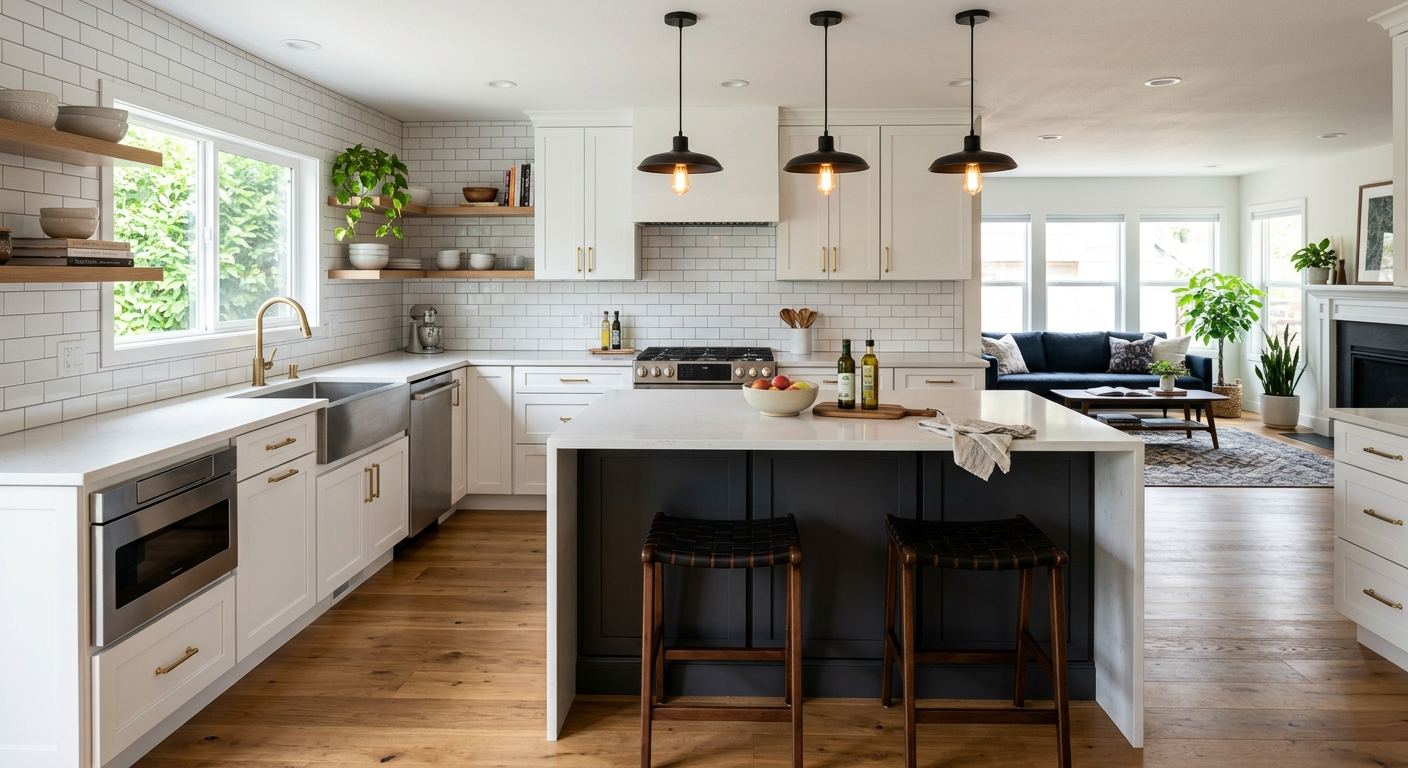
Kitchen renovation options and costs in Victoria Village
Victoria Village is a busy, family-focused pocket of Toronto where homeowners often renovate to balance daily comfort with resale appeal. With a population of 17,510 (Statistics Canada, 2021 Census), the area’s demand keeps trade crews booked for much of the year, and that shows up in lead times and scheduling costs. In higher-value Toronto pockets, many buyers expect upgraded materials; in practice, that means kitchens commonly move toward the 8%–15% of home value spend pattern, with more homeowners selecting quartz or natural stone and custom or semi-custom cabinetry. Even when the job is “only a kitchen,” the choice of finishes usually depends more on what the market rewards than on local weather.
Ontario’s climate doesn’t directly change cabinet installation or countertop fabrication the way it might on exterior work, but it does affect logistics: winter cold can slow concrete subfloor patching and increase drying times, while humidity swings can influence backsplash grout curing and paint flash-off. In Victoria Village, demand is especially strong near the busier corridors and amenities around the North York–style residential streets, where many homes are older and benefit from layout optimization. Because of this, contractor availability tends to tighten in spring and early summer, and estimates can vary depending on schedule and material sourcing.
Use the bands below as a realistic starting point for scoping your project, then we’ll break down what pushes a quote higher or lower in the next section.
| Renovation Tier |
What's Included |
Typical Duration |
Price Range |
| Cosmetic refresh (paint, hardware, new appliances only) |
Paint/trim touch-ups, new hardware, appliance swap (no plumbing/gas moves), basic clean-up |
3–7 days |
$5,000–$15,000 |
| Mid-range full renovation (new cabinets, counters, sink, tile) |
New semi-custom cabinets, quartz or quality laminate counters, sink swap, backsplash tile, accessory installs |
3–6 weeks |
$25,000–$60,000 |
| High-end full renovation (custom cabinets, stone counters, island) |
Custom cabinetry, premium quartz/natural stone, island build (often with updated electrical), upgraded lighting/trim |
6–10+ weeks |
$65,000–$90,000 |
| Cabinet refacing only (new doors + drawer fronts, same boxes) |
Refaced doors/drawers, new hinges/pulls, refinished or relaminated surfaces (existing boxes retained) |
1–2 weeks |
$8,000–$35,000 |
| Countertop swap only (laminate to quartz or stone) |
Remove/replace countertop, install new undermount sink cut-outs as needed, edge profiling |
2–5 days |
$3,000–$15,000 |
| Backsplash tile installation only |
Demo (if needed), tile supply/installation, grout/seal, caulking to cabinets and counters |
3–7 days |
$2,000–$10,000 |
Prices are estimates only and vary by project scope, site access and material selection.
What affects the price of kitchen renovation in Victoria Village
In Victoria Village, you can see 30%–50% quote differences for the same “kitchen refresh” because Toronto-area budgets are driven less by climate and more by what local buyers pay for on resale. Home values and household expectations strongly influence finish tier: in higher-value GTA pockets, homeowners default to quartz or stone counters and semi-custom cabinetry because the upgrade cost is easier to recover at listing time. Where owners are more price-sensitive, laminate and stock cabinets keep the project in the low–mid range while still improving function and appearance.
Layout changes are the biggest wildcard regardless of finish level. Removing a wall, adding an island, or moving a gas line or drain typically adds trades, inspection steps, and schedule risk—so even a $25,000 kitchen can drift quickly toward the next budget tier. For example, a mid-range renovation that includes new cabinets and quartz often lands in the $25,000–$60,000 band, but if you add an island and relocate plumbing, the labour and rough-in work can push you toward the $65,000–$90,000 range without upgrading every finish.
Concrete Victoria Village examples: (1) Many older homes have out-of-level floors or aging subfloor edges, which increases prep time before cabinets and tile go in; that prep cost is labour-heavy but not material-heavy. (2) Standard 60–90 year-old electrical setups sometimes require new circuits for island outlets and under-cabinet lighting—this can raise cost even if your countertops stay the same. (3) If your backsplash wall hides plumbing vents or older routing, demo can uncover surprises and alter tile pricing.
| Price Factor |
Why It Matters |
Cost Impact |
| Cabinet tier — stock vs. semi-custom vs. fully custom millwork |
Lower-cost tiers shorten lead times and reduce labour for fit/finish |
Often the largest line-item swing across the job; can shift budgets by tens of thousands |
| Countertop material — laminate vs. quartz vs. granite vs. stone |
Material pricing and fabrication complexity increase install time and edge/undermount work |
Can move projects from the low–mid range into the higher tier |
| Layout change — wall removal, island add, plumbing/gas move |
Rough-in work triggers additional trades, inspections, and schedule risk |
Typically adds the most unpredictability, regardless of finish level |
| Appliance package tier — builder vs. mid-range vs. pro-grade |
Higher tiers often require different venting, more electrical demand, and stricter installation clearances |
Moderate impact alone, but compounds with ventilation/electrical changes |
| Flooring — refinish existing vs. full replacement |
Matching existing flooring can be cheaper; full replacement adds demo, subfloor prep, and labour |
Can add meaningful cost depending on current condition |
| Backsplash — ceramic tile vs. marble vs. full-height slab |
Premium products increase material and require more careful layout and sealing |
Backsplash budgets range widely; full-height installs can be a major add-on |
| Electrical — new circuits for island, under-cabinet lighting |
New circuits require licensed work and may involve panel capacity checks |
Can significantly increase cost if the panel or routing is difficult |
| Permit fees and licensed trade requirements |
Permits and inspections add process steps; licensed trades affect scheduling |
Usually a smaller portion of total cost, but changes project duration and coordination |
Permits & regulations in Ontario
In Ontario, many kitchen “swap” projects can be done without pulling a building permit, especially when you keep plumbing and gas lines in the same locations and you’re not changing structural elements. In most cases, cabinet and countertop swaps do not require a permit by themselves—so painting cabinets, replacing doors, and installing new laminate or quartz tops are typically straightforward.
Where permits and licensed trades do come into play is when you change how the services run. You generally need permits (and the associated inspections) for work such as: moving or adding plumbing supply/drain lines; relocating a gas stove/range or making any gas line changes; removing or altering a load-bearing wall; and adding electrical circuits (for example, new island receptacles or additional lighting circuits). Gas work must be performed by a licensed gas fitter, and electrical work by a licensed electrician—both require proper inspections.
For Victoria Village homeowners, verify before signing by checking: (1) the contractor’s Ontario business profile and trade credentials where applicable, (2) their certificate of insurance (liability) and confirm coverage amount, and (3) WSIB/WCB status (clearance letters or active account proof). Ask for a copy of the clearance/coverage documents to be included in your file. Then confirm in writing who is responsible for permits and inspections—permit responsibility should not be left to verbal agreement.
Cabinets, countertops and layout decisions in Victoria Village
Three decisions usually determine whether your Victoria Village kitchen feels “right” day-to-day and sells easily later: (1) cabinet tier, (2) countertop material, and (3) whether you change the layout. Cabinet tier controls speed, fit quality, and how custom the storage feels; stock cabinets are the fastest, semi-custom is the most popular mid-range option, and custom millwork gives the best fit if you’re pursuing a higher-end layout.
Countertops matter just as much. Laminate is the budget-friendly route, while quartz offers a strong balance of appearance and everyday durability. Granite and other natural stones can be stunning, but they require more attention to sealing and maintenance habits. Butcher block is warm and functional for chopping, but it’s more sensitive to water and requires a regular care routine.
Finally, layout is where Toronto resale expectations get real. Open-concept and island layouts are often chosen because they create better sightlines and seating, but they only justify the cost when there’s enough room for clear circulation and when you’re ready for the rough-in work. If you’re changing plumbing/gas or adding an island, budget and schedule risk increase more than the finish upgrade does.
A helpful dollar example: upgrading from laminate to quartz on a mid-range kitchen can be a relatively “high-impact, predictable” change—often aligning with the $25,000–$60,000 project band. But adding an island and relocating plumbing/gas can push you into the upper range $65,000–$90,000 even if cabinetry stays semi-custom, because the labour coordination is the driver.
| Option |
Durability |
Maintenance |
Best For |
Price Range |
| Stock cabinets (big-box) |
Good for typical daily use; limited custom sizing |
Wipe-clean routine; replace damaged components if needed |
Quick turnarounds and cost-controlled refreshes |
$8,000–$20,000 |
| Semi-custom cabinets (local dealer) |
Very solid construction for most households; better storage options |
Normal cleaning; hinges and drawers maintainable |
Most Victoria Village homeowners aiming for resale-ready results |
$18,000–$40,000 |
| Custom cabinets (local millwork shop) |
Highest fit and finish; tailored storage and details |
Normal cleaning; custom hardware setup is easier to maintain |
Unique layouts, built-ins, and higher-end stone/island plans |
$35,000–$65,000 |
| Laminate countertop |
Moderate; can chip at edges with impact |
Wipe clean; avoid prolonged standing water at seams |
Budget-friendly upgrades when cabinetry is the priority |
$3,000–$7,000 |
| Quartz engineered countertop |
High durability; resistant to staining and everyday wear |
Minimal—regular soap-and-water cleaning |
Low-maintenance kitchens that match Toronto resale expectations |
$6,000–$12,000 |
| Granite / natural stone countertop |
Very durable; heat resistant with proper installation |
May require periodic sealing; clean with stone-approved products |
Homeowners wanting a natural look and premium feel |
$9,000–$15,000 |
| Butcher block countertop |
Good impact tolerance; can scratch more easily |
Oil/maintain regularly; protect from moisture |
Warm, lived-in kitchens where owners will care for surfaces |
$4,500–$10,000 |
| Marble countertop |
Premium feel; softer and more prone to etching/staining |
Higher care routine; sealing and gentle cleaning required |
Statement kitchens where appearance is prioritized over hard use |
$10,000–$18,000 |
How to choose a kitchen renovation contractor in Victoria Village
Choosing the right contractor in Ontario starts with proof, not promises. Verify Ontario licensing/credentials where applicable, and confirm liability insurance with an active certificate showing the coverage amount and validity dates. For work requiring regulated trades, ask how they’ll handle licensed trades (gas fitter/electrician) and inspections. Also confirm WSIB/WCB coverage by requesting clearance letters or proof of account status—this matters for jobsite safety and for your protection if an injury occurs. If a contractor can’t provide documentation quickly, treat that as a red flag.
Next, get 2–3 itemised written quotes. You want labour and materials broken out (cabinets, counters, demolition, electrical/plumbing rough-in if applicable, tile, disposal). Avoid lump sums that don’t clearly state what’s included. Read the scope line-by-line: Is permit pulling included? Is disposal and dumpster rental included? Who supplies and sets plumbing/electrical rough-in locations? What’s the start date and schedule for cabinet and countertop lead times?
Warranty matters too. Ask for the workmanship warranty length and whether it’s transferable, and separately note the manufacturer warranty terms for cabinets, countertops and appliances. For payment, a safe practice is keeping upfront deposits to no more than 10–15% and holding back a portion until completion and punch-list items are done. Then insist the timeline—start date and estimated completion—be confirmed in writing.
- Request certificates of liability insurance and confirm coverage dates.
- Ask for WSIB/WCB clearance proof before work begins.
- Confirm which work will be done by licensed trades and who books inspections.
- Get itemised quotes with line-item labour and materials (not a single total).
- Ask whether permits are included and who is responsible for permit fees.
- Confirm disposal/dumpster and drywall/tile demo haul-away are included.
- Verify cabinet lead times in writing and what happens if materials arrive late.
- Check countertop template dates and who pays for remake fees if measurements are off.
- Request a written warranty for workmanship and product/manufacturer warranties.
- Agree on payment milestones tied to measurable completion steps.
- Use a written change-order process with pricing in advance of any extra work.
- Ask for references from similar Victoria Village projects and view photos in comparable finishes.
Common red flags in Victoria Village include: (1) quotes that don’t specify permit responsibility and licensed trade scope, (2) unusually low pricing compared to the $25,000–$90,000 reality band for full kitchens without a clear explanation, (3) vague inclusions like “flooring allowance” with no numbers, (4) refusal to provide insurance/WSIB/WCB documentation, and (5) payment schedules asking for large upfront deposits beyond 10–15%.
Frequently asked questions — kitchen renovation in Victoria Village
What order do kitchen renovation steps happen in?
In Victoria Village, a typical renovation sequence starts with confirmation of your final layout, appliance sizes, and service locations (plumbing/drain and electrical needs). We then complete demo, followed by rough-ins if you’re moving plumbing, venting or electrical circuits—those rough-in inspections must be handled before cabinets or tile close everything up. After approvals, you prep the subfloor/walls, install cabinets, and level/secure them. Countertops are templated once cabinets are set, then installed. Tile/backsplash is usually completed after counters go in (or scheduled around it), with grout and sealers curing while trim and painting are completed last. Disposal and final cleaning are scheduled near the end so nothing gets damaged during cabinet and counter work.
Can I live at home during a kitchen renovation in Victoria Village?
Often yes, but it depends on how invasive your scope is. If you’re doing a cosmetic refresh or a countertop-only project, you may be able to use the kitchen partially. For a mid-range full renovation (commonly in the $25,000–$60,000 band), most homeowners set up a temporary cooking station in another room because demolition and counter removal make the main work zone unusable. If you’re doing layout changes—especially electrical circuit additions or moving plumbing—living on-site usually requires more careful staging and protection of adjacent areas. In Ontario winters, drying times for patching and paint can extend, so we recommend planning a functional “Plan B” for meals. Your contractor should propose daily dust control and at least one clear pathway through the home.
Should I renovate my kitchen before selling in Victoria Village?
Generally, renovation timing is about buyer expectations and your current kitchen condition. In Victoria Village and across the Toronto market, kitchens still “sell the home,” so improving visible elements like cabinetry finish, lighting, and countertops can help. However, if the project requires major layout changes or premium stone, you should treat it like an investment decision rather than a pure lifestyle upgrade. If you’re aiming for resale, mid-range finishes (semi-custom cabinets, quartz or quality laminate) often align with the $25,000–$60,000 band and can be easier to justify. Premium custom builds and stone/island packages can reach $65,000–$90,000 and should be matched to your home’s value and buyer segment. If you’re unsure, a local realtor can help you benchmark what upgrades are most valued for your specific listing price point.
What's the most popular kitchen style in Victoria Village right now?
Right now in Victoria Village, many homeowners are leaning toward clean-lined modern looks with warm neutrals—think shaker-style fronts (often in soft whites, greys or natural wood tones), simple hardware, and quartz counters. Islands are popular when the footprint supports comfortable circulation, but many reno plans still keep a practical, family-friendly layout because resale buyers in Toronto often want both entertaining space and real storage. Backsplashes frequently use large-format tile or a simple pattern that doesn’t feel dated quickly. On the finishes side, quartz is a common default because it fits the “low-maintenance” expectation; laminate remains a budget strategy for those keeping the overall project closer to the mid-range. The key is choosing a style that matches the rest of your home’s flooring and light fixtures.
How do I know if I need to update my kitchen plumbing in Victoria Village?
You may need plumbing updates if you’re moving sinks/dishwashers, dealing with ongoing leaks or slow drains, or if your existing rough-in lines are undersized or corroded. Signs include recurring under-sink moisture, water pressure that fluctuates, discoloured supply lines, frequent disposal resets, or a drain that gurgles even after routine clearing. If you’re changing layout or adding an island with new sinks, plumbing upgrades are almost unavoidable because you’ll be adding new connections and rerouting drains/supplies. Also consider that older housing stock often has older shutoff valves or workmanship that’s hard to troubleshoot once walls and cabinets come down. A contractor should assess the condition during demo and recommend the least disruptive path that avoids rework later.
What is the difference between a galley and open-concept kitchen?
A galley kitchen is typically a corridor-style layout with counters on two parallel walls, creating an efficient work triangle but less space for seating. An open-concept kitchen removes the barrier between kitchen and living/dining, often adding an island or peninsula to define the cooking zone. In Ontario homes around Victoria Village, you’ll see both: galley plans are common in older footprints, while open-concept designs are popular when buyers want a more social flow. Cost differences show up when you change structure or services: removing a wall can require permits and coordination, and adding an island may mean electrical, plumbing or venting changes. That’s why your quote can shift more than finish selection alone—layout work can move a job from the mid-range band toward the higher tier even if cabinets stay semi-custom.