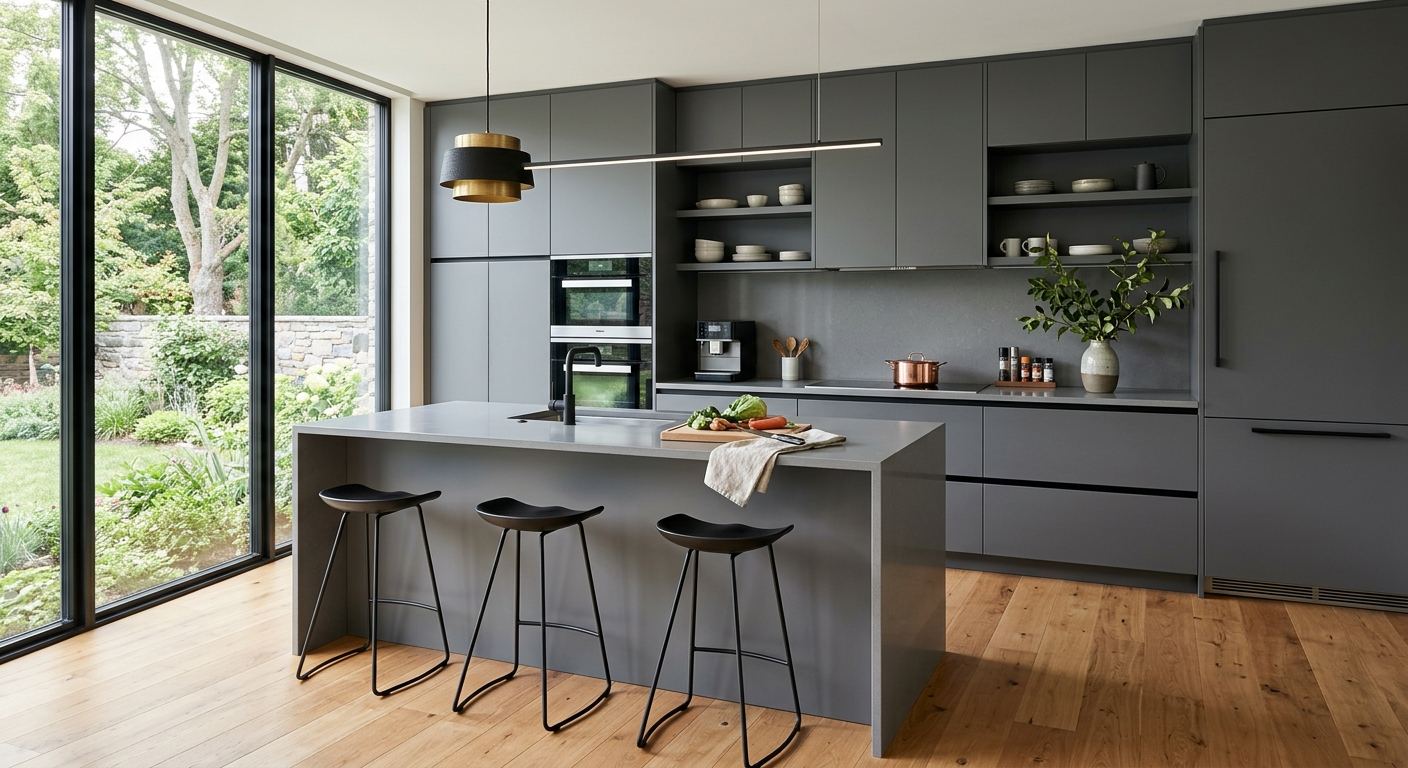
Kitchen renovation options and costs in Mount Pleasant East
Kitchen renovations in Mount Pleasant East typically start with a simple choice: how much you want to change visually versus what you want to change structurally. With a population of 16,775 (Statistics Canada, 2021 Census), the area is busy with mid-sized owner households who often renovate to match Toronto-area buyer expectations—clean lines, durable surfaces, and layouts that feel bright. In the broader Toronto economic region, higher-value homes tend to justify upgrading cabinetry and counters more often, and that shows up in quotes: many projects land in finish tiers where homeowners are essentially treating the kitchen as a long-term resale feature rather than a short-term refresh. Even though Mount Pleasant East is not the priciest pocket in Toronto, expectations are still elevated compared with more price-sensitive GTA pockets.
In practice, Toronto-area market demand affects cost more than climate does. Costs are driven mainly by cabinet and countertop lead times, labour availability, and what finish tier you choose—not winter frost or summer humidity. Where climate does matter is in material performance: solid wood and laminate can tolerate normal indoor swings, but bathrooms and kitchens in older homes need good ventilation to prevent odour and moisture build-up behind tile and cabinetry. Older housing stock also means you may discover older shutoffs, outdated electrical panels, or plumbing that must be reworked once floors and walls open up, which is why “mid-range refresh” quotes can shift quickly after demolition.
In Mount Pleasant East, the contractor demand is especially steady around family-focused pockets and retail-adjacent streets where homeowners want a modern, functional kitchen before listing. From there, the easiest way to budget is to compare renovation tiers side-by-side.
| Renovation Tier |
What's Included |
Typical Duration |
Price Range |
| Cosmetic refresh (paint, hardware, new appliances only) |
Cabinet repaint or touch-ups, new pulls/knobs, paint and caulking, appliance swaps, minor wall/trim patching |
1–2 weeks |
$8,000–$15,000 |
| Mid-range full renovation (new cabinets, counters, sink, tile) |
Semi-custom or stock cabinets, quartz or good laminate counters, new sink and faucet, backsplash tile, floor protection work, basic lighting/updates |
4–8 weeks |
$25,000–$55,000 |
| High-end full renovation (custom cabinets, stone counters, island) |
Fully custom millwork, premium quartz/natural stone counters, island build, upgraded appliance package, fuller backsplash (often to ceiling), electrical enhancements |
8–14 weeks |
$55,000–$90,000 |
| Cabinet refacing only (new doors + drawer fronts, same boxes) |
New door and drawer fronts, veneer-style finish, new hinges/pulls, cosmetic adjustments, countertop can stay or be swapped separately |
2–5 weeks |
$8,000–$25,000 |
| Countertop swap only (laminate to quartz or stone) |
Remove old tops, template, new quartz/stone installation, reseal/finish at edges, sink cut-out refinishing |
1–3 weeks |
$3,000–$15,000 |
| Backsplash tile installation only |
Ceramic tile or upgraded tile, surface prep, layout and waterproofing detail, grout and sealant |
3–7 days |
$2,000–$10,000 |
Prices are estimates only and vary by project scope, site access and material selection.
What affects the price of kitchen renovation in Mount Pleasant East
Across Toronto and Ontario, even “the same kitchen” can price differently by 30–50% because contractors are not just quoting materials—they’re pricing risk. The risk is hidden in what gets uncovered after demolition (plumbing condition, electrical capacity), in how many trades must coordinate (cabinet makers, electricians, gas fitters, tile setters), and in scheduling/lead times. In Mount Pleasant East, quotes frequently diverge based on local finish expectations driven by housing values and household buying patterns: homeowners in higher-value Toronto pockets often default to quartz or stone counters and semi-custom cabinetry, because the renovation cost is more likely to be recovered on resale. In more price-sensitive GTA pockets, owners more often choose laminate and stock cabinets to keep the total in a lower range while still improving function.
Layout changes add the most unpredictable cost regardless of finish tier. Removing a wall, adding an island, or moving a gas line or plumbing run can require new venting, updated electrical, and licensed trade work—so the quote depends on how far services must travel and whether the subfloor/ceiling cavity is easy to access. For many Mount Pleasant East homeowners, this is the difference between a project that stays closer to the $25,000–$55,000 mid-range and one that climbs toward the $55,000–$90,000 high-end band.
Concrete local examples: first, older Toronto-area homes often have undersized electrical circuits—adding under-cabinet lighting and island outlets can mean new circuits, not just “plug-and-play.” Second, if your current sink plumbing sits in a spot that doesn’t align with a new cabinet layout, the labour cost jumps because additional openings and patching are required. Third, when homeowners choose premium stone, slab sourcing and templating windows can shift timelines and labour planning, especially during peak demand periods.
| Price Factor |
Why It Matters |
Cost Impact |
| Cabinet tier — stock vs. semi-custom vs. fully custom millwork |
Higher tiers provide better fit, more options, and longer lifespans, but they require more shop work and installation time. |
Typically shifts budgets across roughly $10,000–$40,000+ depending on size and complexity |
| Countertop material — laminate vs. quartz vs. granite vs. stone |
Material price and installation difficulty change the labour and template time; seams/edges and thickness also affect cost. |
Can add about $1,500–$8,000+ versus laminate to engineered/quartz tiers |
| Layout change — wall removal, island add, plumbing/gas move |
Structural and service reroutes trigger more trades, inspection steps, and site patching after rough-in. |
Often moves a kitchen from mid-range toward high-end by $10,000–$25,000+ |
| Appliance package tier — builder vs. mid-range vs. pro-grade |
Pro-grade units cost more and may require different ventilation clearances and electrical specs. |
Commonly changes the appliance line by $1,500–$6,000+ |
| Flooring — refinish existing vs. full replacement |
When cabinets are removed, floors can be damaged or misaligned; replacing can include subfloor prep and underlayment. |
Can swing totals by $2,000–$12,000 |
| Backsplash — ceramic tile vs. marble vs. full-height slab |
Stone and full-height installs require additional waterproofing details and more cutting time around outlets. |
Typically adds $500–$6,000+ depending on height and material |
| Electrical — new circuits for island, under-cabinet lighting |
New circuits and dedicated runs increase electrician time; lighting add-ons can require locations and dimmers. |
Often $800–$4,500+ for typical kitchen upgrades |
| Permit fees and licensed trade requirements |
Certain scope items require permits and licensed work; timelines also include inspections and scheduling. |
Can add roughly $500–$3,500+ plus coordination time |
Permits & regulations in Ontario
In Ontario, not every kitchen change triggers a permit. Generally, swapping cabinets and replacing countertops usually do not require a permit because you are not altering the building’s core systems. However, the rules tighten when you touch plumbing, gas, structural support, or electrical circuits. If you move plumbing supply or drain lines, relocate a gas stove or range hood that vents using gas systems, remove a load-bearing wall, or add new electrical circuits (for an island, new outlets, or rewiring major loads), you should expect permits and inspections—and the work must be done by the correct licensed trades.
Here’s the practical homeowner approach in Mount Pleasant East. Step one: ask the contractor to list the exact permit-triggering items in writing (for example, “relocate water supply 8 ft,” “move gas line,” “new GFCI circuit,” or “remove wall to open plan”). Step two: confirm which trade is pulling permits and who is responsible for inspection bookings. Step three: verify contractor documentation before work starts.
To verify licensing and coverage, check (1) Ontario contractor/trade licences through the appropriate online registry or licensing portal for the trade type, (2) the certificate of insurance (liability coverage) showing current limits, and (3) WSIB/WCB clearance or status documentation for workers involved in the project. Make sure the contractor provides these in advance, not after you’ve paid deposits.
Cabinets, countertops and layout decisions in Mount Pleasant East
The three most consequential decisions in a Mount Pleasant East kitchen renovation are cabinet tier, countertop material, and whether you change the layout. Cabinets drive daily function—storage height, drawer smoothness, and how long the system stays square in Toronto’s indoor climate cycles. Countertops drive the look and durability: quartz is a consistent choice for busy households because it resists staining and is less fussy than natural stone. Layout decisions matter because they determine whether you’ll keep plumbing and electrical where they are or reroute them through walls and floors.
For resale in the Toronto market, many buyers expect quartz or durable surfaces, modern drawer hardware, and an efficient workflow. That doesn’t mean you must start with the priciest materials, but it does mean you should prioritise changes that improve function. If you’re trying to stay in the mid-range, stock cabinets are the fastest route, while semi-custom is the sweet spot for better sizing and more practical storage without jumping into fully custom millwork costs. For countertops, laminate can be budget-friendly, but quartz usually reads “higher end” in photos and handles heat and day-to-day cleaning better—useful if you host or cook often.
Climate impacts are indirect: Toronto winters and summer temperature swings can reveal poorly sealed edges around sinks and backsplash, so good ventilation and proper caulking details matter. When you choose a layout that keeps the sink and range roughly in place, you may keep the project closer to the $25,000–$55,000 band. If you add an island and relocate plumbing/gas, you can quickly move toward the $55,000–$90,000 tier. A typical “justified” example: upgrading from laminate to quartz can cost a few thousand dollars, and homeowners often accept that because it reduces ongoing maintenance worry compared with laminate wear at seams—especially in kitchens where heavy traffic cabinets and countertops are used daily.
| Option |
Durability |
Maintenance |
Best For |
Price Range |
| Stock cabinets (big-box) |
Good durability with standard materials; limited custom fit |
Low maintenance; clean with mild soap |
Fast refreshes and budget-conscious renovations |
$8,000–$25,000 |
| Semi-custom cabinets (local dealer) |
Better fit and more storage options; strong value |
Low maintenance; durable finishes with proper care |
Most homeowners targeting a resale-friendly update |
$15,000–$45,000 |
| Custom cabinets (local millwork shop) |
Highest precision; tailored storage and details |
Low to moderate; depends on finish type |
Complex layouts, unique dimensions, “showpiece” kitchens |
$30,000–$70,000+ |
| Laminate countertop |
Moderate; can be sensitive around seams and impact points |
Wipe clean; avoid prolonged standing water at edges |
Cost-controlled kitchens where style is refreshed with other upgrades |
$3,000–$7,000 |
| Quartz engineered countertop |
High durability; resistant to staining and normal wear |
Very low; regular household cleaners are usually sufficient |
Busy kitchens that still need a premium look |
$5,500–$12,000 |
| Granite / natural stone countertop |
Very durable and heat resistant; natural variation |
Needs periodic sealing depending on product |
Homeowners who want unique natural patterns |
$7,000–$15,000 |
| Butcher block countertop |
Durable but can mark or scratch; sensitive to moisture if neglected |
Regular oiling and careful edge maintenance |
Warm, “lived-in” kitchens and casual cooking styles |
$4,000–$10,000 |
| Marble countertop |
Beautiful but softer; can etch or stain more easily than quartz |
Higher maintenance; sealing and gentle cleaners |
Statement kitchens where homeowners accept extra care |
$9,000–$18,000+ |
How to choose a kitchen renovation contractor in Mount Pleasant East
Choosing the right contractor in Ontario starts with proof, not promises. Before you sign anything for a kitchen in Mount Pleasant East, verify (1) Ontario licensing for the relevant trades involved (especially if you’re changing electrical, moving plumbing, or touching gas appliances), (2) liability insurance with current coverage, and (3) WSIB/WCB clearance for worker protection. Ask for the documents up front and read the expiry dates—an insurance certificate that’s about to lapse is a practical red flag.
Next, get 2–3 itemised written quotes, not just one number. You want a labour and materials breakdown that clearly lists cabinet supply, countertop install, tile prep, electrical scope, and disposal/dump fees. Make sure the quote specifies whether permits are included, and whether the contractor handles inspection bookings. Also confirm what’s excluded: old cabinet removal, drywall patching, subfloor repairs, backsplash waterproofing, and whether appliances are disconnected and hauled away.
For warranty, require two layers: a workmanship warranty (for installation issues like cabinet alignment, tile grout failures, and countertop seam problems) and the manufacturer warranty for products. Ask whether warranties are transferable if you sell the home. Payment schedule matters too: never pay more than 10–15% upfront, and use a holdback until substantial completion so you’re covered if items are delayed or corrected. Finally, require a start date and completion estimate in writing, including how delays in cabinet or slab delivery will be handled.
- Request licence numbers (and trade-specific proof where applicable) before demolition.
- Confirm liability insurance and that the contractor lists the right project address.
- Ask for WSIB/WCB clearance documentation for the crew.
- Get itemised quotes showing labour, materials, and allowances.
- Verify what’s included: demolition, disposal, drywall patching, and dust control.
- Confirm permit responsibility in the contract for plumbing/gas/electrical/structural work.
- Ensure electrical scope includes outlets, circuits, and lighting details (not just “some upgrades”).
- Confirm countertop templating timeline and who pays if dimensions change.
- Ask about tile waterproofing methods behind backsplash and around any wet areas.
- Set a clear change-order process for scope drift after demo.
- Use a payment schedule with a holdback until punch list completion.
- Require a written warranty statement and start date for that warranty period.
Red flags to watch for in Mount Pleasant East: a contractor who won’t provide insurance/WSIB/WCB paperwork, quotes that are not itemised (or rely on vague allowances), promises of “no permits needed” despite plans to move plumbing/gas/electrical, refusing a written start date/completion estimate, and asking for large upfront payments beyond 10–15%.
Frequently asked questions — kitchen renovation in Mount Pleasant East
Can I move my kitchen sink or stove?
Yes, you can move a kitchen sink or stove in Mount Pleasant East, but it changes the complexity and likely the permitting. Moving a sink typically means altering water supply and drain lines; those plumbing changes usually require permits and a licensed plumber, plus careful planning to avoid dead spots or poor drainage. Moving a stove may be straightforward if it’s purely electric, but if it involves gas (or changing how the range hood vents), it generally requires a licensed gas fitter and inspections. Budget-wise, even a “reasonable” relocation can push you from a mid-range renovation into higher-end territory because of patching, extra labour, and coordination. If your baseline full kitchen is around $25,000–$55,000, relocating services can be the difference between staying there and approaching $55,000–$90,000.
What's the most cost-effective kitchen upgrade?
The most cost-effective upgrade is usually one that delivers a big visual and usability payoff without triggering service reroutes. In Ontario, the common best value is updating cabinet fronts and pulls (refacing) or swapping the countertops, because those changes look “new” while limiting demolition. If your cabinet boxes are solid, cabinet refacing can keep disruption lower than a full install and often fits budgets like $8,000–$25,000 depending on kitchen size. For a dramatic change with less complexity, countertop swaps can land in the $3,000–$15,000 range, especially when you’re moving from laminate to quartz. If your goal is durability in a Toronto home with real daily use, quartz is often the standout upgrade versus staying with older laminate seams.
Custom vs stock cabinets — is custom worth it?
Custom cabinets can be worth it when your kitchen has unusual dimensions, you want tailored storage (pantries, appliance garages, or deep drawers), or you’re doing a layout change that requires perfect fit. In Mount Pleasant East, many homeowners start with semi-custom because it balances fit and timeline. Stock cabinets are the fastest and usually cheapest route, but you may compromise on storage layout or rely on filler panels to meet ceiling height. If you’re staying within the mid-range full renovation budget of $25,000–$55,000, semi-custom is often the best resale-friendly move. Custom millwork is typically more aligned with higher-end projects in the $55,000–$90,000 band, where the homeowner expects a premium finish and expects to pay for the shop time that delivers the “built-in” look.
How do I choose a kitchen contractor in Mount Pleasant East?
Choose a contractor by verifying Ontario compliance, comparing itemised quotes, and checking workmanship processes. First, request proof of licence (for the trades involved), liability insurance, and WSIB/WCB clearance before any work begins. Second, get 2–3 itemised quotes showing labour and materials breakdown—cabinet supply/installation, countertop templating and install, tile prep, electrical scope, disposal and any allowances. Third, read the contract for permit responsibility: moving plumbing supply/drain, relocating gas, removing a load-bearing wall, or adding circuits should be explicitly assigned and permitted. Fourth, confirm warranty terms: workmanship coverage length, manufacturer warranty, and whether warranties transfer on sale. Finally, align payment to completion—never more than 10–15% upfront, and keep a holdback for the final punch list.
What order do kitchen renovation steps happen in?
A typical sequence for a Mount Pleasant East kitchen renovation is: design and measurements (including countertop templating planning), then demolition, then rough-in work (electrical, plumbing, and any gas work if required), followed by inspections where permits apply. After rough-in, you install cabinets (or cabinet bases first), then countertops, and then the backsplash and trim details. Flooring repairs or replacement usually happen before final cabinet and countertop install, because cabinets need a stable, level base. Finally, finishing work includes painting/touch-ups, appliance hook-ups, caulking/sealing, and a punch list walkthrough. The exact order can shift if you’re doing structural changes, but the key idea is rough-in before finish surfaces. If your quote is budgeted around the mid-range $25,000–$55,000, staying disciplined about this sequence helps avoid delays from trade coordination and rework.
Can I live at home during a kitchen renovation in Mount Pleasant East?
Often, yes, but it depends on the scope and how your contractor manages dust and safety. For cosmetic refreshes (like paint, hardware, and appliance swaps), many homeowners remain in the home with minimal disruption. For full renovations, living at home is possible when the contractor can stage work so only part of the kitchen is out of service at a time, maintain dust control, and set safe access to other rooms. If you’re moving plumbing, relocating gas, or upgrading electrical circuits, you’ll likely have more downtime for cooking and water access to the sink area. A practical approach is to plan for a temporary cooking setup and a backup meal plan during countertop install and backsplash phases. If you’re budgeting within $25,000–$55,000, the schedule is often shorter than high-end builds, which can reduce the time you’re working around “no kitchen” periods.