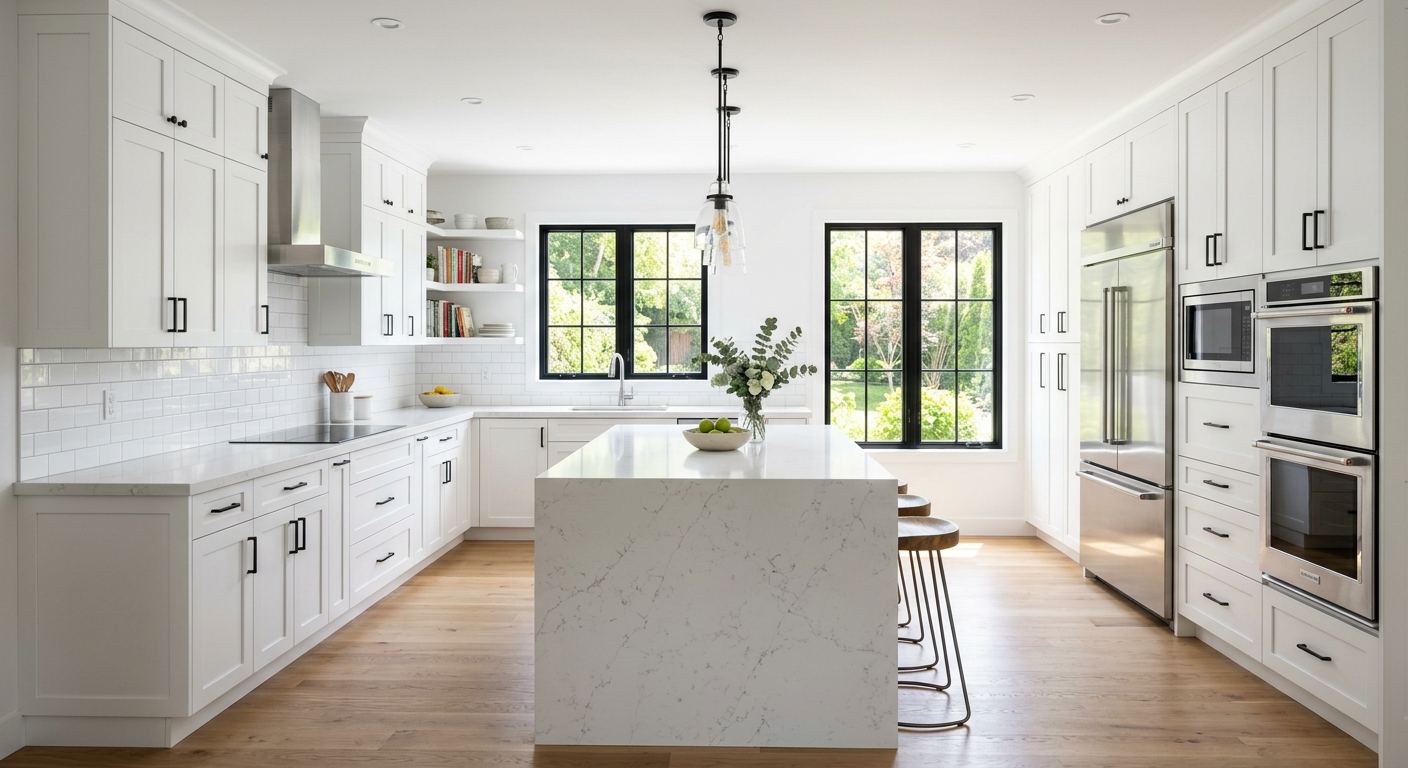
Kitchen renovation options and costs in Vaughan
Kitchen renovations in Vaughan typically start with how you want your space to look and function—and that’s heavily influenced by the local market. With a median household income of $124,000 (Statistics Canada, 2021 Census), many homeowners can comfortably move beyond a basic refresh into mid-range or even high-end upgrades. Vaughan’s housing mix also matters: owner households are the majority (89,290 owner households, 85.9% of households) and that ownership profile often correlates with planning a longer “stay period,” which makes durable finishes like quartz and better cabinetry more common.
In the Toronto economic region, budgeting is less about weather and more about resale expectations. Contractors still price with seasonal realities—spring and early summer are busiest, which can tighten schedules—yet the biggest swings come from finish tier and scope. In higher-value pockets of Vaughan (and nearby corridors where homeowners invest a larger share of home value into the kitchen), it’s common to see projects trend toward custom cabinetry, quartz or natural stone countertops, and upgraded appliance packages. When you’re aiming for a simpler refresh, costs stay closer to the low–mid range by limiting demolition and keeping the layout intact.
If you’re renovating near Vaughan Metropolitan Centre or the Father Canadian? / Vaughan area around major transit and condo corridors, demand is especially steady because homeowners in established neighbourhoods often want a modern look without relocating plumbing. Next, use the table below to compare realistic budget tiers for Vaughan projects so you can discuss the right scope with your contractor.
| Renovation Tier |
What's Included |
Typical Duration |
Price Range |
| Cosmetic refresh (paint, hardware, new appliances only) |
Cabinet paint or partial touch-ups, new pulls/knobs, new appliances (no layout/plumbing changes), basic caulking & finish trim, simple countertop cleaning/polish if applicable |
3–7 days |
$8,000–$18,000 |
| Mid-range full renovation (new cabinets, counters, sink, tile) |
New semi-custom cabinets, new quartz or good laminate counters, sink & faucet replacement, backsplash tile, new flooring (refinish or partial replacement), electrical updates for under-cabinet lighting as needed |
4–7 weeks |
$25,000–$65,000 |
| High-end full renovation (custom cabinets, stone counters, island) |
Fully custom millwork, natural stone or premium quartz, island with upgraded lighting, full backsplash to ceiling or feature stone, new premium appliance package, expanded electrical (circuits/pendants), often includes more layout work |
7–14 weeks |
$65,000–$90,000 |
| Cabinet refacing only (new doors + drawer fronts, same boxes) |
Door/drawer-front replacement, updated hardware, new toe-kick/trim pieces, touch-up paint/finish where needed, backsplash refresh (optional add-on) |
1–3 weeks |
$8,000–$35,000 |
| Countertop swap only (laminate to quartz or stone) |
Remove existing tops, prep and install new quartz/stone, seal where required, reconnect sink and disposal, adjust cut-outs |
2–5 days (plus scheduling) |
$3,000–$15,000 |
| Backsplash tile installation only |
Tile supply & install (typical 18–54 inch height), surface prep, new grout/seal, edge trim, caulking at transitions |
3–10 days |
$2,000–$10,000 |
Prices are estimates only and vary by project scope, site access and material selection.
What affects the price of kitchen renovation in Vaughan
In Vaughan, two homeowners can receive very different quotes for “the same” kitchen because Toronto-area pricing can swing 30–50% depending on how much is being changed, who supplies the materials, and whether the work stays cosmetic versus structural and trades-heavy. Across Ontario’s market, labour rates and material costs are fairly consistent, but finish tier and scope are not. In higher-value Vaughan and nearby Toronto-facing corridors, homeowners often default to quartz or stone counters and semi-custom cabinetry because the renovation cost is more readily recovered on resale. In more price-sensitive pockets, laminate and stock cabinets are still common because they protect ROI and keep the project closer to the low–mid bands (for example, mid-range full renovations often start around the $25,000 mark).
Climate matters less than people expect for kitchen cost in the Greater Toronto Area. Weather can influence scheduling (waiting for crews during peak months) and drying times for patching and paint, but it doesn’t usually change the basic labour model the way it would for exterior envelope work. The bigger cost drivers are layout changes and trades coordination: removing a wall, adding an island, or moving a gas line or plumbing often adds unpredictability regardless of whether you choose laminate or premium stone.
Concrete examples I see in Vaughan: (1) older homes built before 1981 (7.6% of dwellings, Statistics Canada, 2021 Census) can have knob-and-tube remnants or older service sizing, triggering extra electrical work; that pushes electrical from a simple swap to a “new circuits” job. (2) If the kitchen ceiling is lower and you want a hood vented through an existing duct route, the duct path can force cabinet rework and raise cabinet installation labour. (3) When homeowners insist on full-height tile or feature stone behind an island in a tight footprint, it increases tile labour and waste—often moving a backsplash line from the lower end toward the $10,000 band.
| Price Factor |
Why It Matters |
Cost Impact |
| Cabinet tier — stock vs. semi-custom vs. fully custom millwork |
Custom sizing, internal organizers, door styles, and build quality change material and labour time |
Can shift projects by tens of thousands, commonly moving a kitchen from mid-range ($25,000+) toward high-end ($65,000+) |
| Countertop material — laminate vs. quartz vs. granite vs. stone |
Pricing per square foot and fabrication complexity vary widely; stone also needs sealing/extra handling |
Countertops alone can range from about $3,000 up to $15,000+ depending on slab and edges |
| Layout change — wall removal, island add, plumbing/gas move |
Structural work and rerouting lines add licensed trades, inspection steps, and demolition/patching |
Typically the largest unpredictable swing; can push an otherwise mid-range job toward high-end |
| Appliance package tier — builder vs. mid-range vs. pro-grade |
Brand tier affects ventilation needs, electrical requirements, and install time |
May add a few thousand to significantly more; pro-grade models can affect hood and circuit planning |
| Flooring — refinish existing vs. full replacement |
Protection during demo is one cost; tear-out and substrate prep is another |
Full replacement can add several thousand; refinish-focused scopes stay lower |
| Backsplash — ceramic tile vs. marble vs. full-height slab |
Material fragility, cutting time, and finishing level drive tile labour |
Can move from a couple thousand toward the $2,000–$10,000 range quickly |
| Electrical — new circuits for island, under-cabinet lighting |
Electrical planning must match appliance use and lighting layout; adds inspection steps |
New circuits can add cost on top of lighting; basic swaps are much less |
| Permit fees and licensed trade requirements |
When scope triggers permits (plumbing/gas/electrical/structural), timelines and fees increase |
Often adds meaningful overhead; timing delays can also raise labour logistics costs |
Permits & regulations in Ontario
In Ontario, some kitchen updates don’t require permits, but several common “upgrade” paths do. For Vaughan homeowners, the key is to separate cosmetic changes from work that alters plumbing, gas, electrical capacity, or building structure. Cabinet and countertop swaps generally do not require permits when you keep the existing layout and utilities in place. Similarly, replacing like-for-like finishes (for example, a standard backsplash tile install) is usually handled under the contractor’s scope without a permit.
However, you should expect permits and licensed trades when the work involves plumbing supply or drain lines, relocating a gas stove or any gas appliance/venting, removing a load-bearing wall, adding a new opening that affects structure, or installing electrical circuits (such as for an island receptacle or dedicated under-cabinet lighting circuits). Gas work must be performed by a licensed gas fitter, and electrical work must be done by a licensed electrician, with inspections. If the contractor starts describing “we’ll just do it” without a licensed trade involvement where needed, that’s a red flag.
Before you sign, verify three things step-by-step: (1) licensing—confirm the contractor’s applicable Ontario registration and, for gas/electrical, confirm the trade is licensed; (2) liability insurance—request a current certificate of insurance naming you as applicable per the contract; and (3) WSIB/WCB coverage—ask for proof of coverage and clearance where applicable. In your contract, ensure each permit responsibility (who pulls it, who pays, who schedules inspections) is clearly written.
Cabinets, countertops and layout decisions in Vaughan
Choosing the right cabinet tier, countertop material, and layout plan are the three decisions that most strongly determine your Vaughan kitchen renovation outcome—and your final budget. First is cabinets. Stock cabinets are the fastest and cheapest because the sizes are standardized and lead times are predictable. Semi-custom cabinets are the most popular mid-range choice in Vaughan: they balance cost with better interior organizers and more flexibility for odd wall heights in older homes. Custom cabinets deliver the best fit for vaulted ceilings or complex footprints, but they’re the highest cost.
Second is countertops. Laminate is a practical option for staying in the lower bands, but it won’t match quartz or stone for stain resistance and everyday longevity. Quartz engineered tops are a common “sweet spot” in the Toronto market because they handle typical household wear well (day-to-day spills, heat precautions still required, and easy cleaning). Granite/natural stone adds a premium look, while butcher block brings warmth but requires more oiling and careful maintenance around moisture—important in a busy Vaughan household.
Third is layout. An open-concept wall removal, island addition, or relocating plumbing/gas is often the most justified when you can clearly improve flow and storage. But if your goal is mostly cosmetic, keeping the layout is how you protect budget and stay closer to mid-range pricing. For example, if you’re choosing between a mid-range full renovation around $25,000–$65,000 versus a higher-end scope $65,000–$90,000, the difference is often less about “which cabinet finish looks nicest” and more about whether you’re adding an island, upgrading electrical, and moving utilities.
Local housing stock also affects your decision: with 7.6% of dwellings built before 1981 (Statistics Canada, 2021 Census), you may need extra planning for older electrical routing or non-level walls, which is another reason semi-custom or custom cabinet installs are common when homeowners want everything to sit level and square.
| Option |
Durability |
Maintenance |
Best For |
Price Range |
| Stock cabinets (big-box) |
Solid for everyday use; limited adjustment for unusual spaces |
Low—routine cleaning; rely on proper installation for longevity |
Fast timelines and tighter budgets where the layout is staying put |
$8,000–$20,000 |
| Semi-custom cabinets (local dealer) |
Good durability with better hardware/organizer options; more sizing flexibility |
Low to moderate—keep hinges and slides adjusted as needed over time |
Most Vaughan homeowners balancing resale appeal and cost |
$15,000–$35,000 |
| Custom cabinets (local millwork shop) |
High durability; tailored fit and stronger integration for specialty storage |
Low—still just normal cleaning, but often built with longer-term hardware options |
Complex footprints, ceiling height challenges, and high-end resale presentation |
$30,000–$55,000 |
| Laminate countertop |
Moderate—can scratch; seam quality matters in busy kitchens |
Low—clean with mild products; avoid cutting directly on surface |
Budget-friendly refreshes when you want a big visual change |
$3,000–$8,000 |
| Quartz engineered countertop |
High—excellent stain and wear resistance for everyday use |
Low—routine cleaning; heat still needs caution |
Most popular “durable and stylish” upgrade for Vaughan resale |
$6,000–$12,000 |
| Granite / natural stone countertop |
High—very durable; variation makes each slab unique |
Moderate—periodic sealing and gentle care depending on stone type |
Premium look for buyers who expect natural stone aesthetics |
$9,000–$15,000 |
| Butcher block countertop |
Moderate to high if cared for; sensitive to standing water and long heat exposure |
Higher—regular oiling and careful drying around sink splash |
Warm, casual designs where the family will maintain the surface |
$5,000–$12,000 |
| Marble countertop |
Moderate—beautiful but more porous and easier to etch/stain than quartz |
Moderate to high—sealing and more careful cleaning needed |
Statement kitchens and higher-end look where homeowners accept extra care |
$10,000–$18,000 |
How to choose a kitchen renovation contractor in Vaughan
Choosing the right contractor in Vaughan comes down to verification, clarity, and risk control. Start by confirming Ontario licensing where applicable to the contractor’s work scope, and request liability insurance documentation (certificate of insurance). For trade-heavy kitchen work, you also need proof that the contractor arranges WSIB/WCB coverage for workers—ask for proof of coverage or a clearance letter, and confirm it’s current. If a contractor can’t provide documentation promptly, that’s usually a sign they’ll struggle with compliance during the build.
Next, get 2–3 itemised written quotes with labour and materials broken out—not just a lump sum. A good kitchen quote should specify cabinet line/brand and what’s included (hardware, crown, fillers, internal drawers), countertop slab thickness and fabrication details, backsplash scope, floor protection and disposal, and whether permits are included. Confirm exclusions clearly: what’s not included for demolition, drywall patching, appliance hookup, or under-cabinet lighting? If permits are required (for plumbing/electrical/gas/structural changes), ensure who pulls them and schedules inspections.
Warranty matters: ask for workmanship warranty length, the product/manufacturer warranty terms, and whether warranties are transferable if you sell. Payment schedule should be conservative—never more than 10–15% upfront; use milestone payments and hold back a portion until completion and punch-list sign-off. Finally, require a written timeline with a start date and realistic completion estimate that accounts for material lead times.
- Provide Ontario documentation for contractor scope and request trade license proof for gas/electrical where applicable.
- Share a current certificate of liability insurance and confirm minimum coverage meets your contract requirements.
- Request WSIB/WCB clearance or proof of coverage before work begins.
- Use itemised quotes: labour hours, material allowances, and line-by-line inclusions/exclusions.
- Confirm permit responsibility in writing if you’re relocating plumbing, gas, electrical circuits, or removing walls.
- Ask who handles disposal and what portion of waste is included in the bid.
- Verify cabinet details: warranty, door style, soft-close specs, and whether fillers/adjustments are included.
- Confirm countertop scope: thickness, edge profile, cut-outs for sink/hob, and whether sink/faucet reconnection is included.
- Review backsplash scope: height, materials, grout type, and whether the area behind the range hood is included.
- Ask about flooring transition details if tiles meet hardwood/vinyl (including subfloor prep).
- Get a written start date, lead-time assumptions, and a completion target with milestones.
- Ensure warranty and aftercare are documented (workmanship start date, punch-list process, parts replacement).
Red flags in Vaughan: quotes that don’t itemise labour/materials (only vague allowances), refusal to provide WSIB/WCB proof or insurance documentation, “no permit needed” claims when you’re moving plumbing/gas/electrical or removing a wall, payment terms requesting large upfront deposits beyond 10–15%, and contracts that omit warranty details or dispute resolution steps.
Frequently asked questions — kitchen renovation in Vaughan
What order do kitchen renovation steps happen in?
In Vaughan, a typical kitchen renovation sequence goes from planning to demo to finish. First, we measure and confirm appliance/cabinet specifications, then finalize any permit steps if plumbing/gas/electrical or structural work is required. Next comes demo: removal of old cabinets, countertops, and backsplash, followed by rough-in changes (plumbing/drain/gas lines and electrical circuits if needed). After rough-ins pass inspection (when applicable), we install cabinets, then countertops, then backsplash. Flooring and paint are often sequenced so you don’t damage finished surfaces—many teams do flooring prep early and complete trim/paint near the end. Finally, appliances are set, sink/faucet hookups are completed, and a punch-list walkthrough closes out the job.
Can I live at home during a kitchen renovation in Vaughan?
Often yes, especially for renovations that stay within cosmetic refresh scope or a tight mid-range rebuild. For example, a cosmetic refresh (paint, hardware, and new appliances only) can be handled in about 3–7 days with minimal disruption. For full renovations, you can usually remain at home if you have access to at least a temporary kitchen area (microwave, kettle, small fridge, and a safe countertop space). Dust control is key in Vaughan homes—older basements and finished spaces can make dust travel worse if the contractor doesn’t use proper plastic containment. If your project includes moving plumbing, adding an island, or electrical work, plan for a messier phase and clearer off-limits zones. Your contractor should also provide a site plan and daily cleanup routine so you can safely live around the renovation.
Should I renovate my kitchen before selling in Vaughan?
It can be worth it in Vaughan when the renovation improves buyer appeal without overbuilding. Many buyers respond strongly to clean lines, modern lighting, updated counters, and functional storage. However, the “best” timing depends on your current kitchen condition and your renovation tier. If you’re aiming for a full mid-range renovation (commonly $25,000–$65,000 in this market), focus on cabinets, countertops, and lighting that buyers see immediately—often quartz and a coordinated backsplash deliver the visual payoff. If you’re doing high-end work ($65,000–$90,000), ensure the rest of the home supports that level; otherwise, it may not match what buyers expect for your neighbourhood. Also consider homes built before 1981 (7.6% of dwellings in Vaughan’s broader profile), where older electrical/plumbing can impact how much “surprise cost” you’ll face right before listing.
What's the most popular kitchen style in Vaughan right now?
In Vaughan, the most common look homeowners choose right now is a bright, modern style—often shaker-style or flat-panel cabinetry in warm neutrals (white, soft greys, and greige), paired with quartz counters and straightforward hardware. The Toronto-area resale mindset shapes this: buyers expect clean surfaces, durable countertops, and lighting that makes the workspace feel open. Many projects also incorporate a functional island, but only when the footprint supports it—otherwise homeowners keep the layout and improve storage with better cabinet interiors. If you’re leaning budget-friendly, laminate counters and a refreshed backsplash can still achieve the modern look, but most mid-range and high-end renovations gravitate to quartz because it’s easy to maintain day-to-day. Ultimately, the “popular” style is the one that still fits your home’s age and ceiling height.
How do I know if I need to update my kitchen plumbing in Vaughan?
You usually need plumbing updates when you’re moving fixtures, when shutoffs or supply lines are failing, or when inspections reveal aging components. Signs include frequent leaks under the sink, slow drains, inconsistent water pressure, corrosion, or dated shutoff valves that won’t shut fully. If you’re planning to change the sink location, add a dishwasher where there wasn’t one before, or relocate the gas/electrical layout that affects the sink area, plumbers may need to reroute supply or drain lines—this is when permits and licensed trades are typically involved in Ontario. Also consider older homes built before 1981 (7.6% of dwellings in the broader profile): you may discover older drain configurations that don’t align with newer appliance specs. A good contractor arranges a plumbing assessment early, before cabinets are ordered, to avoid costly rework.
What is the difference between a galley and open-concept kitchen?
A galley kitchen is a narrow layout with counters on two opposing walls, often with a corridor running through. It’s efficient for work zones and tends to cost less to renovate if you keep utilities where they are, which can help homeowners stay closer to mid-range budgets like $25,000–$65,000 for full renovations. An open-concept kitchen removes barriers between kitchen and living space, creating sightlines and a larger “social” area—often achieved by removing a wall or reworking the room arrangement. In Ontario (including Vaughan), wall removal can trigger permits and licensed involvement due to potential structural implications. Open-concept layouts are also more likely to require electrical planning for islands and new lighting, plus changes to HVAC airflow expectations. The right choice depends on your space, how you cook, and whether your goals are resale-driven or lifestyle-driven.