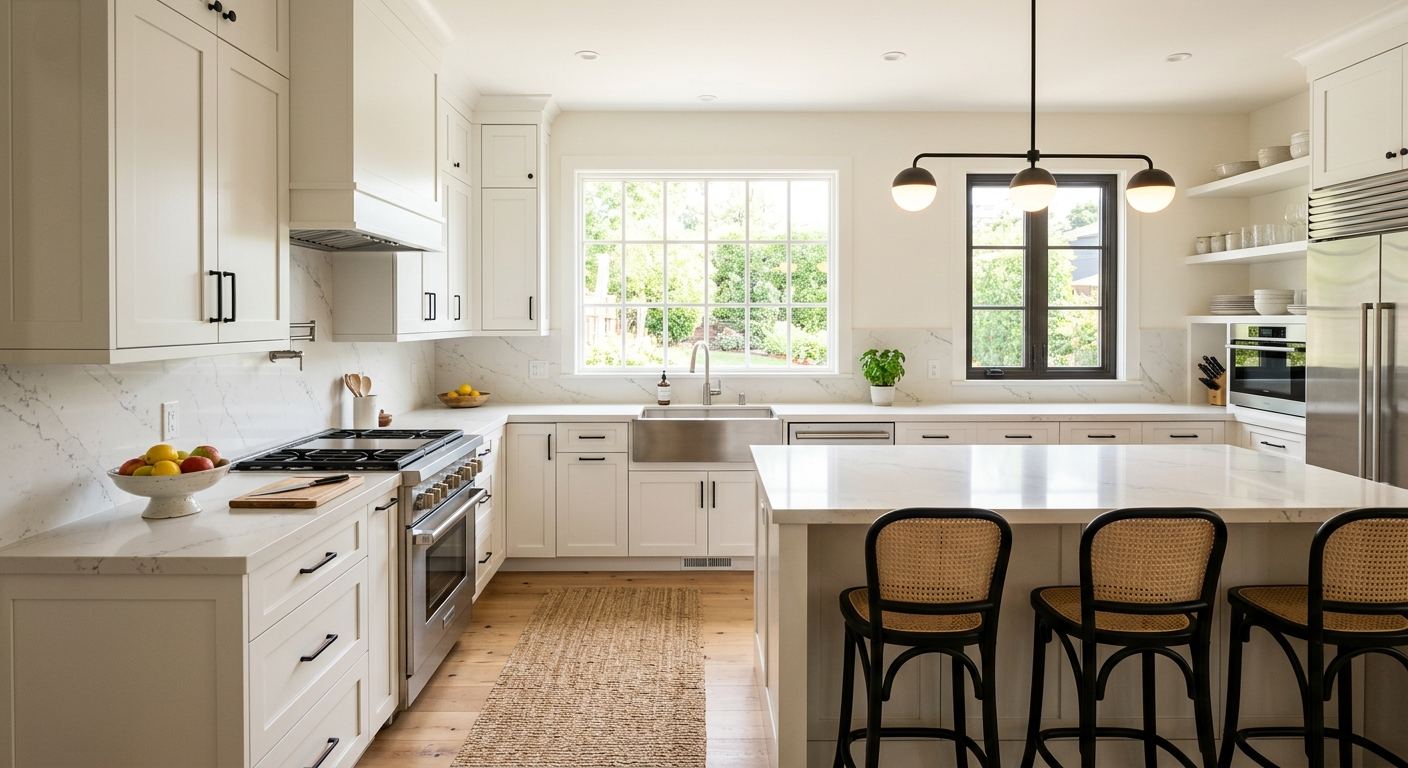
Kitchen renovation options and costs in Lansing-Westgate
Lansing-Westgate homeowners often start with one big question: what can we realistically afford without overcapitalizing? In this community of 16,164 people (Statistics Canada, 2021 Census), kitchen upgrades tend to track the broader Toronto economic pull—when incomes and home values support premium finishes, buyers expect more than “builder basic.” In many high-value GTA pockets, homeowners commonly invest roughly 8–15% of the property’s value into the kitchen, which is why quotes trend toward custom cabinetry, quartz, and upgraded appliances rather than bargain refreshes.
In practice, Toronto’s renovation costs are shaped more by market demand and contractor scheduling than by weather. While Ontario winters can mean longer material drying/curing times and careful moisture control for tile and finishes, the bigger driver is that kitchen work is labour-intensive and trade availability can tighten during peak demand. In Lansing-Westgate, the busiest kitchen renovation demand is typically around the Bayview Avenue and Finch Avenue East corridor, where higher turnover and condo-townhouse mix create consistent interest in resale-ready updates.
Whether you’re targeting a modest refresh or a full, layout-changing remodel, the best way to compare contractors is to map your needs to a renovation tier. The table below gives typical durations and realistic budget ranges for Lansing-Westgate projects, consistent with the Toronto economic region’s finish-driven pricing.
| Renovation Tier |
What's Included |
Typical Duration |
Price Range |
| Cosmetic refresh (paint, hardware, new appliances only) |
Cabinet repaint or touch-ups, new hardware/pulls, paint, install new appliances, minor caulking and trim updates |
3–7 days |
$25,000–$45,000 |
| Mid-range full renovation (new cabinets, counters, sink, tile) |
Semi-custom or good stock cabinets, countertop (often quartz), sink/faucet, backsplash tile, floor refresh or replacement (as needed) |
2–4 weeks |
$45,000–$70,000 |
| High-end full renovation (custom cabinets, stone counters, island) |
Fully custom millwork, stone countertops (quartz premium/natural stone), island build-out, upgraded appliance package, enhanced lighting |
4–8 weeks |
$70,000–$90,000 |
| Cabinet refacing only (new doors + drawer fronts, same boxes) |
Remove/replace doors and drawer fronts, new hardware, edge banding, match existing cabinet boxes, optional paint touch-ups |
1–2 weeks |
$8,000–$28,000 |
| Countertop swap only (laminate to quartz or stone) |
Template and install new countertops, sink cut-outs, reinstall backsplash edges or allow for later backsplash work |
4–10 days |
$3,000–$15,000 |
| Backsplash tile installation only |
Surface prep, tile installation, grout/seal where needed, trim/silicone at edges, caulking around outlet covers |
2–5 days |
$2,000–$10,000 |
Prices are estimates only and vary by project scope, site access and material selection.
What affects the price of kitchen renovation in Lansing-Westgate
In Lansing-Westgate, you can see the same kitchen described three different ways on three different quotes—and the totals can swing by 30–50% even when the homeowners think they’re comparing “apples to apples.” The usual reasons aren’t hidden: finish tier, product pricing, and how much work is truly required once the contractor opens up the walls. In the Toronto economic region, local home values and typical household incomes shape the finish tier far more than climate. When buyers expect a premium look, many renovations move to quartz or natural stone and semi-custom cabinetry because the cost is easier to recover on resale; in more price-sensitive areas, laminate and stock cabinets dominate to keep budgets in check.
Layout changes are the wildcard regardless of finish. Removing a wall, adding an island, or moving plumbing for a sink typically creates unpredictable cost—especially when existing framing, venting, or subfloor conditions aren’t visible until demolition. For example, upgrading from a mid-range full renovation budget of $45,000–$70,000 to a high-end design often happens after one “small” decision: moving the sink to the island or adding under-cabinet lighting/electrical for a feature backsplash.
Two Lansing-Westgate examples that commonly raise cost: (1) older homes with uneven subfloors can force additional prep under tile and require more flooring labour; (2) winters can slow drying and finish curing, so contractors may schedule caulking, grout sealing, and paint steps with more lead time. On the flip side, if your cabinet boxes are solid and you’re staying within your current plumbing footprint, you can keep costs closer to the refacing band—cabinet refacing often lands around $8,000–$28,000.
| Price Factor |
Why It Matters |
Cost Impact |
| Cabinet tier — stock vs. semi-custom vs. fully custom millwork |
Higher tiers cost more in materials and labour; fit, finish, and hardware options are also more extensive |
Big swing; can shift a job by tens of thousands depending on complexity |
| Countertop material — laminate vs. quartz vs. granite vs. stone |
Material price, edge profiles, and installation demands drive the change |
Medium to large; countertops are a major visible cost driver |
| Layout change — wall removal, island add, plumbing/gas move |
Unseen structural, venting, and mechanical work creates unpredictable labour and inspections |
Large and difficult to cap accurately |
| Appliance package tier — builder vs. mid-range vs. pro-grade |
Cutouts, venting requirements, and power needs vary |
Medium; adds cost quickly with ventilation and integrated models |
| Flooring — refinish existing vs. full replacement |
Subfloor condition and tile prep affect labour time |
Medium; can add weeks if demolition is extensive |
| Backsplash — ceramic tile vs. marble vs. full-height slab |
Material fragility, grout detail, and install time increase |
Medium; slab or full-height work can exceed expectations |
| Electrical — new circuits for island, under-cabinet lighting |
Electrical scope requires licensed work and inspection time |
Small to medium but can escalate with code-driven updates |
| Permit fees and licensed trade requirements |
Permits and inspection timelines add direct costs and scheduling constraints |
Variable; larger when plumbing/electrical structural changes are included |
Permits & regulations in Ontario
In Ontario, many straightforward kitchen updates do not require a permit. Cabinet and countertop swaps generally fall into the “no permit” category when you’re not altering plumbing, gas, or electrical circuits. So, changing doors, refacing cabinets, replacing laminate with quartz, or installing a new backsplash tile typically does not trigger permits.
Permits are commonly required when you change building services or structure. Moving plumbing supply or drain lines, relocating or adding gas connections for a stove/range area, removing a load-bearing wall, or adding new electrical circuits (for example, to support an island with extra outlets or a major lighting upgrade) usually requires permits and licensed trades. Gas work must be performed by a licensed gas fitter; electrical work must be done by a licensed electrician, and both require inspection steps.
For a Lansing-Westgate homeowner, the safest process is simple: (1) ask the contractor to list which permit(s) they will pull, (2) confirm which trade is responsible for each permit scope in the contract, and (3) verify licensing and coverage before work starts. You’ll typically verify Ontario licensing through the relevant provincial registry or public professional listings, confirm liability insurance by requesting a current certificate of insurance naming you as an additional insured where applicable, and ensure the contractor has WSIB/WCB coverage for workers (request a clearance letter or proof of coverage as provided by the contractor). Make this part of your approval checklist—don’t leave it to “we’ll handle it.”
Cabinets, countertops and layout decisions in Lansing-Westgate
In Lansing-Westgate, the three most consequential renovation decisions are cabinet tier, countertop material, and layout. Start with cabinet tier: stock cabinets are fastest and cheapest, semi-custom is the most popular balance for mid-range budgets, and custom cabinets deliver the tightest fit for awkward corners and modern storage demands—at the highest cost. Next is countertop material. Laminate can look great with the right edge and colour, but it’s less heat- and scratch-resistant than stone. Quartz is the common Toronto “sweet spot” because it’s durable for everyday cooking and tends to be easier to maintain than granite or marble. Finally, decide on layout: removing a wall for open-concept flow or adding an island can make the kitchen feel larger, but plumbing/gas relocation often adds major cost and scheduling complexity.
Because Toronto resale expectations reward modern storage and clean lines, many homeowners in this area aim for a finish tier that matches buyer perception. If you stay near a mid-range budget of $45,000–$70,000, semi-custom cabinets with quartz counters and a sensible backsplash usually deliver strong value. But if you push into high-end territory around $70,000–$90,000, the premium is typically justified by custom millwork detailing (pantries, appliance garages, integrated storage) plus an island that improves daily workflow.
Ontario’s winter climate indirectly affects your decision: in older homes, temperature swings can contribute to seasonal movement, so proper acclimation and careful sealing around sinks and tile edges matter. For example, choosing quartz over marble isn’t just about styling—quartz generally avoids the higher maintenance demands of natural stone sealing and sensitivity. If you’re not willing to maintain natural stone, quartz is often the better long-term choice.
| Option |
Durability |
Maintenance |
Best For |
Price Range |
| Stock cabinets (big-box) |
Good durability with standard hardware; limited custom sizing |
Low; wipe clean, address hinges promptly |
Faster timelines and budget-conscious updates |
$8,000–$25,000 |
| Semi-custom cabinets (local dealer) |
Very durable with better door/drawer options and more sizing flexibility |
Low; best with proper leveling and ventilation |
Mid-range renovations aiming for a “designer” look |
$20,000–$45,000 |
| Custom cabinets (local millwork shop) |
Excellent durability; built for your exact measurements and workflow |
Low; depends on finish type (paint/laminate/wood) |
High-end, unique layouts and maximum storage |
$35,000–$70,000 |
| Laminate countertop |
Decent for everyday use; can chip or scratch with heavy impact |
Simple cleaning; protect from heat and standing water at seams |
Cost control and easy refreshes |
$3,000–$7,500 |
| Quartz engineered countertop |
High durability; resists staining and daily wear |
Low maintenance; wipe with mild soap and water |
Family kitchens and resale-friendly, modern finishes |
$7,000–$15,000 |
| Granite / natural stone countertop |
Very durable but varies by stone; can be more sensitive to impact and thermal shock |
Moderate; typically benefits from periodic sealing |
Premium look when you’re committed to stone upkeep |
$9,000–$18,000 |
| Butcher block countertop |
Durable if cared for; can dent without proper use |
Higher maintenance; regular oiling and careful moisture control |
Warm, traditional styles and regular food-prep households |
$6,000–$13,000 |
| Marble countertop |
Beautiful but softer; can etch or stain with acids and daily use |
Higher maintenance; sealing and careful cleaning required |
Statement luxury where the kitchen is more showpiece than workshop |
$10,000–$20,000 |
How to choose a kitchen renovation contractor in Lansing-Westgate
Choosing the right contractor in Lansing-Westgate is less about flashy photos and more about proof. First, verify Ontario licensing, liability insurance, and WSIB/WCB coverage. Licensing is trade-specific: electricians for electrical, gas fitters for gas, and general contractors should meet applicable registration requirements for the work they perform. You can check licensing through provincial/regulatory online registries and confirm insurance by requesting a current certificate of insurance before you sign. For WSIB/WCB, request proof of coverage or a clearance letter so you’re not exposed if a worker is injured on your site.
Next, request 2–3 itemised, written quotes. Insist on a breakdown that separates labour and materials—especially for cabinets, countertop fabrication/installation, tile setting, demolition/disposal, and electrical/plumbing scope. A lump sum can hide major exclusions. Read the scope line-by-line: does the price include permit pulling, drywall patching/painting, disposal and dump fees, and site protection? Get warranty details in writing: workmanship warranty length, product/manufacturer warranties, and whether warranties are transferable if you sell the home. For payment, avoid large upfront cheques—stay at no more than about 10–15% at the start and use milestone payments. If the contractor asks for most money early, that’s a risk signal. Finally, require a start date and a completion estimate in writing, including how schedule changes will be communicated during winter curing and lead-time delays.
- Confirm trade licences for any plumbing/electrical/gas work and name the responsible contractor on the contract.
- Ask for a certificate of insurance and confirm liability coverage limits.
- Verify WSIB/WCB clearance or proof of coverage before demolition starts.
- Get 2–3 itemised quotes with labour and materials broken out (not a single number).
- Ensure permit responsibility is stated (who pulls permits, who pays fees, who schedules inspections).
- Confirm demolition/disposal is included or itemised.
- Ask who handles drywall patching, primer, paint touch-ups, and floor protection.
- Make the countertop templating process explicit (when it happens and what triggers changes).
- Verify backsplash prep requirements (flatness, backer board vs. direct tile on drywall).
- Request a workmanship warranty duration and the exact scope it covers.
- Check product warranty terms and whether they’re tied to installation registration.
- Use a payment schedule that keeps holdback until punch list completion and sign-off.
Red flags I often see in Lansing-Westgate: (1) quotes that don’t specify what’s included/excluded for permits and disposal; (2) reluctance to provide insurance/WSIB proof; (3) pressure to pay a large deposit up front (beyond ~10–15%); (4) no written start/completion timeline or no process for change orders; (5) ignoring level/structural prep details for cabinets and tile—because that’s where kitchen renovations fail in daily use.
Frequently asked questions — kitchen renovation in Lansing-Westgate
Can I live at home during a kitchen renovation in Lansing-Westgate?
Often, yes. In Lansing-Westgate and across the GTA, most homeowners renovate while staying in the home because the work is typically phased: demolition and rough-in first, then cabinets and countertops, then tile and finishing. That said, full renovations can temporarily affect water access, stove use, and overall kitchen function. If your scope includes moving plumbing or adding electrical circuits, you may have a longer period with reduced usability while inspections are scheduled. For smaller scopes like backsplash installation or cabinet refacing, you can usually maintain normal routines with only minor disruption. To plan, ask your contractor about a “temporary cooking” setup and whether a sink can remain operational during countertop installation.
Should I renovate my kitchen before selling in Lansing-Westgate?
In many cases, a kitchen refresh before selling helps—especially if the current layout is functional but the finishes look dated. In the Toronto market, buyers strongly notice cabinets, countertops, and lighting, and a well-planned mid-range update can make the listing feel move-in ready. However, avoid overbuilding for your neighbourhood: if your home’s value supports only practical improvements, premium custom millwork and expensive stone may not fully pay back. A smart approach is to focus on “first impression” upgrades like new cabinet doors (refacing) or quartz countertops, staying within realistic renovation bands. For example, a cabinet refacing plus a countertop swap can keep you near $8,000–$35,000 for portions of the work, rather than jumping to a full high-end rebuild. Your agent can also provide recent comparable sale patterns for the immediate area.
What's the most popular kitchen style in Lansing-Westgate right now?
What sells fastest in Lansing-Westgate is typically a clean, modern transitional style: flat-panel or simple shaker fronts, warm greige or light neutral tones, and white-to-light-grey quartz countertops. Many homeowners also choose practical layout upgrades like a small island or improved storage (pantry pull-outs, deeper drawers) because buyers value everyday convenience. Hardware is usually brushed metal (nickel/chrome look) paired with matte finishes for a cohesive, contemporary feel. Lighting matters too—under-cabinet LED strips and task lighting around the sink are now common because they photograph well in GTA real estate listings. While tastes vary by household, premium resale expectations generally favour durable quartz over high-maintenance natural stone.
How do I know if I need to update my kitchen plumbing in Lansing-Westgate?
Look for signs that your lines are struggling rather than assuming replacement. If you’ve had slow drains, recurring odours, frequent shutoff valve issues, or visible corrosion around supply lines, plumbing updates may be needed. Also consider the scope: if you’re moving a sink to an island or changing where the dishwasher connects, you’ll need plumbing work even if current lines are “fine.” When contractors do demolition, they can assess pipe condition, valve age, and whether the drain venting supports updated fixtures. In Ontario, moving supply/drain lines is a permitting scope and should involve licensed plumbing work. If your renovation is limited to countertops or cabinet refacing with no plumbing changes, plumbing updates are usually optional—unless an inspection reveals defects.
What is the difference between a galley and open-concept kitchen?
A galley kitchen is a narrow layout where cabinets and counters run along two parallel walls, often with a walkway in between. It’s efficient for cooking but can feel tight if you want seating or a bigger social space. An open-concept kitchen removes a wall or uses a wider opening to blend the kitchen with living/dining areas, which improves sightlines and overall perceived space. In Lansing-Westgate, many renovations are opting for open flow because it aligns with how families entertain, but it also depends on your house structure. If you’re considering wall removal, the work can trigger permits and requires careful assessment of load-bearing elements. The cost difference usually comes from structural changes and the need to coordinate electrical/plumbing and inspections.
How do I get accurate kitchen renovation quotes in Lansing-Westgate?
Accurate quotes come from a clear scope and thorough measurements. Start by compiling your decisions—cabinet tier, countertop material, backsplash scope, and whether you’re changing layout or moving plumbing/gas/electrical. Then request 2–3 itemised quotes with labour and materials separated, including disposal, drywall patching, permit costs (if any), and what’s excluded. Provide photos and, ideally, allow a site visit so the contractor can check existing cabinet boxes, subfloor flatness, and electrical/plumbing conditions. Ask how they handle change orders and what triggers price adjustments. A common budgeting mistake is comparing only a bottom-line number rather than categories; for instance, cabinets-only refacing may look affordable near $8,000–$35,000, but adding countertops, tile, and electrical can move you toward full renovation bands like $25,000–$90,000 depending on finish tier. Finally, insist on start/completion dates in writing and confirm warranty coverage before signing.