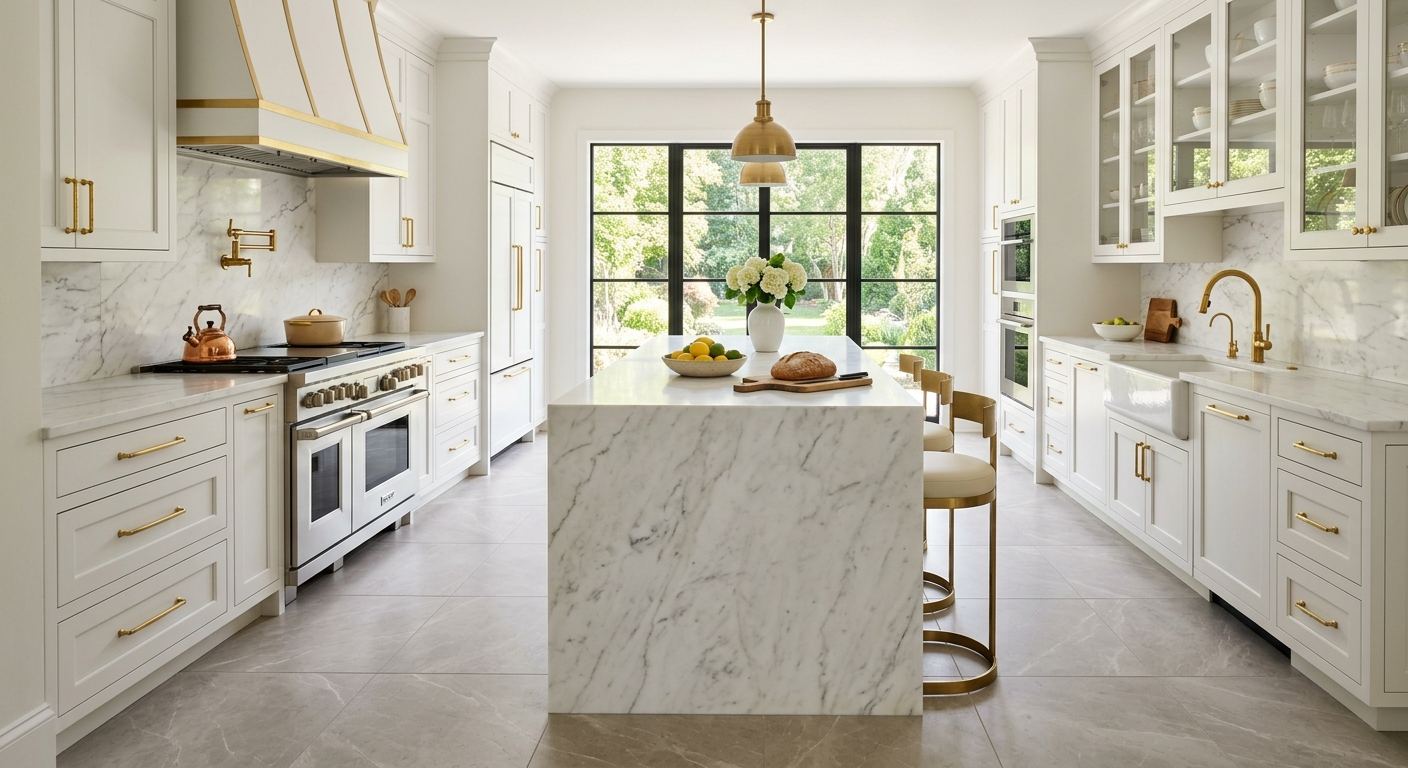
Kitchen renovation options and costs in Central Frederick
Central Frederick kitchen renovations typically start with a simple question: “What do you want to change?” In a small community like Central Frederick (population 3,808, Statistics Canada, 2021 Census), many homeowners aim for a practical refresh that performs well for daily life and still supports resale value. In the broader Toronto economic region, higher-value neighbourhoods tend to push finish expectations upward, often allocating about 8–15% of home value to kitchen updates; that usually means custom or semi-custom cabinetry, quartz or natural stone counters, and upgraded appliances rather than basic replacements.
Cost in the GTA is driven more by market choices than weather. Ontario’s winter freeze–thaw and humidity swings can affect how materials behave over time—especially caulking, grout lines, and cabinet finish stability—so pros account for proper sealing and ventilation during installs. Contractor availability is also influenced by seasonal demand: spring and summer schedules often carry higher labour pressure, while smaller “like-for-like” work can be slotted more easily in the shoulder months. If you’re in an in-demand pocket such as the established residential streets around the Central Frederick core, you’ll notice trade partners booking earlier because homeowners often time renovations around inspection/closing windows and school-year planning.
Below are realistic renovation tiers to help you compare quotes before you start detailed selections. Use this table as a backbone, then ask for an itemised breakdown so you can see what’s truly driving the number.
| Renovation Tier |
What's Included |
Typical Duration |
Price Range |
| Cosmetic refresh (paint, hardware, new appliances only) |
Cabinet paint or stain touch-up (where applicable), new hardware, fresh trim/paint, replacement of existing appliances only (no new plumbing/gas runs), minor caulking and re-sealing |
1–3 weeks |
$12,000–$25,000 |
| Mid-range full renovation (new cabinets, counters, sink, tile) |
New semi-custom cabinets, quartz countertops, sink faucet replacement, backsplash tile, new flooring transitions as needed, electrical tie-ins for under-cabinet lighting (if added), disposal & site cleanup |
4–8 weeks |
$25,000–$60,000 |
| High-end full renovation (custom cabinets, stone counters, island) |
Fully custom cabinetry, natural stone counters, island construction, expanded backsplash, upgraded appliance package, upgraded lighting, more extensive plumbing/gas coordination (if relocating) |
8–14 weeks |
$70,000–$90,000 |
| Cabinet refacing only (new doors + drawer fronts, same boxes) |
Refaced cabinet fronts, new hardware, sanding/prep of existing boxes (as needed), repaint or veneer overlay, careful alignment and finishing |
2–5 weeks |
$8,000–$28,000 |
| Countertop swap only (laminate to quartz or stone) |
Removal of existing top, new quartz or stone countertop install, new sink cut-out work, seam planning, re-caulking at backsplash line |
1–3 weeks |
$10,000–$15,000 |
| Backsplash tile installation only |
Tile supply (if contractor provides), surface prep, water-resistant backer where required, tile install, grout, silicone detailing around outlets and corners |
1–2 weeks |
$2,000–$10,000 |
Prices are estimates only and vary by project scope, site access and material selection.
What affects the price of kitchen renovation in Central Frederick
Two homeowners in the same Toronto economic region can receive quotes that are 30–50% apart for what looks like the “same kitchen.” In practice, the scope details and the finish tier make the difference: labour hours, cabinet production complexity, countertop fabrication, and the number of subcontract trades involved. That’s why one contractor’s “full renovation” can include plumbing/electrical upgrades and disposal, while another’s might exclude them—changing the total fast.
In this region, home values and household income tend to steer the typical finish tier far more than climate. Where buyers are used to higher-end finishes, many owners go straight to quartz or stone countertops and semi-custom cabinetry because the cost is easier to justify on resale. Where homeowners are more price-sensitive, laminate tops and stock or refaced cabinetry are common, keeping projects anchored closer to the low–mid bands (for example, $25,000–$60,000 for a mid-range full renovation rather than $70,000–$90,000 for a high-end build).
Layout changes are the least predictable cost regardless of finish. Removing a wall, adding an island, or moving a drain line or gas connection typically drives extra labour, subfloor/framing adjustments, and coordination time with licensed trades. In Central Frederick specifically, older housing stock can also matter: dated cabinets may be set on uneven bases, requiring floor levelling and longer cabinet installation times. And because Ontario winters bring dry indoor heat followed by humidity swings, we pay extra attention to sealing edges and ventilation when kitchens are reworked—small changes in prep and caulking can prevent callbacks that erode the savings.
Concrete examples that often shift budgets: (1) a quartz install over an out-of-level base may require additional substrate work; (2) adding under-cabinet lighting can increase electrical rough-in hours; (3) choosing a full-height backsplash can increase tile and labour substantially compared with a standard run.
| Price Factor |
Why It Matters |
Cost Impact |
| Cabinet tier — stock vs. semi-custom vs. fully custom millwork |
Custom boxes and tailored layouts require more shop time, fitting and finish work |
- Stock: typically keeps you toward the lower end of cabinet/refresh budgets
- Semi-custom: most common balance for $25,000–$60,000 projects
- Fully custom: pushes toward $70,000+ when paired with structural changes
|
| Countertop material — laminate vs. quartz vs. granite vs. stone |
Material price plus fabrication complexity (seams, edges, specialty cuts) |
- Laminate: lowest cost for “swap-only” jobs
- Quartz: strong durability/value in Toronto-area homes
- Granite/natural stone: higher material + more fabrication and handling
|
| Layout change — wall removal, island add, plumbing/gas move |
Alters framing, electrical routes, venting, and water/gas routing |
Often the biggest swing: can move a mid-range job into high-end territory even with similar finishes |
| Appliance package tier — builder vs. mid-range vs. pro-grade |
Better appliances usually cost more and may require higher installation standards |
Can add or subtract several thousand dollars depending on whether the change is “swap” or “new configuration” |
| Flooring — refinish existing vs. full replacement |
Kitchen work can damage adjacent flooring and subfloor transitions |
Reusing/refinishing keeps labour lower; full replacement adds materials, prep, and install time |
| Backsplash — ceramic tile vs. marble vs. full-height slab |
Higher-end materials require more careful setting and more finishing details |
Standard tile is one of the smaller line items; full-height slabs increase both material and labour |
| Electrical — new circuits for island, under-cabinet lighting |
More outlets, lighting, and dedicated circuits increase rough-in and inspection time |
Usually moderate if it’s minor tie-in; larger changes can be a meaningful add-on |
| Permit fees and licensed trade requirements |
Work that touches gas/plumbing load-bearing walls or electrical circuits requires compliance steps |
Not every project needs permits, but when they do apply, they add both administrative and labour overhead |
Permits & regulations in Ontario
In Ontario, many kitchen updates are straightforward from a permitting standpoint. Cabinet and countertop swaps typically do not require a permit because you’re replacing finishes without changing the building’s systems. However, permits and licensed trades come into play when you’re moving plumbing or gas lines, altering structural elements, or expanding electrical capacity. Specifically, moving a sink supply/drain, relocating a stove/range hood that involves gas, relocating a gas line, removing a load-bearing wall, or adding new electrical circuits (for example, for an island receptacle load or new under-cabinet lighting tied into an updated layout) generally requires permits and inspections.
Gas work must be performed by a licensed gas fitter, and electrical work must be done by a licensed electrician. Each trade will typically handle their own rough-in and final inspection steps with the appropriate documentation. Before you sign, make sure the responsibility for permits is clearly written in your contract—who pulls them, what scope triggers them, and whether the quoted price includes permit fees and inspection costs.
To verify a contractor in Central Frederick, check three things step-by-step:
- Ontario licence/trade eligibility: request licence numbers for relevant work and confirm eligibility through the appropriate public registry.
- Certificate of insurance: ask for liability coverage with active policy dates and sufficient limits for renovations.
- WSIB/WCB coverage: obtain proof of workers’ compensation coverage (or a clear exemption letter if applicable to their situation).
- Clearance letters where required: confirm they can provide it prior to work starting.
- Written scope: ensure permit pull responsibility is explicitly stated so you’re not surprised later.
This is especially important in kitchen jobs because plumbing, gas, and electrical are the parts that can require inspections and rework if not planned correctly.
Cabinets, countertops and layout decisions in Central Frederick
The three most consequential decisions in a Central Frederick kitchen renovation are cabinet tier, countertop material, and layout. First, choose your cabinet tier: stock cabinets are the fastest and cheapest route, semi-custom is the popular mid-range option for better door/drawer selection and sizing, and custom cabinets offer the best fit for awkward corners, ceiling heights, and a truly integrated look. Second, pick countertops based on how you live: laminate is a budget-friendly surface, but quartz generally wins for everyday durability and heat/resistance performance. Granite/stone adds natural character and long-term value, while butcher block can be excellent for warmth and food prep if you’re willing to maintain it.
Third, decide whether the layout change is worth the cost. Open-concept wall removal or island additions can transform how the kitchen functions, but they also tend to increase labour, trade coordination, and potential permit needs—especially if plumbing/gas lines must be rerouted. In the Toronto resale market, buyers often expect clean, durable surfaces and efficient storage. That means a thoughtful layout paired with quartz and a solid cabinet plan can outperform a “perfect finishes” approach with a poor workflow.
Ontario’s winter conditions also affect real-world performance: temperature swings and indoor humidity changes can make poorly sealed joints more noticeable over time. Using proper backer prep for tile, quality caulking around the perimeter, and ventilated install practices reduces callbacks.
Here’s a realistic dollar example to guide priorities: if you’re considering a mid-range full renovation around $25,000–$60,000, upgrading from laminate to quartz might be a manageable add-on if your base cabinets and layout are already solid. But if you’re also moving plumbing and adding an island, the project can jump toward $70,000–$90,000 quickly—so I’d justify stone upgrades only after the layout and service routes are confirmed.
| Option |
Durability |
Maintenance |
Best For |
Price Range |
| Stock cabinets (big-box) |
Good for standard dimensions; can be less adaptable in tight spaces |
Low—typically no special care beyond normal cleaning |
Fast renovations when budget control matters most |
$8,000–$20,000 |
| Semi-custom cabinets (local dealer) |
Very solid build quality with more sizes, finishes and hardware options |
Low—avoid harsh cleaners on finishes |
Most Toronto-area resale-focused renovations |
$18,000–$40,000 |
| Custom cabinets (local millwork shop) |
Highest fit and finish; tailored storage where standard units won’t |
Low—requires good installation and proper humidity control in-house |
Clients optimizing every inch and willing to invest for longevity |
$35,000–$60,000 |
| Laminate countertop |
Moderate; can chip at edges if impacts occur |
Low to moderate; seams and edge integrity matter |
Budget-first swaps when you want a clean look quickly |
$3,000–$6,000 |
| Quartz engineered countertop |
High; resists staining and is consistent across the slab |
Low—routine cleaning only |
Everyday family kitchens balancing value and durability |
$6,000–$12,000 |
| Granite / natural stone countertop |
Very high; durable with unique natural variations |
Moderate—may require periodic sealing depending on stone type |
Homeowners wanting distinctive, premium character |
$8,000–$15,000 |
| Butcher block countertop |
Good; can handle cutting but needs protection from water sitting |
Moderate to high—oiling and regular care |
Food-prep oriented kitchens with a “warm” look |
$6,000–$10,000 |
| Marble countertop |
High, but more sensitive to acids and etching than quartz |
Moderate—careful cleaning and sealing habits |
High-end aesthetic where you’re willing to maintain it |
$10,000–$15,000 |
How to choose a kitchen renovation contractor in Central Frederick
Choosing the right contractor in Central Frederick starts with verification and paper trails, not just a friendly quote. In Ontario, ensure the contractor can perform or coordinate the licensed parts of your job. For licensing, ask for the contractor’s trade eligibility and the licence numbers for any subcontractors (gas fitting, electrical). For insurance, request a current liability certificate and confirm it covers renovation work—not just general business operations. For workers’ compensation, ask for WSIB/WCB clearance proof so you’re not exposed if someone is injured during your build. These checks are especially important when the scope includes plumbing/gas relocation or new circuits.
Next, get 2–3 itemised written quotes. You want a labour + materials breakdown (cabinet supply, countertop fabrication/installs, tile, electrical/plumbing line items, disposal, protection, and any site levelling). Avoid lump sums without scope detail. Read the scope carefully: what’s excluded (for example, drywall patching, subfloor prep, or freight/delivery)? Is permit pulling included where required? Is demolition and disposal included, or billed separately?
Warranty also matters. Ask for workmanship warranty length (not just “manufacturer warranty” on products), whether it covers the install fully, and whether warranties are transferable if you sell the home. Payment scheduling should be conservative: never agree to pay more than 10–15% upfront, and hold back a portion until substantial completion and cleanup.
Finally, insist on a written timeline: estimated start date, cabinet/counter fabrication lead times, trade coordination windows, and a completion estimate that includes inspection steps where permits apply.
- Request licence and insurance documents before signing the contract.
- Confirm WSIB/WCB clearance or provide proof coverage.
- Insist on an itemised quote with labour and materials lines.
- Clarify what triggers permits and who pulls them in writing.
- Confirm who handles disposal, dump fees and protection (floor/door/walls).
- Ask about cabinet measurement-to-order process and timeline.
- Verify countertop templating and seam planning responsibilities.
- Check warranty: workmanship length and what it covers.
- Confirm payment schedule (10–15% max upfront) and holdback.
- Get a start date and completion estimate in writing.
- Require a written change-order process for scope additions.
- Look for detailed schedule sequencing (demo → rough-in → install → finish).
Red flags I commonly see in Central Frederick kitchen bids include: vague scope language (“includes all work” with no exclusions), refusal to provide insurance/WSIB proof, quotes that omit permit/disposal details for the scope that likely needs them, payment requests above 15% upfront, and no written timeline or warranty terms.
Frequently asked questions — kitchen renovation in Central Frederick
How long does a kitchen renovation take in Central Frederick?
In Central Frederick, most kitchen renovations land in the 4–8 week range for a mid-range full renovation, assuming materials are available and the scope is well defined. Cosmetic refreshes can be 1–3 weeks, while higher-end projects with custom cabinetry, stone counters and an island often stretch to 8–14 weeks. The largest timing variables are cabinet lead times, countertop templating/fabrication, and whether plumbing/gas or electrical updates trigger inspection windows in Ontario. If you’re only doing countertops (like laminate to quartz or stone), many jobs can be closer to 1–3 weeks. For budgeting, a common full renovation spend is in the $25,000–$60,000 range; that timeline typically includes standard coordination for trades and finish work. Ask your contractor to write down start date, milestones, and completion estimate so you can plan around school schedules and daily routines.
Quartz vs granite countertops — which is better?
“Better” depends on how you use your kitchen, but quartz is usually the easiest choice for Ontario homeowners who want low maintenance and consistent performance. Quartz is engineered, which means colour and pattern uniformity, and it generally resists staining better than many natural options. Granite and natural stone are extremely durable and add visual uniqueness, but they can require periodic sealing depending on the stone type and how porous it is. If you’re budgeting for a countertop swap only, countertop costs often sit in the $10,000–$15,000 range when upgrading from laminate to quartz or natural stone, because fabrication and sink cut-outs are included in the work. For a full renovation, quartz is commonly chosen in projects closer to the $25,000–$60,000 band, while natural stone frequently aligns with higher-end selections. In day-to-day kitchens, quartz tends to win for simplicity; granite wins for those who value natural variation and premium look.
Should I reface or replace my cabinets?
Refacing is often the best move when your cabinet boxes (the main frames) are structurally sound and you like the layout you have. It’s typically faster than a full replacement and can cost less, often in the $8,000–$28,000 range for refacing-only scopes. Replacement is the better option when boxes are warped, when you need significant internal reconfiguration (pull-outs, new corner solutions), or when you want to adjust sizing for an updated layout. In Central Frederick homes, older cabinets sometimes suffer from moisture-related finish issues—especially around sink areas—so a good contractor will inspect box condition carefully before recommending refacing. For Ontario kitchens aiming at resale in the Toronto market, semi-custom replacement can deliver a more modern door/drawer profile and better storage, helping you align with buyer expectations. If your cabinets are in decent shape, refacing usually offers the best ROI; if they’re compromised, replacing can prevent problems that come back after install.
Do I need a permit for a kitchen renovation in Ontario?
Often, no—but it depends on what you change. In Ontario, swapping cabinets and countertop surfaces typically does not require a permit. You generally do need permits when the renovation involves moving plumbing supply/drain lines, relocating gas (for a stove/range hood setup that involves gas), removing a load-bearing wall, or adding/altering electrical circuits (for example, new island receptacles or major lighting changes). Gas work must be completed by a licensed gas fitter, and electrical by a licensed electrician, with inspections attached to that work. For homeowners in Central Frederick, the key is clarity in writing: confirm who will pull permits and who is responsible for inspections before work begins. If you’re budgeting for mid-range work in the $25,000–$60,000 band, your permit needs might be minimal if you’re not moving services. If you’re aiming for an island plus relocations that can push toward the $70,000–$90,000 range, permit requirements become much more likely.
What's the ROI on a kitchen renovation?
Kitchen ROI in the Toronto economic region is strongly tied to finish tier and how closely the renovation matches what buyers are expecting. Upgrading where it’s visible—cabinets, countertops, lighting, and workflow—tends to perform better than changes that are purely cosmetic but don’t improve function. In many higher-value pockets, owners sometimes invest roughly 8–15% of home value into a kitchen, and that pattern is why custom cabinetry, quartz or stone counters, and updated appliances are common; those choices can hold value on resale. In more price-sensitive areas around the GTA, projects often stay mid-range (think refaced or semi-custom options and durable counters) to balance resale appeal with affordability. It’s also important to note that ROI is not only about spending more—it’s about spending where it reduces buyer friction: a workable layout, modern finishes, and clean service updates. If your renovation touches plumbing/gas or electrical, done correctly, it can protect resale confidence. The best way to estimate your ROI is to align your selections to your local buyer segment and to keep the scope realistic—especially if your budget is targeted around $25,000–$60,000 versus moving into $70,000–$90,000.
How do I budget for a kitchen renovation?
Budgeting starts with defining your goal: cosmetic refresh, mid-range full renovation, or a higher-end custom build. In Central Frederick and the wider Toronto region, realistic full-kitchen budgets commonly fall within $25,000–$90,000, with mid-range projects frequently sitting around the $25,000–$60,000 area. Then separate your spending into categories: cabinets (stock vs. semi-custom vs. custom), countertops (laminate vs. quartz vs. stone), backsplash/tile, appliances, and any layout/service work. Add a contingency, because layout changes and older-house conditions can create surprises (for example, subfloor levelling, extra drywall patching, or re-routing a drain). For Ontario, remember that permits and licensed trade coordination may be required when moving plumbing, relocating gas, removing load-bearing walls, or adding electrical circuits. Finally, get itemised quotes so you can see whether the contractor included disposal, protection, and permit fees. If your number is tight, prioritise cabinets and counters first, then upgrade lighting and backsplash—those deliver strong visual payoff without always triggering higher structural costs.