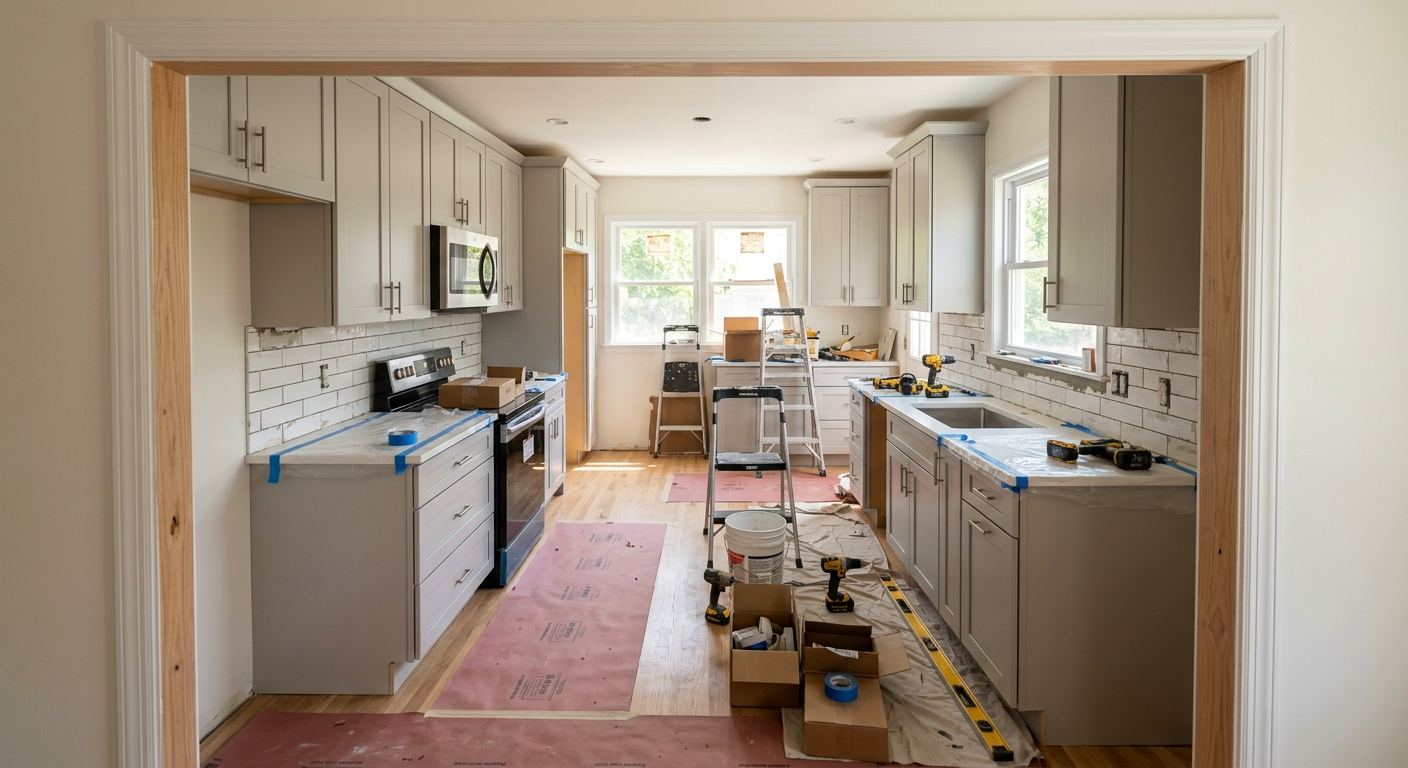
Kitchen renovation options and costs in Patrick Fogarty Catholic Secondary School
Renovating a kitchen in Patrick Fogarty Catholic Secondary School is usually about aligning your budget with the kind of finish buyers expect across the Toronto area. In the local profile, the population is 1,000 (Statistics Canada, 2021 Census), so many homeowners are competing for the same renovation contractors on a limited number of projects at a time. At the same time, most pricing decisions in the Toronto economic region track home values and household income—owners in higher-value pockets tend to spend more on kitchens, and they more often choose upgrades like quartz counters and higher-spec hardware rather than keeping everything “builder standard.”
Because Toronto-region home values and incomes support stronger resale value, renovation costs can move well beyond basic refreshes. In practice, a full renovation often lands in the $25,000–$90,000 band depending on cabinet tier, countertop material, and whether you change the layout. The region’s actual climate doesn’t usually drive the total cost, but it does affect schedules: winter scheduling can slow delivery and site work, and moisture management matters more if you’re replacing flooring right after old cabinets come out.
In and around the area served by Patrick Fogarty Catholic Secondary School, trades are especially busy when homeowners in older neighbourhood pockets (where kitchens are dated and layout is less efficient) want a modern island and improved storage. That’s why you’ll see more mid-range to high-end projects there—often moving toward semi-custom cabinetry and quartz. Use the table below to quickly compare the realistic options and timelines before you request quotes.
| Renovation Tier |
What's Included |
Typical Duration |
Price Range |
| Cosmetic refresh (paint, hardware, new appliances only) |
Paint, cabinet hardware, minor caulking, installation of appliances, existing counter reuse |
2–5 days |
$4,000–$12,000 |
| Mid-range full renovation (new cabinets, counters, sink, tile) |
Semi-custom or quality stock cabinets, quartz or laminate countertops, new sink/faucet, backsplash tile, new flooring prep as needed |
3–6 weeks |
$25,000–$55,000 |
| High-end full renovation (custom cabinets, stone counters, island) |
Custom millwork, premium stone (granite/marble or high-end engineered stone), island build, upgraded appliance package, upgraded lighting/backsplash |
6–12 weeks |
$60,000–$90,000 |
| Cabinet refacing only (new doors + drawer fronts, same boxes) |
Refacing veneer, new doors/drawer fronts, new pulls/handles, minor hardware adjustments, counters reused unless swapped |
1–3 weeks |
$8,000–$25,000 |
| Countertop swap only (laminate to quartz or stone) |
Remove/replace laminate, template, new quartz/stone install, reconnect sink, apply trim/edge where needed |
5–15 business days |
$3,000–$15,000 |
| Backsplash tile installation only |
Tile supply (if included), surface prep, waterproofing details, grouting/sealing, finish trims |
3–7 days |
$2,000–$10,000 |
Prices are estimates only and vary by project scope, site access and material selection.
What affects the price of kitchen renovation in Patrick Fogarty Catholic Secondary School
Even when homeowners request the same “new kitchen,” Toronto-area quotes can differ by 30–50% because the work mix changes: one contractor prices for hidden damage risk, another includes more trades and permits, and material choices swing quickly with cabinet tier and countertop type. In the Toronto economic region, local home values and household income influence the finish tier homeowners choose far more than weather. In higher-value markets, it’s common to budget for quartz or natural stone and semi-custom cabinetry because the cost is easier to justify on resale. In more price-sensitive areas, many projects stay in the mid-range—refaced cabinets or stock units with laminate or mid-tier quartz—balancing affordability and buyer appeal.
Layout changes are the biggest “unpredictable” cost, regardless of finish. Moving a sink, relocating a gas line, adding an island, or removing a wall changes demolition risk, plumbing/gas/electrical coordination, and inspection time—so two kitchens with the same cabinets can end up with different totals.
Concrete examples I see around Patrick Fogarty Catholic Secondary School: (1) older homes often have mismatched subfloors and outdated rough-in plumbing, so when you replace tile and reset cabinetry, labour and materials for prep jump—sometimes adding $3,000–$8,000 to a mid-range project; (2) if your electrical panel or outlet layout needs upgrading for under-cabinet lighting and an island circuit, you may see another $1,500–$4,500 depending on scope; (3) winter scheduling can mean longer lead times on quartz templates, pushing “active site days” out and increasing overlap labour planning, especially in a busy contractor season.
That’s why a modest refresh can stay near the low end of the $25,000–$90,000 full-renovation band only when the layout is unchanged. Once you move into island builds and stone counters, most projects naturally land above $55,000.
| Price Factor |
Why It Matters |
Cost Impact |
| Cabinet tier — stock vs. semi-custom vs. fully custom millwork |
Higher tiers change fit, finish options, hardware quality, and lead times |
~$5,000–$30,000 spread within a full renovation |
| Countertop material — laminate vs. quartz vs. granite vs. stone |
Material price, edge profiles, and install difficulty vary a lot |
~$3,000–$15,000+ depending on material and complexity |
| Layout change — wall removal, island add, plumbing/gas move |
Demolition and re-routing utilities drive the biggest unknowns |
Commonly +$10,000–$25,000 versus “same layout” jobs |
| Appliance package tier — builder vs. mid-range vs. pro-grade |
Price, ventilation needs, and rough-in complexity increase with pro-grade |
~$2,000–$10,000+ difference |
| Flooring — refinish existing vs. full replacement |
Cabinet installation hides parts, but prep and subfloor repair still cost |
~$1,500–$8,000+ depending on removal and replacement |
| Backsplash — ceramic tile vs. marble vs. full-height slab |
Sheeting/slab layouts require more fabrication and careful alignment |
~$2,000–$10,000+ depending on finish |
| Electrical — new circuits for island, under-cabinet lighting |
Lighting adds labour; new circuits add electrician time and parts |
~$500–$6,000+ |
| Permit fees and licensed trade requirements |
Work that triggers permits adds fees, inspections, and scheduling coordination |
~$300–$3,000+ depending on scope |
Permits & regulations in Ontario
In Ontario, many kitchen “swap” projects do not require permits, but several common changes do. If you’re doing cabinet and countertop swaps—keeping plumbing where it is—permits are typically not required. Similarly, installing a new backsplash usually falls into the no-permit zone. The permitting boundary moves when you alter building systems: moving plumbing supply/drain lines, relocating a gas appliance or modifying gas-related connections, removing a load-bearing wall, or adding new electrical circuits.
Here’s the practical list of what typically DOES require permits in Ontario for a kitchen renovation: any work that changes plumbing rough-ins, any relocation or alteration of a gas stove and the associated venting/range hood where gas is involved, any electrical work that adds circuits for an island or significant lighting rewiring, and any structural change such as removing a load-bearing wall. Gas work must be completed by a licensed gas fitter, and electrical work must be completed by a licensed electrician, with inspections for the covered work.
To verify a contractor before signing in the Patrick Fogarty Catholic Secondary School area, follow this order: (1) ask for the contractor’s licence numbers (if applicable to your specific scope), and confirm the trade credentials for gas/electrical via the appropriate provincial registries; (2) request a current certificate of insurance (liability) and confirm it covers renovation work; (3) confirm WSIB/WCB coverage for their workers—your contractor should provide documentation; and (4) if they apply permits, confirm in writing who pulls the permit and who pays the fees.
Cabinets, countertops and layout decisions in Patrick Fogarty Catholic Secondary School
When you’re planning a Patrick Fogarty Catholic Secondary School kitchen renovation, three decisions control most of your experience and your final cost: (1) cabinet tier (stock for fastest/cheapest, semi-custom for best balance, custom for the highest fit), (2) countertop material (laminate, quartz, granite, butcher block, or marble), and (3) layout changes (open-concept wall removal, island addition, or plumbing/gas relocation when the space gain truly matters).
In Toronto resale-focused markets, buyers tend to expect clean lines, durable surfaces, and enough power outlets for modern cooking and small appliances. That pushes many kitchens into semi-custom cabinetry and engineered surfaces at the mid-range. Ontario’s freeze-thaw cycles and seasonal humidity swings don’t usually “damage” kitchens like in some climates, but they do make ventilation and sealing important—especially around sinks, dishwasher installs, and wherever countertop seams meet. If your budget is tight, you’ll get better results by upgrading visible, high-touch surfaces than by chasing niche layout changes.
A dollar example: if you’re choosing between refacing or a full cabinet replacement, refacing can keep you near the $8,000–$35,000 cabinet installation/refacing band and reserve the larger spend for quartz countertops in the $3,000–$15,000 band. But if you want new drawer storage, a true island, and better appliance spacing, then paying for semi-custom or custom cabinets may be justified because the layout upgrades make the storage feel “designed,” not patched.
Layout is the biggest “cost justification” test: an island often makes sense when it improves workflow and gives you seating, but moving plumbing or gas purely for cosmetics can blow the budget quickly and doesn’t always add resale value proportionally. If you keep the plumbing in place and plan power/lighting carefully, you can stay closer to the mid-range rather than pushing toward a high-end rebuild.
| Option |
Durability |
Maintenance |
Best For |
Price Range |
| Stock cabinets (big-box) |
Solid for daily use; limited sizes/colour depth |
Low—just clean and keep hardware tight |
Fast timelines and budget-conscious refreshes |
$8,000–$20,000 |
| Semi-custom cabinets (local dealer) |
Good strength; better internal options and finishes |
Low—regular cleaning and soft-close upkeep |
Most “move-in ready” Toronto-area kitchens |
$18,000–$35,000 |
| Custom cabinets (local millwork shop) |
Highest fit and build quality; tailored storage |
Low to moderate—keep hinges/alignment tuned |
Unique layouts, full-height detailing, statement kitchens |
$30,000–$60,000 |
| Laminate countertop |
Decent impact resistance; can chip at edges if abused |
Low—avoid prolonged standing water at seams |
Cost control and short lead times |
$3,000–$7,000 |
| Quartz engineered countertop |
Highly durable; resists staining better than many natural stones |
Low—typical daily cleaning; manage heat protection |
Balancing premium look with practical maintenance |
$7,000–$12,000 |
| Granite / natural stone countertop |
Very durable; strong but can vary by slab type |
Moderate—requires sealing and careful stain management |
Premium appearance and traditional stone performance |
$10,000–$15,000 |
| Butcher block countertop |
Durable with proper care; can show scratches and water rings |
Moderate—oil/maintenance schedule required |
Warm, casual kitchens and frequent food prep |
$6,000–$10,000 |
| Marble countertop |
Elegant but more vulnerable to etching and staining |
Higher—requires more careful cleaning and sealing |
Statement kitchens where homeowners manage care |
$12,000–$18,000 |
How to choose a kitchen renovation contractor in Patrick Fogarty Catholic Secondary School
Choosing the right contractor matters in Ontario because the job often involves multiple licensed trades and inspection coordination. Start by verifying licensing for the trades you need: gas work must be done by a licensed gas fitter, and electrical work by a licensed electrician. Ask the contractor for their liability insurance certificate and confirm the scope includes renovation work (and that it matches the project address). Next, verify WSIB/WCB coverage for their workers—this is not optional “paperwork.” For homeowners in the Patrick Fogarty Catholic Secondary School area, I recommend you confirm coverage before the first day of demolition so you’re protected if something goes sideways.
Then get 2–3 itemised written quotes. “Itemised” should mean a labour + materials breakdown, not just one lump sum. Make sure the scope is comparable: include/confirm who pulls permits, whether disposal/dumpster fees are included, and what floor protection and dust control they provide. A quality contractor will clearly list exclusions (for example, subfloor repairs, drywall patching beyond a certain height, or unexpected plumbing rough-in costs).
Warranty matters too: confirm the workmanship warranty length and what it covers (and for how long). Also ask about the manufacturer warranty for cabinets and countertops and whether it transfers if you sell the home. Payment should follow a responsible schedule: never pay more than 10–15% upfront; hold back a portion until the job is fully complete and you’ve done the final walkthrough. Finally, get a timeline in writing—start date, countertop template dates, and a completion estimate—because materials lead times can determine your actual start/finish windows.
- Confirm contractor liability insurance certificate (valid dates and project address).
- Verify WSIB/WCB coverage for workers, not just “subcontractors handle it.”
- Ask for gas fitter and electrician licence details for any gas/electrical scope.
- Get 2–3 itemised quotes with labour and materials line items.
- Require a written scope: inclusions, exclusions, and allowances for selections.
- Clarify permit responsibility and whether permit fees are included.
- Confirm disposal/dumpster and dust control (plastic barriers, negative air if needed).
- Check countertop templating schedule and who pays if changes are needed.
- Request cabinet installation details (shimming, fastening, level correction method).
- Review warranty terms: workmanship duration and what “fixable” means.
- Agree on payment milestones (keep 10–15% held back until full completion).
- Get schedule milestones in writing: demolition, rough-in, install, final trim.
Red flags I see in Patrick Fogarty Catholic Secondary School-area kitchen projects: (1) refusing to put permit responsibility in the contract; (2) “no insurance needed” talk or only providing an outdated COI; (3) vague quotes with no line items (especially missing electrical/plumbing allowances); (4) pushing for large upfront payments beyond 10–15%; and (5) no clear timeline for countertop templating and delivery—this usually leads to avoidable downtime and budget creep.
Frequently asked questions — kitchen renovation in Patrick Fogarty Catholic Secondary School
Custom vs stock cabinets — is custom worth it?
In Ontario (including the Patrick Fogarty Catholic Secondary School area), custom cabinets are worth it when your layout has unique constraints—odd corner geometry, a niche for appliances, or you want full-height storage and tailored drawer interiors. If your goal is mainly to modernize finishes, stock or semi-custom often delivers better value. For many homeowners, semi-custom is the practical sweet spot: you get better internal storage options without the long lead times and higher millwork costs of full custom.
Budget-wise, cabinets alone can swing a lot. Many kitchens land in the cabinet installation/refacing range of $8,000–$35,000, where semi-custom commonly supports a durable, resale-friendly finish. If you’re already aiming for a quartz countertop upgrade within $3,000–$15,000, using “custom only where it counts” can prevent overspending while still achieving a high-end look.
How do I choose a kitchen contractor in Patrick Fogarty Catholic Secondary School?
Start by verifying the contractor’s Ontario compliance and coverage. Ask for a current certificate of liability insurance and confirm WSIB/WCB coverage for their workers. If your scope includes gas appliance changes, confirm the job will be completed by a licensed gas fitter; if electrical circuits or island lighting are planned, confirm work by a licensed electrician. In practice, you can also request licence documentation and evidence of inspections once the work is permitted.
Next, require 2–3 itemised quotes with labour and materials breakdowns—so you can compare disposal, drywall patching, electrical/plumbing allowances, and whether permits are included. A reasonable payment schedule matters too: keep upfront at around 10–15% and hold back part of the payment until the final walkthrough. Finally, insist on a clear start date and completion estimate in writing—kitchens in Toronto-area markets often face tight scheduling around material lead times.
What order do kitchen renovation steps happen in?
For most Patrick Fogarty Catholic Secondary School-area renovations in Ontario, the order is designed to protect rough-in work and avoid rework. Typically: (1) final site measurements and countertop templating dates are confirmed early; (2) demolition begins after you approve selections; (3) rough-ins happen next—electrical, plumbing, and any permitted gas work—followed by inspections where required; (4) drywall/patching and flooring prep follow so cabinets have a flat, clean base; (5) cabinet installation is done before countertops; (6) countertops are templated/installed, then backsplash and final trim follow; (7) final electrical/lighting connections, caulking, and appliance hookups close out the job.
If you’re doing a full renovation that aligns with the $25,000–$90,000 full-kitchen range, this sequencing helps keep trades from stepping on each other and reduces change orders—especially around island power and sink cutouts.
Can I live at home during a kitchen renovation in Patrick Fogarty Catholic Secondary School?
Often yes, but it depends on the scope and how your household functions day-to-day. For a cosmetic refresh—paint, hardware, and appliance changes—you can usually stay in the home because demolition is limited. For a mid-range full renovation, you may be able to live in the home if the contractor can maintain one functional area (for example, a temporary sink setup or controlled work zones), but expect daily disruptions and noise.
Once you’re in a full renovation—especially if you’re moving plumbing, adding an island, or replacing flooring—the site usually becomes less “livable” during the rough-in and countertop install phases. Kitchens in Ontario winter scheduling can also slow things down, extending dust and noise windows. For homeowners aiming at $25,000–$55,000 mid-range projects, planning for temporary meals and limited access is still common.
Should I renovate my kitchen before selling in Patrick Fogarty Catholic Secondary School?
Often, yes—if the renovation improves key buyer perceptions: updated cabinets, durable countertops, and a functional layout. In Toronto-area resale expectations, buyers tend to respond well to quartz or other modern surfaces and a clean, well-lit kitchen. However, the timing should match your renovation type. Cosmetic refreshes can improve appearance without the stress of utility moves, while full renovations near $80,000–$90,000 should be reserved for homes where the kitchen is truly holding back buyer interest or where you can justify the spend on the overall property value.
If your plan includes layout changes, be careful: moving plumbing or gas drives permitting and scheduling, and it can become a risk if you need a fast sale. In many cases, the best strategy is to keep plumbing where possible, upgrade visible surfaces, and choose cabinet tiers that look premium without overshooting your neighbourhood’s price point.
What's the most popular kitchen style in Patrick Fogarty Catholic Secondary School right now?
Across the Toronto economic region, the most common “safe bet” styles are modern transitional looks: clean shaker-style doors, warm neutrals (white, soft greys, and greige), and matte finishes paired with brushed or satin hardware. For countertops, quartz remains popular because it’s durable and low-maintenance, fitting real-life cooking while still looking upscale. Homeowners also like simple backsplash patterns—full-height detail is trending, but many opt for tile that’s easier to maintain.
In terms of price point, this style often lands in the mid-range full renovation band—where you can pair semi-custom cabinetry with a quartz countertop. That frequently keeps the project within the $25,000–$55,000 range for many average-sized renovations. When budgets stretch toward high-end builds in the $60,000–$90,000 range, islands and stone upgrades become more common, along with more custom millwork detailing.