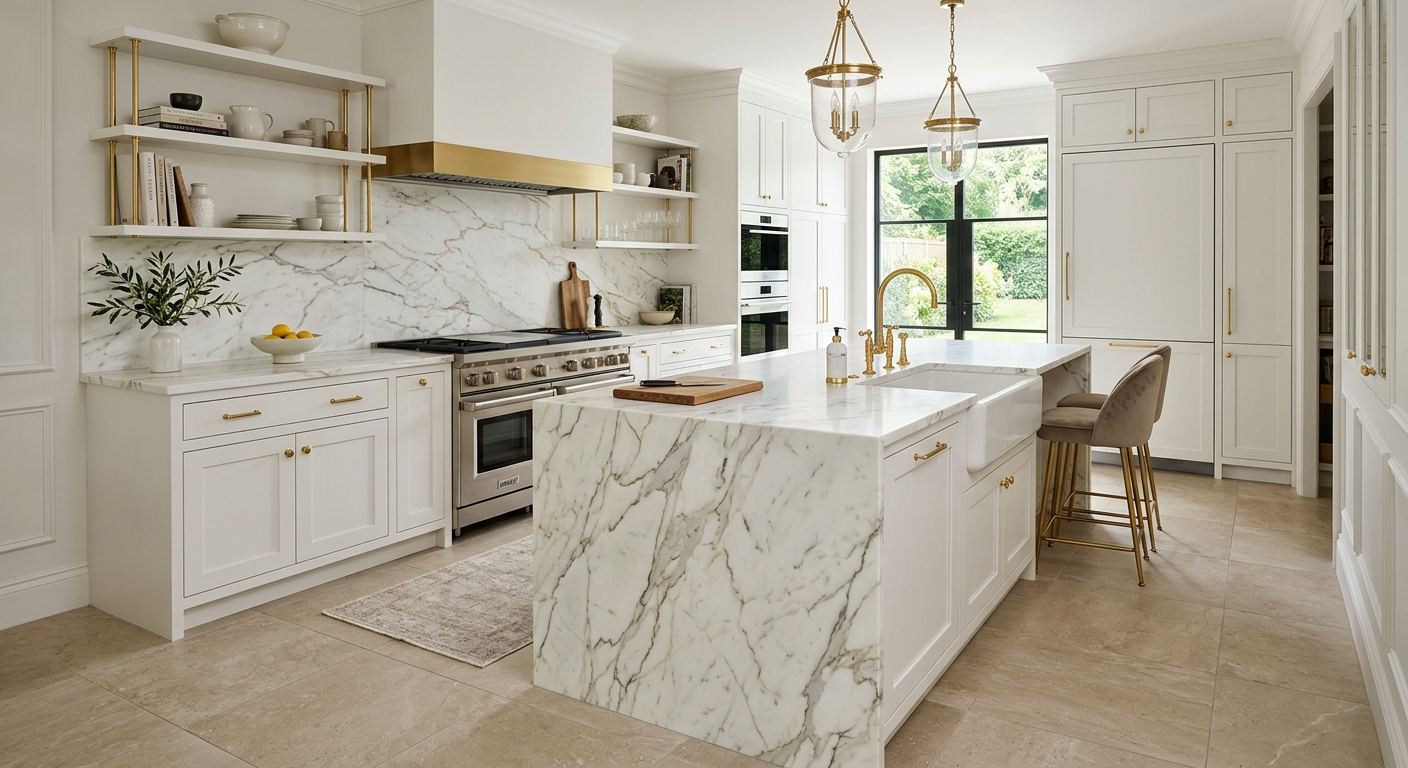
Kitchen renovation options and costs in Moose Factory
Kitchen renovation in Moose Factory starts with choices that fit both your home and the way buyers value kitchens in the Toronto economic region. With Moose Factory’s small population of 1,807 (Statistics Canada, 2021 Census), our local renovation market is tighter—fewer contractors, and scheduling often depends on availability of installers travelling in from farther across Ontario. That matters, because labour access can influence timelines and, in busier seasons, the total price for a full project.
Also, costs in the GTA economic region track closely to local home value and household expectations more than they do to weather. In higher-value pockets, homeowners commonly invest roughly 8–15% of their home’s value into the kitchen, which pushes projects toward custom cabinetry, quartz, and upgraded appliances; in more price-sensitive areas, many owners target a mid-range refresh using semi-custom or refaced cabinets and good laminate or quartz. For Moose Factory homeowners planning resale to buyers who benchmark GTA-style kitchens, it’s common to see finishes chosen to “read premium” without always going fully custom.
On the climate side, Moose Factory’s colder, wetter swings don’t typically raise contractor costs the way it might affect exterior builds, but they do influence material handling and site drying—especially for tile and flooring. Kitchens with older, more humid basements or crawlspaces can also prolong work if moisture levels aren’t addressed early. Demand is especially strong around the central community core, where homeowners often renovate to keep up with modern layout expectations and energy-saving appliance upgrades. From there, the best next step is comparing renovation tiers in the table below.
| Renovation Tier |
What's Included |
Typical Duration |
Price Range |
| Cosmetic refresh (paint, hardware, new appliances only) |
Cabinet painting or new paint, new hardware, trim touch-ups, install of like-for-like appliances, minor caulking and resealing |
3–7 business days |
$8,000–$18,000 |
| Mid-range full renovation (new cabinets, counters, sink, tile) |
Semi-custom or refaced cabinets (new boxes where needed), new countertops, new sink and faucet, backsplash tile, flooring refresh/partial replacement, plumbing adjustments for sink |
3–5 weeks |
$25,000–$55,000 |
| High-end full renovation (custom cabinets, stone counters, island) |
Fully custom millwork, quartz/natural stone countertops, island with seating, upgraded appliance package, full-height backsplash or stone accent, enhanced lighting, more structural work as required |
5–10 weeks |
$65,000–$90,000 |
| Cabinet refacing only (new doors + drawer fronts, same boxes) |
New door and drawer fronts, new end panels and hardware, sand/prep and finish, optional new crown/trim, alignment adjustments |
1–3 weeks |
$8,000–$35,000 |
| Countertop swap only (laminate to quartz or stone) |
Removal of old laminate, new countertop fabrication and install, sink cut-outs where applicable, countertop caulking and cleanup |
2–6 business days (plus template/fabrication lead time) |
$3,000–$15,000 |
| Backsplash tile installation only |
Tile supply/installation for standard backsplash area, prep/leveling, grout and sealing, edge finishing and cleanup |
3–7 business days |
$2,000–$10,000 |
Prices are estimates only and vary by project scope, site access and material selection.
What affects the price of kitchen renovation in Moose Factory
Across Toronto and much of Ontario, homeowners can receive quotes for the “same” kitchen renovation that differ by 30–50%, even before you account for personal preferences. The biggest reason is that contractors price the finish tier and risk differently: labour availability, how much carpentry correction is required for older framing, and whether your scope includes permits and licensed trade work. In Moose Factory and the wider GTA economic region, local home value and household expectations influence what owners choose—meaning the finish level often changes even when the room layout looks similar.
When renovation budgets are justified by resale, many buyers lean toward quartz or natural stone counters and semi-custom cabinetry, pushing projects toward the $25,000–$90,000 full-kitchen bands. In more budget-conscious situations, laminate countertops and stock or refaced cabinets dominate because they deliver a refreshed look without the higher material and fabrication costs. Either way, layout changes are typically the most unpredictable expense regardless of finish. Moving plumbing supply/drain, relocating gas lines, or adding an island with new electrical all introduce concealed work, inspection steps, and trades coordination.
In Moose Factory specifically, two local conditions often raise or lower costs. First, older homes and seasonal moisture can demand extra preparation for tile and flooring—if subfloors need patching or the area is not dry enough, delays and added labour show up. Second, limited local staging space and access routes can increase material handling time; that’s why a “small” backsplash or countertop swap sometimes costs more if staging and dust protection are difficult. With the right planning, you can still target a mid-range renovation around the $25,000–$55,000 band and save the high-end spend for stone, lighting, or a true island footprint.
| Price Factor |
Why It Matters |
Cost Impact |
| Cabinet tier — stock vs. semi-custom vs. fully custom millwork |
Custom work drives shop drawings, fitment time, and higher material/labour rates; semi-custom is often the sweet spot for resale appearance |
$8,000–$40,000 difference depending on scope and layout |
| Countertop material — laminate vs. quartz vs. granite vs. stone |
Material cost and fabrication complexity change substantially; edges, sink cut-outs, and thickness increase pricing |
$3,000–$15,000 for typical swaps, more for island quantities |
| Layout change — wall removal, island add, plumbing/gas move |
Hidden work, structural considerations, and trade coordination create the biggest variability and permit needs |
$5,000–$25,000 swing even with the same finishes |
| Appliance package tier — builder vs. mid-range vs. pro-grade |
Premium appliances add installation complexity, power requirements, and often require better cabinetry clearances |
$2,000–$12,000 spread commonly seen in quotes |
| Flooring — refinish existing vs. full replacement |
If the subfloor is sound you save removal time; if not, labour and materials rise quickly |
$1,500–$8,000 typical range |
| Backsplash — ceramic tile vs. marble vs. full-height slab |
Pattern matching, thinset prep, waterproofing, and specialty stone require more time and skilled install |
$2,000–$10,000 depending on coverage and material |
| Electrical — new circuits for island, under-cabinet lighting |
Adding circuits requires licensed work, inspection, and careful cabling routing in older walls |
$800–$6,000 variance |
| Permit fees and licensed trade requirements |
Where required, permits and inspections add admin time and coordinated scheduling with specialists |
$300–$2,500 plus trade scheduling impacts |
Permits & regulations in Ontario
In Ontario, not every kitchen change needs a permit. Typically, cabinet and countertop swaps that do not alter plumbing, gas, or electrical generally do not require permits—meaning replacing your existing countertops with quartz or changing cabinet doors for a refacing project is usually treated as a non-structural, non-service alteration. However, permits are commonly required when you move plumbing supply or drain lines, relocate gas appliances or lines (including work tied to a stove/range setup or certain hood arrangements), remove a load-bearing wall, add or move electrical circuits (for example, wiring an island with outlets or adding under-cabinet lighting tied to new circuits), or make changes that affect safety-related systems.
For homeowners in Moose Factory, the best approach is to verify responsibilities before signing. Step one: ask the contractor to list which trades are involved and whether a permit is required for each scope item. Step two: confirm gas work is performed by a licensed gas fitter and that electrical work is completed by a licensed electrician; both should include proof of completed work and required inspections. Step three: verify licensing and coverage using Ontario-wide sources: check the contractor’s business licence status where applicable, request a certificate of insurance, and ensure WSIB/WCB coverage is in place (or that the contractor is exempt only where legally allowed). Step four: get the clearance/inspection documentation in writing, and confirm who pulls the permit—permit responsibility should be spelled out in your contract.
Cabinets, countertops and layout decisions in Moose Factory
In a Moose Factory kitchen renovation, three decisions usually drive both cost and resale appeal: cabinet tier, countertop material, and layout. Cabinet tier is the decision that sets the baseline feel of your kitchen—stock is fastest and cheapest, semi-custom is the most popular mid-range option for Ontario buyers, and custom millwork gives the best fit and highest-end look. Countertop material is your second major cost lever: laminate and butcher block are budget-friendly, while quartz, granite, and natural stone carry higher upfront pricing but often deliver a more “finished” look that aligns with GTA resale expectations. Layout is the third decision: open-concept wall removal, island additions, or plumbing/gas relocation can transform the space, but they also bring the biggest variability and permit/licensed-trade needs.
Because Toronto-market finishes are often chosen for resale, many homeowners aiming for the $25,000–$55,000 band pick semi-custom cabinets paired with quartz only for visible surfaces and key edges, while keeping the rest simplified. In Moose Factory’s mixed indoor humidity swings, well-sealed counters and properly installed backsplashes help prevent moisture issues behind tile and at cabinet perimeters. That’s also why an upgraded countertop surface may be worth it even if you keep cabinets mid-range. For example, if quartz costs roughly $4,000 more than laminate on your scope, that difference can be justified when the quartz upgrade supports a cleaner resale impression and reduces long-term refinishing/repair risk—especially in high-use zones.
If your layout is tight, spending on a true island footprint may not be justified; instead, prioritize functional storage (pantries, drawers) and lighting that modern buyers expect. If the room allows it, moving plumbing or gas for an island can pay off by improving workflow—just budget for the coordination and inspections that come with it.
| Option |
Durability |
Maintenance |
Best For |
Price Range |
| Stock cabinets (big-box) |
Good day-to-day durability; longevity depends on installation quality and cabinet box condition |
Minimal; occasional hardware tightening and resealing around sinks |
Fast refreshes and cost-controlled renos when your measurements are standard |
$8,000–$20,000 |
| Semi-custom cabinets (local dealer) |
Very solid build with better sizing options and upgrades like soft-close and interior organizers |
Low; keep caulking in good condition and clean with non-abrasive products |
Most Moose Factory homeowners balancing resale look and affordability |
$15,000–$35,000 |
| Custom cabinets (local millwork shop) |
Highest durability when built to your exact kitchen plan and load demands |
Low to moderate; hinges/soft-close parts still need periodic checks |
Complex layouts, unusual dimensions, and high-end kitchens targeting top resale appeal |
$30,000–$60,000 |
| Laminate countertop |
Decent impact resistance; edges and seams are the weak points if not sealed well |
Wipe clean; avoid standing water at seams; repair chips as needed |
Budget-first renovations and rentals where you want a clean look quickly |
$3,000–$7,000 |
| Quartz engineered countertop |
Very durable, resistant to staining; performs well in busy family kitchens |
Low maintenance; still use proper cutting boards to prevent unnecessary scoring |
Ontario resale-friendly kitchens that want a premium look in the mid-to-high range |
$6,000–$12,000 |
| Granite / natural stone countertop |
Highly durable and heat resistant; variation in the stone makes pattern selection important |
Periodic sealing; clean spills promptly and avoid acidic cleaners |
Homeowners who want true natural variation and a luxury statement |
$8,000–$15,000 |
| Butcher block countertop |
Strong for everyday use but can dent/scratch; finish quality matters |
Needs oiling and careful moisture management, especially around sinks |
Warm, casual kitchen styles where maintenance is acceptable |
$4,000–$9,000 |
| Marble countertop |
Beautiful but softer; sensitive to acidic spills and can etch |
Requires diligence: sealers, quick wipe-ups, and gentle cleaners |
Low-to-moderate use kitchens where aesthetics matter more than heavy-duty wear |
$10,000–$18,000 |
How to choose a kitchen renovation contractor in Moose Factory
Choosing the right contractor in Moose Factory starts with proving they can legally and responsibly do the work. First, ask for their Ontario licensing information where applicable and their certificate of liability insurance—then confirm the coverage limits are appropriate for renovation work and that the certificate names you properly as an interested party if required. Second, verify WSIB/WCB coverage: request proof of coverage (or written confirmation of their status if exempt under Ontario rules). Don’t accept a verbal assurance; get documents. Third, get 2–3 itemised written quotes that break labour and materials line-by-line rather than using a lump sum only. Look for clear scopes: what’s included for demolition, protection, disposal, countertop templating, cabinet installation tolerances, backsplash prep, and any allowance for contingencies.
Read exclusions carefully: are permits included (when needed), are inspections handled, and is demolition and haul-away included or billed separately? Ask about warranty terms. A good workmanship warranty should be spelled out with a start date, length, and what it covers (for example, cabinet alignment, tile adhesion failures, and caulking performance). Product warranties (cabinets, countertops, appliances) should be provided by the manufacturer and explained—especially whether coverage is transferable to you as the homeowner. For payment schedule, never pay more than 10–15% upfront; hold back a portion until the job is complete, inspected, and any punch-list items are addressed. Finally, require a written start date and a completion estimate so you can plan around lead times for cabinets and stone.
- Confirm who pulls permits (if required) and who pays the fees in writing.
- Get an itemised quote for labour, materials, and allowances (especially for tile, stone, and electrical).
- Require a signed scope that lists exclusions (what’s not included) and how change orders are priced.
- Ask for cabinet line details (model, door style, finish system) and countertop material grade/thickness.
- Confirm disposal/haul-away is included for demolition debris and packaging.
- Verify insurance and request a current certificate of liability before work begins.
- Verify WSIB/WCB coverage with proof, not a promise.
- Ask who does electrical and gas-related work and confirm licensed trades are assigned.
- Check timeline assumptions: template dates for stone, cabinet lead times, and inspection scheduling.
- Require a written warranty for workmanship and make sure it’s not “best effort only.”
- Use a payment schedule with 10–15% max upfront and a holdback until completion.
- Get start and completion dates in writing, including key milestones (demo, install, finishing).
Red flags for Moose Factory kitchen projects include: quotes that are only a lump sum without line items, promises of “no permits needed” when plumbing/gas/electrical is being moved, missing proof of insurance or WSIB/WCB coverage, start dates given without accounting for countertop fabrication lead times, and warranties that are vague or don’t specify workmanship coverage.
Frequently asked questions — kitchen renovation in Moose Factory
Should I reface or replace my cabinets?
In Moose Factory and across Ontario, refacing is usually the smartest move when your cabinet boxes are solid, level, and not swollen from moisture—refacing keeps the underlying frames and updates the look with new doors, drawer fronts, and trim. It’s often cheaper and faster than a full replacement, and it can help you stay nearer the mid-range renovation budgets like $25,000–$55,000 for a full kitchen if you’re also updating counters and tile. Replacement is the better choice when boxes are damaged, layout needs to change, or you want fully custom sizing. Note that refacing still requires careful prep; if your current cabinets have water damage near the sink or an older backsplash line, you may end up paying more after the contractor corrects it. Ask your contractor to inspect the boxes and hinge alignment and to itemise any repairs before you decide.
Do I need a permit for a kitchen renovation in Ontario?
Ontario rules depend on what you’re changing, not just that you’re renovating. In many kitchen projects in Moose Factory, cabinet and countertop swaps by themselves do not require permits. However, permits are commonly required when you move plumbing supply/drain lines, relocate gas appliances or relevant gas lines, remove a load-bearing wall, or add/move electrical circuits (for example, outlets and lighting for an island). Gas work must be performed by a licensed gas fitter, and electrical by a licensed electrician, each with appropriate inspections. The safest way is to ask the contractor to list each task and indicate whether it triggers a permit and which trade is responsible. Make sure permit responsibility is explicitly written in your contract before the job starts.
What's the ROI on a kitchen renovation?
ROI in Moose Factory isn’t based on weather—it’s mostly driven by what buyers in the Toronto market expect when they walk into the kitchen. In the GTA economic region, higher-value neighbourhoods often see kitchen renovations returning more because upgraded finishes (quartz or stone counters, better cabinetry, upgraded appliances) align with what buyers pay attention to first. A practical way to think about ROI is to plan your spend around the finish tier that buyers can immediately see: floors, countertops, and cabinet fronts. If you invest heavily in structural changes, the ROI depends on whether the new layout genuinely improves workflow. For reference, many homeowners keep refresh projects closer to the low–mid range and reserve full high-end choices for the top end of the budget. If your goal is resale value, staying in realistic bands like $25,000–$55,000 with a durable countertop upgrade typically makes the most sense for most owners.
How do I budget for a kitchen renovation?
Start by choosing your tier: cosmetic refresh, mid-range full renovation, or high-end full renovation, then add line-item allowances. In the Toronto economic region, realistic full-kitchen budgets commonly run from mid-$20k for modest refreshes into the $80k+ range for larger, more custom builds. In Moose Factory, you’ll also want to build in time and cost for scheduling and material lead times—especially for stone fabrication and custom cabinetry. A helpful budgeting approach is: cabinets (including install), countertops, sink/plumbing adjustments, backsplash/tile, flooring, electrical and lighting, plus a separate allowance for surprises (older homes often need extra subfloor prep). If you’re planning a backsplash-only or countertop-only upgrade, those can be targeted in smaller bands (for example, countertop swaps often fall around $3,000–$15,000 depending on material and complexity).
Can I move my kitchen sink or stove?
Yes, you can move a kitchen sink or stove in Ontario, but it’s where permits and trade coordination frequently enter the picture. Moving a sink usually means rerouting plumbing supply and drain lines; moving a stove can involve changes to gas connections and ventilation requirements. Because this is safety-related work, you generally need licensed plumbers/gas fitters (and electricians if you change outlets/ignition/hood controls). In Moose Factory, the cost can jump quickly because concealed plumbing runs, wall opening, and inspection steps take time and labour—so don’t assume a “simple relocation.” If you want to improve function with less disruption, consider alternatives like adjusting cabinet storage around the existing plumbing locations, or adding an island that doesn’t require moving services. Always confirm in writing who handles permits and inspections before work begins.
What's the most cost-effective kitchen upgrade?
The most cost-effective upgrade is usually the one that changes the kitchen’s visual “read” without requiring extensive rework. For many Moose Factory homeowners, a countertop upgrade or a high-quality backsplash can deliver a big look change with relatively controlled scope. For example, swapping from laminate to quartz or a similar premium surface can fit into the $3,000–$15,000 countertop band, and it often makes cabinets look more modern even if you keep the cabinet tier mid-range. If your cabinets are structurally sound, cabinet refacing is another cost-effective option—commonly in the $8,000–$35,000 range depending on finish and accessories—because it refreshes doors and drawers without full demolition. The biggest “bang for your buck” also depends on your layout: if your main issue is function, the best upgrade may be reconfiguring storage or adding better lighting instead of moving plumbing or gas.