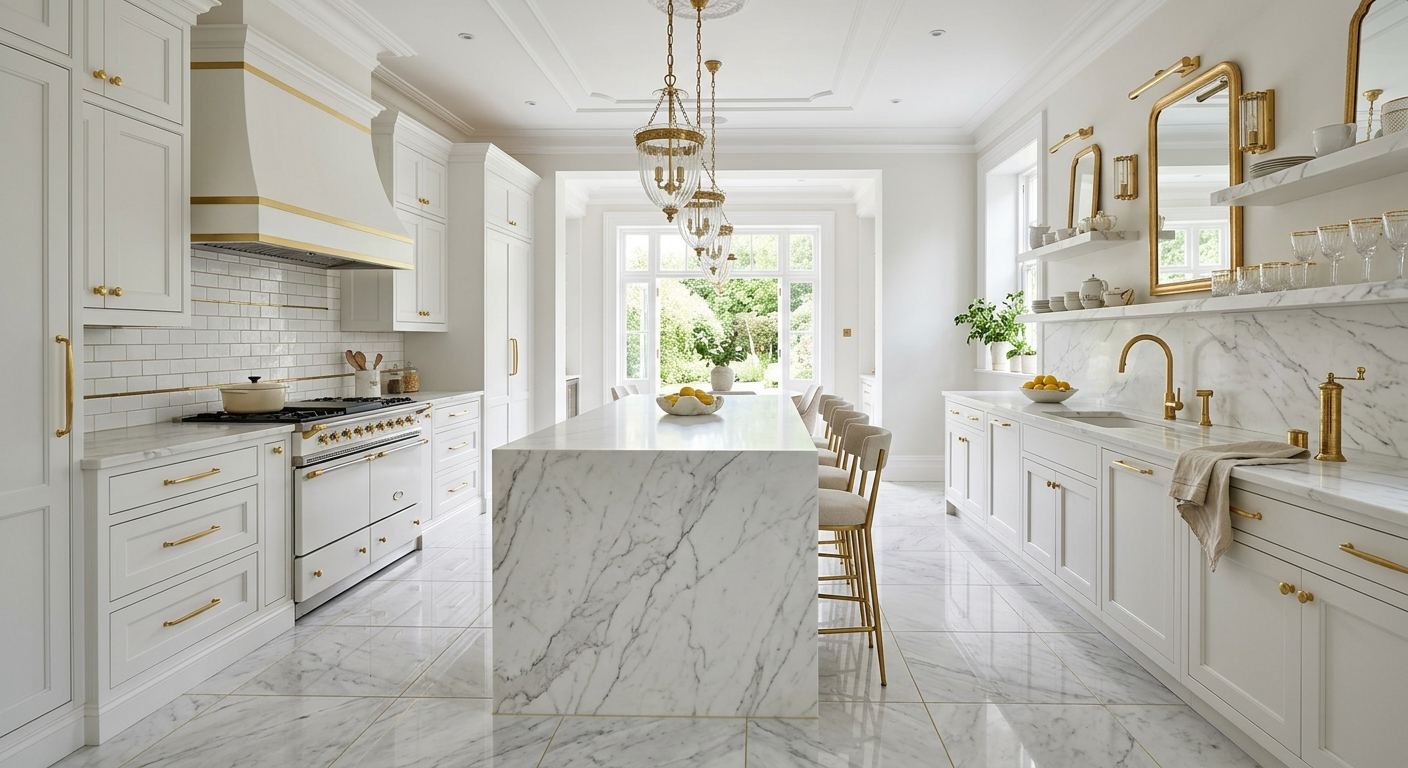
Kitchen renovation options and costs in Taylor-Massey
Taylor-Massey is a great place to renovate because you’ve got a mix of older homes and newer builds, and homeowners there usually plan projects around kitchen resale expectations rather than weather. With a population of 15,683 people (Statistics Canada, 2021 Census), the local contractor base is active and competition is strong, but finish choices still track closely to household prosperity: higher-value Toronto-area homes tend to support the kinds of renovations where buyers expect quartz, upgraded fixtures, and a more tailored cabinet layout. In practice, that means two neighbours can get very different quotes for the “same” kitchen because one owner is targeting mid-range resale and the other is pricing the kitchen as a key value driver.
Ontario’s climate affects kitchens mainly through long-term wear patterns—humidity swings and temperature changes can stress caulking, sealant, and cabinet hardware over time—but it’s rarely the reason the budget jumps by itself. In the Toronto economic region, the main driver is the market: many homeowners aim to invest a meaningful share of property value into the kitchen, which nudges projects toward upgraded cabinets, quartz or natural stone countertops, and better appliance packages. Demand is especially steady around the Taylor-Massey area where families often renovate to refresh layout flow, add storage, or modernize dated finishes.
Below are common renovation tiers you can use to compare quotes from different contractors, before you get into the details of layout, materials, and trade permits.
| Renovation Tier |
What's Included |
Typical Duration |
Price Range |
| Cosmetic refresh (paint, hardware, new appliances only) |
Paint/trim touch-ups, new cabinet hardware, install new appliances, basic cleaning/protection of existing finishes |
3–7 days |
$25,000–$35,000 |
| Mid-range full renovation (new cabinets, counters, sink, tile) |
Semi-custom or quality stock cabinets, quartz or laminate counters, new sink/faucet, backsplash tile, flooring refresh as needed, trade labour |
2–4 weeks |
$45,000–$65,000 |
| High-end full renovation (custom cabinets, stone counters, island) |
Fully custom cabinetry, granite/natural stone counters, island with seating, upgraded appliance package, premium tile/stone backsplash, electrical enhancements |
4–7 weeks |
$70,000–$90,000 |
| Cabinet refacing only (new doors + drawer fronts, same boxes) |
Refacing veneer/panels, new doors/drawers, updated pulls, optional internal updates, patch and prep for paint/trim |
1–2 weeks |
$8,000–$25,000 |
| Countertop swap only (laminate to quartz or stone) |
Remove existing tops, fabricate and install new quartz/stone, new sink cut-out as required, edge profile change, seal/finish |
3–7 days |
$3,500–$12,000 |
| Backsplash tile installation only |
Demo of existing backsplash (if needed), tile supply/layout, installation, grout/seal, clean-up |
3–6 days |
$2,000–$8,500 |
Prices are estimates only and vary by project scope, site access and material selection.
What affects the price of kitchen renovation in Taylor-Massey
In Taylor-Massey and across the Toronto economic region, you can see the same kitchen scope quoted 30–50% apart because contractors price risk differently—what’s hiding behind walls, how plumbing/electrical tie-ins are handled, and how premium finish choices are allowed to escalate. Even when labour rates and permitting costs are fairly consistent across GTA, the market effect is real: higher-value pockets push owners toward custom millwork and stone counters, while more price-sensitive projects often choose stock or refaced cabinets with laminate or mid-tier surfaces to keep resale value without overbuilding.
Local home values and incomes tend to shape the typical finish tier more than climate. In higher-value Toronto-area markets, homeowners commonly default to quartz or natural stone and semi-custom cabinetry because the kitchen cost is easier to recover at resale. In more budget-focused areas like outer Mississauga and parts of Brampton, many projects stay in the mid-range: refacing, laminate counters, and selective layout tweaks. For homeowners targeting mid-range spending, a realistic full renovation often lands around the $45,000–$65,000 band, while custom, island-heavy upgrades commonly move toward the $70,000–$90,000 end.
Two concrete Taylor-Massey examples that change cost fast: (1) homes with older plumbing routes can add demolition and rework when you change sink locations, pushing labour and materials upward even if you keep cabinets “mid-range”; and (2) when you upgrade to full-height backsplash tile or add under-cabinet lighting, electrical time increases and can affect patch-and-finish work on drywall. Also, because Ontario housing stock includes many basements and older wall cavities, what looks like “just swapping countertops” can become a longer job if the old base is out of level—those corrections are where budgets creep.
| Price Factor |
Why It Matters |
Cost Impact |
| Cabinet tier — stock vs. semi-custom vs. fully custom millwork |
Cabinet fabrication quality, door styles, interior options, and fit/finish tolerance |
Small refresh: $8,000–$25,000 (refacing) vs. full custom: $30,000+ within $45,000–$90,000 projects |
| Countertop material — laminate vs. quartz vs. granite vs. stone |
Material cost, edge profiles, and fabrication/installation complexity |
Laminate can stay near $3,000–$6,000; quartz/stone often drives $8,000–$15,000+ |
| Layout change — wall removal, island add, plumbing/gas move |
Structural work, new framing, and rerouting trades |
Often the biggest swing: +$10,000–$25,000 depending on the move |
| Appliance package tier — builder vs. mid-range vs. pro-grade |
Brand tiers influence purchase price and installation details (venting, clearances) |
Mid-range packages usually add a noticeable step within a $45,000–$65,000 renovation |
| Flooring — refinish existing vs. full replacement |
Demo and subfloor prep costs; matching existing finishes |
Refinish may keep cost lower; full replacement can add several thousand dollars |
| Backsplash — ceramic tile vs. marble vs. full-height slab |
Material rarity, pattern alignment, and height/coverage |
Basic tile: $2,000–$5,000; premium options can push toward $10,000+ |
| Electrical — new circuits for island, under-cabinet lighting |
Licensed labour, trenching/patching, and code-compliant placement |
Often +$1,000–$6,000 depending on the number of new points |
| Permit fees and licensed trade requirements |
Fees plus inspection scheduling and trade coordination |
Typically modest, but can affect total timeline and coordination costs |
Permits & regulations in Ontario
In Ontario, swapping cabinets and countertops typically does not require a permit—if you’re keeping the existing plumbing, gas, and electrical locations in place, you’re usually doing interior finishing work. However, if your project changes the services behind the kitchen—moving plumbing supply or drain lines, relocating a gas stove or modifying a gas line, removing a load-bearing wall, or adding electrical circuits—you’ll generally need permits and the work must be completed by licensed trades with inspections.
Here’s the practical way to think about it for a Taylor-Massey homeowner. Usually no permit: cabinet installation/refacing, countertop removal and replacement, and backsplash tiling (when electrical/gas locations aren’t altered). Usually a permit: relocating a sink’s supply/drain, moving a gas cooktop/range and associated venting, adding or relocating outlets and dedicated circuits (for example, island receptacles or under-cabinet lighting circuits), and any structural wall removal.
Before you sign in Ontario, verify licensing and coverage step-by-step. First, ask for the contractor’s Ontario business details and confirm trade licensing for gas work (licensed gas fitter) and electrical work (licensed electrician). Next, request certificates of liability insurance and confirm WSIB/WCB coverage for the contractor and relevant subcontractors—your contractor should be able to provide current documentation. Finally, ensure your contract clearly states who pulls permits (and who pays for permit fees), and that inspections are scheduled before the trades close up walls. If anything is unclear, pause and get it in writing—permit responsibility belongs in the signed scope.
Cabinets, countertops and layout decisions in Taylor-Massey
For most Taylor-Massey kitchens, the biggest value decisions come down to three choices: (1) cabinet tier, (2) countertop material, and (3) whether you’re changing the layout. Cabinet tier influences how quickly the job comes together and how seamless the final fit feels: stock cabinets are usually fastest and least expensive, semi-custom is the most common mid-range sweet spot, and custom millwork gives the best fit for unusual wall angles and storage needs. Countertops are the second major driver—laminate can look great on a budget but doesn’t match quartz/stone for heat resistance and long-term durability. In Ontario, where many homes deal with seasonal humidity shifts, solid installation and proper sealing matter as much as the material itself.
Layout changes are where ROI can be either excellent or wasted. If you remove an awkward wall to improve sightlines or add an island for circulation, you can justify higher spend because buyers notice function. But moving plumbing or gas can quickly erase savings even if the finish tier stays mid-range. In Taylor-Massey, many homes have older service runs; relocating a sink or stove often requires more demolition than expected, which is why the same finish tier can land anywhere within the $45,000–$65,000 band or push toward $70,000+.
Dollar example: if your plan is “same cabinets, change countertops,” you might budget $3,500–$12,000 for a countertop swap. If, at the same time, you move the sink so the faucet sits over a new island location, the layout work can turn a countertop-only upgrade into a full renovation effort—your savings can disappear quickly. The best approach for ROI is to spend on quartz/stone and cabinet organization, and keep plumbing changes limited unless the space gain is clear.
| Option |
Durability |
Maintenance |
Best For |
Price Range |
| Stock cabinets (big-box) |
Good day-to-day durability; limited adjustment for off-square walls |
Low—typical cleaning and tightening of hardware |
Budget refreshes that prioritize timeline and cost control |
$8,000–$25,000 |
| Semi-custom cabinets (local dealer) |
Solid durability with better sizing and storage options |
Low—wipe clean; hinges and drawer tracks are serviceable |
Most homeowners targeting resale value without going fully custom |
$20,000–$45,000 |
| Custom cabinets (local millwork shop) |
Highest durability and best fit for unique footprints |
Low, with occasional hardware tuning |
Irregular layouts, premium storage features, and “stay long-term” builds |
$35,000–$65,000 |
| Laminate countertop |
Moderate durability; sensitive to heat and sharp impacts at seams |
Easy cleaning; avoid prolonged heat exposure |
Refreshes where budget matters most |
$3,000–$6,000 |
| Quartz engineered countertop |
High durability; excellent stain resistance |
Low—typical soap-and-water cleaning |
Busy households and buyers expecting modern, maintenance-friendly surfaces |
$8,000–$12,500 |
| Granite / natural stone countertop |
Very durable; resilient surface with natural variation |
Moderate—may require periodic sealing depending on the stone |
Premium look where you want unique slabs and character |
$10,000–$15,000 |
| Butcher block countertop |
Durable but can be scratched; best with routine care |
Higher—oiling and gentle maintenance to protect the wood |
Warm, casual kitchens and those willing to maintain the surface |
$6,000–$10,000 |
| Marble countertop |
Beautiful but more prone to etching/staining than quartz |
Higher—requires careful cleaning and protection |
Statement kitchens where aesthetics outweigh heavy-duty wear |
$12,000–$18,000 |
How to choose a kitchen renovation contractor in Taylor-Massey
Choosing the right contractor in Taylor-Massey isn’t just about the lowest number—it’s about proof that the work will be coordinated safely and finished on time. In Ontario, you should verify the contractor’s liability insurance (ask for a certificate of insurance naming you/your property if possible), and confirm WSIB/WCB coverage for workers who will be on your site. For the trades: gas work must be done by a licensed gas fitter, and electrical work by a licensed electrician. Ask for their licence numbers and, when available, links or registry confirmations. If the contractor can’t provide these documents or hesitates when you ask, that’s a major warning sign.
When you request quotes, insist on 2–3 itemised written estimates rather than a single lump sum. You want labour and materials broken out (cabinet supply, countertop fabrication, tile install, demo/disposal, electrical scope, and any permit-related tasks). Read the scope line-by-line: what’s excluded (for example, drywall patching beyond a certain amount, subfloor repairs, appliance haul-away), whether permit pulling is included, and who pays for disposal and protection of floors/doors. Warranty also matters: confirm workmanship warranty length, what’s covered for cabinet hardware/installation issues, and whether manufacturer warranties are transferable to you as the homeowner.
For payment, a safe schedule is to avoid large upfront deposits—generally cap deposits around 10–15%, then hold back a portion until the job is fully complete and cleaned. Finally, get a written start date and completion estimate; kitchen renos in the GTA often run long when trades aren’t scheduled around countertop fabrication timelines.
- Confirm contractor liability insurance and WSIB/WCB coverage before any work begins.
- Ask who is pulling permits (if required) and whether permit fees are included.
- Require separate line items for cabinets, countertops, tile, demo/disposal, and electrical/gas work.
- Make sure the quote states whether measurements include cabinet levelling for out-of-square walls.
- Confirm countertop fabrication lead times and installation date assumptions.
- Request proof of licensed gas fitter/electrician involvement where services move or circuits are added.
- Verify the disposal plan (what’s hauled away vs. what you’re expected to remove).
- Ask about drywall patching and painting responsibility after opening walls.
- Get the workmanship warranty in writing (and the duration).
- Clarify product warranties and whether they transfer after installation.
- Use a payment schedule with no more than 10–15% upfront; hold back for completion.
- Confirm site protection standards (floors, stairways, dust control) and daily cleanup.
Red flags I see in Taylor-Massey: contractors who won’t provide insurance/WSIB documentation, quotes that only list a single “kitchen renovation” total with no breakdown, promises to start “anytime” without countertop lead-time planning, payment requests that exceed 10–15% upfront, and scope language that shifts permit responsibility to you after the work is underway.
Frequently asked questions — kitchen renovation in Taylor-Massey
Should I reface or replace my cabinets?
In Ontario, refacing can be the smarter move when your cabinet boxes are structurally solid and level—especially common in older Taylor-Massey homes where doors/drawer fronts are dated but the carcasses are still in good shape. Refacing is also typically faster and can help you stay in the $8,000–$25,000 range, freeing budget for better countertops or hardware. Replacement becomes the better option when boxes are warped from moisture swings, you need major storage changes, or your layout doesn’t work for how you live. If you’re considering a full kitchen budget around $45,000–$65,000, it’s often worth replacing when you’re also updating the layout, but if you’re mainly modernizing finishes, refacing plus quartz may deliver a strong result with less disruption.
Do I need a permit for a kitchen renovation in Ontario?
Many kitchen cosmetic updates in Ontario don’t require a permit—cabinet swaps (including refacing), countertop replacement, and backsplash tile typically fall into that category as long as you aren’t changing services behind the walls. You generally do need permits and licensed trade work when you move plumbing supply/drain lines, relocate gas appliances or modify gas lines, remove a load-bearing wall, or add electrical circuits (like dedicated island receptacles or under-cabinet lighting circuits). For homeowners in Taylor-Massey, the key is to ask your contractor to list what triggers permits in your specific scope and confirm who pulls them. Make sure this is written into your contract, and request inspection details where applicable before walls are closed up.
What's the ROI on a kitchen renovation?
ROI in the Toronto area is strongly tied to whether the kitchen matches what buyers expect at your home price point—finish tier matters more than “chasing trends.” In higher-value GTA markets, kitchens often act as a value driver, and owners may invest a meaningful share of property value into upgraded cabinetry and quartz/stone surfaces because it’s easier to justify on resale. In more price-sensitive areas, overbuilding can hurt ROI, so laminate or stock/refaced cabinets with good layout upgrades can deliver better value. The most reliable strategy is to prioritize functional improvements (better storage, improved workflow, durable counters) and keep the layout changes sensible. If your project lands in the mid-range band (for example, $45,000–$65,000) with durable, buyer-friendly finishes, it tends to be easier to recoup than a very high-end custom build where the rest of the home doesn’t support that price level.
How do I budget for a kitchen renovation?
Start with your renovation tier, then budget for what’s truly driving cost: cabinets, counters, and layout/service changes. A full kitchen renovation in the Taylor-Massey area commonly ranges from mid-$20k for modest refreshes into the $80k+ bracket for larger custom builds, with many realistic mid-range projects landing around $45,000–$65,000. Don’t forget “secondary” costs that often surprise homeowners: electrical updates for island lighting/outlets, tile installation complexity, patch-and-paint after demo, and disposal. If you’re doing a countertop-only upgrade, it can be closer to $3,500–$12,000 depending on quartz/stone selection, while backsplash tile installation alone may be $2,000–$8,500. Build in a contingency for uncovered conditions (out-of-level subfloors, older plumbing tie-ins), and always compare quotes on the same included scope, not just the totals.
Can I move my kitchen sink or stove?
Yes, you can move a sink or stove in Taylor-Massey, but it’s one of the highest-variability parts of kitchen renovation pricing because it involves plumbing, sometimes gas, and often new electrical coordination. Moving a sink requires changes to supply and drain routing; moving a stove/range may involve relocating gas lines and venting, plus code-compliant electrical hookups for controls/ignition. This work is typically where permits and inspections come into play, and it’s also where older wall cavities can add demolition time. If you want to keep costs closer to a countertop swap ($3,500–$12,000) or cabinet refacing ($8,000–$25,000), keep plumbing and gas locations as-is. If the move is worth it for workflow or island design, plan for the project to lean toward full-renovation budgets because the hidden labour is real.
What's the most cost-effective kitchen upgrade?
The most cost-effective upgrade is usually the one that maximizes visual impact without triggering major demolition or rerouting services. In many Taylor-Massey kitchens, that’s either a cabinet refresh/refacing (when boxes are sound) or a countertop upgrade to quartz, paired with new hardware. If your cabinets are structurally fine, refacing can keep you within the $8,000–$25,000 range, which often gives you enough budget to move from laminate into quartz or upgrade the backsplash. If you already have solid cabinet boxes and just want the biggest “new kitchen” look, a countertop swap alone (often $3,500–$12,000) can be a strong value move. The general rule: avoid layout moves unless you’re gaining clear function, because plumbing/gas/electrical work tends to raise total project cost faster than better finishes alone.