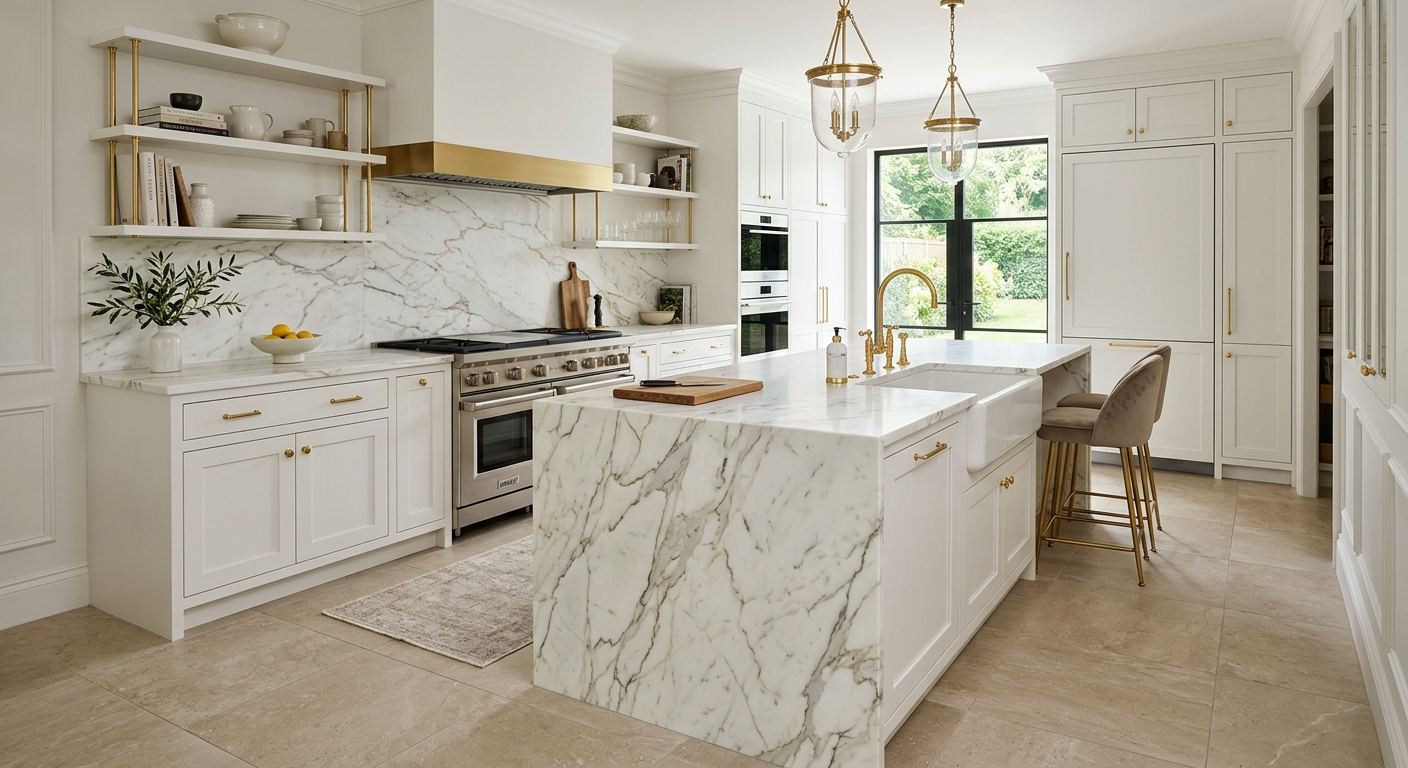
Kitchen renovation options and costs in Rockwood
Kitchen renovation in Rockwood, Ontario usually comes down to how much you want to change—both visually and functionally. With Rockwood’s population at 4,629 (Statistics Canada, 2021 Census), the local contractor base is smaller than in core GTA neighbourhoods, so scheduling can book up quickly when many projects start at once. Affordability also matters: Ontario’s Toronto economic region pulls homeowners toward finish choices that match what buyers expect, and higher-end markets tend to steer renovations toward more custom cabinetry and premium surfaces.
In practical terms, the biggest cost swing in Rockwood isn’t weather; it’s the market value homeowners are trying to protect. In higher-priced pockets of the Toronto region, owners often invest a meaningful share of home value into the kitchen, which pushes projects toward quartz or stone countertops and upgraded appliances. Meanwhile, cost-conscious homeowners in more price-sensitive areas typically stay in the mid-range with stock or refaced cabinets and durable laminate or budget-friendly quartz.
Even though we don’t price kitchen work based on “climate” in Rockwood the way we would for roofing or insulation, the seasonal freeze-thaw cycle still affects logistics. Colder months can slow delivery and flooring/tile work if subfloors need prep, and contractors may prioritize weather-safe installs. Trade availability also tracks with the broader GTA construction calendar.
In Rockwood, trade demand is especially noticeable around the older housing stock closer to town, where buyers want modern storage and brighter finishes without relocating major plumbing. From that starting point, you can compare realistic budget tiers below.
| Renovation Tier |
What's Included |
Typical Duration |
Price Range |
| Cosmetic refresh (paint, hardware, new appliances only) |
Cabinet repaint or touch-ups, new knobs/pulls, appliance swap, minor caulking/trim, basic cleaning and re-sealing as needed |
3–7 business days |
$8,000–$20,000 |
| Mid-range full renovation (new cabinets, counters, sink, tile) |
New semi-custom cabinets, quartz or good laminate countertops, sink and faucet, backsplash tile, new flooring underlay where needed, light electrical refresh (as required) |
2–4 weeks |
$25,000–$55,000 |
| High-end full renovation (custom cabinets, stone counters, island) |
Fully custom millwork, premium quartz or natural stone (granite/marble), island build, upgraded lighting and electrical runs, full backsplash/tile detailing, potential layout improvements |
4–8 weeks |
$60,000–$90,000 |
| Cabinet refacing only (new doors + drawer fronts, same boxes) |
Refaced cabinetry, new crown/trim options, updated hardware, new face materials where feasible, touch-up painting/caulking |
1–2 weeks |
$8,000–$25,000 |
| Countertop swap only (laminate to quartz or stone) |
Remove existing tops, template and install new countertops, sink cut-out coordination, seam finishing, basic finishing around perimeter |
3–7 business days |
$3,000–$15,000 |
| Backsplash tile installation only |
Tile selection and installation, prep and leveling, grout/seal (as required), cut-outs around outlets, optional replace damaged drywall |
3–6 business days |
$2,000–$10,000 |
Prices are estimates only and vary by project scope, site access and material selection.
What affects the price of kitchen renovation in Rockwood
Homeowners often get two very different quotes for what looks like “the same” kitchen renovation in Rockwood, and that gap is usually in the range of 30–50% across the Toronto economic region and Ontario. The reason is simple: contractors price the risk (and the unknowns) in site conditions—especially when layout changes, electrical work, or plumbing/gas moves are involved. Even when finish levels match, hidden issues such as out-of-square walls, older subfloor problems, or outdated wiring can shift labour time and permit scope quickly.
Local home values and median income shape the typical finish tier far more than climate. In higher-value pockets of the Toronto region, many owners default to quartz or stone counters and semi-custom cabinetry because buyers can recover that quality on resale. In more modest markets, laminate and stock cabinets dominate because they deliver good ROI with fewer moving parts. That said, a Toronto-style kitchen that feels “premium” still hinges on details—clean cabinet reveals, solid under-cabinet lighting, and a countertop surface that holds up to daily use.
In Rockwood, two common conditions that raise cost are: (1) older plumbing runs where shut-offs or supply lines aren’t in ideal locations, and (2) kitchens where gas appliances mean you may need careful venting and licensed coordination. A second factor that can lower cost is choosing a cosmetic or refacing scope that keeps existing cabinet boxes and avoids rerouting—many homeowners keep total spend in the $25,000–$55,000 range by limiting changes to cabinets, counters, sink, and tile. If you jump to custom millwork plus an island, budgets often move toward the $60,000–$90,000 band quickly, mostly due to framing, electrical, and stone fabrication.
Transitioning from year-to-year labour demand also matters: when spring scheduling tightens, installers may stack jobs, and timelines compress—sometimes increasing rush or material coordination costs. The most unpredictable costs typically sit with layout changes: removing a wall, adding an island, or moving a gas line.
| Price Factor |
Why It Matters |
Cost Impact |
| Cabinet tier — stock vs. semi-custom vs. fully custom millwork |
Custom doors, internal organizers, and framing tolerances increase fabrication time and material cost; stock keeps lead times shorter. |
Can swing budgets by roughly $10,000–$35,000+ depending on scope |
| Countertop material — laminate vs. quartz vs. granite vs. stone |
Material price, slab availability, and seam/fabrication complexity drive cost more than most homeowners expect. |
Typically $3,000–$15,000 for installation component alone; premium stone rises faster |
| Layout change — wall removal, island add, plumbing/gas move |
These changes involve structural assessment, new rough-in locations, coordination across trades, and inspection steps. |
Often adds $8,000–$25,000+ even on “mid-range” kitchens |
| Appliance package tier — builder vs. mid-range vs. pro-grade |
Higher-grade appliances can require different electrical requirements, panels, and reveal/spacing tolerances. |
Commonly $1,500–$6,000+ difference in appliance spend plus minor install changes |
| Flooring — refinish existing vs. full replacement |
If you keep flooring, you avoid demolition and subfloor repairs; replacing may include underlay, transitions, and trim. |
Can vary by $2,000–$12,000+ depending on size and condition |
| Backsplash — ceramic tile vs. marble vs. full-height slab |
Full-height installs and higher-end stone require more precise wall prep and longer fabrication/setting time. |
Typically $2,000–$10,000; premium slabs can push higher |
| Electrical — new circuits for island, under-cabinet lighting |
Adding dedicated circuits, moving outlets, and installing lighting all affects labour plus licensed work and inspections. |
Usually $1,000–$5,000+ depending on circuit complexity |
| Permit fees and licensed trade requirements |
Permits and inspections add administrative cost and scheduling lead time when plumbing/gas or electrical circuits are changed. |
Often $500–$3,000+ across the project, depending on scope |
Permits & regulations in Ontario
In Ontario, many “looks-only” kitchen updates don’t require permits. For example, a cabinet swap (including refacing with the same box locations) and countertop replacement typically don’t need a permit. Likewise, replacing a backsplash tile or repainting usually falls under normal renovation work that can be handled without permits.
Where permits do come in is when you change the systems behind the finishes. Moving plumbing supply or drain lines, relocating gas appliances (or work tied to the stove/range hood when gas is involved), removing a load-bearing wall, or adding new electrical circuits all generally require permits and the correct licensed trades. Gas work must be done by a licensed gas fitter, and electrical work must be performed by a licensed electrician; both require inspections before you close walls and cabinets.
For a homeowner in Rockwood, the verification process should be step-by-step before work starts: (1) Ask for the contractor’s licence/business info and confirm it through the relevant Ontario online registry where applicable; (2) request a Certificate of Insurance (general liability) and make sure the coverage is current; (3) confirm WSIB/WCB coverage for the trades (or that the contractor is registered as required) so you aren’t left exposed if someone is injured on-site; (4) insist the contractor lists who is pulling permits in the written contract; and (5) require the contractor to provide inspection and permit details in the closing package. Never rely on “we’ll handle it” without it being documented.
Cabinets, countertops and layout decisions in Rockwood
The three most consequential decisions in a Rockwood kitchen renovation are cabinet tier, countertop material, and whether you’re changing the layout. First, pick your cabinet tier. Stock cabinets are the fastest and cheapest option because they come ready-to-install with shorter lead times. Semi-custom cabinets are the most popular mid-range choice locally because they let you tune sizes and storage while keeping costs controlled. Custom cabinets deliver the best fit and the most storage potential, but they’re the highest cost and require more design time.
Second, choose your countertop material with durability and maintenance in mind. Laminate is budget-friendly and easy to replace later, but it can be less forgiving around seams and standing water. Quartz is a strong “set it and forget it” option for busy kitchens, while granite/natural stone offers prestige and unique patterning—though it typically needs periodic sealing. Butcher block adds warmth and can be excellent if you’re disciplined about wiping and oiling; marble looks upscale but is softer and can stain more easily.
Third, layout changes decide whether your project stays in the mid-range or jumps into high-end budgets. In a Toronto resale-oriented market, adding an island or opening up space can be justified when it improves flow and usable entertaining space. If, however, your layout works and you only want a visual refresh, keeping plumbing and gas in place is the easiest way to stay closer to the $25,000–$55,000 band.
For a concrete dollar example: swapping old laminate tops to quartz while installing new semi-custom cabinets and a backsplash tile often fits mid-range budgets, whereas adding an island with electrical plus relocating plumbing/gas commonly pushes you toward $60,000–$90,000 because you’re paying for framing, rough-ins, stone fabrication complexity, and more coordinated trade scheduling.
Rockwood homes often fall into older construction styles, so wall straightness and dated rough-ins can affect cabinet install time and seam alignment. Plan for that early—good layout decisions reduce change orders later.
| Option |
Durability |
Maintenance |
Best For |
Price Range |
| Stock cabinets (big-box) |
Good day-to-day durability; limited custom sizing can affect fit |
Low maintenance; touch up finish as needed |
Fast refreshes and tight budgets where the layout already works |
$8,000–$18,000 |
| Semi-custom cabinets (local dealer) |
Very durable; better internal organization and improved fit options |
Low to moderate upkeep; hinges and hardware should be maintained |
Most Rockwood homeowners aiming for resale-friendly quality |
$18,000–$35,000 |
| Custom cabinets (local millwork shop) |
Highest durability potential; tailored to your exact measurements |
Low maintenance; premium finishes may require gentle cleaning |
Unique layouts, full-height features, and maximum storage |
$35,000–$60,000+ |
| Laminate countertop |
Moderate durability; seams can be vulnerable if water gets underneath |
Easy daily cleaning; avoid prolonged wetness |
Budget-first remodels and when you want to upgrade other areas |
$3,000–$7,000 |
| Quartz engineered countertop |
High durability; resists staining and everyday wear |
Low maintenance; wipe clean and avoid abrasive pads |
Busy families and buyers who expect low-fuss, modern finishes |
$6,000–$15,000 |
| Granite / natural stone countertop |
Very durable and heat tolerant; variation is natural and unique |
Typically needs periodic sealing and careful stain management |
Premium look with durable performance for frequent cooking |
$8,000–$18,000 |
| Butcher block countertop |
Durable with proper care; can scratch and needs attention near sinks |
Requires oiling/sanding refinishing over time |
Casual-to-warm design styles and homeowners willing to maintain |
$4,000–$10,000 |
| Marble countertop |
Moderate durability; more susceptible to etching and staining |
Higher maintenance; clean quickly and use protectants |
Low-traffic kitchens or a design-first upgrade mindset |
$10,000–$22,000+ |
How to choose a kitchen renovation contractor in Rockwood
Choosing a contractor in Rockwood is less about flashy photos and more about proof: licensing, insurance, a clear scope, and a schedule you can track. Start by verifying Ontario licensing where relevant for the trades involved. Ask for Certificate of Insurance (general liability) and confirm WSIB/WCB coverage so you’re not stuck with risk if an accident happens on-site. If a trade needs to be licensed (for example, gas work or electrical), ensure the contractor is providing the licensed professional—not subcontracting “informally.”
Next, get 2–3 itemised written quotes. You want labour and materials broken down clearly, not a single lump sum. The scope should state what’s included (and what’s excluded): permit pull responsibility, demolition, disposal, dust containment, site protection, patching/finishing, and whether flooring transitions and caulking are part of the job. Disputes often come from missing line items, especially around tile prep, countertop templating, and electrical rough-in allowances.
Warranty matters too. Confirm the workmanship warranty length and what it covers. Also check the product/manufacturer warranty and whether it’s transferable to a new owner if you sell. Payment schedules should be conservative: never pay more than 10–15% upfront; hold back a portion until key completion milestones are verified. Finally, ask for a written start date and completion estimate, with allowances for typical lead times on cabinets and countertops.
- Ask for licence details for the specific trades required by your scope (gas, electrical, structural).
- Request a current Certificate of Insurance and confirm the contractor’s name matches the quote contract.
- Confirm WSIB/WCB coverage for work crews before demolition starts.
- Get 2–3 itemised quotes (labour and materials), not a lump sum estimate.
- Ensure demolition, disposal, and site cleanup are explicitly included.
- Confirm who pulls permits and who schedules inspections (if your plan includes plumbing/gas/electrical changes).
- Verify countertop templating timing and how changes are handled if measurements shift.
- Ask about tile substrate prep and who replaces damaged drywall/underlayment.
- Get cabinet installation details: shimming, level checks, and filler/trim approach.
- Check the warranty: workmanship duration and whether it covers labour only or labour plus materials.
- Agree on a payment schedule with 10–15% maximum upfront and a defined holdback.
- Demand a written timeline with start date, milestones, and realistic cabinet/counter lead times.
Red flags in Rockwood: quotes that won’t itemise labour and materials, vague scopes that don’t mention disposal or permit responsibility, contractors who ask for large upfront payments, promises of “guaranteed completion dates” without acknowledging cabinet/counter lead times, and no written warranty terms or workmanship coverage.
Frequently asked questions — kitchen renovation in Rockwood
Should I renovate my kitchen before selling in Rockwood?
If you’re selling in Rockwood, Ontario, focus on improvements that buyers immediately notice and that keep the kitchen functional. A cosmetic refresh (paint, hardware, and new appliances only) can help, but the biggest value signal is usually cabinets and countertops—especially if yours are dated. In the Toronto region, many buyers expect modern finishes, so a mid-range full renovation with semi-custom cabinets and quartz or good laminate typically fits the $25,000–$55,000 range and can be a more “safe” investment than a full custom rebuild.
Renovating ahead of listing can also reduce buyer negotiation pressure, but don’t over-personalize. If your current layout works and plumbing/gas stays put, you’ll typically control costs better than projects that involve wall removals or relocating plumbing. If you’re unsure, a contractor can suggest value-focused upgrades after reviewing your existing cabinet condition, countertop age, and whether flooring/subfloor is stable.
What's the most popular kitchen style in Rockwood right now?
In Rockwood, the most commonly requested look right now is a clean, modern transitional style: simple shaker-style or slab fronts, brighter lighting, and neutral cabinet colours paired with quartz countertops. Homeowners often choose either warm whites/creams or soft greys because they read well in both bright and low-light conditions, which matters during early winter evenings. The practical driver is resale—buyers in the Toronto economic region generally respond well to kitchens that feel up-to-date without being overly trendy.
Most renovations that land in the mid-range tend to use semi-custom cabinets plus quartz for the most “always looks good” outcome. When budgets move toward the $60,000–$90,000 range, you’ll see more custom cabinetry details, a larger island footprint, and higher-end stone or more elaborate backsplash features. The style is less about “fashion” and more about durability, storage, and a layout that’s easy to live with.
How do I know if I need to update my kitchen plumbing in Rockwood?
In Rockwood kitchens—especially older homes—you may not need full plumbing replacement, but you should evaluate supply lines, shut-offs, drain condition, and how old your fixtures are. Signs you likely need updates include slow drains, recurring under-sink leaks, water hammer, corrosion at connectors, or shut-off valves that won’t fully close. If you’re moving a sink location or adding an island, plumbing updates become more likely because rough-ins must be rerouted and re-tested.
It’s also worth checking if your renovation plan includes moving plumbing supply or drain lines, because that work generally triggers permits and requires licensed trades for safe installation and inspections. A good contractor will assess existing piping routes during the site visit and provide an allowance for what may need replacing once demolition reveals the condition behind the walls or cabinetry. That’s one reason itemised quotes are important.
What is the difference between a galley and open-concept kitchen?
A galley kitchen is a narrow layout with parallel counters and usually a clear walkway down the middle. It’s efficient for cooking workflows, but it can feel closed off, and it often limits island placement. An open-concept kitchen removes barriers (sometimes including partial wall removal) to connect the kitchen to dining or living space, improving sightlines and social flow—but it also adds complexity when electrical, ventilation, and structural considerations are involved.
In Ontario, the “open up the space” approach can be a strong resale decision when the structure allows it and when the budget supports the trade coordination. If you keep plumbing/gas where it is and avoid major structural changes, you can often control costs into the $25,000–$55,000 mid-range. If you remove a load-bearing wall or reconfigure utilities, the project can quickly shift upward because permit and inspection steps add time, and framing and rework become part of the scope.
How do I get accurate kitchen renovation quotes in Rockwood?
To get accurate quotes in Rockwood, ask for an itemised written estimate and ensure the scope matches what you want. Provide clear details: whether you’re doing cosmetic work only, refacing cabinets, swapping countertops, or doing a full renovation that includes sink, tile, and layout changes. The more you can specify cabinet tier, countertop material, and backsplash coverage, the fewer surprises you’ll see later.
You should also confirm what’s included for permits, disposal, demolition, and any electrical/plumbing allowances. Many of the biggest quote differences come from whether plumbing/gas/electrical changes are included, because those often require permits and licensed trades. As a homeowner, request 2–3 quotes and compare like-for-like line items, not just the total. If one quote lands in the low–mid range (for example, $25,000–$55,000) while another jumps toward $60,000–$90,000, the contractor should be able to explain exactly what scope element drives the difference.
What's the best countertop material for a busy Rockwood kitchen?
For a busy Rockwood household, quartz is often the best balance of durability, appearance, and low maintenance. It resists staining better than most budget options and doesn’t require the periodic sealing that natural stone like granite or some other stones may need. That matters when you’re cooking frequently in winter, when spills get wiped quickly—or sometimes not as quickly as you’d like.
If you want the lowest upfront cost, laminate can work well, especially when you’re staying in the mid-range renovation approach. But if you’re investing in semi-custom cabinets and want a surface that consistently looks “new” with daily cleaning, quartz is a strong choice. Granite/natural stone is also excellent for durability and heat tolerance, but plan for sealing and mindful cleaning. In budget planning, countertop installation commonly sits within the $3,000–$15,000 band depending on material and complexity, and full premium stone options can push higher within that range.