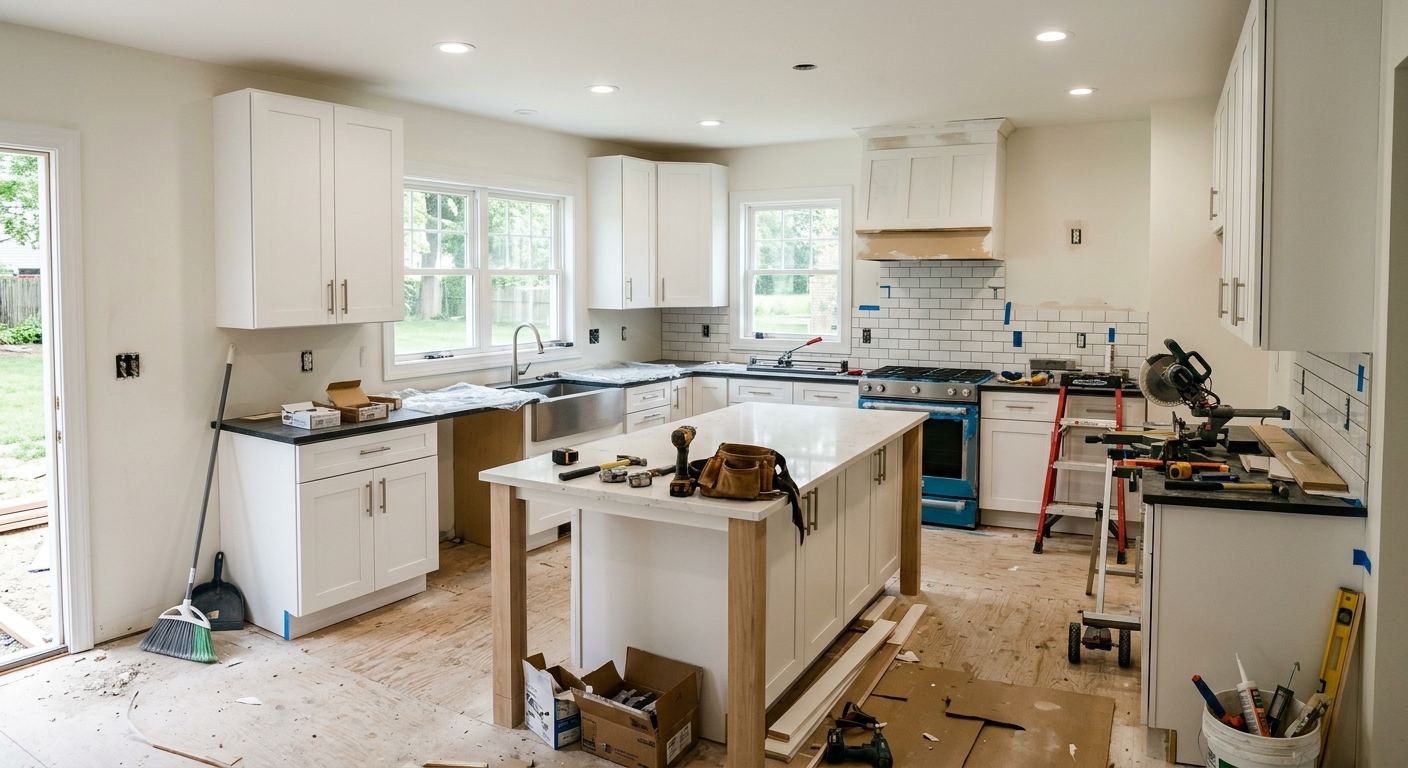
Kitchen renovation options and costs in Cedar Hill
Cedar Hill homeowners have a few clear paths when planning a kitchen renovation: a quick refresh, a mid-range full update, or a high-end redesign with custom millwork. Because the Toronto economic region tends to pull buyers toward modern, durable finishes, many projects in higher-value pockets lean upscale. Even with Cedar Hill’s smaller overall population of 2,633 people (Statistics Canada, 2021 Census), the surrounding GTA demand supports consistent availability of installers and cabinet shops. Typical renovation expectations also track broader household income patterns, and in communities where owners commonly invest a meaningful share of home value into kitchens, you’ll see more quartz, natural stone, and upgraded appliances.
In practice, Ontario costs don’t swing much due to weather the way they might in harsher climates; labour rates and materials are relatively consistent across the GTA. Instead, pricing differences usually come from finish tier and how much “change” you plan. If you keep the layout mostly intact, you can often stay nearer the $25,000–$90,000 full renovation range. Add electrical upgrades (like under-cabinet lighting and extra island circuits), move plumbing or gas, or go from stock to fully custom cabinetry, and your budget moves toward the upper band quickly. Local trade capacity can also affect scheduling—busy periods for tile and cabinet installation can extend timelines.
In Cedar Hill and nearby demand pockets like the broader Toronto/Scarborough corridor, kitchen contractors are especially booked for mid-range to high-end renovations where owners want better storage, an island, and a more premium look that holds resale value. With that in mind, here’s a realistic comparison of options and costs to help you align scope to budget before you request quotes.
| Renovation Tier |
What's Included |
Typical Duration |
Price Range |
| Cosmetic refresh (paint, hardware, new appliances only) |
Cabinet paint or staining (existing boxes), new hardware, new backsplash strip/trim as needed, appliance swap, basic sink/fixture refresh if no plumbing moves |
1–3 weeks |
$8,000–$18,000 |
| Mid-range full renovation (new cabinets, counters, sink, tile) |
Semi-custom or quality stock cabinets, countertop replacement, sink + faucet (no major plumbing relocation), backsplash tile, tile/floor refresh, trim/paint, standard electrical updates |
4–8 weeks |
$25,000–$55,000 |
| High-end full renovation (custom cabinets, stone counters, island) |
Fully custom cabinetry, quartz or natural stone counters, island build with improved storage, upgraded appliance package, extended backsplash or stone feature, more extensive electrical, flooring replacement as needed |
8–16 weeks |
$65,000–$90,000 |
| Cabinet refacing only (new doors + drawer fronts, same boxes) |
Door and drawer front replacement, new fronts for uppers/lowers, re-laminate/replace visible surfaces of boxes, hardware, re-installment of existing countertops if compatible |
2–5 weeks |
$8,000–$35,000 |
| Countertop swap only (laminate to quartz or stone) |
Remove existing laminate, measure/install new countertop, new cut-outs for sink/cooktop if in place, basic reseal and finishing, plumbing reconnection if minimal |
1–3 weeks |
$3,000–$15,000 |
| Backsplash tile installation only |
Tile supply/labour for kitchen backsplash, waterproofing/adhesives, trimming around outlets, grout seal and finish |
3–7 days |
$2,000–$10,000 |
Prices are estimates only and vary by project scope, site access and material selection.
What affects the price of kitchen renovation in Cedar Hill
In Cedar Hill and across the Toronto economic region, you can see the same “kitchen refresh” quoted 30–50% apart. The big driver isn’t climate; it’s the mix of finish tier, how much the layout changes, and how your trades sequence the work. Toronto-area homeowners in higher-value pockets often default to quartz or natural stone countertops and semi-custom cabinetry because they’re easier to justify on resale—buyers tend to pay for a clean, durable look and modern storage. In more price-sensitive pockets, laminate and stock cabinets are common because they deliver a noticeable upgrade without pushing the full renovation into the upper end.
Two examples that commonly raise cost in Cedar Hill are: (1) switching cabinet tier mid-project (for instance, going from stock to semi-custom once a new layout is chosen), and (2) adding an island that requires new electrical and potential plumbing adjustments. Even when your countertop is in the $3,000–$15,000 band, the layout work can dominate the labour and inspection timeline. On the other hand, costs can drop meaningfully when you keep existing plumbing lines and only do a countertop installation and backsplash—those trades can be scheduled tightly, with fewer knock-on changes to drywall and flooring.
Kitchen renovation pricing also reflects how Ontario housing stock affects demolition and recovery. Older homes often have dated electrical runs and less standardized cabinet wall framing; bringing things up to modern conditions can add hours of prep work. For many homeowners, that’s why budgets should be built around realistic bands: a modest refresh can fit closer to the low end of full projects, while moving into a high-end build with upgraded stone and custom millwork aligns with the upper $80k+ territory in the GTA when scope expands beyond finishes.
| Price Factor |
Why It Matters |
Cost Impact |
| Cabinet tier — stock vs. semi-custom vs. fully custom millwork |
Higher tiers use better materials, more door styles/finishes, and tighter tolerances—plus more custom sizing |
Can swing the overall project by roughly 15–40% |
| Countertop material — laminate vs. quartz vs. granite vs. stone |
Material cost, installation complexity, and edge/profile options vary widely |
Often adds or reduces $3,000–$15,000 depending on choice |
| Layout change — wall removal, island add, plumbing/gas move |
Structural work, new framing, and trades coordination increase labour and permit steps |
Often the least predictable; commonly the largest single jump |
| Appliance package tier — builder vs. mid-range vs. pro-grade |
Pro-grade units cost more and may require different ventilation/cut-outs and paneling |
Can add several thousand dollars to the total |
| Flooring — refinish existing vs. full replacement |
Protecting and blending existing surfaces saves demo and underlayment work |
Full replacement typically adds a noticeable mid-project cost |
| Backsplash — ceramic tile vs. marble vs. full-height slab |
Material density and finish complexity affect cutting, sealing, and installation time |
Can move backsplash scope into the $2,000–$10,000 range |
| Electrical — new circuits for island, under-cabinet lighting |
New circuits trigger licensed work, inspection scheduling, and rework if lighting plans change |
Often increases costs even when finishes stay mid-range |
| Permit fees and licensed trade requirements |
Where permits apply, you also add time for inspections and trade scheduling |
Usually a smaller line item, but it affects total schedule and coordination |
Permits & regulations in Ontario
In Ontario, some kitchen work can be done without permits, while other tasks must be handled with permits and licensed trades. A cabinet or countertop swap typically does not require a permit if you’re keeping the existing plumbing, gas, and electrical locations the same—meaning you’re replacing what’s already there. However, permits are usually required when you change the functional systems in the kitchen.
Work that typically does require permits and licensed trades includes: moving plumbing supply or drain lines (sink relocation), relocating gas lines or changing gas appliance locations (stove/range setup), removing a load-bearing wall, adding or changing electrical circuits (for example, new circuits for an island or relocating many outlets), and adding major ventilation changes that affect how the system is installed. Gas work must be done by a licensed gas fitter, and electrical work must be done by a licensed electrician—both typically require inspections for safety sign-off.
For Cedar Hill homeowners, the practical step-by-step check is: (1) ask the contractor for their Ontario licence details and confirm they’re using licensed trades where required; (2) request a certificate of insurance showing liability coverage; (3) confirm workers are covered for WSIB/WCB (ask for clearance documentation); and (4) verify any permit responsibility is clearly stated in the contract before you sign. If a contractor says “we’ll handle it later,” that’s a red flag—permit pull responsibility should be documented up front.
Cabinets, countertops and layout decisions in Cedar Hill
For most Cedar Hill homeowners, three decisions determine both your final look and your budget: (1) cabinet tier, (2) countertop material, and (3) whether you change layout. Cabinet tier choices are straightforward: stock cabinets are typically fastest and cheapest, semi-custom is the most popular “best value” option in the GTA because it balances design flexibility with controlled cost, and custom cabinets deliver the tightest fit and most tailored storage—but at a higher price.
Countertops follow a similar pattern. Laminate is budget-friendly and easy to install, quartz is the common premium pick for durability and low maintenance, granite/natural stone adds distinctive character and heat resistance, and butcher block or marble bring a different aesthetic—each with specific care requirements. In the Toronto market, buyers often expect neutral, clean surfaces and durable finishes, which is why quartz and natural stone are frequent upgrades when budgets move upward from the mid-range toward higher-end renovations.
Layout changes are the wildcard. Removing an open or structural wall, adding an island, or relocating plumbing/gas can be justified when it improves traffic flow, increases seating/storage, or unlocks better ventilation. But they can also add unpredictable trades coordination and inspection steps. For example, if you’re planning a cabinet and countertop refresh and consider upgrading to stone, the additional cost can be worth it when you keep plumbing in place; a countertop swap alone can land in the $3,000–$15,000 band, whereas a full “move everything” scenario can push you into the larger full-renovation budgets.
Ontario’s building stock in the GTA also means many kitchens have older electrical runs or non-standard wall framing. Planning for that early—especially before ordering cabinets—helps prevent delays and added patch-and-finish labour after installation.
| Option |
Durability |
Maintenance |
Best For |
Price Range |
| Stock cabinets (big-box) |
Good durability with standard hardware and consistent construction |
Low maintenance; limited flexibility if your room has unusual dimensions |
Quick timelines and budget-conscious full renovations |
$8,000–$22,000 (typical cabinet portion) |
| Semi-custom cabinets (local dealer) |
Very good durability with upgraded finishes and more sizing options |
Low maintenance; easier to fit to imperfect walls |
Most common Cedar Hill/TO mid-range renovations seeking better storage |
$15,000–$35,000 (typical cabinet portion) |
| Custom cabinets (local millwork shop) |
Excellent durability with tailored build quality and premium hardware options |
Low maintenance; requires careful layout planning and longer lead times |
High-end builds and kitchens that need exact dimensions |
$30,000–$60,000 (typical cabinet portion) |
| Laminate countertop |
Moderate; can chip or scorch if abused |
Easy daily care; avoid hot pans and heavy cutting on the surface |
Budget refresh where you want a new look without top-tier material |
$3,000–$6,000 (typical installed) |
| Quartz engineered countertop |
High; very resistant to staining and daily wear |
Wipe clean; no sealing required |
Families, busy kitchens, and resale-focused durability |
$6,500–$12,000 (typical installed) |
| Granite / natural stone countertop |
High; naturally heat-resistant and strong |
May require periodic sealing depending on the stone |
Homeowners who want unique veining and a premium natural look |
$8,000–$15,000 (typical installed) |
| Butcher block countertop |
Moderate to high; best with proper sealing and care |
Oiling and regular maintenance to prevent drying and staining |
Casual or warm styles where you’ll treat the surface as a “worktop” |
$4,500–$10,000 (typical installed) |
| Marble countertop |
Moderate; elegant but more susceptible to etching and staining |
Higher care needs—gentle cleaners, sealing, and prompt wipe-downs |
Statement kitchens where looks matter more than “toughness” |
$10,000–$18,000 (typical installed) |
How to choose a kitchen renovation contractor in Cedar Hill
Choosing the right contractor in Cedar Hill is mostly about verification and clarity. Start by confirming Ontario licensing where it applies: ask how the contractor will ensure licensed work is completed for gas (if you’re changing cooktops/lines) and electrical (if you’re adding circuits or moving outlets). For liability protection, request their certificate of insurance and verify it’s current for the project value and duration. Also ask for proof of WSIB/WCB coverage—don’t accept “we’re covered” without documentation you can review.
Next, get 2–3 itemised written quotes, not lump sums. A good quote separates labour and materials, outlines cabinet supply (including brands/finish), lists countertop material and thickness, identifies tile products and grout type, and spells out disposal/dump fees. Pay attention to the scope: are permits included, who pulls them, is drywall repair included if cabinets require reframing, and is flooring replacement part of the plan or an extra? Warranty matters too—ask for the workmanship warranty length (and what it covers), the manufacturer warranty for cabinets/countertops/appliances, and whether the warranty is transferable if you sell.
For payment schedule, never pay more than about 10–15% upfront. Hold back a portion until completion and final sign-off. Also insist on a written start date and realistic completion estimate; in the GTA, cabinet and countertop lead times can affect your timeline, and the quote should reflect sequencing.
- Verify Ontario licence details and confirm licensed trade partners for gas and electrical where required.
- Request certificate of liability insurance and ensure the coverage aligns with your project size.
- Confirm WSIB/WCB coverage with documentation before work begins.
- Ask for 2–3 itemised quotes with labour/material breakdowns (no “one number” pricing).
- Check exactly what’s included: demolition, disposal, drywall patching, painting, and dust control.
- Confirm permit responsibility in writing—what’s included, what you pay, and timelines for inspections.
- Verify who supplies appliances and whether delivery/installation is included or extra.
- Review cabinet specs: box construction, door thickness, finish system, and warranty terms.
- Ask countertop details: material type, edge profile, thickness, sink cut-out assumptions, and templating timeline.
- Confirm flooring/tile transitions and underlayment details (especially at cabinet base areas).
- Get a workmanship warranty statement in the contract, including start date and claim process.
- Use a staged payment plan with a holdback until final walkthrough and punch list completion.
Concrete red flags to watch for in Cedar Hill: (1) quotes with vague scopes like “labour included” but no itemisation, (2) refusing to provide proof of insurance or WSIB/WCB, (3) promising an unrealistic start date without acknowledging cabinet/counter lead times, (4) skipping written permit responsibility when layout or system changes are planned, and (5) requesting large upfront payments beyond 10–15% or pressuring you to sign quickly without a contract scope.
Frequently asked questions — kitchen renovation in Cedar Hill
Quartz vs granite countertops — which is better?
In Cedar Hill and across Ontario, quartz is usually the “set it and forget it” choice for busy kitchens because it resists staining well and typically doesn’t need sealing. Granite is also durable and heat-resistant, and many homeowners love the natural veining, but it can require periodic sealing depending on the stone. If you’re choosing based on day-to-day maintenance and resale appeal, quartz is often a safer bet for families and renters-to-buyers transitions. In terms of budgeting, a countertop swap alone often falls in the $3,000–$15,000 band, and your final number will depend on thickness, edge profile, and the number of cut-outs for the sink and cooktop.
Should I reface or replace my cabinets?
Refacing is a strong option when your cabinet boxes are structurally sound and level, and when you’re aiming for a faster, cleaner upgrade without the mess of full demolition. In the GTA, refacing often works well for homeowners who want a new door/drawer style while keeping the footprint the same. Replacement makes more sense if your boxes are warped, if you want to change the interior layout (like pull-out pantries or new corner systems), or if you’re planning a layout change that requires rework to walls and bases. If you’re budgeting, cabinet refacing commonly falls in the $8,000–$35,000 range, while a full mid-range kitchen renovation can stretch from $25,000–$55,000 once you include countertops, tile, and sink updates.
Do I need a permit for a kitchen renovation in Ontario?
For Ontario kitchens in Cedar Hill, a straightforward cabinet or countertop replacement usually does not require a permit, because you’re not changing how water, gas, or electrical systems are routed. Permits are typically needed when you move plumbing supply or drain lines (for example, relocating a sink), relocate gas appliances/lines (stove or range hood with gas), remove a load-bearing wall, or add/change electrical circuits (like new island circuits or rewiring outlet locations). Gas work must be done by a licensed gas fitter and electrical work by a licensed electrician, with inspections. The best way to avoid confusion is to ensure the contract clearly states who pulls permits and who is responsible for compliance before construction begins.
What's the ROI on a kitchen renovation?
ROI varies with neighbourhood price points and how “transformative” your kitchen change is. In higher-value GTA areas, homeowners often invest a larger share of home value into the kitchen—often in the 8–15% range—because durable finishes like quartz or natural stone and upgraded storage tend to appeal to resale buyers. In more price-sensitive areas, the smartest ROI usually comes from controlled upgrades: good cabinet hardware, semi-custom cabinets or refacing, a durable countertop, and tidy backsplash work—without costly structural or system relocations. If you’re aiming for ROI, focus your spend on visible, durable surfaces and layout improvements that solve real storage/flow issues. Your contractor should help you align choices to the likely buyer expectations in the Toronto market rather than overspending on features buyers won’t pay for.
How do I budget for a kitchen renovation?
Budgeting in Cedar Hill starts with matching scope to one of the realistic price bands. For most full kitchen projects in this GTA tier, a reasonable range is $25,000–$90,000, depending on cabinet tier, countertop choice, and whether you move plumbing or electrical. If you’re staying cosmetic, you may be closer to a smaller refresh tier, but once you include new cabinets, countertops, sink, and tile, you’re usually in the mid-range. A countertop swap alone often lands in the $3,000–$15,000 band, while cabinet refacing tends to run $8,000–$35,000. Also budget for the “unseen” costs—electrical updates, dust control, drywall repairs, and disposal—because older Ontario housing can require extra prep before cabinets sit level and flush.
Can I move my kitchen sink or stove?
You can move a sink or stove, but it’s the part of a kitchen renovation that most often triggers permits, inspections, and higher, less predictable costs in Ontario. Moving a kitchen sink typically means relocating plumbing supply and/or drain lines, which usually requires a permit and licensed plumbing work. Moving a stove can mean relocating the gas line and/or ventilation path—gas changes must be done by a licensed gas fitter and inspected. From a budgeting standpoint, it’s usually cheaper to keep plumbing and gas locations where possible and build the layout around them. If you want a different layout in Cedar Hill, ask your contractor early for an option study: “same plumbing route” vs “relocate” so you can compare costs against the space gain before you commit.