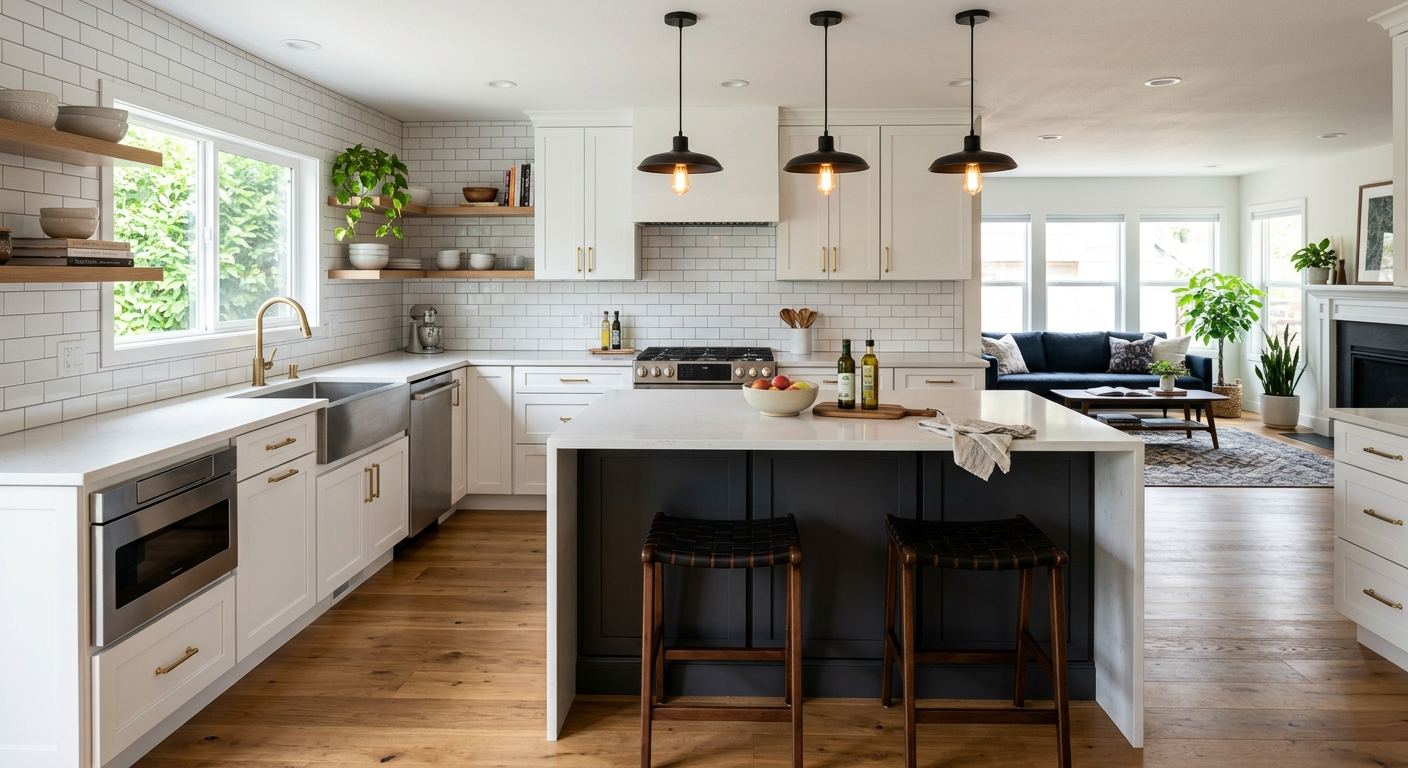
Kitchen renovation options and costs in South Cambie
South Cambie homeowners typically plan kitchen updates with a clear budget window, but the final cost can swing depending on finish expectations and how much of the existing layout must change. With the South Cambie population at 7,970 (Statistics Canada, 2021 Census), the area still draws steady trades demand from the wider Lower Mainland–Southwest market, especially where multi-family and older homes are being refreshed for resale. In higher-value pockets, many owners expect a more design-led outcome and choose semi-custom cabinetry, quartz, and upgraded hardware—partly because buyers in the Lower Mainland often pay for turnkey kitchens. That market behaviour is common across Metro Vancouver’s economic orbit, where household purchasing patterns support higher-end scopes more often than you’d see in lower-cost regions. Also, because the profile’s larger surrounding areas have strong purchasing capacity (Statistics Canada, 2021 Census), contractors there tend to have more experience with stone-counter packages and layout upgrades.
Cost in the Lower Mainland–Southwest is driven less by climate and more by housing value, income, and anticipated resale returns. The weather does matter indirectly: kitchens here get more condensation and humidity swings in older homes, which can make cabinet box integrity and caulking details more important during installation. Labour availability can also affect pricing—when multiple renovations run at once across Vancouver/Richmond-bound corridors, scheduling priority and site conditions become a bigger factor. If you’re near high-demand corridors in South Cambie (including around the Oakridge area), you’ll often find quicker turnaround for mid-range refreshes, while custom millwork timelines can extend when crews are booked.
Below are the most common renovation tiers South Cambie homeowners compare before selecting an approach—then you can map your goals to a realistic range.
| Renovation Tier |
What's Included |
Typical Duration |
Price Range |
| Cosmetic refresh (paint, hardware, new appliances only) |
Cabinet paint or touch-ups (no box changes), new hardware, new fridge/range/dishwasher, minor caulking/trim, basic electrical upgrades if needed |
3–7 days |
$8,000–$22,000 |
| Mid-range full renovation (new cabinets, counters, sink, tile) |
New semi-custom or good-quality stock cabinets, quartz or laminate counters, sink and faucet, backsplash tile, floor protection and tile replacement where required, standard lighting updates |
2–4 weeks |
$40,000–$85,000 |
| High-end full renovation (custom cabinets, stone counters, island) |
Fully custom cabinetry, stone counters (quartz/solid stone), island with seating/pendants, enhanced backsplash (often full-height accents), upgraded hardware, deeper electrical scope (undercabinet lighting, more circuits), appliance upgrades |
4–8 weeks |
$85,000–$120,000 |
| Cabinet refacing only (new doors + drawer fronts, same boxes) |
New doors/drawer fronts (often wood veneer or thermofoil), new toe-kick/trim profiles, hardware swap, cabinet box evaluation and minor repairs, backsplash allowance if needed |
1–3 weeks |
$10,000–$35,000 |
| Countertop swap only (laminate to quartz or stone) |
Remove and replace existing countertop, new quartz or stone top, sink cut-out transfer (as needed), standard sealing and countertop installation, backsplash rework allowance if edges change |
2–7 days |
$3,000–$12,000 |
| Backsplash tile installation only |
Tile supply allowance, demolition of existing surface as required, substrate prep, tile install, grout/seal, trim and caulking |
3–7 days |
$1,500–$6,000 |
Prices are estimates only and vary by project scope, site access and material selection.
What affects the price of kitchen renovation in South Cambie
In the Lower Mainland–Southwest, quotes for the same kitchen can vary by 30–50% between contractors and even between two homeowners with similar layouts. The biggest drivers are local home values and what buyers expect to see when the kitchen is listed—not the weather. In higher-value markets across Metro Vancouver, homeowners often default to quartz or stone counters and semi-custom cabinetry because the cost is easier to justify at resale; owners there see a stronger payoff when the renovation reads “current” and cohesive. In more modest scopes, laminate and stock cabinets dominate because they reduce upfront spend while still delivering a clean, functional update. That’s why South Cambie pricing tends to track finish tier more than it tracks climate.
That said, layout changes are where budgets get unpredictable regardless of finish level. Removing a wall, adding an island, or moving a gas line or plumbing fixture tends to add the most risk: site conditions, venting paths, and service reroutes can force unexpected framing and electrical changes. As a reality check, cabinets plus counters alone can run within your band for a full remodel (for example, $40,000–$120,000 depending on tier), but once you start changing services the job can tip toward the upper end even when you keep finishes mid-range. In South Cambie’s older housing stock, dated supply/drain runs can also require more time to access and test connections; if we find corrosion or non-standard shutoffs, the labour adds quickly.
Concrete examples we see locally: (1) adding under-cabinet lighting usually adds electrical labour and material, especially when cabinets must be installed for proper wiring; (2) swapping to a quartz edge profile with a different thickness can require careful sink cut-out adjustments; and (3) if you want a waterfall island or stone backsplash height change, material tolerances and joinery detail often increase labour hours.
| Price Factor |
Why It Matters |
Cost Impact |
| Cabinet tier — stock vs. semi-custom vs. fully custom millwork |
Box quality, door style complexity, drawer systems, and lead times change labour and material costs |
Stock may keep you closer to the lower end; semi-custom and custom typically push the project toward mid-to-high totals |
| Countertop material — laminate vs. quartz vs. granite vs. stone |
Material price, edge profiles, weight handling, and specialty fabrication drive installation cost |
Laminate is usually the budget-friendly route; quartz/stone adds both material and templating time |
| Layout change — wall removal, island add, plumbing/gas move |
Service reroutes require additional trades, demolition, and sometimes structural assessment |
Commonly the largest swing factor; it’s where 30–50% differences appear between “similar” kitchens |
| Appliance package tier — builder vs. mid-range vs. pro-grade |
Installation requirements, trim kits, and power/venting specs vary |
Upgrading can add noticeable cost even if cabinetry stays the same |
| Flooring — refinish existing vs. full replacement |
Subfloor prep, protection costs, and matching transitions affect labour |
Refinish is typically cheaper; full replacement adds demo, disposal, and new finish work |
| Backsplash — ceramic tile vs. marble vs. full-height slab |
Higher-end materials require flatter surfaces, more careful installation, and premium trim details |
Backsplashes can range widely within the backsplash band once you move beyond basic ceramic |
| Electrical — new circuits for island, under-cabinet lighting |
New island circuits and lighting add labour and materials and may require permitting |
Can meaningfully increase cost even in cosmetic projects |
| Permit fees and licensed trade requirements |
Permits, inspections, and the involvement of licensed trades add process and administrative time |
Small on paper, but it adds real scheduling and labour overhead |
Permits & regulations in British Columbia
In British Columbia, a straightforward cabinet or countertop swap is typically a “no-permit” type of project, as long as you’re not changing how services run. That means replacing existing countertops, swapping cabinet doors/fronts, or installing new backsplash tile over existing surfaces generally doesn’t require a permit. Where it changes is when you modify plumbing supply/drain lines, relocate a sink or dishwasher, move a gas stove connection or change how a hood is vented, remove a load-bearing wall, or add new electrical circuits (for example, dedicated island circuits or substantial under-cabinet lighting conversions tied to new wiring). Those items usually require permits and licensed trades, with inspections arranged as part of the work.
For a South Cambie homeowner, here’s a practical verification sequence before signing: (1) ask the contractor who pulls permits (and confirm it in the contract); (2) request proof of electrical contractor licensing for electrical scope and proof of gas fitter licensing for any gas-related work; (3) ask for liability insurance certificate of insurance (COI) showing coverage limits and the named business/operations; and (4) confirm WSIB/WCB coverage is in place for their crews (and for any subcontractors they use). Where to look: use the relevant provincial online registry for licence status, review the COI for active dates, and insist on a written clearance letter or evidence tied to the project period. Finally, don’t rely on “we’ll handle it”—make the permit responsibility explicit in your signed scope.
Cabinets, countertops and layout decisions in South Cambie
The three decisions that most determine both cost and long-term satisfaction in a South Cambie kitchen renovation are cabinet tier, countertop material, and whether you change the layout. Cabinet tier is the baseline: stock cabinets are fastest and cheapest because they fit common dimensions and arrive in predictable lead times. Semi-custom is the sweet spot for many Lower Mainland–Southwest projects because it balances better storage layouts and door styles with manageable pricing. Custom cabinets give the best fit around unusual walls and framing—great when older homes have non-standard dimensions—but the cost climbs quickly once you go full made-to-fit millwork.
Countertop material is your durability and maintenance trade-off. Laminate is budget-friendly and can be very practical, but it’s more susceptible to edge wear and it generally can’t match the “premium stone look” that buyers often expect at higher resale price points. Quartz engineered tops are a common mid-to-high choice because they resist staining better than many natural options and they handle day-to-day cooking well. Granite and other natural stone can look exceptional, but they typically need more care and sealing schedules, and the fabrication process can be more variable. In South Cambie’s coastal humidity swings, well-sealed seams and properly installed edges matter for preventing moisture infiltration under the countertop line.
Finally, layout changes—like removing a wall for open concept, adding an island, or relocating plumbing/gas—are justified when you gain usable space, improve flow, or better match how you entertain. A dollar example: if your project is leaning toward a mid-range full renovation (often around $40,000–$85,000), adding an island that requires moving plumbing can push you toward the upper renovation band as electrical and plumbing labour expand, even if cabinet and counter tiers stay mid-range. If you can keep plumbing in place and design the island around existing services, you often preserve value without triggering the biggest cost risks.
| Option |
Durability |
Maintenance |
Best For |
Price Range |
| Stock cabinets (big-box) |
Good for typical spans; hinges/drawers vary by model |
Low—keep hardware tight and address any minor alignment issues early |
Budget-conscious refreshes and quick turnarounds |
$8,000–$25,000 |
| Semi-custom cabinets (local dealer) |
Very solid construction with better drawer/glide options and more sizes |
Low to moderate—standard cleaning and hardware checks |
Most South Cambie renovations targeting mid-range resale appeal |
$20,000–$55,000 |
| Custom cabinets (local millwork shop) |
Highest fit and finish; best for irregular spaces and premium storage |
Low—durable materials when installed correctly and sealed properly |
Homes needing made-to-fit millwork and premium design details |
$45,000–$90,000 |
| Laminate countertop |
Moderate; edges are the first area to show wear if abused |
Low—use gentle cleaners; avoid standing water at seams |
Practical kitchens where budget control matters most |
$3,000–$7,000 |
| Quartz engineered countertop |
High—resists staining and handles impacts well for daily use |
Low—wipe clean; avoid abrasive pads at edges |
Busy homes that want “stone look” with dependable performance |
$6,000–$12,000 |
| Granite / natural stone countertop |
High; natural hardness varies by stone type |
Moderate—typically requires periodic sealing and careful stain management |
Design-forward kitchens where unique veining is a priority |
$7,000–$14,000 |
| Butcher block countertop |
Moderate to high; can be extremely durable if maintained |
Moderate—regular oiling and gentle cleaning to prevent drying/cracking |
Warm, casual looks; homeowners comfortable with maintenance |
$5,500–$11,000 |
| Marble countertop |
Lower stain resistance vs quartz; can be durable with careful use |
Higher—sealing, blotting spills quickly, and using the right cleaners |
Premium aesthetic kitchens with a lighter-use lifestyle |
$9,000–$16,000 |
How to choose a kitchen renovation contractor in South Cambie
Choosing a kitchen renovation contractor in South Cambie is less about flashy photos and more about process control. Start with licensing and coverage: confirm the contractor’s British Columbia licences for any trade work they perform (or that their subcontractors hold the correct licences for the specific scope). Ask for a current certificate of insurance showing liability coverage and project-relevant dates. For work crews, verify WSIB/WCB coverage exists and matches who will be on site—request evidence and keep it with your contract package. For electricity and any gas scope, insist on the right licensed professionals for those portions before you sign off on schedules.
Next, get 2–3 itemised written quotes. You want a breakdown that separates labour and materials (not one lump sum), with line items for demolition, cabinetry installation, countertop templating/fabrication, plumbing/electrical labour (if included), disposal, and any allowance for site conditions. Read the scope carefully for exclusions: is permit pulling included? Are permits, inspection fees, and any code-required modifications part of the quote or extra? Confirm disposal and dump fees—kitchens generate a lot of waste, and missing disposal is a common “surprise” item.
Warranty matters too. Ask for workmanship warranty length, whether product/manufacturer warranties are provided, and if those warranties are transferable to new owners. For payment schedule, don’t accept more than 10–15% upfront; hold back a reasonable portion until completion and final sign-off. Finally, make sure your start date and completion estimate are written and tied to a realistic lead-time plan.
- Confirm BC licence(s) and match licences to the exact work being quoted.
- Request COI (certificate of insurance) and confirm it covers the named contracting business.
- Verify WSIB/WCB coverage for all crews working on your job.
- Get 2–3 itemised quotes with labour/material breakdowns, including allowances.
- Ensure the quote lists demolition, dust protection, and disposal/removal fees.
- Ask who pulls permits and whether permit fees are included.
- Confirm electrical and plumbing scope is specified (who does what, and where).
- Check warranty: workmanship length, product warranty terms, and transferability.
- Request a payment schedule that limits upfront payment to 10–15%.
- Use a written timeline with milestones (demo, install, templating, countertop install).
- Verify how changes are priced (change order rates and approval process).
- Ask for an onsite visit or walkthrough to measure and document conditions before pricing.
Red flags to watch for in South Cambie: a contractor who provides only a lump-sum number with no exclusions list, refuses to provide COI or proof of coverage, suggests paying most of the total upfront, can’t clearly explain who is responsible for permits and inspections, or gives unrealistic timelines that ignore cabinetry/counter lead times.
Frequently asked questions — kitchen renovation in South Cambie
How do I know if I need to update my kitchen plumbing in South Cambie?
In British Columbia, you don’t always need a full plumbing replacement, but you should evaluate it whenever you’re moving a sink, dishwasher, or changing the countertop height and cabinet configuration. The clearest triggers are visible corrosion, chronic leaks at shutoffs, slow drains, inconsistent water pressure, or old plumbing materials that don’t match modern fixtures. If your South Cambie kitchen has older supply lines and the contractor can’t confirm shutoff condition quickly, it’s worth doing targeted inspection before you finalize cabinet layouts. A full kitchen renovation can typically land in the $40,000–$120,000 band depending on scope; if plumbing upgrades are needed, that’s one of the reasons the job can trend toward the upper end. Ask your contractor to assess connections during demo so you’re not paying for reinstall work twice.
What is the difference between a galley and open-concept kitchen?
A galley kitchen is a narrow, corridor-style layout with countertops and storage lining two parallel walls, which can work very well in older homes with limited footprint. An open-concept kitchen removes barriers between kitchen and living space to improve sightlines and traffic flow. In the Lower Mainland–Southwest, open concept often costs more because it can involve structural considerations, ceiling and venting adjustments, and potentially permits if you’re changing load-bearing walls or adding electrical circuits for new island lighting. Whether it’s worth it depends on your goals and resale expectations. If you’re staying within mid-range renovation budgets (often around $40,000–$85,000), you can still improve storage and finishes in a galley layout without triggering the highest-cost layout changes.
How do I get accurate kitchen renovation quotes in South Cambie?
Accurate quotes come from good scope definition and measurement. For South Cambie, insist on 2–3 itemised written quotes that separate labour from materials and include allowances for tile, disposal, and any “unknowns” discovered during demo. Before you price cabinets and counters, ask for a site walkthrough that documents wall straightness, floor flatness, and current plumbing/electrical locations—older homes can have surprises that shift costs. Also confirm whether the quote includes permit pulling, inspection coordination, and who provides licensed electrical or gas work if required. If you want to compare fairly, anchor on the same tier: for example, cosmetic refreshes are typically much lower than full renovations, while countertop-only swaps fit within the $3,000–$12,000 countertop band. Finally, require a written start date and a realistic finish timeline tied to material lead times.
What's the best countertop material for a busy South Cambie kitchen?
For most busy households in South Cambie and across the Lower Mainland–Southwest, quartz is a strong “best balance” option. It offers excellent daily durability, resists staining well, and tends to be lower maintenance than many natural stones. It also handles frequent cooking and cleaning without the same sealing schedule you often hear about with granite or marble. Laminate can be a good budget choice, especially for refreshes, but it’s generally less forgiving at seams and edges. If you want a true upgrade while staying realistic on cost, plan your countertop portion around the local countertop installation band—commonly $3,000–$12,000 depending on size and material. Your final pick should also consider how you use the kitchen (spill patterns, cutting habits, and whether you’re willing to maintain a natural stone regularly).
How do I add an island to my South Cambie kitchen?
Adding an island can be a high-impact upgrade, but it’s the planning—not the finish—that drives cost and complexity. First, verify spacing for safe circulation (especially in smaller galley or older footprints). Then, decide whether you’re keeping plumbing in place or moving services: if you want a sink or range in the island, you may need plumbing and electrical work, and gas-related work requires a licensed gas fitter. In British Columbia, adding electrical circuits for island lighting or relocating plumbing can involve permits and licensed trades, so confirm responsibility in your written contract. Cost-wise, island additions often push projects toward the mid-to-high renovation totals because framing, electrical, and countertop fabrication joinery take time. If you’re aiming for a mid-range scope, keeping services on the existing lines can protect your budget within the $40,000–$85,000 range.
How much does a kitchen renovation cost in South Cambie?
Kitchen renovation cost in South Cambie usually depends more on the renovation tier (refresh vs full rebuild) and finish level than on climate. In the Lower Mainland–Southwest, typical full kitchen renovation totals commonly fall within $40,000–$120,000, with pricing skewing higher when homeowners choose semi-custom or custom cabinetry, stone counters, and island layouts. For cabinet installation or refacing-only projects, costs often sit in the $8,000–$50,000 range depending on how much hardware/box work is required. Countertop swaps on their own are commonly within $3,000–$12,000, and backsplash tile installations alone often fall around $1,500–$6,000. If your scope includes moving plumbing, relocating gas appliances, or adding electrical circuits, expect the job to trend upward because licensed work, permitting, and inspection scheduling add both time and cost.