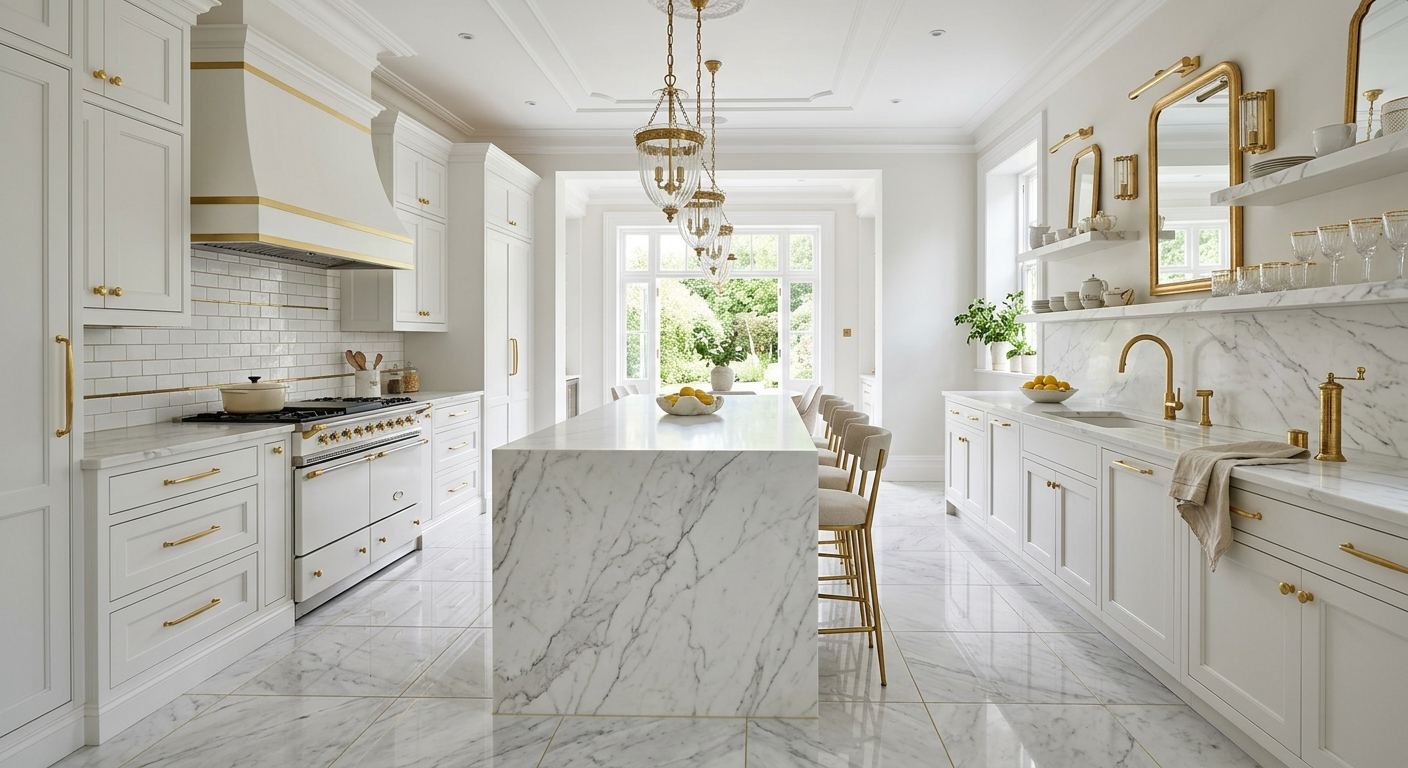
Kitchen renovation options and costs in Houston
In Houston, British Columbia, homeowners typically start their kitchen plans by deciding how much they want to change—cosmetics, a full refresh, or a true rebuild. With a median household income of $84,000 (Statistics Canada, 2021 Census) and a housing stock where 62.2% of homes were built before 1981 (Statistics Canada, 2021 Census), many renovations focus on bringing dated layouts and finishes up to modern buyer expectations. In the Nechako area, kitchen renovation budgets track more closely with owner comfort and home value than with weather alone; that’s why finish choices vary widely even within the same season. Nechako’s interior climate can affect scheduling—freeze-thaw cycles and occasional humidity swings mean contractors plan around drying times for tile thinset, cabinet finishing, and paint cure windows.
Contractor availability is strongest for straightforward scopes in town and nearby acreage areas, with especially high demand along the Houston village core where access, parking, and jobsite logistics are simpler for trades hauling cabinets, stone, and tile. If you’re seeing quote ranges that feel “all over the place,” it’s usually because the Nechako market splits into practical refresh jobs and premium full updates—some buyers prioritize resale-ready upgrades like quartz and an island, while others focus on refacing, appliance swaps, and keeping plumbing where it is.
Use the table below to benchmark common options and durations, then compare quotes by scope—not just by the final number—before you lock in materials and demolition.
| Renovation Tier |
What's Included |
Typical Duration |
Price Range |
| Cosmetic refresh (paint, hardware, new appliances only) |
Cabinet paint or refinish (no box changes), new pulls/knobs, appliance swap, basic caulking and tune-ups, removal/disposal |
3–7 days |
$3,500–$10,000 |
| Mid-range full renovation (new cabinets, counters, sink, tile) |
Semi-custom or quality stock cabinets, countertop installation, sink + faucet, backsplash tile, new or refreshed flooring transitions, labour for standard plumbing tie-ins |
2–4 weeks |
$35,000–$60,000 |
| High-end full renovation (custom cabinets, stone counters, island) |
Custom millwork, quartz or natural stone counters, island build, higher-end tile or slab backsplash, upgraded lighting package, expanded electrical and plumbing coordination |
5–9 weeks |
$70,000–$90,000 |
| Cabinet refacing only (new doors + drawer fronts, same boxes) |
Door/drawer replacement, new hardware, surface prep, optional interior organization updates, countertop protection or limited top work, backsplash touch-ups if needed |
1–2 weeks |
$8,000–$22,000 |
| Countertop swap only (laminate to quartz or stone) |
Remove laminate and install new quartz/stone, seam layout, sink cut-in, basic edge finishing, backsplash preservation (or partial re-tile allowance) |
3–7 days |
$3,500–$15,000 |
| Backsplash tile installation only |
Tile supply or labour allowance, wall prep, layout, waterproofing where required, grout/seal, caulking to countertops and corners |
2–5 days |
$2,500–$12,000 |
Prices are estimates only and vary by project scope, site access and material selection.
What affects the price of kitchen renovation in Houston
In Houston and the wider Nechako economic region, two quotes for the “same” kitchen can differ by 30–50% because the scope quietly changes: cabinet finish tier, countertop thickness, backsplash coverage, electrical upgrades, and how much layout work you’re truly doing. Across Nechako (including Houston) and other BC interior markets, local home values and median income shape the typical finish tier far more than climate. In higher-value buyer circles, quartz or natural stone and semi-custom cabinetry are the default because the upgrade is easier to recover on resale. In tighter budgets, homeowners often choose laminate or entry-level quartz and focus on keeping plumbing where it is—keeping your spend closer to the national average for kitchen renovations.
Nechako’s interior weather doesn’t directly “increase material prices,” but it affects how reliably trades can schedule carpentry, drying, and finishing work. For older homes—many built before 1981—contractors may also find dated subflooring, uneven walls, or electrical rough-ins that need correction before tile and cabinet installation can proceed. Those fixes can push a job from a mid-range band like $35,000–$60,000 toward the upper range like $70,000–$90,000, even when you didn’t plan to go premium.
Concrete cost examples we see often in Houston: (1) adding an island usually triggers new electrical (under-cabinet lighting and/or dedicated circuits) plus additional countertop work—often tipping a “refresh” into a full renovation; (2) moving a sink to a new wall increases labour unpredictability because drain slope and supply lines must be reworked; (3) a full-height backsplash (water-resistant build-up to the ceiling) can significantly raise your tile labour time compared with a standard height run.
That’s why the biggest price swings come from layout changes and trade coordination—not from the fact that you’re in BC or in the Nechako region.
| Price Factor |
Why It Matters |
Cost Impact |
| Cabinet tier — stock vs. semi-custom vs. fully custom millwork |
Fit, finish, hardware integration, and lead times differ by tier. |
Can shift total budget by ~10–30% depending on kitchen size |
| Countertop material — laminate vs. quartz vs. granite vs. stone |
Material cost and fabrication/seam strategy vary widely by product. |
Often adds $3,000–$15,000+ to the countertop line item |
| Layout change — wall removal, island add, plumbing/gas move |
Structural, venting, and utility work adds trade coordination and inspection steps. |
Typically the largest swing; frequently increases labour 20–50% |
| Appliance package tier — builder vs. mid-range vs. pro-grade |
Electrical and venting requirements plus installation complexity change. |
Commonly affects the job by several thousand dollars |
| Flooring — refinish existing vs. full replacement |
Subfloor condition and underlayment may require corrections after demo. |
Can add $2,000–$10,000+ depending on replacement scope |
| Backsplash — ceramic tile vs. marble vs. full-height slab |
Coverage, trim details, and substrate prep drive labour hours. |
Can range from a few thousand to well into the upper $10,000s |
| Electrical — new circuits for island, under-cabinet lighting |
New lighting/outlets and load changes require licensed electrical work. |
Often adds $1,000–$8,000+ depending on complexity |
| Permit fees and licensed trade requirements |
Permits and inspection scheduling can affect timeline and direct costs. |
Typically modest, but they can add delays and administrative labour |
Permits & regulations in British Columbia
In British Columbia, many kitchen changes are straightforward from a permitting standpoint. A cabinet swap (including stock, semi-custom, or custom) and a countertop replacement generally do not require a permit. The permitting triggers usually come when you touch the building’s systems: moving plumbing supply or drain lines, relocating gas (including changing where a stove/range sits, or moving a range hood connected to gas), removing a load-bearing wall, or adding electrical circuits (for example, powering an island with new outlets or significantly expanding lighting circuits). Gas work must be done by a licensed gas fitter, and electrical work must be completed by a licensed electrician, with inspections completed as required.
For a Houston homeowner verifying a contractor’s compliance, do it in three steps. First, check the contractor’s BC licence/registration status (and ensure the correct subcontractors are named for gas and electrical). Second, request a certificate of insurance showing liability coverage for the trade scope. Third, confirm applicable worker coverage documentation (often referenced as WCB/coverage through the responsible parties) so you’re not assuming risk. Ask for these documents before work begins, and confirm who is pulling permits if any are needed—then ensure it’s written into your contract.
Cabinets, countertops and layout decisions in Houston
In a Houston kitchen renovation, three decisions determine both your look and your long-term satisfaction: (1) the cabinet tier, (2) the countertop material, and (3) whether your layout changes meaningfully improve function. For cabinet tier, stock is typically the fastest and cheapest, semi-custom is the most common mid-range choice, and custom delivers the best fit for awkward corners, tall pantries, and homeowners who want integrated details. Countertops are similar: laminate keeps the budget controlled, quartz is a popular balance of durability and maintenance, granite/natural stone offers premium character, and options like butcher block can work well for certain styles—but need more regular care.
Nechako’s housing stock matters here because many homes were built before 1981; you may need a little more prep to get walls plumb for tile and perfectly aligned cabinet runs. That prep cost is why a “small” layout change can be expensive. For example, if you upgrade from laminate tops to quartz and add a new backsplash with higher coverage, you might see your countertop-related spend climb into the $3,500–$15,000 band, while moving from stock to semi-custom cabinets can be the difference between staying closer to a mid-range renovation band like $35,000–$60,000 versus pushing toward the upper full-reno range.
Layout is where costs earn their keep. An island can justify its cost if it improves work triangles, seating, and storage—otherwise you’re paying for electrical/plumbing coordination and extra countertop fabrication without enough day-to-day benefit. If you’re not adding utilities, keep plumbing where it is to reduce unpredictability and protect your budget.
| Option |
Durability |
Maintenance |
Best For |
Price Range |
| Stock cabinets (big-box) |
Good for everyday use; less flexible for unusual spaces |
Low; keep hardware tight and address moisture around sink promptly |
Budget-focused renovations with a straightforward layout |
$8,000–$20,000 |
| Semi-custom cabinets (local dealer) |
Very strong; better door styles, internal options, and sizing flexibility |
Low; reseal minor edges as needed over time |
Most Houston homeowners aiming for resale-ready quality |
$20,000–$45,000 |
| Custom cabinets (local millwork shop) |
Highest fit and finish; ideal for complex corners and built-ins |
Low to moderate; keep finishes clean and manage humidity near openings |
High-end kitchens with integrated storage and premium styling |
$45,000–$70,000+ |
| Laminate countertop |
Durable for normal household wear, but more vulnerable to heat and impact at edges |
Easy daily care; avoid prolonged heat exposure and treat chips quickly |
Cost-controlled updates where layout stays the same |
$3,500–$7,500 |
| Quartz engineered countertop |
Excellent stain and scratch resistance; consistent look |
Low maintenance; no sealing required, wipe spills promptly |
Most popular “premium but practical” choice for BC interior resale |
$7,500–$14,000 |
| Granite / natural stone countertop |
Very durable; natural variation and edge detailing affect performance |
Moderate—may require periodic sealing depending on stone type |
Homeowners seeking a unique premium surface |
$10,000–$18,000 |
| Butcher block countertop |
Good but needs care; can be sensitive to sustained moisture |
Regular oiling and mindful cleaning around sinks |
Warm, traditional or farmhouse-style kitchens |
$6,500–$12,000 |
| Marble countertop |
Premium aesthetic; can etch or stain without careful use |
Higher maintenance—use pH-neutral cleaners and protect from spills |
Statement kitchens where homeowners want a classic, high-end look |
$12,000–$20,000+ |
How to choose a kitchen renovation contractor in Houston
Choosing the right contractor in Houston, British Columbia is less about slogans and more about documentation, scope clarity, and scheduling realism. Start with licensing and coverage checks: ensure the contractor is properly registered for the work they’re doing in BC, and request a certificate of liability insurance covering your project. For the regulated parts of a kitchen renovation, insist the appropriate subcontractors are licensed—especially for gas and electrical. Ask how their responsibility is handled through coverage and inspections so you’re not left chasing paperwork after problems appear.
Then get 2–3 itemised written quotes. You want a breakdown that separates labour and materials (and line items for demolition, cabinet install, countertop fabrication/installation, tile prep, electrical, plumbing tie-ins, and disposal). A lump sum quote without scope detail is hard to compare and easy to change mid-project. Read exclusions carefully: disposal included or not, permit fees included or not, and whether you’re paying extra for site conditions like uneven subfloors or concealed wiring. Confirm warranty terms in writing: workmanship warranty length, product/manufacturer warranty details, and whether coverage is transferable if you sell your home.
Finally, lock down your payment schedule and timeline. Don’t pay more than about 10–15% upfront. Use a holdback until completion and make sure the start date and completion estimate are stated in writing.
- Verify BC credentials for the contractor and confirm licensed trades for gas/electrical.
- Ask for a certificate of liability insurance before signing.
- Get itemised quotes showing labour vs materials (no “mystery allowances”).
- Confirm permit responsibility and whether permits are required for your scope.
- Check what’s included in demolition and disposal.
- Ask who corrects subfloor/tiling prep if old walls are out of level.
- Confirm countertop template and fabrication lead times in writing.
- Require a written change-order process with pricing method.
- Ask about jobsite protection (dust control, floor protection, secure storage).
- Confirm plumbing and electrical tie-in approach before cabinets are installed.
- Review warranty length for workmanship and product warranties separately.
- Use milestone payments with a clear holdback until final walkthrough.
Red flags I commonly see in Houston: (1) a contractor who won’t provide licence/insurance paperwork on request; (2) quotes that don’t distinguish labour vs materials or skip disposal/permit details; (3) scheduling promises that ignore countertop fabrication lead times; (4) pushing for large upfront deposits beyond 10–15%; and (5) vague warranty language, especially around workmanship and backsplash/tile sealing.
Frequently asked questions — kitchen renovation in Houston
How do I choose a kitchen contractor in Houston?
In Houston, start by verifying BC licensing/registration for the contractor and confirming that any required gas and electrical work will be performed by appropriately licensed trades. Ask for a certificate of liability insurance and documentation showing coverage responsibility. Next, compare 2–3 itemised quotes, not just the total. Ensure labour and materials are separated, including disposal, tile prep, countertop templating, and any permit-related tasks. Look at the scope for what’s excluded (like subfloor corrections or disposal), and confirm how change orders are priced. A solid contractor will also give you a realistic timeline. If you’re aiming for a mid-range project around $35,000–$60,000, they should explain where that budget goes and what finishes you can realistically achieve.
What order do kitchen renovation steps happen in?
A typical sequence in British Columbia kitchens is: measurement/template for cabinets and countertops (often before full demolition), then demolition, rough-in trades, and substrate prep. After utilities are ready (plumbing/gas/electrical tie-ins and any permitted changes), installers build the cabinet layout first, then counters are templated/fabricated and installed, and backsplash/tile follows after the countertop base is solid. Flooring and paint usually occur around these stages depending on whether you’re refinishing existing floors or replacing them. Finishing steps like caulking, trim details, and final hardware adjustments come last. If your quote is for a countertop swap only, the order changes—counters go in before any cosmetic backsplash touch-ups. Always ask your contractor to write the step order and dependencies so you know what happens if materials arrive late.
Can I live at home during a kitchen renovation in Houston?
Often, yes—especially for cosmetic refreshes, cabinet refacing, or limited countertop/backsplash scopes. In Houston homes, the biggest living-impact usually comes when you’re doing full demolition and replacing utilities or cutting new openings. For a full mid-range renovation around $35,000–$60,000, expect periods where your sink, cooking, and access routes are partially interrupted, even if the rest of the home stays usable. Contractors can set up a temporary kitchenette, protect flooring with dust control, and stage materials to keep hallways clear. If you’re dealing with older pre-1981 builds, additional hidden issues can extend the “active” phase. For high-end full renos around $70,000–$90,000, many homeowners plan to be out for a week or two depending on layout changes and island/electrical work. Your contractor should propose a live-in plan in writing.
Should I renovate my kitchen before selling in Houston?
If you plan to sell, renovation timing usually comes down to buyer expectations and how your current kitchen compares to typical Nechako/BC interior finishes. In Houston, many buyers respond to clean lines, good lighting, modern cabinet styling, and durable surfaces like quartz. If your cabinets are solid but outdated, refacing can improve appearance without the full cost of a remodel, keeping the budget closer to the $8,000–$22,000 cabinet refacing band. If your counters are worn or the kitchen layout is frustrating, a mid-range full renovation around $35,000–$60,000 may be more persuasive. Just be realistic: a major layout change and premium finishes can cost more than it “pays back” if your home’s overall value position doesn’t match. A good contractor can help you choose upgrades that feel current without overbuilding for your specific neighbourhood and buyer segment.
What's the most popular kitchen style in Houston right now?
In Houston and the Nechako area, the most common direction homeowners choose right now is a clean, modern look with practical storage—think updated shaker-style or slab-front cabinetry, warm neutral colours, and durable countertops (often quartz). Because many homes were built before 1981, buyers also like updates that make the kitchen feel brighter and more functional, such as improved lighting, better backsplash coverage, and more efficient cabinet layouts. For durability and low maintenance in British Columbia’s interior conditions, quartz is frequently selected over higher-maintenance stone. Style trends are also influenced by resale: homeowners who want a broad buyer appeal typically choose finishes that photograph well and age gracefully. If you’re doing a full renovation near the mid-range band ($35,000–$60,000), semi-custom cabinets plus quartz commonly land in the sweet spot for style and value.
How do I know if I need to update my kitchen plumbing in Houston?
You usually don’t replace plumbing just because you’re renovating—however, you should update or correct issues when you’re moving fixtures or when inspections reveal problems. In older Houston homes, especially those built before 1981, hidden issues can show up during demo: aging shutoff valves, questionable drain slope, or supply lines that don’t align cleanly with a new cabinet or sink location. If you’re planning a sink move, adding an island, or relocating gas/electrical that affects where plumbing runs, the job almost always needs plumbing tie-ins to be assessed. Signs you may need attention include slow drains, leaks around shutoffs, water hammer, corrosion under the sink, or recurring odours from the drain. The best approach is to have your contractor assess lines during the early demolition stage and document what needs correcting before you choose final cabinet and countertop specs.