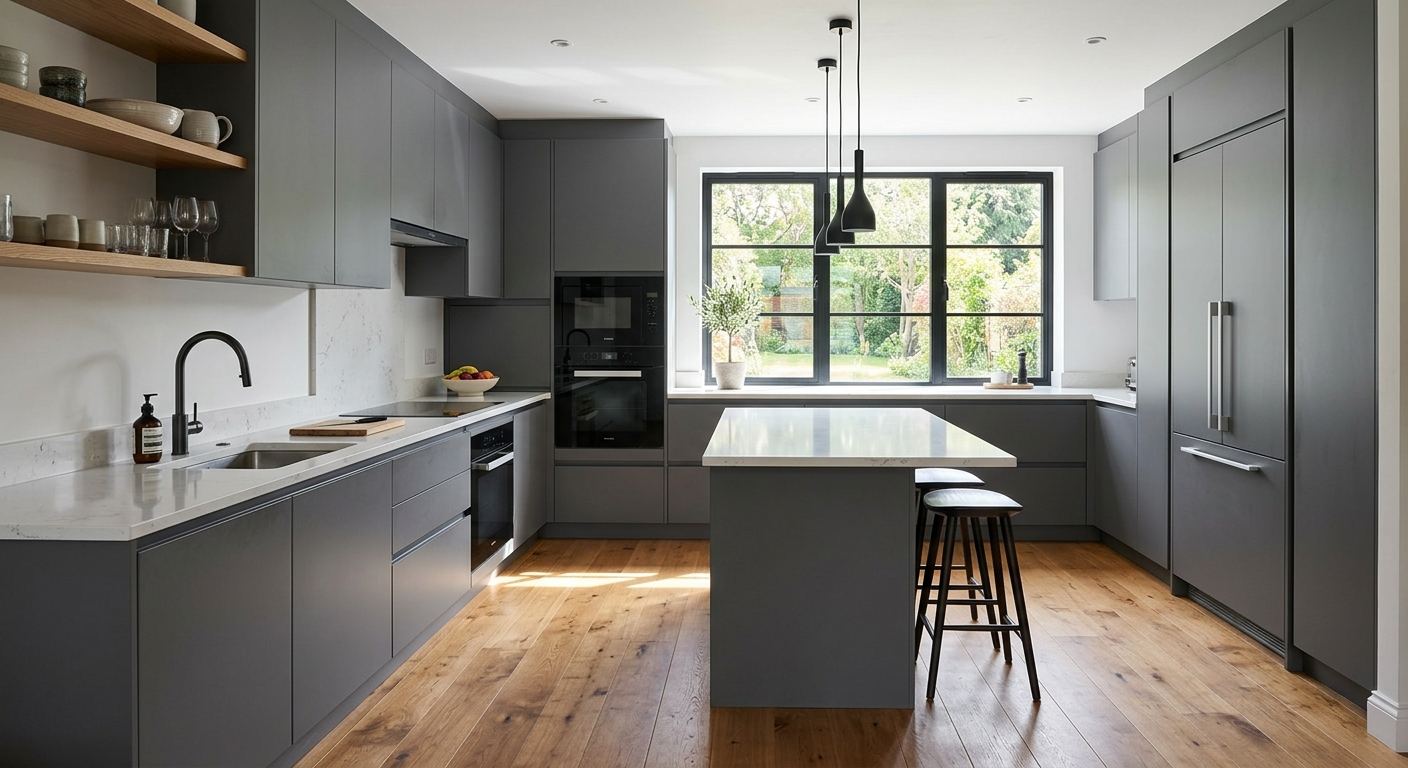
Kitchen renovation options and costs in Handsworth
Kitchen renovations in Handsworth tend to follow a clear “finish ladder”: the starter refresh is the fastest path to curb appeal, while full rebuilds with stone counters and made-to-fit cabinetry push budgets into the premium tier. With a small local population (1,965 residents recorded in the 2021 Census), you’ll often notice fewer contractors than in bigger centres—but the Lower Mainland–Southwest still has a steady flow of tradespeople because projects across the region keep teams busy. That means availability can improve for mid-range work, while highly custom timelines may require scheduling well ahead. Just as importantly, neighbourhood economics drive homeowners’ expectations: in areas like the Lower Mainland, higher household capacity typically correlates with more quartz/stone choices and more custom millwork decisions than you’d see in lower-cost markets (Statistics Canada, 2021 Census).
Climate plays a smaller role here than many homeowners assume. In the Lower Mainland–Southwest, winter damp and humidity can accelerate wear on poorly installed finishes—especially at sink edges and around plumbing penetrations—but the bigger cost drivers are the homeowner’s selected finish level, cabinetry complexity, and whether the plan includes layout or service changes. If you’re renovating near the North Shore–style housing pockets within Handsworth’s broader North/Coast commuter corridor, contractors often report extra demand for modern functional layouts and higher-end hardware packages—because buyers there notice storage design and tactile finishes.
Use the comparison below to quickly align your scope with realistic budget bands, then we’ll break down what actually changes your quote.
| Renovation Tier |
What's Included |
Typical Duration |
Price Range |
| Cosmetic refresh (paint, hardware, new appliances only) |
Cabinet repainting or touch-ups, new cabinet hardware, new/like-for-like appliance swap, minor caulking and countertop re-seal if applicable, basic cleaning/trim work |
1–2 weeks |
$8,000–$20,000 |
| Mid-range full renovation (new cabinets, counters, sink, tile) |
New semi-custom cabinets (or upgraded stock), new countertop (often quartz), sink + faucet, backsplash tile, updated lighting trims (no major layout), plumbing hook-ups, flooring touch-ups |
4–8 weeks |
$40,000–$85,000 |
| High-end full renovation (custom cabinets, stone counters, island) |
Fully custom cabinetry, stone counters with premium finish, island build (often with electrical + upgraded ventilation), full backsplash upgrade, deeper trim/detailing, enhanced appliance package |
8–16 weeks |
$85,000–$120,000 |
| Cabinet refacing only (new doors + drawer fronts, same boxes) |
New door/drawer faces, new hinges/slides, resurfacing of visible cabinet portions, matching end panels where needed, coordination for any minor trim/fit adjustments |
2–4 weeks |
$10,000–$35,000 |
| Countertop swap only (laminate to quartz or stone) |
Removal and disposal of existing countertop, new quartz/stone installs, reseal/finish around sink cut-out, caulking, and backsplash top-edge refinishing as needed |
3–7 days |
$3,000–$12,000 |
| Backsplash tile installation only |
Tile supply allowance, surface prep, underlayment/waterproofing where required, tile install, grout/seal, cleanup, and trim alignment at countertop edges |
3–10 days |
$1,500–$6,000 |
Prices are estimates only and vary by project scope, site access and material selection.
What affects the price of kitchen renovation in Handsworth
In Handsworth and across the Lower Mainland–Southwest, two quotes for what looks like the “same” kitchen can easily differ by 30–50%. The reason is that our regional pricing is driven more by local home value, household purchasing expectations, and the finish tier you choose than by weather. That’s different from places where freeze-thaw and structural freeze issues dominate the build. Here, premium materials—especially semi-custom or custom cabinetry, quartz or stone counters, and upgraded hardware—are common where the renovation cost can be recovered at resale.
Even in a climate-minded province like British Columbia, the cost jump is usually tied to layout and services, not moisture alone. Layout changes are the most unpredictable: removing a wall, adding an island, or moving a gas line/plumbing can trigger additional framing, venting/hood changes, and coordinated electrical and permitting. In a high-value Lower Mainland–Southwest situation, homeowners often choose quartz or stone because buyers expect a clean, durable surface and modern storage; in more modest scopes, laminate and stock cabinets can deliver stronger ROI because the spend stays closer to a refresh band (for example, countertop swaps commonly land in the $3,000–$12,000 range). By contrast, a cabinet-heavy upgrade with mid-range finishes can move quickly toward the $40,000–$85,000 band.
Here are a few Handsworth-realistic examples. First, older homes often have dated electrical runs and limited circuit capacity, which can add cost if you want under-cabinet lighting and an island circuit. Second, some kitchens have older venting paths for ranges, so upgrading a hood for better capture may mean rerouting ducting. Third, damp-season workmanship matters: if sink plumbing penetrations aren’t properly sealed, you can see cabinet edge swelling later—so good prep and sealing work is cheaper than long-term cabinet replacement.
Those items can shift labour hours and trade coordination faster than material prices, which is why your quote should spell out inclusions clearly.
| Price Factor |
Why It Matters |
Cost Impact |
| Cabinet tier — stock vs. semi-custom vs. fully custom millwork |
Higher tiers add complexity in sizing, dovetail/slide quality, interior organization and on-site fit |
Often shifts the job from mid-range toward full renovation totals (commonly $40,000–$85,000 to $85,000–$120,000 depending on scope) |
| Countertop material — laminate vs. quartz vs. granite vs. stone |
Material choice affects cut complexity, install method, edge profiles, and durability against daily moisture exposure |
Laminate swaps tend to be at the low end; quartz/stone typically push totals toward the $3,000–$12,000 countertop band and can increase overall project cost when edges and backsplashes are premium |
| Layout change — wall removal, island add, plumbing/gas move |
Reworks framing, ventilation routes, and service connections; increases inspections and coordination |
Can raise labour and trade costs significantly even when finishes stay mid-range |
| Appliance package tier — builder vs. mid-range vs. pro-grade |
Pro-grade units can require different venting, electrical needs, and more precise clearances |
Typically increases project cost more than homeowners expect once install/fit adjustments are included |
| Flooring — refinish existing vs. full replacement |
Kitchen renovations often disrupt floors at toe-kicks and transitions; replacement may be the only clean finish |
Replacement adds cost and schedule, especially when matching patterns is hard |
| Backsplash — ceramic tile vs. marble vs. full-height slab |
Higher-end stone/tall installs require more careful waterproofing and templating |
Tile-only upgrades can sit around $1,500–$6,000, but premium designs move upward depending on height and material |
| Electrical — new circuits for island, under-cabinet lighting |
Lighting and outlet needs affect circuit count and panel capacity; island builds add complexity |
Can add meaningful labour and permit time compared to a simple refresh |
| Permit fees and licensed trade requirements |
Certain work requires permitted inspections and licensed trades, increasing overhead and scheduling |
Generally adds costs and time, particularly for plumbing/gas relocation and new electrical circuits |
Permits & regulations in British Columbia
In British Columbia, many kitchen upgrades are “no-permit” as long as you keep existing locations and don’t change critical systems. A cabinet swap or refacing (new doors/drawer fronts, new faces) typically doesn’t require a permit, and countertop replacement on the same footprint generally also doesn’t require a permit. The permit triggers usually start when you change plumbing, gas, electrical, or structural elements.
Work that typically DOES require a permit includes: moving plumbing supply/drain lines (for a sink, dishwasher, or refrigerator water), relocating a gas appliance connection (stove/range or gas-related components), removing or altering a load-bearing wall, and adding new electrical circuits or major electrical modifications (for example, dedicated circuits for an island and under-cabinet lighting run that requires new feeds). Work that typically does NOT require a permit includes: painting cabinets, installing new hardware, replacing appliances like-for-like, countertop installation on existing plumbing/locations, and most backsplash installs as finishes.
To verify your contractor in Handsworth (and across BC), start before work begins: (1) ask for their licence details and business registration information, then confirm through provincial online resources; (2) request a certificate of insurance (general liability) and check that the expiry date is current; (3) confirm workplace coverage—commonly known as WSIB/WCB—so you’re not left holding risk if someone gets hurt; and (4) ensure you get a clear written scope showing who pulls permits and who pays for inspections. Always confirm responsibility with the contractor in writing—permits shouldn’t be assumed.
Cabinets, countertops and layout decisions in Handsworth
When homeowners in Handsworth call us for a renovation, three decisions dominate both comfort and budget: (1) cabinet tier, (2) countertop material, and (3) layout changes (especially open-concept wall removal and island additions). In the Lower Mainland–Southwest market, resale-minded buyers often look for clean lines, durable work surfaces, and practical storage long before they care about “trend” colour. That’s why stock cabinets (fast and cheapest) are usually best for shorter timelines, semi-custom is the common mid-range choice, and custom millwork is where budgets rise—but where fit and storage planning can justify the spend.
For countertops, the practical comparison is durability and maintenance under daily use. Laminate can be cost-effective, but it’s more sensitive to edge damage and can show wear sooner in heavy-use kitchens. Quartz offers a strong middle ground: it’s resilient, doesn’t require sealing, and typically lands inside the broader countertop swap band. Granite and other natural stones add a premium look; they can require more careful sealing/maintenance and careful installation at sink cut-outs. Butcher block is warm and repairable, though it demands a more hands-on maintenance routine to manage moisture and seasonal humidity.
Layout changes are where costs can be justified—if the space gain is real. For example, adding an island can improve workflow and seating, but if you’re also moving plumbing or upgrading ventilation for a cooktop/hood, the project often trends upward into the full renovation scope rather than a simple refresh. If your plan stays on the existing plumbing footprint and you only update cabinets and counters, you can sometimes keep the job closer to mid-range renovation totals (for instance, $40,000–$85,000) instead of pushing toward the high-end tier. In other words: spend on functionality and durability, then protect your budget by limiting service relocations unless the space benefit is clear.
| Option |
Durability |
Maintenance |
Best For |
Price Range |
| Stock cabinets (big-box) |
Solid for everyday use; limited customization means some fit compromises in older layouts |
Low; normal cleaning and careful use of water-exposed edges |
Fast turnaround, tighter budgets, straightforward measurements |
$8,000–$25,000 |
| Semi-custom cabinets (local dealer) |
Good durability with better options for organization, sizes and feature upgrades |
Low to moderate; keep seals intact around sink areas to prevent moisture swelling |
Most Handsworth homeowners targeting a modern look with better storage fit |
$15,000–$45,000 |
| Custom cabinets (local millwork shop) |
Highest build-to-fit durability; best for unusual wall angles, pantry integration, and detailed trim |
Low when built with proper moisture detailing and quality hardware installation |
High-end renovations and clients who want maximum storage and precision |
$35,000–$75,000 |
| Laminate countertop |
Reasonable for light-to-moderate use; seams/edges are the most vulnerable points |
Moderate; avoid prolonged standing water on edges and wipe promptly |
Budget-forward refreshes where appearance matters most |
$3,000–$7,000 |
| Quartz engineered countertop |
Very durable and consistent; strong resistance to everyday staining |
Low; no sealing needed, just standard cleaning |
Busy households and resale-focused upgrades in the Lower Mainland–Southwest |
$5,000–$12,000 |
| Granite / natural stone countertop |
High-end durability; natural variation plus good heat tolerance when installed correctly |
Moderate; periodic sealing may be needed depending on stone |
Premium visual impact and a stone “statement” look |
$7,000–$14,000 |
| Butcher block countertop |
Repairable and warm; performance depends on edge sealing and consistent upkeep |
Moderate to high; oil/condition on schedule and protect from water exposure |
Casual-modern kitchens where homeowners will maintain the surface |
$4,500–$10,500 |
| Marble countertop |
Beautiful but softer than quartz; can etch or stain if not cared for |
Higher; requires careful cleaning practices and protective habits |
Design-led kitchens where the owner accepts more maintenance |
$10,000–$18,000 |
How to choose a kitchen renovation contractor in Handsworth
Choosing the right contractor matters more than most homeowners expect—especially in British Columbia where trade coordination and permit handling can swing timelines. Start by verifying licensing and coverage. Ask for the contractor’s proof of liability insurance (certificate of insurance showing current coverage) and confirmation of WSIB/WCB coverage so you’re protected if a worker is injured on site. For licensed trades involved (gas and electrical), confirm that they are licensed for the scope they perform and that they will provide inspection-ready documentation when needed.
Next, get 2–3 itemised written quotes instead of lump-sum numbers. You want a labour + materials breakdown that shows cabinet line items, countertop supply/templating, backsplash work, plumbing or electrical allowances, disposal/dump fees, and any temporary protection for floors and doors. Read the exclusions: does the quote include permit pulling (if applicable), wall patching and paint, caulking at countertop transitions, or disposal of demo debris? Also check that the contractor lists who coordinates inspections and how change orders are priced. A simple “add-ons” line isn’t good enough.
Warranty should be explicit. Ask for the workmanship warranty length, product/manufacturer warranty terms, and whether warranties are transferable if you sell the home later. Payment schedules should protect you: never pay more than about 10–15% upfront; hold back a portion until substantial completion and final walkthrough. Finally, insist on a written timeline with a start date, milestone dates (demo, rough-in, install, trim/finish) and an estimated completion date.
- Confirm insurance (certificate of insurance) and keep a copy in your file.
- Verify WSIB/WCB coverage documentation before work starts.
- Request proof of relevant licences for any gas or electrical scope.
- Ask for an itemised quote: labour, materials, allowances, and exclusions.
- Check whether disposal/dump fees are included (demo waste adds up quickly).
- Confirm permit responsibility in writing for plumbing/gas/electrical/layout changes.
- Review who handles site protection (floors, doorways, dust control).
- Make sure the quote includes countertop templating lead time and cabinet delivery lead times.
- Ask about colour/finish responsibility if materials are discontinued.
- Ensure workmanship warranty terms are clear and not “as per manufacturer” only.
- Confirm change order process: how pricing is calculated and who approves.
- Use a payment schedule that limits upfront payment and includes a completion holdback.
In Handsworth, common red flags include: vague scope language that hides disposal/permit responsibilities, quoted timelines without accounting for cabinet and countertop lead times, “cash-only” or unusual payment structures, missing insurance/coverage documents, and warranties that don’t specify workmanship coverage duration. If you see any of these, slow down and request clarifications before signing.
Frequently asked questions — kitchen renovation in Handsworth
How do I choose a kitchen contractor in Handsworth?
Start by comparing itemised quotes from contractors who actually have the coverage to match the work. In British Columbia, you’ll want proof of general liability insurance and WSIB/WCB coverage before anyone starts on your home. Then ask whether the contractor will use licensed trades for anything that touches electrical circuits or gas connections. For the kitchen scope, compare inclusions line-by-line—especially demo/disposal, cabinet installation, countertop templating/installation, and who handles permits if you’re changing plumbing, gas, or electrical. A strong quote will also spell out workmanship warranty coverage. As a quick budget reality check, if someone promises a full mid-range renovation near the low end of the band (for example, around the $40,000–$85,000 scope) but excludes key items like tile work or electrical updates, expect surprises later.
What order do kitchen renovation steps happen in?
A typical kitchen renovation sequence in Handsworth starts with site protection and demolition, followed by rough-in work (plumbing/drain adjustments, electrical roughing, and any gas changes if part of your plan). Next comes framing and wall repairs needed for layout changes, then cabinet installation. After cabinets are solid, countertops are templated and installed, usually after final cabinet alignment. Backsplash tile and trim/floor transitions come later, once the major installs are complete. Finally, you get painting/finishes, caulking, hardware adjustments, appliance set-up, and a clean-up/walkthrough. The order protects your waterproofing: sink plumbing and cabinet sealing details get handled before countertops and tile are closed in. If you change layout, the rough-in and inspections step becomes the scheduling driver, which is why contractors should provide a written milestone timeline.
Can I live at home during a kitchen renovation in Handsworth?
Often yes, but it depends on your scope and the dust level. For a cosmetic refresh or a countertop-only swap, many homeowners in Handsworth remain living in the home because the disruption is short and localized. For mid-range full renovations (new cabinets, counters, and tile) you may still be able to stay in place, but you’ll need a temporary cooking plan and a workable route through dust-controlled areas. For high-end full renovations that include an island and service changes, it can be harder to function normally because electrical/plumbing work and cabinetry fit-outs take time. Good contractors keep dust control strict (poly barriers, HEPA filtering if needed) and protect floors and doorways. Regardless of scope, plan for limited access to one kitchen zone and confirm whether your contractor provides secure daily site clean-up.
Should I renovate my kitchen before selling in Handsworth?
Usually, you should renovate only if the kitchen limitations are costing you buyer interest or inspection issues—like failing cabinets, water-damaged toe-kicks, outdated electrical, or countertops that are clearly worn. In the Lower Mainland–Southwest, buyers often expect modern, durable surfaces; that’s why quartz and well-built semi-custom cabinetry are common choices at the mid-range and above. If you’re considering a full renovation, aim for the finish level that matches your home’s likely buyer profile; a high-end spend doesn’t always pay back if the rest of the home is more dated. If your budget is closer to a refresh band, a countertop swap or careful backsplash update can improve appearance without the disruption of moving plumbing. For example, a countertop swap can often land around the $3,000–$12,000 range, while full renovations typically move into the $40,000–$120,000 bands depending on cabinetry and layout complexity.
What's the most popular kitchen style in Handsworth right now?
In Handsworth and the broader Lower Mainland–Southwest, the most requested direction right now is a clean, modern look with practical storage: shaker-style fronts (in updated colours), matte hardware, and brighter lighting for better task visibility. Many homeowners pair this with quartz counters and a backsplash that adds texture without requiring heavy maintenance—often ceramic tile or a limited-stone feature. Island layouts remain popular where space allows, because they create a social hub and better workflow. That said, the “best” style depends on your home’s existing architecture: older homes may look out of place with overly flat, ultra-modern cabinetry, while newer builds can handle bolder lines. Most contractors in this region steer clients toward styles that photograph well and resist trends—so the kitchen still feels current several years later.
How do I know if I need to update my kitchen plumbing in Handsworth?
You usually don’t have to replace plumbing just because you’re renovating, but you should update it when repairs would be more expensive later or when inspections show condition issues. Common triggers include frequent leaks under the sink, discoloured water stains near shut-offs, slow drainage, outdated supply lines, or corrosion at fittings. If you’re moving the sink, dishwasher, or adding a water line for an island appliance, plan on at least localized upgrades and proper sealing at penetrations. Damp-season humidity in British Columbia can expose small sealing defects sooner, especially around sink edges. Ask your contractor to assess shut-off valves, P-traps, supply line condition, and routing before ordering cabinets. If your contractor recommends plumbing changes, ensure it’s included in the written scope with a clear explanation—so you’re not paying later during cabinetry and countertop install.