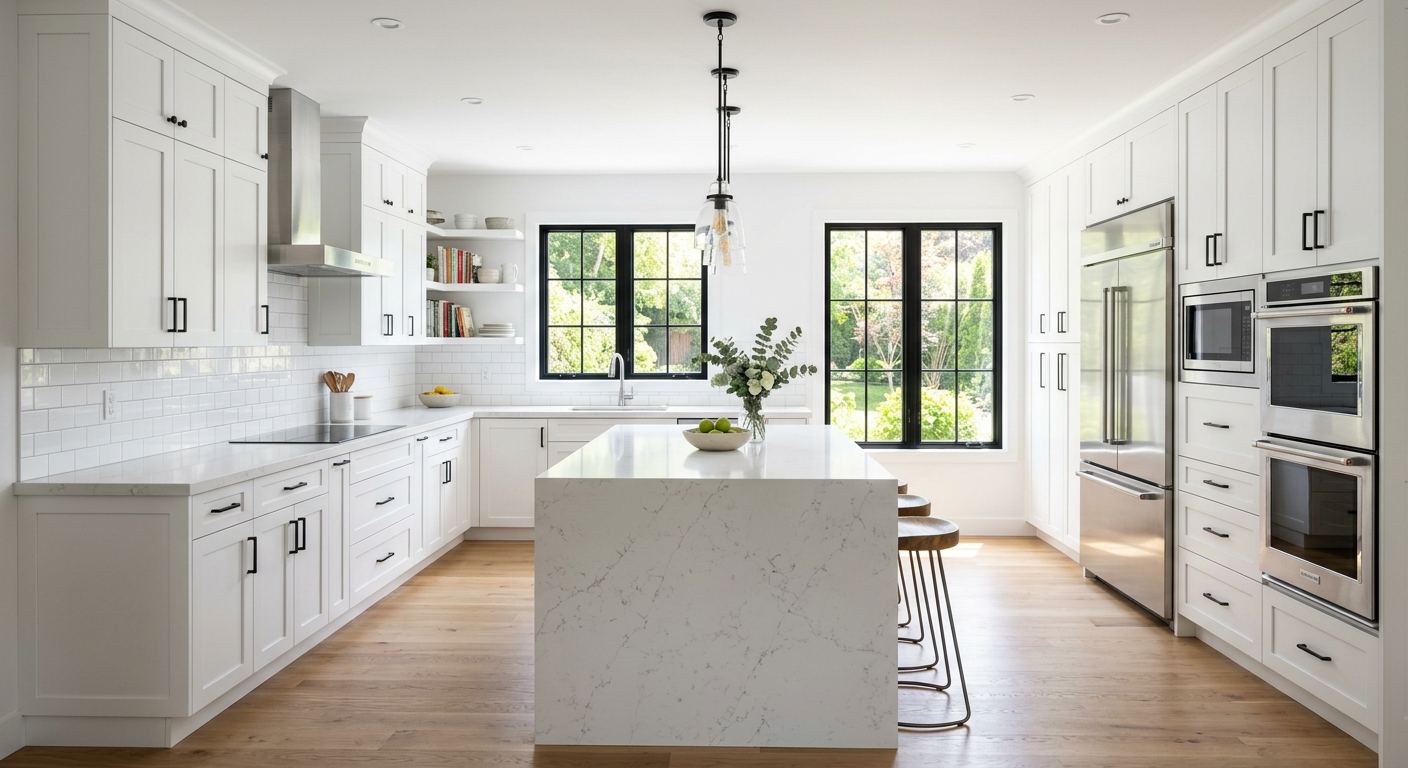
Kitchen renovation options and costs in Cawston
Cawston homeowners renovating their kitchens typically start with one big question: “How much will it really cost here?” With a 2021 population of 1,040 (Statistics Canada, 2021 Census), Cawston is small enough that scheduling can be tight, so builders often bundle trades efficiently—especially when multiple nearby jobs are sharing the same cabinet and countertop lead times. At the same time, the Lower Mainland–Southwest market tends to price kitchens based more on finish expectations and resale value than on weather alone. In higher-value pockets across the region, many buyers lean toward semi-custom cabinetry and quartz/stone counters because those upgrades feel “standard” at purchase time. Even in smaller towns like Cawston, that market pull influences what contractors propose as a default “good, better, best” set of options.
Climate matters in the background: kitchens in BC experience humidity swings, and that makes proper ventilation and moisture-resistant finishes more important than glossy trends. However, the biggest driver of cost in the Lower Mainland–Southwest is still material tier and scope—especially whether you’re refreshing surfaces or rebuilding the kitchen layout. Cabinet and countertop lead times are also a practical constraint: if your timeline is fixed, that can steer you toward stock or laminate-first packages.
In Cawston, trade demand is especially noticeable where kitchen upgrades intersect with main-floor living and accessibility planning—many homeowners prioritize functionality for everyday use. From there, it’s easiest to compare options side-by-side, which leads directly into the cost table below.
| Renovation Tier |
What's Included |
Typical Duration |
Price Range |
| Cosmetic refresh (paint, hardware, new appliances only) |
Cabinet paint or refinish, new cabinet hardware, replacement of existing appliances (no plumbing/gas moves), minor caulking, basic clean-up |
1–3 weeks |
$8,000–$25,000 |
| Mid-range full renovation (new cabinets, counters, sink, tile) |
New semi-custom or stock cabinets, new countertops, sink and tap replacement, backsplash tile, new flooring sectioning as required, basic electrical touch-ups |
4–8 weeks |
$40,000–$85,000 |
| High-end full renovation (custom cabinets, stone counters, island) |
Custom cabinetry, stone counters (quartz/stone/granite), island with integrated storage, upgraded backsplash (including higher labour tile work), more complex electrical (island lighting) and possible plumbing rework |
8–16 weeks |
$85,000–$120,000 |
| Cabinet refacing only (new doors + drawer fronts, same boxes) |
New cabinet doors/drawer fronts, new pulls/hinges, paint or veneer on existing boxes as permitted, selective countertop edge refresh (if needed) |
3–6 weeks |
$8,000–$35,000 |
| Countertop swap only (laminate to quartz or stone) |
Removal and disposal of old surface, new countertop and seams, basic backsplash integration at the countertop line, sink cut-in if compatible |
1–2 weeks |
$3,000–$12,000 |
| Backsplash tile installation only |
Tile supply and installation, surface prep, waterproofing where appropriate, grouting/sealing, trim at counters/corners |
3–8 days |
$1,500–$6,000 |
Prices are estimates only and vary by project scope, site access and material selection.
What affects the price of kitchen renovation in Cawston
In Cawston and the broader Lower Mainland–Southwest, two homeowners can submit the same “3-bedroom, 1970s kitchen” description and still see quotes that differ by 30–50%. The gap usually isn’t climate—it’s finish tier, layout complexity, and how much “value-recovering” work the homeowner is budgeting. In higher-value areas of the region, projects more often shift into quartz/stone counters, semi-custom or custom cabinetry, and design-led layout refinements. That pushes typical full renovation totals toward the upper end of the BC price bands. In more modest scopes, laminate and stock cabinets can keep budgets closer to refresh-and-replace levels, even when the kitchen is the same size.
Local home value expectations and the ability to recoup costs on resale strongly influence what “standard” looks like. When homeowners plan for semi-custom or stone counters, they’re not only improving day-to-day use; they’re also aligning with what buyers expect when touring kitchens in the Lower Mainland–Southwest. In contrast, if you’re targeting a shorter ownership horizon or keeping ROI conservative, laminate surfaces and stock cabinetry dominate because they deliver a noticeable look change without triggering premium trades and fabrication costs.
Two Cawston-specific examples contractors commonly price differently: (1) older homes sometimes need careful cabinet leveling and subfloor verification, which can add labour even if you’re staying “mid-range”; and (2) condensation management near exterior walls can mean improved ventilation and a more robust backsplash/tile prep package. And if you’re moving plumbing or a gas line, that cost can jump quickly—often exceeding the difference between a laminate-to-quartz swap (typically within $3,000–$12,000) and a full layout change component within a $40,000–$120,000 project window.
| Price Factor |
Why It Matters |
Cost Impact |
| Cabinet tier — stock vs. semi-custom vs. fully custom millwork |
Tier determines how much is made-to-measure, the number of finish options, and the complexity of installs and fillers |
Typically shifts most labour and material totals by tens of thousands on full renovations |
| Countertop material — laminate vs. quartz vs. granite vs. stone |
Material cost and fabrication/seam planning affect both supply and install time |
Can move a countertop-only scope within the $3,000–$12,000 band and influence full-kitchen totals |
| Layout change — wall removal, island add, plumbing/gas move |
Structural work, new framing, and utility reroutes add unpredictable variables |
Often the largest unknown; can push projects toward the high end of the $40,000–$120,000 range |
| Appliance package tier — builder vs. mid-range vs. pro-grade |
Electrical requirements, ventilation needs, trim kits, and matching dimensions change installation complexity |
Moderate to high impact depending on venting and power needs |
| Flooring — refinish existing vs. full replacement |
Some kitchens need matching floors throughout for a clean finish line; others can be sectioned |
Can add labour and material for underlay, removal, and patching |
| Backsplash — ceramic tile vs. marble vs. full-height slab |
Porosity, weight, and pattern alignment raise prep and installation time |
Backsplashes commonly range up to $1,500–$6,000 for tile-only scope; higher finishes rise faster |
| Electrical — new circuits for island, under-cabinet lighting |
Licensed work, panel capacity, wire routing, and fixture placement affect cost and scheduling |
Can add several thousand on layout upgrades and lighting plans |
| Permit fees and licensed trade requirements |
Where permits are triggered, inspection scheduling can affect labour staging and overhead |
More impactful when plumbing/gas/electrical changes are part of the plan |
Permits & regulations in British Columbia
In British Columbia, many kitchen “swap” jobs are straightforward from a permitting standpoint, but renovation scope changes can quickly trigger permits and licensed trade requirements. For example, cabinet and countertop replacements typically do not require a permit. The moment you move plumbing supply or drain lines, relocate gas components (such as the stove/range configuration and certain range hood setups tied to gas), remove a load-bearing wall, or add new electrical circuits, you should expect permits and inspections.
Gas work must be done by a licensed gas fitter, and electrical work must be completed by a licensed electrician—both require inspections before walls/ceilings are closed. The practical homeowner rule is simple: if the job touches the “systems” (gas, plumbing, wiring, structural load paths), plan for permitting. If it stays within cosmetic surfaces—paint/refinish, replacing cabinet doors, swapping counters, or installing a backsplash—it usually stays permit-light.
Step-by-step verification for a Cawston homeowner: (1) Ask for the contractor’s licence details and the licences for subcontracted gas/electrical work; (2) Request certificates of insurance (liability) naming the contractor/company and confirm the policy is current for the project dates; (3) Confirm workers’ coverage—commonly via clearance documentation—through the contractor before work begins; (4) Ensure the written contract states who pulls permits (and whether the contractor includes permit fees and inspection scheduling) so responsibility doesn’t get disputed after demolition; and (5) When permits apply, verify that inspections occur before close-in.
Cabinets, countertops and layout decisions in Cawston
For most Cawston kitchens, the biggest “knock-on” decisions are (1) cabinet tier, (2) countertop material, and (3) layout changes. These three choices shape not only price but also lead times, install sequencing, and how well the finished kitchen performs in BC’s day-to-day humidity and cooking heat.
Cabinet tier: stock cabinets are the fastest and typically cheapest because they rely on standard sizes and quicker fabrication. Semi-custom cabinets are the most popular middle ground in the Lower Mainland–Southwest because you can correct common real-world issues (out-of-square walls, awkward corners, and appliance clearances) without jumping straight into fully custom millwork. Custom cabinets cost more, but they’re the best route when you want a tailored fit around unique layouts or when you’re aiming for an island with integrated storage and specialty dimensions.
Countertop material: laminate is budget-friendly and can look excellent with the right edge and colour, but it generally has less long-term resistance to heat and impact than stone. Quartz engineered countertops deliver strong durability and lower maintenance, and they’re widely used because they hold up well to everyday spills and cooking cycles. Natural stones like granite/stone (and marble in particular) can be gorgeous, but they need more awareness around etching and sealing.
Layout: open-concept wall removal and island additions can be justified when they fix real circulation problems or increase seating/storage. But plumbing/gas relocation is often where costs jump most—sometimes pushing you toward the upper part of the full renovation band ($85,000–$120,000) even if cabinets are “only” mid-range. A good dollar example: upgrading countertops from laminate to quartz might fall within the countertop-only scope ($3,000–$12,000), but moving a sink run can add far more than the material difference because it affects trades, wall openings, and scheduling.
In the Lower Mainland–Southwest resale market, buyers frequently expect clean lines, modern hardware, and durable surfaces at both mid-range and premium price points—so choosing the right tier with a realistic layout plan tends to deliver the best long-term outcome.
| Option |
Durability |
Maintenance |
Best For |
Price Range |
| Stock cabinets (big-box) |
Good for standard use; durability depends on door/core quality and finish system |
Low; avoid harsh abrasives, tighten hardware as needed |
Fast timelines and budget-focused renovations |
$15,000–$35,000 |
| Semi-custom cabinets (local dealer) |
High—better options for inserts, corner solutions, and finishing details |
Low; regular wipe-down and occasional hardware adjustment |
Most Cawston-area mid-range full renovations |
$25,000–$60,000 |
| Custom cabinets (local millwork shop) |
Very high—tailored construction and fit; ideal for complex spaces |
Low; quality hinges/drawer systems reduce long-term wear |
Design-led layouts and specialty storage/island builds |
$50,000–$90,000 |
| Laminate countertop |
Moderate; can chip or scorch if heat or impact hits concentrated areas |
Low; avoid cutting directly and use trivets for hot items |
Refresh budgets and renters/shorter ownership horizons |
$3,000–$7,000 |
| Quartz engineered countertop |
High; very resistant to stains and daily wear |
Low; wipe clean and use non-abrasive products |
Busy households wanting “set it and forget it” performance |
$6,000–$12,000 |
| Granite / natural stone countertop |
High; very durable but varies by slab and finish type |
Moderate; sealing and mindful cleaning for certain stains |
Homeowners seeking natural variation and premium look |
$7,000–$14,000 |
| Butcher block countertop |
Moderate to good when properly maintained; susceptible to moisture at seams if not sealed |
Moderate; regular oiling and careful cleanup |
Warm, traditional styles and light cooking |
$4,500–$10,000 |
| Marble countertop |
Moderate; can etch with acids and is softer than quartz/granite |
High; needs sealing discipline and gentle cleaners |
Statement kitchens where homeowners understand maintenance |
$9,000–$18,000 |
How to choose a kitchen renovation contractor in Cawston
Choosing the right contractor in Cawston is mostly about proof: licences, insurance, transparent quoting, and a scope that matches what you actually want. In British Columbia, confirm that the contractor is properly licensed for the work they perform, and that subcontracted gas and electrical work is covered under the appropriate licensed trades. For liability insurance, request a certificate of insurance and verify it’s active for your project dates. For workers’ compensation coverage (often referenced as WSIB/WCB in practice), ask for clearance documentation and confirm it’s in place before demolition starts—this protects you if something happens on site.
Get 2–3 itemised written quotes that break labour and materials out separately rather than relying on a single lump sum. Review scope exclusions: is drywall patching included, is disposal and recycling included, and who pays for permit pulls if permits are required? A clear quote should specify what happens to old cabinets and countertops, how the work area is protected, and how finish repairs are handled after rough-in is complete.
Warranty matters in kitchens because humidity and daily use create wear patterns. Ask for the workmanship warranty term (and what it covers), plus the manufacturer warranty details for cabinets and countertops. Also confirm whether warranties are transferable if you sell your home.
For payment schedule, never let the project start with a large deposit: aim for no more than 10–15% upfront, and use holdback until completion and punch-list items are verified. Lastly, require the start date and an estimated completion timeline in writing, including how long cabinet and countertop fabrication lead times are expected to be.
- Ask for proof of contractor liability insurance and confirm coverage for the project duration.
- Verify gas fitter and electrician licences where plumbing/gas/electrical changes are included.
- Confirm workers’ compensation/clearance coverage before demolition begins.
- Require itemised quotes (labour, materials, permits, disposal) instead of lump sums.
- Check whether demolition and site protection (dust control) are included.
- Confirm who pulls permits and whether inspection scheduling is included.
- Ensure disposal/recycling of old materials is explicitly stated.
- Clarify countertop templating responsibility and what happens if measurements change.
- Ask for an installation sequencing plan (cabinet install, rough-in, counters, backsplash).
- Review warranty length and exclusions for workmanship and products.
- Confirm payment milestones are aligned with verifiable progress, with a holdback.
- Get a written timeline with start date, lead-time assumptions, and completion estimate.
Red flags in Cawston: vague scopes that don’t list inclusions/exclusions; refusing to provide licence/insurance paperwork; asking for more than 10–15% upfront without a detailed contract; quoting countertops without a templating process; and promising “exact finish dates” without accounting for cabinet/counter fabrication lead times.
Frequently asked questions — kitchen renovation in Cawston
Can I live at home during a kitchen renovation in Cawston?
Often yes, especially for a refresh or staged mid-range job where demolition and installation are contained to one kitchen area. In Cawston, many homeowners choose to remain in the home for cosmetic work and cabinet/counter swaps because the disruption can be managed with dust control and a clear “kitchen closed” zone. For full renovations that include layout changes, plumbing/gas reroutes, or electrical updates, you may want a temporary plan for cooking and dishwashing (for example, setting up a small cooking area in another room). A practical approach is to do demolition early, secure the site, and complete the “rough-in to close-in” sequence efficiently. Costs don’t change just because you stay home, but timeline and how crews stage the work can affect how quickly you regain usable kitchen function.
Should I renovate my kitchen before selling in Cawston?
If you plan to sell soon, focus on changes that buyers notice and that fit the resale expectations in the Lower Mainland–Southwest market. In many cases, a mid-range refresh (new cabinets and counters, upgraded hardware, and a clean backsplash) makes more sense than high-end custom upgrades. The reason is ROI: buyers often look for durable surfaces and an updated look, but they don’t always pay back for every premium choice if the rest of the kitchen layout doesn’t support it. For example, upgrading countertops from laminate to quartz can land within the countertop-only band of $3,000–$12,000, which can be easier to justify. If your budget is closer to a full renovation range of $40,000–$120,000, prioritize functional layout improvements (storage, circulation, lighting) over “nice-to-have” design elements.
What's the most popular kitchen style in Cawston right now?
Most homeowners in the Cawston area gravitate toward modern transitional styling: clean cabinet fronts, shaker or flat-panel looks, and neutral colour palettes that photograph well and match common flooring and paint tones in BC homes. Hardware is usually brushed or matte finishes, and backsplash choices commonly stay practical—ceramic tile or stone-look materials rather than overly delicate surfaces for heavy daily use. Quartz counters remain a frequent pick because they balance a premium look with lower maintenance. Style trends also follow the “finish tier” reality: mid-range budgets typically align with semi-custom cabinets and quartz, while high-end renovations tend to introduce island features, more bespoke millwork, and heavier stone selections. If you’re matching existing trim and flooring, the contractor should help you choose a style that blends with your home’s era without turning into a full mismatch.
How do I know if I need to update my kitchen plumbing in Cawston?
Look for signs like low water pressure, slow drains, recurring leaks under sinks, or plumbing that’s already been patched multiple times. In older kitchens common across BC, plumbing may still function, but renovation can expose issues when you open walls for a new cabinet layout. If you’re moving a sink, dishwasher, or relocating a gas appliance to match a new layout, plan for plumbing updates because new lines often need correct routing, shutoffs, and proper venting. Even if you’re not moving fixtures, it’s wise to confirm the condition of supply lines and shutoff valves before closing everything back up—especially in coastal/Lower Mainland–Southwest humidity where corrosion can accelerate. The best way to confirm is a pre-demolition inspection and a written scope that states whether plumbing includes shutoff replacement, supply lines, and drain modifications where required.
What is the difference between a galley and open-concept kitchen?
A galley kitchen is typically a narrow, corridor-style layout with counters on two sides and a clear walkway down the middle—often efficient for smaller footprints but less flexible for seating. An open-concept kitchen connects the kitchen to the living/dining space, usually with fewer walls, which can improve sightlines and overall usability. In renovations in Cawston, switching from galley to open-concept often drives costs because it can involve structural considerations and electrical/plumbing reroutes, not just cosmetic changes. That’s where permitting and licensed trade work can become part of the scope if walls are removed or circuits are updated. If you’re considering an island to support open-concept living, budget for additional electrical and potentially changes to plumbing/gas clearance. In short: the layout choice is a major cost driver regardless of cabinet finishes.
How do I get accurate kitchen renovation quotes in Cawston?
To get accurate quotes in Cawston, provide consistent information so contractors price the same job: cabinet sizes or at least measurements, appliance dimensions/selected models, and whether you’re keeping or moving plumbing/gas/electrical. Request 2–3 itemised quotes with a labour-and-materials breakdown and explicit inclusions: demolition, dust control, disposal, permit pulls (if required), subfloor/drywall repairs, countertop templating, and backsplash prep. Confirm whether the quote assumes stock vs semi-custom vs custom cabinet supply, because that choice alone can swing the total dramatically within the typical full renovation band of $40,000–$120,000. Also ask about lead times for cabinets and countertops and how price changes are handled if selections shift. Finally, verify licences and insurance before work begins so your budget isn’t affected later by scope corrections or missing trade coverage.