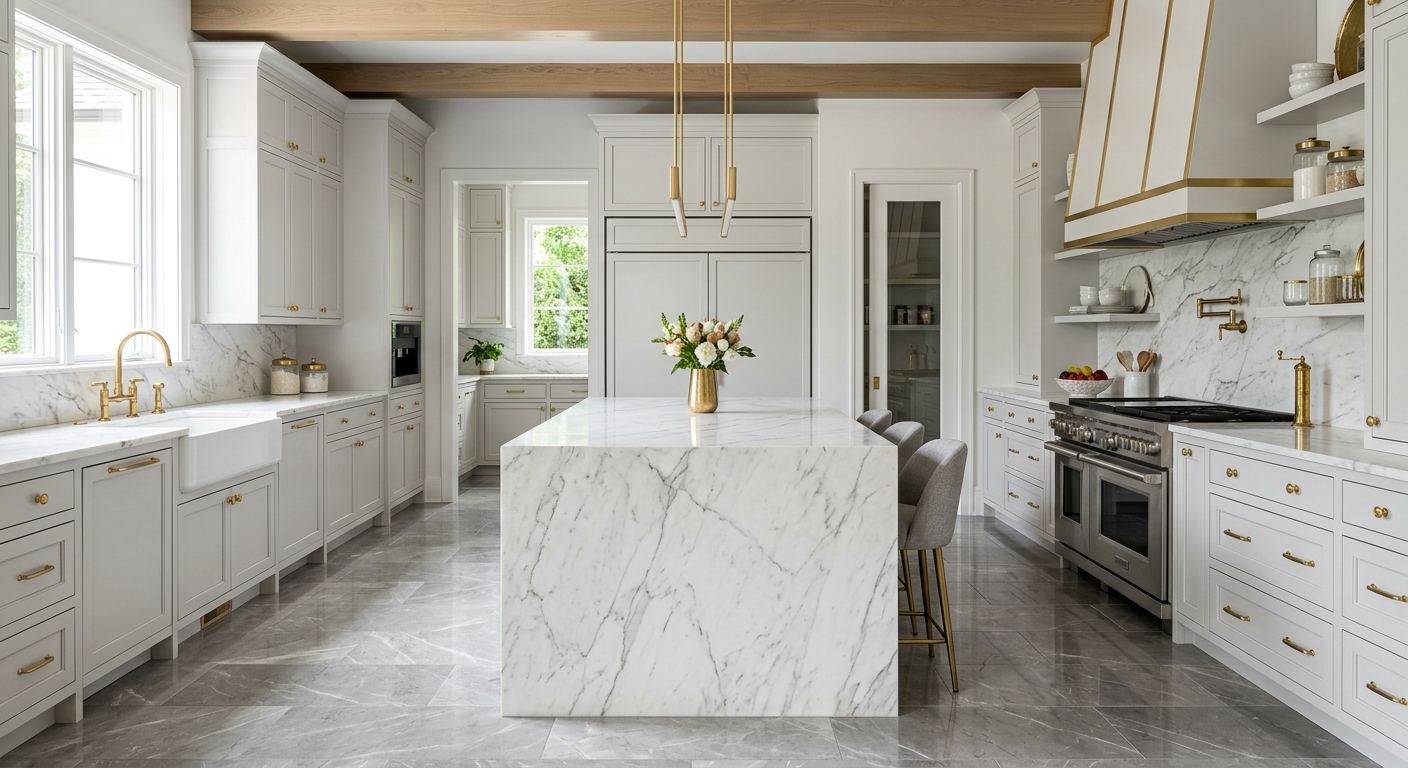
Kitchen renovation options and costs in Castleridge
Kitchen renovation in Castleridge typically starts with how closely your plan matches what buyers expect in Calgary’s broader market—more than weather or season. Castleridge’s population was 6,130 in the 2021 Census (Statistics Canada, 2021 Census), and in the Calgary economic region homeowners often have finish expectations that line up with what they paid for the home. In higher-value pockets of Calgary, renovations commonly target a practical “refresh level” that supports resale; many homeowners budget for a cost recovery tier that naturally pushes choices toward quartz counters and semi-custom cabinetry rather than basic laminate and stock boxes.
In this region, contractor availability and pricing are also influenced by Alberta’s strong construction activity. Skilled labour in Calgary commonly runs about $90–$140 per hour, so design time, project management, demo labour, and installation sequencing are a meaningful portion of your total. Climate matters mostly through installation details—heated, controlled indoor work is standard for adhesives, tile thinsets, and stone fabrication—but the big swing in cost is usually scope, not cold weather.
Where trade demand is especially steady in the area, neighbourhood pockets near major commuting routes into Calgary see quicker scheduling for cabinet installs, because cabinets, stone, and flooring trades tend to be booked in synchronized windows. If you’re planning a multi-trade job, moving from a simple upgrade to a full redesign is where budgets typically step up to the mid five-figures and, for layout changes, potentially into six figures.
Below is a practical breakdown of the renovation tiers homeowners in Castleridge most often compare before they request itemised quotes.
| Renovation Tier |
What's Included |
Typical Duration |
Price Range |
| Cosmetic refresh (paint, hardware, new appliances only) |
Cabinet paint or refinish (if applicable), new pulls/knobs, appliance swap, minor caulking/trim touches |
1–3 weeks |
$8,000–$22,000 |
| Mid-range full renovation (new cabinets, counters, sink, tile) |
Semi-custom or upgraded stock cabinets, new countertops, sink and tap, backsplash tile, new flooring section or refresh as needed |
4–8 weeks |
$25,000–$65,000 |
| High-end full renovation (custom cabinets, stone counters, island) |
Fully custom millwork, natural stone or premium engineered stone, island build, upgraded lighting, extensive tiling |
8–14 weeks |
$70,000–$100,000 |
| Cabinet refacing only (new doors + drawer fronts, same boxes) |
Reface doors/drawer fronts, new hardware, updated trim and backsplash preparation (some tile may be included) |
2–5 weeks |
$8,000–$30,000 |
| Countertop swap only (laminate to quartz or stone) |
Template and install new countertop material, basic sink cut-out adjustments, reconnect sink plumbing as required |
1–3 weeks |
$3,000–$12,000 |
| Backsplash tile installation only |
Tile supply and install, waterproofing where needed, grout/seal, caulk at change-of-plane |
3–7 days |
$2,500–$8,000 |
Prices are estimates only and vary by project scope, site access and material selection.
What affects the price of kitchen renovation in Castleridge
Even when two homeowners in Calgary and nearby communities request the “same” kitchen, quotes can differ by 30–50% because the hidden drivers—labour complexity, material grade, and how much of the layout changes—vary a lot from home to home. Local home value and household income influence what finish tier people choose, but the renovation cost is still governed by scope. In higher-value Calgary-area markets, homeowners often default to quartz or natural stone counters and semi-custom cabinetry because the upgrade is easier to recover on resale. In more modest budgets, laminate and stock cabinets dominate because they reduce spend while delivering a visible refresh.
Layout changes are the biggest unpredictable cost regardless of finish. Removing a wall, adding an island, or moving plumbing or a gas line can trigger additional framing, electrical, drywall, and inspection steps—plus trade scheduling and material coordination.
In Castleridge specifically, a few common conditions raise costs. Older homes may have uneven walls or dated framing that requires more shimming and drywall patching before cabinetry goes in. If your kitchen has a cramped corridor and limited staging space, demo and cabinet delivery can take longer, adding labour. Also, if you’re upgrading from laminate counters to quartz, you may need additional build-up for undersides and to ensure a clean, level edge line—especially if the existing base cabinets aren’t perfectly square. On a typical full renovation, budgets commonly land around the mid-band (for example, $25,000–$65,000) when the layout stays mostly intact; if you add an island and relocate plumbing or gas, costs often climb toward the full redesign band (for example, $70,000–$100,000) due to coordinated trades and premium materials.
| Price Factor |
Why It Matters |
Cost Impact |
| Cabinet tier — stock vs. semi-custom vs. fully custom millwork |
Custom sizing, door styles, and internal components change both material and install time |
Largest swing in mid-to-high budgets |
| Countertop material — laminate vs. quartz vs. granite vs. stone |
Fabrication complexity, thickness, and edge profiles affect cost and schedule |
Can shift totals by thousands quickly |
| Layout change — wall removal, island add, plumbing/gas move |
Triggers framing, electrical, plumbing work, and more demo/drywall/finishing |
Often the biggest unpredictable cost |
| Appliance package tier — builder vs. mid-range vs. pro-grade |
Power requirements, venting, and depth dimensions can affect cabinet and countertop fit |
May add notable line items to “mid-range” jobs |
| Flooring — refinish existing vs. full replacement |
Protection during demo, subfloor condition, and matching new materials affect labour |
Unexpected subfloor repairs can increase spend |
| Backsplash — ceramic tile vs. marble vs. full-height slab |
Material thickness, detailing, and waterproofing change labour intensity |
Premium stone dramatically raises cost |
| Electrical — new circuits for island, under-cabinet lighting |
Electrical scope adds licensed trade time and possibly panel work or re-routing |
Often adds “surprise” cost if not scoped early |
| Permit fees and licensed trade requirements |
Some work requires permits/inspections, impacting scheduling and administrative steps |
Can affect both timeline and total budget |
Permits & regulations in Alberta
In Alberta, not every kitchen task requires a permit, but several common renovation moves do. Generally, cabinet and countertop swaps don’t require permits when you’re replacing like-for-like and not changing structural elements. The permit triggers are usually tied to moving plumbing supply/drain lines, relocating gas (for example, stove location or a gas range hood setup), removing a load-bearing wall, and adding new electrical circuits (like dedicated island outlets or substantial under-cabinet lighting runs that require new circuit work).
Gas work must be done by a licensed gas fitter and electrical work by a licensed electrician; both typically require inspections before you can close up walls or cover work. As a homeowner in Castleridge, the fastest way to protect yourself is to verify responsibility in writing before the work starts. A professional contract should specify who pulls any required permits, who schedules inspections, and what trades are responsible for compliance.
Step-by-step: (1) Ask for the contractor’s Alberta licence/business registration details; confirm through the applicable online registry or trade authority listing. (2) Request a certificate of insurance (liability coverage) and verify the coverage is active for the project dates. (3) Ask about WSIB/WCB coverage and obtain proof/clearance documentation—contractors should be able to provide this before mobilizing. If they can’t produce documentation promptly, that’s your cue to pause and get clarification in writing.
Cabinets, countertops and layout decisions in Castleridge
The three decisions that most influence cost, resale appeal, and day-to-day satisfaction in a Castleridge kitchen are: (1) cabinet tier, (2) countertop material, and (3) whether you change the layout. In the Calgary resale market, buyers often expect clean lines, durable worktops, and storage that matches modern needs—so the “right” choice depends on your total budget band. Stock cabinets are the fastest and cheapest path (good if you want a refresh without changing plumbing or walls). Semi-custom cabinets are the most popular mid-range option because they deliver better sizing and upgrades without the long lead times and higher pricing of fully custom millwork. Custom is the best fit when you’re dealing with an awkward room shape or want a tailored island footprint.
For countertops, laminate is budget-friendly but can look dated faster and doesn’t offer the same heat and scratch tolerance as stone surfaces. Quartz is a common sweet spot in this region: it’s durable, relatively low maintenance, and supports the “move-ready” look buyers want. Natural stone (granite/marble) can elevate the finish, but it comes with higher material and fabrication costs—and marble generally needs more care. Butcher block can be great for homeowners who embrace maintenance and don’t mind regular sealing and mindful water exposure.
Layout changes justify their cost only when the space gain improves function: adding an island for seating or workflow is worth it when you’re not sacrificing circulation, and relocating plumbing/gas makes sense when it unlocks a better cabinet run. A concrete example: if you’re planning a cabinet-and-counter renovation around the mid-band (often $25,000–$65,000) and you simply swap laminate for quartz without moving plumbing, you may add only the countertop premium. But if you move plumbing or gas to reposition a sink or range, you can quickly push into the redesign band (often $70,000–$100,000) because the labour and coordination costs stack up.
| Option |
Durability |
Maintenance |
Best For |
Price Range |
| Stock cabinets (big-box) |
Good for normal household use; limited custom fit |
Low—regular cleaning; hardware upgrades help |
Cosmetic-to-mid refresh where layout stays |
$8,000–$20,000 |
| Semi-custom cabinets (local dealer) |
Very good; better internal options and door/detail choices |
Low; hinges and soft-close add long-term usability |
Most Castleridge renovations targeting resale appeal |
$20,000–$45,000 |
| Custom cabinets (local millwork shop) |
Excellent; tailored fit and refined finishing |
Low with proper care; higher-end hardware available |
Complex room geometry and premium built-ins |
$45,000–$75,000 |
| Laminate countertop |
Moderate; can chip at edges and wear over time |
Low; avoid prolonged heat and wet seams |
Budget-focused refresh without major layout changes |
$3,000–$6,000 |
| Quartz engineered countertop |
High; strong against staining with sealed-like surface |
Low; clean with non-abrasives |
Balanced durability and “new kitchen” look in Alberta |
$6,000–$10,500 |
| Granite / natural stone countertop |
High; tough surface with natural pattern variation |
Moderate; periodic sealing recommended |
Premium appearance for resale and long service life |
$8,000–$12,000 |
| Butcher block countertop |
Moderate to high with oiling; sensitive to standing water |
Higher; requires regular sealing/conditioning |
Home cooks who want warmth and don’t mind upkeep |
$4,000–$8,000 |
| Marble countertop |
Moderate; can etch or stain if not protected |
Higher; sealing and careful cleaning required |
Luxury look where homeowners accept maintenance |
$10,000–$16,000 |
How to choose a kitchen renovation contractor in Castleridge
Choosing the right contractor in Castleridge comes down to verifying compliance, getting clean scope, and aligning your budget with the real installation sequence. Start by confirming Alberta licensing: ask for the contractor’s applicable business/trade registration details, then request a certificate of insurance for liability coverage and coverage limits suitable for the project. For labour protection, verify WSIB/WCB clearance or proof of coverage—licensed/insured contractors should provide documentation without delay.
Next, get 2–3 itemised written quotes rather than a single lump sum. A proper quote breaks out labour and materials (demo, carpentry/cabinet install, plumbing/electrical allowances, countertop template and install, tile, drywall/paint, disposal). Read the scope for exclusions: is permit pulling included (when needed), is demolition disposal included, and what happens if site conditions uncover mould, water damage, or out-of-square framing?
Warranty matters—ask for both the workmanship warranty length and the manufacturer’s product warranty. Confirm whether warranties are transferable to future owners if you sell. For payment, a safe approach is to keep upfront deposits around 10–15%, then pay progress milestones; hold back a portion until critical items are complete and punch-list items are addressed. Finally, timeline: insist on a start date and completion estimate in writing, including lead times for cabinets and stone fabrication.
- Request proof of Alberta coverage: insurance certificate and WSIB/WCB clearance
- Ask which trade is pulling permits (if any) and confirm in the contract
- Get itemised pricing for demo, millwork, counters, tile, paint, and electrical/plumbing allowances
- Confirm disposal/trucking is included or budgeted separately
- Ask about subfloor repairs and wall levelling—how are out-of-square conditions handled?
- Verify countertop template timing and who pays for re-template if errors occur
- Confirm backsplash waterproofing method (especially near sink and behind counters)
- Clarify whether appliances are included or only allowances are provided
- Review warranty terms: duration, what’s covered, and exclusions
- Use milestone payments (10–15% upfront; holdback until completion/punch list)
- Ensure schedule includes inspection windows for any permitted plumbing/gas/electrical work
- Get a written change-order process so extra work is priced and approved before execution
Red flags in Castleridge: they won’t provide insurance/WSIB/WCB proof; they refuse itemised quotes and push lump sums; they mention permits “probably won’t be needed” without discussing your exact scope (gas/plumbing/electrical/layout); they ask for large upfront payments beyond 15%; or they can’t commit to a start/completion schedule that reflects cabinet and stone lead times.
Frequently asked questions — kitchen renovation in Castleridge
Custom vs stock cabinets — is custom worth it?
In Castleridge and the wider Calgary market, custom cabinets are “worth it” when your room shape, ceiling height, or awkward angles require a tailored fit—especially around a fridge nook, sloped walls, or a planned island with specific seating clearance. If your goal is primarily a modern look, stock or semi-custom often delivers better value. Stock cabinets can suit a refresh budget where you’re keeping plumbing and walls unchanged, while semi-custom is the most common choice when you want soft-close hardware, better interior storage, and more door/style options without the longest lead times. As a practical reference point, many mid-range full renovations land in the $25,000–$65,000 band, where semi-custom offers a strong balance of cost and resale appeal. If you’re moving into the high-end tier, custom cabinets can help you reach the premium $70,000–$100,000 band—but only if the design truly needs the extra fit and finish.
How do I choose a kitchen contractor in Castleridge?
Choose a Castleridge contractor based on documentation, scope clarity, and how they manage trade coordination. First, verify Alberta coverage: request a current liability insurance certificate and WSIB/WCB clearance/proof, and confirm the contractor can provide the appropriate licence/registration details. Second, get 2–3 itemised quotes with labour and materials breakdowns—cabinet supply/installs, countertop template and install, tile scope, and allowances for plumbing/electrical. Third, confirm who is responsible for permits and inspections when your scope includes moving plumbing/drain lines, relocating gas, removing a load-bearing wall, or adding electrical circuits. Fourth, check warranty terms for workmanship and confirm manufacturer warranty details for cabinets/counters. Finally, insist on a written start date and completion estimate that accounts for cabinet and stone fabrication lead times.
What order do kitchen renovation steps happen in?
A typical kitchen renovation sequence in Alberta follows a predictable order so trades don’t trip over each other. First is measurement and scheduling: template for countertops, final measurements for cabinets, and planning for any permitted plumbing/gas/electrical work. Next comes demo and site prep: remove old cabinets/counters, protect floors, and inspect for subfloor or wall issues. Then rough-in work: plumbing/gas/electrical updates (if required) happen before walls are closed. After that, drywall/levelling and priming occur, followed by cabinet installation and securing to proper blocking. Counters come next (after any paint has cured enough for quality bonding/finishing at edges), then sink install and final caulking. Tile and backsplash installation follow, followed by flooring touch-ups and final paint. Finally, appliances connect, lighting is tested, and your walkthrough/punch list closes out the job.
Can I live at home during a kitchen renovation in Castleridge?
Often, yes—many homeowners in Castleridge live at home during a renovation, but it depends on scope. Cosmetic refreshes and countertop-only swaps are typically the least disruptive, since they don’t involve major demolition or wall opening. For a mid-range full renovation ($25,000–$65,000), you may be able to stay if you can set up a temporary meal area and if demolition is contained, but expect noise during cabinet install, tile work, and any electrical/plumbing updates. For high-end redesigns (commonly $70,000–$100,000) that move walls, add an island, or require more rough-in work, many homeowners choose to plan for at least part of the project offsite or with a reduced kitchen routine. Your contractor should help you plan a workable temporary kitchen, dust control, and where you’ll safely store appliances and food during construction.
Should I renovate my kitchen before selling in Castleridge?
Usually, a kitchen refresh is most beneficial when it improves what buyers notice quickly: clean, modern cabinet faces (hardware included), bright lighting, and durable countertops. If your layout already works and your goal is to avoid major relocation (especially plumbing or gas), you can often hit a strong value zone with fewer surprises. In Castleridge, buyers in the Calgary market frequently respond well to quartz or similarly durable surfaces and updated backsplash/tile detailing. That said, the best ROI comes from matching the expected finish tier for your home type rather than over-upgrading. If your project pushes into premium custom builds and major layout changes, you may not recoup the full spend in every sale scenario, even though it can be a standout feature. A smart approach is to decide your target budget band first (for example, aiming for the $25,000–$65,000 zone for most “full but efficient” upgrades) and only add custom or premium stone when the design change genuinely improves function and buyer appeal.
What's the most popular kitchen style in Castleridge right now?
Right now in Castleridge and across the Calgary area, the most popular direction is a clean, modern look with warm neutrals—think white or light-wood cabinets, simple slab or shaker door profiles, and a “less clutter” layout. Pairing it with quartz countertops and a coordinated backsplash (often ceramic tile or a stone-look pattern) is still the most common choice because it reads fresh, photographs well, and holds up to everyday cooking. Many homeowners also choose an island for flow and added storage, but the island only makes sense when the room width supports comfortable circulation. If you’re targeting the mid-range band, semi-custom cabinetry plus quartz counters remains a winning combo. Higher-end projects often introduce custom millwork details and more premium stone or integrated lighting, aligning with the upper cost band (commonly $70,000–$100,000) where upgrades are most visible.