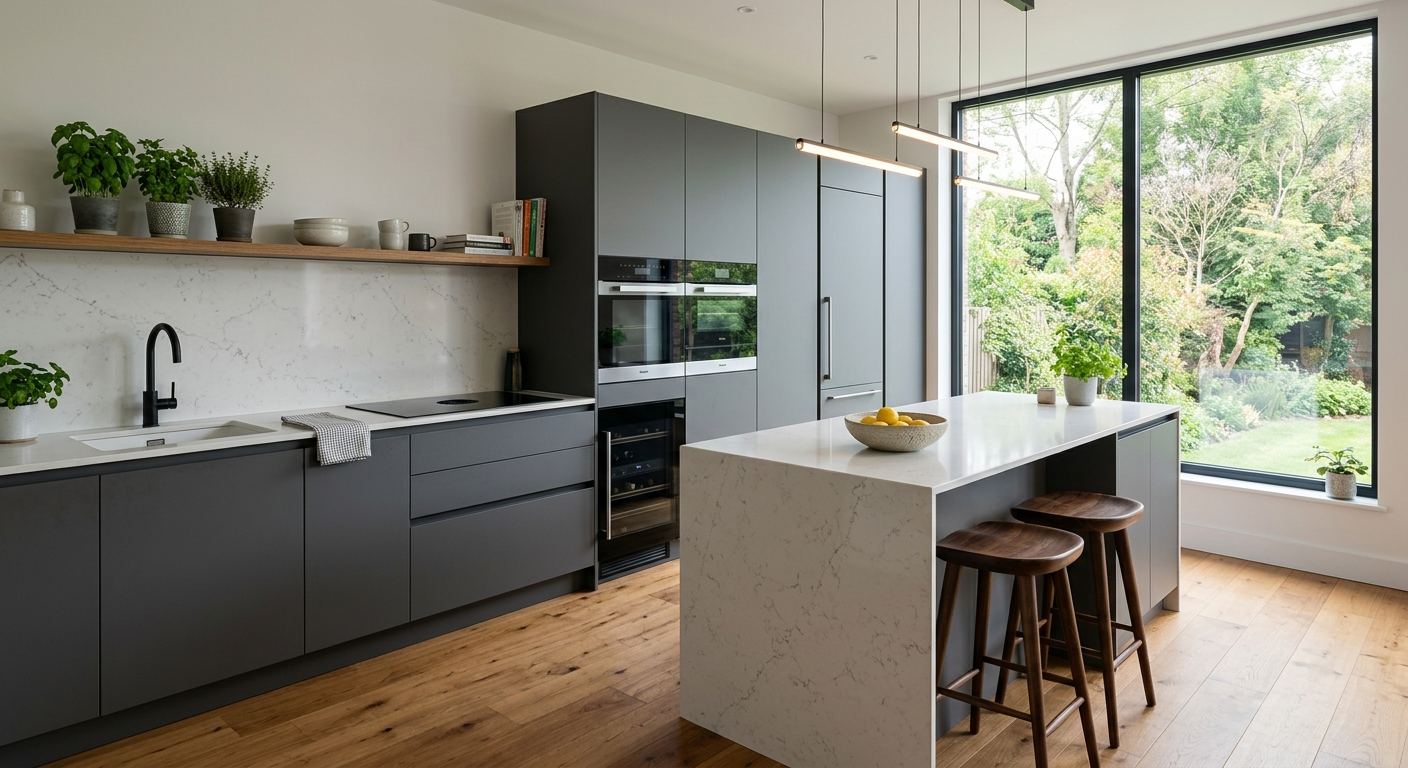
Kitchen renovation options and costs in Prince Rupert
Prince Rupert homeowners can choose from several kitchen renovation paths, and the right one mostly depends on how much you want to change the layout, finishes, and appliance package—not just what you’re currently seeing in the room. Even with a smaller local population (1,319 residents, Statistics Canada, 2021 Census), kitchen demand is steady because older homes tend to be renovated block-by-block. When the renovation is also meant to keep value aligned with the wider Calgary economic market, many budgets rise toward mid- to higher-finish tiers: that’s where buyers increasingly expect durable surfaces and better cabinetry fit, especially if you’re planning to sell in the next few years.
In the Calgary economic region, renovation budgets track closely to home values and household incomes, so finish expectations tend to shift upward in higher-value pockets. That typically means more quartz or natural stone counters and semi-custom or custom cabinetry. Alberta’s strong construction market also affects costs: skilled labour often runs around $90–$140 per hour in the Calgary region, so project management and site work become a major budget line. Climate plays a smaller role than homeowners assume. In practice, the weather mainly impacts scheduling and protection of work-in-progress (drying times for coatings, delivery delays, and keeping materials dry), while finish selection drives the largest pricing differences.
In Prince Rupert’s popular North area, trades see frequent kitchen upgrades because many properties were built with straightforward cabinet runs and dated plumbing layouts, making cosmetic refreshes and partial renovations common entry points. From there, most homeowners decide whether they’re doing a cosmetic update or moving into a full redesign—then you can compare typical tiers in the table below.
| Renovation Tier |
What's Included |
Typical Duration |
Price Range |
| Cosmetic refresh (paint, hardware, new appliances only) |
Cabinet paint or refinish, new hardware/pulls, matching trim caulk & touch-ups, installation of new appliances (no plumbing/gas moves) |
1–3 weeks |
$7,000–$18,000 |
| Mid-range full renovation (new cabinets, counters, sink, tile) |
New semi-custom or stock cabinets, new countertop (quartz or comparable), sink + faucet swap, backsplash tile, new under-cabinet lighting (if planned), flooring refresh where required |
4–7 weeks |
$25,000–$55,000 |
| High-end full renovation (custom cabinets, stone counters, island) |
Custom cabinetry, natural stone or premium engineered stone counters, island build, upgraded backsplash (including premium finishes), revised lighting plan, expanded appliance package, layout and plumbing/gas coordination |
7–14 weeks |
$70,000–$120,000 |
| Cabinet refacing only (new doors + drawer fronts, same boxes) |
Door/drawer replacement, new hardware, option for new cabinet interiors (selective), sanding/prep and finish system |
2–4 weeks |
$8,000–$30,000 |
| Countertop swap only (laminate to quartz or stone) |
Remove existing countertop, fabricate and install quartz or stone, reseal/finish edges, cut-outs for sink/faucet, caulking and cleanup |
3–10 days |
$3,000–$12,000 |
| Backsplash tile installation only |
Surface prep, tile supply (if contractor-included), waterproofing where needed, grout/seal, finishing at counter and wall edges |
2–5 days |
$2,500–$8,000 |
Prices are estimates only and vary by project scope, site access and material selection.
What affects the price of kitchen renovation in Prince Rupert
For the same “kitchen refresh” label, quotes in the Calgary economic region can swing 30–50% because contractors price uncertainty: layout changes, trade scheduling, and how much of the existing construction they must correct. In Alberta’s active construction market, skilled labour is in demand, and that labour time can balloon when wiring, ducting, drainage, or old finishes aren’t where plans assumed they would be. The biggest driver is usually finish tier, not weather. Local home values and household income shape what finish tier homeowners choose—higher-value markets push more people toward quartz or natural stone counters and semi-custom cabinetry because the cost is easier to recover on resale. In more modest markets, laminate and stock cabinets dominate because they deliver a strong visual upgrade for less risk.
In Prince Rupert, two local conditions commonly move the budget even when you keep the same finish style. First, many homes have older plumbing runs behind the toe-kick area and in exterior wall zones; if the sink location changes, labour and materials jump quickly (you may be looking at thousands in additional demo and reconnection). Second, shipping and delivery timing can affect when stone slabs arrive, which means contractors protect the site longer—especially when drying or cure times for coatings and grout matter.
Concrete budget impacts show up even in the basic bands. A countertop-only swap—like laminate to quartz—typically sits around $3,000–$12,000, but once you add a cabinet tier change and backsplash, you’re often in the $25,000–$55,000 zone for a mid-range full renovation. If you add an island and start moving plumbing or gas-related components, the job can climb into the high-end band because redesign and coordination are labour-heavy, regardless of the specific surface you choose.
| Price Factor |
Why It Matters |
Cost Impact |
| Cabinet tier — stock vs. semi-custom vs. fully custom millwork |
Tier affects material cost, door/drawer construction, internal organizers, and how long install and adjustments take |
Often the largest swing within the renovation; can shift a mid-range project by $10,000+ (depending on scope) |
| Countertop material — laminate vs. quartz vs. granite vs. stone |
Material dictates fabrication complexity, edge profiles, and durability expectations buyers look for |
Laminate to quartz may add roughly $2,000–$6,000; premium stone can add more depending on slab size |
| Layout change — wall removal, island add, plumbing/gas move |
Layout work introduces demo, structural checks, and re-routing lines; this is the most unpredictable cost |
Can add $5,000–$25,000+ even if finishes stay similar |
| Appliance package tier — builder vs. mid-range vs. pro-grade |
Electrical requirements, venting/fit, and integration options change installation time and materials |
Upgrading appliances can add $1,500–$15,000 depending on model tier and venting needs |
| Flooring — refinish existing vs. full replacement |
Kitchen floors are often damaged during demo; replacement adds subsurface and underlayment work |
Refinish can keep costs lower by $2,000–$6,000 versus full replacement |
| Backsplash — ceramic tile vs. marble vs. full-height slab |
Premium materials raise labour for precision cuts, waterproofing, and finishing details |
Tile-only is typically a mid-single-figure thousand line item; premium or full-height can push higher |
| Electrical — new circuits for island, under-cabinet lighting |
Electrical scope is labour-intensive and must be done by licensed trade(s) with inspection |
Common adds include $800–$3,500+ depending on circuit count and fixture count |
| Permit fees and licensed trade requirements |
Certain work triggers permits, inspections, and coordination; contractors must schedule trades accordingly |
Typically adds several hundred to a few thousand, plus administrative time |
Permits & regulations in Alberta
In Alberta, not every kitchen task needs a permit, but homeowners need to plan for the ones that do. Cabinet and countertop swaps generally do not require a permit when you’re keeping the same plumbing and electrical locations and you’re not moving a load-bearing wall. Likewise, a paint-and-hardware refresh or a backsplash install typically stays in the “no permit” lane—assuming no changes to structural elements or major services.
Where permits do come up is when you change how the kitchen is serviced or supported: moving plumbing supply or drain lines, relocating gas connections for a stove or range hood with gas, removing a load-bearing wall, adding an electrical circuit (for example, for an island receptacle count or under-cabinet lighting plan), or making other service extensions that require inspection. Gas work must be performed by a licensed gas fitter, and electrical work must be performed by a licensed electrician; both require inspection upon completion.
To verify a contractor in Prince Rupert before you sign, follow this step-by-step process:
- Ask for their Alberta licence details and confirm the exact trade authorization (not just “we can do it”).
- Request a certificate of liability insurance and confirm it’s current and matches your project dates.
- Ask for WSIB/WCB coverage proof (or the applicable exemption documentation if they’re structured that way); don’t accept verbal confirmation.
- Check online trade registries for licensing status using the contractor/company name and, when provided, the responsible individual(s).
- Ensure the contract clearly states who pulls permits, pays fees, and schedules inspections—don’t assume it’s included.
Cabinets, countertops and layout decisions in Prince Rupert
In a Prince Rupert kitchen renovation, three decisions usually drive both cost and buyer appeal: cabinet tier, countertop material, and layout changes. Start with cabinets. Stock cabinets are the fastest and typically the cheapest, but they can feel less “built-in” if you have a quirky wall line or want deep organizers. Semi-custom (the most common mid-range choice) balances cost and fit, often letting you pick functional drawer heights and better storage. Custom cabinets offer the best fit and strongest visual outcome, but they add design time, fabrication lead time, and installation adjustment costs.
Next, choose your countertop. Laminate is budget-friendly and easy to refresh, but it’s more vulnerable to cuts and heat damage than stone surfaces. Quartz is durable and relatively low-maintenance for everyday use, and it’s commonly selected when homeowners want a premium look without the variability of slab stone. Granite or natural stone can look exceptional, though it may require periodic sealing. Butcher block adds warmth and handles repairs well, yet it needs regular maintenance to keep it from drying or staining in a high-moisture kitchen environment. Marble is upscale and striking, but it’s more sensitive to etching from acidic spills.
Finally, layout. Removing a wall for an open-concept feel, adding an island, or relocating plumbing/gas can justify cost when it improves flow, adds seating, or solves storage problems. But if you’re not gaining usable workspace, layout changes are expensive relative to simpler upgrades. For example, upgrading counters from laminate to quartz alone often fits the $3,000–$12,000 band, while adding cabinets, sink, and tile brings you into the $25,000–$55,000 zone. Spend your budget where it changes daily function—then let the Calgary resale market logic guide the finish tier you choose.
| Option |
Durability |
Maintenance |
Best For |
Price Range |
| Stock cabinets (big-box) |
Good for everyday use; durability depends on door/drawer construction and hardware |
Low; typical wipe-down and hardware tightening |
Short timelines and a controlled budget |
$8,000–$18,000 |
| Semi-custom cabinets (local dealer) |
Very good; stronger build quality and better internal options |
Low; occasional hardware adjustment |
Most homeowners who want better fit, organizers, and resale appeal |
$15,000–$35,000 |
| Custom cabinets (local millwork shop) |
Excellent; tailored joinery and finish control |
Low to moderate; relies on finish type but generally easy to care for |
Irregular layouts, premium design goals, and maximum storage |
$30,000–$60,000 |
| Laminate countertop |
Moderate; can chip at edges and scratch with heavy cutting |
Low; avoid heat and cutting directly on the surface |
Cost-focused refresh where appearance matters most |
$2,500–$6,500 |
| Quartz engineered countertop |
High; strong resistance to staining and daily wear |
Low; routine cleaner and wipe-dry is usually enough |
Mid-range to higher-end upgrades and strong resale expectations |
$4,500–$12,000 |
| Granite / natural stone countertop |
High; heat tolerant depending on the specific stone |
Moderate; may need periodic sealing and careful spill management |
Premium look where you’re comfortable with stone care |
$6,000–$15,000 |
| Butcher block countertop |
Good; resilient with normal wear but sensitive to moisture imbalance |
Moderate; regular oiling and protective habits |
Casual, warm kitchens and homeowners who maintain surfaces |
$3,500–$10,000 |
| Marble countertop |
Medium to high; resistant to some wear but susceptible to etching |
Moderate; prompt cleaning and sealant plans are important |
Upscale kitchens where aesthetics are the priority |
$7,000–$20,000 |
How to choose a kitchen renovation contractor in Prince Rupert
Choosing the right contractor in Alberta is mostly about verification and clarity. Start with licensing and coverage: ask the contractor for their Alberta trade licences (or licence numbers for the responsible trades) and confirm they use licensed gas fitters and electricians when plumbing/gas lines or new circuits are involved. Then verify their liability insurance certificate and request evidence of WSIB/WCB coverage (or applicable exemption documentation). You can also cross-check licences via online registries using the business name and—when available—the individual responsible for the work.
Get 2–3 itemised written quotes, not just a lump sum. Look for labour and materials breakdowns (cabinets, countertops, tile, disposal, electrical/plumbing line items) so you can compare like-for-like. Carefully read the scope: what’s excluded (subfloor repairs, subpanel upgrades, disposal fees, old cabinet removal)? Is permit pulling included or billed separately? Is dust control and jobsite protection included? Also check warranty terms: workmanship warranty length, product/manufacturer warranties, and whether they’re transferable if you sell the home.
For payment scheduling, keep it conservative. A common guideline is no more than 10–15% upfront, then milestone payments after measurable progress. Avoid paying the full balance before cleanup and final walkthrough. Finally, insist on a written timeline with a start date and completion estimate so scheduling risks—common in active Alberta trade markets—don’t turn into surprises for your family.
- Confirm exact Alberta trade licences for the scope (gas fitter/electrician included).
- Request certificate of liability insurance and confirm coverage limits and dates.
- Verify WSIB/WCB coverage proof (or exemption documentation) before work starts.
- Get at least 2–3 itemised quotes with labour/material line items.
- Ask who pulls permits and who pays permit/inspection fees.
- Ensure disposal and dump fees are clearly stated (not “included” with no details).
- Check product selections on the contract: make/model numbers for appliances and lighting.
- Confirm countertop templating and fabrication lead times in writing.
- Review warranty: workmanship length, manufacturer warranty term, and transferability.
- Use a milestone schedule with retainage/holdback until completion and corrections.
- Require a detailed inclusions/exclusions list for demo, floor repairs, and patch/paint.
- Get start date, interim dates (demo, install, inspections), and completion estimate in writing.
Red flags to watch for in Prince Rupert: (1) quotes that don’t list line items or that lump everything without explaining allowances; (2) contractors who can’t provide insurance/WSIB/WCB proof; (3) promises of “no permits needed” for work that clearly moves plumbing, gas, or electrical circuits; (4) vague timelines with no start/completion dates; and (5) requests for large upfront deposits beyond 10–15%.
Frequently asked questions — kitchen renovation in Prince Rupert
Can I move my kitchen sink or stove?
Yes, but in Alberta that’s where permits and licensed trades commonly come into play. Moving a sink involves changes to water supply and drain lines; moving a stove or adding/relocating a range hood with gas involves gas work that must be done by a licensed gas fitter. The exact cost depends on how far the lines must be extended and whether you’re working through finished walls or ceilings. Many homeowners find it’s cheaper to keep the sink near its existing plumbing location and upgrade the surrounding cabinets and counters instead. If you do want a move, plan for coordination time and inspections, and ask the contractor whether that work is driving you into the mid-range full renovation tier (often $25,000–$55,000) versus a smaller countertop-only scope. In Prince Rupert, older housing layouts can add demo surprises, so build some contingency into the quote.
What's the most cost-effective kitchen upgrade?
For most Prince Rupert homes, the best value upgrade is upgrading surfaces that deliver a high visual impact without triggering heavy service work. The classic “bang for the buck” is a countertop swap or a focused backsplash upgrade—especially when you leave plumbing and electrical where they are. A countertop-only install (for example, laminate to quartz) commonly lands around $3,000–$12,000, and that change can modernize the entire kitchen. Add a new backsplash tile and the room typically looks complete without full demolition. If your cabinets are structurally sound, cabinet refacing can also be a strong value path, since you keep the boxes and replace doors/drawer fronts—often in the $8,000–$30,000 range depending on scope. The key is to get itemised quotes and confirm whether surface prep and disposal are included, because those details can swing final cost more than people expect.
Custom vs stock cabinets — is custom worth it?
Custom cabinets are worth it when the room’s layout or wall conditions make stock look awkward, or when you want built-in storage solutions that improve daily function. In Prince Rupert, many kitchens have older wall lines and plumbing offsets, and custom work can fit around the reality of the space instead of forcing compromises. That said, if your goal is mostly updating the look and you can live with standard sizes, stock or semi-custom often delivers better ROI. Stock is typically the fastest option (and usually the least expensive), while semi-custom is the most popular mid-range choice for homeowners who want better fit and organizers. Custom can be ideal for islands, angled areas, or when you’re targeting the high-end full renovation tier (which can reach well above $70,000–$120,000 when combined with stone and layout changes). If you’re staying closer to a mid-range plan, consider semi-custom first and reserve custom upgrades for the most visible zones like the pantry wall or island seating area.
How do I choose a kitchen contractor in Prince Rupert?
Start by verifying Alberta compliance and job-readiness. Ask for licence details for the trades involved, a current certificate of liability insurance, and WSIB/WCB coverage proof (or proper exemption documentation). Then get 2–3 written quotes that are itemised: labour, materials, disposal, and allowances should all be clear. Scope clarity matters: confirm who pulls permits, what inspections are included, and whether demo and flooring repairs are part of the package. Kitchen renovations often uncover issues in older homes, so a reputable contractor should explain how they handle unexpected conditions. Finally, check warranty terms—both workmanship and product warranties—and whether they transfer if you sell. If a contractor won’t put timeline and scope in writing, treat that as a serious problem. Many homeowners end up paying more simply because the first quote didn’t include electrical circuit changes or proper countertop templating lead times, pushing the job toward the larger renovation bands (like $25,000–$55,000 or more).
What order do kitchen renovation steps happen in?
A typical renovation sequence in Alberta starts with planning and measurements, then demo, then rough-ins, and only then do finishes go in. Step order usually looks like this: (1) confirm measurements, confirm appliance rough-in requirements, and choose cabinet/counter specifications; (2) protect the home and remove old cabinets/counters and (if needed) tile and flooring; (3) complete plumbing/electrical/gas-related rough work by licensed trades and schedule required inspections; (4) install cabinets; (5) template and fabricate countertops (this lead time must be scheduled); (6) install countertops and connect sink/faucet; (7) install backsplash and finish trim; (8) finish flooring touch-ups and final paint; (9) install appliances and lighting; (10) final walkthrough and warranty sign-off. In Prince Rupert, timing matters because stone and quartz require lead time and careful handling to keep the site dry. A contractor who tries to rush countertops before cabinets are fully set will usually create rework costs and delays.
Can I live at home during a kitchen renovation in Prince Rupert?
Often, yes—especially for smaller scopes like a backsplash-only install or a countertop swap. But for a full kitchen renovation (especially one involving wall or service changes), you’ll typically experience noise, dust, and limited access to cooking. In Prince Rupert, many homeowners choose to live in the home by setting up a temporary “meal zone” (microwave, kettle, and simple prep on a protected table), using a separate entrance path, and enforcing dust barriers. If plumbing/electrical is being accessed, the kitchen may be partially unusable for days. Contractors usually schedule rough-ins before cabinets and then shift toward quicker finish tasks, which helps day-to-day living. If your project budget is in the mid-range band (often $25,000–$55,000), plan for at least several weeks of partial disruption. Ask your contractor for a week-by-week work plan and confirm what areas will be blocked off so you can decide if staying home is realistic for your household.